Types of T-shirts are usually defined by four things: neckline, sleeve, fit, and purpose. These labels overlap. One shirt can be a crew-neck, short-sleeve, oversized graphic tee at the same time. The 20 styles below are useful reference points, not a complete or exclusive classification system. For a children’s retail assortment, compare these basic styles with current wholesale kids' T-shirt trends before ordering stock.
Once you understand those four dimensions, choosing a T-shirt gets easier. You can start with where you will wear it, decide how much coverage and room you want, then check the fabric and measurements before buying.
How are different types of T-shirts classified?
A neckline describes the opening around your neck. A sleeve label may refer to length, as with a long-sleeve tee, or construction, as with a raglan sleeve. Fit tells you how closely the shirt follows your body, while design and purpose cover details such as graphics, pockets, or sports use.
That is why different guides produce different totals. An oversized tee and a graphic tee aren’t competing categories. You can combine both features in one garment. The same choices also affect the pattern and sewing, which you can see in this guide to how a T-shirt is made from design to delivery.
20 types of T-shirts at a glance
| No. | T-shirt type | Category | Commonly works well for |
|---|---|---|---|
| 1 | Crew neck | Neckline | Everyday wear and layering |
| 2 | V-neck | Neckline | Open-neck outfits and warm weather |
| 3 | Scoop neck | Neckline | Relaxed summer styling |
| 4 | Henley | Neckline | Casual outfits with extra detail |
| 5 | Mock neck | Neckline | Minimal and smart-casual layering |
| 6 | Short sleeve | Sleeve | Daily wear in many seasons |
| 7 | Cap sleeve | Sleeve | Light, fitted warm-weather looks |
| 8 | Sleeveless | Sleeve | Exercise, heat, and layering |
| 9 | Long sleeve | Sleeve | Transitional weather and base layers |
| 10 | Raglan sleeve | Sleeve construction | Sport-inspired and retro outfits |
| 11 | Slim fit | Fit | Neat outfits and close layering |
| 12 | Regular fit | Fit | A balanced everyday shape |
| 13 | Relaxed fit | Fit | Travel and easy casual wear |
| 14 | Oversized | Fit | Streetwear and loose layering |
| 15 | Boxy | Silhouette | Shorter, wider contemporary looks |
| 16 | Cropped | Length | High-rise bottoms and summer outfits |
| 17 | Pocket tee | Design | Subtle detail on a simple shirt |
| 18 | Ringer tee | Design | Retro and collegiate styling |
| 19 | Graphic tee | Design | Personal expression and visual focus |
| 20 | Performance tee | Purpose | Exercise and high-activity use |
Types of T-shirts by neckline
Neckline names give you a useful starting point, but their width and depth vary by brand. Product photos and garment measurements tell you more than the label alone.
1. Crew-neck T-shirt
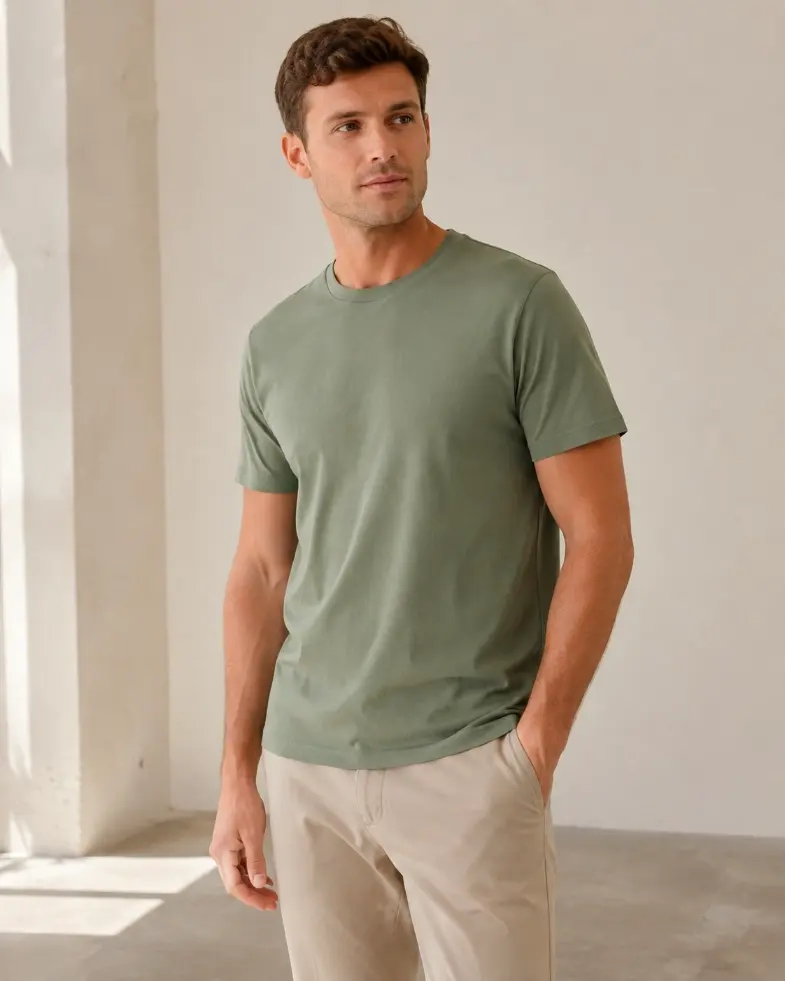
Rounded and fairly close to the base of the neck, a crew neckline is easy to wear alone and usually sits neatly beneath an overshirt or jacket. If close collars bother you, compare the actual opening because some crew necks sit higher and tighter than others.
2. V-neck T-shirt
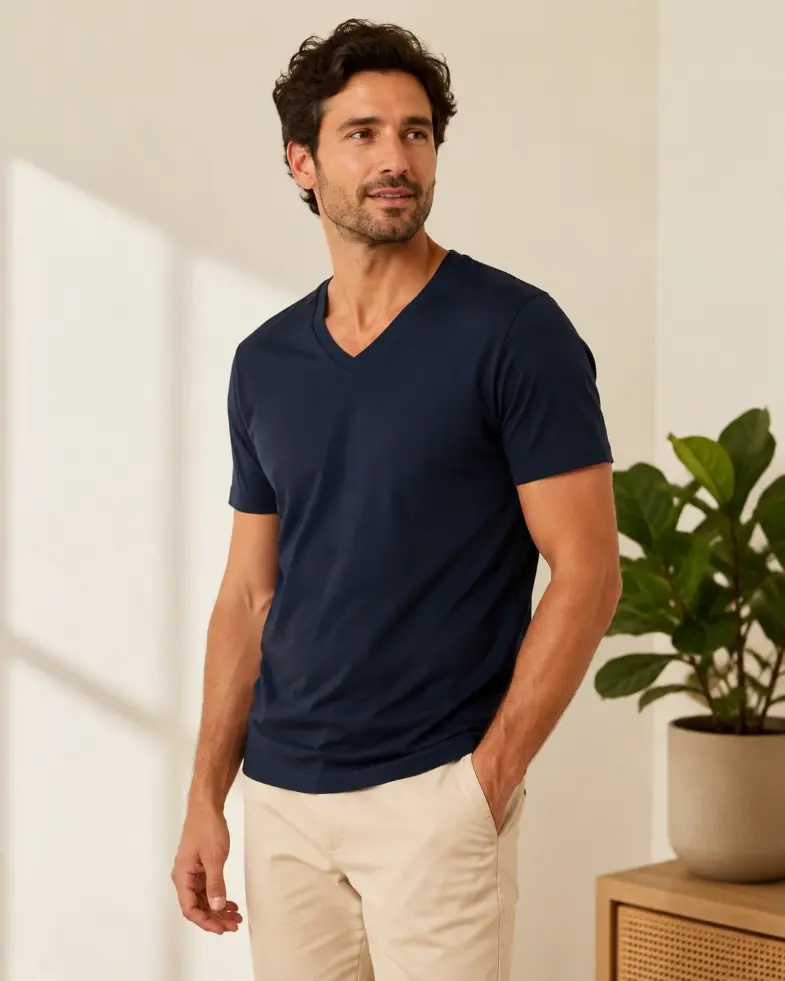
The front opening forms a V that can be shallow or deep. Its open shape works well in warm weather or beneath an unbuttoned shirt. A shallow V is usually easier to combine with everyday clothes, while a deep V makes the neckline a stronger part of the outfit.
3. Scoop-neck T-shirt
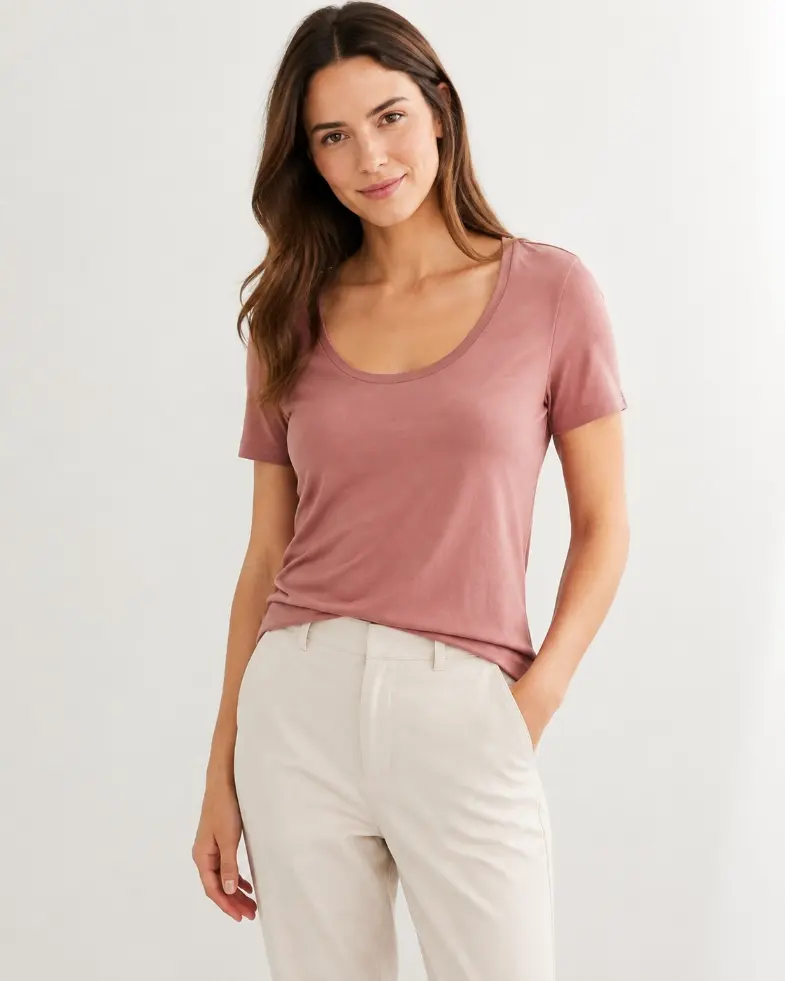
Compared with a crew neck, a scoop neck has a wider, lower curve. You may also see similar shirts described as U-neck tees. The shape suits relaxed summer outfits and leaves more room around the collarbone, but coverage differs, so check the front and side views before buying.
4. Henley T-shirt
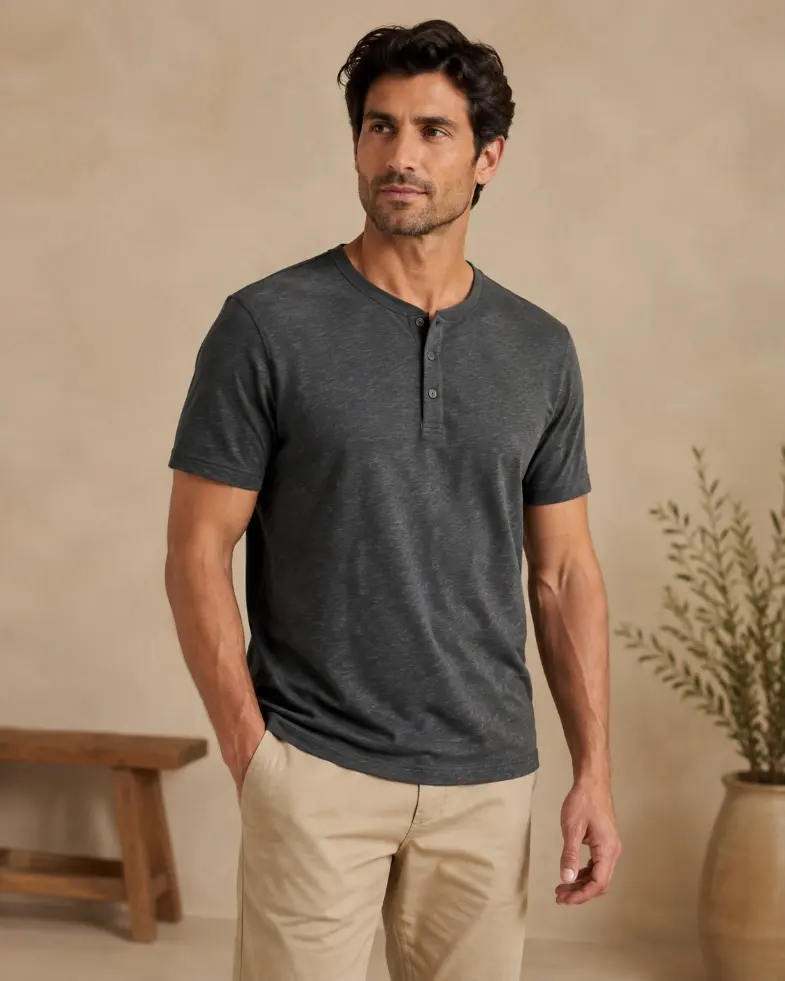
Buttons set the Henley apart from a plain crew neck. It is collarless, with a short placket at the front that adds a little structure without turning the garment into a button-up shirt. Wear it alone for a casual weekend outfit or under a jacket when the weather cools.
5. Mock-neck T-shirt
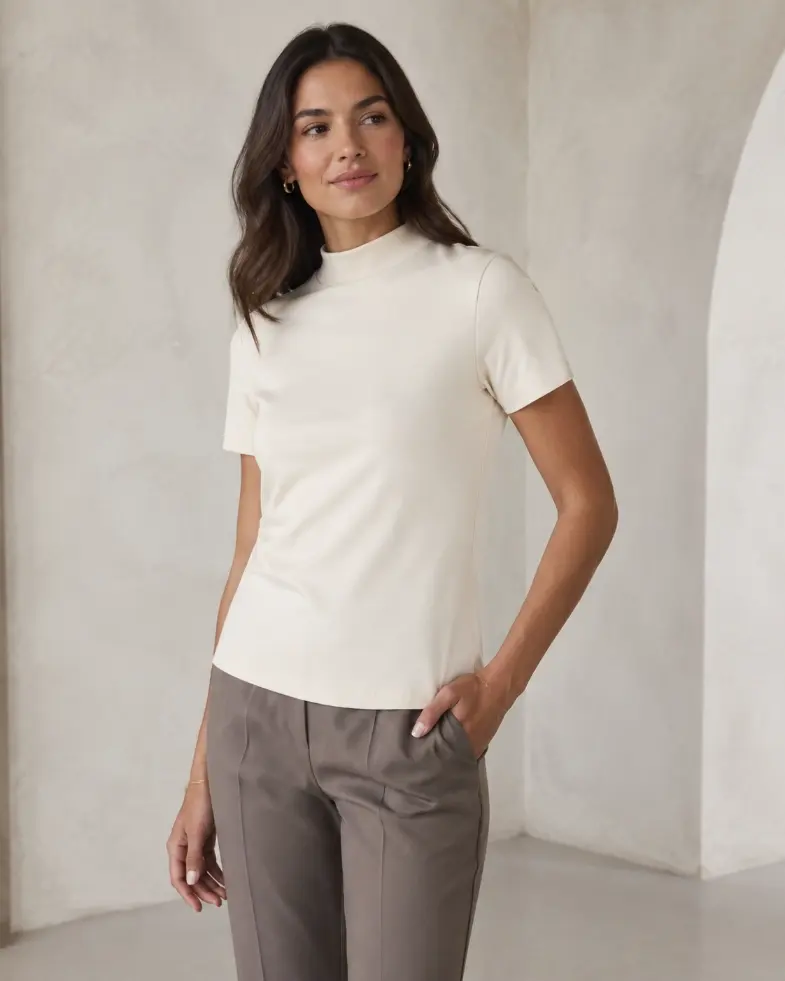
Sitting between a crew neck and a full turtleneck, a mock neck has a short raised collar. It creates a clean line under a jacket and can make a basic outfit look slightly dressier. Check the collar’s height and stretch, especially if you dislike pressure around your neck.
Types of T-shirts by sleeve style
Sleeves change coverage and proportion. They can also affect movement, although the complete pattern and fabric matter as much as sleeve length.
6. Short-sleeve T-shirt
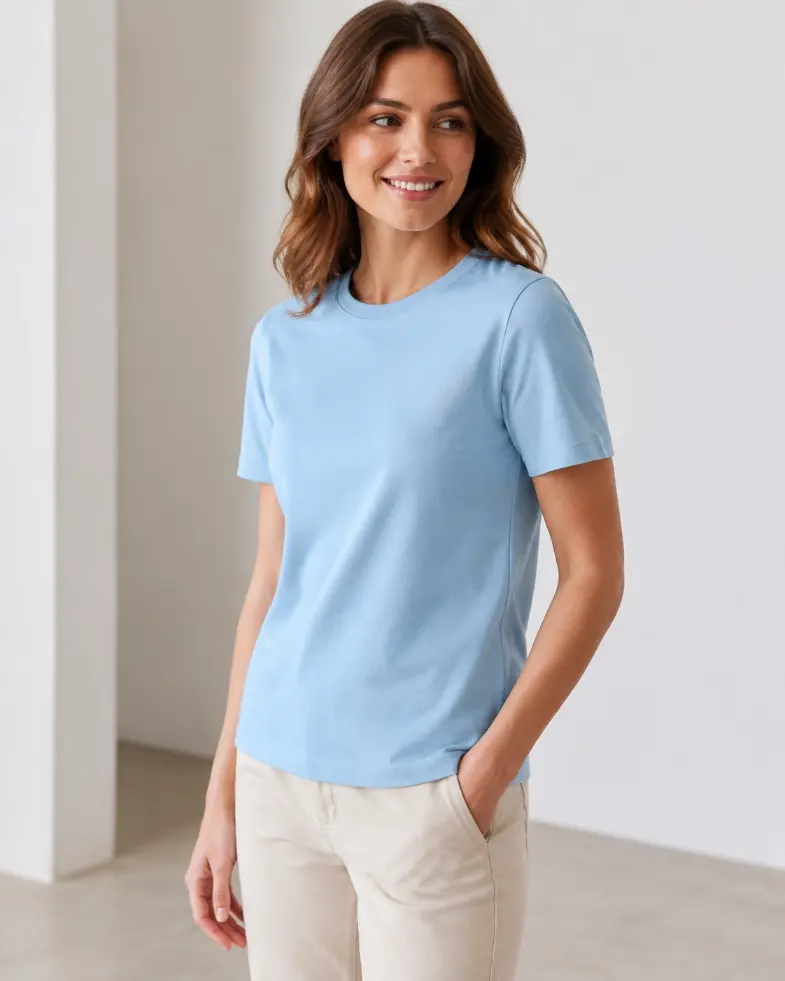
This familiar sleeve normally ends on the upper arm. Small changes in its length and opening width can make the same basic tee look fitted, straight, or loose. A short-sleeve T-shirt is practical for daily wear and works as a layer throughout much of the year.
7. Cap-sleeve T-shirt
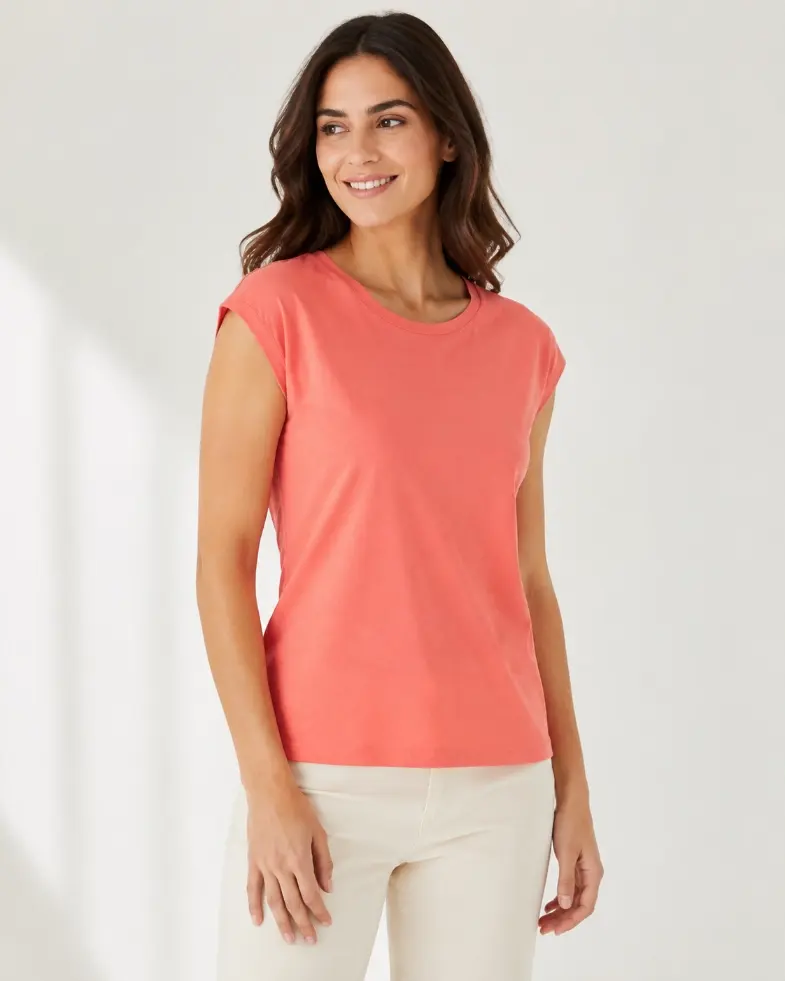
Cap sleeves cover the edge of the shoulder but stop before a standard short sleeve would. You will often find them on light, fitted tops for warm weather. Retailers use the term loosely, so look at how far the sleeve extends and where it meets the underarm.
8. Sleeveless T-shirt
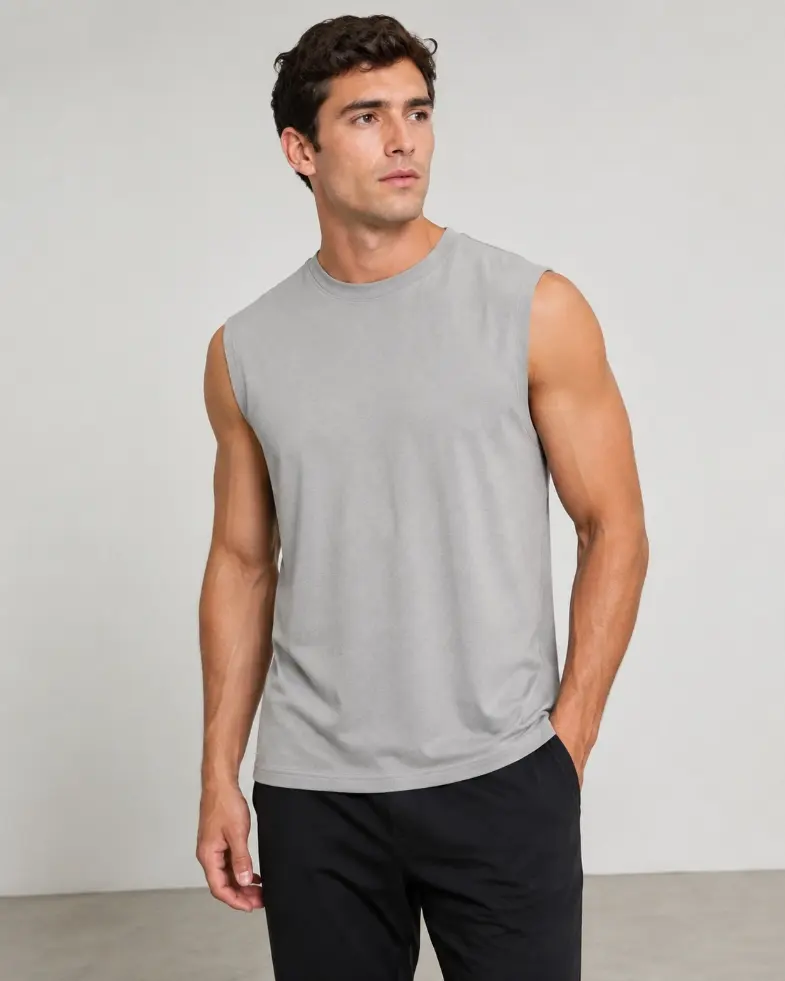
Remove the usual sleeves from a T-shirt-like body and the result falls somewhere in the broad sleeveless category. Muscle tees, tanks, and other shapes often overlap in store listings. Choose by shoulder coverage and armhole depth, especially if you plan to exercise or wear the shirt without another layer.
9. Long-sleeve T-shirt
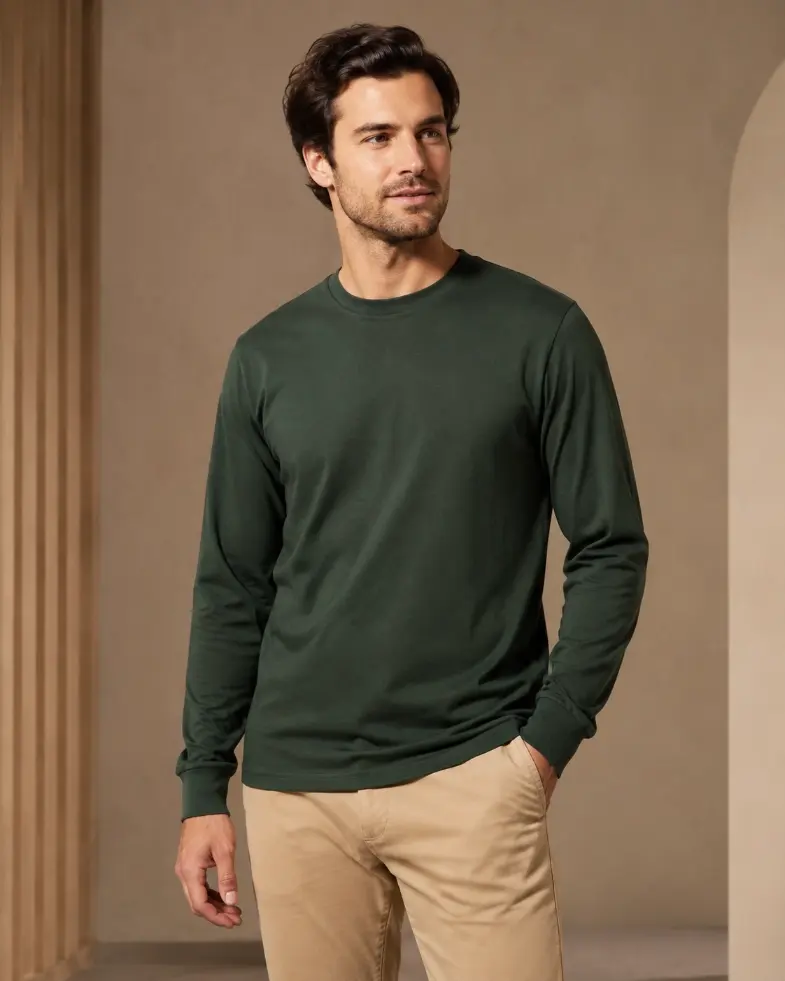
Long-sleeve tees extend toward the wrist while keeping the lighter construction of a T-shirt. They work as base layers, transitional tops, or indoor casual wear. Fabric weight makes a big difference: a thin version layers easily, while a heavier one may work better on its own.
10. Raglan-sleeve T-shirt
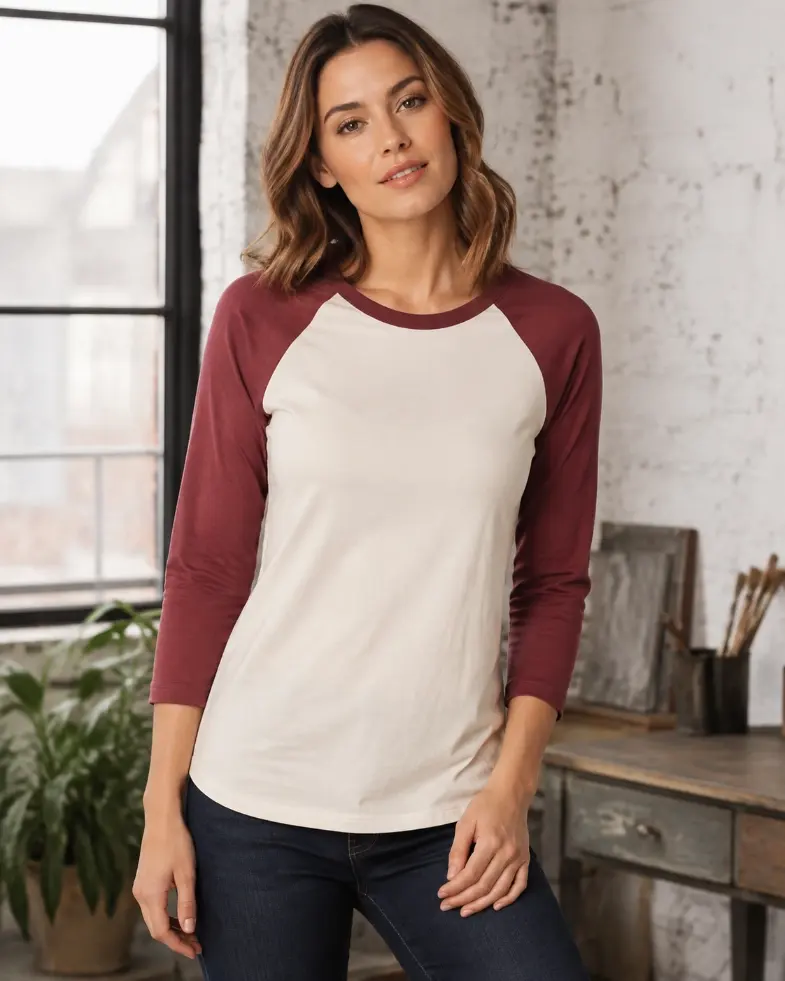
Instead of sitting at the shoulder edge, a raglan sleeve seam runs diagonally from the neckline toward the underarm. Contrasting sleeves create the familiar baseball look. The construction is associated with casual movement, but actual comfort still depends on sleeve shape, fabric stretch, and room through the upper body.
T-shirt types by fit and silhouette
Fit labels aren’t standardized. A regular tee from one brand may resemble a relaxed tee from another, so compare the garment’s chest width, shoulder shape, sleeve, and length whenever those measurements are available.
11. Slim-fit T-shirt
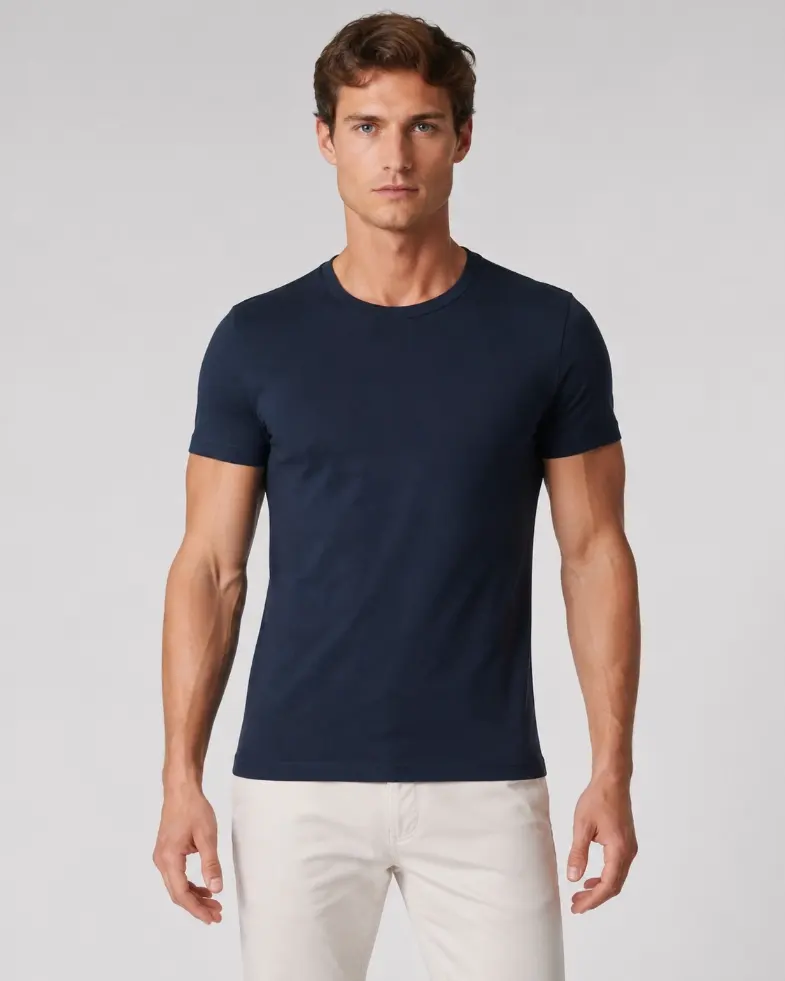
Cut closer through the chest, torso, and often the sleeves, a slim-fit tee can sit tidily beneath a shirt or jacket because there is less fabric to bunch. Close-fitting shouldn’t mean restrictive, though. Reach forward and raise your arms to check whether the shirt moves with you.
12. Regular-fit T-shirt
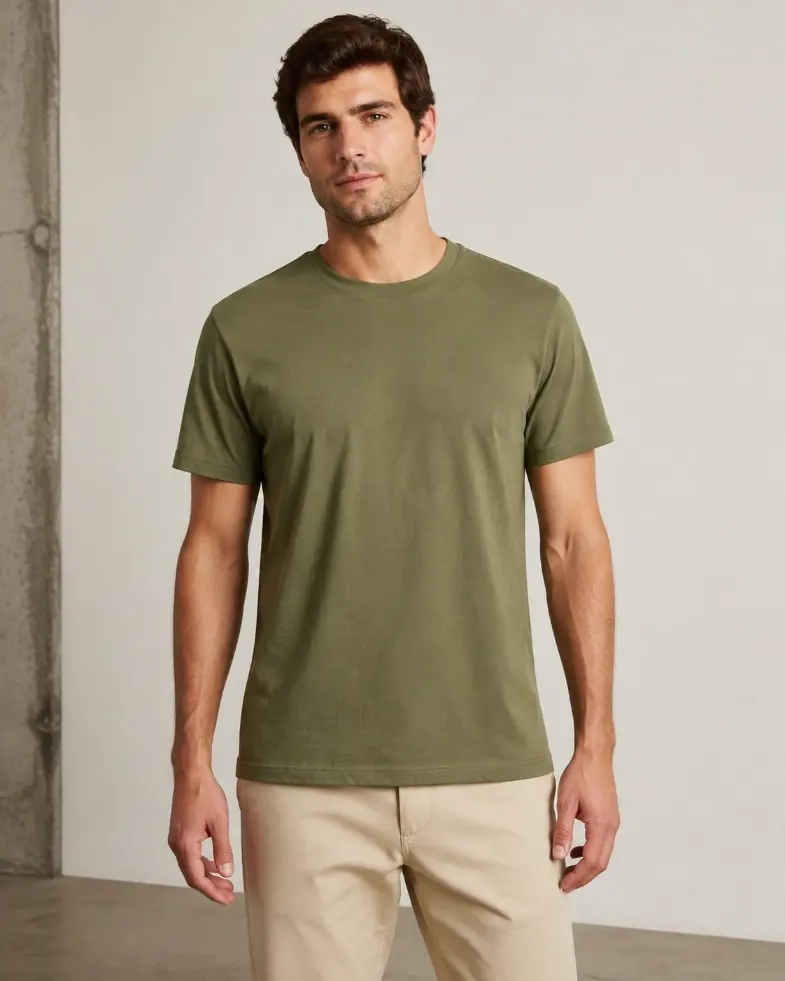
If you want neither a close nor an exaggerated silhouette, regular fit is a sensible everyday starting point. It usually means moderate room without an intentionally loose shape. Since the label varies, use the size chart and compare it with a T-shirt you already like.
13. Relaxed-fit T-shirt
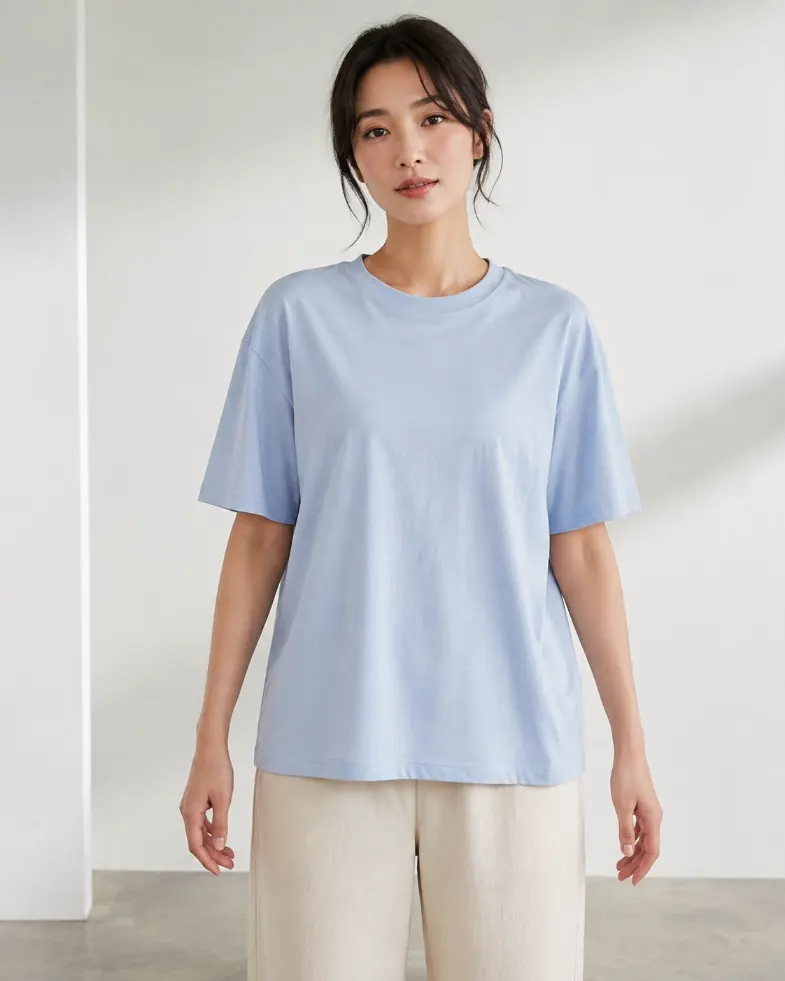
More room through the body and sometimes the sleeves gives a relaxed tee its easy shape. It doesn’t necessarily have dropped shoulders or extra-long proportions. This fit is useful for travel, lounging, and casual layering when a regular fit feels too neat.
14. Oversized T-shirt
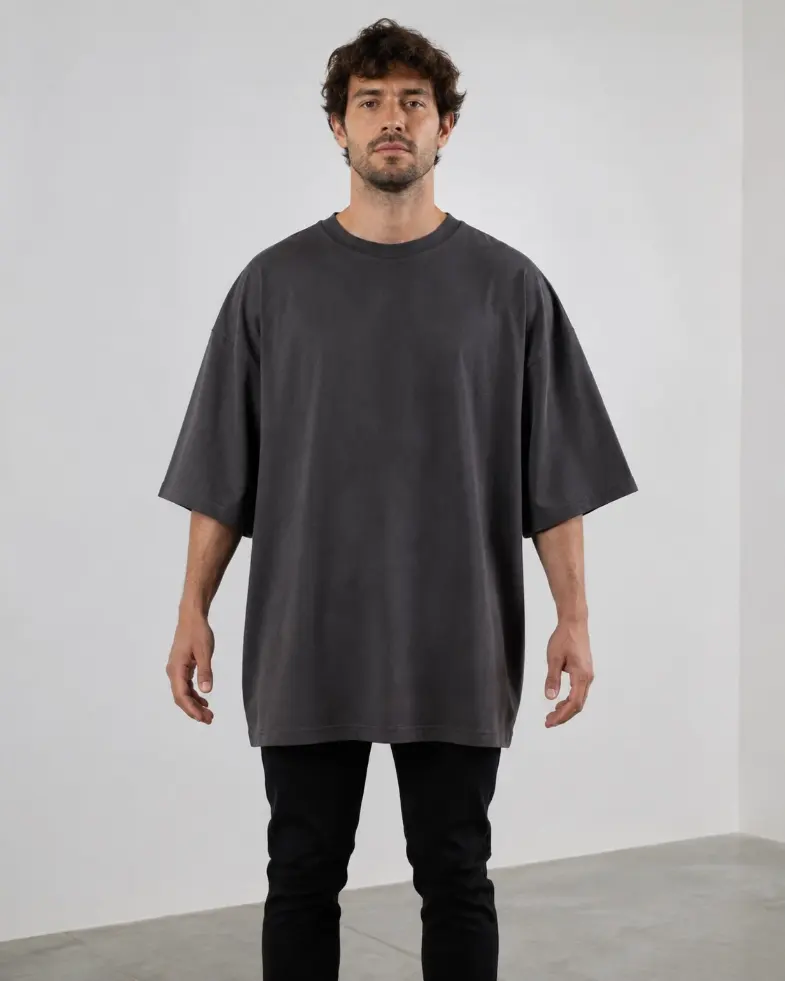
An oversized T-shirt is patterned with deliberate extra width, larger sleeves, or a dropped shoulder. Simply buying a regular tee several sizes too large can also add unwanted length or leave the neckline sitting badly. If you want a balanced oversized shape, start with a garment designed that way.
15. Boxy T-shirt
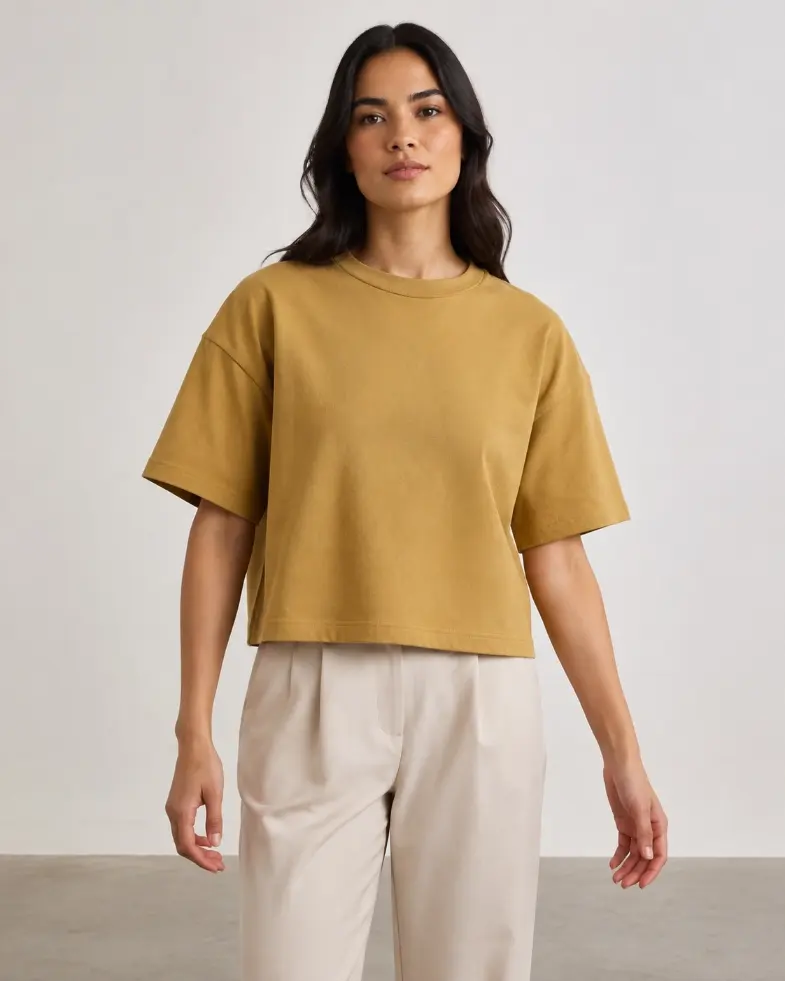
A boxy tee has a wide, straight body and a squared outline. It is often shorter than an oversized tee, which may be wide and long at the same time. The two labels can overlap, but boxy mainly describes shape, while oversized describes deliberately enlarged proportions.
16. Cropped T-shirt
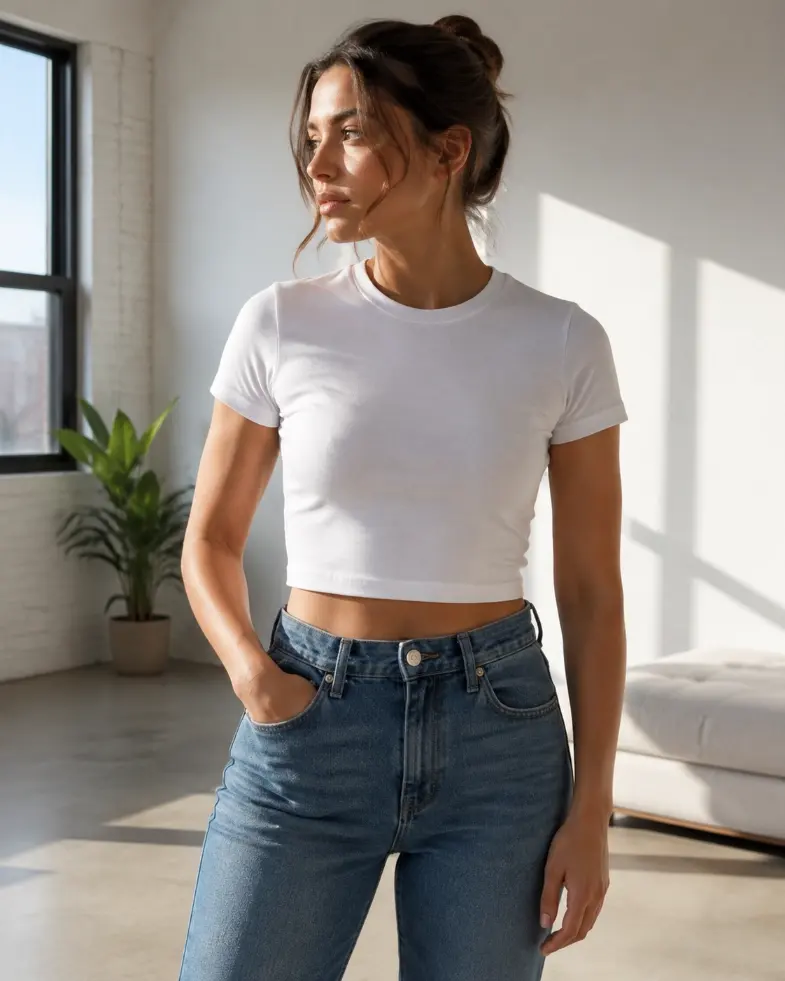
A cropped tee ends above a standard T-shirt hem. Some versions only shorten the body slightly; others expose the midriff. Cropped describes length, so the shirt may also be slim, relaxed, boxy, or oversized. It pairs easily with high-rise bottoms when you want a shorter proportion.
T-shirt styles by design and function
The next four names describe a detail or use. They can be combined with almost any neckline, sleeve, and fit.
17. Pocket T-shirt
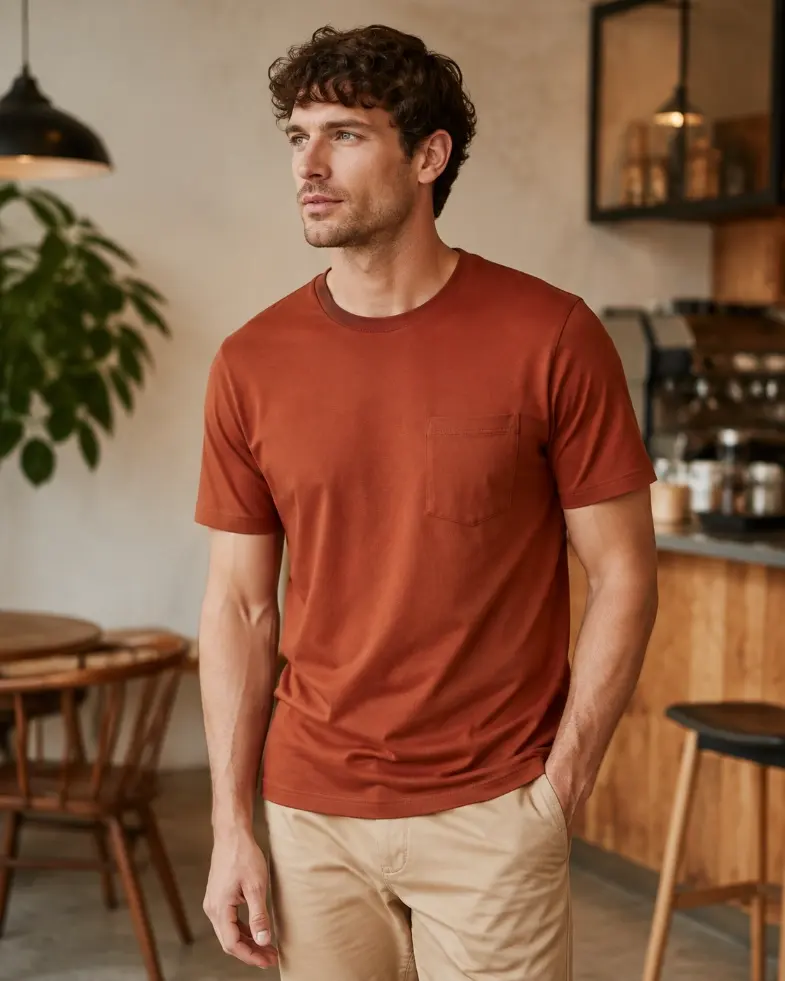
A small patch pocket gives a plain T-shirt some detail without requiring a print. It may hold light items, but on many casual tees the pocket is mainly decorative, especially when the fabric is soft or stretchy.
18. Ringer T-shirt
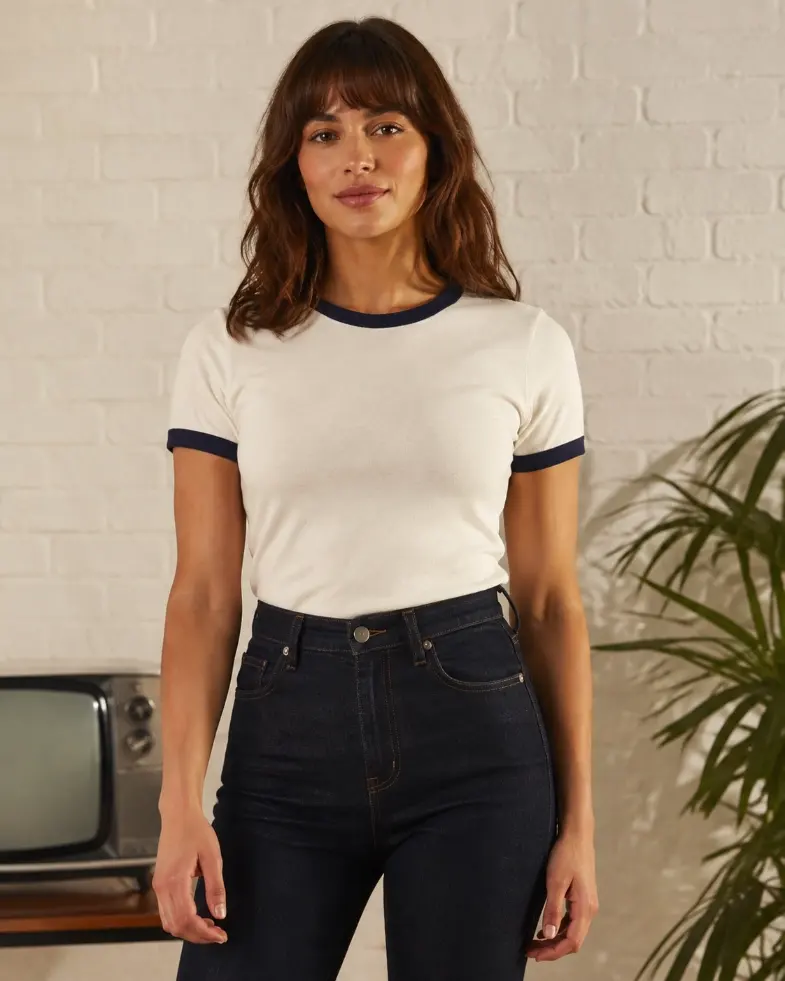
Contrasting rib trim around the neck and sleeves defines a ringer tee. The color blocking gives it a retro, collegiate, or sport-inspired feel. Most versions are short-sleeve crew necks, though the trim, rather than the fit, is what makes the style recognizable.
19. Graphic T-shirt
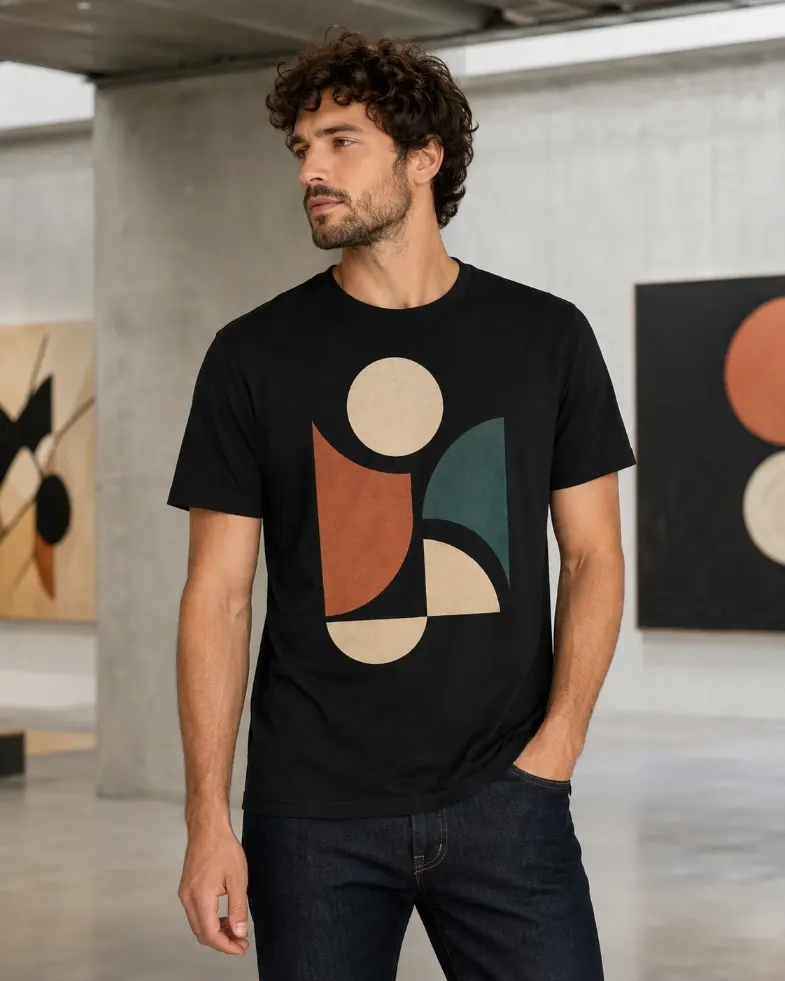
Artwork is the main feature of a graphic tee. It may use text, illustration, photography, a logo, or another surface design on the front, back, sleeve, or several areas. If you are curious about one common decoration method, this guide explains how screen printing works on T-shirts.
Judge the shirt and the artwork separately. A good-looking print doesn’t tell you whether the fabric, fit, or stitching will suit you.
20. Performance T-shirt
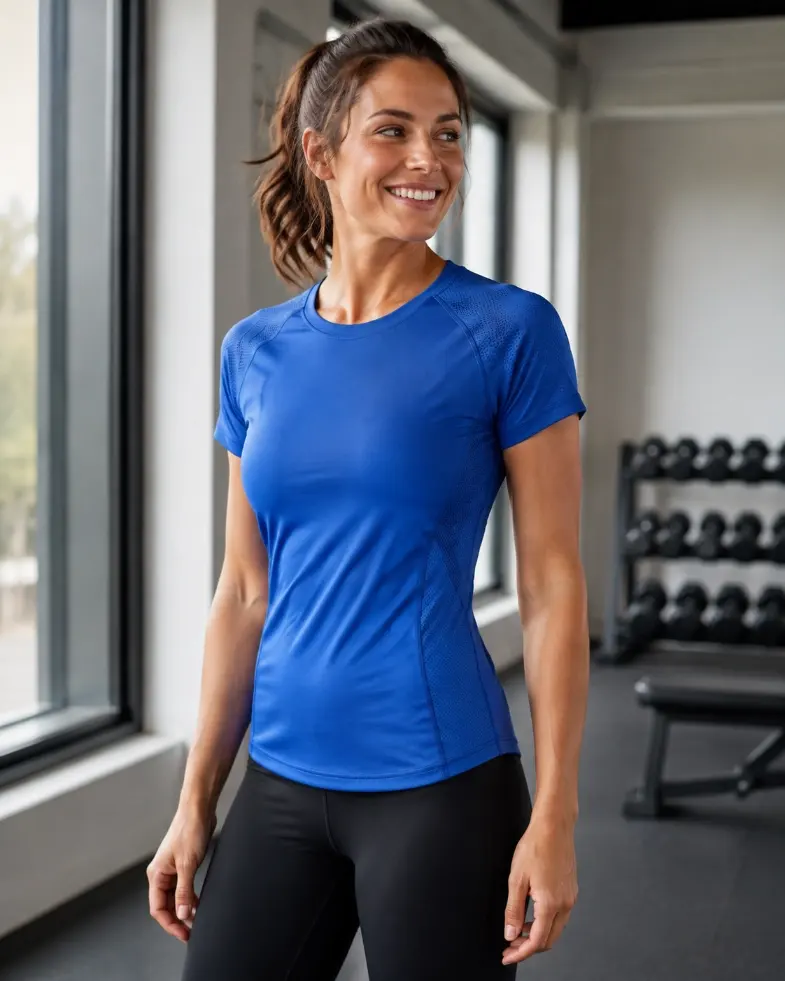
Performance tees are designed for exercise, but “performance” is not a test result. AATCC TM217-2025 measures vertical and horizontal liquid wicking with image analysis. It does not test drying time, vapor transfer, or whether every wearer will feel comfortable.
A 2023 wear trial published in Scientific Reports compared five same-pattern, similar-weight T-shirts on 10 healthy male long-distance runners at 27°C and 45% relative humidity. Tencel single jersey and polyester mesh produced lower temperature or humidity readings in several comparisons, yet subjective temperature, wetness, and thermal comfort did not differ significantly across all five. The small, specific sample and controlled exercise setting do not support a universal fiber ranking.
Check the product specification, knit construction, care needs, and intended activity. A soft everyday polyester tee is not automatically a technical training shirt.
Which T-shirt style works best for each occasion?
Start with the situation, then combine features. The suggestions below are starting points rather than dress rules.
| Occasion | Useful starting options | What to check |
|---|---|---|
| Everyday wear | Crew neck, regular fit, pocket tee | Comfort, easy care, and outfit compatibility |
| Hot weather | Scoop neck, cap sleeve, sleeveless tee | Fabric, airflow, coverage, and opacity |
| Cool-weather layering | Crew neck, mock neck, long sleeve | Bulk, sleeve length, and fabric weight |
| Smart casual | Henley, mock neck, regular fit | Neckline condition and overall fit |
| Exercise | Raglan, sleeveless, performance tee | Movement, seams, drying, and verified performance |
| Travel | Relaxed fit, regular fit, performance tee | Comfort, care, and repeat-wear needs |
| Streetwear | Oversized, boxy, graphic tee | Deliberate proportions and garment length |
Color, fabric, footwear, and the rest of your outfit can shift the result. A plain, well-fitting crew neck may look smarter than a poorly fitted Henley, even though the Henley has more detail.
How do fabric and weight affect T-shirt style?
Cut is only part of the story. A lightweight, fluid fabric may fall close to the body, while a thicker knit can hold a boxy outline more clearly. Neither result is automatically better. It depends on the shape and feel you want.
ASTM D3776/D3776M-20(2025) measures fabric mass per unit area. GSM therefore describes weight, not softness, durability, opacity, sewing quality, or comfort.
Stretch can make a slim tee easier to move in, but recovery matters too. Fiber, yarn, knit structure, weight, and finishing work together. Match them to your climate, activity, preferred coverage, and care routine. If you want to look beyond style names, compare common T-shirt fabrics before choosing.
How can you check T-shirt fit and quality?
Try the shirt on if you can, then move rather than judging it from a still mirror pose.
- Check whether the shoulder position matches the intended slim, regular, or dropped-shoulder fit.
- Reach forward and raise your arms to test room across the chest and upper back.
- Look at sleeve length and opening width, not only the size label.
- Check where the hem sits while standing, sitting, and reaching.
- Make sure the neckline lies as intended and doesn’t feel uncomfortable.
- Inspect the seams for puckering, loose threads, uneven stitching, or obvious twisting.
- Check lightweight fabric under normal lighting if coverage matters to you.
- Read the care label before buying.
Under the U.S. FTC’s Care Labeling Rule guidance, manufacturers and importers must provide care instructions on covered garments and have a reasonable basis for them. The label is not a guarantee against shrinkage, fading, or distortion, but it tells you how the garment was intended to be maintained.
When a seller publishes wash-test data, compare the before-and-after measurements. AATCC TM150-2025 measures garment length and width changes after defined home-laundering procedures and may not suit certain stretch garments. Results belong to the tested garment and conditions, not to every cotton or polyester tee.
When shopping for children, current measurements are more useful than age alone. This children’s clothing size and measurement guide shows the body points typically used for comparison. For cotton tees already in the wardrobe, these practical steps can also help reduce shrinkage and fading.
Conclusion
The easiest way to choose among different types of T-shirts is to build the garment one decision at a time. Start with the occasion, then choose a neckline, sleeve, and fit. After that, check the fabric, measurements, movement, and care instructions.
There is no single best T-shirt for everyone. A crew-neck regular tee is a dependable starting point, while a boxy, cropped, graphic, or performance style solves a more specific need. Use the labels to narrow your options, then judge the actual garment.
Frequently asked questions
Is a T-shirt the same as a tee?
Yes. In everyday English, “tee” is simply a shorter, more informal name for a T-shirt. Retailers and clothing brands commonly use both terms for the same garment.
Is a polo shirt considered a type of T-shirt?
Some retail guides place polos within a broad T-shirt category because both are usually knitted tops. In apparel classification, a polo is often treated as a neighboring category because it has a collar and button placket. Check the product description if the distinction matters to you.
Are unisex T-shirts the same as men’s T-shirts?
Not necessarily. Some unisex tees use a straight shape similar to a traditional men’s cut, but there is no universal unisex fit. Compare chest width, shoulder shape, body length, and intended ease instead of relying on the label.
Are tank tops a type of T-shirt?
The categories overlap. Some shops group tanks, muscle tees, and sleeveless T-shirts together, while others separate them. Shoulder coverage, strap width, armhole shape, and intended use give you a clearer comparison than the product name.
Does a heavier T-shirt mean better quality?
No. A heavier fabric may feel more substantial, appear less sheer, or hold its shape differently, but weight alone doesn’t prove durability. Yarn quality, knit construction, seams, finishing, and care all affect how well a T-shirt wears over time.
References and testing standards
- AATCC TM217-2025, liquid moisture movement measured through vertical and horizontal wicking image analysis.
- Özkan et al., Scientific Reports, 2023, a controlled wear trial involving five T-shirt fabrics and 10 male long-distance runners.
- ASTM D3776/D3776M-20(2025), methods for measuring fabric mass per unit area.
- AATCC TM150-2025, dimensional changes of garments after home laundering.
- U.S. FTC Care Labeling Rule guidance, care instructions and the evidence supporting them.