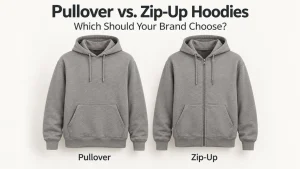
What is a hoodie, and why can two that look alike feel so different? A brushed interior, a tight neck opening, or a different hem can change how the garment feels and fits. Those details are easy to miss in a product photo.
I’ll walk you through five features worth checking, then explain how hoodies differ from crewneck sweatshirts and how to choose a fit that works with your usual layers. Whether you’re buying one to wear or developing a clothing range, you’ll know what to look for beyond the color and logo.
What Is a Hoodie?
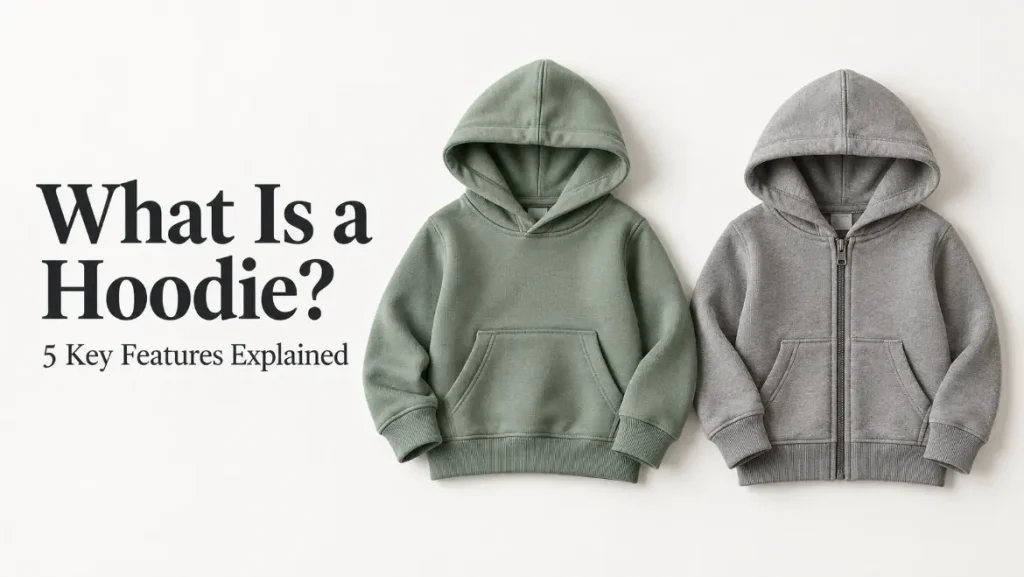
A hoodie is a casual top with an attached hood. In everyday clothing, the term usually means a hooded sweatshirt, whether it pulls over your head or opens with a zipper. The hood is the clearest identifying feature, while the rest of the design can vary.
What Does a Hoodie Look Like?
Picture a sweatshirt with a hood resting behind the neckline. The familiar version has long sleeves and a casual shape, often with a front pocket. You might see it as a plain top, a matching piece in a tracksuit, or a garment covered in graphics. Those styling choices don’t change its basic identity.
When checking a product photo, I’d look at the back or side view as well as the front. A hood folded behind the shoulders can be easy to miss. Color, branding, and a loose fit aren’t enough to identify a hoodie; check the garment itself before relying on how the outfit is styled.
Is a Hoodie the Same as a Hooded Sweatshirt?
For everyday sweatshirt styles, the two names usually describe the same garment. Collins lists a hooded sweatshirt as the British English meaning of hoodie, while its other definitions also cover broader casual hooded tops. Seeing “hooded sweatshirt” on a label doesn’t, by itself, indicate a different quality level or a heavier fabric.
You can use either phrase when discussing a sweatshirt-style design. If you’re comparing products or briefing a supplier, add a useful detail such as “pullover” or “full-zip” so the intended version is clear. The five features below explain what to check beyond the name.
What Are the Five Key Features of a Hoodie?
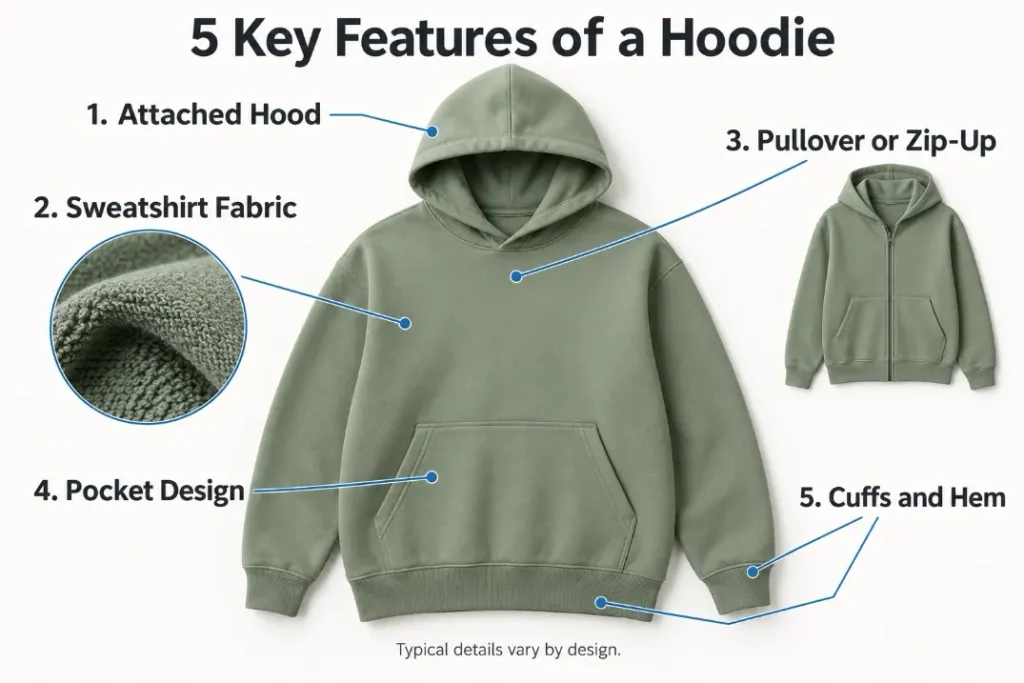
Start with the hood, then examine the other parts of a hoodie. The five features below describe a typical sweatshirt-style garment, including the details you can change without turning it into a different category of clothing.
1. An Attached Hood
The hood joins the garment at the neckline and can cover your head or rest behind your neck. Collins defines hoodie as a hooded sweatshirt in its British English entry, with broader definitions also covering casual hooded tops or jackets. For the everyday sweatshirt version, I’d check these details on a sample:
- Raise and lower the hood to see how its front edge sits and how it rests against the neckline.
- Check the opening width and whether it has a separate inner layer; a front-only photograph won’t show everything.
A hoodie without drawstrings is still a hoodie. The cord adjusts the opening; it doesn’t define the garment. A lining or particular hood shape isn’t guaranteed by the name either. For wet weather, check the product’s weather-protection information: the presence of a hood alone doesn’t establish rain protection.
2. Sweatshirt Fabrics
What is a hoodie made of? Everyday versions often use French terry or brushed sweatshirt fleece, in cotton or cotton-polyester blends. French terry has inner loops; brushed fleece has a fuzzy inner surface. Nike’s Club French terry hoodie and its brushed-fleece pullover illustrate the difference. When reading a label or specification, separate these three details:
- Fiber content identifies the materials, such as cotton and polyester. It doesn’t tell you whether the inside is looped or brushed.
- Fabric construction describes how the fabric is made. French terry is a fabric description, not another name for cotton.
- The inner finish tells you more about the surface against your clothing or skin. A close-up of the inside can be more informative than another photograph of the logo.
I wouldn’t choose a fabric from its fiber percentage alone. Compare a sample with the description and check whether its feel suits the garment you have in mind. For a children’s range, our guide to fabrics for kids’ hoodies explains those choices in more detail. The garment name doesn’t specify a single material.
3. Pullover or Zip-Up Construction
When comparing a pullover vs. zip-up hoodie, start with how you put it on. Nike uses the hoodie name for both constructions; adding a zipper doesn’t automatically change the category. Each opening brings a different practical consideration:
- A pullover goes over your head, so try it over your usual layer to check the neck opening. There is no full-length zipper across the front artwork area, although pockets and seams still matter.
- A full zip lets you open the front without removing the garment. Check how the front sits when closed, as well as how it looks open.
Keep closure separate from fit. A pullover isn’t automatically oversized, and a zip-up isn’t automatically fitted. Either can have quite different proportions. Our guide to different types of hoodies covers those style variations beyond the front opening.
4. Pocket Designs
A hoodie with a kangaroo pocket has a front pouch with an opening at each side. Full-zip designs can use separate pockets, which Nike’s Club French terry description calls split pouch pockets. The kangaroo pocket is common, but it isn’t a defining requirement. Check its position and intended use:
- Can your hands reach the openings comfortably? Review a full-size photograph or the garment itself.
- Is it for resting your hands or carrying belongings? Don’t promise secure storage from an open pouch unless the design supports that claim.
For a clothing brand, the pocket also shares space with your decoration. A design that looks balanced on a flat drawing may overlap a pocket edge on the garment. Mark both positions before sampling, then compare embroidery and printing for kids’ hoodies with that layout in mind.
5. Cuffs and Hem Finishes
The cuffs finish the sleeve openings; the hem finishes the lower body edge. Ribbed bands, recognizable by their vertical ridges, are common but the cuffs and hem don’t have to match. Aritzia’s Terry Sweatfleece Perfect Raw-hem Hoodie combines ribbed cuffs with a raw-cut lower edge. That unfinished-looking hem is intentional, rather than automatically a manufacturing mistake.
When reviewing a sample, check where the sleeves finish and how the bottom edge sits when the wearer reaches forward or sits down. A close-fitting band and an open hem can create different outlines even when the chest measurement is similar. I’d specify the finish rather than ask for a “standard hoodie hem” and leave the supplier to interpret it.
How Is a Hoodie Different from a Sweatshirt?
A sweatshirt-style hoodie is a sweatshirt with a hood. The confusion comes from shop categories: a retailer may use “sweatshirts” for crewneck styles and list “hoodies” separately. That browsing convention doesn’t mean the two words are always mutually exclusive.
The difference between a hoodie and a crewneck sweatshirt is easier to see when you compare the neckline and front opening:
| Garment | Neck or hood detail | Front opening | Useful description |
|---|---|---|---|
| Pullover hoodie | Attached hood | No full front opening | Pullover hooded sweatshirt |
| Full-zip hoodie | Attached hood | Zipper opens the front | Full-zip hooded sweatshirt |
| Crewneck sweatshirt | Round neckline without a hood | Usually a pullover | Crewneck sweatshirt |
The terms also overlap with jacket in casual and outdoor product naming. Patagonia, for example, calls its insulated Micro Puff jacket a hoody, although it has a nylon shell rather than a sweatshirt-knit body. Read the construction description before deciding what the product is suitable for. Our separate guide to sweatshirt and sweater differences explains another distinction you may encounter while comparing clothing.
For a brand, “full-zip French terry hoodie” gives customers a clearer picture than “casual jacket” alone. Check that the product title, photographs, and specifications describe the same item, even if it appears in more than one store category.
What Are Hoodies Used For?
Hoodies work as casual tops and as extra layers you can take off when you get warm. I’d start with where you’ll wear yours most:
1. Everyday Wear
A hoodie can be your casual top or an extra layer over a T-shirt, depending on the day.
2. Relaxing at Home
For lounging, focus on how the fabric feels and whether the fit lets you sit and move comfortably.
3. Commuting and Travel
Think about taking it on and off over your clothes as you move between places. Check that it works with the layers you plan to wear.
4. Before or After Training
A hoodie can be a layer for the trip to and from exercise. If you also want to train in it, check the specific product’s fabric and intended activity. A casual sweatshirt and a purpose-designed training hoodie aren’t necessarily interchangeable, and a sports logo alone doesn’t establish sweat-management performance.
For a brand planning a range, this is a useful distinction: choose the use before choosing the details. A hoodie intended for lounging may need a different fit and fabric from one worn during an active warm-up. The garment name can stay the same while the brief changes.
What Weather Is a Hoodie Suitable For?
A sweatshirt-style hoodie can be useful in cool, dry conditions, either over a T-shirt or beneath another layer. There isn’t one temperature range that suits every hoodie. Fabric thickness, your other clothes, wind, and how active you are all affect whether it feels comfortable.
Can you wear a hoodie in summer? A lightweight version may suit a cool evening or an air-conditioned room; a thick brushed style may be more than you need. In winter, treat the hoodie as one possible part of your outfit, not an automatic replacement for a winter coat. REI’s layering guidance separates insulation from the outer layer’s job of shielding you from wind and rain.
If wet or windy weather is likely, check the outer garment’s stated protection. A hood covers part of your head, but it doesn’t make ordinary sweatshirt fabric waterproof. I wouldn’t use a product photo or fabric weight alone to decide whether a hoodie is enough for an outdoor trip.
How Should a Hoodie Fit?
A hoodie should let you move comfortably with the clothes you plan to wear underneath. Beyond that, the intended cut matters: a regular-fit hoodie, a dropped-shoulder style, and a cropped design won’t sit in the same places. A shoulder seam below your shoulder isn’t automatically a sizing mistake.
Try it with your usual layer and check more than the view in the mirror:
- Reach forward and sit down. Notice whether the chest, upper arms, or hem pull enough to restrict you.
- Put the hood up. Check whether it draws the neckline backward or feels tight around your head.
- If you plan to wear a jacket over it, try both together. Check for bunched sleeves and uncomfortable bulk at the neck.
When shopping online, check whether the size chart lists body measurements or garment measurements before comparing numbers. Don’t assume sizing up recreates an oversized cut. You may gain length where you wanted width. I’d compare the stated fit and measurements with a hoodie you already like before choosing another size.
What Should You Wear Under a Hoodie?
A T-shirt is a simple starting point for everyday wear. It gives you a separate layer to wear if you take the hoodie off. In cooler conditions, you might prefer a long-sleeve top, provided the sleeves and neckline still feel comfortable together.
For active outdoor use, choose the layer against your skin for the activity and expected conditions. REI describes moisture management as the base layer’s job. Adidas also illustrates a T-shirt beneath a zip-up hoodie, with a rain jacket outside it, in its cold-weather layering guide. These are layering examples, not a promise that any three garments will suit every forecast.
If you’re wondering whether you can wear a hoodie under a jacket, try the combination with the jacket fastened. An oversized hoodie you enjoy on its own may feel cramped underneath a close-fitting coat. I would choose a less bulky combination before buying a larger coat simply to make one hoodie fit.
Conclusion
Understanding what a hoodie is starts with its hood, but choosing one means looking at the whole garment. The five features help you recognize the design; its fit, intended use, and place in your outfit help you decide whether it works for you.
For custom kids’ hoodies, HAPA offers cut-and-sew development, including fabric selection, patterns, samples, and branded details. Its published process includes sample approval before bulk production. That’s the stage to check how your chosen features work together on the finished garment.
If you’re planning a children’s hoodie collection, send HAPA your design brief or reference images, along with the target age range, preferred materials, estimated quantity, and sales market. Tell us which details are fixed and where you’d like guidance so we can discuss suitable materials, samples, and a quotation. If you’re still deciding how to order, start with our bulk kids’ hoodies buying guide.
Frequently Asked Questions
Is it spelled hoodie or hoody?
Both spellings are used. Collins lists “hoody” as an alternative to “hoodie.” You can use hoodie consistently in your own writing while preserving a brand’s spelling when referring to its product name. The spelling alone doesn’t identify a different construction or quality level.
Can a hoodie be sleeveless?
Yes. Brands sell sleeveless hoodies, including Under Armour’s UA Icon Fleece Men’s Sleeveless Hoodie. Long sleeves are familiar on everyday sweatshirt-style hoodies, but they aren’t a reliable rule for every product using the name. If you’re describing or ordering a sleeveless version, say so explicitly; “hoodie” alone won’t communicate that detail.
Can you machine-wash a hoodie?
Check its care label. For example, Nike lists machine washing for the Club full-zip French terry hoodie discussed here, but that instruction applies to that product. Don’t copy it onto a different hoodie simply because the garments look similar. Follow the specified washing and drying instructions, especially when the finished item includes prints, embroidery, or other decoration.