Sustainable Production Guide
Sustainable Clothing Production: From Design to Delivery
Sustainable clothing is made through the same broad physical stages as conventional clothing, but each stage is managed against clearer environmental, social, quality, and evidence goals. The process starts with a product designed to last, moves through material sourcing, textile production, wet processing, cutting and sewing, and ends with verified claims, suitable packaging, and plans for longer use. No single fiber, factory certificate, or hangtag makes a garment sustainable. What matters is whether each claimed improvement applies to the actual product and can be checked.
Design First
Product life, construction and production volume shape every later choice.
Fit the Material
A preferred fiber still has to perform for the garment and its customer.
Control the Process
Textile mills, wet processors and garment factories each manage different risks.
Verify the Claim
Certificates, tests and order records answer different questions.
What Makes Clothing Production Sustainable?
Clothing production becomes more sustainable when a brand reduces specific environmental or social risks across the product lifecycle and keeps credible evidence for those improvements. A preferred material or factory certificate can support the case, but neither proves the performance of the whole garment.
The physical route from a design to a finished garment does not suddenly change because a collection is described as sustainable. Fibers still become yarn, yarn becomes fabric, the fabric is colored and finished, and a factory cuts and assembles the garment. The difference lies in the decisions made at those handoffs. A brand may specify a verified material, require tighter chemical controls, design a seam for repeated washing, reduce avoidable packaging, or ask for traceable order documents.
This is why sustainability should be treated as a management system rather than a shopping list of fashionable fibers. Environmental priorities can include raw material sourcing, energy, water, chemicals, waste, transport, care and end-of-use options. Social priorities can include working conditions, wages, safety, freedom of association and grievance processes. Quality matters too. A garment that fails quickly can waste the material and work already invested in it.
A useful boundary: say exactly what improved, which product or facility the claim covers, what period or production lot it applies to, and how a buyer can verify it. Avoid treating the words sustainable, ethical, certified and safe as interchangeable.
If you need a detailed explanation of standard sampling, cutting, sewing and quality stages, see HAPA’s guide to the standard garment factory process. The rest of this article focuses on the sustainability decisions placed over that normal production chain.
How Is Sustainable Clothing Made Step by Step?

Sustainable clothing is made through seven connected stages: design for longer use, source verifiable materials, make traceable fabric, control wet processing, cut and sew efficiently, verify the finished product, and plan packaging and longer use.
These steps are connected. A late change to the color can affect dyeing and testing. A fabric substitution can break an intended material claim. A decorative trim can improve appearance but complicate repair or recycling. The best time to manage these trade-offs is before sampling, not after the bulk order has been packed.
Step 1: Design for Longer Use
The first sustainability decisions happen in the product brief. Define how the garment will be worn, how often it is likely to be washed, and what performance it needs to retain. For children’s clothing, frequent washing, active movement, trim security and changing body size can be especially relevant. A durable school sweatshirt and a lightweight occasion dress will not need the same construction or care strategy.
Design also determines material complexity. A single-fiber body may be easier to describe and, in some systems, easier to recycle, but performance can require elastane, reinforcement, lining, coatings or mixed trims. The right question is not whether the design looks simple on paper. It is whether each component earns its place and whether the full product still meets its intended life.
Before material sourcing starts, the brief should capture:
- the wearing situation, expected care and useful-life goal;
- fit, strength, shrinkage, pilling and colorfastness expectations;
- repair access, removable parts and spare-trim needs;
- planned colors, size curve and realistic production volume; and
- the exact material, certification or packaging claim the brand hopes to make.
Decision
Set a useful-life and performance target before choosing the fabric.
Evidence
Approved product brief, construction notes and test criteria.
Limit
A mono-material or small run is not automatically lower impact.
Step 2: Source Verifiable Materials
Material selection starts with function. Compare composition, weight, hand feel, stretch, strength, breathability, shrinkage, pilling, colorfastness and care against the intended product. Organic cotton, recycled polyester, recycled cotton, responsibly sourced man-made cellulosic fibers and conventional materials can all behave differently after knitting, dyeing and finishing. No fiber wins every comparison.
Then define the claim and its proof. Ask who made the fiber and fabric, which facility and product category appear on the certificate, whether the certificate is current, and what lot or transaction record connects the purchased material to the order. A supplier brochure or a scope certificate may show that a company can handle a certified product. It does not automatically show that the fabric delivered for your garment is the certified material you requested.
Decision
Match the fiber and fabric to performance, care and claim goals.
Evidence
Specification, composition, mill identity, lot records, certificates and tests.
Limit
A material attribute does not describe dyeing, labor, quality or the whole garment.
Step 3: Turn Fiber Into Fabric
Fiber is cleaned and prepared before spinning converts it into yarn. The yarn is then knitted, woven or otherwise formed into fabric. Those stages may involve several companies, so traceability can be lost long before the fabric reaches the garment factory. Certified and conventional inputs that look alike need identification, separation and quantity records.
Fabric structure matters as much as fiber content. Knit density, yarn size, weave, weight and finishing affect stretch, coverage, durability, material use and suitability for the garment. A lighter fabric does not automatically have a better overall result if it becomes transparent, loses shape or fails early. Keep the mill, fabric code, roll or lot number, composition and approved specification connected through sampling and bulk production.
Decision
Choose a fabric construction that meets both performance and evidence needs.
Evidence
Mill details, material codes, lot records, quantity reconciliation and test results.
Limit
Raw-fiber certification is not proof that every later processor is covered.
Step 4: Control Dyeing and Finishing
Wet processing includes preparation, dyeing, printing, washing and finishing. It is a major control point because water and chemical inputs are used to create color, hand feel and performance. A preferred fiber does not cancel risks introduced at this stage. Ask the wet-processing facility how it manages its chemical inventory, restricted inputs, wastewater treatment, testing and corrective actions.
Product approval still matters. A lab dip or print strike-off should be checked for color, shade consistency and artwork. The finished fabric or garment may also need tests for shrinkage, colorfastness and the durability of the finish. The phrase “low-impact dye” is not enough on its own. The useful evidence is the named facility, applicable input controls, current reports and results for the relevant material or process.
Decision
Approve the color and finish only after process and performance checks.
Evidence
Chemical inventory, input approvals, wastewater reports and lab results.
Limit
MRSL input control is not the same as finished-product safety testing.
Step 5: Cut and Sew the Garment
At the garment factory, pattern pieces are arranged on the fabric in a marker before cutting. Fabric width, print direction, nap, pattern shape and the size ratio all affect utilization. Better planning can reduce avoidable offcuts, but a utilization percentage should always state the project and calculation boundary. It does not measure the product’s total impact.
Sewing quality can protect the work already invested in the textile. Seam choice, stitch density, reinforcement, trim security and accurate measurements influence durability and returns. Factories should record cutting scraps, rework and defective garments separately, because prevention, reuse, recycling and disposal are different outcomes. A claim such as “zero waste” needs a defined waste stream, period and destination record.
Decision
Balance fabric efficiency with fit, strength and production consistency.
Evidence
Marker, cutting, scrap, inline quality, defect and corrective-action records.
Limit
Efficient cutting alone does not prove low overall product impact.
Step 6: Verify the Finished Product
Verification should separate four questions: Is the garment made to the approved specification? Does it meet the applicable product requirements? Are the material and production claims supported? Is the public wording accurate? One certificate rarely answers all four.
A practical evidence pack can include:
- the approved bill of materials and finished composition;
- performance and applicable safety test reports;
- valid facility or scope certificates for the relevant operation;
- transaction, shipment or lot evidence connecting inputs to the order;
- social audit findings and corrective-action status where used; and
- approval for logos, percentages and consumer-facing claim wording.
For example, GOTS states that its program covers processing stages after raw-fiber production and that every company in the supply chain must be certified for a product to carry the GOTS label. Its official process guidance also emphasizes scope and transaction certificates, quantity records and label approval. The certification route is useful, but it does not replace mandatory product safety or performance checks for the target market.
Decision
Release the claim only when product, order and wording evidence agree.
Evidence
Approved specification, tests, certificates, transaction records and label release.
Limit
A facility audit or material certificate cannot substitute for every other check.
Step 7: Package and Support Longer Use
Start packaging work by removing components that do not protect, identify or transport the product. Then specify the remaining materials, dimensions, recycled content, reuse plan and realistic disposal route. “Biodegradable” and “recyclable” need conditions. A package may technically fit a process that is not available to most customers in the target market.
Transport choices involve another set of trade-offs. Consolidation and adequate production planning can reduce emergency shipments, but distance alone is not a complete carbon calculation. After sale, accurate care instructions, repair information, spare trims, resale support or a workable take-back route can help extend use. These actions should be described precisely rather than bundled into a vague promise that the garment has no impact.
Decision
Specify only necessary packaging and plan realistic care and recovery options.
Evidence
Packaging specifications, purchase records, care tests and program terms.
Limit
Packaging improvements do not make the entire garment sustainable.
What Materials Are Used in Sustainable Clothing?

Sustainable clothing can use organic, recycled, responsibly sourced, conventional or synthetic fibers when the material fits the product, performs for its intended life and supports specific, verifiable claims.
Material names are useful starting points, not final scores. A brand should compare fibers at the level of the actual product: where the input came from, how it was processed, how much is present, how the fabric performs, and whether the supporting evidence follows the order. A durable garment that contains a small functional percentage of synthetic fiber can be a more honest design choice than a poorly performing product selected to support a simple marketing line.
Organic and Natural Fibers
Organic cotton, linen and hemp are common options. Their relevant attributes can involve farming practices, certified content or sourcing systems, but later spinning, dyeing and finishing still matter. Organic does not mean chemical-free, hypoallergenic or automatically certified as a finished garment.
Recycled Fibers
Recycled cotton and recycled synthetics can use pre-consumer or post-consumer inputs. Brands should check the stated percentage, source category, chain of custody and effect on performance. Recycled content is one attribute. It does not prove that the product is recyclable or that waste has been eliminated.
Cellulosic and Synthetic Fibers
Man-made cellulosic fibers and conventional or recycled synthetics may provide softness, drape, stretch, strength or quick drying. Their assessment can involve forestry sourcing, chemical recovery, energy, microfiber concerns and available recycling systems. The fiber name alone does not settle those questions.
| Material question | What to review | What it does not prove |
|---|---|---|
| Is the claimed content present? | Composition, percentage, material specification and order-level evidence | How the fiber was dyed, sewn or used |
| Does it suit the product? | Weight, stretch, strength, shrinkage, pilling, colorfastness and care tests | That the same material suits every style |
| Can the claim be traced? | Supplier, mill, facility, certificate scope, lot and transaction records | That a supplier’s entire output is certified |
| Can it be recovered later? | Full construction, blends, trims, coatings and local collection technology | That technical recyclability means local access |
For a deeper explanation of cultivation and certification boundaries, read what organic cotton certification means. For eligible children’s clothing projects, HAPA can discuss GOTS-certified organic cotton options. The current supplier scope, order documents and any finished-product label eligibility still need to be confirmed for the specific order.
How Do Manufacturers Make Clothing More Sustainable?
Manufacturers can improve clothing production by controlling energy, chemicals, water, waste, quality, working conditions and traceability. Credible performance claims still need a facility, period, method and record.
A garment factory directly controls some activities, while mills, dye houses, printers, laundries, trim suppliers and logistics providers control others. A buyer should map each claim to the company that performs the work. Asking a cut-and-sew factory for its wastewater report is useful only if that facility actually runs a wet process. If dyeing is outsourced, the relevant evidence belongs to the dye house.
Manage Energy and Equipment
Factories can meter energy, maintain equipment, improve load planning and review the source of purchased electricity. A statement such as “uses renewable energy” needs the facility, coverage, period and accounting method. Solar panels visible in a photograph do not reveal how much production they power.
Control Chemicals and Water
Wet processors can maintain chemical inventories, screen inputs, operate effluent treatment and test wastewater and sludge. As of this fact check, ZDHC states that its Wastewater and Sludge Guidelines V2 are available for preparation but V1 remains active until November 1, 2026. Brands should confirm the applicable version when ordering.
Prevent Waste and Defects
Marker planning, accurate cutting, controlled sewing and early defect detection can prevent material from becoming waste. The records should separate offcuts, rework, rejected garments and other waste streams, then identify their destinations. “Recycled” should not be used when material was actually downcycled, burned or discarded.
Support Responsible Workplaces
Policies, training, working-hour and wage records, safety systems, worker representation, grievance channels, audits and corrective actions each show part of the picture. A passed audit is not proof of every daily condition. Follow-up and unresolved findings matter when a brand evaluates a facility.
Watch for evidence gaps that often hide behind attractive sustainability language:
- a percentage reduction with no baseline, time period or facility boundary;
- a factory certificate that does not cover the site or process being discussed;
- terms such as “non-toxic,” “zero waste” or “water-saving” without a method and report;
- a social audit shown without the findings or corrective-action status; and
- stock factory images presented as if they document the supplier’s own operations.
Good supplier evaluation is not a hunt for a perfect factory. It is a way to identify which risks are material to your product, who controls them, and whether the manufacturer can provide evidence at the right stage.
How Can Brands Verify Sustainable Clothing Claims?

Match every claim to its product, facility, order, test and approval evidence. A logo or supplier statement is useful only within the scope it actually covers.
Start by naming the subject of the claim. Is it the fiber, recycled percentage, wet-processing facility, working conditions, finished garment or packaging? Then request the document that answers that question. Check the holder, site, product category, validity, lot or transaction reference and any approval conditions.
| Claim | Useful evidence | Common overreach |
|---|---|---|
| Certified organic or recycled input | Current scope plus transaction or lot evidence | Treating supplier eligibility as proof for the shipment |
| Tested finished product | Report naming the sample, method, date and result | Applying one test to later, changed products |
| Responsible production facility | Applicable audit, certificate and corrective-action status | Using one site result for the entire supply chain |
| Recyclable or biodegradable item | Full construction, test conditions and available disposal route | Ignoring blends, trims or local infrastructure |
The GOTS programme currently lists version 8.1 documents, so brands should check the operative and transition rules when the order is placed. Textile Exchange says its Materials Matter Standard becomes effective on December 31, 2026, mandatory for Tier 4 audits from December 31, 2027, with all relevant claims and labels moving to the new standard by June 30, 2029. Time-sensitive references should never be copied from an old tech pack without rechecking.
The claim itself also needs review. The US FTC advises against broad, unqualified claims such as “green” or “eco-friendly” and states that third-party certification does not remove a marketer’s duty to substantiate express and implied claims. EU Directive 2024/825 also targets unsupported sustainability labels and generic environmental claims, with member-state measures applying from September 27, 2026. This article is general information, not legal advice.
Use HAPA’s guide to compare sustainable clothing certifications, then confirm the current rules with the standard owner and your compliance reviewer.
Why Is Sustainable Clothing More Expensive to Make?
Sustainable clothing is not always more expensive, but verified materials, testing, traceability, process controls, durable construction or smaller runs can add real work and cost.
| Cost driver | Why it changes a quote | What the brand can control |
|---|---|---|
| Material and certification | Separate sourcing, documentation and eligible supply can narrow options | Specify the required claim and acceptable alternatives |
| Testing and approvals | More markets, colors or finishes can require more checks | Freeze the product scope before testing |
| Order structure | Small lots and many color or size combinations reduce efficiency | Simplify the range and plan replenishment |
| Quality and durability | Stronger construction or additional inspections require time | Set performance priorities in the brief |
Compare suppliers against the same tech pack, quantity, material, testing, packaging and evidence request. A higher price does not prove a better outcome, while a lower quote may exclude controls you assumed were included.
Can Sustainable Clothing Be Made at Scale?
Yes. Sustainable clothing can be produced at scale when approved materials, processes, quality standards and evidence can be repeated across production lots.
Standardize the Approved Inputs
Lock the composition, mill, fabric code, color, finish, trims, packaging, tests and claim wording in the bill of materials and approval record. Any substitute should trigger a review before use.
Control Every Production Lot
Use incoming inspection, lot identification, T-shirt manufacturing quality checks, current certificates, order records and deviation approval. A good sample does not automatically describe every bulk unit.
Scale itself is neither proof nor disproof of sustainability. The practical test is reproducibility. Can the supplier book enough eligible material, keep batches identifiable, maintain product performance and deliver the required evidence without an unapproved change? For broader supplier evaluation, review how to choose a sustainable clothing manufacturing partner. Confirm MOQ, capacity and timing for the actual project rather than assuming a universal rule.
How Can Brands Start Making Sustainable Clothing?
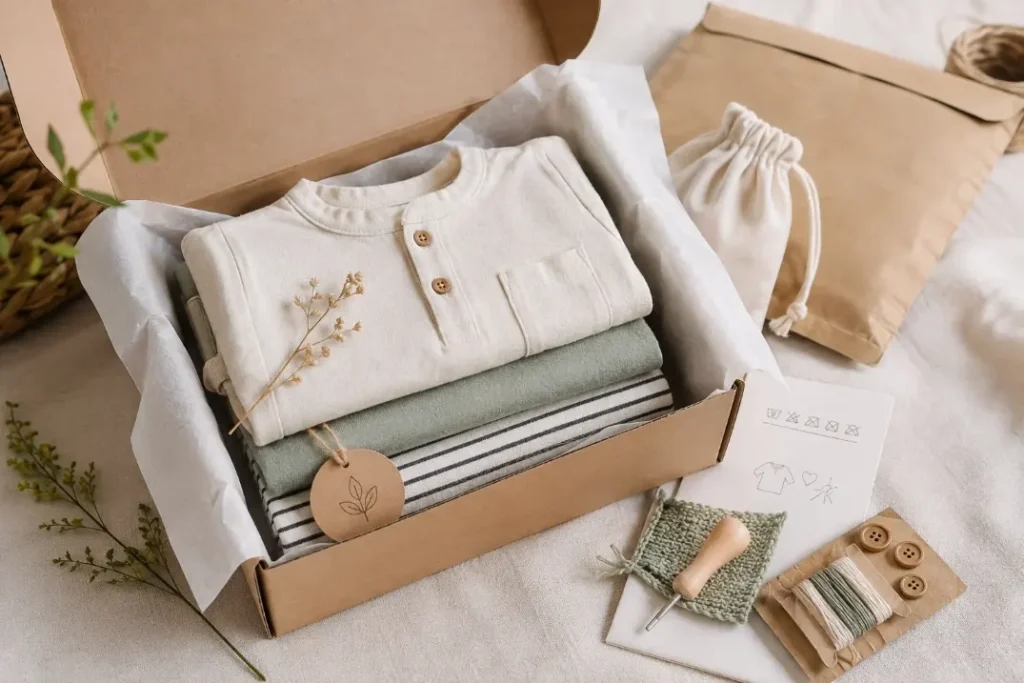
Choose one product and one evidence-backed priority, put the requirement in the brief, and test it through a controlled sample before expanding the program.
Choose One Priority
Select the issue most relevant to the customer and product, such as verified material, durability, chemical control, waste prevention or reduced packaging.
Approve the Whole Sample
Review the physical garment, test results, material records and proposed public wording together. Pause if the material changes or key evidence is missing.
A useful sample brief should include:
- product category, target customer, market and size range;
- factory-ready clothing tech pack or reference, quantity range and launch target;
- composition, certification or claim goal and acceptable alternatives;
- colors, prints, finishes, performance and safety checks; and
- packaging, required documents and the person who approves each item.
HAPA can review these inputs for an eligible children’s clothing project and discuss material selection, sampling, production, quality and order-document needs. Start by asking us to develop and verify a production sample. Sampling support does not provide automatic certification, legal approval or permission to use a sustainability label.
How HAPA Supports More Sustainable Clothing Production
HAPA supports babywear and children’s clothing brands with material selection, sampling, production planning, quality checks and order records that make defined sustainability goals easier to manage.
GOTS-Certified Organic Cotton
HAPA holds GOTS certification and can provide GOTS-certified organic cotton options for eligible projects. The current certificate, product scope, order documents and label eligibility require project-specific confirmation.
Practical Lower-Impact Choices
The team can discuss efficient marker planning, durable construction, reduced packaging and other practical options matched to product, budget and market needs.
Evidence Before Claims
Specifications, samples, test needs and supporting records are reviewed before a brand turns a production choice into a public environmental claim.
Support for Target Markets
HAPA helps brands align product specifications and documentation with target-market expectations. Rules vary by country, retailer, product and claim, so no certificate guarantees worldwide compliance.
Brands can combine these safeguards with HAPA’s private label children’s clothing manufacturing support from development through approved bulk production.
Conclusion
How sustainable clothing is made can be summarized in seven steps, but the value comes from keeping those steps connected. Design sets the performance goal. Material and textile decisions define what can be claimed. Wet processing and garment production need controls. Testing, certification and order records show which claims are supported. Packaging and care then shape what happens after production.
There is no universal sustainable fiber and no certificate that replaces product quality, safety or accurate marketing. Start with a defined product, one meaningful priority and a clear evidence request. Then test the garment and its documents before scaling.
Have your product category, tech pack or references, target market, quantity range, material goal, testing needs and packaging brief ready. HAPA can use those inputs to assess the next sample step for an eligible children’s clothing project.
Frequently Asked Questions About How Sustainable Clothing Is Made
Does GOTS-certified fabric make the finished garment GOTS-certified?
No. GOTS says every company in the relevant supply chain must be certified for a product to carry its label. The order also needs the applicable transaction records, and label use must follow current approval rules. A certified input cannot be presented as a certified finished garment without that complete chain.
Can sustainable clothing be made from synthetic fibers?
Yes, depending on the product and the specific claim. Synthetic fibers can provide stretch, strength or quick drying, but a brand should also assess sourcing, recycled content where claimed, microfiber risks, useful life and realistic recovery options.
Are blended fabrics harder to recycle?
They often add separation challenges, but the answer depends on the fiber combination, proportions, coatings, trims and recycling technology available in the target region. Do not claim that a blend is recyclable without checking the full construction and accessible recovery route.
Do sustainable clothing manufacturers require higher MOQs?
Not as a universal rule. MOQ can be driven by fabric knitting or weaving, dye lots, trims, certified batch availability and production scheduling. Ask for a project-specific MOQ using the same composition, colors, sizes, tests and documentation scope you want quoted.
How can consumers tell whether clothing was made sustainably?
Look for a specific claim, the material percentage, a verifiable certificate or product ID, information about where the claim applies, and practical care details. Be cautious when a page relies on green colors or words such as “eco-friendly” without naming the benefit, scope or proof.