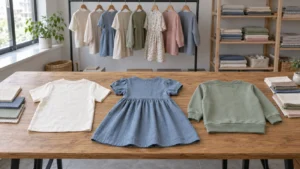
After years of working on children’s wear at HAPA, I’ve learned one consistent truth: clients make better sourcing decisions when they can see what actually happens behind the factory door. The garment factory process is far more than cutting and sewing. It’s a carefully managed sequence of decisions, skilled hands, and quality checkpoints that protects your design, your timeline, and your final product at every step.
In this guide, I’ll walk you through how clothing is made at scale — from tech pack development all the way through packing and shipment — so you know exactly what to expect before committing to an OEM or ODM order. If you’re still evaluating factory partners, this guide to finding clothing manufacturers is a practical place to start before diving into the production detail below.
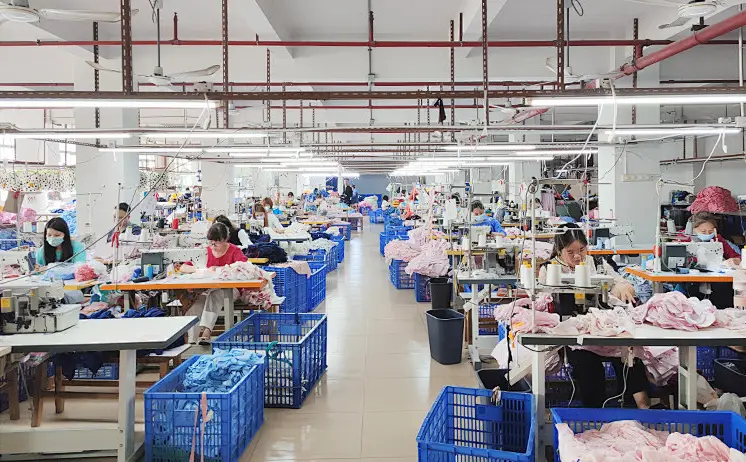
What Is the Garment Factory Process?
The garment factory process is the complete sequence of steps a clothing manufacturer follows to turn a design concept into finished, ready-to-ship garments. It moves through eight core stages: design and tech pack development, fabric sourcing, pattern making and sampling, cutting, sewing, finishing, quality control, and packing for shipment. Depending on order size and complexity, the full journey typically takes 8 to 14 weeks from approved design to delivery.
Understanding how clothing is made from start to finish isn’t just useful background. It’s the difference between a brand that catches problems early and one that discovers them after 10,000 pieces have been sewn. That knowledge pays for itself fast.
The 8 Core Stages of the Garment Factory Process, Step by Step
These eight garment production steps apply whether you’re ordering 500 bodysuits or 50,000 winter jackets. The scale and the stakes change; the stages don’t. This is the section worth reading twice.
Stage 1 — Design and Tech Pack Development
Everything in the garment factory process begins with the tech pack: the document that tells the factory precisely what to make. A solid tech pack covers:
- Graded measurements with tolerances for every key point
- Fabric composition and weight (GSM)
- Stitch types and seam construction
- Trims, hardware, and thread specifications
- Label placement and artwork files
- Colorways for every style
My first HAPA tech pack was two pages long. The sample that came back cured me of that habit permanently — ours now run fourteen to eighteen pages. The rule I share with every new brand is this: the factory will build what you wrote, not what you imagined. Every vague specification becomes a guess, and every guess costs you roughly two weeks.
Stage 2 — Fabric Sourcing and Inspection
Ask most people where production delays come from, and they’ll say the sewing floor. They’re almost always wrong. This stage is where delays actually originate. Bulk fabric takes three to five weeks from the mill, and lab dips for color approval can add another two if you’re precise about shade matching — which I am, having spent too many conversations trying to achieve consistent dusty pink across three separate production runs.
When fabric arrives at the factory, inspection using the 4-point system should follow, scoring defects including slubs, holes, and dye streaks. Rolls scoring above 40 points per 100 square yards should be rejected outright, not quietly worked around. Shrinkage testing before cutting is equally non-negotiable. Early in our production history at HAPA, we cut before the shrink results came back. Two thousand bodysuits, all a size off after their first wash. Wait for the test. Always.
If you’re sourcing fabric and production from the same region, it helps to understand the ecosystem you’re working within. This overview of sourcing apparel from China covers fabric mill relationships, typical lead times, and what to expect from integrated Chinese supply chains.
Stage 3 — Pattern Making, Grading, and Sampling
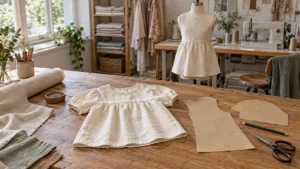
A pattern maker translates the tech pack into flat pieces that become a three-dimensional garment when assembled. Grading then scales the base size across your full range — and in children’s wear, grading is its own discipline. A 2T body is not simply a shrunken size 8. Children’s proportions shift as they grow, and a factory that grades kidswear using linear scaling will hand you fit problems at both ends of the size range.
Sampling follows in three stages:
- Proto sample — confirms the design is structurally buildable
- Fit sample — tested on a real body, or a very patient toddler
- Pre-production (PP) sample — made in the actual bulk fabric and trims
Never skip the PP sample, and always approve it in writing. That sample is your reference point — legal and practical — if bulk production goes sideways.
Stage 4 — Cutting
The cutting stage is where money is made or lost, because fabric typically accounts for 50–60% of your total garment cost.
Marker Making and Fabric Utilization
A marker is the puzzle layout of every pattern piece arranged across the fabric width to minimize waste. Software handles the core optimization, but skilled technicians still make manual adjustments to recover fractions of a percent. Marker efficiency of 80–85% is considered solid. On one HAPA legging order, the cutting team pushed our marker from 81% to 84%, saving nearly 400 meters of fabric. Small percentages, meaningful money.
Spreading and Automated Cutting
Spreading machines layer fabric across the cutting table — sometimes 80 to 100 plies deep — before a straight-knife operator or automated CAM cutter traces the marker. Automated systems hold accuracy within a millimeter or two and don’t lose precision at 4pm.
One operational note for printed kidswear: directional prints require one-way markers, which lower efficiency and increase fabric consumption. A simple teddy bear that must face upward in every panel sounds like a small detail until you see the yardage difference. Budget for it before committing to a print direction.
Stage 5 — Sewing and Assembly
This is the stage most people picture when they think about how clothing is made. Cut pieces travel down the assembly line in bundles, with each operator completing a single operation — attaching the collar, closing the side seams, hemming the sleeves. A basic children’s tee passes through roughly eleven individual operations. A padded winter jacket can exceed sixty.
A well-balanced sewing line has an almost rhythmic quality, and the real skill belongs to the line chief who identifies a bottleneck before it stalls production and reshuffles operators accordingly. It’s also why factories quote per style and insist on minimum order quantities — setting up a line carries a fixed cost regardless of how many pieces run through it.
Stage 6 — Finishing: Washing, Pressing, and Trimming
Garment finishing covers everything between the last stitch and the polybag: thread trimming, pressing, and often a garment wash for softness. In children’s wear, that finishing wash is close to standard practice, because parents shop by touch — and so do their kids.
Then comes the step I consider genuinely non-negotiable in children’s clothing: every single garment must pass through a needle-detection machine to catch fragments from any broken sewing needle. Serious factories also maintain a broken-needle log that tracks every piece of every snapped needle across the production floor. Ask to see that log on your next factory visit. How a factory responds will tell you a great deal about their overall quality culture.
Stage 7 — Quality Control and Inspection (AQL Standards)
Strong factories run inline QC checks throughout sewing, but the final gate in the garment factory process is AQL quality control — the Acceptable Quality Limit. The ANSI/ASQ Z1.4 sampling standard provides the statistical framework that most professional inspection teams follow when determining sample sizes and acceptance thresholds.
Here’s what AQL 2.5 looks like on a real 1,000-piece order:
- An inspector pulls 80 garments at random
- More than 5 major defects — broken stitching, a misaligned snap, a stain that won’t lift — and the entire batch fails and returns for rework
- Minor flaws, like an overlong thread tail, receive a more forgiving threshold
For your first several orders, I’d strongly recommend hiring a third-party inspection company. It typically costs US$250–350 per man-day, and it has saved me from expensive surprises on more than one occasion.
Stage 8 — Packing, Labeling, and Shipping
The least glamorous stage of the garment factory process — and surprisingly easy to get wrong. Folding specifications, polybag requirements, hangtags, size stickers, carton dimensions, and shipping marks all need to align precisely with buyer requirements. Retail partners in particular have rigid standards on every one of these details, and a relabeling job at the destination warehouse is costly and time-consuming in equal measure.
One detail US-bound kidswear brands must not overlook: polybags legally require printed suffocation warnings in the correct size and exact wording. We caught that requirement during the PP stage on an early HAPA order. Better there than at customs.
Once cartons are sealed and loaded, the factory’s responsibility ends at the agreed handoff — typically FOB at the origin port — and your freight forwarder takes over from there.
What Machines Are Used to Manufacture Clothing?
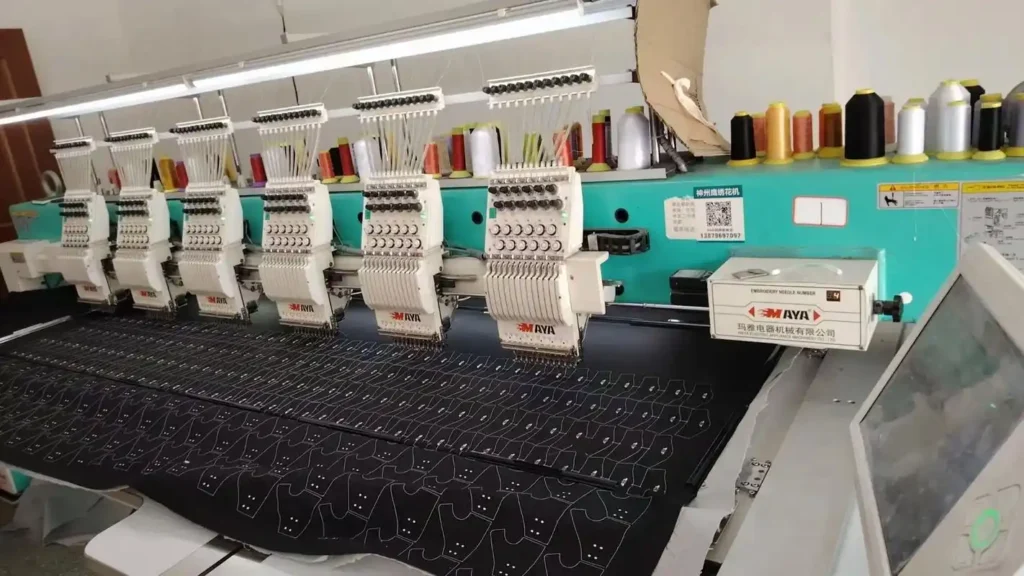
Understanding how clothing is made at a mechanical level — not just a process level — helps you ask the right questions when you walk a factory floor. Garment factories rely on four main equipment categories: cutting machinery (spreading machines and automated CAM cutters), industrial sewing machines (lockstitch, overlock, and coverstitch), specialty equipment for buttonholes, snaps, and embroidery, and finishing machinery including pressing stations and needle detectors. A mid-sized factory typically runs 200 to 500 machines across a single production floor.
I used to think a sewing machine was a sewing machine. Nine years in, I can stand on a factory floor with my eyes closed and identify what’s being manufactured from the sound alone — overlocks rattle like heavy rain, lockstitches hum at a steadier pitch. Here’s what that noise actually represents.
Cutting Room Machinery
The spreaders and automated CAM cutters covered in Stage 4 handle the bulk of the cutting work. The two dominant brands you’ll encounter on factory tours are Gerber and Lectra, both working alongside hand-guided straight knives for smaller or specialty production runs.
One machine worth highlighting separately is the fusing press, which heat-bonds interlining into collars, cuffs, and plackets to maintain their shape through repeated wear and washing. If a factory fuses at the wrong temperature, you won’t catch it during inspection — you’ll discover it after the first wash, when collars bubble like orange peel.
Sewing Machines: The Heart of the Factory
Walk any active sewing floor and you’ll encounter five or six machine types repeated across every line:
- Single-needle lockstitch — the workhorse for woven fabrics and topstitching. The core mechanism hasn’t fundamentally changed in over a century, which says something about the quality of the original design.
- Overlock (serger) — sews, trims, and wraps the seam edge in one pass using three to five threads. The foundation of all knitwear production.
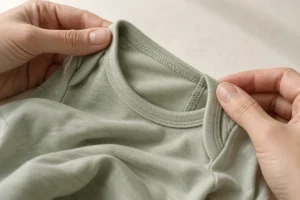
- Coverstitch — creates those parallel rows on a t-shirt hem, with a soft, flat finish on the inside. In children’s wear, this machine carries more importance than most brands realize.
- Bartack machine — places a dense block of reinforcing stitches at stress points: pocket corners, belt loops, the top of a zipper fly.
- Buttonhole and button-attach machines — each performs exactly one job, hundreds of times per hour.
- Snap press — sets metal or plastic snaps on baby wear, ideally paired with a pull-force tester at the same station.
That coverstitch mention deserves a story. A few years ago, a mother emailed us a photo of faint seam marks on her son’s stomach after a full day in HAPA leggings. We immediately switched our waistband construction from a folded overlock seam to a flat coverstitch finish. That single email changed our default specification for every bottom we now produce. In children’s clothing, softness is not a marketing claim — it’s a machine choice.
Embellishment and Finishing Equipment
If your designs carry logos or printed artwork, you’ll also work with multi-head embroidery machines (a 12-head unit stitches twelve garments simultaneously), screen-printing carousels, and heat-transfer presses. In the finishing room, vacuum pressing tables and form finishers handle structured pieces, alongside the needle detector I’d rank above every other machine in the building.
A vetting tip I wish someone had shared before my first factory tour: don’t count the machines — read the mix. A floor dominated by single-needle lockstitches is a woven apparel factory, whatever the sales team claims. If you produce baby knits and don’t see rows of overlocks and coverstitch machines, finish your tea and keep looking.
Understanding the 2 Core Garment Production Methods
Two core production models define how clothing is made within a manufacturing relationship: CMT (Cut, Make, Trim) and FPP (Full Package Production). Choosing between them is one of the first and most consequential decisions a brand makes when entering manufacturing — and the right answer depends heavily on how much supply chain experience and internal capacity you’re bringing to the table.
CMT (Cut, Make, Trim)
CMT stands for Cut, Make, Trim. Under this model, the factory’s scope is deliberately narrow: they cut your fabric, sew the pieces together, and apply the finishing details — trims, labels, buttons, and zippers. Their responsibility begins and ends on the production floor.
Everything upstream is yours to manage. That means sourcing your own fabric, purchasing trims and accessories, arranging material shipment to the factory, and arriving with a tech pack detailed enough that the team can execute without interpretation. The factory is providing skilled labour and machinery access, not supply chain management.
FPP (Full Package Production)
FPP, or Full Package Production, shifts the supply chain responsibility to the manufacturer. You hand over design specifications — a tech pack, approved samples, and clear quality standards — and the factory handles everything downstream. They source the fabric, procure the trims, manage their own supplier relationships, and deliver finished, ready-to-ship garments.
The appeal is practical: one point of contact, significantly less logistics management on your side, and a factory that’s accountable for the complete product rather than just the labour component. For brands entering private label development, FPP is typically the lower-friction path. This directory of private label clothing manufacturers is a useful reference if you’re actively evaluating FPP partners.
CMT vs. FPP: Which Model Is Right for Your Brand?
| Responsibility | CMT (Cut, Make, Trim) | FPP (Full Package Production) |
|---|---|---|
| Fabric & Trim Sourcing | Client supplies everything | Factory sources everything |
| Pattern Making & Grading | Client provides final patterns | Factory develops from tech pack |
| Sample Creation | Client tests before production | Factory creates and sends for approval |
| Factory Role | Labour and assembly only | End-to-end supply chain management |
| Client Workload | High logistical burden | Low logistical burden |
Kidswear vs. Adult Clothing: Why the Rules Are Stricter
One of the most important things to understand about how clothing is made for children is that it operates under an entirely different regulatory framework than adult garment production — not just in scope, but in legal consequence.
Children’s clothing is legally classified as a “children’s product,” not simply a scaled-down version of adult apparel. That classification triggers mandatory third-party lab testing, strict chemical limits on lead, phthalates, and formaldehyde, specific flammability standards for sleepwear, and outright design prohibitions on hood drawstrings and loose small parts. Adult garments face almost none of these requirements — which is precisely why kidswear takes longer to certify and costs more to develop. It should.
When you manufacture adult clothing, quality control and aesthetics are your primary focus. In children’s clothing, legal compliance comes first. In the US market, the Consumer Product Safety Improvement Act (CPSIA) governs every material and process involved in the garment factory process for children’s products. A compliance failure — a zipper with trace amounts of lead, for example — won’t just generate a negative review. It can result in a seized shipment or a permanent retail marketplace ban.
Beyond CPSIA, many responsible children’s clothing manufacturers also pursue OEKO-TEX STANDARD 100 certification, which independently tests for hundreds of harmful substances and provides an additional layer of chemical safety assurance that parents are increasingly looking for on hang tags.
| Safety Category | Adult Clothing | Children’s Clothing |
|---|---|---|
| Chemical Limits | Standard industry restrictions on toxic dyes | Mandatory limits on lead (≤100 ppm), phthalates, and hundreds of restricted chemicals |
| Physical Attachments | Attached for durability and aesthetics | Must pass pull tests — hardware must withstand 15 lbs of tension for 10 seconds to prevent choking hazards |
| Garment Design | Full creative freedom with cords and drawstrings | Drawstrings prohibited around the hood and neck for sizes 2T–12 to prevent strangulation |
| Sleepwear Rules | General fabric flammability standards apply | Must meet self-extinguishing flame-resistant standards under 16 CFR 1615/1616 |
Which Countries Lead Global Clothing Manufacturing?
The garment factory process doesn’t operate in isolation — where clothing is made shapes cost, technical capability, lead time, and risk in ways that vary significantly by product type. No single country is best at everything. Each has developed real advantages in specific garment categories, and matching your product to the right manufacturing ecosystem is a decision worth approaching carefully. For a full breakdown of how the major sourcing destinations compare across product types and price points, this guide to the best countries for clothing manufacturing covers the complete analysis.
| Country | Core Manufacturing Strength | Best Suited For |
|---|---|---|
| China | Unmatched end-to-end supply chain integration with local access to virtually any fabric or trim | Technical apparel, complex construction, brands requiring fast access to specialized materials |
| Vietnam | Large, rapidly growing infrastructure with a strong balance of skill, cost, and technical capability | Activewear, performance fabrics, brands diversifying across Asian supply chains |
| Bangladesh | Built for volume and cost efficiency; widely considered the global cotton basics capital | High-volume T-shirts, knitwear, and denim where price point leads the decision |
| India | Vast raw material base with highly flexible factory structures | Organic cotton, specialized embroidery, and mid-volume production runs |
| Turkey & Portugal | Premium craftsmanship combined with fast shipping to European markets | Luxury knits, denim, and European brands operating on short turnaround cycles |
Conclusion
The garment factory process is a carefully managed journey from initial concept to finished delivery. Knowing how clothing is made — stage by stage, machine by machine, decision by decision — means you can spot where things go wrong before they do, ask better questions on factory visits, and build products that hold up to real use and real scrutiny. When you understand the fabric decisions, the machinery, the production models, the compliance requirements, and the global sourcing landscape, you’re equipped to develop children’s clothing with stronger quality outcomes, fewer costly mistakes, and far greater confidence at every step.
At HAPA Children’s Wear, we support brands throughout that journey, drawing on years of hands-on factory experience to provide careful kidswear development and reliable OEM and ODM production from concept through to finished garment.
FAQ
How does a garment factory work?
Understanding how clothing is made in a factory environment starts with recognizing that it’s a team process, not a single machine. A garment factory turns a design into finished clothing through a structured, sequential workflow covering design review, fabric sourcing, pattern making, sampling, cutting, sewing, finishing, quality control, packing, and shipment. Each department operates in close coordination to ensure the final garments meet the client’s quality standards, construction specifications, and delivery timeline.
How long does it take a factory to produce clothing?
Production typically takes 8 to 14 weeks, depending on the style, fabric sourcing lead times, order quantity, and factory schedule. Simple garments with readily available fabric can move faster. Custom children’s wear with specialty trims, printing, embroidery, or multiple rounds of sample revisions all add time. Clear tech packs and timely approvals at each stage remain the most effective way to keep production on schedule.
What is the minimum order quantity for clothing manufacturing?
The minimum order quantity (MOQ) is the smallest number of pieces a factory can produce per order. MOQ varies based on fabric type, style, colorways, size range, customization level, and production method. As a general rule, fully custom clothing carries a higher MOQ than ready-stock or simple private label styles.
How much does it cost to manufacture a single garment?
The cost of producing a single garment depends on fabric, trims, labour, printing, embroidery, finishing washes, packaging, order quantity, and design complexity. A basic T-shirt costs significantly less than a padded winter jacket or detailed baby romper. To receive an accurate quote, a factory typically requires a tech pack, an approved sample, or a clear product reference.
Why is quality control important in garment manufacturing?
Quality control ensures finished garments meet the client’s specifications before leaving the factory. Inspection covers measurements, stitching quality, fabric defects, staining, labeling, trims, packing integrity, and overall workmanship. In children’s clothing specifically, quality control is critical because comfort, physical safety, hardware security, and durability directly affect the child wearing the garment — and in some cases, their wellbeing.