Finding an organic cotton clothing manufacturer sounds simple until you start asking practical questions. Is the company a garment factory, a sourcing partner, or a wholesaler of ready-made blanks? Does it hold a current certification, or does it simply buy certified fabric? Can it support your product category and order size? And will the documentation cover the clothes you actually receive?
This guide compares 15 organic cotton clothing manufacturers and production partners across Asian, European, and North American regions. It includes integrated suppliers, private-label factories, kidswear specialists, and a certified blank-apparel company.
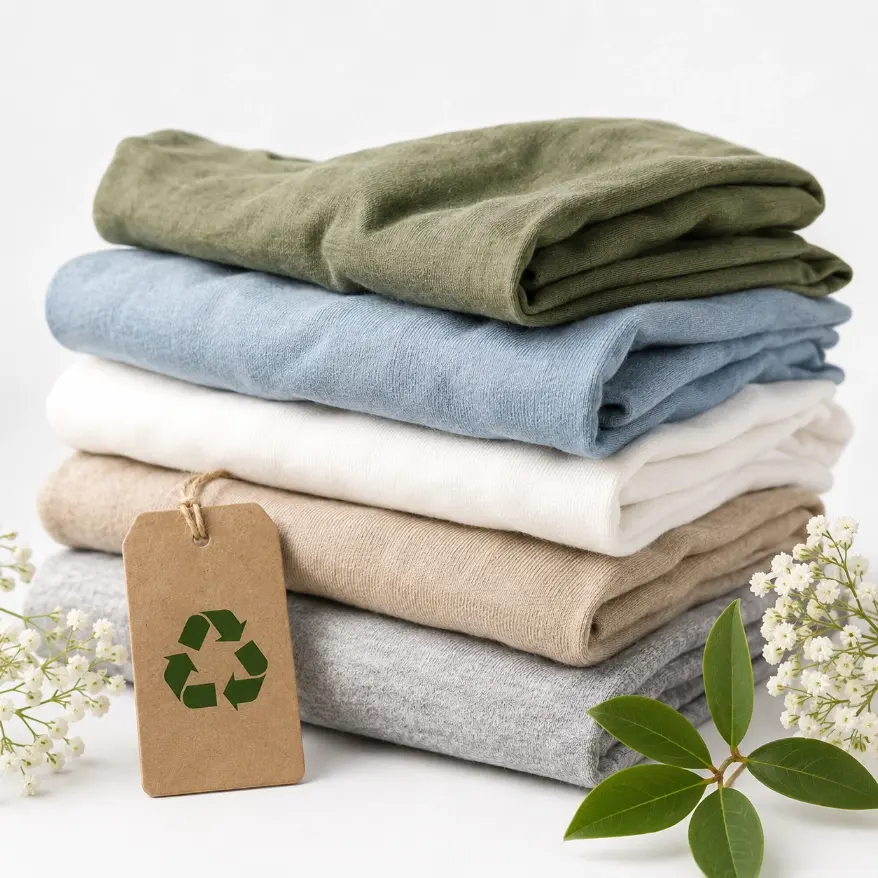
What Counts as an Organic Cotton Clothing Manufacturer?
In sourcing conversations, manufacturer is used loosely. A vertically integrated company may control spinning, knitting, dyeing, and garment production. A cut-and-sew factory may buy finished fabric from a certified mill. A sourcing partner may coordinate production through several factories. A blank-apparel supplier may sell finished T-shirts and hoodies that a brand decorates later.
All four models can be useful, but they do not give a buyer the same control or evidence.
| Supplier type | What the buyer receives | Customization level | Main verification risk |
|---|---|---|---|
| Vertically integrated manufacturer | Fabric and finished garments managed through a broad production system | Medium to high, often suited to scale | Assuming every facility and process has the same certification scope |
| Cut-and-sew or private-label factory | Garments made from stock or custom-sourced fabric | High | Treating a fabric certificate as proof that the factory or finished garment is certified |
| Sourcing or manufacturing partner | Development and production coordinated through selected facilities | Medium to high | Not knowing which legal entity, factory, or subcontractor will make the order |
| Certified blank supplier | Finished stock garments ready for printing or branding | Low to medium | Confusing a wholesale blank program with full custom OEM manufacturing |
The second distinction is even more important: organic fiber, certified fabric, and a certified finished product are not interchangeable claims.
Textile Exchange explains that the Organic Content Standard uses chain-of-custody controls to follow organically grown material through the supply chain. Facilities handling the material need the appropriate certification, while transaction certificates help reconcile material as ownership changes. GOTS Version 8.1 is equally direct: only goods produced by a Certified Entity and certified by an Approved Certifier may be represented, advertised, or sold as GOTS Goods.
That means a factory can honestly say, “We can source GOTS-certified jersey,” without being entitled to say, “Every garment we make is GOTS certified.” The buyer still needs to confirm the legal entity, site, product and process scope, subcontractors, labeling route, and order-level documentation.
If you are still deciding between a direct factory and another supplier model, HAPA’s guide to finding and verifying a clothing manufacturer provides a broader due-diligence framework.
How We Selected These 15 Manufacturers
No editorial shortlist is neutral, so here is exactly how this one was built.
Candidates were identified from company websites, public certification databases, published Scope Certificates, production facility information, stated minimum order pages, and publicly available compliance or social audit records. Five criteria were applied:
- Organic certification that can be looked up publicly, such as GOTS or OCS, rather than a logo pasted onto a homepage.
- Own production facilities or a verifiable fixed production relationship, with a clear distinction drawn between factories, manufacturing networks and trading companies.
- A genuine garment manufacturing route for international brands — not fabric-only supply and not finished-goods wholesale alone.
- Publicly stated minimums or minimum ranges, or an honest note where none is published.
- Compliance or social audit records that can be verified publicly.
Quick Comparison of the 15 Organic Cotton Clothing Manufacturers
The table is designed for scanning. “Certification listed” describes the evidence located during research; it does not certify a future order. “Stated MOQ” is the company’s published position where available and should be reconfirmed against the actual style, fabric, color, and decoration.
| Manufacturer | Location | Product categories | Stated MOQ | Services | Best fit |
|---|---|---|---|---|---|
| Royal Apparel | Hauppauge, United States | Organic blanks, T-shirts, fleece, infant, youth and adult basics | No minimum for stock blanks; 1,200-2,400/style/color for custom production | Wholesale blanks, private label, custom manufacturing, decoration | U.S.-made organic basics and blanks |
| Ninghow | Shenzhen, China | T-shirts, polos, hoodies, sportswear, uniforms, baby clothing and more | 100-500 for standard T-shirts; varies by category | OEM/ODM, private label, sampling, sourcing, bulk production | Flexible custom programs from China |
| Lefty Production Co. | Los Angeles, United States | Women’s, men’s and children’s apparel, swimwear, activewear, accessories | Low minimums stated; exact quantity on request | Design, sourcing, patterns, samples, grading, cutting and sewing | Hands-on Los Angeles development |
| Egedeniz Textile / Kadeks | Izmir, Türkiye | Yarn, fabric, knitted and woven garments | 1,000 pieces/style; 350/colorway | Fiber-to-garment, sampling, private label | Türkiye traceability and nearshoring |
| Thygesen Textile Vietnam | Hanoi/Vietnam production | Activewear, underwear, casualwear, kidswear | 3,000/design for casual or activewear | OEM/ODM, sourcing, sampling, bulk production | Large-volume Vietnam programs |
| Organic & More | Noida, India | Babywear, kidswear, womenswear, bedding, soft toys | Not publicly stated | Private label, sampling, patterns, sourcing, printing | Organic baby and kids collections |
| Argus Apparel | Los Angeles, United States | T-shirts, hoodies, activewear, loungewear, kidswear and babywear | From 100/style stated | Tech packs, patterns, sourcing, cut and sew, branding, packaging | Low-MOQ U.S. private label |
| Billoomi Fashion | Noida/Delhi NCR, India | Infant, kidswear, womenswear, casualwear | 25/style/color for some solids; 100 for printed/embroidered styles | OEM/ODM, sampling, patterns, decoration | Small-batch startups |
| Orimpex | Izmir, Türkiye | Knitted and woven adult, children’s and baby apparel | Smaller-quantity positioning; exact MOQ on request | Custom garment manufacturing | Conscious brands seeking Türkiye production |
| Akcakaya Textile | Izmir, Türkiye | Adult, children’s and baby knitwear | Not publicly stated | Design, patterns, sampling, sourcing, bulk production | Full-package Turkish knitwear |
| White Cotton | Barcelos, Portugal | T-shirts, hoodies, sweats, shirts, outerwear, pants | 50/style/color | Private label, cut and sew, development, decoration | Small European nearshore orders |
| Organic Apparel USA | U.S. client interface; Türkiye production | Custom organic apparel and private label | 400/color/model | Customization, samples, labels, packaging | North American brands using Türkiye production |
| HAPA | Guangzhou, China | Babywear, kidswear, dresses, sets, T-shirts, hoodies, pajamas | 100/style/color stated | OEM, ODM, private label, sampling, sourcing, QC support | Custom children’s clothing |
| Steve Apparel | Columbus, United States; Karachi production | T-shirts, hoodies, streetwear, sportswear, casualwear and private label | 200/design stated | Tech packs, samples, cut and sew, decoration, labels, packaging | Flexible full-package custom apparel |
| Continental Clothing | Bournemouth, UK; international production | Certified blanks for babies, children and adults | No minimum for stock; made-to-order terms differ | Wholesale blanks and made-to-order | Merch, printwear and fast stock programs |
1. Royal Apparel
Royal Apparel manufactures organic cotton apparel domestically in Hauppauge, New York, and has been running as a union shop since 1992. What makes it unusual on this list is the size range: the organic line runs from infant and toddler through to adult, and you can buy stock blanks now and move into a custom production run later.
Key Products:
- Organic cotton tees, infant through adult
- Organic viscose bamboo and organic cotton blends
- Fleece pullovers, hoodies and thermals
Best for: Brands wanting US-made organic blanks, infant and toddler sizing, or modest custom runs without offshore lead times.
2. Ninghow Apparel
Ninghow is a Chinese private label manufacturer built around low-volume brands, with published sampling turnarounds and customisation covering fabric, labels, trims and packaging. It is a genuinely useful option for testing a style before committing.
Key Products:
- Organic cotton T-shirts
- Polo shirts and uniform ranges
- Hoodies and custom knits
Best for: Startups and smaller brands testing private label styles at low volume.
3. Argus Apparel
Argus is a Los Angeles cut-and-sew and full-package manufacturer with babywear stated as a core category rather than a footnote, which is rare among domestic US options. Development support is aimed squarely at first-time brands.
Key Products:
- Private label baby and toddler apparel
- Custom T-shirts and polos
- Sweatshirts and underwear ranges
Best for: US brands developing private label babywear, kidswear or basics who value domestic lead times.
4. Egedeniz Textile
Based in Izmir, Egedeniz sits close to Türkiye’s organic cotton growing region and works across yarn, fabric and finished garments. If traceability is central to your positioning and your customers are European, the shorter material story is the appeal.
Key Products:
- Organic cotton yarn and fabric
- Knitted organic cotton garments
- Fibre-to-garment custom development
Best for: Brands prioritising European proximity, material traceability and mid-to-upper-tier organic development.
5. Thygesen Textile Vietnam
Thygesen offers broad development capability out of Hanoi, with kidswear among its stated categories alongside activewear and technical knits. It suits brands who want project management as much as capacity.
Key Products:
- Kidswear ranges
- Activewear and functional knits
- Underwear and casual basics
Best for: International brands seeking Vietnamese OEM or ODM production with kidswear or technical knit development.
6. Organic & More
A concentrated organic private-label operation near Delhi with real relevance to baby and children’s categories. It suits brands entering through a tight basics range rather than a broad first collection.
Key Products:
- Organic babywear
- Children’s basics
- Adult organic basics
Best for: Brands developing organic babywear, kidswear or foundational private-label ranges.
7. Lefty Production Co.
Operating from the downtown Los Angeles Fashion District since 2012, Lefty offers genuine end-to-end development under one roof — sketching, fabric and trim sourcing, pattern making, sampling, grading, cutting and production sewing. If you have a sketch rather than a tech pack, this is the type of partner that gets you to a production-ready pattern.
Key Products:
- Children’s apparel
- Swimwear, activewear and athleisure
- Accessories and home textiles
Best for: US brands needing full development support from sketch to production, where organic fabric is a specification you bring rather than a certification you buy.
8. Billoomi Fashion
Billoomi is positioned for early-stage brands who need development support alongside production, with kidswear among its stated categories and a publicly stated small-batch model.
Key Products:
- Organic babywear
- Kidswear ranges
- Small-batch streetwear and casualwear
Best for: Startups running small test batches with meaningful development needs.
9. Orimpex
An Izmir manufacturer with a design-through-delivery positioning and the practical advantage of overlapping working hours with European teams.
Key Products:
- Organic cotton T-shirts
- Sweatshirts
- Knitted casualwear
Best for: European brands wanting Turkish nearshore knit casualwear with design support.
10. Akcakaya Textile
Akcakaya covers adult, children’s and baby knits under one roof, which helps if you are planning a family or matching range and want consistent handfeel across sizes.
Key Products:
- Baby knit sets
- Children’s knitwear
- Adult knit basics
Best for: Brands developing Turkish knit kidswear, babywear or family collections.
11. White Cotton
A Portuguese private label and cut-and-sew operation in Barcelos, offering a short communication chain for European brands at a scale that tends to suit small and mid-sized programmes.
Key Products:
- Organic cotton T-shirts
- Sweatshirts
- Custom private-label casualwear
Best for: Brands developing small-to-mid batch casualwear in Portugal with fast European communication.
12. Organic Apparel USA
A US communication interface paired with Turkish production, which suits brands wanting time-zone-aligned account management without giving up nearshore European manufacturing.
Key Products:
- Private label T-shirts
- Sweatshirts and fleece
- Baby and kids apparel
Best for: North American brands wanting a US-facing window onto Turkish organic private-label production.
13. HAPA
HAPA is a Guangzhou manufacturer specializing in custom babywear and children’s clothing rather than a broad general-apparel catalog. It supports product development, materials, trims, branding, packaging, and production quality control.
Key Products:
- Custom kidswear
- Babywear
- Children’s T-shirts
Best for: Brands seeking Chinese custom kidswear development, sampling and private-label support.
14. Steve Apparel
A US cut-and-sew and private label manufacturer handling decoration in-house rather than subcontracting it, with a minimum that sits usefully between very low-volume specialists and full production factories.
Key Products:
- Custom T-shirts
- Cut-and-sew private label ranges
- Screen-printed and embroidered apparel
Best for: US brands with settled specifications wanting domestic cut-and-sew and in-house decoration at moderate volumes.
15. Continental Clothing
The clearest, fastest route on this list from decision to certified product in hand, which is exactly right for merchandise, printwear and market testing.
Key Products:
- Organic blank T-shirts
- Hoodies and sweatshirts
- Made-to-order apparel
Best for: Merch programmes, printwear businesses, corporate apparel, and brands starting from certified blanks.
How to Match a Manufacturer to Your Brand and Order
Start with the order and find the business model that fits it.
Best Fit for Startups and Lower-Volume Testing
For a young brand, inventory risk often matters more than the lowest unit price. Billoomi and White Cotton publish particularly low starting quantities. Ninghow and Argus state 100-piece starting points for some products, while Steve Apparel publishes 200 pieces per design. Lefty discusses low minimums but requires a direct quote.
There is a catch: low garment MOQ does not guarantee low fabric MOQ. A startup may be able to order 50 finished T-shirts only because the factory has suitable fabric in stock. Request a custom Pantone color, heavyweight interlock, yarn-dyed stripe, or exclusive print, and the mill requirement can become the real minimum.
Before selecting a low-MOQ supplier, ask:
- Is the minimum per style, color, fabric, print, or total order?
- Must the brand use stock fabric?
- Can leftover custom fabric be stored or used in a repeat order?
- Are labels, packaging, embroidery, and printing subject to separate minimums?
- Does the certification route still apply at the low quantity?
Best Fit for Large-Scale Knits and Basics
Thygesen, Royal Apparel’s custom program, and Egedeniz are more relevant when forecasts are stable and volumes justify structured sourcing. Ninghow also presents multiple production bases for brands that expect to scale, but the nominated facility and capacity should be confirmed.
Larger manufacturers can coordinate materials, capacity, and quality systems efficiently, but may require complete tech packs, earlier booking, and longer onboarding. A technically excellent supplier can still be wrong for your current business stage.
Best Fit for Organic Babywear and Kidswear
Continental has the clearest public Scope Certificate in this shortlist covering baby and children’s apparel, although its listed process is trading rather than manufacturing. Royal Apparel, Organic & More, Billoomi, HAPA, Argus, Akcakaya, Thygesen, and Lefty also publish relevant baby or children’s categories, but their production and evidence models differ considerably.
For children’s clothing, examine more than fiber. Ask about size grading, neck openings, snaps, buttons, drawcords, small parts, print hand feel, seam comfort, wash shrinkage, colorfastness, sleepwear, labels, tracking information, and the destination market.
If your collection is focused on baby products, a supplier that routinely develops rompers, bodysuits, pajamas, or sets may be more useful than a famous organic T-shirt factory. HAPA’s babywear manufacturing overview explains some of the product-development questions to settle before sampling.
Best Fit for Europe Nearshoring
Egedeniz, Orimpex, Akcakaya, Organic Apparel USA’s Turkish route, and White Cotton offer production closer to European buyers. Nearshoring can simplify factory visits, communication, and freight planning, but it does not automatically mean lower total cost or stronger certification.
A Portuguese small-batch casualwear factory and a Turkish vertically connected supplier solve different problems. This clothing manufacturing country comparison helps separate geography from capability.
Best Fit for Certified Blanks and Merchandise
Continental Clothing is the clearest option here for stock blanks. This route can remove pattern development and reduce product risk because the garment already exists. The trade-off is reduced control over silhouette, construction, fabric, and some branding details.
Choose blanks when speed, proven styles, and low stock-order minimums matter more than a unique product. Choose full custom cut and sew when the fit, construction, fabric, trims, and details are central to the brand.
How to Verify Organic Certification and Order-Level Traceability
Organic certification is not a badge-collection exercise. Your goal is to build a chain of evidence that connects the supplier’s public claim to the legal entity, production site, process, product, and shipment you are buying.
Check the Legal Entity, Facility, and Scope Certificate
Begin with the legal name that will appear on the quotation and contract. Search that name, not only the website brand, in the relevant public certification database. Compare the result with the factory address, certifier, license, issue date, expiry date, product categories, process categories, and any listed subcontractors.
A useful certificate review checks:
- Legal company name
- Factory and office addresses
- License and certificate numbers
- Certification body
- Issue and expiry dates
- Product categories
- Material compositions and label grades
- Processes such as manufacturing, dyeing, printing, packing, or trading
- Certified and non-certified subcontractors
- Whether the proposed order fits the published scope
Do not stop at “the certificate is valid.” A valid trading certificate does not prove the holder manufactures. A valid fabric scope does not prove the sewing factory is certified. A valid adult T-shirt scope may not cover the baby product you plan to sell.
Royal Apparel and Continental make the evidence difference concrete. Royal’s FAQ says its organic cotton is GOTS certified but does not publish the certificate number on the page. Continental publishes a Scope Certificate that identifies the legal entity, address, product categories, validity, and trading process. One statement starts a verification task; the other provides a document that can be checked line by line.
Ask Whether a Transaction Certificate Can Cover Your Order
A Scope Certificate tells you what the organization is certified to handle. It does not certify every item it ships. Continental’s public Scope Certificate states that proof for delivered goods comes from a valid transaction certificate covering those goods.
Textile Exchange similarly explains that transaction certificates accompany organic cotton products as ownership changes, helping reconcile volumes through the chain.
Ask the supplier:
- Can a TC cover this exact order and composition?
- Which company will request or issue it?
- When in the order cycle will it be available?
- Will it identify the finished product, quantity, and buyer?
- Are all relevant suppliers and subcontractors inside the required chain?
- Is there an additional cost or minimum?
Do not wait until the goods are packed to discuss this. If one processor is outside the route, a finished-product claim may already be impossible.
Confirm the Final Product Claim and Label Before Production
The wording used on a product page, swing tag, package, wholesale line sheet, or marketplace listing should be agreed before production. GOTS Version 8.1 clarifies that only products produced by a Certified Entity and certified by an Approved Certifier may be labeled, represented, advertised, or sold as GOTS Goods.
In practice, the brand should send the proposed claim and artwork to the manufacturer and, when required, the approved certifier. Do not assume that purchasing certified material gives permission to place a GOTS logo on the final garment.
| Document | What it can help show | What it does not prove by itself |
|---|---|---|
| Scope Certificate | The certified entity, facility, products, processes, and validity | That your shipment is certified |
| Transaction Certificate | The certified material or goods involved in a particular transaction | Product safety or performance |
| Test report | Results for the tested sample and specified methods | Organic chain of custody or every future production batch |
Red flags include:
- A logo with no legal entity or certificate number
- An expired or mismatched certificate
- A sales company presenting a partner mill’s document as its own
- A fabric certificate described as factory certification
- Refusal to identify the production site
- A promise to add a certification logo without discussing approval
Treat Children’s Product Compliance as a Separate Workstream
Organic certification addresses organic content and, depending on the standard, processing and social criteria. It does not replace the destination market’s children’s product requirements.
For babywear and kidswear, review the product category, age range, fiber content, trims, drawcords, small parts, restricted substances, flammability or sleepwear rules where relevant, care labels, tracking information, packaging, and testing responsibility. Use current guidance from the official regulator in your sales market.
HAPA’s guide to children’s clothing safety considerations is a useful planning resource, but the importer or brand should still confirm the rules that apply to the specific product and country.
Organic and safe are not competing ideas; they are separate evidence files.
What to Ask Each Manufacturer Before Sampling
Once you have three to five promising suppliers, send each one the same brief. This is the only way to compare replies fairly. A vague message such as “Please quote 1,000 organic cotton kids’ T-shirts” invites assumptions about jersey, weight, fit, print, certification, packaging, and quality.
Product and Technical Questions
Start with the garment rather than the supplier’s marketing.
Send:
- A tech pack or clearly annotated reference
- Product category and intended age range
- Measurement chart, tolerances, and grading rules
- Fiber composition and fabric construction
- Target GSM, finish, stretch, and hand feel
- Colorways, Pantone references, prints, and embroideries
- Size range and quantity by size and color
- Trim, label, and packaging requirements
- Target sales market and channel
For kidswear, identify comfort and safety-sensitive details. A neck opening that is acceptable in an adult tee may be frustrating for a toddler. A decorative bow, snap, bead, cord, or zipper can change testing and construction decisions.
Ask the factory which parts of your specification it would change and why. A good technical response is often more valuable than an instant “yes.”
Organic Material and Certification Questions
Replace “organic cotton” with a measurable request:
- Is the composition 100% organic cotton or a blend?
- Is the fabric jersey, rib, interlock, fleece, French terry, poplin, muslin, or another construction?
- What is the finished GSM and tolerance?
- Is the fabric in stock, made to order, or custom dyed?
- Which standard and label grade are required?
- Which entity holds the Scope Certificate?
- Can the proposed product and process fit that scope?
- Can a TC cover the order?
- Which dyehouse, printer, embroiderer, or other subcontractors are involved?
- What documents will the brand receive, and when?
Request the fabric specification and certificates before paying for a sales sample made in a substitute material. If the final organic fabric behaves differently, a sample in conventional stock jersey may be useful for rough fit, but not for final shrinkage, shade, or performance approval.
Bringing It Together
With organic cotton clothing manufacturers, the list is the easy half. Narrow fifteen to five with the comparison table, five to three with the certificate checks, then send all three the same brief and judge the samples on evidence rather than softness. Keep hold of the distinction running through this whole guide: organic fibre, certified fabric and a certified finished product are three separate things, and only the documents tell you which one you are actually buying.
If your project is baby or children’s apparel, we would be glad to look at it. HAPA develops and produces custom kidswear, babywear and private-label ranges from Guangzhou, with organic cotton available as a sourced fabric option — and, as our own entry above shows, we will tell you plainly what we can and cannot document. Send your product category, age range, target market, quantity, fabric structure and GSM, and certification requirement, and we can confirm whether the project fits before you commit to sampling. Start with an organic cotton babywear project, custom organic cotton kids T-shirts, or simply contact HAPA with your tech pack.
Frequently Asked Questions
Is organic cotton clothing automatically GOTS certified?
No. Organic fibre, certified fabric, certified processing and certified finished goods are separate levels. Only products made by a certified entity and certified by an approved certifier qualify as GOTS Goods.
Can a brand use the GOTS logo if its manufacturer buys GOTS-certified fabric?
No. Certified fabric does not transfer certification to your finished garment. Final product certification, a certified entity, and certifier approval of your specific label are all required first.
What is the difference between a Scope Certificate and a Transaction Certificate?
A Scope Certificate confirms a company is certified for defined products, processes and sites. A Transaction Certificate documents that specific goods in a specific shipment are covered. You generally need both.
Are low MOQs possible for organic cotton clothing?
Yes, but “low” usually applies to garments only. Fabric, colour, dye lots, prints, trims and certification documents can each carry separate minimums. Ask suppliers to itemise every one.
Which country is best for organic cotton clothing manufacturing?
There is no single answer. It depends on your product type, order volume, nearshoring needs, logistics, target market and certification requirements. Compare shortlisted factories, not countries.
Does organic certification cover children’s clothing safety requirements?
No. Children’s product testing, small parts, drawstrings, flammability, labelling and market registration are separate legal obligations, generally resting with the importer or brand owner rather than the factory.
What should I send an organic cotton manufacturer for a quote?
A tech pack, product category, fabric structure and GSM, colourways, size range, quantities by size and colour, target market, certification goal, testing needs, labelling, packaging and delivery terms.
How often should a buyer recheck a manufacturer’s certificate?
Recheck with every new supplier, every certificate renewal, and any change of production site or order scope. Always confirm current validity and order coverage before placing bulk.