I’ve lost count of the desperate emails that land in my inbox from designers who feel completely overwhelmed before a single stitch has been sewn. As the CEO of HAPA, a Guangzhou-based children’s apparel factory with over 16 years on the production floor, I’ve watched this pattern repeat itself countless times — brilliant creative vision colliding head-on with the brutal reality of garment manufacturing.
Learning how to find clothing manufacturers is never a routine task you can knock out in an afternoon. It’s the single most consequential partnership your brand will ever build. The right factory makes scaling feel effortless. The wrong one can drain your entire launch budget before you ever open for business.
This guide shares everything I know — the exact lessons I desperately wish someone had handed me when I was just starting out.
Before You Search: Laying the Groundwork
Before you contact a single factory, you need to get your own house in order. Clear product direction, a realistic budget, and defined production expectations allow manufacturers to respond faster, quote more accurately, and take your inquiry seriously from the start.
CMT vs. Full-Package Production: Know Which Model You Need
The first decision most brand founders don’t realize they need to make is what kind of manufacturing relationship they’re actually looking for. In the industry, this comes down to two primary models.
- CMT (Cut, Make, Trim) You supply the fabric, patterns, and all trims. The factory handles assembly only. This gives you tighter control over materials and sourcing costs, but it requires strong supply chain knowledge and existing supplier relationships. It’s best suited to brands that already know their fabrics inside and out.
- Full-Package Production (FPP) The factory manages fabric sourcing, trims, and construction end-to-end. The workflow is simpler, you’re managing fewer vendors, and the path to market is faster. Unit costs are slightly higher, but operational overhead is considerably lower — and scaling becomes much more straightforward once the relationship is established. For most early-stage brands trying to figure out how to get clothes made, FPP is the more practical starting point.
Getting this decision wrong doesn’t just cost money. It can stall your entire launch timeline by months.
Building a Tech Pack That Manufacturers Will Actually Use
You cannot send a rough sketch and expect a production-ready garment in return. Every clothing factory worth working with will require a tech pack — the definitive blueprint for your product. A complete tech pack includes:
- Detailed flat sketches — clear front, back, and lining views
- Bill of Materials (BOM) — every component, from main fabric to thread weight, zippers, and hardware
- Measurement specifications — precise dimensions for your base size and grading rules for other sizes
- Colorways and print details — exact Pantone codes and vector artwork files
- Labeling and packaging instructions — placement of care tags, woven labels, folding method, and poly bag specs
Establishing Your MOQ and Budget Before Reaching Out
Know your numbers before you make contact. A low minimum order quantity (MOQ) can help you test the market with less risk, but it typically increases your unit cost — fabric sourcing, cutting, sampling, and production setup all require time and labor regardless of volume.
Before reaching out to any potential partner, prepare your ideal order quantity, target unit price, sample budget, and launch timeline. This allows manufacturers to recommend genuinely realistic options rather than wasting everyone’s time with quotes that can’t work.
How to Find Clothing Manufacturers: The Best Sourcing Channels
Knowing how to find clothing suppliers isn’t about casting the widest possible net. It’s about showing up in the right places with the right filters. Here’s what actually works — and what doesn’t.
Online B2B Platforms
Platforms like Alibaba and Global Sources give you enormous scale, but they place legitimate factories and outright scammers side by side. My vetting checklist before engaging with any supplier on these platforms:
- An actively maintained Verified Supplier badge — not a one-time credential from three years ago
- Five or more years of transaction history concentrated in a single specialty (generalists are a red flag)
- Three or more detailed buyer reviews from verifiable accounts, ideally alongside a third-party audit report
- A company domain email and willingness to video call within a week — instant quotes without reviewing a tech pack are an immediate disqualifier
If a factory relies entirely on stock photos, offers suspiciously low MOQs for complex garments, or communicates only through personal Skype accounts with no company trail, move on. B2B platforms reward healthy skepticism.
Industry Trade Shows and Sourcing Fairs
Nothing replaces walking a show floor, touching fabric, and watching someone’s eyes when you ask about their defect rate. Events like Magic Las Vegas, Texworld, and Première Vision remain among the most reliable ways to find a garment manufacturer you can actually trust.
I walk every show with a slim binder of printed tech packs, a one-sheet brand intro stating my MOQ and target price, and a set of prepared questions. On the floor, I watch before I speak — sloppy samples and disengaged staff tell the real story quickly. Before leaving any booth, I collect a physical sample and check the care label. It often leads straight to the actual production facility behind the sales booth.
Manufacturer Directories
Curated directories like Maker’s Row, Sqetch, and Common Objective surface domestic manufacturers who rarely spend on advertising. I sort by specialty first — not location — then cross-check every factory’s website for real production photos, a named team, and a verifiable physical address.
The single most revealing step: request a five-minute video tour of the cutting floor. Factories that proudly show their setup are gold. Hesitant responses filter themselves out. Call a reference and ask one simple question: “Would you use them again?” The pause before the answer is data you can’t manufacture.
Google Search
The best clothing factory I ever found was buried on page seven of search results after a very specific query. I rely on advanced search operators to cut through middlemen and trading companies:
"cut and sew" "canvas jacket" "small batch" Los Angeles cotton jersey manufacturer Portugal -dropshipping -"print on demand"
Those quotation marks and minus signs are a practical shortcut. Once I land on a site, I scan in under a minute — real factory-floor photography, a clear stated specialty, and an actual street address. A homepage claiming to handle “all apparel categories” sends me straight back to the results page.
Social Media
Instagram and LinkedIn have quietly become powerful sourcing backchannels. On Instagram, I follow working hashtags like #cutandsew and #madeinportugal, study unfiltered production Stories for quality cues, and send DMs that reference something specific — never a generic template. On LinkedIn, I search directly for Production Managers and Factory Directors, bypassing sales gatekeepers with a short, human connection request that references a recent post or a shared industry group.
One thoughtful message once secured a Portuguese jersey partner that the website contact form never reached.
How to Vet and Shortlist Manufacturing Partners
A handful of promising leads means nothing until you’ve applied a rigorous filter. I’ve caught roughly 90% of potential production disasters in the first hour of screening. Here’s the exact process I use to separate serious factories from pretenders.
- Verify business registration and trading history. Pull official company records and cross-reference them against the website and email signature. A mismatch, or a freshly registered entity presenting itself as a decade-old operation, ends the conversation immediately.
- Audit their digital footprint for production reality. Genuine factory-floor photography, machinery shots, and team images signal a real production plant — not a trading company with a polished storefront and a rented showroom two cities away.
- Confirm a single, deep specialization. A factory claiming equal expertise across denim, lingerie, outerwear, and accessories isn’t a specialist — it’s a middleman with a broad rolodex. I insist on a proven, narrow category focus that genuinely matches my product type. If you’re exploring cut and sew manufacturing specifically, this matters even more.
- Request a live, unscripted video tour. No edited highlight reels or curated photo albums. A hesitant reply to this request is a self-issued rejection. A proud, slightly shaky phone walkthrough of the cutting and sewing floor is a green flag.
- Test technical knowledge with a specific garment question. Pose a concrete construction question about your product — a particular seam finish, a tricky pattern-matching challenge. A swift, confident, technically precise answer can’t be faked.
- Run their name through industry backchannels. Sourcing forums, trade association databases, and trusted peers in the industry have flagged more hidden problems than any paid audit ever could.
- Weigh response time and communication quality. How a factory handles a first inquiry is a direct preview of how they’ll handle a production crisis at 2 a.m. Delayed, sloppy, or unclear replies signal that your project will always sit at the bottom of their priority list.
How to Contact Clothing Manufacturers Effectively
Manufacturers want to respond — they just need a message that’s clear, prepared, and respectful of their workload.
Prepare Before You Write Anything
Before drafting a single sentence, gather a simple project snapshot: garment type, a reference image or rough sketch, target fabric, honest MOQ, and a realistic timeline. You don’t need a finished tech pack. You need enough clarity for a factory to quickly assess whether your project fits their production floor.
Write a Clear, Purposeful Inquiry Email
The best inquiries fit on a single phone screen. Introduce your brand briefly, then give the factory what it actually needs to say yes:
- Product type (T-shirts, outerwear, activewear, kidswear)
- Production model (CMT, full-package, OEM, private label)
- Estimated quantity per style or colorway
- Customization requirements (labels, embroidery, custom packaging, prints)
- Two or three direct questions about lead time, MOQ flexibility, and target price range
Attach one lightweight PDF with a visual and key measurements. Skip the brand origin story — lead with specifics.
Ask the Questions That Actually Reveal Capability
Don’t lead with price in your first real conversation. Instead, ask questions that expose whether this factory can truly handle your product:
- What’s running on your floor right now, and for which markets?
- What’s your typical defect rate, and how do you handle a rejected batch?
- Who would be my daily contact once production begins?
- Can you source my target fabric, or do I need to supply it?
Their answers reveal experience, transparency, and communication style far more reliably than any quoted price.
Follow Up and Compare Responses Intelligently
Send one polite follow-up after about a week of silence. If there’s no response, move on. When replies come in from multiple factories, compare them on three dimensions: the depth of their technical questions back to you, the honesty in their stated timelines, and the overall quality of the exchange. The cheapest quote with a one-line reply has never once become my strongest production partner.
5 Recommended Clothing Manufacturers for Startups
I’m frequently asked which factories I’d personally recommend for a brand getting off the ground. Here’s an honest shortlist of manufacturers that have demonstrated a genuine willingness to work with smaller brands, reasonable MOQs, and communication standards that won’t leave you chasing replies. For a deeper breakdown, see our full guide on clothing manufacturers for startups.
HAPA
I’ll be completely transparent: this is my own factory, and I’m including it because it genuinely belongs on this list for the right brands. At HAPA, my team specializes exclusively in children’s apparel, using sustainable, skin-friendly materials including organic cotton and bamboo viscose. We offer flexible MOQs and full-package production services, and we actively guide first-time founders through every step — from refining your tech pack to managing final delivery. If you’re launching a kids’ clothing line with an ethical sourcing focus, we’re built exactly for that.
Zega Apparel
Zega is a well-recognized name in the startup space, widely known for handling custom clothing at exceptionally low minimum order quantities. This makes them a strong choice for brands that want to test multiple designs without committing to large production runs. They manage cut and sew, printing, and embroidery, which makes them a versatile option for streetwear and casual wear brands.
Arcus Apparel Group
Arcus stands out for their emphasis on product development support — a genuine advantage if your tech packs and grading rules aren’t fully developed yet. They guide brands through pattern making, fit testing, and material sourcing well before mass production begins. This protective, educational approach saves startups from costly technical mistakes on their first run.
Tack Apparel
Tack is a strong contender for everyday fashion and athleisure brands. Their production lines handle a wide variety of styles, from functional activewear to premium basics, and they’re entirely accustomed to working with founders who are new to the complexities of garment manufacturing.
Appareify
Appareify brings a modern, technology-integrated approach to clothing production, with streamlined order tracking and communication systems that provide real visibility into your production timeline. They offer accessible MOQs for beginners but carry significant production capacity — a critical advantage when your brand suddenly needs to scale from 100 units to 10,000.
Domestic vs. Overseas Manufacturers: A Practical Comparison
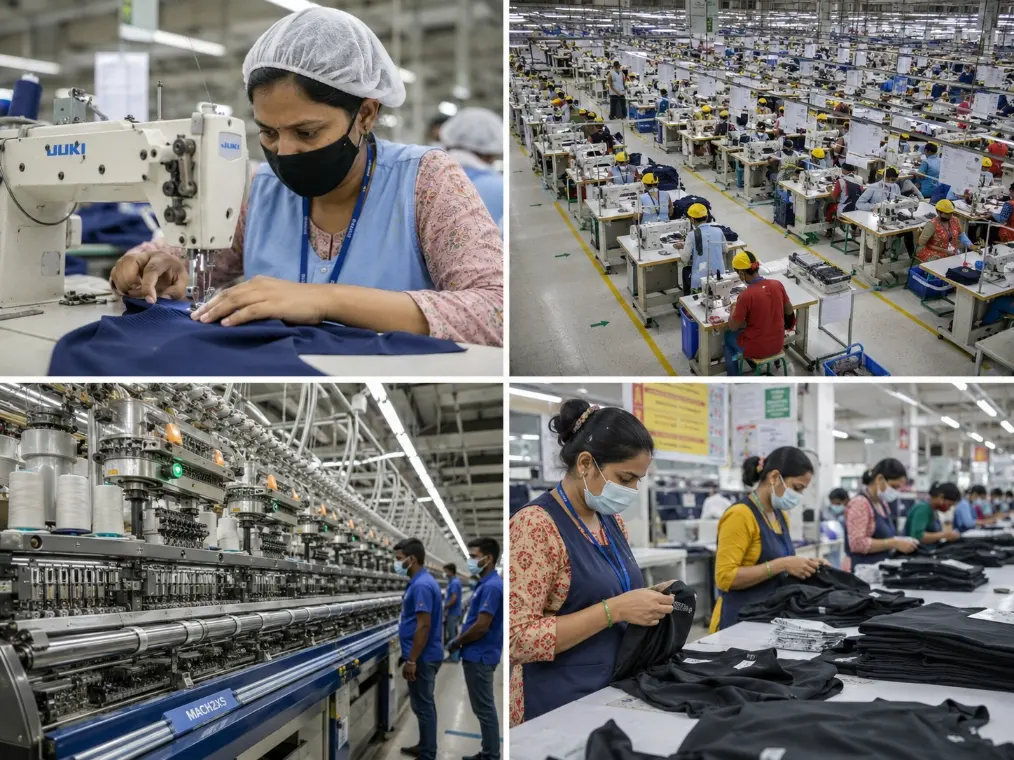
Choosing between domestic and overseas production depends on your brand stage, product complexity, budget, and quality expectations. There is no universally correct answer — only the choice that best matches your specific goals. Understanding what a garment factory actually looks like on the inside can help you make a more informed comparison.
| Feature | Domestic Manufacturers | Overseas Manufacturers |
|---|---|---|
| Unit Costs | Higher, due to local labor rates and overhead | Significantly lower, due to scaled operations |
| MOQ | Typically lower; excellent for small-batch testing | Generally higher; requires volume to justify setup |
| Material Sourcing | May rely on imported specialty fabrics, adding lead time | Immediate access to a vast raw materials ecosystem |
| Technical Capabilities | Strong for basics; may lack specialized machinery | Advanced capabilities across complex construction types |
| Communication | Same time zone and language; in-person visits are feasible | Time zone differences; relies on video calls and dedicated account managers |
| Shipping & Logistics | Fast, reliable domestic transit; lower freight costs | Longer lead times; requires customs clearance and international freight management |
| Best For | Startups with premium price points needing fast turnaround | Brands ready to scale, seeking stronger margins and FPP production |
A practical tip: If you’re still validating your design or testing the market, domestic manufacturing or a low-MOQ overseas option may be the safer starting point. Once your product is confirmed and you’re ready to grow, overseas manufacturing typically offers stronger cost advantages and greater supply chain flexibility.
Sourcing Sustainably: How to Find Ethical Clothing Manufacturers
“Sustainable” and “ethical” are the two most overused — and most abused — words in the apparel industry. I’ve seen beautifully framed certifications in front lobbies and unventilated sewing rooms on the floors above. Finding genuinely responsible manufacturing partners means skipping the brochure and asking sharper questions.
True sustainability lives in unglamorous operational details: a factory that recycles cutting waste, a dye house running closed-loop water systems, a sourcing team that defaults to organic or recycled fabrics without being asked. Genuinely responsible manufacturers volunteer this information because it’s baked into their costs — not added to their marketing materials.
Certifications Worth Demanding
No certificate is foolproof, but several require genuine, recurring third-party audits:
- GOTS (Global Organic Textile Standard) — Covers organic fiber processing and both environmental and social criteria from fabric through finished garment
- OEKO-TEX Standard 100 — Tests for harmful substances; a safety baseline, not a comprehensive ethical audit
- WRAP — Focused on safe working conditions, fair wages, and the absence of forced or child labor
- BSCI — Broad social compliance covering working hours, compensation, and health and safety
- Fair Trade Certified — Fair wages and community investment; rare but meaningful
A single certificate on a wall means little. A factory that produces recent audit reports — and looks slightly uncomfortable when pressed for specifics — is usually the real thing.
Questions That Cut Through Greenwashing
Weave these into early conversations as a shared commitment, not an interrogation:
- Can I see your most recent social compliance audit report — not just the certificate?
- How do you track fabric waste, water consumption, and chemical discharge?
- How do you ensure your workers are paid above minimum wage?
- Can I speak directly with your compliance officer, rather than the sales team?
Factories that answer clearly get shortlisted. Those that pivot to “we can accommodate any requirement” are running on marketing fumes.
Budgeting for the Real Cost
Ethical production costs more — organic fabrics often run 20–40% higher, and living-wage labor structures carry a visible premium. Build this into your margin from day one, not as a late-stage afterthought. The brands I’ve watched earn lasting customer loyalty are the ones that wear their commitments plainly and price their products honestly.
Conclusion
Knowing how to find clothing manufacturers is ultimately about preparation, precision, and patience. Define your sourcing model, build a solid tech pack, set realistic budget and MOQ expectations, and then vet every lead rigorously before any commitment is made. Whether you source domestically or overseas, the goal is the same: a production partner who genuinely understands your brand, upholds your quality standards, and has the capacity to grow with you.
The right factory doesn’t just make your clothes. It makes running your brand possible.
FAQ
How do I connect with a clothing manufacturer?
Prepare a clear inquiry that includes your garment type, estimated MOQ, and a tech pack or detailed brief. Reach out through the manufacturer’s official email or B2B platform messaging. Short, specific messages with a visual reference generate the fastest, most useful replies.
How do I find the right manufacturer for my brand?
Search niche B2B platforms, attend trade shows, and explore curated manufacturer directories. Vet your shortlist using certifications, live video tours, verified buyer reviews, and industry backchannel checks before making any commitment.
How can I find out what manufacturer a clothing brand uses?
Check the garment’s care label for an RN number or factory ID, then cross-reference import databases like ImportGenius or Panjiva to trace customs shipment records.
How do I find a clothing manufacturer on Alibaba?
Filter strictly by Verified Supplier status, years in business, and your exact product category. Scrutinize transaction history and third-party audit reports, and always request a video call before engaging further.
How do I get a manufacturer to produce my clothing line?
Present a detailed tech pack, a realistic MOQ, and a professional, concise inquiry. Begin with a sampling round to establish trust and demonstrate that you’re a prepared, serious production partner.