After more than a decade building HAPA from a small children’s apparel studio into a full-scale production house, I’ve had one conversation more times than I can count — brands reaching out, frustrated, after trusting the wrong Sportswear Clothing Manufacturers. Fabric that pills after two washes. Sizing that shifts batch to batch. Certifications that turn out to be counterfeit. I’ve seen it all — and it never gets easier to hear.
Choosing the right sportswear manufacturers isn’t a logistics checkbox. It’s the foundation your entire brand stands on. Get it right, and you have a partner who grows alongside you. Get it wrong, and no amount of clever marketing will save you from the fallout.
That’s exactly why I put this guide together. Whether you’re launching your first kids’ sportswear line or scaling an existing collection, these are the fifteen manufacturers I’d genuinely recommend in 2026 — evaluated through the same lens I’ve applied on factory floors for nearly two decades.
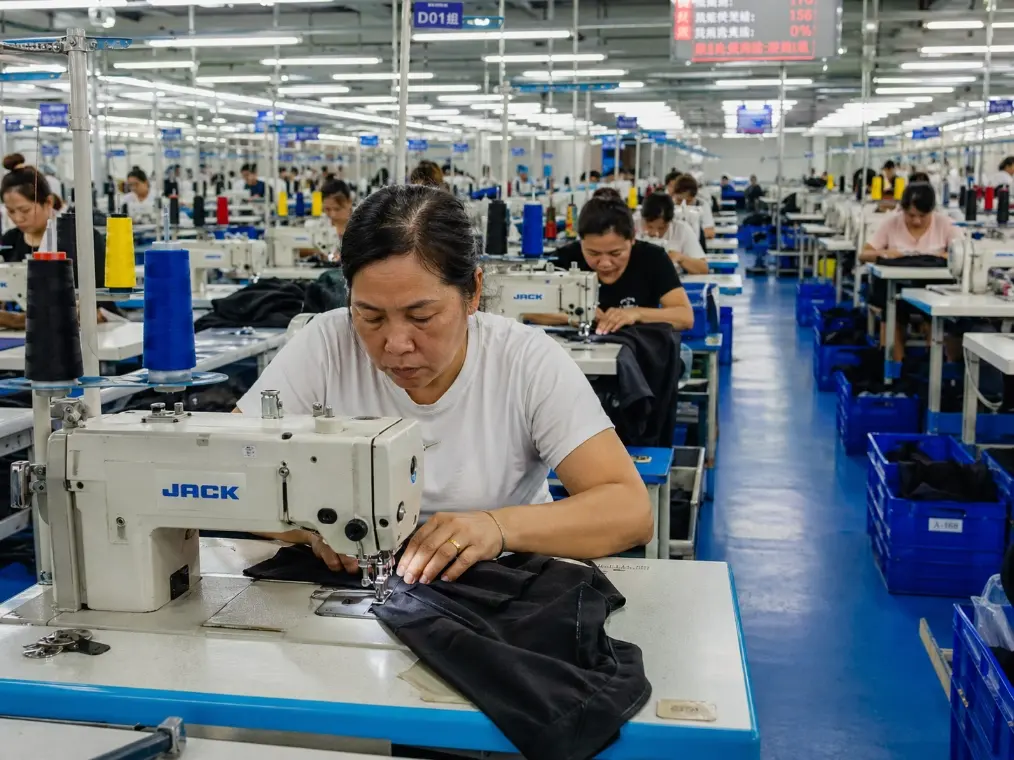
How We Selected the 15 Best Sportswear Manufacturers
People often ask how I know which players in this industry are actually reliable. Honestly, after spending years walking factory floors, you learn to spot red flags almost instantly. For this list, we didn’t weight search rankings or slick websites. We dug into hard data, verified track records, and the production realities that determine whether a brand will thrive or struggle.
Every candidate was evaluated against three non-negotiable pillars:
- Sustainable and premium material sourcing. The activewear market expects better fabrics. We prioritized factories with genuine expertise in eco-friendly, high-performance materials — bamboo viscose, organic cotton, recycled poly-blends — not just marketing claims. For a deeper look at what these materials mean in practice, see our guide on the best materials for kids’ sports apparel.
- Uncompromising safety and compliance. As a children’s apparel manufacturer, this pillar is personal. Every supplier on this list holds verifiable international certifications — OEKO-TEX Standard 100, CPC, and CPSIA — ensuring garments are free from harmful substances.
- Advanced technical execution. Great fabric means nothing without great construction. We selected suppliers that can translate complex tech packs into reality, manage precise size grading, and execute demanding techniques like flawless flatlock stitching.
OEM vs. ODM — Know the Difference Before You Choose a Partner
Before contacting any factory on this list, it’s worth understanding the two primary manufacturing models. The distinction will save you time and help you filter for partners that genuinely match your business goals.
OEM (Original Equipment Manufacturer)
In the OEM model, you’re in the driver’s seat. You provide the factory with your exact designs, tech packs, and fabric specifications, and they bring your vision to life. This is the model we operate under at HAPA — and it’s the right route if you’re building a custom sportswear brand from scratch and need total control over fit, features, and proprietary design details.
ODM (Original Design Manufacturer)
Also known as private labeling, ODM means the factory offers a catalog of pre-designed, pre-tested garments. You select the styles, choose colors, and have the factory add your branding. If speed to market matters more than design exclusivity, an ODM partner is a cost-effective and practical starting point.
The 15 Best Sportswear Clothing Manufacturers for Your Brand (2026)
- Tack Apparel
- Dongguan Sansansun Sports
- HAPA
- Thygesen Textile Vietnam
- Seam Apparel
- Argus Apparel
- Zega Apparel
- Affix Apparel
- Mega Apparel
- AEL Apparel
- Modaknits
- Lefty Production Co.
- Hingto
- LeelineSports
- Alanic Global
1. Tack Apparel — Best for Startups Needing Low MOQ Custom Production
Tack Apparel has built a strong reputation as a go-to partner for emerging brands that want genuine customization without the barrier of large minimum orders. Their catalog spans fitness leggings, tank tops, sports bras, hoodies, jackets, and shorts — each category backed by dedicated design teams that optimize fabric compositions for the specific garment type.
What sets Tack apart is their transparency around sustainable sourcing. They actively track textile innovations like recycled polyester nylon and BCI cotton, which resonates with today’s increasingly conscientious consumer base.
- Location: Long Beach, California, USA
- MOQ: From 50 pieces
- Manufacturing Model: OEM & Private Label
- Key Strengths: In-house sublimation printing, cut-and-sew, embroidery, ethical labor standards
- Best For: Startups validating a concept before scaling
2. Dongguan Sansansun Sports — Best for Emerging E-Commerce Brands
Founded in 2008, Sansansun was built around a clear mission: to be the product think tank for growing brands. Their dual-factory setup is what makes them genuinely interesting — one facility dedicated to cut-and-sew production, another to seamless wear, equipped with over 200 Santoni knitting machines. For a brand wanting to offer both traditional and seamless activewear under one partnership, that infrastructure is difficult to match. They’ve supported more than 3,000 activewear brands and release over 800 new styles annually.
- Location: Dongguan, Guangdong Province, China
- MOQ: 150 pieces per color for private label
- Manufacturing Model: OEM & ODM
- Key Strengths: Seamless knitting technology, GRS-certified recycled fabrics, free tech packs and 3D visuals
- Best For: E-commerce brands in North America, Europe, and Australia seeking fast trend turnaround
3. HAPA — Best for Children’s Sportswear and Safety-First Production
I’ll be transparent: HAPA is my own company, and I’m including it here because I genuinely believe it belongs on this list. Over the past decade, we’ve built our entire operation around a category most manufacturers treat as an afterthought — children’s activewear.
Every fabric we source is tested against OEKO-TEX Standard 100 and CPSIA requirements. Every silhouette is graded specifically for pediatric proportions. And every hardware component — from drawstrings to zipper pulls — is evaluated against choking hazard regulations before it touches a sample. If you’re building a premium children’s clothing brand, safety documentation shouldn’t be an afterthought. For us, it’s the first conversation.
- Location: Guangzhou, China
- MOQ: 100 pieces per color; accommodates both emerging and established brands
- Manufacturing Model: OEM
- Key Certifications: OEKO-TEX Standard 100, CPSIA, CPC
- Key Strengths: Dedicated children’s apparel expertise, proprietary pediatric fit grading, full safety compliance documentation
- Best For: Children’s sportswear brands that cannot compromise on safety
4. Thygesen Textile Vietnam — Best for Scaling Brands With Sustainability Mandates
Thygesen is one of the most credentialed manufacturers on this list. Their story began in 1931, and the depth of their certifications — ISO 9001:2015, GRS, GOTS, OEKO-TEX Standard 100, SA8000, WRAP, and more — reflects a company that has been doing this seriously for a very long time. Their client roster includes Tommy Hilfiger, DKNY, Calvin Klein, Fjällräven, and Girlfriend Collective. The trade-off is their minimum of 3,000 pieces per design, which positions them firmly in the scaling-brand tier rather than the startup space.
- Location: Vietnam (North)
- MOQ: 3,000 pieces per design for activewear
- Manufacturing Model: OEM & ODM (full-package)
- Key Strengths: 90+ years of experience, LEAN production system, up to 800,000 pieces monthly capacity
- Best For: Mid-to-large brands with sustainability commitments and the volume to match
5. Seam Apparel — Best for Performance-Focused Activewear With a Workwear Crossover

Based in Miami, Seam Apparel excels at high-performance activewear and durable workwear for fashion brands and corporate clients. Their technical approach to fabric is one of their clearest differentiators — every material goes through strict performance testing before production begins. What I appreciate about Seam is that they haven’t tried to be everything to everyone. Their focus on the activewear-workwear intersection gives them real depth in a category many manufacturers handle superficially.
- Location: Miami, Florida, USA
- MOQ: 250 units per design
- Manufacturing Model: OEM
- Key Strengths: Multi-checkpoint quality control, moisture-wicking and breathability specialization
- Best For: Brands bridging corporate workwear and performance activewear
6. Argus Apparel — Best for Brands That Want One Partner Across Many Categories
Argus Apparel is a custom clothing manufacturer offering end-to-end service — from fabric sourcing and pattern making through bulk production and worldwide delivery. Their product range spans nearly 30 categories, including T-shirts, hoodies, sportswear, swimwear, lingerie, baby clothing, and leather goods. For a growing brand looking to consolidate vendor relationships, that breadth has real operational value. The inclusion of baby clothing is also worth noting for children’s apparel brands looking to extend into adjacent product lines.
- Location: USA operations with global manufacturing
- Manufacturing Model: OEM & Private Label
- Key Strengths: Cut & sew, screen printing, embroidery, near-30-category product range, global delivery
- Best For: Multi-category brands wanting a single manufacturing partner
7. Zega Apparel — Best for Brands Balancing Cost Efficiency With US-Based Support
Zega Apparel started as a small workshop and has grown into a 50,000 sq ft vertically integrated facility serving over 3,000 brands across 30+ countries. Their model is worth understanding: US-based customer support combined with cost-competitive production in Pakistan gives clients the best of both worlds — English-speaking account management without overseas price premiums. MOQ starts at 200 pieces per color and design.
- Location: USA (headquarters); Pakistan (manufacturing)
- MOQ: 200 pieces per color and design
- Manufacturing Model: OEM & Private Label
- Key Strengths: Vertically integrated facility, in-house printing and embroidery, strong ethical compliance track record
- Best For: Brands that want US-based account management with overseas cost structures
8. Affix Apparel — Best for Artisan-Level Craftsmanship at Accessible Minimums
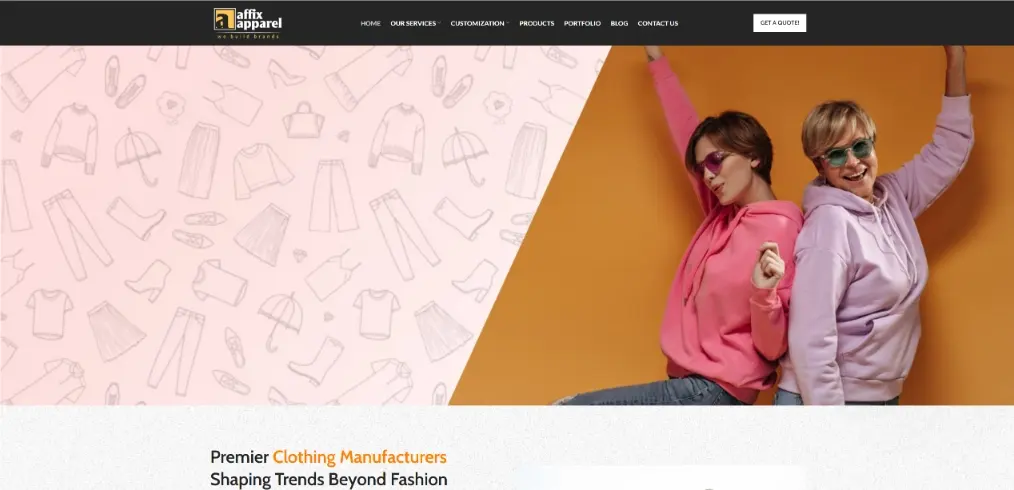
Affix Apparel is a made-to-order manufacturer based in Los Angeles, with production in Karachi, Pakistan. Their positioning in high-end street couture gives them a distinctive edge for activewear brands that prioritize elevated construction quality over mass-market speed. Their sweatshop-free credentials are verifiable — which matters increasingly to consumers, particularly parents choosing children’s activewear. Minimums start around 50 pieces, and fabric options include Pima cotton, bamboo, modal, and nylon/Lycra blends with proprietary moisture-wicking and UV protection features.
- Location: Los Angeles, California, USA (production in Karachi, Pakistan)
- MOQ: From approximately 50 pieces
- Manufacturing Model: OEM, Custom Cut & Sew
- Key Strengths: Premium craftsmanship, sweatshop-free certification, performance fabric options
- Best For: Premium activewear brands prioritizing design distinction and ethical production
9. Mega Apparel — Best for Reliable Bulk Production at Competitive Price Points
Mega Apparel is a large-scale production partner suited to brands that have moved past sampling and validation and need consistent, high-volume output at competitive pricing. Their strength lies in production reliability — the operational discipline that matters when a brand’s reputation depends on accurate, on-spec goods across consecutive runs. For wholesale or promotional sportswear buyers who need volume without sacrificing baseline quality, Mega is a pragmatic choice.
- Location: Bangladesh
- Manufacturing Model: OEM & ODM
- Key Strengths: High-volume production capacity, competitive bulk pricing, broad fabric sourcing
- Best For: Wholesale buyers and established brands with consistent, high-volume reorder needs
10. AEL Apparel — Best for E-Commerce Sellers Needing High-Capacity Private Label
AEL Apparel operates as a dedicated private label manufacturer with a narrow focus on the activewear segment. What differentiates them for digital-first brands is their structural adaptation to e-commerce fulfillment demands. They understand the logistical realities of online retail in a way many traditional manufacturers simply don’t. AEL appears consistently among top US-listed activewear suppliers, particularly for brands looking to scale with flexible MOQs.
- Location: USA
- Manufacturing Model: Private Label / OEM
- Key Strengths: E-commerce-oriented fulfillment, high monthly production capacity, activewear specialization
- Best For: DTC and e-commerce-first brands scaling without managing production complexity
11. Modaknits — Best for Custom Made-to-Measure Activewear From China

Modaknits is recognized for delivering made-to-measure activewear crafted with precision — a credible position in a Chinese manufacturing segment where deep customization and ethical standards don’t always coexist. They offer flexible MOQ options for businesses of varying sizes and provide prototype designs so clients can evaluate samples before committing to bulk production.
- Location: China
- Manufacturing Model: OEM & Private Label
- Key Strengths: Made-to-measure production, ethical manufacturing standards, prototype-first sampling, trend-responsive design
- Best For: Global brands and e-commerce sellers seeking premium, customized Chinese manufacturing
12. Lefty Production Co. — Best for Domestic Brands Prioritizing Made-in-USA Quality
Lefty Production Co. is a comprehensive development house and apparel manufacturer based in Los Angeles, guiding both new and established lines through the entire process — from sketching and design to fabric sourcing, pattern making, and final production. For brands whose customers value domestic manufacturing and are willing to pay for it, Lefty’s proposition is genuinely strong. A 200-piece MOQ makes them accessible to smaller brands, and their coverage of women’s, men’s, and children’s wear broadens their appeal considerably.
- Location: Los Angeles, California, USA
- MOQ: 200 pieces
- Manufacturing Model: Full-service OEM
- Key Strengths: End-to-end domestic production, technical fabric sourcing, pattern making, quality control at every phase
- Best For: Brands building a “Made in USA” positioning, particularly in boutique fitness or premium athleisure
13. Hingto — Best for Australian and Asia-Pacific Market Brands
Hingto is an Australian-managed company specializing in the design and manufacturing of custom activewear, with over a decade of experience. Their product scope covers sportswear, loungewear, swimwear, gymwear, athleisure, and modest wear — versatile enough for brands operating across multiple activewear sub-categories. Their focus on climate-appropriate fabric sourcing for the Australian market, combined with regional logistics advantages, makes them a standout choice for Asia-Pacific brands.
- Location: Australia (managed); China (production)
- Manufacturing Model: OEM & Custom Design
- Key Strengths: Australian-managed communication, flexible MOQ, climate-appropriate fabric sourcing, Asia-Pacific logistics advantage
- Best For: Australian and Asia-Pacific brands seeking a culturally familiar partner with regional production advantages
14. LeelineSports — Best for Brands That Need Supply Chain Management Support

LeelineSports positions itself as more than a factory — they function as a supply chain management partner for brands that lack the internal expertise to vet manufacturers and navigate production independently. Their in-house knowledge of technical documentation, AQL-based quality control frameworks, and customs compliance makes them especially valuable for brands scaling quickly without a dedicated sourcing team.
- Location: China (with global sourcing and logistics network)
- Manufacturing Model: SCM Partner & OEM
- Key Strengths: Technical documentation support, AQL quality control, customs compliance guidance, flexible pricing tiers
- Best For: Brands scaling quickly that need an experienced supply chain partner, not just a factory
15. Alanic Global — Best for Global Wholesale With the Broadest Product Range
Based in Beverly Hills, Alanic Global has built a strong reputation among startups and established brands alike, with a focus on quality, scalability, and global reach. Their catalog depth is genuinely extraordinary — over 18,000 products covering fashion, fitness, accessories, and custom clothing. Entry-level minimums can start as low as 10 pieces per design, making them one of the most accessible private label options on this list. With offices in the USA, Australia, Canada, the UK, and the UAE, they’re well positioned for brands with international distribution ambitions.
- Location: Beverly Hills, California, USA (with global offices)
- MOQ: As low as 10 pieces per design
- Manufacturing Model: Private Label & Wholesale
- Key Strengths: 18,000+ product catalog, international distribution network, UV protection and maternity wear categories
- Best For: Brands at any stage looking for the most flexible entry point into private label, or wholesale buyers needing a broad range from a single supplier
Which Sportswear Manufacturer Fits Your Product and Business Model?
The best sportswear manufacturer is not necessarily the largest factory or the supplier offering the lowest minimum order quantity. The better choice is a manufacturer whose regular production experience matches your garment category, development model, order volume, and target customer.
A factory that performs well with seamless yoga leggings may not be equally suitable for sublimated football jerseys. Likewise, a large retail supplier may have excellent capacity but provide less development support for a startup refining its first collection.
Use the following framework to identify the type of manufacturer your brand should prioritize.
| Your product or business need | Manufacturer profile to prioritize | What to verify before shortlisting |
|---|---|---|
| First collection or small market test | Development-focused, small-batch cut-and-sew manufacturer | Pattern-making support, sample costs, MOQ by style and color, revision process, and reorder flexibility |
| Custom technical activewear | OEM performance-apparel specialist | Four-way stretch experience, fabric recovery, moisture management, flatlock or bonded seams, and ability to follow a complete clothing tech pack |
| Faster private label launch | ODM or private label sportswear supplier | Available styles, stock fabrics, permitted design changes, branding options, packaging, and whether designs are exclusive |
| Seamless yoga or gym wear | Seamless knitting specialist | Knitting equipment, yarn options, compression-zone control, size consistency, stretch recovery, and experience with fitted garments |
| Teamwear and sports uniforms | Sublimation and teamwear manufacturer | Artwork accuracy, color matching, player names and numbers, mixed-size ordering, repeat-order consistency, and delivery planning |
| Children’s sportswear | Kidswear-specialized manufacturer | Age-appropriate sizing, comfortable seam construction, safe trims, movement-friendly fit, and documentation relevant to the destination market |
| Large-volume retail program | Full-package manufacturer with scalable production | Available production lines, actual factory location, quality-control process, subcontracting policy, peak-season capacity, and inspection arrangements |
This framework should be used to narrow the list above, not to select a supplier immediately. Start with three to five candidates whose product focus and service model resemble your project, then send each company the same specifications and questions.
Compare their answers on the same basis. A strong manufacturer should explain what it can produce, what it cannot support, which parts of the order may be subcontracted, and what information it needs before providing a reliable quotation.
Published MOQs, lead times, certifications, and production capacities can change. Confirm these details in writing with the facility that would actually handle your order. The best-fit supplier is the one that can reproduce the approved sample consistently within your quality, budget, and delivery requirements, not the company making the broadest marketing claims.
What Actually Makes a Great Sportswear Manufacturer?
The instinct is to lead with price and MOQ — and while both matter, brands that prioritize cost above everything else almost always restart their manufacturer search within a year. The better question is: who can deliver what my brand needs, consistently, at the standard my customers expect?
Quality Standards and Fabric Transparency
Fabric sourcing transparency is the first thing I look for. A manufacturer who can specify their mill sources, GSM tolerances, and colorfastness verification processes has genuine control over their inputs. One who responds with vague assurances about “premium materials” does not.
Beyond fabric, evaluate seam tensile strength, flatlock stitch quality at high-stress points, and shape retention after repeated washing. It also helps to understand what different materials actually do — our guide on what polyester fabric is covers performance characteristics worth knowing before you approve a spec sheet.
On the certification side, OEKO-TEX Standard 100, ISO 9001:2015, and GRS or GOTS credentials carry third-party verified weight — unlike the self-reported quality claims you’ll encounter constantly during sourcing.
MOQ, Lead Times, and Scalability
ODM manufacturers typically offer MOQs of 50 to 200 units per style; OEM manufacturers generally require 300 to 1,000, reflecting the added investment in sampling and pattern development. Lead times follow the same logic — OEM cycles typically run 90 to 150 days, while ODM can compress to 45 to 75 days.
The scalability question is one most founders underweight. A manufacturer suited to your first run of 300 units may not have the capacity or pricing architecture to serve you at 5,000. Always ask directly how they handle significant volume growth before signing anything.
Children’s Sportswear: A Different Regulatory League Entirely
Children’s activewear operates under an entirely different regulatory framework. In the US, CPSIA mandates third-party testing and a Children’s Product Certificate for garments intended for children under 12, covering lead content, phthalates, drawstring restrictions, hardware choking hazard compliance, and flammability standards.
Pediatric fit grading is also a specialist skill — a well-fitting children’s garment is never simply a scaled-down adult pattern. If a potential partner cannot provide current compliance documentation and demonstrate genuine experience with children’s sizing, they’re not the right fit regardless of their price point.
How to Choose the Right Custom Sportswear Manufacturer
Choosing a production partner starts with one honest question: can they turn your design into a product that still performs after real-world use? A good factory understands fit, stretch, breathability, stitching, printing, and long-term wash durability — not just basic garment sewing.
1. Verify Their Sportswear-Specific Experience
Look for manufacturers with a proven track record in activewear, gym wear, teamwear, leggings, or kids’ sportswear. Request previous samples, fabric spec sheets, printing or embroidery examples, and real factory photos before committing to any conversation about pricing.
2. Review Fabric and Quality Standards Rigorously
The right factory should be able to explain fabric weight, stretch recovery, moisture-wicking performance, shrinkage rates, pilling resistance, and colorfastness in concrete terms. Certifications help, but your own sample testing tells the real story.
3. Compare MOQ, Lead Time, and Customization Options Carefully
A low MOQ is helpful for startups, but ultra-low minimums often drive up unit costs in ways that compress your margins. Find a balanced MOQ that protects your retail markup. Before ordering, confirm the MOQ for each style, color, size range, logo method, and packaging option — each can carry its own threshold.
4. Test Samples Under Real Conditions
Never approve bulk production from photos alone. Wash the sample. Stretch it. Check the seams after wear. Inspect the logo placement after multiple cycles. For sportswear, a credible sample should feel comfortable, recover its shape after stretching, and show clean stitching after repeated washing.
5. Apply Extra Scrutiny to Children’s Sportswear
If you’re producing kids’ activewear, safety standards are in a different league. Choose a manufacturer that understands soft fabrics, safe trims, smooth seams, stable sizing, and the compliance requirements that apply in your target markets. This matters especially for hoodies, tracksuits, sports uniforms, and activewear sets.
USA vs. Overseas Sportswear Manufacturers — Which Is Right for Your Brand?
Choosing between domestic and overseas production depends on your budget, timeline, order volume, and quality-control setup. Neither is universally better — the right answer depends on where your brand currently sits.
| Factor | USA Manufacturers | Overseas Manufacturers |
|---|---|---|
| Best for | Startups, premium brands, small batches | Growing brands, bulk orders, full collections |
| MOQ | Usually lower and more flexible | Often higher, especially for custom fabrics |
| Unit cost | Higher labor and production costs | More competitive at scale |
| Lead time | Faster sampling and local delivery | Longer due to shipping and customs |
| Communication | Easier time zone and language alignment | Requires clearer tech packs and follow-up |
| Customization | Strong for development and testing | Strong for fabric sourcing, printing, and bulk production |
| Risk profile | Higher cost, limited capacity | Shipping delays, tariffs, quality-control distance |
US-based sportswear manufacturers make sense when you need quick sampling, tighter production control, or a “Made in USA” brand story. They’re particularly well suited to the development phase — when you’re still refining fit, fabric, and design before scaling.
Overseas manufacturers are generally the right call once your brand is ready for larger orders and more competitive pricing. This route suits brands producing full activewear collections, private-label gym wear, teamwear, or kids’ sportswear at meaningful scale.
Final Thoughts
Finding the right sportswear manufacturer isn’t about ticking boxes on a spreadsheet. It’s about finding a partner who understands your product category, shares your standards, and has the operational depth to grow with you. Whether you need a high-volume facility, a specialized factory for sustainable children’s activewear, or something in between, never compromise on fabric transparency, communication quality, or safety documentation.
At HAPA, we’ve spent sixteen years refining this process in Guangzhou. If you’re looking for a reliable team to bring your vision to life — particularly for premium, safety-certified kidswear — we’d love to hear from you. Send over your tech packs and let’s explore what we can build together.
Frequently Asked Questions
How do I start my own activewear brand?
Start by defining a clear niche — gym wear, yoga wear, teamwear, or children’s sportswear. Develop your designs, select performance fabrics, create samples, test the fit thoroughly, and work with a reliable manufacturer before placing bulk orders. Balancing product design, manufacturing, branding, and marketing from the outset will save significant rework later.
How do I find a manufacturer for my clothing brand?
Look for manufacturers with specific experience in your product category, not just general apparel. Review their samples, MOQ thresholds, lead times, certifications, fabric options, and communication responsiveness. Always request a physical sample before confirming bulk production.
How long does custom sportswear manufacturing take?
Custom sportswear production typically requires several weeks to months, depending on fabric sourcing, sample approval rounds, printing complexity, production volume, and shipping. OEM cycles commonly run 90 to 150 days; ODM can compress to 45 to 75 days. Always build buffer time into your launch planning.
Can I manufacture children’s sportswear with a small budget?
Yes — start with a limited collection and low-MOQ styles. Focus on simple designs, readily available fabrics, and essential pieces like T-shirts, shorts, and hoodies. But never cut corners on safety, fabric comfort, or testing requirements. The CPSC requires third-party testing and a Children’s Product Certificate for most children’s products sold in the US.
What is the typical MOQ for sportswear manufacturers?
MOQs vary widely by factory, fabric type, and customization level. Some low-MOQ sportswear manufacturers start around 50 pieces per design, while custom fabrics or specialized trims may require higher quantities. Always confirm MOQ by style, color, size range, logo method, and packaging before placing an order.