There is no single best clothing wholesale market in China for every buyer. The right choice depends on what you sell, your target price and quality level, whether you need ready stock or original products, and how much control you require over sizing, materials, branding, and repeat orders.
Physical wholesale markets are strong at product discovery. You can compare many styles, inspect samples, buy available inventory, and test a category without opening a full product-development project. An OEM or ODM factory serves a different purpose: it turns specifications into repeatable products through patterns, materials, samples, approvals, production, and quality control.
This guide compares major sourcing hubs including Guangzhou, Hangzhou, Yiwu, Changshu, and Keqiao. It also explains how to evaluate a market vendor, plan an on-site or remote purchase, and recognize the point at which a factory relationship makes more sense than another ready-stock order.
What “Best” Means When Choosing a Clothing Wholesale Market in China
The word “best” is useful only when the comparison has a clear purpose. A market that works well for a boutique testing ten fashion styles may be completely wrong for a children’s brand developing an exclusive size range. For that brand, a shortlist of children’s clothing manufacturers in China may be a better starting point for an OEM brief; verify each candidate’s actual product capabilities. A fabric buyer and a ready-garment buyer also need different destinations.
This guide therefore treats “best” as best fit for a defined buying model, not as an absolute award.
Start With Your Product, Customer, and Price Position
Write a one-page buying brief before comparing market names. At a minimum, define:
- Product category and intended use
- Target customer and retail channel
- Expected retail and landed-cost range
- Preferred quality and construction level
- Sizes, colors, and approximate quantity
- Ready stock, modified stock, or original development
- Branding, labeling, and packaging needs
- Destination market and delivery window
My rule is simple: I do not choose a market before the buying brief is written. Without that brief, the first impressive showroom can reset the plan. With it, every market and vendor faces the same commercial questions.
Define Ready Stock, Modified Stock, or Fully Custom Production
These three routes may look similar during an early conversation, but they involve very different levels of control.
Ready stock means buying an existing garment in available colors, sizes, and quantities. It supports fast testing, but offers limited exclusivity and uncertain continuity.
Modified stock may involve adding a label, changing packaging, selecting another available color, or making a minor adjustment. Ask exactly what can be changed and whether the seller controls the underlying source.
Fully custom production begins with a specification, tech pack, reference sample, or developed concept. It requires material decisions, pattern work, grading, samples, approvals, and production controls—even if the first contact happened inside a market.
If you are still comparing seller and sourcing models, HAPA’s overview of China clothing suppliers, platforms, and manufacturers explains why those businesses should not be treated as interchangeable.
Use Six Criteria to Compare Markets Consistently
Compare every destination with the same six questions:
- Product fit: Does the market have meaningful depth in your category?
- Positioning: Does the merchandise match your target customer and quality level?
- Order model: Is it designed for stock, mixed lots, samples, private label, or production orders?
- Repeatability: Can a successful item be reordered from the same source and specification?
- Buyer workload: Who handles translation, checking, consolidation, export, and exceptions?
- Verification: Can you identify the contracting, payment, supply, and responsible entities?
A qualitative answer—good fit, possible fit, or verify carefully—is more useful than a decorative score out of ten.
Quick Comparison of China’s Main Clothing Wholesale Hubs
China’s apparel trade is distributed across cities with different histories and specialties. The table below is a routing guide, not a ranking. Exact buildings, floors, merchandise, and operating arrangements should be confirmed before a sourcing trip.
City-by-City Sourcing Comparison Table
| Hub | Practical strength | Typical buyer fit | Order model to expect | Main point to verify |
|---|---|---|---|---|
| Guangzhou | Dense selection of specialized clothing, kidswear, fabric, and accessory markets | Boutiques, wholesalers, ecommerce sellers, kidswear buyers, multi-category sourcing teams | Primarily ready stock and wholesale; some sellers may discuss modifications or production | Which market and floor match the category; whether the seller controls production |
| Hangzhou Sijiqing | Fashion-focused wholesale ecosystem with active women’s and men’s sections | Trend-led retailers, fashion buyers, regional distributors | Ready-garment wholesale with seller-specific quantities and terms | Exact submarket, positioning, stock status, and export capability |
| Yiwu Huangyuan | Multi-category garment market within Yiwu’s broader trading ecosystem | Buyers combining apparel with other product lines; stock-focused retailers | Wholesale, retail, and foreign-trade activity coexist | Whether the offer is stock, repeat wholesale, or factory-linked production |
| Changshu Garment City | Established garment-trading area with visible menswear activity and professional markets | Menswear and regional distribution buyers; trading and market-procurement teams | Market and merchant dependent | Product specialization, export entity, logistics, and current operating arrangements |
| Keqiao | Upstream textile and fabric sourcing rather than a direct substitute for a ready-garment market | Brands, factories, designers, and agents sourcing fabric or developing materials | Fabric sampling, textile trade, and supplier development | Fabric minimums, testing, finishing, repeat lots, and which factory converts fabric into garments |
How to Read the Table Without Treating It as a Ranking
Start by eliminating mismatches. A ready-stock boutique does not need to begin in a fabric market. A brand developing original kidswear should not assume that a stall with attractive samples can manage grading, labels, testing documentation, and repeat production.
A quick first-pass decision looks like this:
- Choose Guangzhou when you need broad apparel-market coverage or a specialized kidswear route.
- Compare Hangzhou when trend-led fashion wholesale is central to the brief.
- Consider Yiwu when apparel is part of a wider multi-category buying program.
- Research Changshu for garment trading and menswear-oriented sourcing.
- Use Keqiao when the project is driven by fabric, textile development, or upstream material choice.
- Move toward a qualified OEM/ODM factory when the objective is an original, controlled, repeatable product rather than available market stock.
These are starting points. A city name does not approve a specific vendor or garment.
Guangzhou Clothing Wholesale Markets: The Broadest Starting Point for Many Buyers
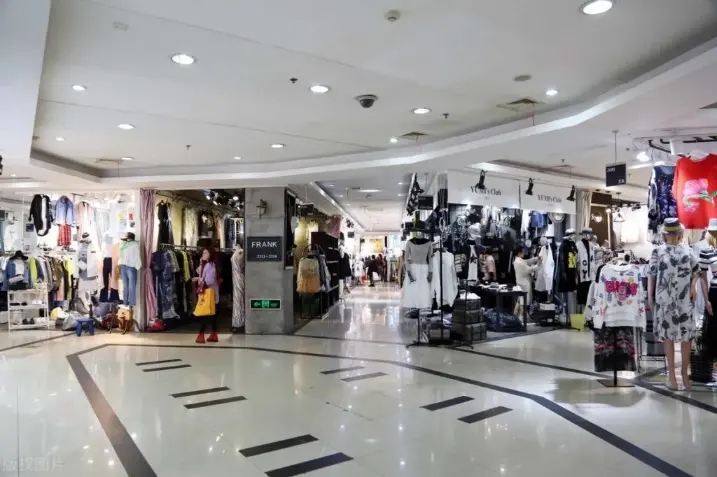
Guangzhou appears frequently in international sourcing research because it combines multiple specialized market areas with fabrics, trims, logistics, and garment-production resources in the wider region. In April 2026, Guangzhou announced a three-year plan intended to improve foreign-buyer access through measures involving payment convenience, buyer-service centers, multilingual support, trade services, and cargo consolidation. It is a plan, not proof that every service is already available in every market, so buyers should verify implementation locally. See the Guangzhou government’s announcement for the current policy context.
Why Guangzhou Is Often the First City Buyers Research
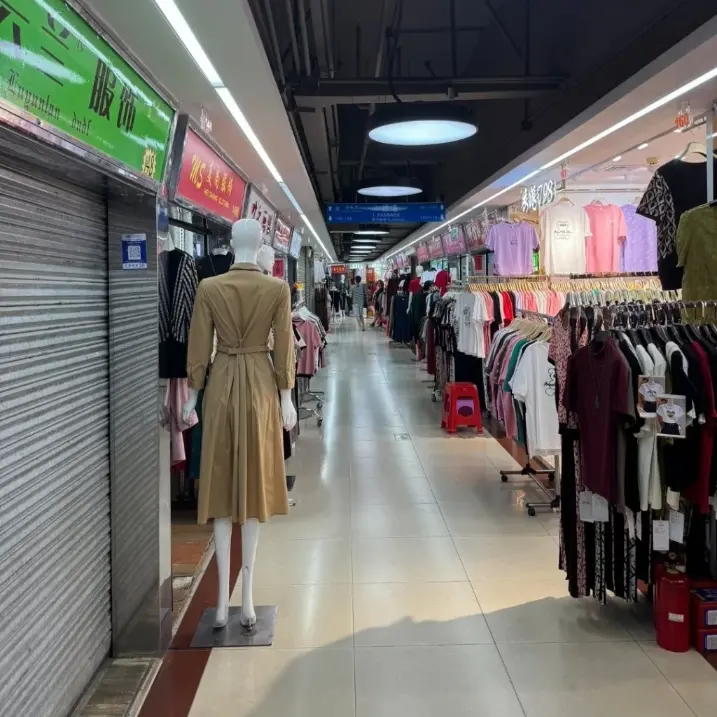
The city lets buyers research finished garments, children’s wear, fabrics, accessories, logistics, and factories within one region. That density also creates confusion: “Guangzhou clothing market” is shorthand for several districts and buildings, not one destination.
If Guangzhou is on your shortlist, compare Shahe, Baima, Shisanhang, and Liuhua before choosing a building or planning a visit.
Key Guangzhou Market Clusters and Their Buying Profiles
The descriptions below are deliberately qualitative. Current addresses and hours should be checked against market channels and a recent local source. A practical overview is available in this Guangzhou wholesale-market guide, but vendor-level terms still require direct confirmation.
Baima and the Liuhua Area — Brand-Oriented and Mid-to-Upper Market Positioning
Baima and the wider railway-station/Liuhua area are commonly researched by buyers looking for more organized fashion showrooms and a higher market position than purely price-led stock districts. The area is useful for comparing finished products, presentation, fabric hand feel, and how sellers structure their collections.
Polished merchandising is not manufacturing control. Ask whether the seller owns the brand, buys from another producer, or can document a stable source.
Shahe — Price-Led, Fast-Moving Ready Stock
Shahe is generally associated with price-sensitive, fast-moving apparel and dense ready-stock selection. It may suit buyers whose advantage comes from speed, breadth, and frequent product testing.
Low unit prices can distract from consistency. Check measurements across sizes, compare several units, and ask whether future stock will use the same material and source.
Shisanhang — Fashion Variety and Rapid Style Turnover
Shisanhang is another dense fashion-wholesale area, often considered by buyers seeking varied, trend-led merchandise. It can be useful for assortment research and fast product selection.
Treat every offer as seller specific. Record the building, floor, stall, style code, sample, price basis, size mix, and stock date. A photograph without source information is not a reorder system.
Zhongshan Ba Road — Children’s Wear and Baby Product Sourcing
The Zhongshan Ba Road area is the most relevant Guangzhou route for buyers researching children’s wear and maternity/baby categories. Multiple buildings and vendors can make it useful for inspecting product types, comparing sizing approaches, and studying the ready-stock market.
Kidswear buyers need a stricter filter. Examine seams, trim attachment, drawcords, buttons, zippers, fabric feel, labeling, packaging, and measurement consistency. Ask what documentation accompanies the product and who is responsible for destination-market requirements.
For a wider comparison beyond physical markets, see HAPA’s guide to kids clothing wholesale suppliers in China. It should be used for discovery, not as a substitute for order-specific verification.
When Guangzhou May Not Match Your Product or Buying Model
Guangzhou may be inefficient if the buyer needs one specialized material from another cluster, a category better represented elsewhere, or a tightly controlled original product. It can also overwhelm an unprepared team: more choice does not automatically produce a better shortlist.
If your core requirements include exclusive patterns, proprietary artwork, controlled grading, specific materials, branded packaging, formal sample approval, and repeat production, you may use Guangzhou for research while contracting a separate qualified manufacturer.
Beyond Guangzhou: Hangzhou, Yiwu, Changshu, and Textile-Sourcing Options
Other hubs deserve attention when they match the brief more closely. The key is to distinguish a professional garment market from a small-commodity market, a regional distribution center, or an upstream textile cluster.
Regional Hubs to Compare After Guangzhou
Hangzhou Sijiqing — Multi-Building Fashion Wholesale Ecosystem
Sijiqing is an established garment-market area with multiple fashion sections rather than a single uniform hall. Hangzhou’s official English portal reported its post-holiday reopening in March 2026 and described active women’s and men’s market areas. That current activity is useful evidence that the market remains commercially relevant, but individual sellers still determine stock, quantities, prices, and export support. Review the Hangzhou government update and reconfirm details before visiting.
Sijiqing suits fashion buyers comparing trend-led collections, but buyers should not expect every showroom to provide full OEM development.
Yiwu Huangyuan and Related Markets — Apparel Within a Broader Trading Hub
Yiwu is famous for broad commodity trade, so buyers should not assume the International Trade City is primarily a clothing market. Huangyuan is the more relevant garment destination. The Yiwu government’s Huangyuan profile lists categories including denim, menswear, womenswear, sleepwear, sweaters, sportswear, and children’s wear, and describes a mix of wholesale, retail, and foreign-trade activity.
Because that profile is older, verify the current floor plan. Yiwu can suit multi-category orders and consolidation, but may not offer equal depth in every clothing segment.
Changshu China Garment City — A Regional Garment Distribution Option
Changshu has an established garment-trading area with multiple professional markets. A February 2026 update from the Changshu municipal government highlighted current activity in the menswear center and plans involving market operations, digital services, logistics, and testing support.
Changshu is worth researching for menswear and regional distribution. Confirm the exact building and whether the merchant supports international contracting, payment, export, and after-sales handling.
Keqiao and Fabric Markets Are Upstream Sourcing, Not Ready-Garment Substitutes
Keqiao is a textile-industry cluster. China’s State Council English portal describes the district as a base with extensive textile-business activity and ongoing technology upgrades. This makes it relevant to fabric selection, textile development, printing, finishing, and material-supply research—not as a simple substitute for a finished-clothing wholesale market. See the official Keqiao textile-industry overview.
A brand visiting Keqiao still needs a garment-production plan. Confirm fabric minimums, lot consistency, color standards, finishing, testing, and the relationship between the fabric supplier and factory.
Verify the Exact Building and Product Floor Before Booking a Trip
Market articles age quickly. Buildings change tenants, floors shift categories, merchants move online, and holiday schedules interrupt normal operations.
Before booking:
- Obtain the current Chinese and English market names.
- Confirm the exact building and product floor.
- Ask whether the market serves wholesale buyers, retail customers, or both.
- Contact several relevant vendors before arrival.
- Confirm opening dates around Chinese public holidays and seasonal closures.
- Ask about payment, samples, pickup, consolidation, and export support.
If a market cannot be confirmed through a current official or first-party source, treat it as a lead to verify, not a fixed itinerary item.
Match the Market to Your Clothing Category and Business Model
The most efficient route starts with the merchandise, not the city. Buyers in the same market can need different sources because their customers, margins, quantities, and control requirements differ.
Women’s Fashion, Trend-Led Boutiques, and Fast Product Testing
Trend-led boutiques often value variety, quick selection, small tests, and frequent assortment changes. Guangzhou and Hangzhou are logical research points because both offer dense fashion-market environments.
Evaluate more than visual appeal. Check whether the garment matches your retail price, whether the size range suits your customer, and whether the source can replenish a winning style. A fast-moving market can help test demand, but a product that disappears after one order may be difficult to build into a core line.
Menswear, Basics, Outerwear, and Category-Specific Sourcing
Menswear buyers can compare dedicated sections in Hangzhou and Changshu alongside Guangzhou options. Basics and outerwear should be evaluated by construction and repeatability, not only category labels.
For outerwear, inspect lining, closures, pocket construction, seam finishing, fill or insulation claims, and care information. For basics, compare fabric weight, shrinkage expectations, measurements, neck and cuff recovery, stitching, and shade consistency.
The more technical the product, the less useful a vague “same quality” promise becomes. Ask for a written specification and a physical reference sample.
Children’s Clothing and Babywear Require a Different Checklist
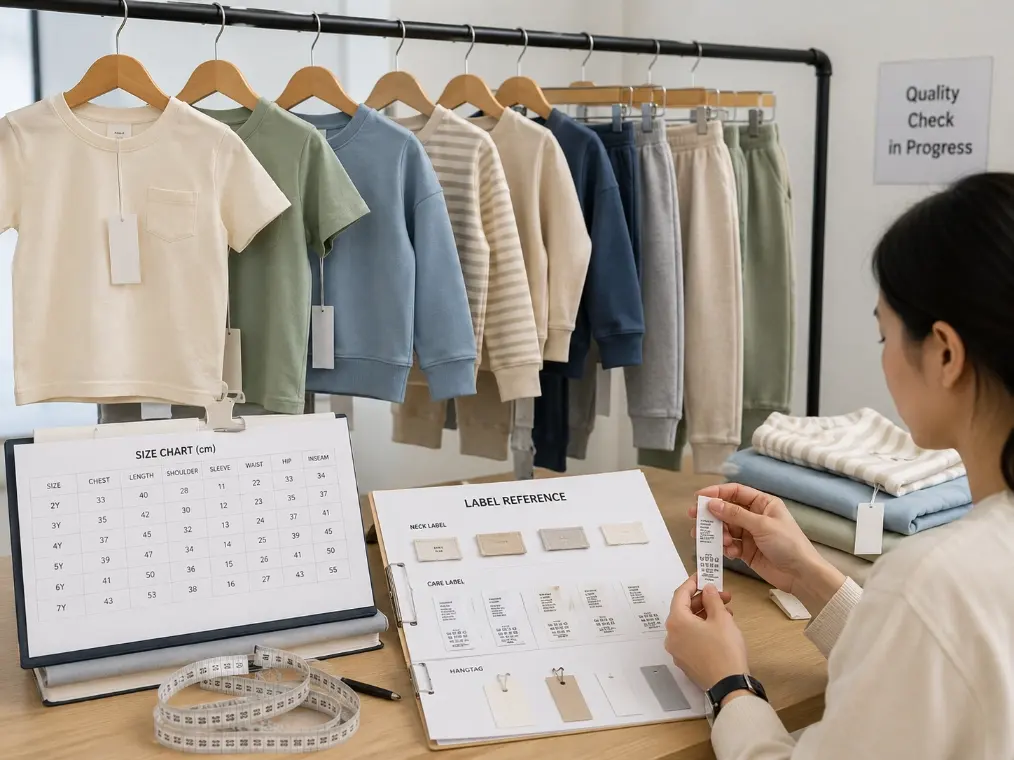
Children’s wear adds age, fit, movement, material, trim, labeling, and destination-market questions. Market stock may be useful for studying price points and silhouettes, but a buyer should not assume that an attractive sample is ready for every target market.
At a minimum, record:
- Intended age and size range
- Garment measurements by size
- Fiber and material information
- Buttons, snaps, zippers, cords, decorations, and other trims
- Seam, edge, and finishing quality
- Care and identification labels
- Packaging and traceability information
- Available test or product documentation
Requirements vary by product and destination. For custom projects, a children’s clothing OEM workflow can provide more control through tech-pack review, patterns, grading, material selection, samples, bulk production, labels, packaging, and quality checks. HAPA should still be compared with other qualified factories using the same evidence standards.
Private Label and Original Designs Need More Than Ready Stock
Adding a label to an existing garment is not the same as developing an original private-label product. Ask which of these the vendor actually offers:
- A label applied to unchanged stock
- New packaging around an existing product
- Minor changes to an existing pattern or color
- Supplier-led ODM development
- Full production from your specifications or tech pack
The deeper the change, the more important pattern control, material approval, sample revisions, intellectual-property terms, grading, and quality checkpoints become. If these responsibilities are unclear, the project is not ready for bulk ordering.
Wholesale Market or OEM Factory? Choose the Right Sourcing Model
The choice is not about which model is universally superior. It is about matching the supply relationship to the business objective.
Choose a Wholesale Market for Ready Stock and Assortment Testing
A wholesale market is usually the better starting point when you need:
- Existing products rather than original designs
- Fast assortment building
- Multiple styles from several vendors
- A limited trial before committing more inventory
- Trend and price research
- Products that do not require deep specification control
The trade-offs are weaker exclusivity, variable source transparency, seller-dependent QC, and possible difficulty reproducing the item later.
Choose an OEM or ODM Factory for Product Control and Repeatability
A factory relationship becomes more appropriate when you need:
- A product made to your design or controlled reference
- Patterns and size grading
- Specific fabrics, colors, trims, or construction
- Custom labels, hangtags, and packaging
- Formal sample approval
- Defined bulk-production checks
- A repeatable specification for future orders
Brands moving in this direction can review HAPA’s guide to buying apparel directly from a factory before preparing an RFQ.
Compare the Two Models With One Decision Matrix
| Decision factor | Physical wholesale market | OEM/ODM factory |
|---|---|---|
| Product starting point | Existing stock or seller’s current styles | Buyer specification, reference, or supplier-developed concept |
| Speed to inspect product | Often immediate if stock is present | Requires development and sample approval |
| Initial variety | High across multiple stalls | Focused on the agreed collection |
| Design control | Limited unless modifications are clearly offered | Higher when specifications, patterns, artwork, and approvals are controlled |
| Branding | Seller dependent; may be limited to labels or packaging | Can be integrated into the development and production plan |
| Reorder consistency | Must be verified; source may change | Better potential when the factory controls specifications and production records |
| QC responsibility | Buyer, seller, agent, and inspector roles may be fragmented | Can be defined through approved samples, specifications, inspections, and contracts |
| Best fit | Ready stock, assortment testing, and fast resale | Original, private-label, and repeatable production programs |
Order Models and MOQ: Ready Stock, Mixed Lots, and When Markets Stop Fitting
How you order matters as much as where you order. Understanding the real order models at wholesale markets — and their limits — is what keeps a promising sourcing trip from turning into an inventory problem.
How order models work at wholesale markets
Most market buying falls into three patterns. You can buy pure ready stock, taking what is available in current styles. You can build mixed lots, combining small quantities of many styles to spread risk. Or, for a few vendors, you can arrange light customization on top of an existing style. Each stall sets its own terms, and those terms are negotiated in person or through an agent, not published.
Mixed lots and small-batch buying
Mixed-lot buying is the market’s real superpower for smaller brands. Instead of committing to hundreds of one design, you assemble a range across styles and sizes, see what sells, and reorder the winners. It is an efficient way to test a market before scaling — as long as you treat every reorder as a fresh quality check rather than an assumption.
Why low MOQ isn’t the same as low risk
It is tempting to read a China wholesale clothing market’s low MOQ as low risk. It is not the same thing. Low minimums make it easy to start, but they say nothing about whether sizing is consistent, whether the next batch matches the last, or whether the source will still exist next season. A low entry quantity and a dependable, repeatable supply are two different questions, and confusing them is one of the most common sourcing mistakes.
Signs it’s time to move to an OEM factory
You have likely outgrown market ready stock when several of these are true:
- You need original designs rather than styles anyone can buy.
- You require the same product, in the same fit and quality, season after season.
- You want your own labels, size chart, and retail packaging.
- You need stronger, documented quality control and destination-market compliance.
- You are scaling to volumes where consistency matters more than variety.
At that point, the China wholesale market vs clothing factory decision tilts toward the factory. An OEM or private label partner develops your product to your specification, controls grading and labeling, and produces repeatable batches. For a branded kids’ line, that is the difference between reselling stock and owning a product — which is exactly what a private label kidswear manufacturer is set up to deliver.
Verify Vendors and Reduce Risk Before You Pay
Whichever market you choose, the moment before payment is where risk concentrates. A short, disciplined verification routine protects you far more than any single “trusted” recommendation. Keep it lightweight but consistent.
Confirm who you’re actually buying from
First, establish what kind of supplier you are dealing with. Ask directly whether the vendor is a stall reseller, a trading company, or an actual factory, and ask for evidence rather than assurances. A polished ground-floor showroom does not prove production capability, and the answer changes what you can reasonably expect on customization, consistency, and accountability.
Samples, written specs, and payment terms
Second, put the deal on paper before money moves:
- Samples first. Approve a physical sample, and for reorders, pull pieces from actual stock rather than judging by a display.
- Written specifications. Record styles, materials, sizes, quantities, and packaging so expectations are documented, not remembered.
- Payment and responsibility. Confirm who you are paying and how, avoid paying full amounts to unverified personal accounts, and agree in advance who is responsible for defects, consolidation, and shipping.
A full pre-visit checklist deserves its own treatment, but these basics prevent the most common losses. Our guide on how to find and vet clothing manufacturers goes deeper on supplier verification, and our China clothing wholesale suppliers list can help you cross-check vendors and platforms.
Visit in Person or Source Remotely, Plus International Buyer Access
Finally, decide how you will actually transact. Visiting in person and sourcing remotely are both valid, and each carries trade-offs worth weighing against your budget and experience.
Visiting a market in person
Going yourself lets you feel fabric, inspect stitching, negotiate face to face, and see the real range rather than a curated selection. It costs time and travel, and it works best when you arrive with a category plan and a shortlist rather than wandering. If you go, plan around market hours and China’s holiday and trade-fair periods, when many stalls close.
Sourcing remotely with agents
If you cannot travel, a sourcing agent can inspect stock, negotiate, arrange samples, consolidate orders, and manage shipping on your behalf. The key is to define responsibilities clearly: who verifies suppliers, who checks quality, who holds payment, and what the inspection actually covers. A remote model can work well, but only with those boundaries written down.
International buyer access and recent changes
Access for overseas buyers is also improving. In April 2026, Guangzhou’s municipal government announced a three-year action plan to make its specialized wholesale markets easier for international buyers to use, citing more than 20 million overseas buyer visits in 2025. Announced measures include enabling major foreign card payments for core vendors in key districts, foreign buyer service centers offering translation and foreign-exchange support, simpler customs procedures with bulk-cargo consolidation, and dedicated shuttle routes linking the Canton Fair to major markets. These are official commitments rolling out over time, so verify what is actually live before you depend on any single service.
Conclusion: Match the Market to Your Model
There is no crown to hand out. The best clothing wholesale markets in China are simply the ones that fit your category, your price tier, and your order model — Guangzhou for breadth, Hangzhou for women’s wear, Yiwu for accessories, Changshu for menswear and volume, and Guangzhou’s Zhongshan Ba Road for kids. Judge them by consistent criteria, know whether you are buying from a stall, a trader, or a factory, and verify before you pay.
The clearest signal to change approach is your own growth. When you need original designs, your own labels, controlled sizing, dependable repeat quality, and destination-market compliance, market ready stock has done its job and a manufacturer becomes the better partner. If you are reaching that point with a children’s line, prepare a tech pack and size chart, request samples, and talk to a product development team about a custom or children’s clothing OEM program built to your specification.
Frequently Asked Questions
What is the best clothing wholesale market in China?
There is no single best market. The right one depends on your product category, price tier, and order model. Guangzhou suits most buyers for its range; other cities specialize by category and price.
Which city is best for wholesale clothing in China: Guangzhou, Yiwu, or Hangzhou?
Guangzhou offers the broadest categories and logistics, Hangzhou is strongest for women’s wear, and Yiwu leads on accessories and low-cost basics. Choose based on what you actually sell.
Can foreign buyers buy directly at Guangzhou clothing wholesale markets?
Generally yes, though language, payment, and shipping create hurdles. Guangzhou is expanding foreign-buyer services like translation and card payments, but many stalls still prefer local payment and domestic delivery, so plan ahead.
What MOQ should I expect at a China clothing wholesale market?
Minimums vary by stall and category, and are often low, but not universal. Treat a low MOQ as an easy start, not proof of low risk, since consistency and reorder reliability still need checking.
Where can I buy wholesale children’s clothing in Guangzhou?
Guangzhou’s main kids’ wear district is along Zhongshan Ba Road in Liwan, with large markets like Zhong Ba Children’s Garment Plaza and Fuli Kids World covering infant through older children’s ranges.
Should I buy ready stock or work with an OEM manufacturer?
Ready stock suits testing, variety, and quick restocks. Move to an OEM manufacturer when you need original designs, your own labels, controlled sizing, and the same quality repeated across seasons.
Can I source from Chinese wholesale markets without visiting China?
Yes, through a sourcing agent who inspects stock, negotiates, arranges samples, and manages shipping. Success depends on defining who verifies suppliers, checks quality, and holds payment before you commit.
How do I verify a market vendor before paying?
Confirm whether they are a stall, trader, or factory, approve a physical sample, document specifications in writing, and clarify who you pay and who is responsible for defects and shipping.