Finding names is the easy part of sourcing apparel. Finding the right transaction model, production capability, and evidence is harder. This China clothing wholesale suppliers list compares ten options, but they are not ten interchangeable factories. The list includes direct manufacturers, an apparel group, B2B sourcing platforms, low-volume marketplaces, and fulfillment services.
That distinction matters. A platform may offer enormous choice but leave supplier verification to you. A specialized factory may offer far deeper product development but no ready-stock catalog. A dropshipping service may remove inventory work while giving you less control over the original producer.
Our view is simple: the best apparel vendor is not the company with the longest capability list. It is the option whose normal operating model most closely matches your product, order size, customization level, quality-control needs, and internal sourcing resources.
Why China Leads Wholesale Clothing Sourcing
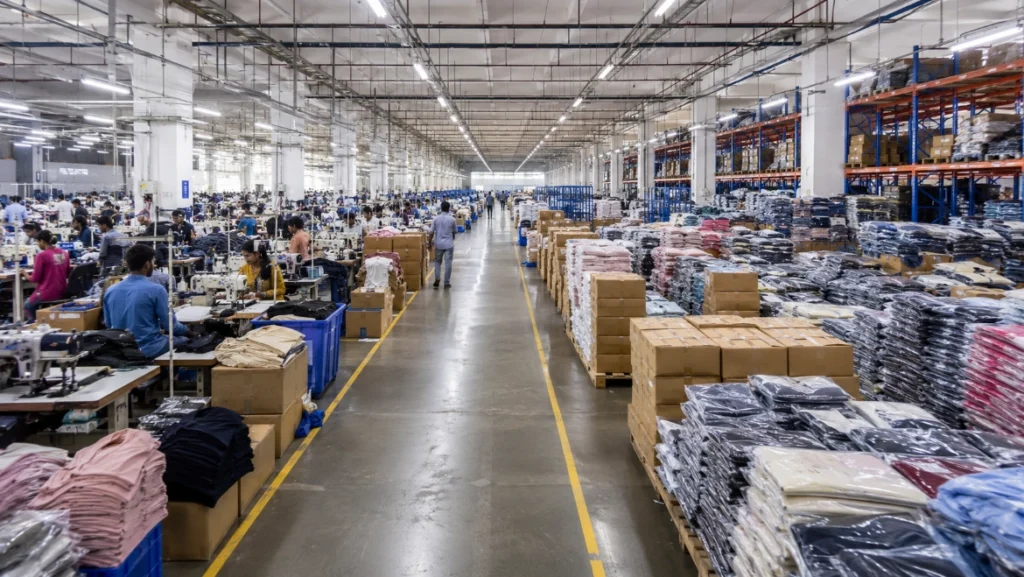
China’s strength lies in its highly integrated apparel ecosystem. Fabrics, trims, labels, packaging, sampling, and production are often concentrated within the same manufacturing clusters, helping suppliers shorten lead times and respond quickly to design changes. WTO data shows that 89.1% of the value in China’s textile and clothing exports was generated domestically in 2022.
Buyers can source everything from basic T-shirts to technical outerwear and detail-intensive garments through specialized factories. China also benefits from mature ports, freight networks, and export documentation experience. However, supplier capabilities vary widely, so careful verification remains essential before placing bulk orders.
How We Evaluated the 10 Apparel Vendors
A “best vendors” list is only as reliable as the method behind it. We evaluated each supplier using the following six criteria:
- Verifiability: Every vendor is a real, established business whose services can be confirmed through its official website or platform. We excluded suppliers based only on unverifiable claims.
- Apparel Category Coverage: Each vendor meaningfully serves clothing buyers rather than treating apparel as a minor or secondary category.
- Clear Service Model: We identified whether each company operates as a marketplace, sourcing platform, agent, wholesaler, or direct manufacturer, so buyers know what level of service to expect.
- Buyer Protection and Accountability: We considered features such as secure payment systems, supplier audits, inspection services, dispute support, and direct factory accountability.
- Buyer Accessibility: Vendors were assessed on whether they provide realistic entry points for small and medium-sized buyers, rather than serving only large enterprise accounts.
- Supplier Diversity: The final list covers the main ways businesses source wholesale clothing from China, helping different buyer types find a suitable option.
10 China Apparel Vendors and Sourcing Platforms to Compare
The entries are grouped by sourcing model. Numbering supports navigation and does not represent an audited quality score. Read each profile as a routing guide: it explains what the option is designed to do, where it may fit, and what must still be verified before money or production is committed.
Direct Manufacturers and Apparel Groups
1. Taian JTL Garment Co., Ltd.: Best Fit for Functional and Heated Apparel OEM/ODM
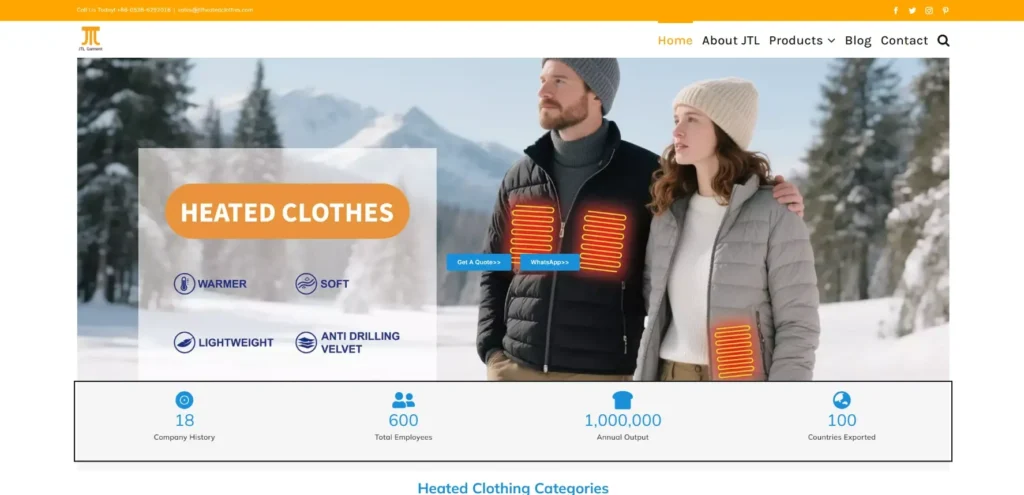
Taian JTL Garment presents itself as an OEM/ODM manufacturer specializing in heated and functional clothing. An associated Bowins company page identifies JTL as a wholly owned factory within a broader functional-apparel operation. This makes it more relevant to technically specified outerwear than to buyers seeking a general ready-stock fashion catalog.
Main Products / Services
Heated jackets, heated vests, heated pants, skiing clothing, outdoor apparel, and OEM/ODM development for functional garments.
MOQ / Order Model
Project-based OEM/ODM. A universal MOQ is not clearly published for every construction, so buyers should request quantities by garment, heating system, fabric, color, and component configuration.
Pros
- Clear specialization in heated and functional apparel
- Product categories align with technical outerwear development
- Publicly identified within a broader functional-garment manufacturing group
Cons
- Not designed as a general fashion wholesaler
- Heating components add testing, documentation, and warranty questions
- Contracting and factory relationships should be confirmed for each order
Best For: Outdoor, workwear, ski, or heated-apparel brands with detailed specifications and the resources to validate technical components.
Buyer Check: Confirm the legal, payment, and production entities; component sourcing; sample development; test responsibilities; QC stages; MOQ; and the exact production location.
2. Shanghai Garment Group: Best Fit for Established Buyers Exploring a Diversified Apparel Group
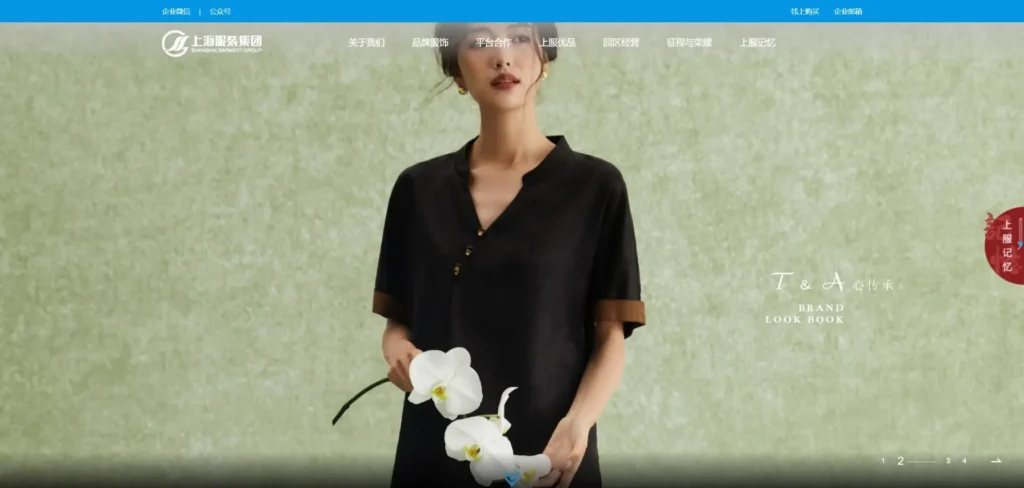
The official Shanghai Garment Group overview describes Shanghai Garment (Group) Co., Ltd. as an organization spanning garment business, brands, fashion-related activities, and creative-industry operations. It is not presented like a conventional wholesale website, so the group name should be treated as an entry point to a business relationship, not proof of a specific production offer.
Main Products / Services
The public site highlights garment business, brand clothing, platform cooperation, and fashion-industry activities. It does not provide a sufficiently detailed export-manufacturing catalog for this article to assign a fixed product range.
MOQ / Order Model
Not publicly standardized. MOQ, sampling, production, and export terms would depend on the specific group company or business unit handling the inquiry.
Pros
- Broader apparel and fashion-group context
- Potential access to brand, platform, and garment-business resources
- Suitable for buyers able to conduct entity-level due diligence
Cons
- No simple public wholesale catalog or universal ordering model
- Exact manufacturing and export roles are not obvious from the group overview
- Less accessible for buyers seeking a quick online quotation
Best For: Established procurement teams exploring a diversified Shanghai apparel organization and prepared to identify the correct operating company.
Buyer Check: Ask which entity will quote, contract, manufacture, export, receive payment, own patterns, perform QC, and accept responsibility for delivery.
3. HAPA: Best Fit for Custom Kidswear and Private Label Development
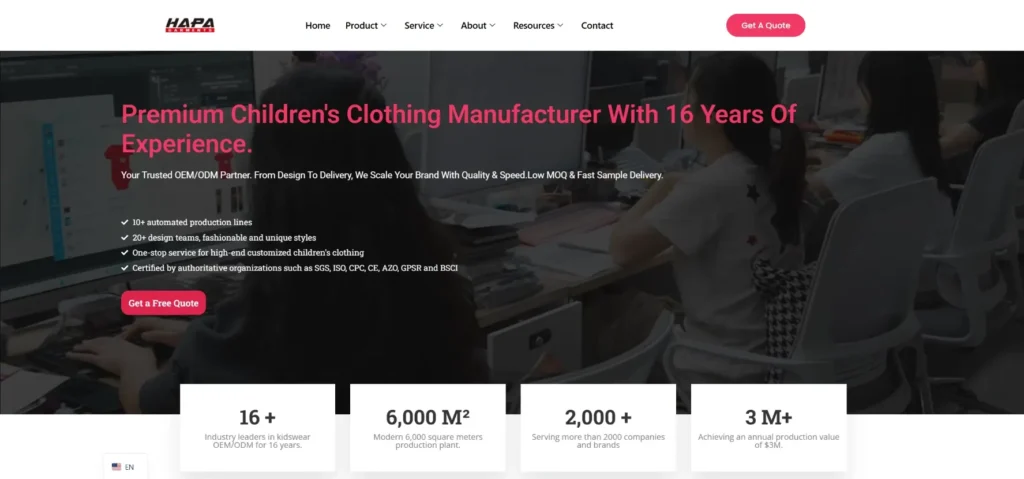
Publisher disclosure: HAPA publishes this article and is included as one option. Its position at number three is not an independent award or a claim that it is suitable for every apparel buyer.
HAPA’s children’s clothing OEM service covers tech-pack review, patterns and grading, fabric and trim selection, sampling, bulk production, checks, labels, and packaging. Its private label kidswear service is intended for baby, girls’, and boys’ apparel brands that need more product control than ready-stock purchasing provides.
Main Products / Services
Custom kidswear including dresses, sets, T-shirts, hoodies, jackets, pants, pajamas, and related categories, supported by OEM/ODM development, private labels, custom packaging, and samples.
MOQ / Order Model
Custom OEM/ODM and private label. HAPA’s current private-label page states that MOQ starts at 100 pieces, while the final requirement depends on style, color, fabric, size range, labels, packaging, and production method. Buyers should reconfirm this for the quotation.
Pros
- Focused on children’s clothing development rather than generic adult stock
- Combines sampling, grading, materials, branding, and production in one workflow
- Useful for original designs and deeper private-label projects
Cons
- Not the natural choice for adult ready-stock dropshipping
- Custom development requires approvals before bulk production
- Project-specific testing, timing, and documentation still require written confirmation
Best For: Emerging and established kidswear brands that need custom products, brand presentation, and a controlled sample-to-production process.
Buyer Check: Compare HAPA’s sample, specifications, MOQ basis, revision terms, QC plan, payment milestones, and destination-market documentation with other qualified factories.
B2B Platforms for Supplier Discovery
4. Alibaba.com: Best Fit for Broad Supplier Discovery and RFQs
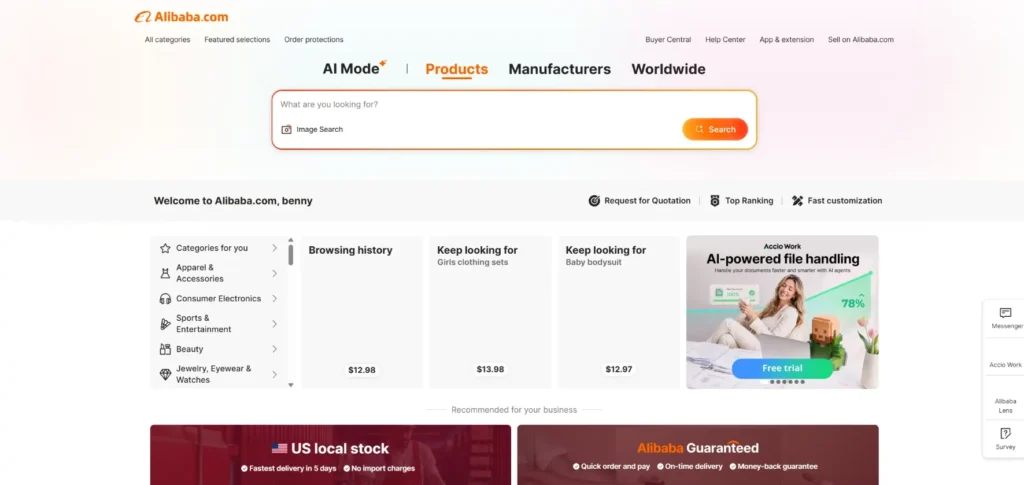
Alibaba.com’s clothing supplier pages aggregate independent manufacturers, trading companies, and other sellers across many apparel categories. The platform is valuable for discovery and standardized RFQs, but Alibaba.com itself is not the factory making every listed garment.
Main Products / Services
Supplier search, ready-to-ship listings, custom apparel inquiries, RFQs, online orders, and seller-dependent OEM, ODM, or private-label offers.
MOQ / Order Model
Seller and listing dependent. Buyers may find single-unit samples, low-quantity listings, and factory-scale custom MOQs on the same platform.
Pros
- Very broad apparel supplier pool
- Useful RFQ and quote-comparison workflow
- Online-order protection framework is available for eligible transactions
Cons
- Seller capabilities and business types vary widely
- Badges and profile claims do not approve the actual garment
- Vague or off-platform changes can weaken the documentary trail
Best For: Buyers who can manage supplier screening and want to compare several manufacturers or trading companies from one discovery channel.
Buyer Check: Verify the seller’s legal and production identity, sample, specifications, and payment route. Alibaba states that Trade Assurance protection is based on the online order, so include measurable requirements there.
5. Made-in-China.com: Best Fit for Manufacturer and Wholesaler Comparison
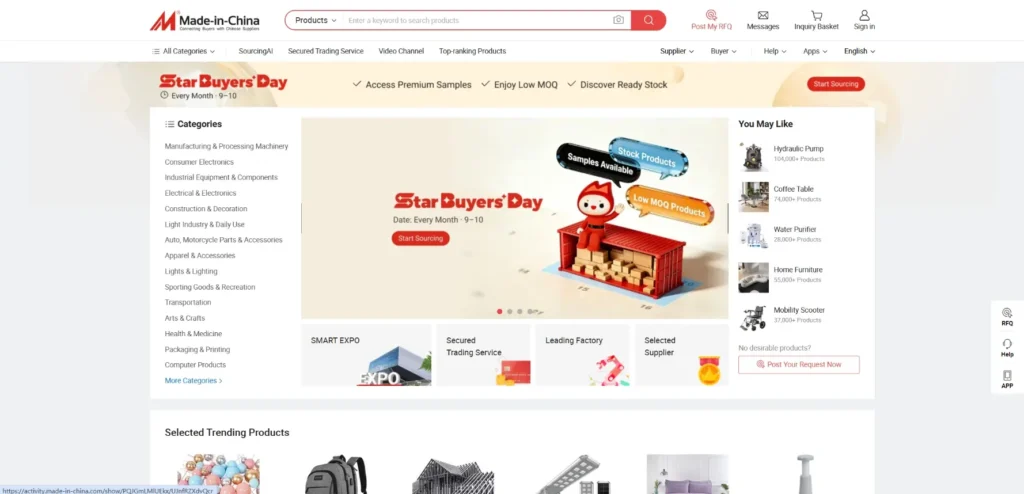
Made-in-China.com’s clothing directory supports supplier discovery across apparel categories. Its Audited Supplier program provides reports prepared through inspection organizations, which can add more screening detail than a basic profile badge.
Main Products / Services
Manufacturer and wholesaler directories, apparel listings, supplier profiles, sourcing requests, direct inquiries, and audit-report access for participating suppliers.
MOQ / Order Model
Supplier dependent. Ready-made products, samples, and custom manufacturing can carry different minimums even within one supplier profile.
Pros
- Structured manufacturer and product comparison
- Audit reports can reveal legal, facility, and capability details
- Useful for distinguishing factories from trading companies
Cons
- An audited company is not the same as an approved product
- Report dates and scope need to be checked
- Sampling and contract control remain the buyer’s responsibility
Best For: Procurement teams that value supplier directories and want access to more formal screening documents before direct contact.
Buyer Check: Read the full report, including legal name, business type, address, production areas, and date. The platform says its Audited Supplier program includes document and on-site checks, but buyers still need product-specific samples and terms.
6. Global Sources: Best Fit for Online and Trade-Show Supplier Discovery
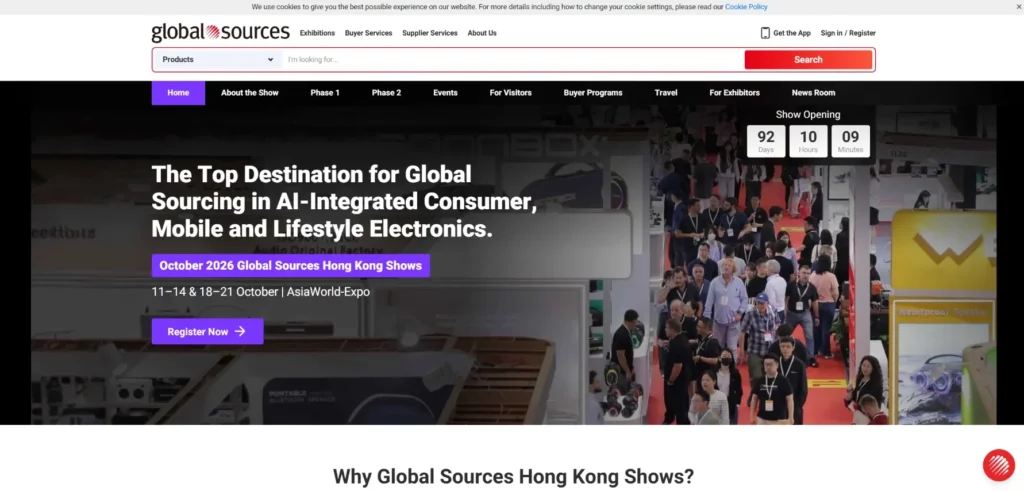
Global Sources combines online supplier discovery, buyer tools, and trade-show activity. It can move a sourcing project from desktop research to face-to-face product and supplier comparison, although every exhibitor still requires order-specific verification.
Main Products / Services
Online supplier discovery, product categories, buyer tools, sourcing content, trade shows, and direct supplier engagement across a broader B2B marketplace.
MOQ / Order Model
Supplier dependent. Global Sources facilitates discovery; the individual supplier defines samples, custom development, minimums, payment, and production terms.
Pros
- Combines digital research with in-person sourcing opportunities
- Useful for concentrated supplier and sample comparison
- Suitable for professional buying teams with prepared briefs
Cons
- Apparel depth varies by supplier and event
- Verification language does not guarantee the order
- Trade-show presentation can distract from technical evidence
Best For: Professional buyers who want to combine online shortlisting with direct meetings and physical sample review.
Buyer Check: Confirm what verification covers, match the online company to the booth and contract entity, and use the same sample, specification, and inspection standards applied elsewhere.
Low-Volume Marketplaces for Ready-Made Product Testing
7. AliExpress: Best Fit for Single-Unit and Small-Batch Product Testing
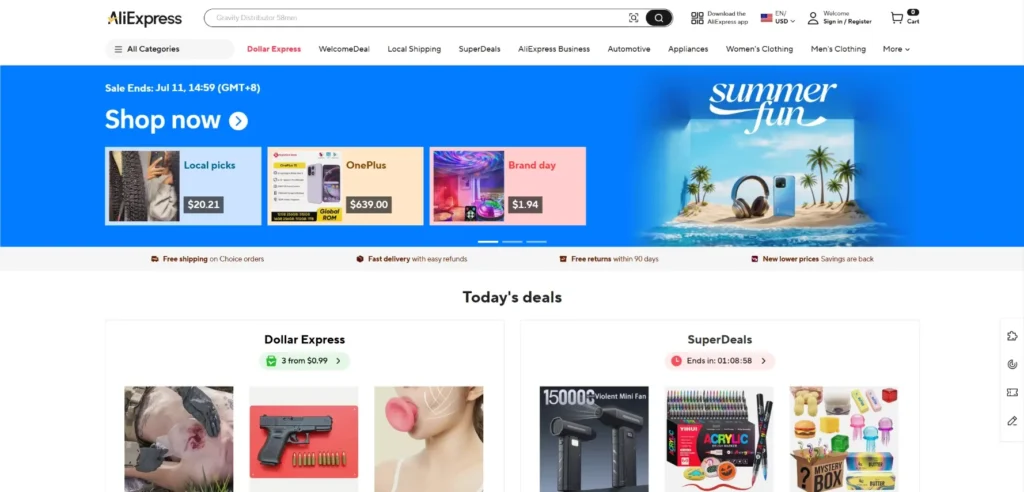
Alibaba Group describes AliExpress as a global retail e-commerce platform. It can help a small seller buy one or a few ready-made items for product research, but it should not be confused with a stable OEM factory or conventional B2B wholesale relationship.
Main Products / Services
Ready-made fashion and general consumer products from independent sellers, with retail-style ordering, shipping, and platform transactions.
MOQ / Order Model
Often single-unit or small-quantity retail purchasing, depending on the seller. This is product testing, not evidence of scalable production.
Pros
- Low barrier to ordering samples or test products
- Useful for studying construction, demand, sizing, and price position
- Broad ready-made assortment
Cons
- Retail marketplace rather than a dedicated B2B manufacturing channel
- Seller may not control the factory or future source
- Limited continuity, exclusivity, and custom-development control
Best For: Small e-commerce sellers conducting low-cost product research before choosing a repeatable wholesale or manufacturing route.
Buyer Check: Review seller identity, material descriptions, intellectual property, resale restrictions, returns, taxes, logistics, and whether a successful listing can be replenished from the same source.
8. DHgate: Best Fit for Small Wholesale Tests and Ready-Made Inventory
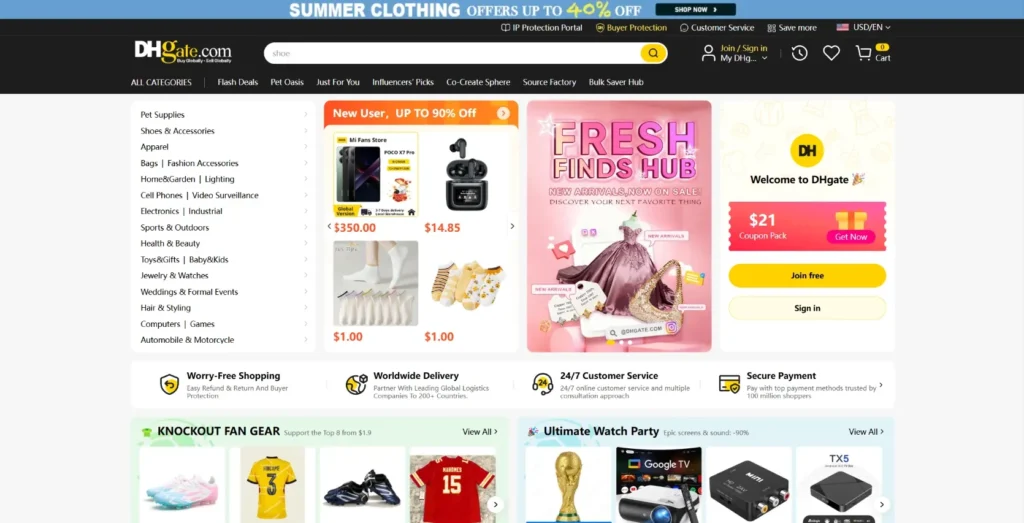
DHgate is a multi-seller cross-border marketplace with apparel listings suited to ready-made product exploration and small purchasing tests. It can help retailers compare styles without opening a full development project, but easy checkout should not be mistaken for long-term supply continuity.
Main Products / Services
Ready-made apparel, accessories, and other products offered by independent marketplace sellers, with seller-specific order and fulfillment terms.
MOQ / Order Model
Listing dependent. Some products support small quantities, while larger or customized orders require direct confirmation with the seller.
Pros
- Accessible for small ready-made tests
- Broad multi-seller product choice
- Lower commitment than custom OEM development
Cons
- Fabric, construction, and source continuity may change
- Limited control over original production
- Product imagery and brand references need IP review
Best For: Retailers testing ready-made styles before committing to a larger inventory or custom-manufacturing program.
Buyer Check: Compare the physical sample with the listing, save specifications, review dispute and return terms, and ask how the same product will be sourced for replenishment.
Wholesale and Fulfillment Services for E-commerce Sellers
9. FashionTIY: Best Fit for Multi-Category Fashion Wholesale
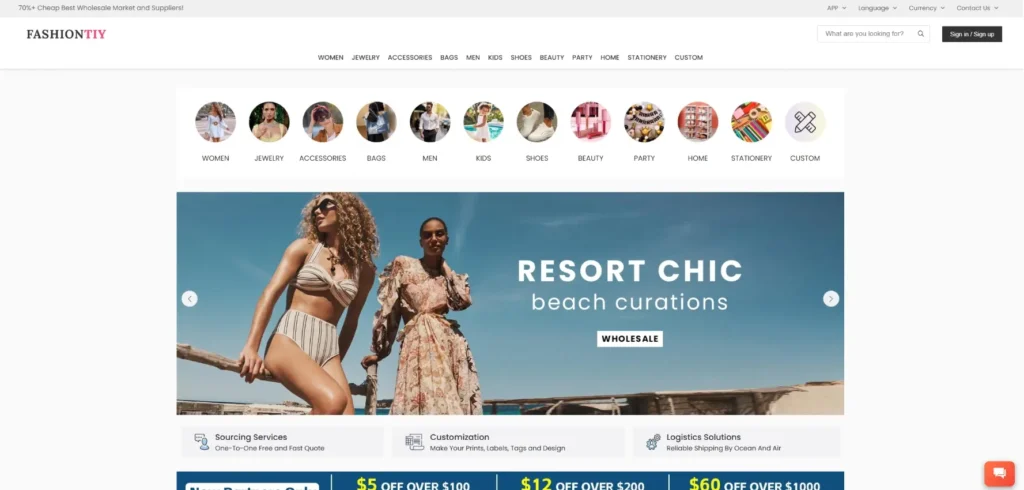
FashionTIY’s terms describe it as a wholesale platform serving small and medium-sized wholesalers and retailers. Its broader assortment and customization options can simplify multi-category purchasing, but buyers still need visibility into source continuity, freight, and after-sales responsibility.
Main Products / Services
Women’s, men’s, and children’s fashion, accessories, multi-category wholesale purchasing, product sourcing, and selected packaging, tag, label, size, or print customization.
MOQ / Order Model
Product dependent. Current platform guidance says many items may be purchased without a conventional MOQ, while customization and specific listings can have separate requirements.
Pros
- Multi-category wholesale assortment
- Useful for small and medium-sized retailers
- Sourcing and selected customization options are available
Cons
- Broad assortment does not prove a common production source
- Mixed-product shipping can change final margin
- Repeat-order consistency and defect responsibility need confirmation
Best For: Boutiques and online retailers combining apparel with related fashion categories in one purchasing workflow.
Buyer Check: Confirm MOQ by product, customization scope, sample access, label ownership, freight calculation, return terms, defect handling, and whether repeat orders use the same source.
10. EPROLO: Best Fit for Fashion Dropshipping, Sourcing, and Fulfillment
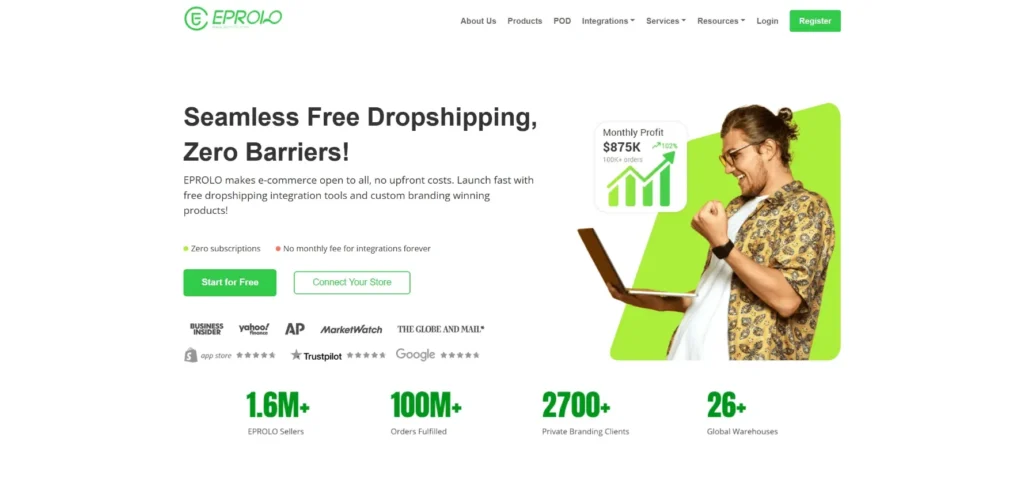
EPROLO describes itself as a dropshipping platform and supply-chain solution supporting sourcing, store integration, branding, inventory management, warehousing, and fulfillment. Its value lies in coordinating e-commerce operations, not in acting as one identifiable apparel factory for every product.
Main Products / Services
Fashion and general-product sourcing, dropshipping, private-branding options, store integrations, inventory management, print-on-demand connections, warehousing, and fulfillment.
MOQ / Order Model
Dropshipping and service-based sourcing. EPROLO currently promotes no-MOQ options for parts of its fashion and branding offer, but eligibility, customization fees, and product conditions should be reconfirmed.
Pros
- Combines sourcing, branding, and fulfillment functions
- Useful for sellers minimizing conventional inventory
- Store integrations can reduce manual order handling
Cons
- Not a single direct clothing factory
- Product quality depends partly on underlying sources
- Fees, returns, delivery service levels, and branding eligibility vary
Best For: E-commerce sellers prioritizing dropshipping operations, product sourcing, branding, and fulfillment over original cut-and-sew development.
Buyer Check: Verify the underlying source, contracting entity, product consistency, QC responsibility, branding eligibility, fees, returns, warehouse location, and delivery terms.
Compare the 10 Suppliers by Business Model
The detailed profiles become easier to use when reduced to the same operational questions. The comparison below highlights entity type, intended use, product route, and the one issue that most needs verification before each option reaches a shortlist.
Compare entity type, product fit, and order model
| Option | Entity type | Best used for | Product route | Main point to verify |
|---|---|---|---|---|
| Taian JTL | Functional-apparel manufacturer | Heated and technical outerwear development | OEM/ODM | Contract entity, components, testing, production site |
| Shanghai Garment Group | Apparel and fashion group | Experienced buyers exploring group resources | Business-unit dependent | Exact supplier, exporter, and production entity |
| HAPA | Kidswear manufacturer | Custom and private-label children’s apparel | OEM/ODM/private label | Project-specific MOQ, samples, QC, documents |
| Alibaba.com | B2B marketplace | Broad discovery and RFQs | Seller dependent | Seller identity and online-order specifications |
| Made-in-China.com | B2B directory/marketplace | Manufacturer comparison | Supplier dependent | Audit report details and actual business type |
| Global Sources | B2B sourcing platform | Online and trade-show discovery | Supplier dependent | Verification scope and contracting entity |
| AliExpress | Retail marketplace | Single-unit product testing | Ready-made | Continuity, resale, IP, and seller terms |
| DHgate | Cross-border marketplace | Small ready-made tests | Ready-made/seller dependent | Sample match, continuity, dispute terms |
| FashionTIY | Wholesale platform | Multi-category wholesale buying | Ready-made/customization varies | Source continuity, freight, after-sales responsibility |
| EPROLO | Sourcing and fulfillment service | Dropshipping and operational support | Catalog/sourcing/branding | Underlying source, fees, QC, fulfillment terms |
Build a three-supplier shortlist for evidence-based comparison
Do not shortlist three businesses merely because they appear popular. Build a shortlist that tests your real decision.
For a custom product, compare two manufacturers with relevant category depth and one credible alternative. For ready stock, compare two wholesale or marketplace sellers and one backup source. For dropshipping, compare the fulfillment workflow as carefully as the item itself.
Send every candidate the same brief. Otherwise, you are comparing different products, terms, and assumptions rather than different suppliers. Kidswear buyers considering bulk orders can use HAPA’s guide to buying bulk kids clothing from China as an additional planning reference.
Match the Supplier Type to Your Apparel Business
The same provider can be useful for one business and unsuitable for another. Starting with your inventory model, design ownership, product complexity, and internal sourcing capacity prevents you from paying for capabilities you do not need or expecting services the supplier was never built to provide.
For boutiques buying ready-made stock
Choose a wholesaler or marketplace when speed and assortment matter more than exclusive construction. Check whether sizes can be mixed, whether products are genuinely in stock, and whether restocks come from the same source. A cheap first order has limited value if the winning style cannot be replenished consistently.
For e-commerce sellers using dropshipping
Dropshipping shifts inventory work, but it does not remove product responsibility. Evaluate stock synchronization, packing slips, branding, delivery tracking, returns, customer-data handling, and what happens when the source changes.
The hidden product in a dropshipping relationship is the operating process. Test it by ordering to several destinations, checking packaging and tracking, and recording how exceptions are handled.
For brands adding private labels to existing styles
“Private label” can mean three very different things: applying a label to an existing garment, modifying an existing style, or developing a more distinct product with supplier design support. Ask which level is offered before comparing prices.
Confirm label method, care-label responsibility, packaging, color and fabric choices, pattern ownership, exclusivity, and reorder continuity. HAPA’s private label clothing manufacturing page shows the deeper end of this route for kidswear, where sampling and product development sit alongside labels and packaging.
For custom OEM or ODM apparel development
Choose OEM when you already control the design and specifications. Consider ODM when you need the supplier to contribute patterns, materials, or design development. In both cases, the quality of the supplier’s questions is evidence.
A capable development partner should ask about end use, fabric performance, measurements, construction, trims, artwork, grading, target market, packing, and test requirements. A supplier that quotes immediately from a reference image may be fast, but it is also pricing unknown assumptions.
For children’s clothing and kidswear brands
Kidswear adds decisions that generic adult-fashion sourcing may overlook: age-appropriate fit, grading, fabric feel, trim security, label placement, drawcord or small-part risks, packaging, and destination-market documentation.
For this category, supplier fit means more than sewing ability. It means the supplier can translate approved details across sizes and production. Buyers pursuing custom children’s clothing OEM should make the approved sample, measurement chart, trim details, and packaging standard part of one controlled specification set.
How to Find, Vet, and Choose a Reliable Supplier
A list of ten gets you started, but your best long-term supplier might not be on any list. What you need is a repeatable process for finding candidates, verifying them, and matching one to your business.
Where to find suppliers
Beyond the platforms above, five channels consistently produce good candidates. B2B marketplaces offer the widest funnel — use filters like business type and verification status to cut trading companies out of a factory search. Trade shows, from the Canton Fair to category-specific apparel expos, remain the highest-signal channel: you can touch fabric, examine stitching, and read a supplier’s professionalism in person before committing anything. Sourcing agents make sense when you lack the time or experience to manage the process, provided the fee structure is transparent. Wholesale markets, particularly Guangzhou’s garment district, suit stock buyers more than brand builders. And direct outreach — approaching a factory whose work you have seen, or finding one through social channels where factories now show their production floors — often surfaces suppliers who never paid for marketplace placement.
If your category is children’s wear specifically, we keep a dedicated round-up of kids clothing wholesale suppliers in China that goes deeper on that niche.
How to verify a supplier before ordering
Run every serious candidate through the same sequence:
- Request the business license. A legitimate company provides it without friction. Cross-check the registered name against what appears on quotes and invoices.
- Treat platform badges as a filter, not proof. Verified and audited statuses narrow the field; they do not replace your own checks.
- Run the factory-vs-middleman test. Ask what is running on their production floor right now and for which markets. A factory answers specifically; a middleman answers vaguely.
- Order a physical sample. Photos hide what hands discover — fabric weight, seam strength, stitch density, sizing accuracy. Never move to bulk on images alone.
- Review third-party evidence. Recent audit reports and product test reports tell you how the supplier performs when someone independent is checking.
- Judge the communication. A supplier who asks sharp technical questions about your spec is showing you their competence. One who only quotes prices is showing you theirs too.
Walk away on any of these red flags: prices dramatically below every other quote, refusal to provide a sample, vague answers about materials, no compliance documentation for your target market, or pressure to skip inspection and pay in full upfront.
One point on compliance deserves its own paragraph. If you import clothing — especially children’s clothing — regulatory responsibility sits with you, the importer, not the factory. A good supplier supports compliance with certified materials and current test reports, but it cannot absolve you of it. Before ordering, confirm the requirements for your specific market with the official body that governs it: for the United States, that is the Consumer Product Safety Commission; for textile chemical safety, certifications such as OEKO-TEX Standard 100 are widely requested evidence that fabrics have been tested for harmful substances. Raise compliance in your first conversation with a supplier, not your last.
Build a Shortlist and Start With a Controlled Trial Order
Once the wrong supplier models have been removed, the remaining candidates should face the same brief and the same evidence standard. A controlled trial order lets the buyer test communication, specification control, production discipline, and exception handling before increasing commitment.
Shortlist suppliers by product and order model
Start by eliminating mismatched models. Then shortlist two or three candidates that can plausibly support your category, customization level, quantity, destination market, and operating needs.
A trial order should test the system, not only the garment. Observe specification control, communication, sample revision, labeling, packing, inspection evidence, shipping documents, and exception handling. A perfect sample followed by a chaotic process is still a warning.
Send the same RFQ and compare evidence with one scorecard
Send each candidate the same information:
- Product category and end use
- Reference images, sample, or tech pack
- Fabric and performance requirements
- Construction and trim details
- Size range and measurement chart
- Colors and artwork files
- Estimated quantity by style and color
- Branding, labels, and packaging
- Target market and sales channel
- Required sample and testing plan
- Desired trade term and destination
- Target approval and delivery dates
Score not only the answer, but the questions the supplier asks. Good questions expose assumptions before they become defects. Compare entity clarity, product fit, sample quality, documentation, total cost, communication, and risk.
Contact HAPA for custom kidswear development
If your project involves original or private-label children’s clothing, prepare your tech pack or reference images, size range, target quantity, fabric preferences, branding requirements, destination market, and target timeline.
You can then discuss your custom kidswear project with HAPA or request a custom kidswear sample. HAPA should remain one candidate in your evidence-based comparison, not an automatic choice.
The central lesson from this China clothing wholesale suppliers list is that sourcing success does not come from collecting more names. It comes from matching the supplier model to the order, controlling the specification, and requiring evidence at each stage before increasing commitment.
Frequently Asked Questions
What is the difference between a clothing wholesaler and a manufacturer in China?
A wholesaler usually sells existing inventory or sourced products. A manufacturer develops or produces garments. Confirm who controls production, specifications, and quality before ordering.
Which China clothing supplier is best for a small business?
Choose by business model: ready-stock wholesale for quick testing, dropshipping for low inventory, private label for branding, or OEM/ODM for original products.
Is Alibaba a clothing supplier or a marketplace?
Alibaba.com is a B2B marketplace hosting independent suppliers. Verify each seller’s legal identity, production role, sample, specifications, payment route, and online-order terms separately.
How do I verify a China clothing supplier before paying a deposit?
Match the legal, contract, payment, production, and shipping entities. Approve a relevant sample, define written specifications, confirm remedies, and use inspection when justified.
Can China wholesale clothing suppliers add my private label?
Some can, but scope varies from label replacement to ODM or full OEM. Confirm branding options, component MOQs, sample approval, packaging, and intellectual-property responsibility.
What is a typical MOQ for China wholesale clothing?
There is no universal MOQ. It may depend on style, color, size, fabric, trims, print, labels, packaging, or whether the product is ready-made.
Should I use a sourcing platform or contact a factory directly?
Platforms broaden discovery; direct factories can offer deeper development. Choose according to product complexity, internal sourcing capacity, order size, and who controls quality and delivery.
How can I find a China supplier for custom children’s clothing?
Look for kidswear-specific development, grading, sampling, trims, labels, packaging, and QC. Send a clear brief and verify destination-market requirements before bulk production.