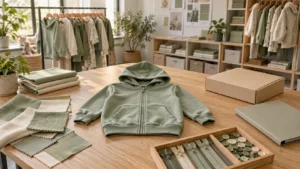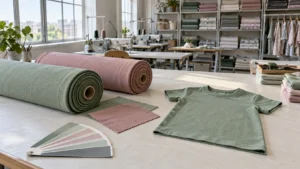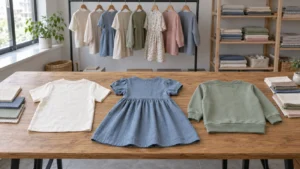
Most buyers sourcing children’s clothing in bulk from China focus almost entirely on price. The logic is understandable — margins are tight, competition is fierce, and a lower unit cost looks like straightforward profit. But the buyers who build lasting, scalable businesses are the ones who look past the sample and understand what actually happens inside the factory before the goods ship.
Whether you are a boutique owner, an Amazon or Etsy seller, or growing a Shopify brand, this guide covers what to verify, what to document, and what you should never skip when placing your first — or fiftieth — bulk kids clothing order from China.
Why Buying Bulk Kids Clothing from China Can Be Profitable
Sourcing bulk kids clothing from China can improve your margins, expand your product range, and support brand growth — but only when quality, safety, and compliance are managed carefully from the start. Here is why experienced buyers continue to return to China’s garment supply chain.
Lower manufacturing costs. Direct factory sourcing can significantly reduce unit costs. Before accepting the lowest quote, compare fabric quality, trim standards, packaging requirements, and whether third-party inspection is included in the pricing.
Broader style options. China’s garment supply chain makes it easy to source across categories — basics, seasonal sets, boutique outfits, pajamas, and full private-label collections — without managing multiple countries of origin.
Flexible MOQ availability. Lower minimum order quantities help smaller sellers test sizing, colorways, and demand before committing to larger bulk runs.
Consistent product quality. The right factory can deliver soft fabrics, accurate sizing, strong seams, and careful finishing — when your specifications are clearly documented and communicated upfront.
Customization services. OEM and ODM manufacturing let you tailor labels, prints, colors, packaging, and cut-and-sew patterns to build a more recognizable children’s clothing brand.
Global compliance awareness. Reliable suppliers should understand tracking labels, sleepwear safety rules, flammability requirements, and market-specific testing protocols before production begins — not after shipment.
Understanding why top brands choose clothing factories in China helps put these advantages in broader context. The supply chain infrastructure, skilled labor base, and material options available in China remain difficult to match elsewhere.
Sourcing Channels: Where to Find Reliable Children’s Clothing Manufacturers in China
Knowing where to look is only part of the challenge. The sourcing channels below each carry their own strengths, blind spots, and verification requirements — and the right combination depends on your order volume, timeline, and how much direct factory access you need.
B2B Platforms
For most buyers, B2B platforms are the natural first stop. That is a reasonable starting point, as long as you understand exactly what each platform’s verification actually covers.
| Platform | Best For | Verification Level | Key Limitation |
|---|---|---|---|
| Alibaba | Broadest supplier range; low MOQ options | Paid listing (Gold Supplier status is not independently audited) | High volume of trading companies presenting as factories |
| Global Sources | Mid-to-large volume buyers | Stronger on-site verification than Alibaba | Smaller overall supplier pool |
| Made-in-China.com | Factory-direct sourcing | Optional third-party audits available | Less international traffic; slower response times |
| 1688.com | Benchmarking domestic factory pricing | None — open domestic market | Chinese-language only; not export-oriented |
How to tell a factory from a trading company
This is one of the most important skills for buyers using any B2B platform. Trading companies are not inherently problematic, but for compliance-sensitive categories like children’s clothing, they introduce a layer of opacity between you and the actual production facility. Watch for these signals:
- Product range is too wide. A genuine children’s clothing factory specializes. If a single supplier lists toddler onesies alongside pet accessories and kitchen textiles, you are almost certainly looking at a trading company.
- They cannot name their testing lab. Ask directly: “Which CPSC-accepted third-party lab do you use for children’s product testing?” A factory with genuine export experience will answer this immediately.
- Factory photos look staged or appear across multiple profiles. Run images through a reverse search to check whether they have been reused across supplier listings.
- MOQ is unusually low alongside an unusually low unit price. Fifty units at $3.50 for a compliant children’s hoodie is not a factory offer.
Using 1688.com as a pricing benchmark
Most buyers overlook 1688.com — Alibaba’s domestic Chinese-language platform — but it shows you what factories charge each other before any export markup is applied. If an Alibaba supplier quotes you $8.50 FOB for a basic cotton tee and the same product lists domestically for the equivalent of $3.20, you have a useful negotiation reference point. Use Google Translate or a sourcing agent to navigate the interface; the pricing transparency alone is worth the friction.
Trade Shows and Industry Exhibitions
Trade shows compress months of email vetting into days of face-to-face qualification. For children’s clothing specifically, these are the shows worth planning around:
- Canton Fair — Phase 2 (Guangzhou): The largest sourcing event in the world, held biannually in late April and October. Phase 2 covers textiles and garments, and the concentration of children’s clothing manufacturers in one venue is unmatched.
- CHIC Shanghai: More fashion-forward than Canton; better suited for buyers building design-led kidswear ranges rather than sourcing commodity basics. Typically held in March.
- Intertextile Shanghai Apparel Fabrics: Useful if you are sourcing fabrics independently before engaging CMT factories; less relevant for buyers purchasing finished garments.
- Kids Fashion Fair: Specialist children’s apparel exhibitions that draw a higher concentration of category-focused manufacturers.
Bring a printed supplier questionnaire and request compliance documentation on the spot. Factories that cannot produce it at a trade show booth are rarely better prepared once you are back home.
China’s Major Textile Manufacturing Clusters
China’s children’s clothing production is geographically concentrated. Understanding that geography helps you source more strategically — and plan factory visits that cover the most ground efficiently.
| Province / Region | Key Cities | Specialization | Best For |
|---|---|---|---|
| Guangdong | Guangzhou, Dongguan, Foshan, Humen | Knitwear, outerwear, denim, export-ready manufacturers | Buyers needing CPSIA- or EU-compliant finished garments |
| Zhejiang | Hangzhou, Ningbo, Shaoxing | Woven garments, embroidery, premium fabric mills | Design-driven and premium-positioned brands |
| Shandong | Qingdao, Jinan | High-volume basics, school uniforms | Large-quantity buyers focused on unit cost |
| Fujian | Quanzhou, Xiamen | Sportswear, childrenswear accessories, footwear | Activewear and outdoor kidswear categories |
| Jiangsu | Nanjing, Suzhou | Technical fabrics, functional apparel | Performance and weatherproof children’s outerwear |
Even a two-day walkthrough of a manufacturing cluster like Humen or Zhongshan gives you a ground-level read on production scale, equipment condition, and working environment that no B2B profile can replicate. If you are committing to a supplier relationship across multiple seasons, at least one in-person factory visit is worth the airfare.
Professional Sourcing Agents
A well-connected China-based sourcing agent earns their fee by knowing which factories are genuinely production-capable and which ones will broker your order the moment you sign. Before engaging one, it helps to understand what a qualified agent should — and should not — be doing on your behalf.
What a sourcing agent should handle:
- Factory identification and initial qualification visits
- Sample coordination and translation of tech pack requirements
- Price negotiation in Mandarin, with market-rate benchmarking
- Logistics coordination between factory, freight forwarder, and customs broker
- On-the-ground follow-up during production
What a sourcing agent does not replace:
- Your own third-party lab testing (under CPSIA, the importer of record bears full legal compliance responsibility — no agent can transfer that burden)
- Independent factory audit documentation
- Your golden sample approval and pre-shipment inspection sign-off
To evaluate a sourcing agent before engaging, ask for three verifiable buyer references in your product category, request their standard supplier vetting checklist, confirm whether they receive commission from factories in addition to fees from buyers (a genuine conflict of interest), and verify that they provide written audit reports rather than verbal recommendations alone.
Typical fees run 5–10% of FOB order value, or a flat monthly retainer for buyers with consistent volume. The retainer model tends to produce better alignment — a commission-based agent has an incentive to push order volume regardless of supplier fit.
Factory Websites and Direct Outreach
Established export factories increasingly maintain English-language websites, and those that do are often more serious about international business than suppliers who rely entirely on platform traffic. A direct search can surface manufacturers who do not actively market on Alibaba — and those factories are sometimes among your most production-focused options.
Search strings worth trying:
- “children’s clothing manufacturer” China OEM export
- “kids wear factory” Guangdong CPSIA OEKO-TEX
- “childrenswear OEM” China “low MOQ” private label
Once you are on a factory website, the language they use about compliance tells you a great deal:
| What You See | What It Signals |
|---|---|
| References CPSIA, EN 14682, REACH by name | Has real export experience in regulated markets |
| Lists specific third-party labs (SGS, Intertek, Bureau Veritas) | Familiar with independent testing requirements |
| Uses language like “quality guaranteed” with no specifics | Marketing copy; follow up with documentation requests |
| Displays expired or unverifiable certificates | Proceed with caution; verify everything independently |
| Shows real factory-floor photography with equipment detail | More credible than stock-looking imagery |
Our guide to sourcing apparel from China covers the full supplier evaluation process in detail for buyers who want a deeper reference for vetting factory websites and profiles.
Social Media
Social media will not replace formal qualification, but it has become a legitimate first-contact channel — particularly for reaching export managers who prefer direct outreach over platform enquiry forms.
| Platform | Best Use | Honest Limitation |
|---|---|---|
| Reaching factory export managers and trade representatives directly | Verification is minimal; treat as a warm introduction only | |
| Reviewing factory production content and product range visually | Promotional by nature; not a compliance signal | |
| YouTube | Factory tour videos that give a visual read on facility scale | Self-produced and unverified, but useful for initial screening |
| Ongoing communication once initial contact is established | Standard in China; setting up an account removes unnecessary friction | |
| Facebook Groups | Community sourcing forums where buyers share supplier experiences | Variable quality; useful for red-flag checking, not primary sourcing |
Once you move past initial contact, most Chinese manufacturers default to WeChat for daily communication. Setting up an account before your first factory conversation removes a friction point that can slow down supplier relationships unnecessarily.
A Step-by-Step Action Plan for First-Time Buyers
If this is your first time ordering kids clothing in bulk from China, the safest path forward is not to rush into a large purchase. Start small, verify everything, and let each step tell you whether a supplier is genuinely ready for your business.
Many first-time buyers get excited by a beautiful sample, only to discover later that the bulk order used a different fabric, sizing ran inconsistently, or labels were missing required information. A clear action plan helps you catch those problems before they become expensive.
Step 1: Define Your Product and Compliance Requirements
Before contacting any supplier, get clear on what you want to produce and where you plan to sell it. A factory cannot quote accurately if your request is too vague.
Prepare a short product brief that includes: product category (babywear, toddler sets, pajamas, dresses, hoodies, schoolwear), age and size range, preferred fabric and fabric weight, design details (snaps, zippers, prints, embroidery, trims), target market (US, EU, UK, Canada, Australia), selling channel (Amazon, Etsy, Shopify, boutique retail, wholesale), and any labeling, packaging, or barcode requirements.
For children’s clothing, compliance should be discussed from the very beginning. If you are sourcing pajamas, baby garments, or clothing with small parts, do not wait until production is finished to raise safety and testing requirements.
Step 2: Shortlist 10–15 Suppliers
Once your product brief is ready, build a supplier shortlist. Contacting 10–15 suppliers is worthwhile because not every supplier will reply, and not every reply will be useful.
Sources to draw from include B2B platforms, trade shows, factory websites, social media, sourcing agents, and China’s garment production clusters. At this stage, you are not selecting a final manufacturer — you are creating enough options to compare meaningfully.
A strong shortlist should include a mix of kidswear-focused factories, OEM and ODM manufacturers, export-experienced suppliers, and factories with clear sample processes and previous experience in your target market.
Send a message that explains your product type, estimated quantity, target market, fabric preference, and customization needs rather than simply asking for a price. The quality of the supplier’s reply will tell you a great deal about how they work.
Step 3: Score Suppliers Using a Verification Checklist
After suppliers reply, compare them carefully. The lowest quote should not automatically win. A cheaper supplier may cost significantly more in the long run if fabric shrinks, seams twist, sizes run incorrectly, or goods fail inspection.
Useful questions to score suppliers against include:
- Do they regularly produce children’s clothing?
- Are they a factory, a trading company, or a combination of both?
- Do they answer clearly and professionally?
- Can they explain fabric options, shrinkage behavior, and sizing tolerances?
- Do they support custom labels, packaging, and print development?
- Are they familiar with your target selling market and its requirements?
- Are they willing to provide samples before bulk production?
- Do they permit third-party inspection?
- Can they provide compliance or testing documents on request?
A supplier who asks thoughtful questions about your product is a positive signal. It means they are thinking about production details, not simply trying to close a quick sale.
Step 4: Request Samples from 3–5 Suppliers
After your initial screening, request samples from 3–5 suppliers. Placed side by side, samples reveal differences in fabric quality, stitching consistency, measurement accuracy, and finishing that are impossible to detect when reviewing a single item in isolation.
Evaluate the sample the way a parent would. Is the fabric soft? Are the seams smooth? Does the label scratch the skin? Are snaps and buttons secure? Does the garment hold up after washing? Children’s clothing has to feel good, not just photograph well.
When the sample arrives: measure it against the size chart, wash it once, check the inside seams, pull gently on buttons and snaps, and examine prints or embroidery closely. If a supplier cannot keep the sample consistent, bulk production will not automatically improve on it.
Step 5: Assess High-Risk Products and Materials
Some products deserve additional scrutiny before production begins. Children’s sleepwear, baby clothing, garments with small parts, drawstrings, coated prints, dark dyes, and metal trims all carry higher risk than simple cotton basics.
This does not mean every product requires the same testing plan. It means understanding what your product is, where it will be sold, and which safety requirements apply to it in that market. Discuss testing and compliance documentation with your supplier before approving the final sample.
A reliable factory should be comfortable discussing fabric composition, care labeling, tracking information, lab testing protocols, and its previous export experience. Confusion or evasiveness on these topics is a clear warning sign for children’s products specifically.
Step 6: Place a Small Trial Order
Once samples are approved, place a small trial order. A sample demonstrates what the factory can make once. A trial order shows whether they can produce that quality consistently at volume.
For your first bulk order, keep it straightforward: one or two styles, a limited number of colorways, and your most important sizes. Too many variations make production harder to control, especially at the start of a new factory relationship.
Before paying any deposit, confirm the following in writing: approved sample details, fabric composition and color, size chart and measurement tolerances, labeling and packaging requirements, print and trim specifications, production timeline, payment terms, inspection arrangement, and shipping method. The more clearly you document before production, the fewer disputes you face after it.
Step 7: Inspect Before Shipment
Pre-shipment inspection is one of the most important steps in any kids clothing order. Once goods leave the factory, fixing problems becomes slower, more expensive, and sometimes impossible.
Inspection can be carried out through your sourcing agent, your own team, or an independent third-party inspection company. The inspector should compare finished goods against the approved sample, size chart, order details, and packaging requirements.
A proper inspection covers: total quantity by style, color, and size; measurements against the approved size chart; fabric quality and color consistency; sewing quality, loose threads, stains, and defects; buttons, snaps, zippers, cords, and decorative elements; brand labels, size labels, care labels, and any required tracking information; polybags, hang tags, barcodes, carton marks, and overall packaging condition.
If the inspection finds serious issues, do not approve shipment immediately. Ask the supplier to repair, sort, or remake the affected goods and provide a clear explanation before you release the balance payment.
Our guide on how to buy apparel direct from the factory covers pre-shipment inspection and direct factory ordering in further depth for buyers who want a more detailed reference.
Step 8: Review Customer Feedback Before Scaling
After your trial order arrives and starts selling, listen carefully to your customers. A sample tells you about workmanship under controlled conditions; customers tell you how the garment performs in daily use.
Watch for feedback about sizing, softness, shrinkage, fading, seams, labels, buttons, and comfort. A few isolated complaints may point to an easy fix. Repeated patterns usually indicate something that needs addressing before your next production run.
Before scaling, send your supplier a clear improvement summary. Include photos, return reasons, customer comments, and any changes to fabric, sizing, labels, trims, or packaging. A production-focused factory will welcome specific feedback because it helps them make the next order better.
Your first order is the learning round. Use it well, and your second order will be cleaner, safer, and considerably easier to scale.
Manufacturer vs. Trading Company vs. Wholesaler
When sourcing children’s clothing from China, you will typically encounter three types of suppliers: manufacturers, trading companies, and wholesalers. They may all sell “kids clothing,” but they operate very differently. The right choice depends on your order size, customization needs, timeline, budget, and how much direct control you want over quality and compliance.
For children’s apparel specifically, this distinction matters. A lower MOQ or faster delivery may look attractive on paper, but you still need clear answers about fabric, sizing, labels, testing, and who is responsible when something goes wrong.
Understanding MOQ, Customization, Price, Speed, and Accountability
The clearest way to compare supplier types is to look at what each one controls. A manufacturer controls production. A trading company manages supplier relationships. A wholesaler typically sells ready-made goods from stock or wholesale market inventory.
| Supplier Type | MOQ | Customization | Price | Speed | Accountability |
|---|---|---|---|---|---|
| Manufacturer | Medium to high | Strongest for OEM/ODM — fabrics, patterns, labels, packaging | Better value at higher repeat volume | Slower initially due to sampling and production lead time | Highest when working directly with the factory |
| Trading Company | Often more flexible than factories | Can coordinate customization, but depends on partner factories | Includes a service margin | Can be faster for sourcing and communication | Medium — manages the order but may not control production directly |
| Wholesaler | Often lowest | Limited — typically stock styles, colors, and sizes | Good for small orders; not well-suited to scaling | Fastest when goods are already in stock | Lower for custom quality issues; products are typically ready-made |
Manufacturer (best for control): Ideal for building a private-label brand. Gives you direct influence over sizing, fabric selection, packaging, and quality standards. Best suited for repeat orders where consistency matters season over season.
Trading company (best for flexibility): Practical for sourcing across multiple clothing categories without managing separate factory relationships. The trade-off is reduced visibility into who actually produces the goods and under what conditions.
Wholesaler (best for speed): The fastest option for buying ready-made stock for boutiques or small-volume tests. The primary limitation is differentiation — the same styles may appear across competing shops, making it harder to build a distinct brand identity over time.
Which Supplier Type Suits Your Business?
Beginners: Trading companies and low-MOQ wholesalers offer a manageable starting point. Test styles, learn how sizing and shipping work, and always sample before committing to bulk. Regardless of supplier type, confirm labeling, fabric composition, and any required safety documents before listing products for sale.
Boutiques: Wholesalers work well for quick, small-batch stock replenishment. The primary risk is overlap — ready-stock styles may appear in competing stores nearby. Start with wholesale, then gradually introduce private-label elements, exclusive colorways, or seasonal prints to protect your store’s identity.
Private-label brands: A manufacturer gives you direct control over fit, fabric, labels, and quality standards. As order volume grows, direct factory access improves sampling speed and cost efficiency. Do not choose on price alone — prioritize suppliers who can reproduce quality reliably and follow a detailed tech pack consistently.
Larger importers: Consistent execution matters more than unit price at this level. Factory audits, production inspections, approved samples, written specifications, and clearly defined Incoterms are non-negotiable. Your core supplier base should deliver the same product reliably, season after season.
You can explore a wider range of kids clothing wholesale suppliers in China to see how different factory types compare across product categories and order sizes.
Define Your Market’s Safety Standards Before You Contact a Single Supplier
One of the most common — and costly — mistakes in children’s apparel sourcing is treating compliance as an afterthought. A Chinese factory will build exactly what you tell them to build. If your design includes a long decorative drawstring around the hood of a toddler’s jacket, the factory may manufacture it precisely as specified. But when that shipment reaches US or European customs, it can be detained or destroyed for violating strict child safety regulations.
As the importer of record, the legal and financial responsibility for compliance sits with you. No supplier agreement transfers that burden.
Why Compliance Must Precede Supplier Selection
If you start negotiating prices before defining your safety requirements, you are creating a problem for yourself downstream. Say a factory quotes $3.50 for a children’s jacket based on their standard materials. If you raise the need for lead-free hardware and REACH-compliant dyes only after signing the purchase order, the factory will either significantly revise the price or quietly substitute cheaper materials to protect their margin.
Presenting your compliance requirements in your first contact email immediately filters out factories without relevant export experience. It signals to the supplier that you audit your goods and understand the regulatory environment — and it sets a baseline of professionalism from day one.
US Market: CPSIA and CPSC Requirements
If you sell children’s clothing in the US market or store inventory in Amazon fulfillment centers, you are subject to the Consumer Product Safety Commission (CPSC) and its primary enforcement framework, the Consumer Product Safety Improvement Act (CPSIA).
Key requirements to specify in your tech packs for the US market include:
- Lead limits: All accessible parts — snaps, zippers, painted graphics — must not exceed 100 parts per million (ppm) of lead.
- Phthalate restrictions: Plasticized prints, screen-printed elements, or PVC components cannot contain more than 0.1% of restricted phthalates.
- The drawstring restriction: Drawstrings in the hood or neck area are prohibited on children’s garments in sizes 2T through 12. This is one of the most frequent reasons kidswear is recalled in the US.
- Tracking labels: Every garment must carry a permanent label identifying the manufacturer, production location, and date of manufacture to enable traceability in the event of a recall.
- Flammability standards: Fabrics must pass a burn test. Children’s sleepwear in sizes 9 months through 14 is subject to especially strict, separate flammability requirements.
EU Market: EN 14682, REACH, and the OEKO-TEX Framework
Selling into European markets requires navigating a distinct but equally rigorous set of regulations. European border authorities conduct thorough product testing, and non-compliant shipments can be blocked or subject to recall.
- REACH Regulation: Europe’s comprehensive chemical safety law, REACH, restricts heavy metals, bans specific azo dyes capable of releasing carcinogenic amines, and increasingly targets PFAS (per- and polyfluoroalkyl substances) in water-resistant outerwear.
- EN 14682 (Cords and drawstrings): European rules on garment cords are highly specific. For example, decorative straps on children’s garments for ages under seven cannot have free ends longer than 7.5 cm.
- OEKO-TEX Standard 100: For buyers sourcing into the EU market, working with factories that hold OEKO-TEX Standard 100 certification provides meaningful compliance assurance. This independent, globally recognized framework certifies that every component of a garment — from fabric to sewing thread to care label — has been tested against harmful substance limits. OEKO-TEX-certified products address a substantial portion of REACH requirements by design.
Other Key Markets: Australia, Canada, and the UK
If you are scaling into multiple markets, safety standards do not translate directly across borders.
| Market | Core Regulation | Critical Focus Area |
|---|---|---|
| Canada | CCPSA (Canada Consumer Product Safety Act) | Mirrors many US requirements but includes distinctly strict children’s sleepwear flammability testing protocols |
| Australia / NZ | AS/NZS Standards | Strong focus on nightwear; sleepwear must carry specific fire hazard warning labels based on fabric flammability classification |
| United Kingdom | UKCA / GPSR | Post-Brexit framework functionally similar to the EU’s EN 14682 for drawstrings, but with UK-specific labeling and traceability requirements |
Understanding these standards before your first supplier conversation positions you as a serious, informed buyer, protects your brand equity, and helps ensure your goods clear customs without unnecessary delays.
Conclusion
Sourcing bulk kids clothing from China can be profitable and repeatable when approached correctly — starting with clear safety standards, choosing suppliers based on capability rather than price alone, verifying samples, inspecting production, and scaling gradually. The most successful buying relationships are built on clear communication, documented specifications, and consistent accountability on both sides.
If you are ready to move away from unreliable supplier relationships and build a scalable, compliant supply chain for children’s apparel, HAPA provides transparent manufacturing support at every stage of growth. Whether you are launching a private-label baby collection, building out a boutique seasonal range, or expanding an established wholesale business, working with a factory that understands compliance, sampling, and consistent production quality makes a measurable difference.
FAQ
How do you order bulk clothes from China?
Start by preparing a clear product brief covering garment type, size range, fabric preference, target market, and estimated order quantity. Source suppliers through B2B platforms, trade shows, or factory websites; request samples from 3–5 shortlisted factories; confirm all specifications in writing before production begins; and arrange a pre-shipment inspection before releasing final payment.
How do you buy children’s clothes wholesale?
For wholesale purchasing, you can source ready-made stock through wholesalers on platforms like Alibaba or Made-in-China.com, attend trade shows such as the Canton Fair, or work directly with a kidswear manufacturer for OEM production. For branded or private-label wholesale, direct factory relationships give you better control over quality, compliance, and customization.
What is the best website to buy wholesale from China?
Alibaba has the largest supplier pool and is a practical starting point for initial outreach and comparison. Global Sources offers stronger supplier verification for mid-to-large volume buyers. For pricing benchmarks, 1688.com shows domestic market rates before export markup is applied, which is useful for negotiation reference.
What is the minimum order quantity (MOQ) for bulk kids clothing from China?
MOQ varies widely depending on supplier type and product complexity. Wholesalers may accept orders from as few as 20–50 pieces. Manufacturers producing custom OEM garments typically require 100–300 pieces per style at minimum, though some low-MOQ factories cater specifically to emerging brands with reduced initial quantities.
Can I use Alibaba to find reliable children’s clothing manufacturers?
Alibaba is a useful starting point, but it requires careful verification. A significant number of listings come from trading companies rather than factories. Use the vetting signals outlined in this guide — product specialization, compliance documentation, testing lab references, and sample processes — to identify production-capable suppliers. Follow up every Alibaba shortlist with sample requests and, where possible, independent factory audits before committing to a bulk order.