Kids’ jacket production lead time covers more than the days spent cutting and sewing. For a new custom style, you also need time to develop samples, confirm materials, approve the fit, and prepare the finished order for shipment. Delivery to your warehouse adds another part of the schedule.
That matters when a back-to-school launch or winter collection has a firm deadline. This guide explains how a manufacturer builds a jacket schedule, what can hold it up, and how to work backward from your launch date without treating an estimate as a delivery promise.
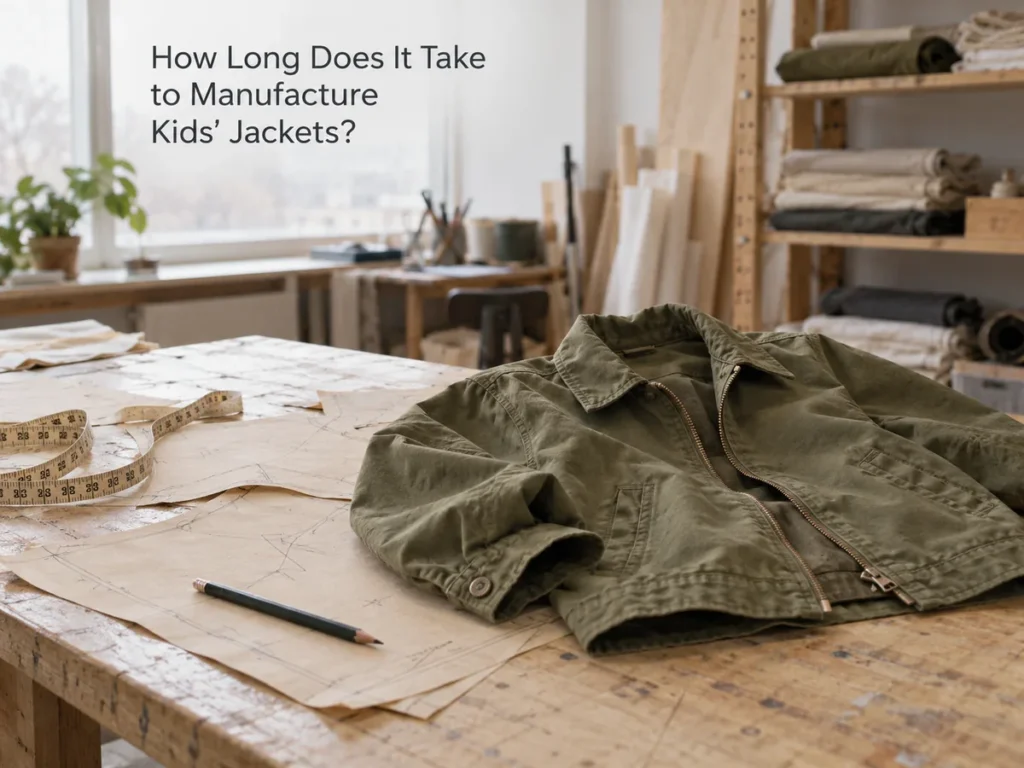
What Is a Realistic Kids’ Jacket Production Lead Time?
At HAPA, our custom cut-and-sew service has two main stages: sample development and bulk production. Sample development usually takes 1–2 weeks after the tech pack and fabrics are confirmed; bulk production typically takes 4–6 weeks after pre-production sample approval. For your jacket order, we also review the construction, fabric and trim availability, order quantity, and production schedule to confirm a timeline that fits the project.
If you are planning a collection launch, allow time for the work before and after production too. Initial design discussions, material sourcing, sample shipping, your team’s review, and delivery to your warehouse all need a place in the schedule. When confirming your order, we recommend clarifying exactly what the quoted lead time covers, including whether testing, inspection, and packing are included.
We also recommend treating “sample completed,” “bulk production completed,” and “warehouse arrival” as three separate milestones. List these dates individually when discussing your schedule. For “ready to ship,” confirm whether only sewing is complete or whether inspection, packing, and release arrangements are finished as well. This gives us a shared understanding of each date and helps you plan your sales activities.
| Stage | Our Typical Timing and Scheduling Approach | What We Need to Confirm With You |
|---|---|---|
| Design and material preparation | Scheduled around your design and material requirements | Design brief, measurements, fabric selection, and trim availability |
| Sample development | Usually 1–2 weeks after tech pack and fabric confirmation | Sample type, construction requirements, completion date, and whether shipping time is separate |
| Sample review and revisions | Agreed according to the feedback and changes in each round | When you will provide feedback, what needs changing, and when the revised sample will be approved |
| Bulk production | Typically 4–6 weeks after pre-production sample approval | Material readiness, order quantity, production slot, and the work included in this period |
| Testing and result review, where applicable | Scheduled with the testing provider and production team | Test samples, report dates, and any corrective work or other release conditions |
| Final inspection, packing, and handover | Confirm whether these are included in the agreed production period and quotation | Resolution of inspection findings, packing approval, and carrier pickup arrangements |
| Transport and warehouse delivery | Estimated for the specific route and logistics service | Shipping method, customs clearance, final delivery, and your receiving arrangements |
These estimates can help you begin planning, while the dates for your order follow the project schedule we agree on together. We recommend confirming whether time is counted in working days or calendar days and which activities can run in parallel. You can also review our kids’ clothing manufacturing process, then send us your design details and target warehouse arrival date so we can work through the timeline together.
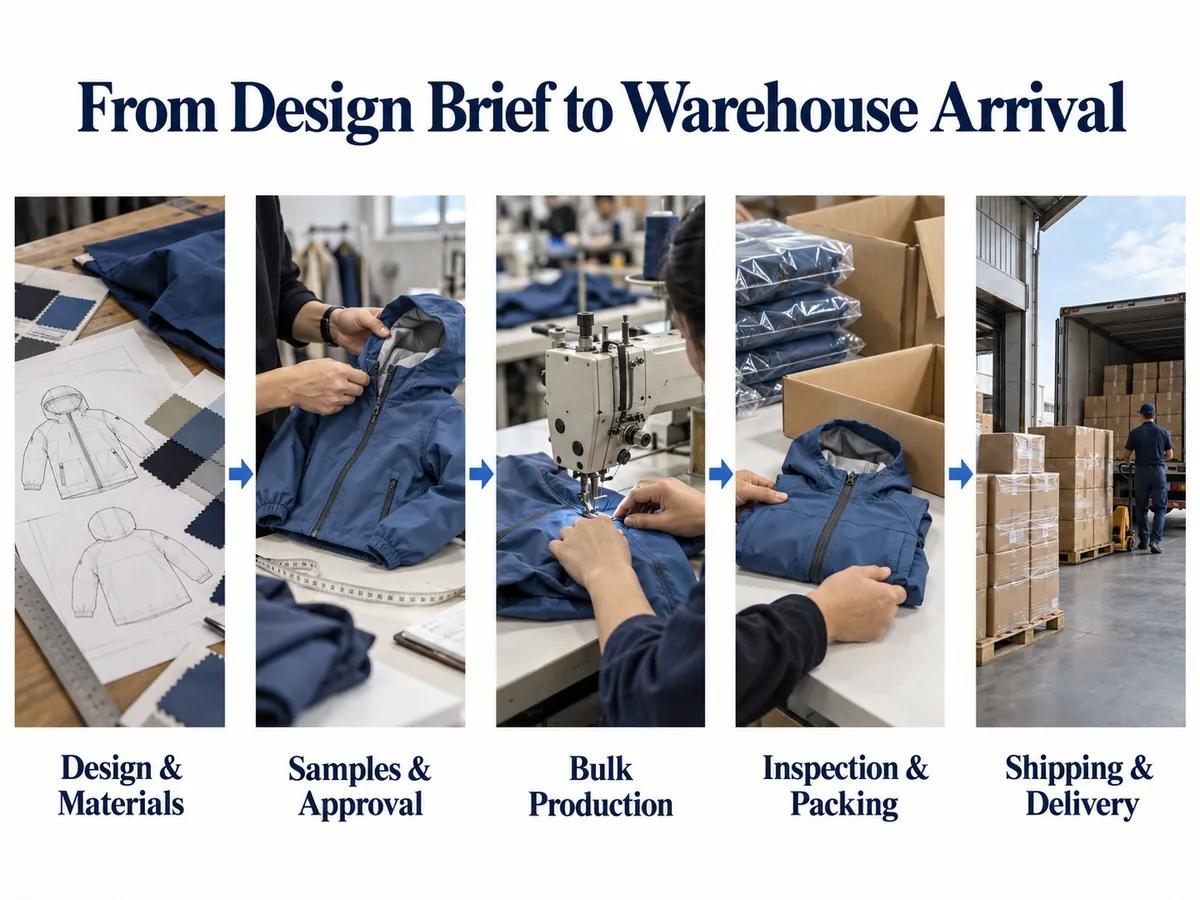
HAPA’s Documented Workflow: From Design Brief to Bulk Approval
Our sample-development process begins with a design brief, reference images, technical specifications, or an existing garment. The team reviews that input and prepares a specification sheet for approval. When a buyer needs help developing a tech pack, our published service includes design support to turn the concept into production instructions.
Fabric and trim sourcing follows the design requirements. During sample production, our QC team reviews the workmanship before the sample is shipped. The buyer then checks the garment and returns feedback; changes are incorporated into an updated sample where needed. This sequence creates a clear distinction between making a sample and obtaining approval to manufacture the order.
Our published cut-and-sew timeline places the bulk-production period after pre-production sample approval. For a jacket project, use that approval meeting to settle the final specifications and confirm the remaining material and scheduling requirements. Record the approved version and the agreed production dates together, so a later change can be assessed against a clear baseline.
This workflow is described in HAPA’s service pages. Its practical value for buyers is a defined path from brief to approval; the dates for an individual order still come from that order’s confirmed production plan.
When Does the Jacket Production Lead Time Start?
Ask the manufacturer to finish this sentence: “The quoted production period starts when…” The answer matters as much as the number of weeks. An inquiry date, deposit date, approved sample, and actual cutting date can all fall on different days.
Appearance approval alone does not settle every production detail. Confirm the final lining, zipper, and other components separately so the approved sample is supported by complete instructions. Likewise, payment may satisfy one commercial condition without confirming that materials have arrived or a production slot is available.
Before relying on a bulk-production start date, work through this checklist with the supplier:
- Specifications: Confirm the current design, measurements, construction, and approved document version.
- Approval sample: Identify the exact sample and any written exceptions still outstanding.
- Materials: Check whether fabric and trims are available, reserved, ordered, or physically received.
- Order breakdown: Finalize quantities by style, color, and size, rather than only the total piece count.
- Commercial conditions: Confirm the agreed payment and purchase-order requirements.
- Production slot: Record the planned start, the completion target, and anything that could change either date.
Also ask whether the quotation uses working days or calendar days and which holidays are excluded. These are suggested planning checks, not universal contract terms. The outcome you want is simple: both sides should understand which event starts the clock and what must happen before that event is possible.
What Happens Before Kids’ Jackets Are Ready to Ship?
The manufacturer’s schedule combines work on the garment with time spent waiting for materials, decisions, and reviews. Understanding those dependencies helps you see whether a proposed date is supported by a workable plan.
Sample Development and Fit Approval
A first sample helps you assess how the design works as a garment. A fit sample focuses on measurements and wear; a size set checks selected sizes; a pre-production sample records the version intended for bulk manufacture. Names and approval sequences vary, so agree on what each sample must prove. HAPA’s product sample service is a starting point for discussing development requirements, but the number of rounds should follow your project’s needs.
For a children’s jacket, review sleeve length, hood shape, closure access, and movement with the intended layer underneath. A jacket that looks right on a hanger may feel restrictive over a sweatshirt. Ask which sizes need checking before approving the range. Include sample shipping and your team’s review time in the calendar: “sample finished” does not mean “sample received and approved.”
Fabric and Trim Preparation
Material readiness needs a more precise answer than “we can source it.” The fabric used for a sample may be available only in a small quantity, while the bulk order needs a larger matching batch. Linings, filling, zippers, snaps, labels, and packaging can each have a separate supplier and delivery date. Ask which components are already secured and which still depend on approval or purchase.
Color matching can introduce another decision. You might accept a standard zipper color, or require a closer match to the shell fabric. Neither option should be assumed from a reference photo. Recording that choice early helps prevent a small unresolved trim from holding up an otherwise prepared order. The useful milestone is “approved materials ready for the next operation,” rather than simply “sourcing started.”
Bulk Cutting and Sewing
Once the necessary approvals and materials are in place, production can follow the agreed size and color breakdown. For custom cut-and-sew production, the factory makes the garment from its component pieces rather than decorating an already finished jacket. Pocket construction, lining assembly, closures, and any additional operations therefore belong in the manufacturing plan.
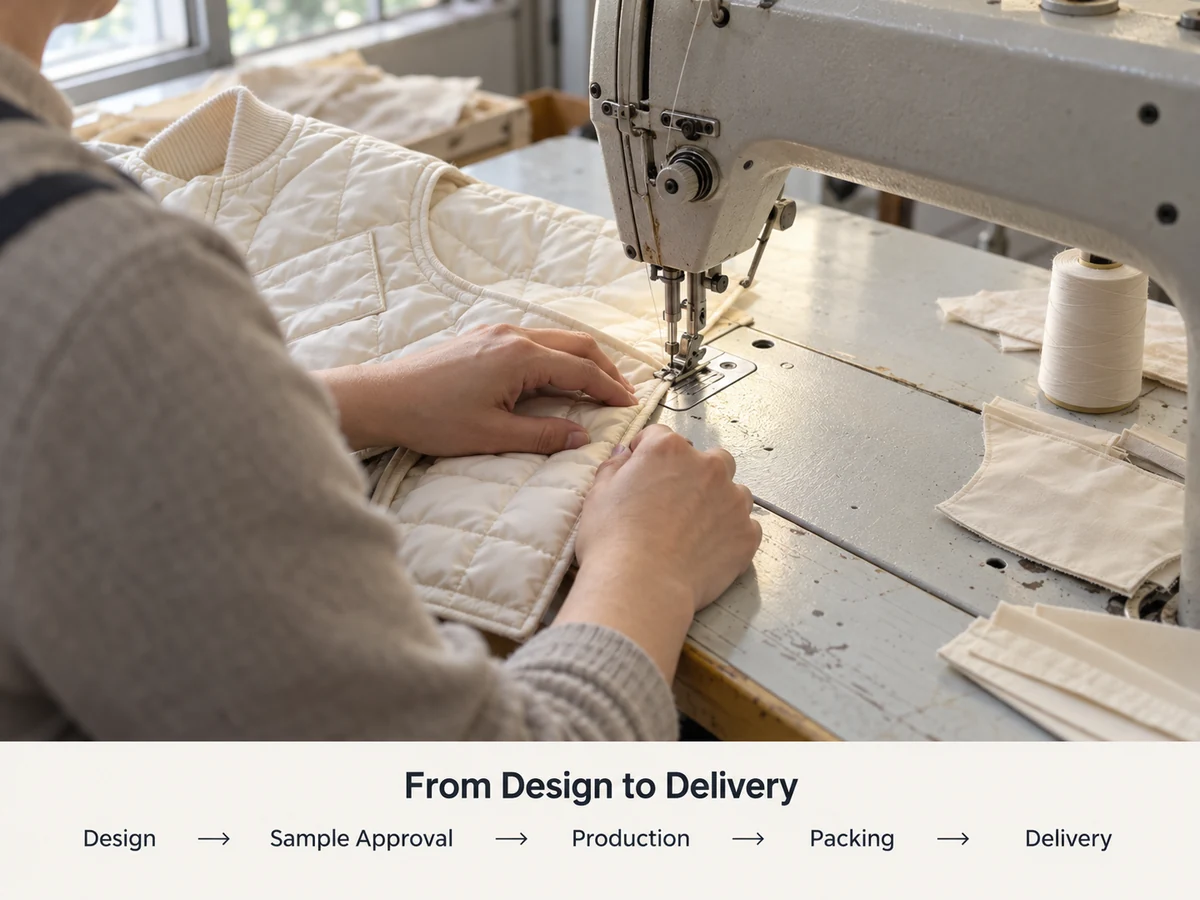
Changes become harder to absorb after cutting. A revised pocket position might affect prepared panels, while a new size ratio can change how much fabric is needed for each size. Before approving a late change, ask what has already been completed and whether the request affects materials, rework, cost, or the dispatch date. Keep the revised specification and schedule together so the production team is working from the same decision.
Quality Checks and Packing
Quality work belongs throughout the schedule. Incoming-material checks, checks during production, and final inspection answer different questions; Intertek’s apparel inspection guidance describes these separate stages. For your jacket order, agree on what will be checked, who reviews the findings, and when corrections must be completed. Photos of finished garments can show progress, but they do not replace the agreed inspection process.
Testing is a separate planning item where your product, destination, or buyer requirements call for it. Textile testing services cover materials and finished apparel; discuss the applicable scope early rather than assigning every jacket the same test package. Allow for samples, results, and possible corrective work. Finally, confirm labels, barcodes, size assortments, and carton instructions before packing. A sewn order can still be unready for release if those details remain open.
What Affects Kids’ Jacket Manufacturing Time?
Two orders with the same piece count can have different schedules. To understand the difference, look at what must be developed, how the order is divided, and which operations need their own approval or equipment time.
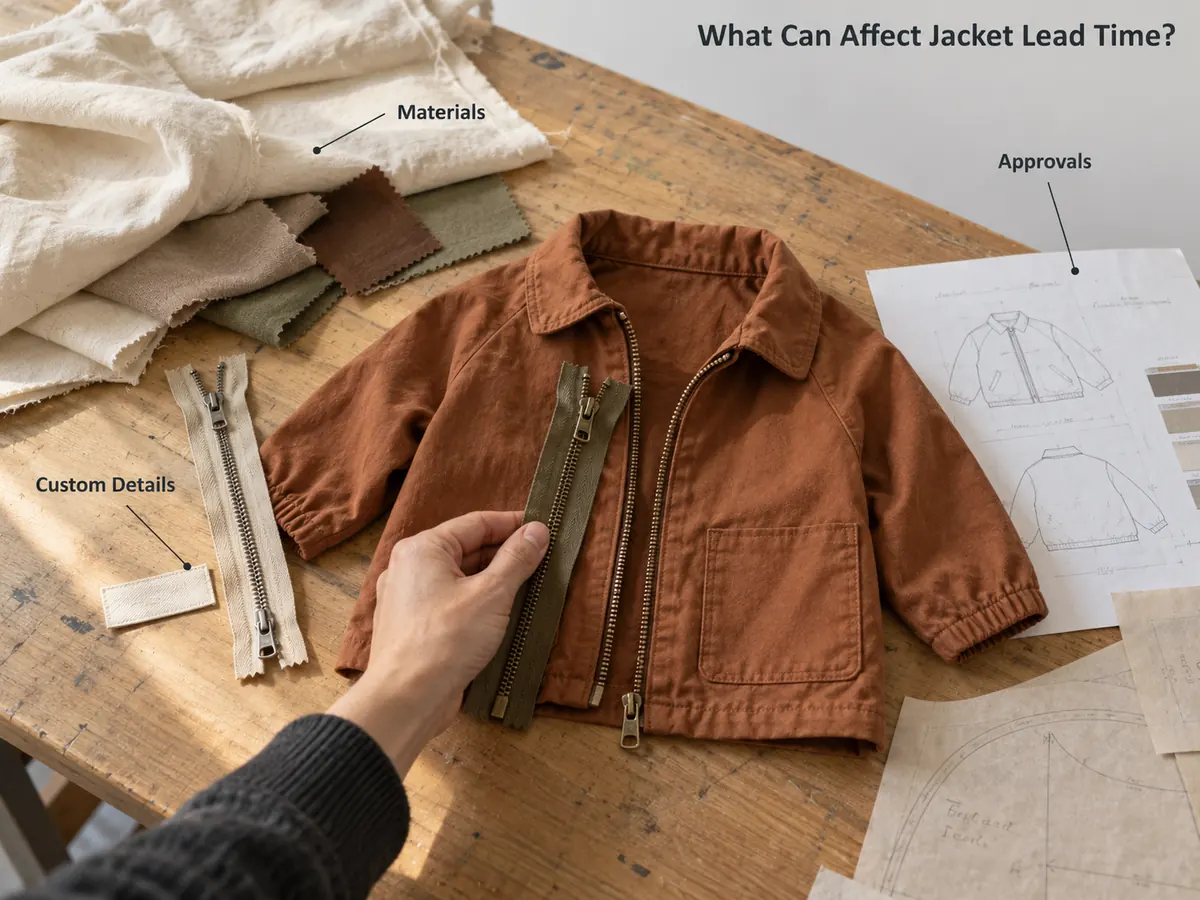
Jacket Style and Material Availability
A simple unlined jacket and a quilted, lined jacket do not require the same construction. Yet the lighter garment is not automatically faster: a custom shell fabric may take longer to prepare than an available fabric and lining combination. For a functional outerwear style, ask whether the planned finishes, seam treatments, and performance checks add steps that the factory has included in its estimate.
Existing fabric colors and standard closures need availability checks. Custom colors and branded zipper pulls also need development and approval decisions. Record the approval status and expected arrival date of each component, then identify which outstanding item determines the earliest possible cutting date.
Order Quantity and Colorways
Total quantity is only part of the workload. Each color and size combination needs to be accounted for in cutting, production identification, inspection, and packing. Additional colorways may also require separate fabric and trim batches. Send the complete style, color, and size breakdown with your quotation request so the manufacturer can review the actual workload before confirming dates.
Small orders still need patterns, samples, setup, and approvals. Reducing quantity may shorten some production work without shortening material preparation or moving the order ahead of other bookings. If your deadline is tight, ask whether simplifying the assortment would help. Keep that discussion separate from reducing the total quantity, because the two changes solve different problems.
Embroidery and Custom Details
Decoration needs its own approval decisions. A small chest logo and a large embroidered back design differ in placement, coverage, and production requirements. Ask when the artwork must be final, whether a trial on the actual fabric is needed, and whether decoration happens before or after garment assembly. Its position in the process affects which other operations can continue while approval is pending.
Avoid assuming printing is always faster than embroidery. Availability of equipment, artwork readiness, the material, and the selected method all matter. Custom patches, zipper pulls, or special labels can also arrive on a separate schedule. If a branded component is essential to your launch, include its approval and delivery milestones in the main order plan rather than treating it as a finishing detail to resolve later.
Factory Schedules and Approval Delays
Available materials do not guarantee an immediate production start. The factory must fit the order around its existing commitments, and outside processes may have separate bookings. Ask which dates are reserved and which are provisional. Around holidays, confirm the factory’s schedule and the availability of relevant material suppliers and logistics providers instead of assuming that every business closes and restarts on the same day.
Buyer decisions can affect that schedule too. Conflicting comments from design, merchandising, and sourcing may create another revision after the factory has already acted on the first response. Conversely, unclear factory questions can slow approval. Give each open issue an owner and a response date, and ask the supplier to explain its effect on the next step. That keeps the discussion focused on resolving the hold rather than assigning blame.
How Can You Shorten Jacket Lead Times?
Start by removing avoidable waiting. Faster decisions and fewer unresolved details can help, but whether they shorten the final delivery date depends on material availability and the production schedule.
Finalize Details and Consolidate Feedback
Send one current set of instructions, with reference images supporting rather than contradicting it. During sampling, have your team review the garment together and return one consolidated response. Separate required changes from questions so the factory knows what it can act on immediately.
Use a short feedback format that makes the next action clear:
- Issue: Identify the part of the sample or specification being reviewed.
- Requested action: State the change, using measurements or marked images where appropriate.
- Approval status: Say what is approved and what remains open.
- Decision deadline: Confirm when both sides need an answer to protect the next milestone.
Prepare Materials in Parallel
Some material work can run alongside sampling. The supplier can investigate availability, obtain swatches, and discuss reservations before every fit detail is settled. This can reveal a material problem early, while you still have time to choose another option.
However, checking stock is different from authorizing a nonrefundable purchase. Before committing to bulk materials, agree on:
- The exact material, color, and quantity being authorized.
- Which design or size decisions remain unresolved.
- Who carries the cost if those decisions change.
- Whether a reservation expires or a purchase can be canceled.
Check Whether a Rush Order Is Feasible
If you need a rush order, tell us your target warehouse arrival date, order quantity, and any design or material requirements you can adjust. Together, we need to confirm whether samples and specifications are approved, fabrics and trims are ready, and production capacity is available. These conditions determine which stages we may be able to shorten.
HAPA Customer Case: A Bestselling Jacket Reorder Produced in 12 Days
One customer contacted us when a children’s jacket sold faster than expected and stock was running low. They wanted to replenish inventory within 20 days. After reviewing the order, we arranged expedited production:
- Less preparation for a repeat order: We had produced this jacket before, so the patterns, size specifications, and construction details were already approved. There was no need to repeat the full sampling process.
- Materials and capacity coordinated: We checked fabric and trim stock, adjusted the production schedule, and confirmed with the customer which sizes needed priority replenishment.
- Production completed in 12 days: By coordinating our production lines, we completed the batch within 12 days. Shipping and warehouse delivery time were separate.
If your bestseller needs urgent replenishment, share your stock situation and target warehouse arrival date with us as early as possible. We will assess production and shipping separately, confirm any cost changes, and allow time for necessary testing and inspection.
When Should You Order for Your Launch Date?
Begin with the date your warehouse needs usable inventory, then work backward. “Winter collection” is not a sufficient deadline: your sales market, retail commitments, and launch plan determine when the jackets must be available.
Work Back From Warehouse Arrival
Start with your required warehouse receipt date and ask the logistics provider for an estimate covering the actual route and service. Establish whether that estimate includes factory pickup, export handling, freight, clearance, and final delivery. Use the resulting pickup deadline to discuss factory completion and release with your manufacturer.
Then work back through inspection, applicable testing, production, material preparation, and sample approval. Use the dates agreed for your project rather than assigning a fixed number of weeks to every order. The following sequence keeps each deadline tied to the party responsible for confirming it.
| Planning Step | Information Needed | Who Should Confirm It |
|---|---|---|
| Set the launch and receiving dates | Time needed to receive, count, list, and prepare inventory for sale | Your retail, e-commerce, and warehouse teams |
| Establish the latest pickup date | Route, freight service, clearance arrangements, and final delivery estimate | The logistics provider and the party arranging transport |
| Set the factory release target | Inspection completion, corrections, packing, and shipment documents | The manufacturer and any appointed inspector |
| Place applicable testing in the schedule | Test scope, sample readiness, result dates, and release dependencies | The testing provider and responsible production or quality staff |
| Confirm the bulk-production period | Approved specifications, material availability, and a production slot | The manufacturer |
| Set the sample approval deadline | Sample shipping, internal review, revisions, and final authorization | Your product team and the manufacturer |
| Confirm when development must begin | Brief readiness, material selection, and unresolved design work | Your sourcing team and the manufacturer |
Leave Room for Revisions
Set contingency around the unresolved parts of your order. A new fit, a material still awaiting approval, or an unconfirmed freight booking creates a different scheduling problem from a repeat style with materials already secured. Discuss those open items with the responsible teams before deciding how much time to reserve.
Include sample delivery and buyer review in the development calendar. Where testing is required, identify when suitable samples will be available and when the results must be accepted. If revisions or corrective work change a milestone, update the downstream dates and check whether the original production slot remains available.
Count overlapping work once. Material preparation may run alongside parts of sample development, while some operations must wait for approval. Keep the agreed dependencies visible so the plan reflects the work that determines the finish date, rather than simply adding every activity’s duration.
How Can You Keep a Jacket Order on Schedule?
Agree on the update format when you confirm the order. A short milestone record is more useful than repeated messages asking whether everything is on time, because it makes unfinished work and changed dates visible.
Request Updates at Key Milestones
Use the following milestone checklist when agreeing on order updates with your supplier. For each row, add an owner, an agreed date, the latest forecast, and any action needed from your team. Confirm which records the supplier will provide, and request updates when a milestone is completed or its date changes.
| Milestone | Evidence to Request | Unresolved Question to Record |
|---|---|---|
| Materials ready | Receipt or availability status for required components | Is any fabric or trim still missing? |
| Production approved | Identified sample and current written specifications | Are there exceptions awaiting a decision? |
| Bulk work underway | Stage reached and remaining operations | Has the completion forecast changed? |
| Applicable testing reviewed | Relevant results and corrective-action status | Does any outstanding result or correction affect release? |
| Checks completed | Agreed findings and correction status | What must be resolved before release? |
| Shipment handed over | Packing information and carrier confirmation | What is the updated warehouse arrival estimate? |
Agree on a Recovery Plan
If a date slips, establish what is affected before choosing a remedy. A delayed zipper for one color may have a different impact from a fit change affecting the full order. Ask for the earliest revised completion date and which assumptions support it.
Possible options include an approved alternative component, a split shipment, different transport, or a revised launch date. Each has consequences for cost, consistency, and stock availability. Record the selected option and revised dates in writing. If an alternative changes the garment, confirm any renewed approval or testing needs before proceeding. A recovery plan should explain what will happen next, not simply replace the original deadline with another unsupported date.
Planning Your Kids’ Jacket Order With HAPA
At HAPA, we offer sample development, assistance with tech packs, fabric and trim sourcing, and custom cut-and-sew manufacturing. These services let you discuss the garment and its development needs together. The schedule for your jacket still depends on its design, materials, approvals, and the production arrangements agreed for the order.
To begin that discussion, send:
- Your sketch, reference garment, or existing tech pack.
- The intended age range and quantity by size and color.
- Fabric, lining, filling, closure, and decoration requirements.
- The destination market and any buyer-specific testing or packaging requirements.
- Your target warehouse arrival date and planned launch date.
If some details are undecided, mark them clearly. That helps distinguish work that can begin now from decisions needed before production. Contact HAPA to discuss your kids’ jacket project and ask for a schedule that identifies sample approval, material readiness, production completion, and shipment handover. Confirm transportation responsibility and delivery estimates separately so the proposed factory date fits your wider launch plan.
Conclusion
A dependable kids’ jacket production timeline explains what has to happen before the next stage can start. Sample approval, material readiness, and production availability all shape the factory schedule, while transport and receiving determine when your brand can use the inventory.
Before accepting a lead-time estimate, confirm its starting conditions and endpoint. Then build your launch plan around the agreed milestones, with room for unresolved decisions and any required corrective work. When you approach HAPA, bring your design and target warehouse date so the discussion can focus on a workable plan for your collection.
Frequently Asked Questions
Are Repeat Jacket Orders Always Faster?
Not always. An unchanged, approved style may need less development, but the factory must still confirm materials, quantities, and capacity. A new color, different trim, or changed size range can add decisions. HAPA’s guide to kidswear repeat-order turnaround time explores that separate planning situation. Check what can genuinely be reused before treating a repeat order as a shorter version of the original schedule.
Is Adding a Logo to Stock Jackets Faster Than Custom Manufacturing?
It can be if the correct jackets are physically available and the decoration work can be scheduled. You avoid developing and sewing a new garment, but still need artwork approval, stock allocation, decoration checks, and packing. Confirm the supplier’s available size and color inventory before comparing dates. Existing patterns and designs are different from finished jackets held in stock; ask which option is actually being offered.
Can You Start Without a Tech Pack?
Yes, you can start a discussion with sketches, reference images, or a sample. HAPA offers help preparing a tech pack. Before bulk production, the garment still needs agreed measurements, materials, construction details, and artwork. Ask who will prepare those documents, what development work is included in the quotation, and when you need to approve it. An early inquiry can begin development, but it does not establish a production-ready date.
Can a Jacket Order Be Shipped in Batches?
Sometimes, subject to agreement with the manufacturer and logistics provider. Specify which sizes or colors you need first and confirm whether those units can be completed, inspected, and packed independently. Separate shipments can change freight and handling costs. Ask for a schedule and release requirements for each batch, then confirm whether a partial assortment is useful for your launch before approving the arrangement.
References & Sources
- HAPA: Cut-and-Sew Manufacturing Services. Source for the described development, tech-pack, and material-sourcing services, and the published general sample and bulk-production ranges. These ranges are not jacket-specific delivery guarantees.
- HAPA: Product Samples. Source for the documented sequence of brief submission, design confirmation, material sourcing, sample production, and buyer feedback.
- Intertek: Textile and Apparel Inspection. Reference for inspection at different production stages.
- Intertek: Textiles and Apparel Services. Reference for textile and garment testing scope.