To build a successful children’s apparel brand, you need to focus on far more than just aesthetic designs. You also need a reliable custom kids clothing manufacturer as your solid backbone, and a deep, thorough understanding of how apparel production operates.
Whether you are an established boutique owner expanding your private label children’s clothing line, or a startup brand seeking reliable OEM kids clothing / ODM childrenswear solutions, a clear grasp of every single step in the process—from creating a comprehensive tech pack to the final finished goods inspection—is absolutely critical.
In this guide, we will break down the kids clothing manufacturing process in full detail, to help your children’s wear brand achieve seamless, steady, and sustainably scalable growth.
Children’s Apparel Production Is Subject to Far Stricter Regulations
Manufacturing children’s clothing is not simply about producing scaled-down versions of adult garments — it requires compliance with much more stringent safety standards. If your children’s apparel is sold in the United States, it must meet the requirements of the CPSIA. For example, per CPSC regulations, drawstrings are strictly prohibited in the hood and neck area of children’s tops and jackets (sizing range: 2T to 12) to prevent the risk of strangulation. Waist drawstrings must be reinforced with bar-tacking, and their length must comply with specified limits.
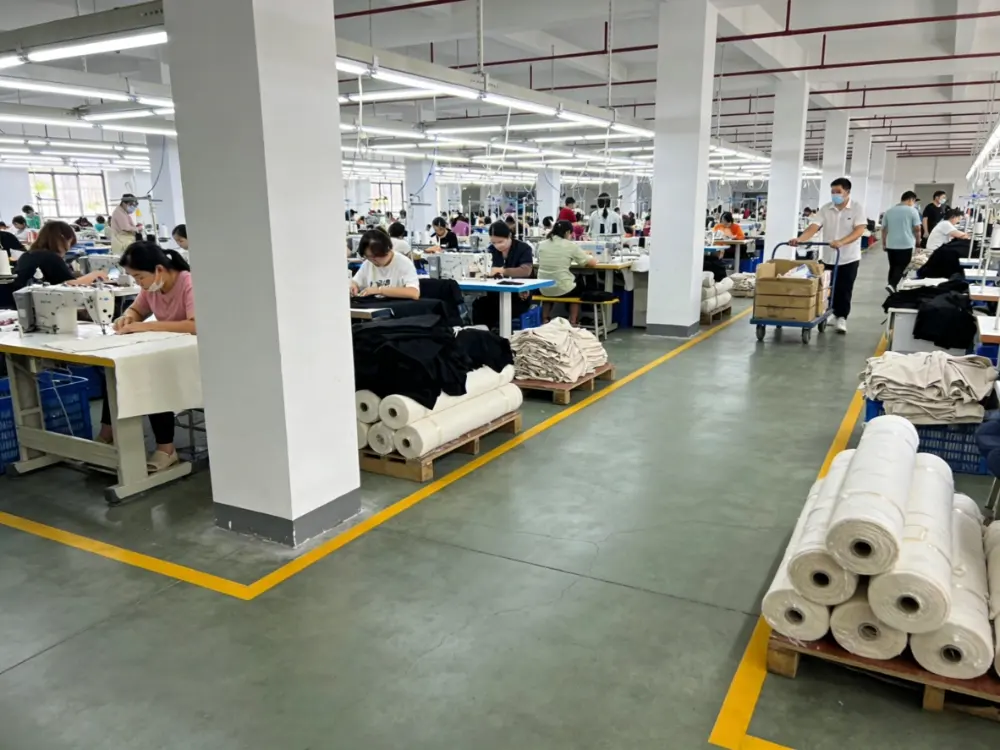
In addition, the quality control (QC) process for children’s apparel is far more rigorous. Beyond routine size and visual inspections, needle detection testing is an absolutely non-negotiable step before garments leave the kids clothing factory, ensuring no broken needles or metal debris residue remain in the finished products. Furthermore, regular and rigorous physical destructive testing of small parts is conducted on a high-frequency basis.
A Complete Breakdown of the Children’s Apparel Manufacturing Process
Now that we’ve established that children’s apparel production is held to far higher standards than adult clothing, have you ever wondered exactly how children’s clothes are made? Using HAPA’s in-house manufacturing process as a blueprint, we’ll walk you through the essential children’s clothing production steps, showing how an original creative concept is transformed into finished garments ready for retail shelves.
Phase 1: Design, Tech Packs, and Pre-Production Preparation
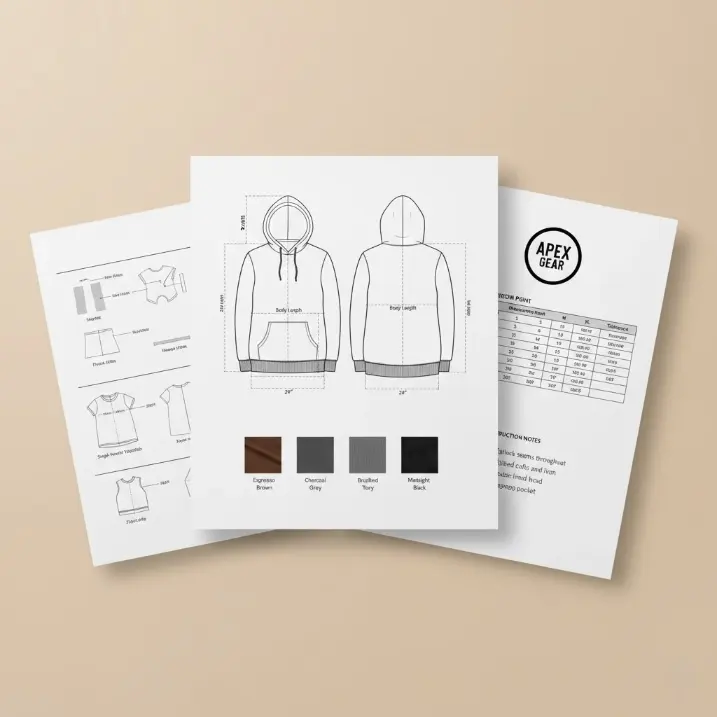
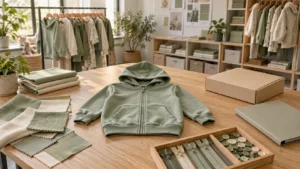
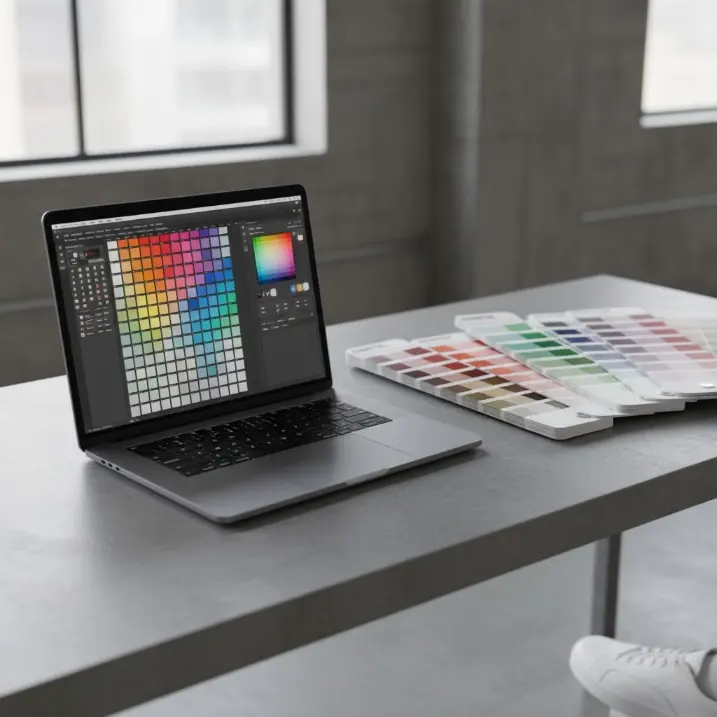
At the very start of children’s apparel manufacturing, everything begins with your tech pack. Think of a tech pack as the official blueprint for garment production: it includes flat technical sketches, precise measurement specifications, fabric requirements, color codes (such as Pantone numbers), and detailed notes on trims and accessories. The more comprehensive the critical information, the better the factory can understand and execute your vision with complete accuracy.
For brands using OEM (Original Equipment Manufacturing) services, providing a clear, detailed tech pack is critical — it effectively prevents miscommunication and the costly production delays that come with it. If you are working with an ODM (Original Design Manufacturing) model, a trusted factory will typically leverage its existing, market-proven design library to support you in building these comprehensive tech packs.
Phase 2: Sourcing Child-Safe Grade Fabrics and Trims
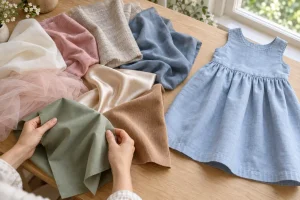
Children have extremely delicate, sensitive skin, which makes fabric selection a make-or-break factor for the quality and reputation of your children’s apparel brand. Non-negotiable considerations include breathability, softness, and absolute safety.
- Fabric Selection: High-end manufacturers typically use 100% natural pure cotton for everyday wear; for next-to-skin base layers, ultra-soft modal fabric are the go-to choice; for activewear, durable, high-performance polyamide fibers are preferred.
- Safety Standards: Sourcing materials that meet OEKO-TEX® Standard 100 certification requirements is non-negotiable. This certification guarantees fabrics are free from harmful chemicals and toxic azo dyes. In addition, all trims and components — such as zippers, buttons, and snaps — must comply with lead-free standards and be securely fastened to the garment, to eliminate the risk of choking hazards from detachment.
Phase 3: Pattern Making and Size Grading for Children’s Apparel
Once the tech pack and fabrics are finalized, professional pattern makers translate 2D design drawings into 3D pattern templates. Children grow and develop at a rapid pace, with dramatic shifts in body proportions from infancy to toddlerhood and beyond — a single set of standard sizing simply cannot meet these evolving needs.
This is where size grading comes into play. Size grading is a mathematical, rule-based manufacturing process that scales the base pattern up or down proportionally to generate a full size range (for example: 2T, 3T, 4T, 5T, etc.). Precise size grading ensures the garment delivers a consistent, comfortable fit across all age groups, which in turn effectively reduces customer return rates for your brand.
Phase 4: Prototype Creation and Sample Approval
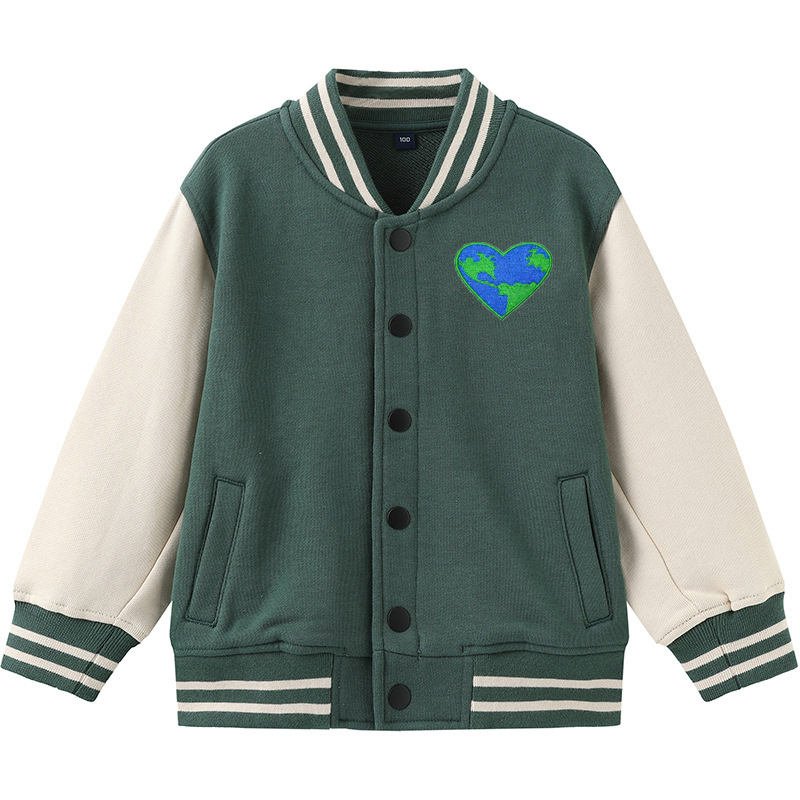
Before mass production begins, the factory will create physical prototype samples. This stage typically includes two critical steps:
- Fit Sample: Made using readily available substitute fabrics, the fit sample is designed to verify the garment’s silhouette, drape, and overall fit accuracy via a fit mannequin or live child fit model.
- Pre-Production (PP) Sample: Once the fit is formally approved, the factory will produce a pre-production sample using the exact same fabrics, trims, and final colorways that will be used for bulk production. This sample serves as the final, binding benchmark for the entire production run. Mass production will only officially commence once you have given your final written approval of the PP sample.
Phase 5: Bulk Cutting and Sewing Production
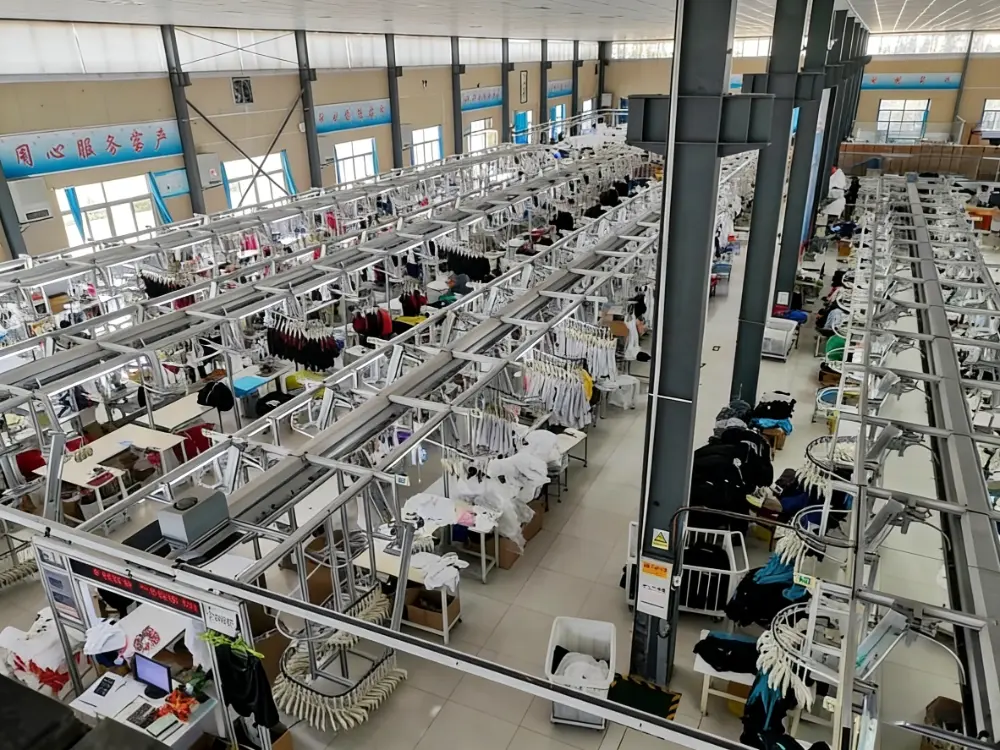
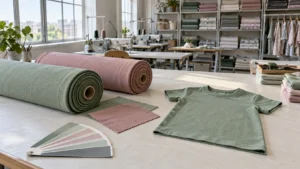
This is the stage where your design is transformed into a tangible finished garment. Approved fabrics are laid out in large, tension-free multiple layers. Using computer numerical control (CNC) precision cutting machines, the fabric is cut with pinpoint accuracy according to the graded size patterns, minimizing fabric waste and lowering your overall production costs.
The cut fabric pieces are then bundled and sent to the sewing assembly line for construction. Given children’s naturally active and playful nature, durability must be the top priority in the sewing process. Experienced sewing technicians use reinforced stitching techniques (such as interlock stitching and overlock stitching) to ensure the finished garment can withstand repeated washing and the wear and tear of everyday play.
Phase 6: Quality Control (QC) and Final Inspection
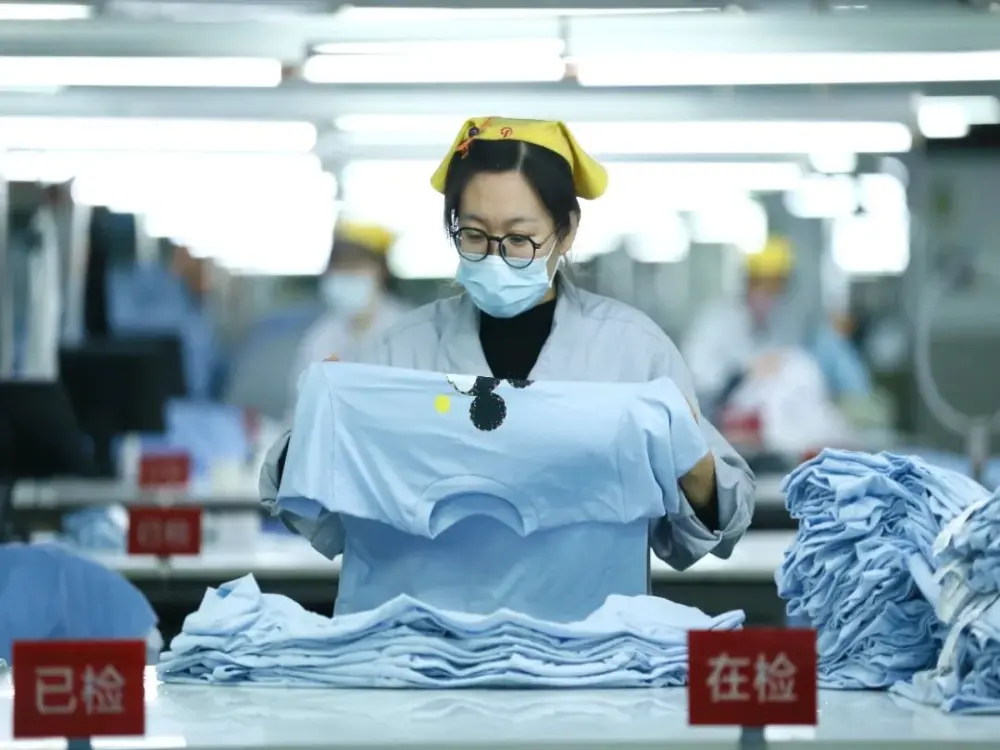
Quality inspection should never be an afterthought; in fact, it is integrated and embedded throughout the entire production process.
- In-Line Production Inspection: The QC team conducts daily monitoring and spot checks across the sewing assembly line, to identify and correct issues such as missed stitches or pattern misalignment at the earliest possible stage.
- Final Inspection and Compliance Checks: Once fully assembled, finished garments undergo a rigorous comprehensive evaluation. This includes mandatory pull testing on all buttons and snaps, to ensure they meet the physical safety requirements set out in CPC (Children’s Product Certificate) regulations.
At HAPA, we have a 30-person dedicated quality control team that enforces an extremely strict in-house QC protocol, ensuring every single garment that leaves our factory meets the highest standards of the international retail market.
Phase 7: Custom Labeling, Packaging, and Shipping
Once production is fully completed, the remaining steps are brand labeling and logistics. Finished garments are fitted with your brand’s custom woven labels, hang tags, and the legally required care labels (which detail fabric composition and washing and care instructions).
For wholesale orders, garments are neatly folded and packed into eco-friendly plastic bags or your specified custom packaging, before being handed over to the freight forwarder for shipping. This efficient, seamless packaging process ensures your inventory arrives at your warehouse or fulfillment center in perfect condition, ready for immediate retail sale.
OEM vs. ODM: Which Manufacturing Model Fits Your Brand?
When entering into a partnership with a children’s apparel factory, you will face a critical business decision: should you choose the OEM or ODM production model? Your choice will directly impact your budget, production lead time, and the level of creative control you hold over the final finished garments. We have created a clear comparison table to lay out the core differences between the two models, to help you make the most informed decision for your brand.
| Feature | OEM (Original Equipment Manufacturer) | ODM (Original Design Manufacturer) |
| Definition | You provide the design (Tech Pack); the factory builds it from scratch. | The factory provides pre-designed styles; you add your branding. |
| Design Exclusivity | High. 100% exclusive to your brand. | Low. Styles may be sold to other brands (White Labeling). |
| Time-to-Market | Slower. Requires pattern making, size grading, and multiple sample rounds. | Faster. Skips R&D and sampling phases; ready for bulk production. |
| Upfront Costs | Higher. Requires investment in technical designers and prototyping. | Lower. Saves money on R&D and pattern development. |
| Customization | Complete Control. You dictate exact fabrics, custom fits, and specific Pantone colors. | Limited. Usually restricted to custom woven labels, hangtags, and packaging. |
| Best Suited For | Established brands, experienced designers, and companies needing highly specific sizing. | Boutique owners, e-commerce startups, and brands wanting a fast, low-risk launch. |
HAPA offers comprehensive support for both OEM and ODM services. If you’re unsure which model is the best fit for your brand, feel free to reach out to us. Our team of professional consultants is ready to provide you with tailored guidance, and answer all your questions about every aspect of children’s apparel manufacturing.
How to Build a Partnership with a Trusted Children’s Apparel Manufacturer
Understanding the full manufacturing process is only half the battle. Choosing a reliable strategic partner with professional expertise lets you save massive amounts of time and energy on production workflows, so you can focus more of your efforts on marketing and brand building. Before signing a contract or paying a deposit, here are the five critical questions you need to ask potential manufacturers:
- What is your Minimum Order Quantity (MOQ)?
The MOQ is the most critical foundational factor, and you must ensure it aligns perfectly with your current business scale and future expansion plans. - Do you have the capacity to handle both OEM and ODM orders?
A flexible factory can adapt to your brand’s evolving needs, and support your seamless transition from private labeling to exclusive custom-designed collections. - Do you operate an in-house cut-and-sew production line?
Unlike middlemen or sourcing agents, manufacturers with direct in-house cut-and-sew capabilities typically offer more competitive pricing, and can enforce far stricter quality control across the entire production process. - How do you ensure products comply with CPC and OEKO-TEX standards?
When it comes to children’s safety, there is zero room for compromise. Be sure to request and review their Standard Operating Procedures (SOPs) for the use of non-toxic dyes, lead-free trims, and child-safe fasteners. - What is your standard lead time for sampling and bulk production?
Clear communication around timelines is critical, as it allows you to systematically plan the retail launch of every seasonal new collection with full confidence.
Request a Quote for Your Next Children’s Wear Collection
When you’re ready to reach out to a manufacturer, thorough preparation is essential. To secure the most accurate quote and production timeline, please provide the manufacturer with your detailed Tech Pack, your estimated order volume broken down by size and color, and your expected delivery date.
Even if your team does not have an in-house professional technical designer, HAPA has the perfect solution for you. As experts with deep roots in the children’s apparel manufacturing sector, we provide end-to-end development services, from initial concept incubation all the way through to bulk production. Our technical team will support you through every step of creating your first high-quality prototypes, helping you eliminate costly R&D and pattern-making expenses, and drastically shortening your time-to-market.
Conclusion
The children’s apparel manufacturing process is a comprehensive, multi-step journey. Few garment manufacturers openly share these behind-the-scenes details, and even fewer allow outside parties to spend a day observing their end-to-end production workflows.
To avoid unnecessary headaches and setbacks throughout the production process, we sincerely recommend that you conduct thorough due diligence and select the right children’s apparel manufacturer to support you in building a complete, successful children’s wear line. A partner like HAPA, with extensive expertise in children’s apparel manufacturing and global regulatory compliance, delivers a full one-stop service. We turn your creative vision into tangible, market-ready products, so you can leave worries about supply chain bottlenecks behind for good.
Ready to kick off your production? Get in touch with our team today, submit your design sketches or creative concepts, and let’s work together to build your next best-selling collection of premium children’s apparel.
FAQ
How long does the complete kids clothing manufacturing process take?
The standard timeline typically ranges from 8 to 12 weeks. The sampling phase (including tech packs and prototyping) usually takes 2 to 4 weeks. Once the Pre-Production (PP) sample is approved, bulk cut-and-sew manufacturing and final quality control take an additional 6 to 8 weeks. Timelines may vary based on design complexity and the specific fabrics used.
How do you guarantee the children’s apparel is safe and CPC compliant?
Child safety is non-negotiable. At HAPA, our entire manufacturing process is built around strict compliance. We source OEKO-TEX® Standard 100 certified fabrics and lead-free, non-toxic trims. During the Quality Control phase, our team conducts rigorous pull-testing on all buttons and snaps, ensuring every garment meets or exceeds CPSC regulations and is fully CPC compliant for the US market.
Can you manufacture my kids’ clothing line if I don’t have a Tech Pack?
Absolutely. While having a complete Tech Pack accelerates the OEM process, you don’t need one to get started. HAPA offers comprehensive end-to-end development services. Our in-house technical team will work closely with you to translate your initial sketches into professional tech packs, handle the precise size grading, and develop your first prototypes from scratch.
What is the difference between OEM and ODM for childrenswear?
OEM (Original Equipment Manufacturer) means we manufacture your garments entirely from scratch based on your unique designs, offering you 100% creative control over the fit and fabric. ODM (Original Design Manufacturer), or private labeling, allows you to select from our catalog of pre-designed, market-tested styles and apply your own brand’s woven labels and hangtags. ODM is generally a faster and more cost-effective way to launch a new collection.