To style a T-shirt dress, try sneakers and a cap, sandals and a tote, denim and trainers, an open shirt, a cardigan and boots, a blazer and loafers, a belt and flats, a biker jacket, a sweater and tall boots, or dressier sandals with a small bag.
You don’t need a different dress for each look. Start with its length and how loosely it fits, then choose for the day you’re having. The ideas below explain what to pair and what to adjust, without treating waist definition, heels, or a particular body shape as requirements.
How to Style a T-Shirt Dress: Pick Your Starting Look
Start with shoes you can comfortably wear for the day’s activities. Then decide whether you want to keep the dress loose, add a layer, or define the waist. Check the combination while sitting and walking before adding accessories. That gives you a practical starting point for the ten outfits below.
| The look you want | Start with these outfits | First thing to adjust |
|---|---|---|
| Casual and easy | 1: sneakers and cap; 7: belt and flats | Keep or remove the belt according to the shape you prefer |
| Light, warm-weather dressing | 2: sandals and tote; 4: open shirt | Decide whether you need the extra layer |
| A layered outfit | 3: denim; 5: cardigan; 8: biker jacket; 9: sweater | Check sleeve bulk and where the two hems fall |
| A little more polished | 6: blazer and loafers; 10: dinner sandals | Check the dress’s coverage and condition first |
A T-shirt dress borrows the neckline and general feel of a tee, with enough length to wear as a dress. Here, we’re styling that garment rather than a collared, button-front shirt dress. If you’re shopping for a child, knowing the different types of kids’ dresses helps you distinguish a T-shirt dress from a shift or shirt dress before choosing accessories.
Change one element at a time. If you like the dress with sandals but not boots, compare the footwear before replacing the dress or adding a belt.
10 Easy T-Shirt Dress Outfit Ideas to Try
Try these combinations with pieces you already own. Each includes an adjustment for when the outfit looks right in your head but feels different once you put it on.
1. White Sneakers and a Baseball Cap for Everyday Errands
A straight or relaxed T-shirt dress with sneakers is an easy option for errands, a casual lunch, or a day with plenty of walking. Add a baseball cap and, if useful, a hands-free bag. Caralyn Mirand’s styling examples include this casual pairing. You can leave the dress loose rather than adding another piece at the waist.
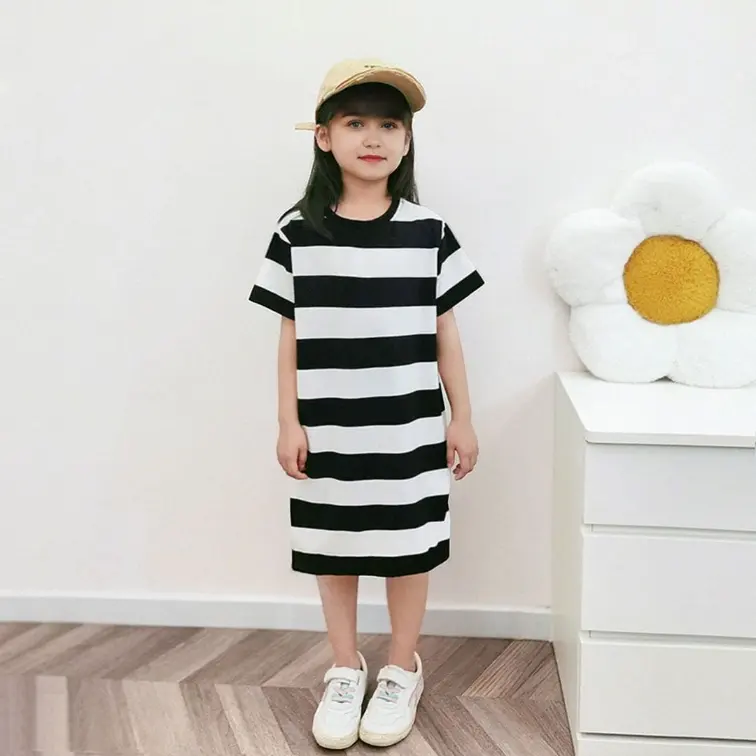
Image source: INCLUD.
If the lower half looks busier than you wanted, compare crew socks with a less visible pair. See which gap between the hem and shoes you prefer. Sit down and reach forward, too, to check the dress’s coverage.
2. Flat Sandals and a Woven Tote for Warm Days
For summer T-shirt dress outfits, try a loose knee-length or midi dress, flat sandals, and a woven tote. The bag adds texture to a plain dress; with a print, you may want very little else. Choose the tote’s size for what you’ll carry.
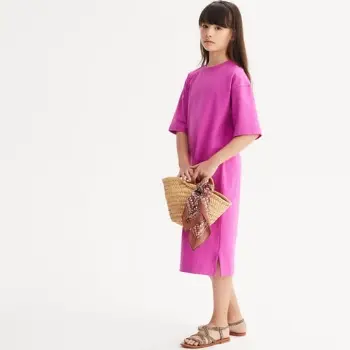
Image source: La Redoute.
Check a pale dress in daylight before heading out. If you want more coverage, consider whether another dress would be easier than adding several underlayers. When comparing fabrics for summer clothing, check the dress’s thickness and looseness as well as its fiber label. And use sandals you already find comfortable for the planned walk; flat soles alone don’t settle that.
3. A Denim Jacket and Trainers for Cooler Evenings
A denim jacket adds a more defined outline over a soft dress. Try a shorter jacket if you want more of the skirt visible, or keep a longer cut if you prefer that relaxed shape. Trainers keep the combination casual. When choosing between a coat and a jacket, compare the actual coverage and room for layers as well as the name.
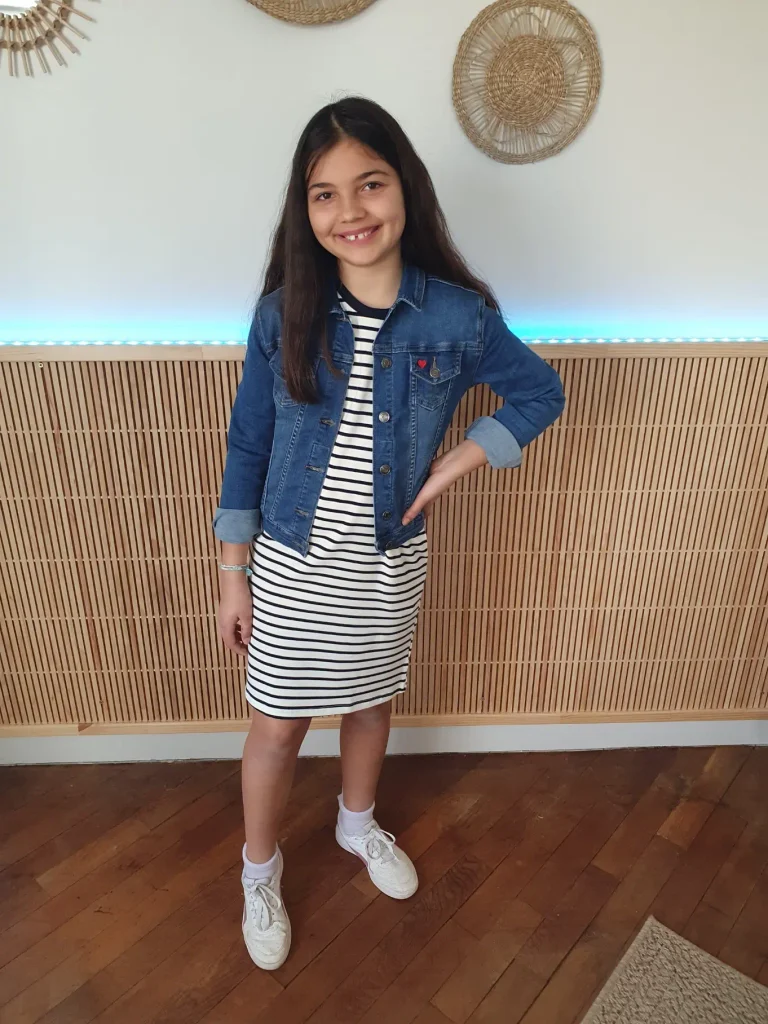
Image source: Maëlia Style.
Before leaving, move your arms forward as though carrying a bag. Dress sleeves bunching inside the jacket need a fit adjustment, not another accessory. Straighten the inner sleeves, then try a roomier jacket if they still feel compressed.
4. An Open Shirt and Flat Sandals for a Relaxed Layer
An open lightweight shirt is worth trying when you want another layer without the structure of denim. Over a straight T-shirt dress, it leaves the center of the outfit visible while adding movement at the sides. Keep the sandals simple if the shirt already has a strong stripe or print. Roll the sleeves only if the cuff stays comfortable.
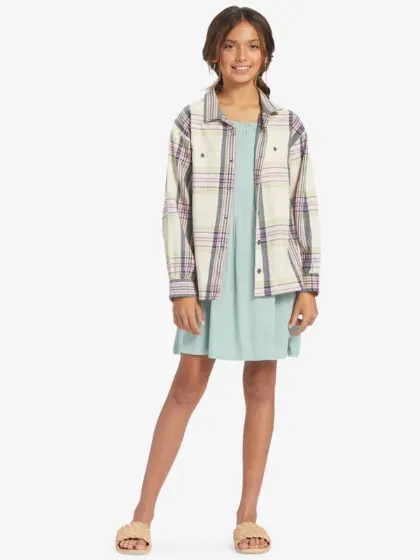
Image source: Roxy.
Two loose garments can work together. If there’s more volume than you wanted, try a shorter shirt or less substantial shoes before reaching for a belt. Turn sideways to see where the shirt’s hem falls against the dress.
5. A Cardigan and Ankle Boots for Transitional Weather
A cardigan and ankle boots give you another way to wear a knee-length or midi T-shirt dress as the weather changes. Start with the cardigan you already reach for, then look at where its hem meets the dress. A short cardigan exposes more of the skirt; a longer one gives you an overlapping, looser outline.
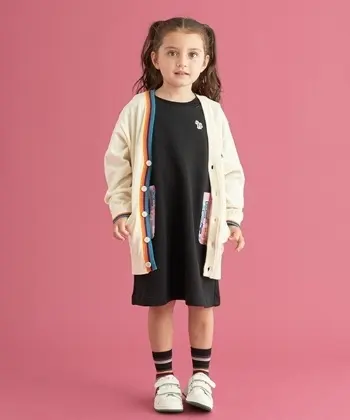
Image source: WEAR / Paul Smith Junior.
Walk around before deciding. If the dress catches against the cardigan or gathers around your hips, separate the layers and see whether they fall back into place. Try another cardigan if the problem keeps returning. Choose extra coverage for the actual weather, rather than assuming this combination is enough for every fall day.
6. A Blazer and Loafers for a More Polished Look
For a café meeting or another setting that allows relaxed clothing, try a plain T-shirt dress with a blazer and loafers. A neckline that sits neatly and fabric with the coverage you want make the outfit easier to finish. You can keep the shoes flat. The blazer already introduces a more structured piece.
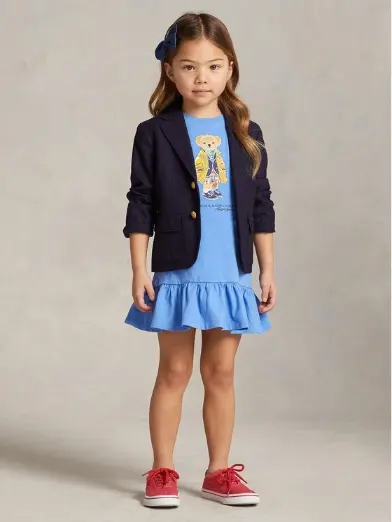
Image source: MODIVO / Polo Ralph Lauren.
A roomy blazer over a roomy dress may be just the shape you like. If it feels bulky, try one closer-fitting piece. I’d resolve the shoulder and sleeve fit before choosing jewelry. Check the venue or workplace expectations, too; a blazer doesn’t make every casual dress suitable.
7. A Belt and Ballet Flats for Optional Waist Definition
If you want to change the dress’s outline, try a belt with ballet flats. Place the belt where it feels comfortable and see how much fabric gathers above and below it. Daryl-Ann Denner’s guide makes waist definition central to her preferred styling. I’d treat it as an option, particularly if you bought the dress because you liked its loose shape.
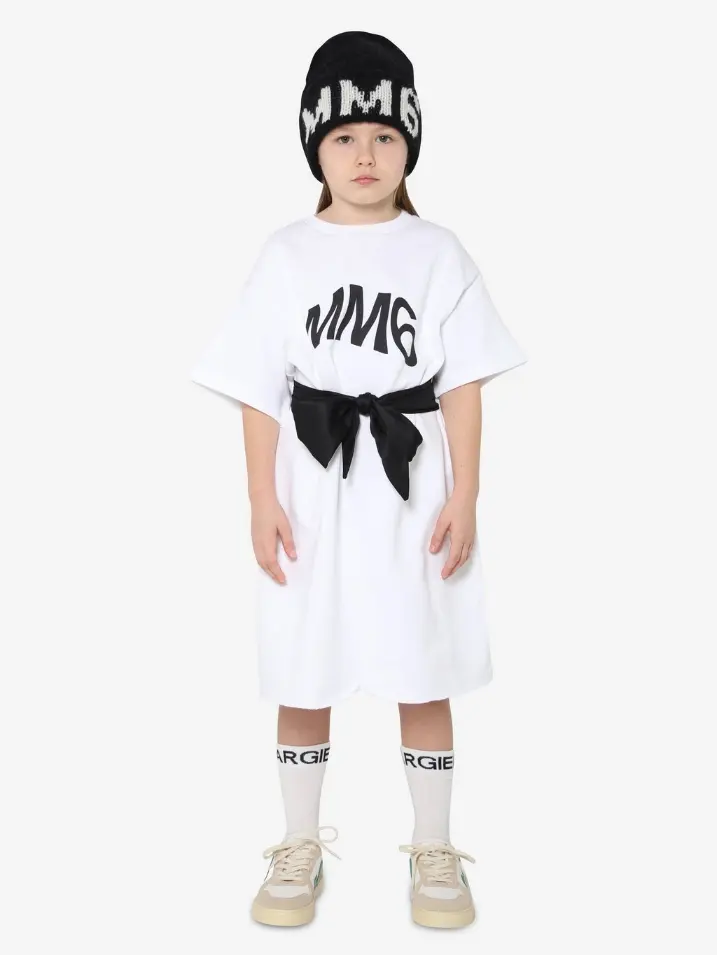
Image source: Childsplay Clothing / MM6 Maison Margiela.
Check the hem again after belting. Pulling fabric over a belt can make the dress shorter than it was hanging freely. If the waist develops folds you keep rearranging, loosen or remove the belt. You can keep the flats and wear the rest unchanged.
8. A Biker Jacket and Boots for a Stronger Contrast
A biker-style jacket and boots give a plain T-shirt dress a more substantial outer layer and footwear. Try the combination with a soft midi dress if you like the contrast between loose fabric and a firmer jacket. Black-on-black keeps the colors simple; a lighter dress makes the jacket stand out more.
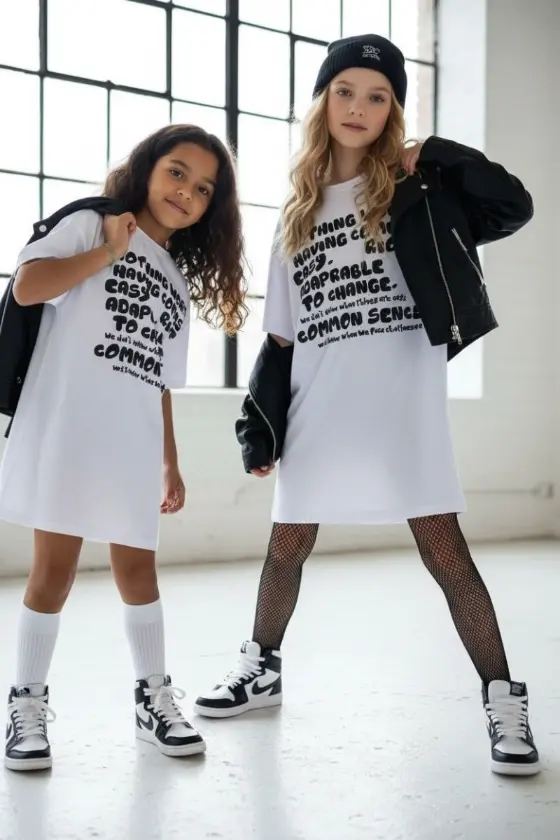
Image source: Sówka Sklep.
With zips or buckles on both the jacket and boots, try a simpler bag. Check a close-fitting jacket’s shoulders and armholes over the dress: can you reach and sit without rearranging the layers?
9. A Sweater and Knee-High Boots for a Layered Outfit
Pulling a sweater over a plain T-shirt dress lets the visible lower part work much like a skirt. A shorter sweater makes that change easy to see without knotting the fabric. You can also try a sweatshirt; the difference between a sweatshirt and a sweater helps explain why their texture and structure can change the look. Try knee-high boots with a knee-length or midi dress, then compare the gap or overlap between the skirt and boot shafts.
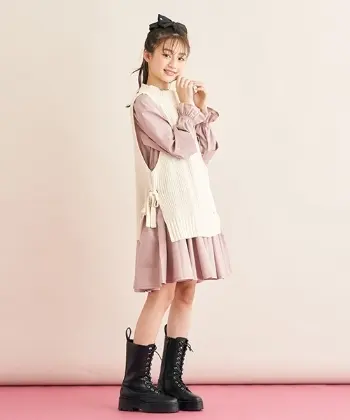
Image source: WEAR / mezzo piano Junior.
The sleeves underneath deserve attention here. If they bunch, smooth them before trying a different sweater cut. Walk and sit to check whether the sweater rides up or the skirt catches on the boots. Use warmer outerwear when needed; this is a styling idea, not a guarantee that a summer dress will work through winter.
10. Dressier Sandals and a Small Bag for Dinner
To dress up a T-shirt dress for a casual dinner, try sandals with a finer shape, a small bag, and one piece of jewelry you enjoy wearing. Flat sandals or a low heel can both work. Who What Wear’s outfit examples show how different sandals and accessories change the presentation of a simple dress.
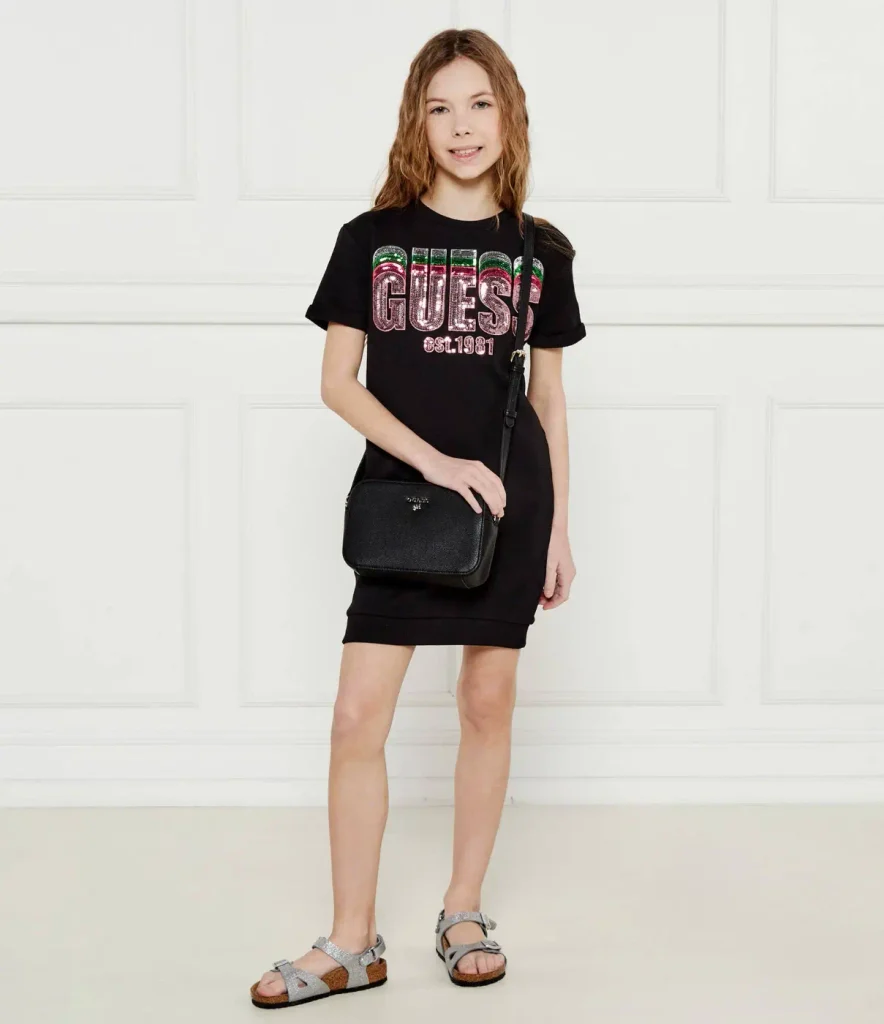
Image source: Gomez / GUESS.
Look at the dress before adding more: does the neckline sit neatly, and is its coverage right for the setting? I’d choose another dress before trying to disguise fabric that feels too thin or stretched for the occasion. More accessories won’t necessarily give you the result you want
What Shoes Should You Wear with a T-Shirt Dress?
Choose shoes for your plans first, then compare their shape against the dress. A chunky sole creates a different visual balance from a narrow flat, but neither requires a particular body type. Look at the whole outfit, including socks and the space between the hem and shoe.
- With sneakers, compare low-profile and bulkier pairs using the same dress. Keep the one that gives you the casual shape you prefer and works for the walk.
- With sandals, look at the straps as well as the sole. A simple strap arrangement can keep a printed dress from feeling too busy; wider straps create a more substantial look.
- With loafers or ballet flats, decide whether you want visible socks. That small choice can change the outfit without requiring a different bag or layer.
- With boots, check the shaft height against your skirt. An open gap and an overlapping hem are both options, provided the combination moves comfortably.
A photo helps you compare the shapes, but wear the shoes around the room before deciding. You’ll need to be comfortable in them.
How to Style a T-Shirt Dress for Fall and Winter
Start with how much time you’ll spend outside. For a mild fall day, a removable cardigan may be enough; colder weather calls for more coverage underneath and suitable outerwear. Build an outfit that still works when you take your coat off, especially if you’re moving between chilly streets and heated rooms.
- Try a thin long-sleeve top underneath if the dress has room through the shoulders. Let its cuffs and neckline show deliberately rather than trying to hide every edge.
- Add tights or leggings that feel comfortable under the skirt. If the fabrics cling together, try another pairing before committing to a full day in it.
- Check the outfit with your coat closed. A sweater that looks good indoors can become awkward when its sleeves are squeezed inside another layer.
For example, you could wear a navy midi T-shirt dress over a gray long-sleeve top, with tights and ankle boots. Add outerwear suited to the forecast. If you’re adapting the outfit for your child, choose winter layers for kids around their school day and outdoor time, rather than the photograph alone. I’d save a very thin summer dress for milder days if making it comfortable requires several fussy layers.
What Accessories Work Best with a T-Shirt Dress?
Choose one accessory you want to notice first, then add what you need for the day. A patterned scarf, bright bag, or pair of earrings can give a plain dress some character. You don’t have to buy a matching set or add a belt just to make the outfit feel finished.
Look at the neckline when choosing jewelry. With a crew neck, try a pendant that sits clearly below the collar, or skip the necklace and wear earrings. With a graphic dress, I’d start with a plain bag so the print stays visible. If you enjoy mixing patterns, pick up one color from the dress in your scarf or bag as an easy starting point.
Try the bag on with the outfit. Adjust a crossbody strap if the bag lands awkwardly against a belt or gathers the dress at your hip. A scarf tied to its handle is another way to add color without wearing anything extra around your neck.
How Do You Style an Oversized T-Shirt Dress?
Keep the roominess you enjoy and choose what you want to make more defined: the outer layer, the shoes, or the waist. You don’t need to change all three. Check the neckline and sleeve length as well as the hem. Buying several sizes up can change those areas in ways you didn’t intend.
For an illustrative comparison, picture the same loose black dress in two outfits. White low-profile sneakers and a small crossbody bag keep it casual. Loafers and a short jacket give it a more structured finish while leaving the dress loose. Neither depends on adding a belt, and neither requires buying a smaller dress.
The fabric affects this choice too. One oversized dress may stand away from your body while another falls into softer folds. If you’re comparing modal and cotton fabrics, look beyond the fiber label at the finished dress’s construction and drape. I’d try the intended jacket over it before buying, especially when both pieces have generous sleeves.
Why Does a T-Shirt Dress Outfit Sometimes Feel Unfinished?
Before adding something, identify the part you don’t like. Is the outfit too busy, are the layers awkward, or is it simply different from the fitted silhouette you usually wear? That distinction saves you from repeatedly changing accessories when the problem is somewhere else.
- If several details compete, remove one and look again. A graphic dress, patterned bag, large necklace, and detailed shoes may be more than you want together. Start with the item you care least about.
- If layers bunch, take off the outer piece and check the dress alone. Put it back on after straightening the sleeves. If the same folds return, compare another outer layer’s cut.
- If a belt creates unwanted folds, loosen it or change its position. Then remove it completely and compare. Waist definition is only useful if you like wearing the result.
- If the outfit works standing but bothers you in motion, test the activity causing the problem. Sit in a chair, walk, and carry your usual bag. Notice whether the hem rises or a strap pulls the dress out of place.
Change one thing, then repeat the same check. If you still have to keep fixing the dress, choose another for that day.
Conclusion
The easiest T-shirt dress outfit is often the one you can assemble from clothes you already use. Pick a combination that fits your plans, check it in motion, and change the element that bothers you. You may only need different shoes or a less bulky layer.
I’d start with one casual option and one dressier option for the same dress. Once those work, you can borrow a layer from another outfit instead of buying a separate set of accessories for each look.
Frequently Asked Questions
Can You Wear a T-Shirt Dress Without a Belt?
Yes. A straight or roomy silhouette can be the whole point of the dress. Use shoes, an outer layer, or a bag to change the overall feel if you want to. Add a belt only when you prefer the shape and find it comfortable, not because the outfit supposedly needs a waistline.
Can You Wear Leggings Under a T-Shirt Dress?
Yes, if you like that combination. Check whether the dress catches on the leggings and whether the waistband creates bulk you find uncomfortable. Look at both garments in the light where you’ll wear them. Leggings can add coverage, but their warmth and opacity depend on the actual pair.
Can You Wear a T-Shirt Dress to Work?
That depends on your workplace and the dress itself. Some casual settings may allow an opaque, appropriately covered T-shirt dress with loafers and a jacket; others won’t. Check your employer’s expectations rather than relying on accessories to make the outfit suitable. Length and comfort while seated matter as well.
How Do You Style a Black T-Shirt Dress?
For a casual black T-shirt dress outfit, try white sneakers and a simple bag. For a more tonal look, use black flats or loafers and let the shapes differ. A contrasting cardigan is another option. You don’t need to add color if you prefer black throughout.
Is a T-Shirt Dress the Same as an Oversized T-Shirt?
Not necessarily. A purpose-made T-shirt dress is designed to be worn at dress length, whereas an oversized tee may simply have a wider or longer fit. Among the different types of T-shirts, oversized describes fit, not a guarantee of dress-length coverage. Retailers use the names inconsistently, so check measurements and how the garment covers you when you sit, bend, or reach.