The 12 types of kids’ dresses covered here are A-line dresses, shift dresses, fit-and-flare dresses, empire-waist dresses, drop-waist dresses, shirt dresses, T-shirt dresses, pinafore dresses, tiered dresses, smocked dresses, wrap dresses, and sundresses.
These names can overlap: one dress might be both A-line and tiered. To tell the styles apart, I’d start with the shape, waist position, and opening. Below, you’ll learn what to look for and how to describe a dress clearly when shopping or developing a collection.
How Do Kids’ Dress Names Work?
Kids’ dress names can describe the silhouette, waist placement, construction, or intended use. Several names can apply to the same dress without contradicting each other. Oliver + S, for example, describes its Popover Sundress as an A-line design. One word identifies the shape; the other places it in a warm-weather category.
When you’re looking at an unfamiliar design, follow this order. The bodice is the upper section of the dress, above the skirt:
- Follow the outside shape. Does it fall fairly straight, widen gradually, or narrow before opening into a fuller skirt?
- Find the waist. Is the bodice-to-skirt seam raised, near the natural waist, or lower down? There may be no separate waist seam.
- Check the opening. Look for buttons, a zipper, an overlap, or a pull-on neckline.
- Inspect the skirt and bodice details. Joined tiers, surface ruffles, and gathered panels describe different things.
Leave color and print until later. A floral print doesn’t make a dress a sundress, and a bow doesn’t make it a wrap dress. Likewise, types of dress hemlines concern the lower edge; they don’t explain the whole garment. Reading these features separately gives you a more useful description than choosing one label and stopping there.
Common Types of Kids’ Dresses
These 12 names describe different aspects of children’s dress styles. Focus on the feature each name identifies, then check the details it leaves unanswered.
1. A-Line Dress
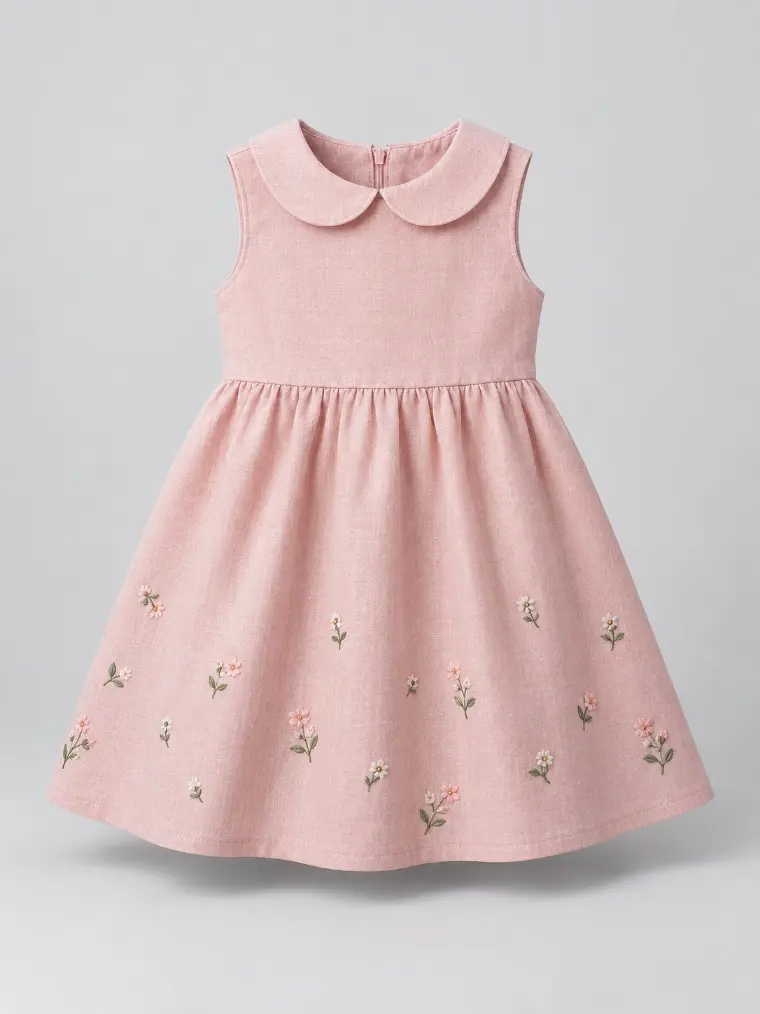
An A-line dress is narrower toward the top and widens toward the bottom, roughly suggesting the letter A. Look at the overall outline rather than searching for a particular seam. The flare can be gentle or pronounced, and an A-line dress can have a waist seam.
In a product photo, trace the side edges down to the hem. Both an uninterrupted shape and a design with a separate bodice may have an A-line outline. Check the chest measurements and fastening separately.
2. Shift Dress
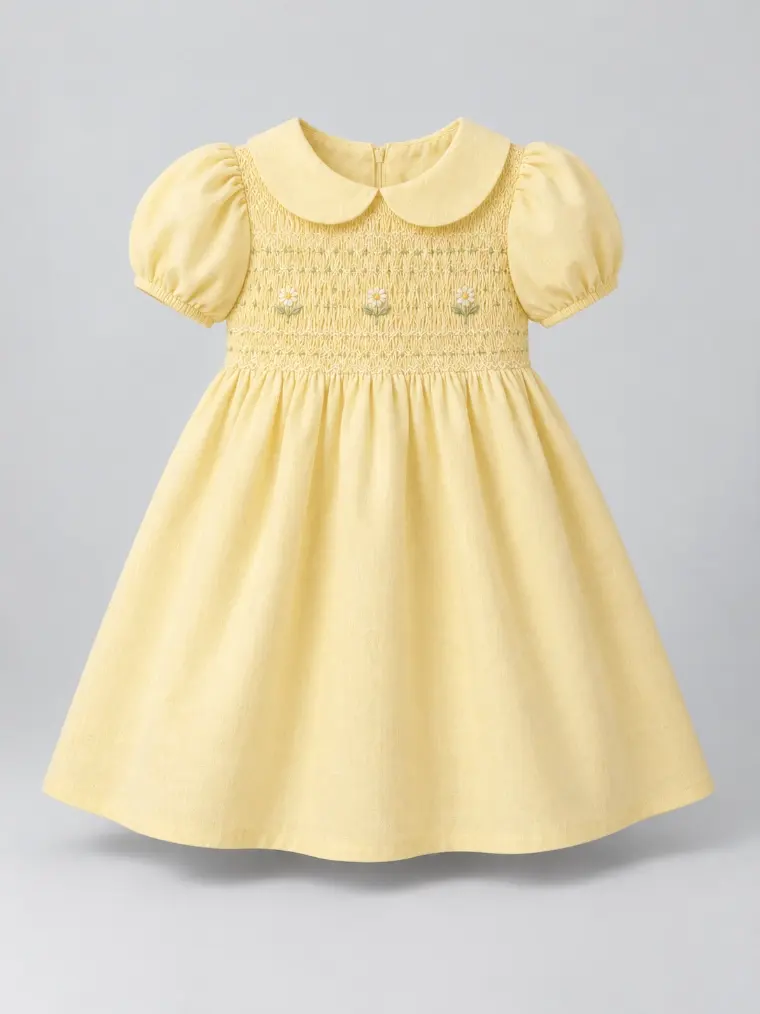
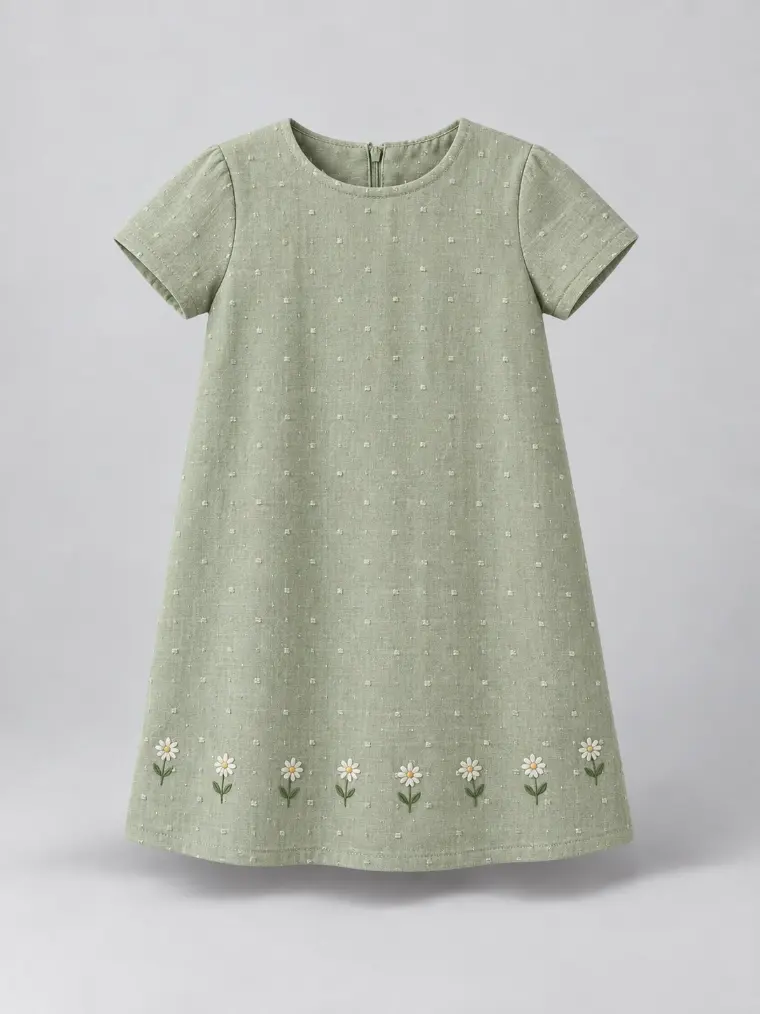
A shift dress usually has a fairly straight, loose or semifitted shape, with little emphasis on a defined waist. Compared with a strongly flared design, the change in width from the upper body to the skirt is less obvious. It doesn’t mean a tight, body-hugging dress.
I’d be careful about judging fit from a flat photograph. The same straight outline could look roomy on one child and close-fitting on another. Use measurements and worn views to understand the space inside; “shift” doesn’t replace sizing information.
3. Fit-and-Flare Dress
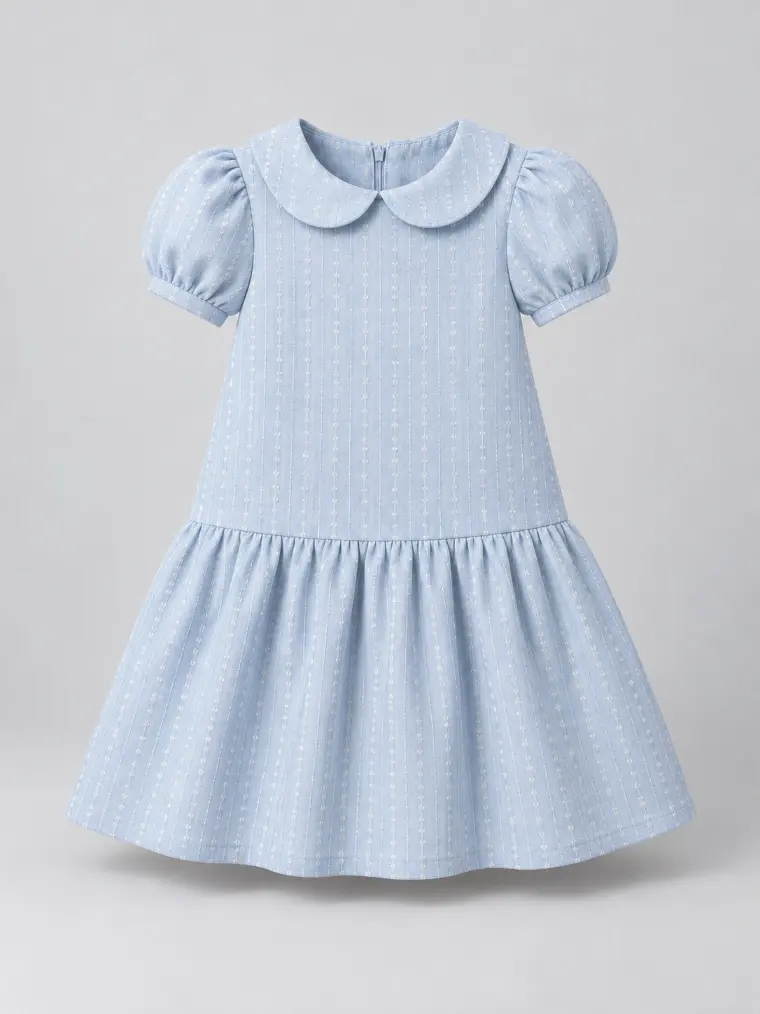
A fit-and-flare dress combines a relatively shaped bodice with a skirt that opens out below it. The contrast between the upper section and the fuller skirt is the useful clue. The transition often sits around the waist, although children’s pattern descriptions also use this term for raised-waist designs.
For example, Simplicity S3245 describes a fit-and-flare silhouette with an empire-waist accent and gathered skirt. That combination shows why rigid naming rules can be misleading. For a child, “fitted” should describe the intended shape; it doesn’t mean choosing a size that pulls across the body.
4. Empire-Waist Dress
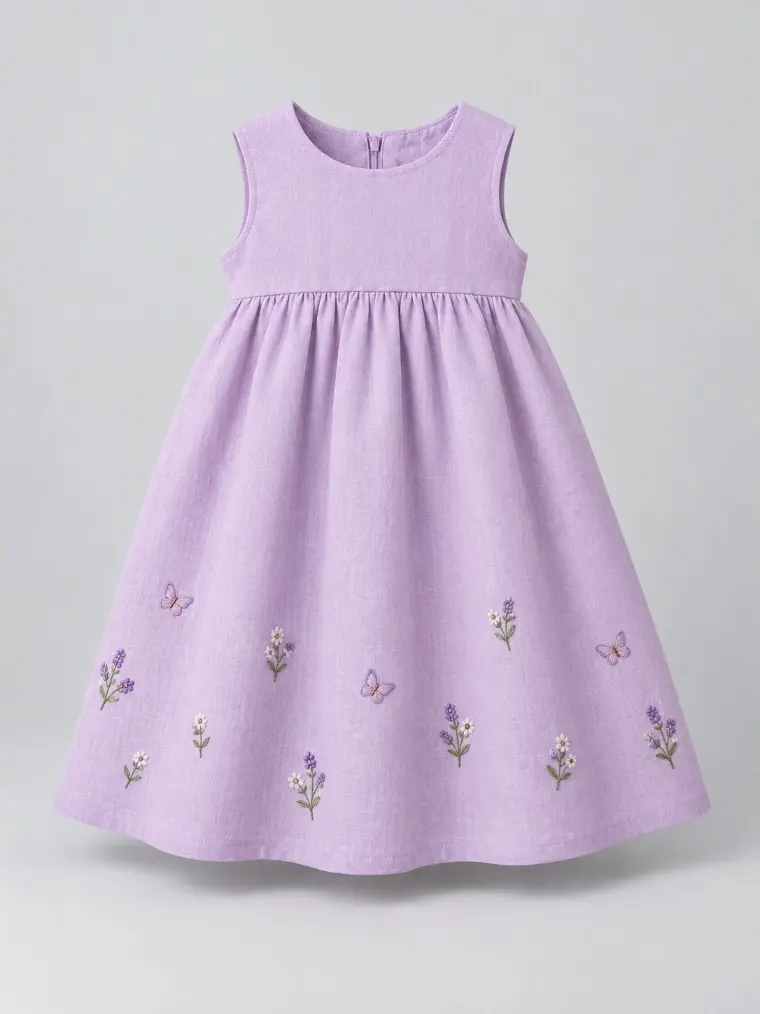
An empire-waist dress places the waistline above the natural waist, leaving a shorter upper section and a skirt that begins higher on the body. Find the actual bodice-to-skirt join rather than relying on a ribbon or contrasting stripe, which may only be decoration.
Butterick B6161 is a useful published example: it combines a raised empire waist with several skirt and sleeve variations. The waist description remains useful even when those other details change. In children’s clothing, describe that placement in relation to the child’s proportions rather than using adult body-shaping language.
5. Drop-Waist Dress
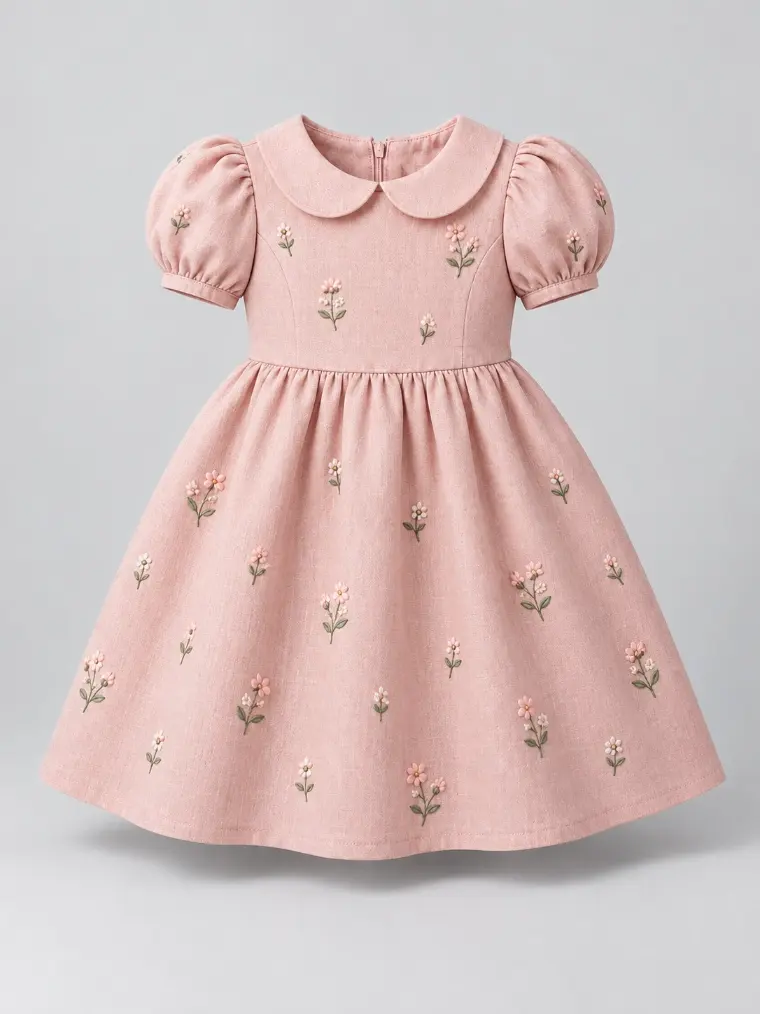
A drop-waist dress moves the waistline below its usual position, creating a longer upper section before the skirt begins. The lower skirt might be gathered or flared. Look for where that change happens on the wearer; there’s no single distance in inches that defines every drop-waist design.
Oliver + S describes its Jump Rope Dress View A as having a slightly dropped waist. It also has shirt-inspired details, so “drop-waist shirt dress” can be a useful combined description. A long bodice alone isn’t enough to settle the name when you can’t see where it sits on the body.
6. Shirt Dress
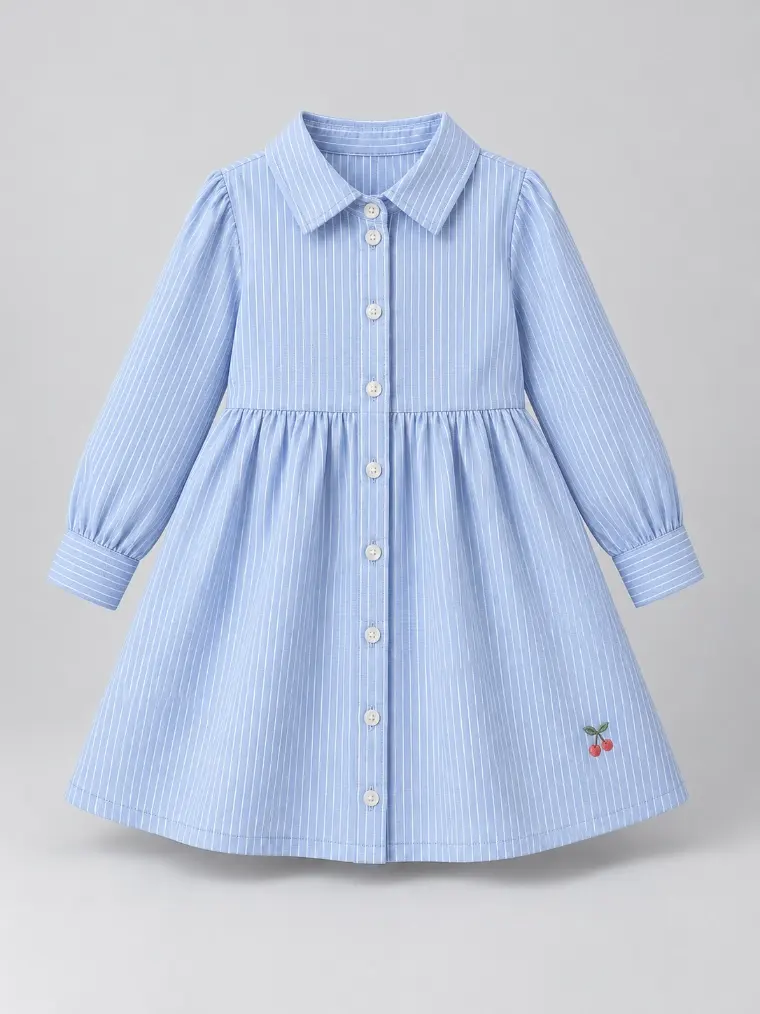
A shirt dress borrows its construction or appearance from a shirt. Look for a buttoned front or placket, the strip around an opening, often accompanied by a collar. The opening may extend partway or farther down the dress. Short sleeves, long sleeves, and different skirt shapes can all fit this description.
Separate those features from the material. A description such as “short-sleeved shirt dress in cotton poplin” tells you both the design direction and a fabric choice. “Shirt dress” on its own doesn’t specify cotton, fabric thickness, or whether the whole front opens for dressing.
7. T-Shirt Dress
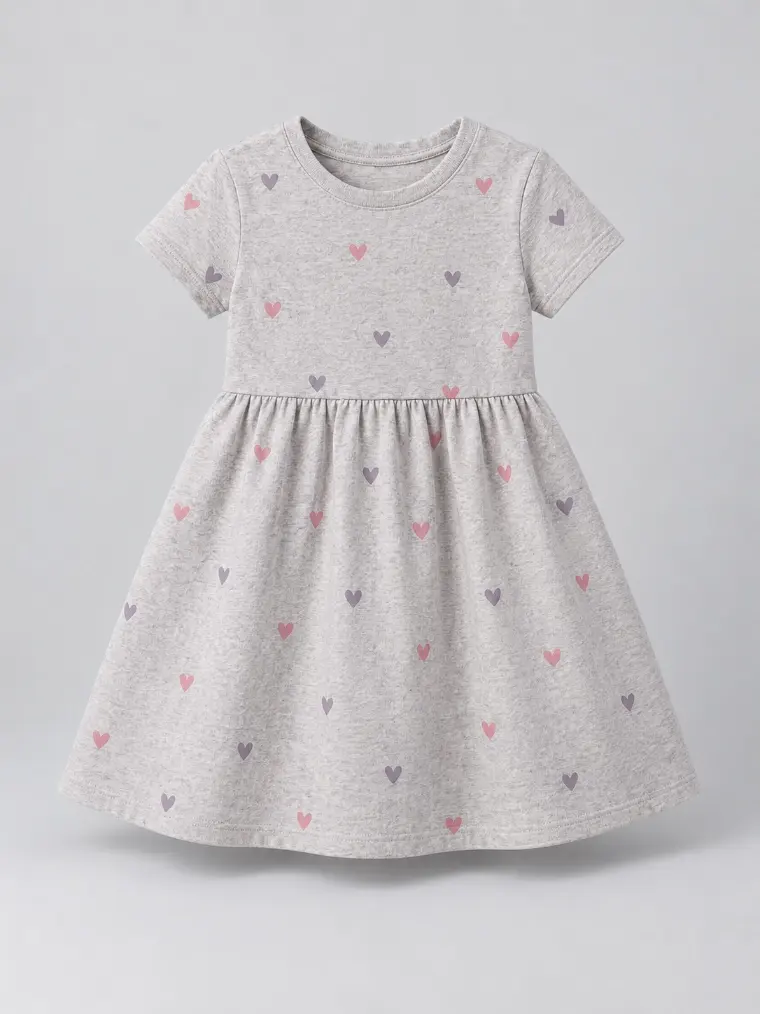
A T-shirt dress has a tee-like upper body and neckline, commonly made in jersey knit. Think of the neck finish and general construction of a T-shirt, extended into a dress. It may fall straight or include a separately joined skirt, so it doesn’t have to resemble one long rectangle.
H&M’s Motif-Detail T-Shirt Dress illustrates this: its product description combines a round neck with a gathered, flared skirt. When comparing similar garments, check the fiber label and care instructions separately. The casual style name can’t tell you how stretchy the finished dress is or how it will behave after washing.
8. Pinafore Dress
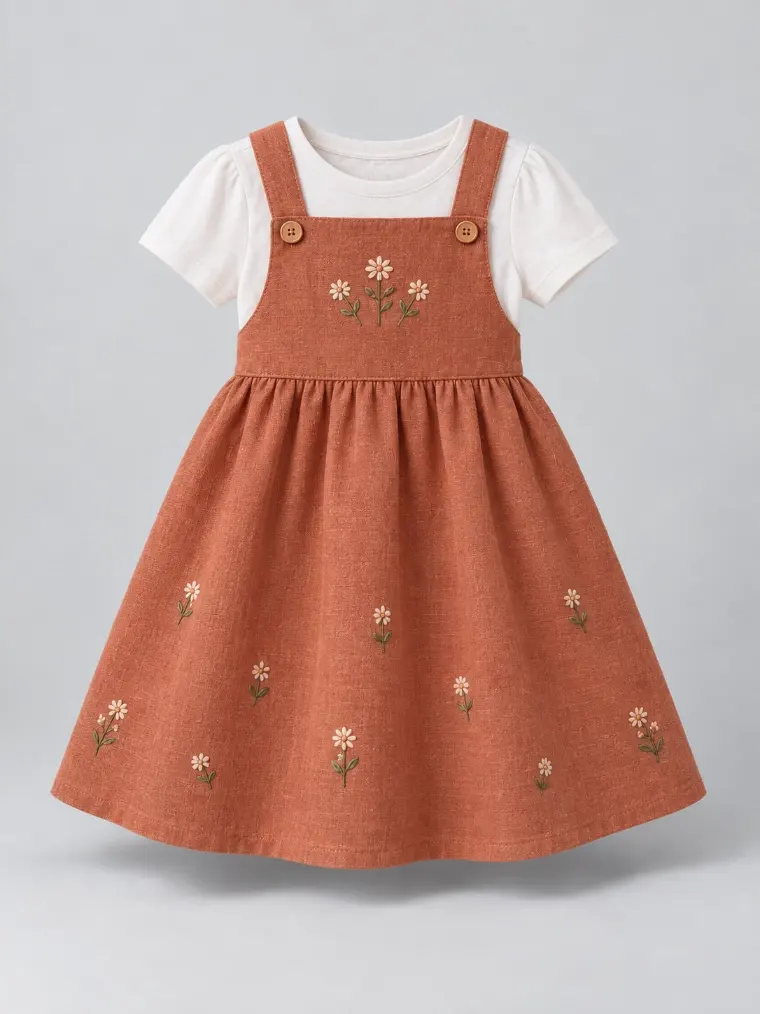
A pinafore dress is a sleeveless, often apron-like design commonly worn over another top. A bib-style front, shoulder straps, or open armholes can help you recognize it. Designs vary, so don’t assume every pinafore has the same back or fastening arrangement.
The intended layering is worth noticing. If the product is shown over a blouse, look at how the neckline and armholes accommodate it. A sleeveless dress designed to be worn on its own isn’t automatically a pinafore. You’ll also encounter the term “jumper” in US listings, which can cause confusion when shopping internationally.
9. Tiered Dress
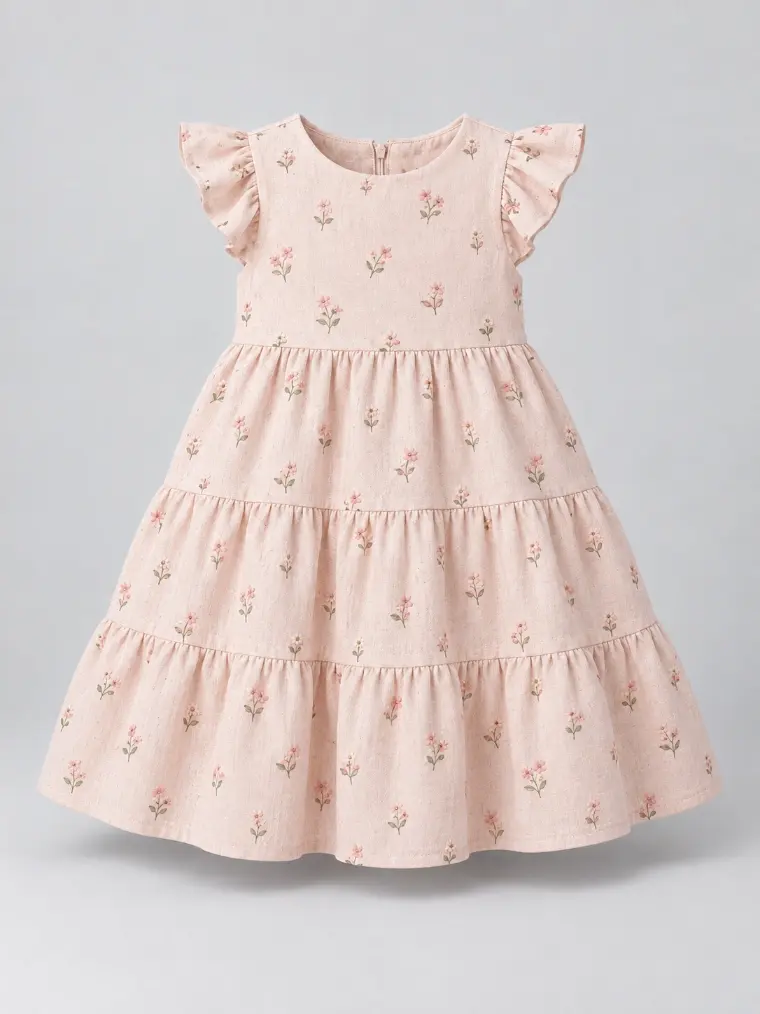
A tiered dress has sections arranged one above another. In a joined-panel skirt, horizontal seams connect the tiers, often with gathers that add fullness. The tiering can begin high on the body or appear only in the skirt, alongside another description such as empire-waist or sundress.
Look closely at whether those sections join to form the skirt or whether ruffles sit over a continuous layer underneath. Retail listings sometimes call both effects “tiered,” although the construction differs. For a reference description, “three joined skirt panels” is more precise than “three layers,” which could also mean an outer fabric, overlay, and lining.
10. Smocked Dress
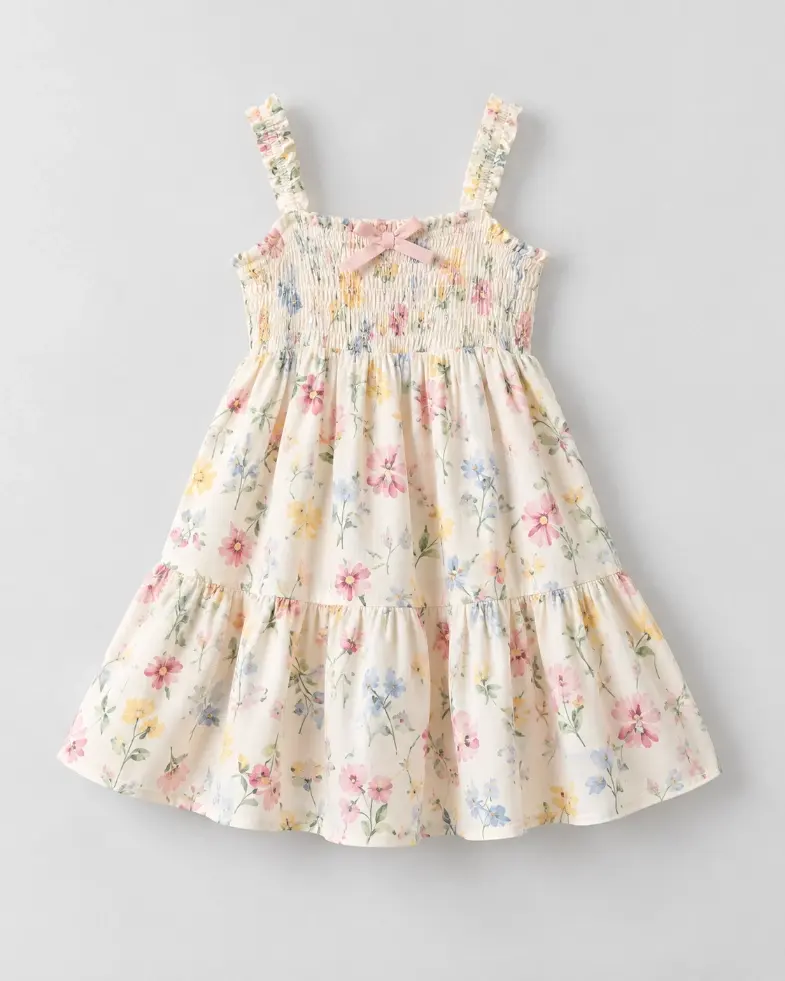
Smocking describes a worked area of fabric rather than the whole dress shape. Traditional smocking uses decorative stitches across small pleats. On a child’s dress, that detail may appear across the chest while the skirt below remains loose or gathered.
A listing labeled “smocked dress” may instead show rows of elastic gathering. You don’t need to reject the garment because the retail wording is broad, but you do need a closer look if you want a particular construction. Check the panel itself; neither the label nor the dress’s price proves that it uses traditional smocking.
11. Wrap Dress
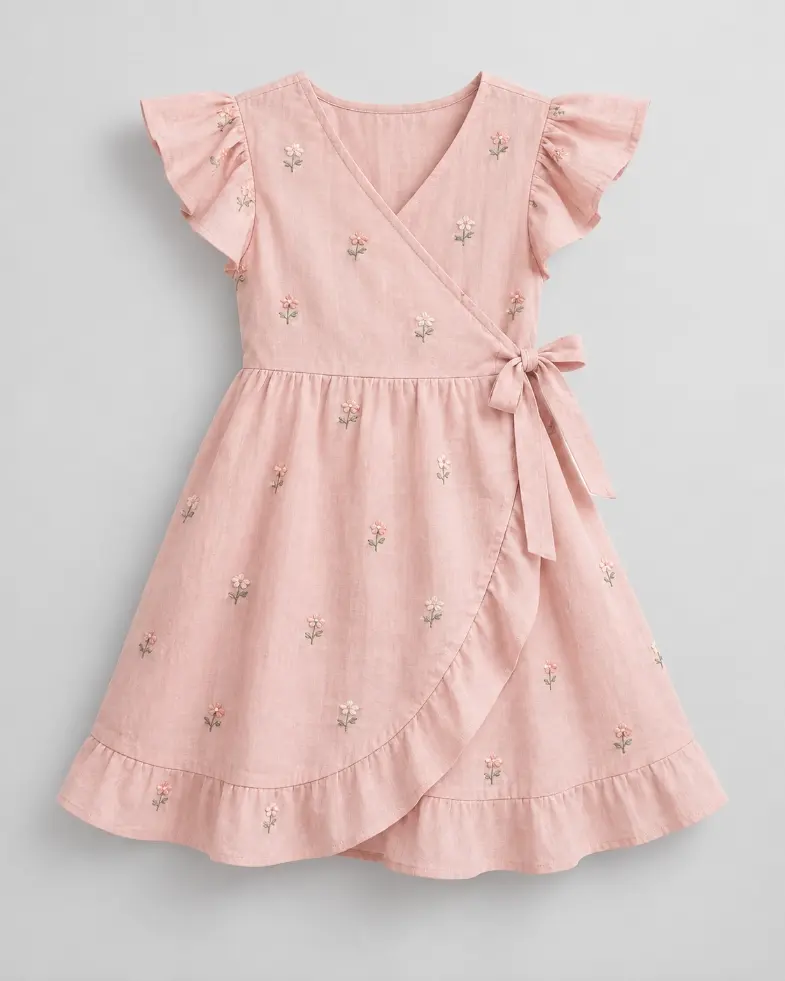
A wrap dress uses overlapping sections that wrap across the body. Some designs open out when unfastened; others keep the overlapping appearance but use a fixed construction or a separate opening. A side bow alone doesn’t establish how the dress works.
The Oliver + S Cartwheel Wrap Dress shows how varied this category can be. Its published design slips over the head and includes an additional skirt panel. I would ask to see the fastening arrangement before choosing a wrap style, especially if easy dressing matters more to you than the appearance of the overlap.
12. Sundress
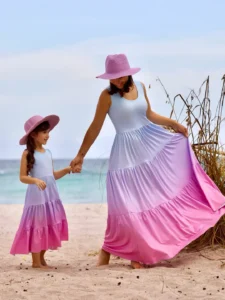
A sundress is associated with warm-weather wear, commonly with a sleeveless or shoulder-strap design. Unlike “drop-waist,” it doesn’t identify one precise construction. An A-line dress, a gathered dress, and a tiered dress can each be described as a sundress.
Use the term to narrow your search, then read the garment details. A summer print doesn’t reveal the weight of the fabric or whether there’s a lining underneath. The name also doesn’t establish cooling or sun-protection performance. Those are separate questions from recognizing the style.
What Types of Kids’ Dresses Are Popular Right Now?
Through our conversations with customers, we’ve noticed that tiered dresses, smocked or shirred styles, T-shirt dresses, and pinafores are particularly popular lately. We’ve been receiving plenty of inquiries about these styles, too. If you’re considering them for your own collection, I’d focus on a different detail for each:
- Tiered dresses give you room to vary the design through the number and proportions of the skirt sections. Before sampling, decide how much fullness you want and whether your reference shows joined tiers or overlapping ruffles.
- Smocked or shirred dresses put the gathered panel at the center of the design. Be clear about whether you want embroidered pleats or elastic gathering; a similar-looking reference can lead to quite different construction choices.
- T-shirt dresses are a useful starting point for an everyday collection. You can keep the skirt straight or add a gathered section. I’d settle the fabric, neckline, and intended fit before spending too much time on prints.
- Pinafore dresses offer a layering option. Decide which top you expect underneath, then check the neckline and armholes with that layer during fitting. The dress needs to work as part of the outfit you’re planning.
These are the styles drawing interest in our own business, so they’re worth considering when you plan a range. I’d still choose around your customers’ age group, climate, and everyday needs. You don’t need all four in a collection just because they’re getting attention.
Dress Styles That Are Easy to Confuse
Before deciding that two listings contradict each other, check what each word describes. These three comparisons help you distinguish similar outlines and spot differences that a product name can hide.
A-Line vs. Fit-and-Flare
A-line describes the widening outline, while fit-and-flare draws attention to the relationship between a shaped upper section and a fuller skirt. A dress can fit both descriptions. As an illustrative example, a shaped bodice joined to a moderately flared skirt could have an A-line outline overall. Instead of arguing over the label, describe how closely the bodice fits and where the flare begins.
Shirt Dress vs. T-Shirt Dress
Start with the neckline and front opening. Shirt dresses borrow shirt details such as plackets and collars; T-shirt dresses borrow a tee-like upper section. Woven fabric versus jersey can support your reading, but it isn’t a reliable rule by itself. When searching online, including “button-front” or “crew-neck jersey” can help you find the version you mean.
Smocking vs. Elastic Shirring
Seamwork’s guide to shirring explains the construction difference: elastic shirring uses elastic bobbin thread to gather fabric, whereas traditional smocking uses embroidery across pleats. Both can create a gathered-looking panel, but they aren’t interchangeable instructions for making a dress.
For development, include close-up front and reverse views when discussing decorative garment techniques. Specify whether you want embroidery over pleats or elastic gathering. That gives the sample team something clearer to work with than the word “smocked” alone.
| Comparison | Where to look | What the name doesn’t settle |
|---|---|---|
| A-line / fit-and-flare | Overall outline and the transition from bodice to skirt | Actual fit or room for movement |
| Shirt / T-shirt dress | Neckline, placket, and front opening | Exact fiber content or care needs |
| Smocking / elastic shirring | Pleats, stitching, and the reverse of the panel | Whether the retail label identifies the technique precisely |
Describe a Dress Beyond Its Name
A useful description separates what you can see from what you still need to confirm. I would rather receive one clear sentence about the construction than several style names without a reference image. This helps whether you’re asking a shop about a dress or explaining a design to a manufacturer.
Consider this illustrative description, not a real product specification: “An A-line sundress with fixed shoulder straps, a raised waist, and two joined skirt tiers; cotton fabric proposed, lining and back opening to be confirmed.” It separates the information into practical questions:
- Shape and waist: a widening outline with a higher bodice-to-skirt join.
- Visible construction: fixed straps and two joined tiers, rather than surface ruffles.
- Proposed material: cotton, with the fabric structure and weight still undecided.
- Missing details: how the dress opens and whether it needs a lining.
“Cotton” still leaves plenty to decide. The different types of cotton fabric include constructions that won’t hang or handle identically. Keep the desired appearance separate from an unconfirmed material choice. A photograph can show a crisp-looking skirt, but it can’t establish the fiber content.
If you’re developing the dress, use sample development to check the details a name or reference photo can’t settle. Review the opening, inside finish, and intended fit on the actual sample. Mark unknowns early rather than letting someone assume that every unseen detail should match their usual practice.
Conclusion
Recognizing kids’ dress styles gets easier when you read the shape, waist, opening, and details separately. You don’t have to force every dress into one category. A combined description is often more accurate, provided each word adds information.
For a new collection, gather front and back references, the intended age range and measurements, and the features you want to keep. Those details provide a useful starting point for custom girls’ dress manufacturing. The style name starts the conversation; the construction details make it specific.
Frequently Asked Questions
Is a frock different from a dress?
In a children’s clothing listing, “frock” generally means a dress. It doesn’t identify one particular silhouette, fabric, or level of formality. Usage varies by region and retailer, so read the details rather than assuming that a frock must be fuller or dressier than a garment labeled “dress.”
What does jumper mean in a kids’ dress listing?
In US English, a jumper can mean a sleeveless dress worn over another top. In British English, jumper usually means a sweater. The photograph and market context should make the intended meaning clear. Adding “pinafore dress” to a search can help when you want the layered dress rather than knitwear.
Does changing the sleeve change the dress type?
Usually, you can change the sleeve description without changing the main silhouette name. Butterick B6161, for example, includes sleeveless and puff-sleeve variations within its raised-waist design. The sleeve changes the appearance, but the waist placement can remain the same. Describe both when that distinction matters.
Is a party dress a specific silhouette?
No. “Party dress” describes an intended occasion, so you still need another description to understand its shape. An A-line or fit-and-flare design could be presented as partywear. Look at the actual cut and details rather than assuming that the occasion label means a full skirt, sequins, or a particular fabric.
Can the same dress style work in different fabrics?
Yes, but that doesn’t mean you can substitute any fabric without changing the pattern or construction. Butterick B6161 lists several suitable woven fabrics, while McCall’s M8251 specifies stretch knits. Start with the requirements of the particular design. A shared style name doesn’t make those material choices interchangeable.
References & Sources
These dictionaries, sewing references, and original product descriptions support the terminology and examples above. The popularity section reflects HAPA’s recent customer conversations and inquiries. The garment-reading and development suggestions are editorial guidance, not findings from a wear test.
- Merriam-Webster: definitions of shift, shirtdress, pinafore, and frock.
- Cambridge Dictionary: jumper and its UK/US meanings.
- Oliver + S: Popover Sundress, Jump Rope Dress View A, and Cartwheel Wrap Dress.
- Simplicity: S3245 girls’ fit-and-flare dress.
- Butterick: B6161 raised-waist dress variations and fabric suggestions.