Finding overseas custom clothing manufacturers for Australian brands is the easy part. Finding one that suits your product, order size and launch calendar is much harder. A factory that makes sense for a 3,000-piece activewear programme may be a poor match for a 100-piece kidswear test.
This guide compares ten manufacturers across China, Vietnam, Indonesia, India, Pakistan and Bangladesh. It is a researched shortlist, not a performance guarantee. Use it to narrow your options, then verify the factory, sample, quote and contract before placing a bulk order. For more Vietnam-based options, compare this Vietnam clothing manufacturer shortlist and check each factory against your brief.
Before you shortlist a manufacturer
- Match the supplier to your garment category and order stage, not to a generic country reputation.
- Compare landed cost and quote scope instead of comparing unit prices alone.
- Treat public MOQs, lead times, certifications and client claims as details to reconfirm.
- Approve a production sample and define inspection requirements before paying for bulk production.
Why Do Australian Brands Choose Overseas Clothing Manufacturers?
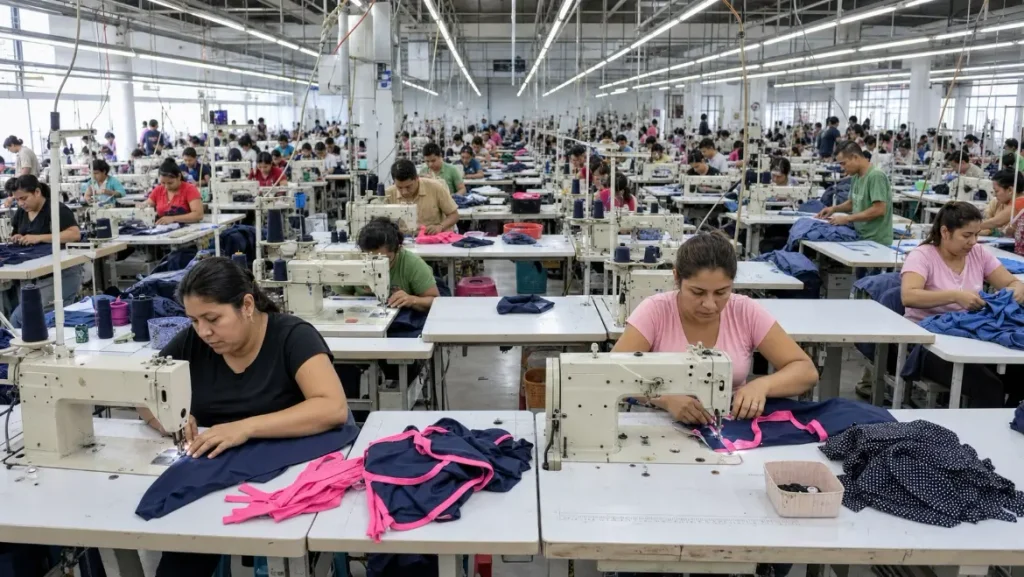
Australian brands usually look overseas because they need a capability, material, production scale or cost structure that is difficult to obtain locally. One factory may specialise in bonded activewear, another in smocked childrenswear, and another in high-volume circular knits. That specialisation can be more valuable than a low headline price. If you want to assess manufacturing options for Australia as well, compare these kids' clothing manufacturers in Australia against your product and order size. For sourcing baby garments for an Australian startup, see our babywear factory guide for Australian startups.
Offshore production also creates work for the buyer. You need to manage longer logistics, currency exposure, sample approvals, import arrangements and quality evidence across distance. A low factory price can become an expensive order if the quote excludes fabric testing, labels, packing, inspection, freight or rework.
The overseas route is more likely to make sense when:
- your product needs machinery, materials or decoration that a suitable local supplier cannot provide;
- your planned quantity fits the factory’s real minimum by style, colour, fabric and size;
- the collection has enough margin and time to absorb sampling, freight and quality control;
- your team can give clear technical feedback and keep written approval records; and
- the supplier can show where the garment will be made and which processes are subcontracted.
No country is right for every collection. If you are still deciding where to source, first compare clothing manufacturing countries by product capability, order scale, logistics and risk rather than choosing on labour cost alone.
How Should Australian Brands Evaluate Overseas Custom Clothing Manufacturers?
In this guide, reliable means that a company passed a public-evidence screening threshold. It has an active official presence, identifies a production model or location, describes genuine custom manufacturing services, and publishes enough product information for a buyer to ask useful follow-up questions. It does not mean that every claim has been independently audited or that a future order is guaranteed.
The ten companies were reviewed using the same four filters:
- Traceable operation: The business names a factory, production country or managed production relationship.
- Custom capability: The service goes beyond reselling finished garments or printing a logo on generic blanks.
- Product relevance: The company documents categories, processes or development support useful to an apparel brand.
- International buying path: The site provides a credible route for samples, production enquiries or export orders.
Wholesalers, print-on-demand services and businesses with no usable production evidence were excluded. The order below is not a quality ranking. Most evidence comes from company websites, so you should treat it as a starting point for due diligence. The same evidence boundary applies to every company in the list.
If you have never built a supplier shortlist before, this practical guide to finding a clothing manufacturer explains how to move from a broad search to comparable enquiries.
10 Reliable Overseas Custom Clothing Manufacturers for Australian Brands
The table gives you a fast comparison. Published order signals were checked on 31 August 2026 and are only indicative. A fabric mill minimum, custom colour, print method or complex construction can change the usable MOQ.
| Manufacturer | Production model | Documented product focus | Published order signal | What to confirm first |
|---|---|---|---|---|
| HAPA Garments | Guangzhou-based manufacturing, China | Kidswear, private label development, decorative details | Public figures vary by project and page | Style, colour and material minimums |
| Hongyu Apparel | Factory positioning with several service routes, China | Casualwear, streetwear and broad cut-and-sew | Different figures for blanks, customisation and cut-and-sew | Which route and facility the quote covers |
| Hingto | China production with Australian customer support | Activewear, swimwear, sportswear and streetwear | Route-dependent figures are published | Factory, fabric testing and exact project MOQ |
| Thygesen Textile Vietnam | Two stated Vietnam factories | Knit activewear, underwear, workwear and kidswear | Higher-volume thresholds are published | Design, colour and material minimums |
| Appareify | Guangzhou-linked production facilities plus sourcing network, China | Broad fashion, performance, kidswear, sleepwear and intimate apparel | Low MOQ promoted without one general number | Contracting entity, production site and category-specific terms |
| CM Garmindo | Denpasar factory positioning, Indonesia | Activewear, swimwear, leisurewear and childrenswear | Smaller batch figures are published | Total order rule and outsourced processes |
| Crystal International Group | Hong Kong-listed group with a multi-country production platform | Lifestyle wear, denim, intimate apparel, sweaters, sportswear and outdoor apparel | No public startup MOQ or standard lead time | Commercial entry point, factory allocation and programme scale |
| Billoomi Fashion | Delhi NCR factory with some partner processes, India | Womenswear, kidswear and embellished garments | Minimums vary by construction and service | Style-specific schedule and subcontracting |
| Zega Apparel | Pakistan production with a US-registered business presence | Streetwear, sportswear, basics and workwear | Public MOQ and timing pages conflict | Contracting entity, current MOQ and factory address |
| Altair Fabrics | Australian-managed account with Bangladesh production | Knit basics, streetwear, performance and kidswear | A 100-unit starting point is published | Relationship with the production facility |
1. HAPA Garments: Custom Kidswear in China

HAPA Garments is the export brand of Guangzhou Happy Credit Apparel Co., Ltd. Its public pages describe Guangzhou-based development and production, including sourcing, sampling, sewing, inspection, private labelling and packing. Its clearest documented focus is custom childrenswear.
The company works with developed styles and decorative details rather than limiting its service to logo application. For a broader view of this market, see our guide to kidswear manufacturers in Australia. Public MOQ and timing references differ between its FAQ and ODM pages, so a quote must reflect the actual style, fabric and colour plan.
Key strengths
- Documented specialisation in custom kidswear
- Sampling, material sourcing, labels and packing support
- Decorative details and private label development
Likely fit: Australian childrenswear brands that want development and production coordinated through one supplier.
2. Hongyu Apparel: Multiple Development Routes in China
Hongyu Apparel presents a Dongguan production base and several ways to develop a collection. Buyers can customise ready garments, add branding or develop an original cut-and-sew style. Its documented categories include casualwear, streetwear, sportswear and other fashion products.
The routes require different development work and commercial terms. Hongyu publishes varying MOQ and lead-time references for blanks, logo customisation and cut-and-sew production, so a style-specific quote should define the production address, service scope, labels, packing and inspection.
Key strengths
- Ready-garment and original cut-and-sew routes
- Broad casualwear and streetwear coverage
- Product development and branding services
Likely fit: Brands that want to compare a simpler customisation route with fully developed garments.
3. Hingto: Activewear With Australian Account Support
Hingto combines manufacturing in China with an Australian customer contact in Sydney. Its product scope includes activewear, swimwear, sportswear, streetwear and casualwear. Design and tech-pack support is also available.
The Sydney contact may make account communication more convenient, but the garments are not presented as Australian made. Hingto publishes different order levels for template customisation and original development, while its sample and production windows are targets rather than fixed guarantees. Fabric testing and subcontracted processes still depend on the selected product.
Key strengths
- Activewear and performance-product focus
- Template and original-design development routes
- Australian-side customer communication
Likely fit: Activewear brands that want design support and a local contact while manufacturing offshore.
4. Thygesen Textile Vietnam: Higher-Volume Knitwear
Thygesen Textile Vietnam states that it operates two factories in Vietnam and provides OEM and ODM services. Its work covers material research, sewing, quality control and packing. The product range includes activewear, underwear, workwear, hospital wear, kidswear and other knitted apparel.
Its published minimums suit established programmes more than small tests. The company lists 3,000 pieces per design and 1,000 per colour, with higher requirements for some underwear. Material development, line capacity and factory allocation can change the workable quantity and schedule.
Key strengths
- Documented focus on knitted and performance categories
- Material research, sewing, quality control and packing
- Production model designed for larger programmes
Likely fit: Established brands planning repeatable knit, performance, underwear or workwear orders.
5.Appareify: Broad Custom Apparel Manufacturing in China
Appareify presents a Guangzhou-based custom manufacturing service whose contact page names Guangzhou Yueyi Sportswear Co., Ltd. Its published range spans basics, denim, activewear, kidswear, sleepwear, swimwear, intimate apparel, uniforms and knitwear. It describes production facilities and a sourcing network, so production may vary by category.
Services include development, sampling, cut and sew, OEM, private labelling, printing, embroidery and packing. It promotes low MOQs without one general number. Timing also varies between private label and fully custom work, so use a style-specific quotation.
Key strengths
- Broad published apparel range
- OEM, private label and cut-and-sew routes
- Sampling, decoration and packing support
Likely fit: Australian brands planning a multi-category capsule and willing to verify the production site and terms for each style.
6. CM Garmindo: Multi-Category Production in Bali
CM Garmindo presents a Denpasar factory with custom design, private label and white label routes. Its categories include activewear, swimwear, leisurewear, resortwear, sleepwear and childrenswear. The range may suit related capsule products.
Its MOQ page lists 20 pieces per style variation, at least five per size and 60 pieces across an order. These are starting references, not universal terms. The schedule depends on the specification and production queue, while some processes may take place outside the main facility. Inspection, freight and claim terms belong in the project quotation.
Key strengths
- Multi-category product coverage
- Custom, private label and white label routes
- Published small-batch order structure
Likely fit: Smaller brands developing a focused capsule across leisure, swim, active or children’s categories.
7.Crystal International Group: Multi-Category Production Across Asia

Crystal International Group is a Hong Kong-listed manufacturer founded in 1970. It reports around 20 facilities across Vietnam, China, Cambodia, Bangladesh and Sri Lanka. The product portfolio covers lifestyle wear, denim, intimate apparel, sweaters, sportswear and outdoor apparel.
The group uses a co-creation model and publishes financial reports under HKEX stock code 2232. It does not publish a startup MOQ, standard lead time or Australia-specific account route. Its scale points to established programmes that can manage multi-country factory allocation.
Key strengths
- Multi-country manufacturing platform
- Broad portfolio across five apparel segments
- Public corporate and financial reporting
Likely fit: Established Australian brands with larger, repeatable programmes and a formal sourcing, quality and compliance team.
8. Billoomi Fashion: Small-Batch Womenswear and Kidswear in India
Billoomi Fashion describes a made-to-order factory in Delhi NCR. Services include patterns, sourcing, sampling, sewing, decoration, quality control and packing. Womenswear and kidswear are the stated focus, with knitted and woven products plus smocking, embroidery and printing.
The company identifies Australia as an export market and publishes minimums that start at 25 pieces per solid-colour style. Several decorated products start at 100 pieces; CMT uses a different structure. Some materials and specialist processes involve partners, so compare prices only after defining the production map, schedule and delivery term.
Key strengths
- Womenswear and kidswear specialisation
- Pattern, sampling and embellishment support
- Published minimums for smaller solid-colour runs
Likely fit: Emerging brands developing detailed womenswear or childrenswear in controlled quantities.
9. Zega Apparel: Streetwear and Sportswear in Pakistan
Zega Apparel presents a US-registered custom apparel business with production in Karachi, Pakistan. Its categories include T-shirts, hoodies, streetwear, sportswear, workwear, denim and kidswear. Listed services include cut-and-sew, printing, embroidery, labels and packaging.
Australia appears among its stated shipping markets. The homepage lists 200 units per style and colour, but other Zega pages publish different minimums and timelines. A dated, style-specific quotation should keep the contracting entity, factory address, bank beneficiary, outsourced work, inspection rights and shipping basis consistent across the order documents.
Key strengths
- Streetwear, sportswear and branded basics coverage
- Several decoration and packaging services
- Australia appears among its stated shipping markets
Likely fit: Brands sourcing decorated tees, hoodies, uniforms or sportswear through one product brief.
10. Altair Fabrics: Australian Management With Bangladesh Production

Altair Fabrics uses an Australian-managed, Bangladesh-made model. The Australian Business Register lists Altair Fabrics Pty Ltd as an active New South Wales company. Altair says its Sydney operation handles contracts, invoices and account management.
Production is described as taking place at Tua-Ha Textiles in Bangladesh, with a range centred on T-shirts, hoodies, joggers, polos, shorts, performance wear and kidswear. The site publishes a 100-unit starting point, two to three weeks for samples and four to eight weeks for bulk work. Current documents should establish the Tua-Ha relationship, facility audits and subcontracting.
Key strengths
- Australian-side contracts and account management
- Knit basics, streetwear and performance categories
- Published 100-unit starting point
Likely fit: Australian brands that prefer a local commercial contact while manufacturing knit products offshore.
Which Overseas Clothing Manufacturer Fits Your Australian Brand?
Start with your product and commercial constraints, then investigate two or three candidates. The following matrix is a routing tool, not an endorsement. A supplier only becomes a real fit after it accepts your specification, quantity and schedule in writing and produces a satisfactory sample.
| Your sourcing situation | Candidates to investigate | Why they enter the shortlist | Condition to verify |
|---|---|---|---|
| Custom kidswear with development support | HAPA, Billoomi, CM Garmindo | Each documents childrenswear and product-development services | Product-specific safety, decoration, material and MOQ requirements |
| Swimwear or resort-led collection | Bali Swim, CM Garmindo, Hingto | Swimwear appears in their documented categories | Fabric performance, fit rounds, colour minimums and size splits |
| Startup activewear capsule | Hingto, CM Garmindo, Activewear Bali | They offer different custom, template or ready-design paths | Whether the usable route fits your originality and inventory plan |
| Higher-volume knit or underwear programme | Thygesen | Its published order thresholds and product range point to established programmes | Design, colour and material minimums plus available capacity |
| Streetwear and branded basics | Hongyu, Zega, Altair | Their ranges include tees, hoodies and streetwear-oriented products | Fabric specification, decoration quality and production ownership |
| Australian commercial contact with offshore production | Hingto, Altair | Both present an Australian-side customer or account interface | Contracting entity, factory control and responsibility at each stage |
A low MOQ should not decide the shortlist by itself. If your collection has six styles, three colours and a wide size range, a seemingly small minimum can still create more stock than you can sell. Conversely, a higher-volume factory may be efficient when you have proven demand and repeatable core products.
If this is your first production run, review these questions for startups choosing a clothing manufacturer before requesting prices.
What Should Australian Brands Compare in Overseas Manufacturing Quotes?
Ask every shortlisted supplier to quote the same specification and quantity grid. If one price includes labels, testing and export packing while another covers sewing only, the numbers are not comparable.
Calculate the Landed Cost
Your factory quotation is only the starting point. Add international freight, insurance, applicable customs duty, import GST, clearance or broker charges, inspection, local delivery and a realistic allowance for defects or delays. The Australian Border Force explains that imported goods can attract duties and taxes unless an exemption or concession applies. Exact treatment depends on the tariff classification, origin, value and current rules, so obtain advice for your shipment rather than copying a rate from another garment.
Match MOQ to Your SKU Plan
Ask how the minimum is calculated: per order, fabric, style, colour, print, size or delivery. Then place it against your actual range plan. A 100-piece minimum per style and colour becomes 600 pieces when one design has six colours. Also ask whether custom-dyed fabric, printed material, labels or trims create separate mill minimums and whether unused material belongs to you.
Build the Launch Calendar
Work backwards from the date stock must reach your warehouse. Include development, fit comments, revised samples, material booking, pre-production approval, bulk sewing, inspection, freight, customs clearance and local delivery. Add a contingency instead of treating the supplier’s production estimate as the whole lead time. If your Australian winter launch depends on one date, state the required warehouse-delivery date in the RFQ.
Define Communication and Ownership
Confirm who owns technical questions, sample approvals, production updates and quality issues. Record approvals in email or the supplier’s project system, not only in chat. The purchase order should name the contracting entity, factory or approved subcontractors, bank beneficiary, Incoterm, payment milestones and escalation contact. If you want a clearer view of the commercial relationship, read how to buy apparel directly from a factory before you negotiate terms.
How Can Australian Brands Verify an Overseas Clothing Manufacturer?
A polished website is useful for discovery, but it cannot replace project-level evidence. Verification should show that the legal entity, factory, sample records and payment details all match.
Verify the Company and Factory
Request the legal company name, registration record, factory address and bank-account beneficiary. Ask which processes happen at that address and which go to dye houses, printers, embroidery units or overflow factories. A dated live video call can show the relevant production area, but it is not a substitute for an independent audit when the order risk justifies one. If the supplier provides a certificate, check the facility name, address, scope, issuer and expiry rather than relying on a logo.
Evaluate Samples and Quality Evidence
Use the sample to test whether the supplier can follow your specification, not merely whether it can make an attractive garment. Measure it against the approved spec, check construction, labelling, shade, shrinkage, appearance after care and any performance requirement relevant to the product. Keep a sealed approval sample or clearly versioned record. Define the inspection stage, sampling method, defect categories and remedy before production begins.
Control Contracts and Payments
The agreement should attach the final tech pack, bill of materials, colour and size breakdown, packaging rules, quality tolerances, inspection requirement, delivery term and claims process. Pay only to the verified beneficiary named in the contract or invoice. Treat a sudden request to use a different personal or company account as a reason to stop and recheck.
Before paying a production deposit, assemble this minimum evidence pack:
- legal entity and bank beneficiary match;
- confirmed factory address and subcontractor disclosure;
- approved sample version and final specification;
- written MOQ, price, inclusions and Incoterm;
- dated production and shipping milestones;
- relevant test or audit documents with a verified scope; and
- inspection, defect and late-delivery terms in writing.
When Is Overseas Clothing Manufacturing Wrong for Australian Brands?
Overseas production is not the right next step simply because a factory offers a lower unit price. Pause the project when:
- The product is still vague. Reference photos without measurements, materials or construction notes lead to guesses and incomparable quotes.
- The viable minimum exceeds proven demand. Cheap units do not help if cash remains tied up in unsold colours and sizes.
- The launch date leaves no room for sampling. Skipping fit, wash or performance checks transfers development risk into the bulk order.
- The budget covers production but not the full order. Freight, taxes, inspection, local delivery and potential rework still need funding.
- The supplier avoids basic evidence. Unclear entities, changing bank details, hidden production locations or refusal to document approvals are reasons to walk away.
You can still move the idea forward. Develop and fit the product locally, test a decorated blank, reduce the range to one or two core styles, or delay bulk production until the specification and cash plan are ready. Local production may also be more practical for urgent replenishment, very small runs or products that need frequent hands-on changes. If you need ready-made stock for a small retail test, compare wholesale kids’ clothing suppliers in Australia before commissioning custom production.
What Should Australian Brands Send to Overseas Clothing Manufacturers?
A useful RFQ gives every supplier the same product definition. It also makes a serious manufacturer more likely to point out technical or commercial problems before quoting.
Send the following information:
- Product overview: Garment category, target wearer, intended use and reference images.
- Technical specification: A tech pack or detailed brief with flat sketches, measurements, construction, tolerances and grading status.
- Materials: Fibre content, fabric construction, target weight, colour, finish and required performance.
- Decoration and branding: Print, embroidery, wash, appliqué, labels, hangtags and packaging.
- Quantity grid: Units by style, colour and size, plus likely reorder quantities.
- Sample request: Prototype, fit sample, size set, pre-production sample and any testing needs.
- Quality expectations: Critical measurements, visual standards, inspection point and defect rules.
- Australian requirements: Intended market, care labels and any product-specific standard or test evidence you have identified.
- Commercial scope: Ask for price inclusions, development charges, tooling, payment milestones and Incoterm.
- Delivery requirement: Australian city or postcode, preferred freight basis and required warehouse date.
You do not need a perfect document to begin a technical conversation, but missing details make an early price less dependable. A complete clothing tech pack helps manufacturers quote the same garment and reduces avoidable interpretation during sampling.
The supplier’s response matters too. It should identify assumptions, material minimums, sample stages, exclusions, production timing and open questions. A generic price with no discussion of your construction or quantity structure is not enough for a buying decision.
If your shortlist points towards a China-based childrenswear partner, you can send HAPA the product brief, quantity range, target fabric, launch date and Australian delivery location for a manufacturing-fit review. Feasibility, minimums and timing must still be assessed against the actual style.
Conclusion
The right overseas manufacturer is not the one with the longest product list or the lowest number in an introductory email. It is the supplier whose production model, technical capability, order economics and evidence match your garment and Australian launch plan.
Use these ten overseas custom clothing manufacturers for Australian brands to create a shortlist, not to skip due diligence. Send the same RFQ to two or three suitable candidates, compare equivalent quote scopes, verify the business and factory, and judge a physical sample against written requirements before committing to bulk production.
Supplier information changes. Reconfirm the MOQ, material availability, timing, capacity, certificates, factory allocation and shipping terms for every project. If your brief is not ready, improve it first. A clear specification and realistic calendar will protect your order more effectively than another week spent searching for a universal best factory.
Frequently Asked Questions
What is a typical MOQ for an overseas clothing manufacturer?
There is no dependable universal MOQ. In this shortlist, public starting points range from small batches to thousands of pieces, but the usable minimum can apply per style, colour, fabric, print or size. Custom-dyed fabric and special trims may add separate mill minimums. Ask for a quantity grid tied to your exact design and treat website figures as dated guidance only.
Can an Australian startup work with an overseas manufacturer?
Yes, if the startup has a defined product, a quantity the supplier can accept, money for samples and quality control, and enough time for development and freight. A smaller collection with fewer fabrics and colours is usually easier to manage than a wide first range. Do not choose a supplier solely because it publishes a low MOQ.
Do I need a tech pack before contacting a clothing manufacturer?
You can begin with a detailed brief, reference images, target materials, measurements and quantities. However, a factory cannot provide a dependable production quote while major details remain open. A tech pack becomes essential before sample approval and bulk production because it records construction, measurements, materials, labels, packaging and tolerances.
How can I tell whether a supplier owns its factory?
Ask for the legal entity, exact production address and a process map showing what happens in-house. Compare those details with business records, invoices, audit documents and the bank beneficiary. Request a live video call or visit, and ask directly about partner factories and subcontractors. Ownership is not automatically better, but the operating model should be transparent.
Who is responsible for Australian clothing compliance when garments are made overseas?
Overseas production does not remove the Australian supplier’s responsibilities. The ACCC Product Safety guidance says manufacturers, importers, distributors and retailers may be suppliers under mandatory-standard rules. Check which standards, bans, care-labelling rules and evidence apply before sale. Requirements depend on the garment and intended use, so obtain current professional advice where needed.