
If you’re stocking kids’ winter coats for the first time, I’d start with one date: when you want parents to be able to buy them. Then work backward to allow for ordering, delivery, checking the clothes, and getting them into your shop or onto your website.
I’d also leave some money aside. Your first few weeks of sales will tell you more about the sizes and styles customers want. You’ll want enough room in the budget to act on that, rather than having everything tied up in your first order.
When Should New Retailers Stock and Sell Kids’ Winter Coats?
Say you want to start selling in September. You’ll need the coats before then so you can check the delivery, take photos, and prepare the product pages. Ask your supplier when you would need to order to make that happen.
For a shop in a temperate Northern Hemisphere region, a September launch, regular checks through autumn, and a January review of leftover stock could be a starting plan. Those months are examples, not measured peaks in children’s coat sales. Adjust them to where your customers live.
This is how I’d break the season into manageable jobs:
| What to do | When to do it | What to check before moving on |
|---|---|---|
| Choose your coats and supplier | Before the last date you can order for your planned launch | Are the styles suitable, what will they cost, and do you need samples? |
| Place your first order | In time for the supplier’s order deadline and delivery schedule | Which sizes are included, when do you pay, and when will they arrive? |
| Get the stock ready | Before you start selling, with time to sort out mistakes | Have you checked the quantities, labels, photos, and product details? |
| Put the coats on sale | Before the local buying period you want to serve | Can customers buy the sizes shown and receive them when promised? |
| Order more where needed | While another delivery would still have time to sell | What is selling, what is already coming, and how much winter is left? |
| Discount or keep the leftovers | When you have more stock than you expect to sell this season | What could you recover now, and what would keeping it cost? |
Faire’s 2026 wholesale buying calendar is a useful reference for planning ahead. It tracks retailers’ searches on Faire, though. I’d use it to understand when shops start looking for seasonal stock, while checking demand for children’s coats separately.
How Do You Set a Winter Coat Launch Date for Your Market?
I’d first ask who you expect to walk into your shop or visit your website. A parent buying a coat for a cold morning at school has different needs from a family preparing for a snow trip.
That gives you something more useful to plan around than a general instruction to “buy winter stock early.”

Plan Around Local Weather and Parent Buying Needs
Choose an age group and think about where the coats will be worn. For school, easy fastening and enough room over a uniform may matter. For a snow trip, parents may need a different kind of coat by a particular departure date.
If you’re still getting to know your customers, start with a few simple checks:
- Ask parents when they usually replace winter coats and which sizes they struggle to find.
- Look at local school dates and when cold weather usually settles in.
- Note when nearby shops bring out similar coats. Their timing is a reference, not proof that they’re selling well.
- Show a small selection to potential customers, or let them sign up for an email when it arrives.
You can introduce different coats at different times. Imagine a shop in a colder area bringing in padded coats early in autumn. Somewhere milder, you might start with lighter jackets and add thicker ones as the weather changes.
Adjust Your Calendar for the Southern Hemisphere
If you’re selling in Australia or New Zealand, build your plan around the local winter. Copying a September launch from a US retail guide could leave you with coats arriving after the customers you wanted to reach have already bought theirs.
I’d check local school dates and shopping events too. Moving everything by six months won’t account for those details or for the dates your supplier can produce and deliver.
How Early Should You Order Kids’ Winter Coats?
Before accepting a delivery estimate, I’d ask two questions: “When does that time start?” and “Where will my coats be when it ends?”
If a supplier says eight weeks, does that mean eight weeks after payment or after you approve the sample? And will the coats be finished at the factory, on their way, or in your warehouse?
Those answers affect when you can start selling.
Buying Ready-to-Ship Wholesale Coats
Existing wholesale stock can be a sensible way to try your first winter range. You can assess clothes that are already available without developing every detail yourself.
Before paying, check the stock by size and color, when the supplier can send it, how long delivery will take, and whether the items will be reserved for you.
I’d ask for more than a total number. “Plenty in stock” isn’t much help if the sizes your customers need are almost gone. Also ask whether you can order individual sizes later or must buy another pack containing a fixed mix of sizes.
Pre-Booking a Brand’s Winter Collection
Some brands take orders before making or allocating their winter collection. Ask for the final ordering date, expected delivery dates, payment schedule, and whether you can change the order.
Find out whether everything will arrive together. If one size comes later, you may have to delay promoting the range or explain the limited choice to customers.
I’d also ask about buying more before placing that first order. If the brand only produces the collection once, you need to know that before relying on a small first purchase followed by more stock later.
Developing Custom or Private-Label Winter Coats
If you want coats made for your own brand, allow time to choose fabrics, agree on the design and sizes, review samples, and make changes before production.
When discussing custom kids’ jacket manufacturing, send the manufacturer your preferred arrival date along with the coat details and quantities. Ask them to show you what needs your approval, and by when.
I’d put the dates on one page so you can see how a delay in one step affects the next.
The timings below are an example to show the calculation. They aren’t an industry standard or a delivery promise from HAPA.
| What needs to happen | Time allowed in this example | Where that puts you before launch |
|---|---|---|
| Develop the coat and approve the details | 4 weeks | Start 20 weeks before; finish 16 weeks before |
| Prepare materials and make the coats | 8 weeks | Finish 8 weeks before |
| Transport the goods and complete import delivery | 5 weeks | Arrive 3 weeks before |
| Check the delivery and prepare to sell | 1 week | Ready 2 weeks before |
| Leave extra time for delays | 2 weeks | Keep this time free before launch |
| Total | 20 weeks | Start 20 weeks ahead |
Replace those timings with estimates confirmed for your order. Some jobs can happen together. You might prepare product pages from an approved sample while the factory makes the coats, for example. Don’t add those weeks twice.
Agree on when inspections will happen and include their time and cost. A supplier’s order deadline may also mean you have to commit earlier than your calculation suggests.
SPS Commerce’s guide to the clothing buying calendar explains how ordering, production, delivery, and later discounts connect. Use the sequence to help organize your own dates; the timetable for a large retailer won’t necessarily fit a new shop.
How Much Winter Coat Stock Should a New Retailer Buy?
I’d choose a fairly specific customer before deciding on quantities. “Everyday school coats for children in this age group” gives you a clearer starting point than “a bit of everything for kids.”
You can then work out what that range would cost, including all the sizes and colors you want to offer.
Build Useful Size Ranges Before Adding More Styles
A few styles can turn into quite a lot of stock. Suppose you pick three styles, two colors, and six sizes, with two coats in every combination:
3 styles × 2 colors × 6 sizes × 2 coats = 72 coats.
That’s 36 different style, color, and size combinations to keep track of. Add another color and you’ll be buying across the size range again.
I’ve used equal quantities to keep the example easy to follow. It isn’t a recommendation to buy the same number of every size. Ask the supplier why its packs contain those quantities, and compare that with what you know about your customers.
Give parents clear children’s clothing size measurements too. Your product pages should show the measurements supplied for the actual coat. A general size guide helps explain fit, but it won’t tell you which sizes your shop should buy most of.
Keep Cash Available for Reorders and Exchanges
Write down when each bill will need paying. The deposit, remaining payment, and transport costs may all fall due before you’ve sold a single coat.
I’d leave room for more than the clothes themselves:
- Delivery, any import charges, and the cost of receiving and storing the stock.
- Photos, preparing the products, and fees for selling them.
- Refunds, exchanges, and items you can’t sell.
- More of a popular size while other sizes are still sitting on the shelf.
Buying a small amount first can help you learn. Just check that the supplier can send more while you still have time to sell it. Having money ready won’t help if that coat is no longer available.
When Should You Start Promoting Kids’ Winter Coats?
I’d have your photos and product information ready before the coats go on sale. You can also start learning what parents want before spending much on advertising.
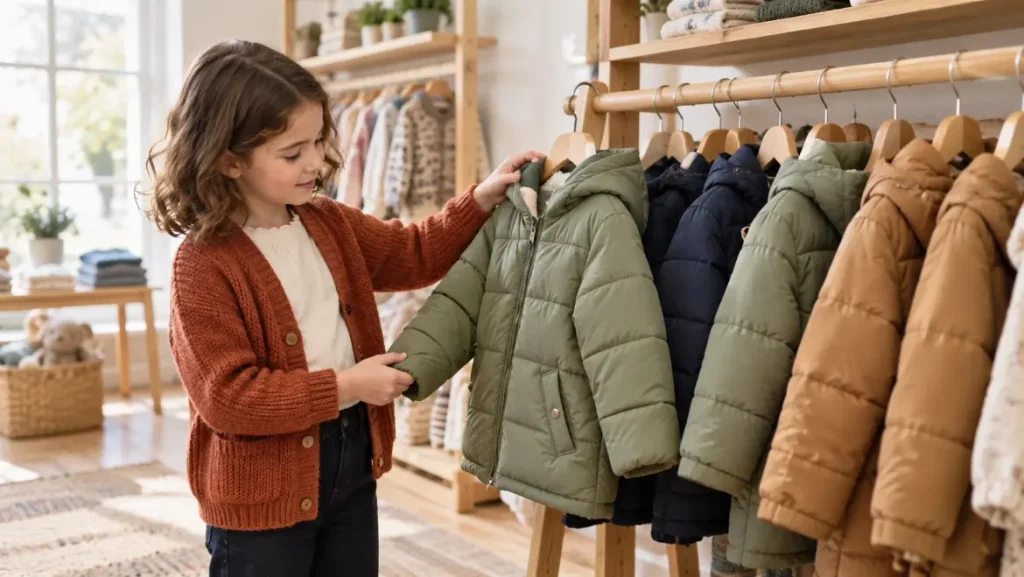
A small preview gives you a chance to hear their questions. Do they understand the sizing? Are they looking for something warmer? Is the price where they expected it to be?
You could work through it like this:
- Prepare the measurements, photos, washing instructions, and delivery information.
- Show a few styles and collect questions about fit, warmth, colors, and price.
- Start selling when the stock and shipping arrangements are ready, or clearly explain an agreed preorder arrangement.
- Check sales and available sizes before spending more on promotion.
If several parents ask whether a coat will fit over a school sweater, answer that properly on the product page. It may be more useful than showing the same incomplete information to more people.
And check what your advertising is sending people to. If most of the sizes shown are unavailable, change the promotion.
If you take preorders, confirm the delivery arrangement with your supplier first. Letting people preview a coat is different from taking their money and promising it will arrive by a certain date.
When Should You Reorder Kids’ Winter Coats, and When Should You Stop?
After a good week, I’d look at the sizes that sold before ordering more. You may need extra stock in one size while having plenty of the same coat in others.
Also check what you’ve already ordered. It’s easy to focus on an empty shelf and forget that another delivery is on its way.
Review Sales and Remaining Stock by Size
Keep a simple weekly list for each size and color: how many sold, how many you can still sell, what’s coming, and what customers returned.
If a size has sold out, zero sales afterward don’t mean nobody wants it. There was simply nothing left for them to buy.
Shopify’s product reports can help you see how much stock has sold and how long the rest might last. Check what each figure includes, and compare products over the same dates.
You can also do a rough calculation yourself:
How many weeks your stock might last = coats you can sell now ÷ coats you expect to sell each week.
Say you have 24 coats left in the size or group you’re checking and expect to sell three a week. That’s about eight weeks of stock.
I’d treat that as a starting estimate. A cold spell or a promotion can make one week unusually busy. Think about what happens if sales slow down as well, and look closely at items with few or no sales.
Set a Last Reorder Date Before Clearance Begins
Ask whether another delivery would arrive early enough to sell at a price you’re happy with.
Suppose you expect another five weeks of useful winter sales. Coats ready to sell next week would have four weeks left. If they take four weeks to arrive and prepare, they’d have just one.
That difference can change how much you’d want to buy, even when the coat is selling well today.
Before ordering, I’d check:
- How much will be left when this delivery arrives, including anything you’ve already ordered?
- How much could you reasonably sell before you expect to start clearing winter stock?
- Would the smallest pack the supplier sells give you more than you need?
- After paying for the coats, transport, and selling costs, would the expected price leave enough money?
Set different final ordering dates for different suppliers or delivery methods. Buying available local stock and asking a factory to make another batch take different amounts of time.
When Should You Mark Down Unsold Kids’ Winter Coats?
I’d start looking at discounts when you have more coats left than you reasonably expect to sell before winter demand drops. Give yourself time to act while parents still have a reason to buy.
You can discount a slow color without reducing every coat in the shop. A short promotion and a final clearance sale also serve different purposes.
Before changing prices, look at what is left. Is the coat selling poorly, or have you run out of the sizes people want? Would better photos, clearer measurements, or an offer aimed at the right customers help?
Then work out what the discounted price leaves you after the product, payment fees, packing, and any delivery you pay for. Selling above the original wholesale price doesn’t automatically mean the sale leaves enough to support the shop.
Parents looking for winter coat clearance deals will weigh the saving against the available sizes and how much use their child will get from the coat. Keep that in mind when describing the offer.
Their best time to find a bargain isn’t necessarily your best time to buy stock.
If you’re thinking about keeping leftovers, write down what you expect to sell them for next winter and what storage will cost. Include the money you won’t be able to use elsewhere. I’d also look at the remaining sizes; an incomplete range can be difficult to sell again.
What If You Are Starting Your Winter Coat Business Late?
You may still have options, even if there isn’t enough time for the full range you originally wanted. I’d check what can arrive reliably and what local customers still need.
Imagine your shop is opening just as cold weather is approaching. You could check wholesale stock in suitable sizes, request a sample if time allows, and add up the delivered cost. A few suitable coats may be enough for a limited start while you work on your own range for next year.
Before paying for faster delivery, ask how much extra selling time it gives you. How many more coats would you need to sell to pay for that extra freight?
I’d only pay the extra once I was comfortable that the coats and sizes suited the customers I wanted to reach.
I’d be cautious about rushing a large order if the dates leave you little time to sell it. You can still use the season to speak with parents, compare suppliers, and learn what to buy next time.
Conclusion: Set Your Winter Coat Dates Before You Place the Order
Before you pay a deposit, I’d put five dates in your calendar: when to order, when the coats should be checked and ready, when to start selling, when to stop ordering more, and when to review leftovers.
Check those dates with your supplier and against the bills you’ll need to pay.
As sales come in, keep notes on the sizes you ran short of, returns, delayed deliveries, and what was still there at clearance. Those are the details I’d come back to when planning next winter.
FAQs About Stocking and Selling Kids’ Winter Coats
Is August Too Early to Sell Kids’ Winter Coats?
It can be a reasonable time to introduce a few styles in parts of the Northern Hemisphere, especially if parents are preparing for school or cooler weather. I’d test interest before giving the range lots of space or advertising money. Consider the coats’ thickness and your local climate, and use a different calendar for Southern Hemisphere customers.
Is October Too Late to Order Winter Coats?
It depends on when they can reach you and how much selling time remains locally. Available wholesale stock may still work. Coats made from scratch need more steps. I’d ask for a realistic date when you could have them checked and ready to sell before deciding.
Can a New Retailer Sell Winter Coats Without Holding Stock?
You can look at preorders or having the supplier send orders directly to customers. First, check availability and delivery times, and agree on who handles returns and size exchanges. You still need to make promises the supplier can keep.
Should You Buy Winter Clearance Stock for Next Year?
I’d consider it if the coats suit your customers and the savings still look worthwhile after storage and the cost of tying up or borrowing money. Check condition, product details, and the sizes in each pack. A low price won’t help much if most of the stock is hard for you to sell.
Should You Keep Unsold Kids’ Winter Coats for the Next Season?
Some styles may be worth keeping. Look at what you expect to recover next winter, what keeping them costs, and how the remaining colors and sizes fit your customers. Compare that with selling them on clearance now, and check what you’ve kept before buying for the next season.