Designing custom jackets for kids starts with how children will wear them. Define the age range and purpose, choose your customization route, then develop the materials, fit, and branding together. A clear design brief and a physical sample turn those choices into something you can review before production.
A jacket can look convincing in a mockup yet feel awkward over a sweatshirt or leave little room for its pockets. This kids jacket design guide helps your brand spot those conflicts early and prepare a design that a manufacturer can actually work from.
1. Start With How Kids Will Wear the Jacket
Before choosing a color for your children’s outerwear collection or collecting inspiration images, write a short description of the child and the situation you’re designing for. A lightweight jacket for the school day has different priorities from a padded coat for prolonged outdoor use. Even within one season, a jacket worn over a T-shirt needs a different fit review from one intended to cover a bulky sweater.
Parents may compare wash instructions and price, while children have to reach the pockets, pull the sleeves over clothing, and fasten the front. Your design needs to address both. When choosing between ideas, ask whether each detail helps the wearer or contributes something recognizable to the collection.
Start your brief with these decisions:
- Identify the target age and size range, along with the country or region where you’ll sell.
- Describe the main use, such as everyday schoolwear, a fashion collection, or a specific outdoor activity.
- State what children are expected to wear underneath and whether adults will usually help with dressing.
- Set the intended care routine and distinguish essential performance requirements from optional features.
Avoid vague phrases such as “suitable for all weather.” Explain the actual conditions you want the design team to consider. If your brand hasn’t decided whether the jacket needs rain protection, record that as an open question before selecting a fabric or describing the product as waterproof.
2. Decide How Much Customization You Need
The word “custom” can describe a finished jacket with added embroidery or a garment developed around your own pattern. These routes give you different levels of control. Choose according to what you need to change, rather than assuming every custom kids jacket supplier offers the same service.
Add Branding to an Existing Jacket
Blank kids jackets can be useful when their shape, fabric, and size range already suit your collection. Your work then centers on decoration and any labeling changes the supplier can support. Before committing, inspect the actual garment and confirm which areas can be decorated without obstructing pockets, closures, or internal finishes.
This route becomes less suitable when the base jacket itself needs substantial changes. If your concept depends on a different body length, pocket layout, or lining, a new logo won’t resolve those differences. Also confirm the supplier’s relabeling arrangements and the product information that must remain accurate for your market.
Develop Your Own Jacket From Scratch
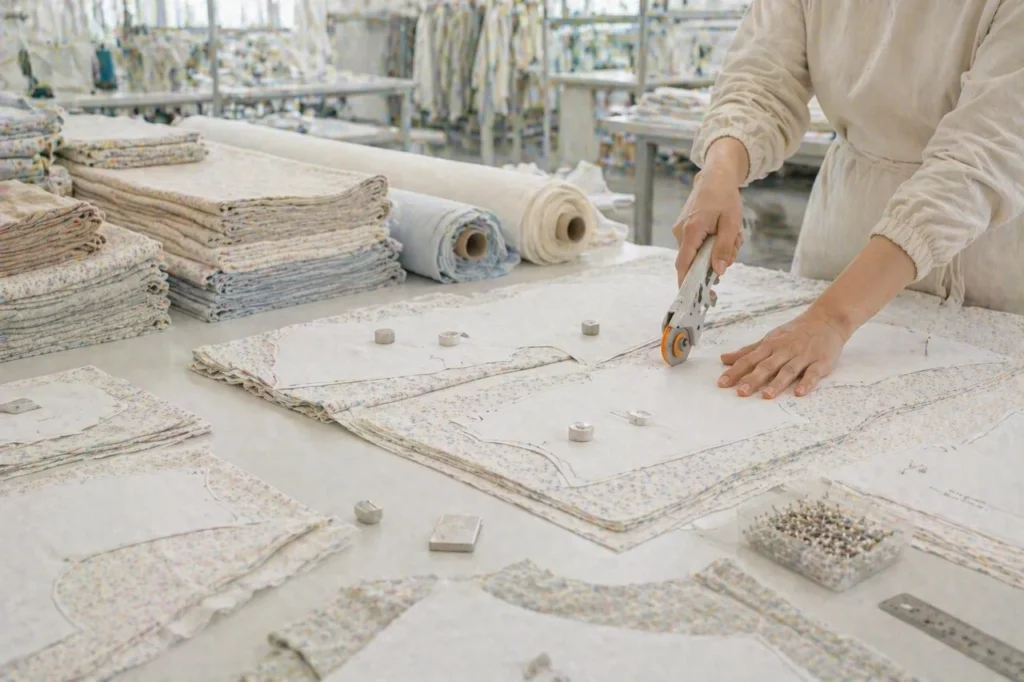
For custom children’s jackets developed from scratch, custom cut-and-sew production lets you discuss the pattern, materials, construction, and decoration as part of one design. That control comes with more decisions: someone must define the measurements, source suitable components, and approve how everything works together in the sample.
| Design Decision | Existing Jacket With Added Branding | Fully Custom Development |
|---|---|---|
| Fit and proportions | Work within the available garment | Develop and review your own specifications |
| Fabric and lining | Usually limited to available options | Select components for the intended design |
| Pockets and closures | Existing construction limits changes | Plan their shape and placement during development |
| Artwork | Must fit accessible decoration areas | Can be coordinated with the garment’s construction |
| Main approval task | Confirm the base garment and decoration | Confirm the complete garment and its specifications |
Neither route is automatically better. A carefully selected blank can serve a straightforward design, while a distinctive silhouette may justify full development. Ask which decisions are genuinely open before comparing proposals.
3. Plan Your Kids Jacket Design Around Your Budget
Share your target cost range before the design becomes fixed. Keep the intended retail price separate from the production budget, and ask what the supplier’s quote includes. A price for making the garment alone cannot tell you the full cost of development, testing, packaging, or delivery.
Separate Essentials From Optional Details
Identify the features that make the jacket useful and recognizable. Comfortable movement, a functioning closure, and applicable safety requirements should remain protected when you simplify the design. A printed lining, extra decorative pockets, or individually branded hardware may be more flexible, depending on your concept.
When we discuss a kids’ jacket budget with a client at HAPA, we usually break the design down into its main cost elements, such as the shell fabric, lining, zippers, pocket construction, and decorative techniques. Sequins, beading, or large embroidered areas can add materials and processing steps, while custom zipper pulls or specially made buttons may involve additional sourcing costs. If the target budget needs adjusting, we first ask which design features are essential to the brand, then explore options such as changing the decoration area, trim selection, or fabric. We avoid treating lower cost as a reason to compromise features that affect comfort or product quality. Any cost difference still needs to be confirmed in a revised quotation based on the actual design, materials, and order quantity.
Keep Your First Color Range Manageable
Each colorway in a small-batch kids jacket collection needs a complete set of decisions. Changing the outer fabric may also change the preferred zipper, ribbing, thread, labels, or artwork contrast. Before spreading an order across several colors, ask which components are shared and which require separate sourcing or minimum quantities.
This is particularly useful for a small collection. You can preserve variety through considered color choices without introducing unrelated constructions in every version. When you request a lower-cost option, ask the supplier to identify exactly what changes. That prevents an alternative quote from quietly becoming a different product.
4. Choose a Jacket Style That Fits Your Collection
Use the intended wardrobe to narrow the silhouette. A jacket that sits naturally alongside your existing tops and bottoms is easier to evaluate than a reference chosen only because it looks appealing in isolation. Consider its length, volume, opening, and pocket arrangement before adding decorative details.
For example, a denim-inspired jacket can support a casual collection, but you’ll still need to decide how substantial or flexible the fabric should feel. A bomber or varsity shape brings attention to the cuffs, hem, and front closure, so those components deserve early review. A lightweight shell calls for clear expectations about wind or rain exposure, while a padded design adds decisions about internal bulk and how the garment fits over layers.
These names describe starting points rather than guaranteed performance. A puffer’s appearance doesn’t establish its warmth, and a jacket described as a windbreaker shouldn’t automatically be sold as waterproof. Keep the intended product claim separate from the style name.
HAPA’s custom kids jacket options include several outerwear directions and design-development services. Use those examples to discuss the silhouette you’re considering, then confirm the materials and construction for your particular project. A catalog image is a conversation starter, not the final specification for your brand.
5. Choose Fabrics for the Whole Jacket
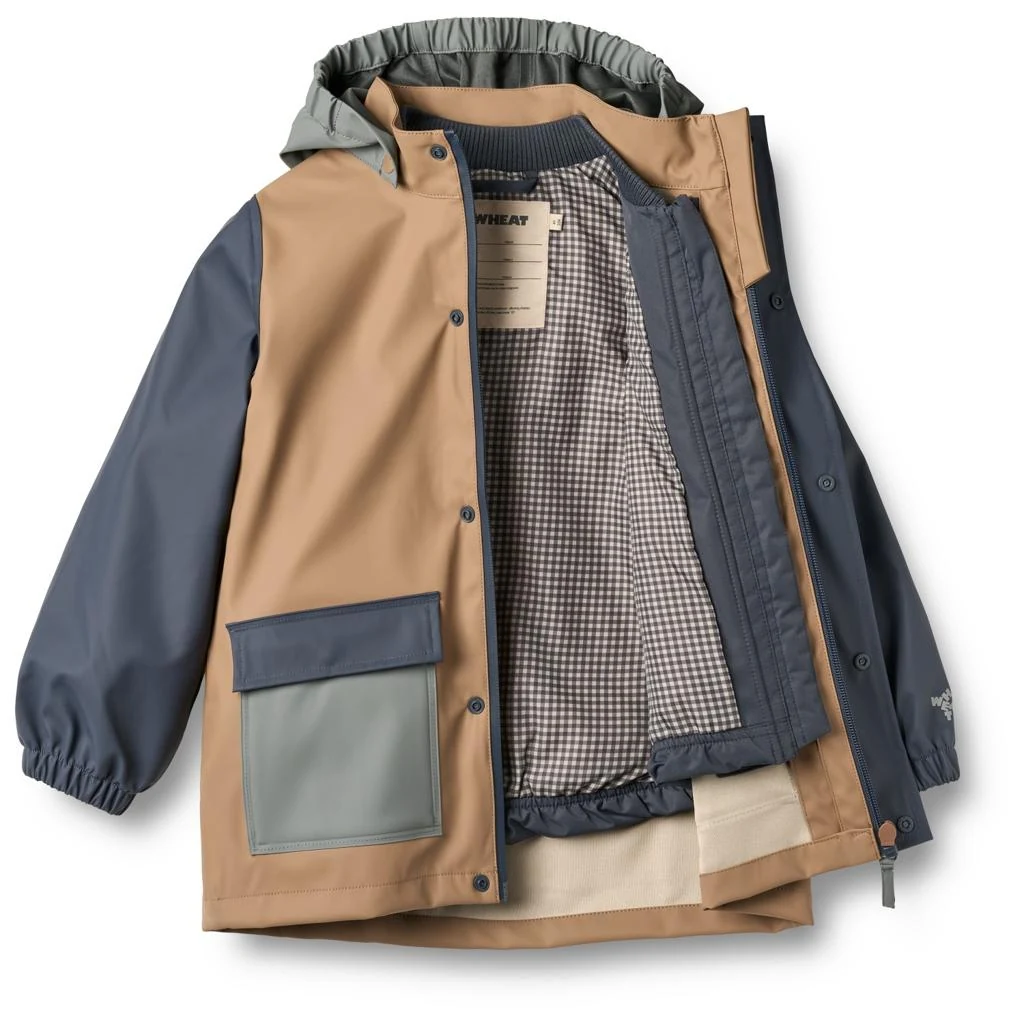
When choosing fabrics for kids jackets, review the outer fabric, lining, and any insulation as a combination. A swatch helps you judge one material, but it cannot show how the finished jacket will hang, how the sleeves will slide over clothing, or how bulky a layered seam will feel.
Pick the Outer Fabric for Its Job
Describe the result you need before narrowing the search to a fiber name. Do you want a soft, casual surface, a crisp shape, a particular washed appearance, or a lightweight shell? Explain which qualities are essential so the supplier can offer relevant alternatives instead of matching only a photograph.
Compare candidate fabrics with the planned construction in mind. Ask to see how a pocket edge, gathered cuff, or decorated area looks on the proposed material. A fabric’s weight or composition alone does not establish how the completed jacket will perform. If a coating or finish matters to the design, include it in the material description and request supporting information.
When we develop children’s jackets at HAPA, we don’t judge a material by its swatch or hand feel alone. We review the shell fabric alongside the lining, ribbing, zipper, and decorative trims because these components have to work together in the finished garment. A fabric may feel soft and lightweight on its own, for example, but the combination with a heavier lining can make the sleeve, armhole, or front opening feel stiff. Before confirming bulk materials, we prefer to make a sample or a trial of the relevant construction using the proposed components, so we can assess the combined feel and structure rather than relying on the swatch alone.
Plan the Lining and Warmth Together
The inside should receive the same attention as the outside. Assess the lining against the clothing children will wear underneath, particularly through the sleeves. During sample review, look for pulling, twisting, exposed decoration backing, and bulky transitions around the cuffs or front opening.
For custom insulated kids jackets, describe the intended use rather than requesting a temperature rating without an agreed basis. Discuss the fill, lining, and outer construction together, then decide what evidence is needed for any warmth claim. Adding thickness also changes the space available inside the jacket, so fit should be reviewed again when those layers change.
When we develop padded or insulated kids’ jackets, we consider the filling, lining, and pattern together rather than assuming that adding more padding automatically creates a better winter jacket. A thicker filling can change the available room inside the sleeves, the shoulder shape, and the way the front closes. During sample review, we pay particular attention to whether children can raise and bend their arms comfortably, whether the shoulders look excessively bulky, and whether the front remains flat when zipped. If the filling material or thickness changes later, we review the affected areas again instead of automatically carrying over the previous sample approval.
Check Care and Performance Claims
Set a care expectation that suits your customer, then check whether the proposed combination can support it. The shell, lining, decoration, and trims all need to remain acceptable after the intended cleaning process. Review measurements, appearance, closures, and color changes using an agreed method; don’t invent a universal number of wash cycles.
Keep water resistance and waterproof claims tied to evidence for the relevant product. A fabric report does not, by itself, describe what happens at the jacket’s seams, openings, or decorated areas. Ask what was tested and whether the tested construction matches the version you plan to sell.
When Recycled or Organic Materials Matter
If your children’s outerwear collection has a specific material requirement, define it precisely. Identify which component must contain the claimed material and what documentation you’ll need. “Recycled shell fabric” and a claim about the entire jacket have different scopes, particularly when the lining and trims use other materials.
Certification logos also require their own checks. Textile Exchange explains that receiving certified materials does not automatically authorize a brand to place its standard’s logo on the finished product. Confirm the applicable certification and approval requirements before finalizing labels or product copy. Its labeling and claims guidance is a useful starting point. Material claims should still sit alongside practical checks for fit, care, and the intended use.
6. Make the Jacket Easy for Kids to Wear
Children’s outerwear needs to work during ordinary movements, not only while the wearer stands still. Look at the whole dressing experience: entering the sleeves, closing the jacket, reaching forward, sitting down, and taking it off again.
Leave Room for Movement and Layers
To assess kids jacket fit, review the sample over the intended clothing. If the jacket will usually cover a sweatshirt, a fitting over a thin T-shirt leaves an important question unanswered. Observe where the fabric pulls when the wearer reaches forward or bends an elbow, rather than responding to every restriction by making the whole jacket larger.
Keep feedback specific. “The sleeve feels tight over the planned sweatshirt” gives the pattern team a clearer problem than “make it more comfortable.” They can then investigate the relevant measurements and construction. For supervised fittings with children, first address identified product hazards; a wear trial is not a substitute for a safety assessment.
Check the Fit Across Your Size Range
For your kids jacket size chart, separate body measurements from finished-garment measurements. Age labels alone don’t explain either, and different suppliers’ size names are not interchangeable. Agree on the measurement points, the starting size, and how dimensions will change across your range. Those planned size changes are often called grading.
One approved sample size does not confirm the entire collection. Ask for a review plan that covers the size range and any different age groups. Pay attention to pocket access, sleeve length, hood proportions, and artwork as well as chest width. An illustration balanced on the largest size can crowd the front of the smallest one, even when the clothing measurements themselves are correct.
When developing several sizes of a kids’ jacket, we don’t simply enlarge or reduce the base size by one fixed percentage. Children’s body proportions do not change in exactly the same way at every age. Along with chest width, body length, and sleeve length, we review shoulder width, armhole shape, hood proportions, and the position of pockets in relation to the body. If the jacket includes a large print, embroidery, or sequin decoration, we also check how the artwork looks across the size range. This helps prevent a design from looking crowded on smaller sizes or undersized on larger ones.
Review Closures and Safety Details
Consider how the intended child will operate the closure and whether an adult will help. Review the puller, surrounding fabric, pocket access, cuff opening, and anything that could detach or catch. Practical observations help improve the design, but required testing and compliance decisions need the appropriate expertise.
Rules depend on the market and product scope. In the United States, CPSC identifies hood and neck drawstrings on children’s upper outerwear in sizes 2T through 12, or equivalent sizes, as a substantial product hazard. It also sets criteria for waist and bottom drawstrings in sizes 2T through 16. Check the CPSC guidance on children’s outerwear drawstrings before approving those details. This is one design-related requirement, not a complete compliance checklist for every country.
For products intended for the U.S. market, confirm the applicable children’s product safety requirements based on the intended age range, construction, materials, and relevant regulations. A children’s product subject to CPSC children’s product safety rules will generally need applicable testing by a CPSC-accepted third-party laboratory and a Children’s Product Certificate (CPC), unless an exemption or exception applies. For products manufactured overseas and imported into the United States, the importer is responsible for issuing the CPC. The laboratory provides test results; it does not issue the certificate on the importer’s behalf. Requirements should therefore be checked product by product with the U.S. importer, testing laboratory, or a qualified compliance adviser. See the CPSC Children’s Product Certificate guidance and the list of rules requiring third-party testing and a CPC.
As of October 2026, CPSC’s electronic filing (eFiling) requirement has also taken effect for most imported consumer products subject to CPSC certification requirements. From July 8, 2026, importers generally need to electronically submit the required certificate data to U.S. Customs and Border Protection (CBP) for covered imports. The importer should confirm whether the jacket’s product classification and applicable rules bring the shipment within the eFiling requirement, and check any relevant exceptions before shipping. See CPSC’s Certificates of Compliance and eFiling guidance.
7. Give Your Custom Kids Jackets a Clear Identity
Decide what should make the collection recognizable before assigning logos to every available panel. A consistent pocket shape, color combination, or contrast detail can give your custom kids jackets a shared identity while leaving enough space for the garment to work comfortably.
Build Recognition Beyond the Logo
Choose which element should draw attention first, then review the rest in relation to it. If a contrast pocket defines the front, nearby embroidery should complement its shape rather than compete for space. Bold graphics can also suit a children’s collection; judge them against the design and wearer instead of treating small logos as a universal rule.
For private label kids jackets, include the inside in this review. Plan the main brand label and its contact with the neck, along with size and care information appropriate to the sales market. Decorative branding and required product information have different purposes. Make space for both before the sample is assembled, and confirm the applicable labeling requirements separately.
For the U.S. market, the FTC’s Textile Fiber Rule requires covered textile products to disclose the generic names and percentages by weight of the constituent fibers, the country of origin, and the identity of the manufacturer or another responsible business. The FTC’s Care Labeling Rule also requires manufacturers and importers to provide appropriate care instructions and to have a reasonable basis for those instructions. For a jacket made with a shell, lining, filling, and decorative materials, care instructions should be considered for the finished garment rather than based only on one fabric component. When planning the label, leave room for required fiber, origin, and care information as well as the brand logo. Refer to the FTC Textile Fiber Rule and the FTC Care Labeling Rule.
Children’s products are also subject to CPSC tracking-label requirements, which are separate from the FTC’s fiber-content and care-label rules. Where practicable, the product and its packaging must carry a permanent, distinguishing mark that helps identify the manufacturer, importer, or private labeler, as well as the location and date of production and batch or other identifying information. The exact marking arrangement should be reviewed for the product and packaging; do not assume that a removable hangtag alone will satisfy the requirement. Brands should confirm the tracking information and placement with their importer and compliance team. See the CPSC guidance on children’s product tracking labels.
Approve Colors on Real Materials
Use a shared color reference, then compare physical components. A screen preview helps communicate a palette, but the shell, ribbing, zipper tape, and embroidery thread need their own confirmation. Ask the supplier to identify the proposed references and keep an approved set for comparison.
Decide whether closely related colors should match or deliberately contrast. “Use navy everywhere” can leave that intention unclear across different materials. Review the combination under agreed viewing conditions and record the decision. If a material changes later, revisit the combination instead of assuming the replacement will look identical.
Match Decoration to the Fabric
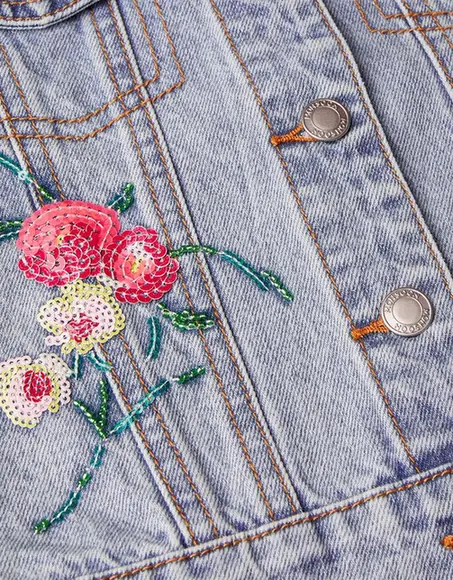
For embroidered or printed kids jackets, discuss artwork with the manufacturer before its position becomes fixed. Seams, pockets, insulation, and lining access can affect how decoration is applied. Ask for a trial on the intended material when the method or combination is unproven. A separate embroidered or printed sample can reveal issues before you commit to decorating the complete jacket. Use these questions to guide the conversation:
- Does the artwork fit the usable panel at the intended garment size without blocking a pocket or closure?
- Will the proposed process change the fabric’s appearance, feel, or required performance?
- Can the text and fine details be reproduced clearly at the actual size?
- How will the inside be finished, and what should be checked after the intended care process?
Avoid choosing a method solely because it worked on a previous hoodie or T-shirt. The new jacket’s material and construction need their own review.
Sequins, beadwork, and embroidery are decorative techniques we regularly work with in children’s apparel. When developing a jacket, we look beyond whether the decoration appears attractive on the front. We also check its distance from zippers, pockets, and seams, and consider whether the backing or finish on the inside could affect the lining or wearing comfort. For raised details such as sequins and beads, we prefer to test the technique on the actual fabric before confirming the final position and coverage. This gives us an opportunity to identify potential conflicts between the decoration and the jacket construction before the full sample is completed.
8. Turn Your Design Into a Clear Brief
A useful kids jacket design brief connects the jacket you have in mind with the details needed to make it. You can start with a simple document, as long as it separates settled decisions from questions you want the development team to help answer.
Turn References Into Front and Back Views
Annotate inspiration images so the supplier knows which features matter. You might like the length of one jacket and the pocket arrangement of another without wanting either garment copied. Use references you have permission to share, and avoid treating another brand’s graphics or identifiers as available artwork.
Prepare front and back views, adding side or inside details where they clarify the design. A simple sketch with useful notes can communicate more than a realistic image with unexplained seams. Digital mockups, including AI-generated concepts, still need checking for inconsistent pockets, impossible construction, or details that change between views.
Specify Artwork at Its Actual Size
Provide the clearest editable source available and ask which formats the decorator needs. State the artwork’s dimensions and its position relative to an agreed seam or other reference point. Include color references and confirm text spelling. A vector logo is source artwork; it is not automatically a ready-to-run embroidery file.
Prepare artwork variations deliberately when the size range requires them. Label the applicable garment sizes and keep each version linked to its placement instructions. Don’t borrow adult chest-logo dimensions for a children’s jacket, or assume that shrinking every element by the same percentage will preserve legibility.
Record What Still Needs Confirmation
Use the following template to organize your first discussion and the information needed for a kids jacket tech pack. Write “supplier recommendation requested” where a choice is open, then record the agreed answer when it is available.
| Brief Field | What to Provide |
|---|---|
| Product and wearer | Style name, age or size range, intended use, target market |
| Design views | Front, back, and any necessary inside or detail sketches |
| Fit | Intended silhouette, usual inner layer, starting size, measurement basis |
| Materials | Shell, lining, insulation if needed, colors, finishes, care expectations |
| Construction | Pockets, hood or collar, cuffs, hem, closure, important seam details |
| Branding | Editable artwork, actual dimensions, locations, color references, labels |
| Order background | Quantity range, colorways, target cost, desired launch timing |
| Open questions | Decisions requiring advice, responsible person, next review point |
| Version | Document date, revision identifier, approved and unapproved items |
HAPA’s kidswear sample development service accepts design concepts, reference images, and product specifications as starting points. If your brief is incomplete, identify where you need assistance and confirm which development work and deliverables are included before proceeding.
9. Review the Sample Before Bulk Production
A digital image can confirm the arrangement you intend; a physical sample lets you evaluate the garment. During custom jacket sample approval, record those approvals separately so approving artwork doesn’t accidentally become approval of fit, materials, and production details.
Review the Digital Design
Check the front, back, sleeves, and any interior branding together. Confirm the spelling, layout, artwork versions, color references, and relationship to seams and pockets. Note any features that the preview cannot show reliably, especially texture, depth, and internal construction.
Make the approval specific, such as “artwork layout approved; fabric color awaiting physical sample.” This gives the supplier a clear record of what can move forward. It also prevents a visually finished mockup from hiding unresolved material or fit decisions.
Check the Physical Sample
Compare the sample with the current brief and the approved component references. Review it both open and closed, with the intended layer underneath. Check appearance after the agreed care procedure where appropriate, and review relevant test evidence separately from your visual and wear checks.
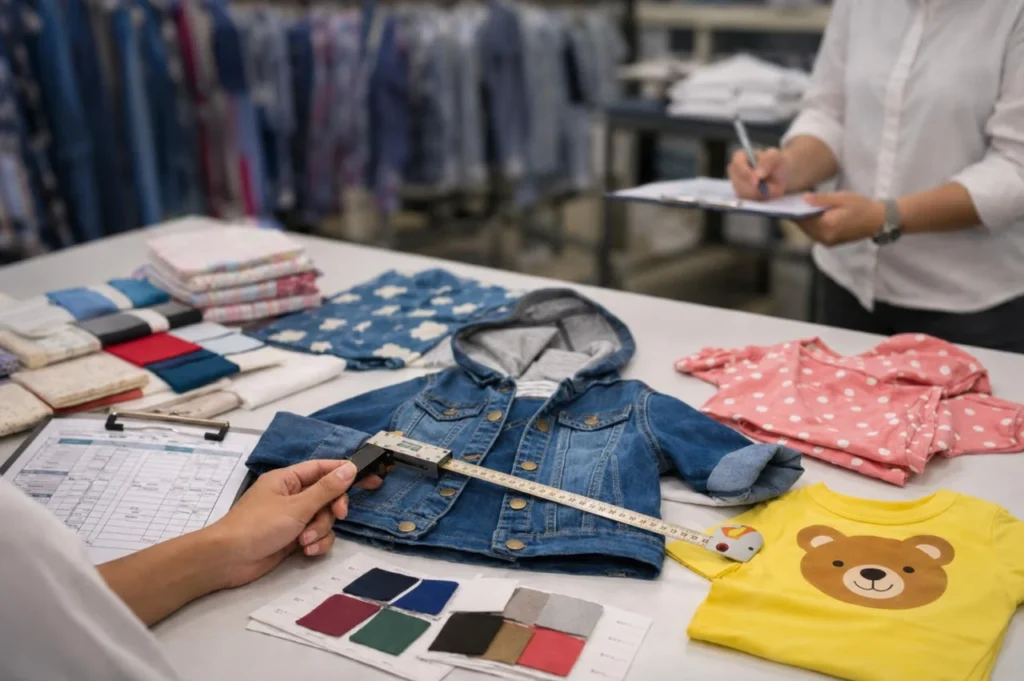
Keep a written record of these observations:
- Confirm the actual materials, colors, trims, and decoration against the approved references.
- Review measurements and movement, including sleeves, shoulders, pockets, and the front opening.
- Inspect the inside for uncomfortable edges, pulling lining, and unfinished decoration areas.
- Record changes after the intended care process, with photos and measurements where useful.
- List unresolved safety, performance, or size-range questions and who must resolve them.
At HAPA, our pre-shipment inspection process includes checks selected for the fabrics, decorations, and trims used in each style. For example, when a garment uses snap fasteners or other hardware, we pay attention to attachment strength and carry out pull checks. For fabrics and colors, we look for noticeable changes after washing. Under HAPA’s current inspection process, we conduct 20 wash tests and pull tests on children’s snap fasteners to assess how the materials, colors, and relevant trims hold up through repeated care and use. The exact checks and acceptance criteria still need to be agreed according to the product design, customer requirements, and target market. These factory quality-control checks are part of our own production process; they do not replace any third-party testing required by law and do not, by themselves, certify compliance in every country.
Approve One Final Version
Bring the final sample, measurements, material list, artwork, and revision notes into agreement. When something changes, identify what needs another review. Replacing a lining, for instance, should prompt a check of the finished feel and fit rather than being treated as a purely administrative update.
For each remaining issue, record the location, observed problem, requested change, and approval status. A note such as “right pocket opening catches the lining when used” is easier to act on than “improve quality.” Once the design is approved, use the separate guide to kids jacket production lead time to plan the next stages without confusing design approval with a confirmed delivery date.
HAPA’s Real Experience: Completing an Urgent Reorder for a Best-Selling Kids’ Jacket
A returning HAPA customer once contacted us because one of their kids’ jacket styles was selling faster than expected and available stock was running low. They needed a replenishment order arranged quickly to avoid missing further sales.
Because HAPA had manufactured this jacket before, we still had the approved pattern, size specifications, and construction details on file. We did not need to repeat the full development and sample-confirmation process required for a completely new style. Instead, we could refer to the existing production records and move directly to checking the reorder requirements.
We first reviewed the availability of the shell fabric and trims, then coordinated the production schedule with our team. We also stayed in contact with the customer to confirm which sizes needed to be replenished first. By adjusting the production arrangements, we completed the replenishment order in 12 days. This refers to production completion only and does not include shipping or delivery time.
The project reinforced something we see in repeat orders: keeping accurate patterns, size specifications, and construction records makes a real difference when a best-selling style needs to be replenished quickly. Those records help our team understand the original product requirements and reconnect production more efficiently.
Conclusion
Designing custom jackets for kids becomes more manageable when every choice follows a clear use case. Define the wearer, choose the development route, and decide which features matter enough to protect in the budget. Then document the details and use the sample to test whether they work together.
If you’re preparing a collection, share your jacket project with HAPA. Send your sketches or reference images, target age range, sales market, expected quantity, and sample needs. Mark anything you’re still deciding so the development discussion can focus on the questions that will shape your jacket.
Frequently Asked Questions
Do I Need Professional Design Software to Get Started?
No. Clear sketches and annotated reference images can start the discussion. Before sampling, agree on who will prepare the technical drawings, measurements, and production artwork for your custom kids jackets. Software choice matters less than having accurate, readable files that the manufacturer can use and revise.
Can I Use Another Brand’s Jacket as a Reference?
You can explain a desired feature using an appropriate reference, but don’t treat that as permission to reproduce another brand’s design, artwork, or identifiers. Identify the specific function or proportion you want to discuss and develop your own solution. Get professional advice if you are unsure about rights.
Who Owns the Patterns and Design Files?
Confirm this in writing with the development partner. Ask what you receive, whether editable files are included, who can access the patterns, and what use is permitted after the project. Don’t assume paying for a sample automatically gives you every underlying file or unrestricted ownership rights.
Can Different Sizes Use Different Artwork Sizes?
Yes, if the manufacturer can support the variations and they are included in the agreed specifications. Supply a size-to-artwork mapping and confirm any extra setup or sampling charges. Check legibility and placement for each artwork version instead of relying on a single preview for the entire range.
References & Sources
- HAPA: Custom Kids Jacket Manufacturer
- HAPA: Product Samples
- HAPA: Cut and Sew Manufacturer
- CPSC: Drawstrings in Children’s Upper Outerwear
- CPSC: Children’s Product Certificate (CPC) Guidance
- CPSC: Rules Requiring Third-Party Testing and a CPC
- CPSC: Certificates of Compliance and eFiling
- CPSC: Children’s Product Tracking Labels
- FTC: Textile Fiber Rule
- FTC: Care Labeling Rule
- Textile Exchange: Labeling & Standards Claims