I know from experience that a strong OEM or ODM apparel partnership is built long before the first sewing line starts running. It begins with your tech pack, fabric selection, sample development, pattern making, cutting plan, sewing workmanship, quality inspection, labeling, packaging, and communication rhythm.
That is why choosing the right factory matters so much.
Vietnam has become one of the most trusted apparel sourcing destinations for global brands. Clothing Manufacturers in Vietnam have earned a strong reputation across sportswear, children’s wear, denim, uniforms, knitwear, outerwear, and structured apparel. For startups, private-label brands, and established retailers, Vietnam offers a practical balance of production quality, export experience, competitive pricing, and supply-chain diversification.
This guide explains How to Find Clothing Manufacturers in Vietnam in a realistic, field-tested way. Whether you are placing your first sample order or shifting part of your supply chain outside China, I’ll walk you through where to search, how to vet suppliers, what questions to ask, which red flags to avoid, and which manufacturers are worth researching.
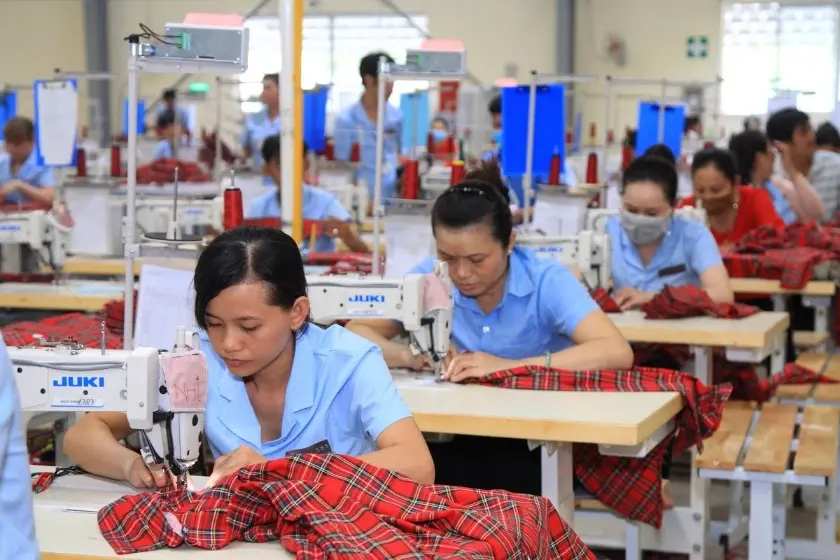
Why Vietnam is the Premier Destination for Apparel Sourcing
Vietnam is currently the world’s third-largest apparel exporter, shipping over $44 billion USD in garments annually, according to data from the World Trade Organization. Only China and Bangladesh export more by volume, but Vietnam’s impressive growth rate consistently outpaces both.
The numbers speak for themselves. The nation’s garment and textile sector continues to see remarkable year-on-year growth, with the Vietnam Textile and Apparel Association (VITAS) frequently highlighting robust double-digit export increases. That kind of sustained economic momentum doesn’t happen without a highly mature, serious industrial foundation behind it.
For any brand weighing where to manufacture, the business case goes far deeper than export rankings. Vietnam brings 17 active free trade agreements, an estimated 2.7 million skilled garment workers, and a vetted supplier network already trusted by global heavyweights like Adidas, Nike, H&M, and Uniqlo.
Where to Find Reliable Clothing Manufacturers in Vietnam
When I evaluate a potential factory partner, I combine several sourcing channels instead of relying on a single database. Each platform gives you a different layer of information. B2B websites help you compare capacities quickly, industry directories yield hyper-local leads, trade shows build interpersonal trust, sourcing agents save you time on the ground, and social media gives you an unfiltered look at daily factory operations.
1. Leverage Global B2B Platforms
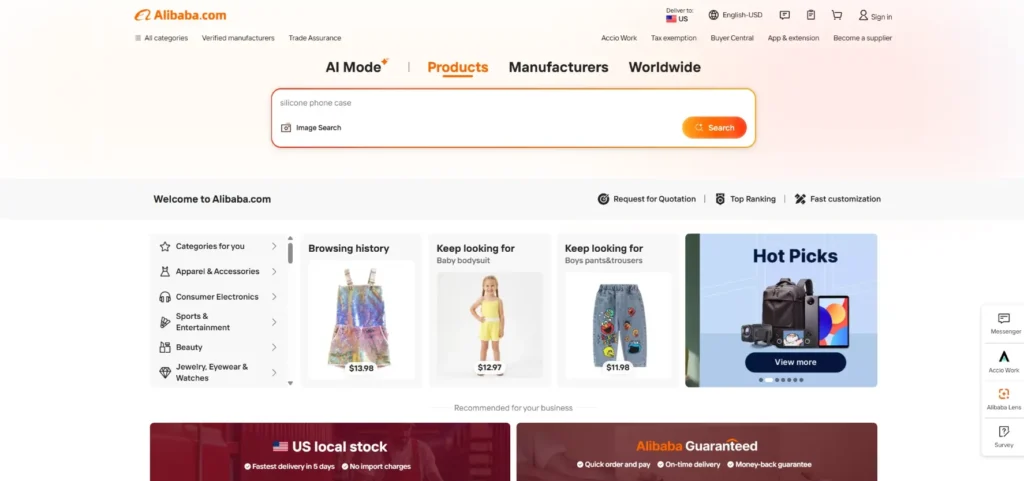
Alibaba and Global Sources are where most brands start their journey, and plenty of capable clothing manufacturers in Vietnam maintain active listings there. However, here is an insider secret: keeping a polished, English-language storefront updated takes dedicated marketing staff—a luxury many genuine, high-quality factories simply don’t prioritize. Consequently, some of the best sewing workshops have incredibly weak profiles, while some of the slickest pages actually belong to trading middlemen posing as manufacturers.
Before you shortlist anyone from a B2B platform, run them through this quick vetting checklist:
- Filter for verified suppliers only: It isn’t foolproof, but it removes the immediate noise.
- Ask for the business registration certificate: Every legitimate Vietnamese factory has one and can email it to you on the same day.
- Request a live video walkthrough: Ask to see the active production floor, not just a pre-recorded promotional clip.
- Check the listed address on Google Maps: Trading companies typically sit in downtown office towers, whereas real factories operate in industrial zones.
- Compare stated capacity with staff count: If they claim to produce 2,000 pieces a day but only have 30 workers, the math does not add up.
A real factory manager will agree to a quick Zalo or WhatsApp video call within minutes. A middleman will instantly start making excuses.
2. Search Vietnam-Specific Industry Directories
Local directories often look dated—you will rarely find glossy photos or clever marketing copy—but this is where the established, legacy exporters actually live. If you want a straightforward shortcut for how to find clothing manufacturers in Vietnam, industry directories are invaluable.
| Directory | Best For | Why I Use It |
| VITAS | Large-scale, certified garment factories | Finding established players with a solid track record of export experience. |
| VCCI | Broader manufacturing and textiles | Verifying a company’s official business standing and legal registry within Vietnam. |
| Yellow Pages VN | Finding niche fabric mills and trim suppliers | Locating localized raw materials to prevent supply chain bottlenecks. |
If I could only recommend one, it would be VITAS. Companies that invest in membership and stay active within the association tend to be serious, long-term exporters rather than fly-by-night operations. I will trust a VITAS member with a plain-text listing over a beautifully designed profile from an unverified trader any day.
3. Attend Textile & Apparel Trade Shows
If you have the budget to make one trip to Southeast Asia, time your visit around a major trade show. These are the three events worth planning your calendar around:
| Exhibition | Best For | Held In | Timing |
| SaigonTex | Garment and textile manufacturers | Ho Chi Minh City | April |
| VIATT | Apparel, home textile, and technical textile suppliers | Ho Chi Minh City | February–March |
| Global Sourcing Fair Vietnam | Export-ready fashion and lifestyle suppliers | Ho Chi Minh City | April |
Having stood on both the buyer and exhibitor sides of those booths, here is my advice on extracting real value from a ten-minute conversation:
- Skip the sales pitch: Politely bypass the sales reps and ask to speak directly with a merchandiser or a technical pattern maker.
- Bring a physical garment: Hand over one of your current products. The true experts will instinctively turn it inside out and examine the stitching tension without being prompted.
- Ask about export markets: Their main geographic markets dictate their standard of quality compliance.
- Get the right contact: Collect the business card of the technician you spoke with, not just the generic company brochure.
4. Partner with Local Sourcing Agents
A competent agent will save a first-time buyer from catastrophic mistakes. A bad one will quietly drain your margins for years. When establishing our children’s clothing OEM lines, finding trustworthy local eyes was paramount.
What a good agent delivers:
- Language and cultural fluency during intense negotiations.
- Pre-vetted factory relationships cultivated over decades.
- On-the-ground, real-time quality inspections.
- Immediate problem-solving when bulk production inevitably hits a snag.
What you risk with the wrong agent:
- Hidden commissions collected from both you and the factory.
- A permanent markup layer baked into your per-unit price.
- Zero direct relationship with the managers actively manufacturing your product.
Expect a transparent, ethical agent to charge a roughly 5–10% commission. Before signing a contract, ask these three non-negotiable questions:
- How exactly are you compensated—by me, the factory, or both?
- Will you provide the factory’s full legal name and physical address?
- Can I visit the facility with you and communicate with them directly?
A trustworthy sourcing partner will answer all three without hesitation.
5. Scout Suppliers on Social Media
Do not overlook the power of social media. A factory’s unpolished, day-to-day content reveals more truth than a highly curated website.
- Facebook: This is the beating heart of Vietnamese business culture. Factory owners regularly post sewing-line videos, team lunches, and container shipment updates. Monitor a page for a month, and you will see undeniable proof of whether a factory is genuinely active.
- LinkedIn: The best platform for reaching humans, not corporate pages. Search “merchandiser + garment + Vietnam” to find professionals who are eager to connect directly.
- Zalo: Vietnam’s domestic messaging app. Once you have an initial contact, this is where actual business gets done. Downloading and using Zalo immediately signals to suppliers that you are an experienced, serious buyer.
6. Conduct Targeted Google Searches
A well-structured Google search is often the secret to how to find clothing manufacturers in Vietnam that don’t rely on massive B2B platforms. Many incredibly capable mid-sized operations run entirely on repeat referrals and basic websites.
Try utilizing these specific search string formats to bypass the middlemen:
- “children’s clothing manufacturer Vietnam OEM”
- “garment factory Ho Chi Minh City MOQ [your target quantity]”
- “[product type] apparel manufacturer Vietnam export”
- “Vietnam garment factory WRAP certified” (or BSCI / OEKO-TEX)
Dig beyond page one. Some of the most technically proficient factories rank poorly simply because SEO has never been a priority for their management team.
How to Vet Clothing Manufacturers in Vietnam Before Paying a Deposit
Before I transferred my first 30% deposit for a major production run, I was terrified. It is one thing to have fantastic chemistry on a Zoom call; it is another entirely to wire tens of thousands of dollars overseas. Trust must be earned through rigorous verification.
Here is my exact protocol to separate genuine manufacturers from risky middlemen:
| Verification Item | What to Look For |
| Business License & Tax Code | Ensure the registered address precisely matches the physical factory floor you tour. Middlemen use virtual downtown offices. |
| Export Experience | Require a proven track record of shipping to your country. They must understand your local labeling laws. |
| Production Capacity | Cross-reference their headcount with your order volume. A 50-person team cannot handle 20,000 units without unauthorized subcontracting. |
| Live Floor Walkthrough | Demand an impromptu Zalo or WhatsApp video tour of the cutting and sewing lines during standard working hours. |
| Certifications | Always validate certificates directly on the issuing body’s portal (e.g., OEKO-TEX, SA8000, WRAP). |
Questions to Ask Every Manufacturer
Once a factory clears the initial audit, nail down the operational specifics. Do not leave your margins to assumption.
- MOQ (Minimum Order Quantity): What is your strict MOQ per style and color? Will you negotiate a lower minimum for a paid test order?
- Lead Time: What is the realistic sample-to-bulk timeline? Specifically, ask how local holidays like Tet (Lunar New Year) will impact delivery dates.
- Fabric Sourcing: Do you weave locally, or rely on imported textiles? Knowing this helps you map out potential supply chain bottlenecks.
- Sample Policy: Are pre-production sample fees deducted from the final bulk purchase order? (This should be an industry standard).
- QC Process: What is your Acceptable Quality Limit (AQL)? How do you conduct inline inspections during sewing, not just at final packaging?
- Payment Terms: Standard is 30% upfront and 70% before shipment (released only after a third-party QC pass). Never pay 100% upfront.
7 Best Clothing Manufacturers in Vietnam
| Manufacturer | Best For | Main Strength |
| Vinatex | Large-scale sourcing and supply-chain access | Broad textile and garment network |
| Thanh Cong Textile Garment | Knitwear, sportswear, children’s wear, and vertical production | Fabric-to-garment capability |
| DUGARCO | OEM apparel, shirts, jackets, workwear, and uniforms | Strong export manufacturing experience |
| TNG Investment and Trading | Outerwear, sportswear, and high-volume garment orders | Multi-factory production capacity |
| Viet Tien Garment Corporation | Formalwear, uniforms, shirts, trousers, and business apparel | Established garment manufacturing background |
| Thygesen Textile Vietnam | OEM/ODM, activewear, casualwear, kidswear, underwear, and sustainable apparel | Full-package product development |
| Phong Phu Corporation | Denim, knit fabric, yarn, towels, and garment-related sourcing | Integrated textile supply chain |
1. Vinatex
Vinatex, also known as Vietnam National Textile and Garment Group, is one of the most important names in Vietnam’s textile and apparel industry. It is not just a single garment factory, but a large textile-garment group with a broad supply chain covering yarn, fabric, dyeing, finishing, and garment manufacturing.
For international brands, Vinatex can be useful if you are looking for large-scale production capacity or access to multiple factories within one wider network. It is especially relevant for buyers who want to understand Vietnam’s broader manufacturing ecosystem rather than work with one small workshop.
Best suited for:
- Large-volume apparel orders
- Brands that need supply-chain scale
- Buyers looking for yarn, fabric, and garment resources
- Long-term sourcing programs
- Companies that need multiple production partners
2. Thanh Cong Textile Garment
Thanh Cong Textile Garment is a strong option for brands looking for more integrated textile and garment production. The company works across fabric and garment manufacturing, which can be helpful when your project depends heavily on fabric quality, color consistency, shrinkage control, and production stability.
For children’s wear, sportswear, T-shirts, polo shirts, and casual knit products, this type of vertical setup can be valuable. When a manufacturer understands both fabric and sewing, communication can be smoother during sampling and bulk production.
Best suited for:
- T-shirts and polo shirts
- Sportswear
- Children’s clothing
- Casualwear
- Knit garments
- Fabric-sensitive projects
3. DUGARCO
DUGARCO, or Duc Giang Corporation, is a well-known OEM garment manufacturer in Vietnam. It has experience producing apparel for domestic and international clients and is often associated with shirts, jackets, uniforms, workwear, and structured garments.
This manufacturer may be a good fit for brands that need reliable OEM production rather than only small experimental orders. If your collection includes shirts, outerwear, officewear, uniforms, or workwear, DUGARCO is worth adding to your shortlist.
Best suited for:
- OEM clothing production
- Shirts
- Jackets
- Workwear
- Uniforms
- Men’s and women’s apparel
- Export-focused orders
4. TNG Investment and Trading
TNG Investment and Trading is another major garment manufacturer in Vietnam, known for multi-factory production and experience in outerwear and sportswear. For brands needing higher-volume production, TNG can be a serious option to consider.
This type of manufacturer is usually better for buyers who already have clear tech packs, approved materials, and stable order planning. Large factories often work best when the buyer is organized, because production planning, material booking, and line scheduling need to be managed carefully.
Best suited for:
- Outerwear
- Sportswear
- Jackets
- High-volume garment orders
- Export-focused production
- Brands with mature product specifications
5. Viet Tien Garment Corporation
Viet Tien Garment Corporation is one of Vietnam’s established garment manufacturers, with a strong background in apparel production. It is especially relevant for brands looking at formalwear, shirts, trousers, uniforms, business apparel, and classic garment categories.
For buyers who need stable workmanship and a more traditional garment-manufacturing foundation, Viet Tien can be a strong name to research. It may be especially suitable for structured products that require clean sewing, consistent sizing, and reliable finishing.
Best suited for:
- Shirts
- Trousers
- Business apparel
- Uniforms
- Formalwear
- Classic men’s and women’s clothing
6. Thygesen Textile Vietnam
Thygesen Textile Vietnam is positioned as an OEM and ODM clothing manufacturer serving global brands. It is a useful option for buyers looking for more than basic cut-and-sew service, especially if they need product development, material sourcing, sampling, private labeling, packaging, and bulk production support.
Thygesen may be relevant for brands producing activewear, casualwear, kidswear, underwear, workwear, uniforms, and sustainable apparel. For newer brands, a full-package manufacturer can be easier to work with because the factory can help guide the process from concept to finished garments.
Best suited for:
- OEM and ODM apparel
- Activewear
- Kidswear
- Casualwear
- Underwear and loungewear
- Workwear and uniforms
- Sustainable clothing projects
7. Phong Phu Corporation
Phong Phu Corporation is a long-established textile and garment company in Vietnam, especially known for textile-related production such as yarn, denim, knitted fabric, towels, and garment products. It can be a good option for brands that care about fabric sourcing as much as final garment sewing.
For apparel brands, Phong Phu may be especially interesting if your products involve denim, knit fabrics, cotton-based materials, towels, home textiles, or fabric-driven collections. A supplier with textile strength can help when fabric performance is a major part of your product quality.
Best suited for:
- Denim-related products
- Knit fabric sourcing
- Cotton-based garments
- Towels and home textiles
- Fabric-driven apparel projects
- Brands needing textile and garment support
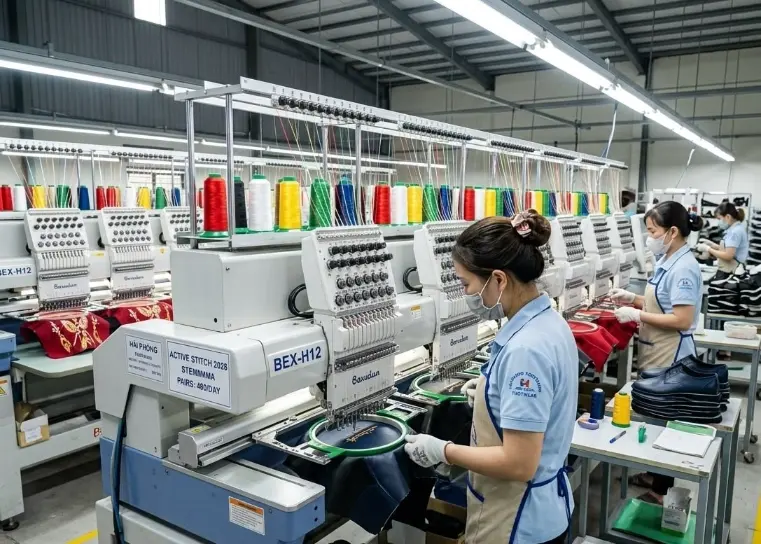
Vietnam vs. China: Which Garment Manufacturing Destination Is Better?
When clients ask me to compare Vietnam vs. China garment factories, I tell them it ultimately comes down to your brand’s specific sourcing priorities.
China remains unrivaled regarding the sheer depth of its supply chain. There are specific reasons why top brands choose clothing factories in China—namely, their capacity for incredibly complex designs, instant access to niche trims, and rapid fabric development.
Conversely, Vietnam is incredibly attractive for brands seeking highly competitive costs, exceptional sewing stability, and necessary supply-chain diversification. Many clothing manufacturers in Vietnam are deeply specialized in sportswear, uniforms, and knitwear, making them a perfect, cost-effective alternative base outside of China.
Conclusion
Vietnam offers brands a strong balance of skilled garment production, competitive costs, export experience, and growing compliance standards. By choosing the right sourcing channels, verifying factories carefully, and matching suppliers to your product needs, you can build a reliable apparel supply chain with greater confidence.
FAQ
How do I find clothing manufacturers in Vietnam?
You can source clothing manufacturers in Vietnam through specialized trade directories (like VITAS), local sourcing agents, LinkedIn, industry trade shows, and highly targeted Google searches. Always filter your shortlist based on product specialty, MOQ requirements, and verifiable export experience.
What should I check before choosing a Vietnam garment factory?
Always verify their official business license, true production capacity, current export certifications, and their Acceptable Quality Limit (AQL) standards. Furthermore, demand a live video walk-through of the floor and secure customer references before wiring a deposit.
Are clothing manufacturers in Vietnam good for small brands?
Yes, many clothing manufacturers in Vietnam cater to smaller brands, though minimums vary wildly depending on fabric availability and style complexity. Startups should seek out low-MOQ sample rooms or partner with reputable sourcing agents who bundle smaller orders to meet factory thresholds.
What products are commonly made by clothing manufacturers in Vietnam?
Vietnamese factories excel in producing activewear, premium T-shirts, outerwear jackets, uniforms, swimwear, children’s clothing, and denim. They heavily service top-tier export markets including the U.S., EU, Japan, and Australia.
How can I avoid scams when sourcing from Vietnam?
Protect yourself by independently verifying the factory’s legal standing, demanding live video calls, utilizing written and legally binding contracts, insisting on third-party inline quality inspections, and never agreeing to pay 100% of the invoice upfront. Remember: an unbelievably low unit price is usually the first indicator of a scam.