Ask ten sourcing guides which city is best for clothing wholesale in China and you will get ten confident, contradictory answers. The honest one is shorter: it depends on what you sell, at what price, in what quantities, and how the goods need to get home. Guangzhou, Hangzhou, Yiwu, and a handful of specialist cities each run a different kind of sourcing ecosystem, and the “best” city is simply the one whose ecosystem matches your business.
This guide is written for that decision. It compares China’s main wholesale cities as ecosystems — category depth, price positioning, factory proximity, logistics, and buyer access — and ends with a framework for matching a city to your business type. What it deliberately does not do is walk building-by-building through individual markets. Buyers who need specific market names, locations, product categories, and practical visiting information can refer to our guide to the best clothing wholesale markets in China.
What Makes a City Best for Clothing Wholesale in China?
Before comparing cities, agree on the yardstick. Buyers who choose a city on reputation alone — “biggest” or “cheapest” — usually discover the reputation was built for someone else’s business. Four groups of factors do the real work.
Category strengths and price tier
Chinese wholesale cities specialize. One city leads in womenswear, another in accessories, another in children’s wear, and within each city the price tiers separate further by district and floor. The first question is never “which city is famous?” but “which city is deep in my category, at my tier?” A city with ten thousand stalls in the wrong category is worth less to you than a modest district in the right one.
Market scale and ecosystem depth
Scale matters less than depth. A strong sourcing city surrounds its markets with everything an order needs: fabric and trim supply, sourcing agents, sample rooms, consolidators, inspection services, and freight forwarders. That depth is what turns a buying trip into a working supply chain. If you are still assembling a shortlist of vendors and platforms before committing to a city, a vetted China clothing wholesale suppliers list is a practical place to start.
Order flexibility and factory proximity
Cities also differ in how they let you buy — how easily stalls mix styles and sizes, and how workable small first orders are. Mixed-lot norms are not uniform: in some ecosystems combining a few pieces across many styles is routine, while in others stalls expect cleaner, larger commitments per style, and that difference alone can decide whether a city suits a testing-stage buyer. And one factor almost every first-time buyer overlooks: how close the city sits to actual garment factories. From the manufacturing side, we see why this matters later rather than sooner. The buyers who eventually need custom production — their own designs, their own size chart, their own labels — are far better served by a city whose surrounding region can make to spec, not just sell from stock.
Logistics, export, and buyer access
Finally, the goods have to leave China. Before committing to a city, check three things about how it moves goods and serves buyers:
- Consolidation and forwarding depth. Mature export cities treat mixed orders from many stalls as routine, with forwarders who collect, inspect, and combine shipments as standard service.
- Customs and export experience. A city that exports clothing every day clears it smoothly; thin export infrastructure turns paperwork into your problem.
- Buyer access and support. Language help, payment options for foreign cards, and buyer services decide whether an international buyer’s week is productive or exhausting.
A slightly cheaper city with thin export services is rarely cheaper by the time the goods land.
Guangzhou — The All-Round Wholesale Hub
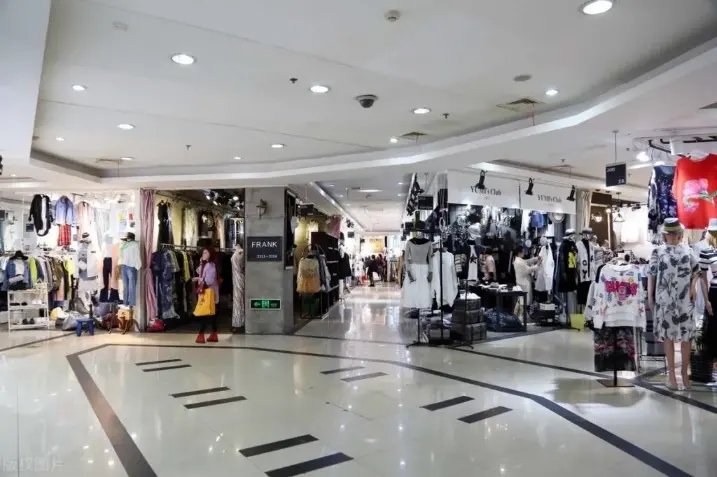
If the question is where to start, Guangzhou is the default answer for a reason. No other Chinese city combines this much category breadth with this much export infrastructure.
Category strengths and price range
Guangzhou’s wholesale ecosystem covers nearly everything: womenswear from trend-led to higher grade, menswear, denim, and a dedicated children’s wear district concentrated along Zhongshan Ba Road in Liwan. Price tiers run from aggressive value districts to mid-high-end buildings, so most buyers can find their level without leaving the city. For kidswear specifically, the district model means you can compare a large share of the ready-stock market in a single day — and our guide to kids clothing wholesale suppliers in China maps that supply landscape in more detail.
Logistics, factory access, and buyer support
Guangzhou’s quiet advantage is what surrounds the markets. The Zhongda district supplies fabric and trims at scale, and the Pearl River Delta factory belt — Foshan, Dongguan, and neighboring cities — sits within easy reach, which means the road from buying ready stock to commissioning custom production is short. In practical terms, a buyer can spend the first days of a trip comparing ready stock in the wholesale districts and the last day visiting a factory to discuss samples — something no other city makes quite so easy to combine. Export services are mature, with consolidators and forwarders accustomed to multi-stall orders. Access for international buyers is also improving: in 2026 the municipal government announced a multi-year plan to expand foreign-card payments, buyer service centers, and simplified customs around its wholesale districts. Treat those services as rolling out rather than fully in place, and verify what is live before you rely on any single one.
Who should source in Guangzhou (and when to look elsewhere)
Choose Guangzhou if any of these describe you:
- You want breadth on a first trip. No other city lets you compare this many categories and price tiers in one visit.
- You sell across categories. Womenswear, menswear, denim, and kidswear all have real depth here, so one city covers the range.
- Children’s wear is central to your range. The dedicated kidswear district makes side-by-side comparison unusually efficient.
- You expect to graduate into custom production. With the factory belt next door, the step from ready stock to made-to-spec is shorter here than anywhere.
Look elsewhere if your range is accessories-led at rock-bottom prices (Yiwu does that better), if you are a womenswear-only online seller chasing weekly newness (Hangzhou’s ecosystem is built for it), or if your brand competes on distinctive design (Shenzhen leans that way).
Hangzhou — Womenswear and Online Supply
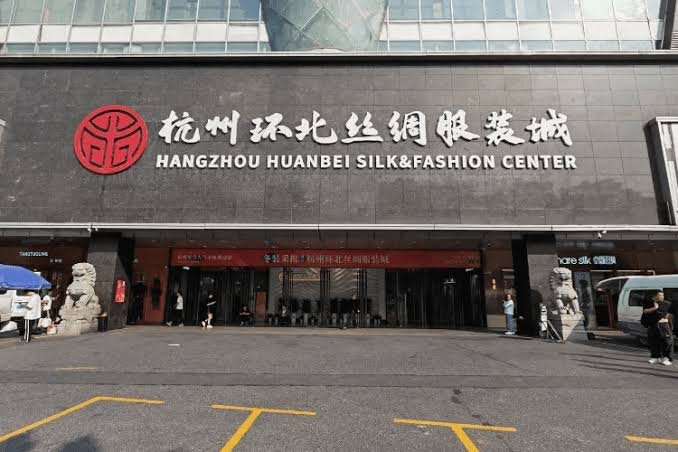
Hangzhou is the specialist answer to a specific question: where is womenswear deepest, freshest, and most connected to how clothing actually sells online in China?
Category strengths and price range
Hangzhou’s Sijiqing ecosystem is one of the country’s great womenswear engines, running the full spectrum from high-volume value to design-driven pieces. What sets it apart is its integration with China’s e-commerce and livestream wholesale scene: styles turn over quickly, new designs surface constantly, and the whole supply rhythm is tuned to sellers who need this week’s look rather than this season’s. That rhythm has practical consequences for a buyer. Stalls are used to fast, repeated small orders and picture-based reordering over chat apps, which makes remote follow-up easier than in many cities — but it also means styles retire quickly, so a design you loved last month may simply be gone. Buy accordingly: test fast, reorder fast, and never build a plan around a single style staying available. Price tiers span budget to premium, with the design-led end noticeably stronger than in most value-first cities.
Who should source in Hangzhou
Choose Hangzhou if womenswear is your core business — especially if you sell online and compete on freshness — or if you want a design-forward alternative and complement to Guangzhou’s breadth. Look elsewhere if your range leads with menswear, children’s wear, or accessories: Hangzhou can supply pieces of those, but you would be shopping at the edge of its ecosystem rather than its center.
Yiwu — Accessories and High-Volume Value
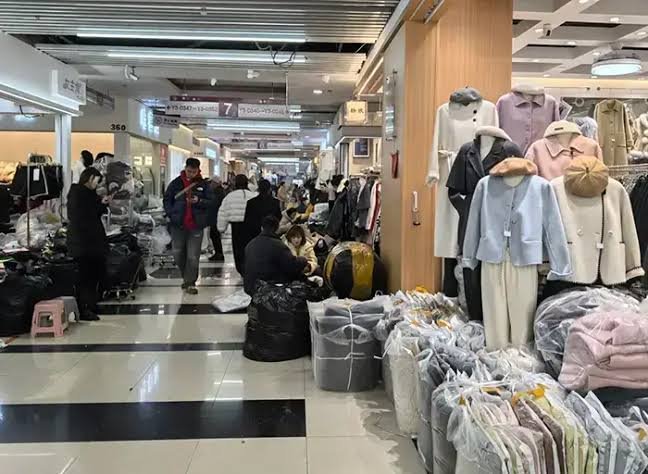
Yiwu’s fame precedes it, and slightly misleads. It is not really a fashion city at all — and understanding that is exactly what makes it useful.
What Yiwu is really best for
Yiwu is China’s small-commodities capital. Its genuine strengths for a clothing business are the categories around the garments: socks, hats, scarves, bags, belts, hair accessories, trims, and low-cost basics at very high volume, all plugged into one of the most practiced export machines in the country. The trading complex is organized into districts by product type at a scale that rewards preparation — buyers who arrive with a category list and target quantities cover ground efficiently, while unprepared visitors drown in choice. For trend-led or design-led apparel, it is the wrong tool. For rounding out a range with add-on lines at unbeatable volume economics, it is the right one.
Who should source in Yiwu
Choose Yiwu if you are a value- and volume-driven seller, or if accessories and basics are a meaningful share of your range — many buyers pair it with an apparel city, sourcing garments in Guangzhou or Hangzhou and add-ons in Yiwu, then consolidating shipments. Two cautions: cheapest is not the same as best once quality and reorder consistency enter the math, and if any of those accessories are destined for children, treat them with the same safety scrutiny as garments.
Other Specialist Cities and Clusters
Beyond the big three, several specialist cities reward buyers with a defined focus. These are narrower answers — but for the right buyer, better ones.
Changshu — menswear, knitwear, and volume
Changshu, in the Yangtze River Delta, runs one of China’s largest clothing wholesale clusters by scale, with particular depth in menswear, knitwear, and down jackets. Its orientation leans toward domestic-brand distribution and full-category volume, which suits buyers whose model is scale in those categories more than fashion-forward differentiation.
Shenzhen — design-led and fashion-forward
Shenzhen sits at the opposite end of the spectrum: a design-led ecosystem where originality and quality carry more weight than price. Boutique buyers and brands hunting distinctive, higher-grade pieces — particularly in womenswear — often find Shenzhen worth the premium, with the usual caveat that design-led sourcing demands closer attention to originality and intellectual-property risk.
Huzhou — China’s children’s clothing capital
For children’s wear buyers, one city deserves its own mention. Huzhou, in Zhejiang province, is home to China’s officially designated children’s clothing capital — a dense cluster centered on its Zhili town — with government and state-media reports describing more than 14,000 kidswear enterprises producing a large share, by official accounts around two-thirds, of the country’s children’s clothing, wrapped in a deep e-commerce and wholesale ecosystem. For a kidswear-focused buyer, Huzhou offers category depth that generalist cities cannot match. Three grounding notes before you go:
- It is a production-and-wholesale cluster, not an international showcase. Expect a more domestic-facing environment than Guangzhou’s buyer-oriented districts, with less English and fewer services aimed at overseas visitors.
- Ready stock is still made to the producer’s specification, not yours. Cluster depth does not change what stock is: the sizing, labels, and fabrics were decided before you arrived.
- Destination-market compliance remains your responsibility as the importer. Buying from the country’s biggest kidswear cluster transfers none of your testing or labeling obligations.
In the Pearl River Delta, Foshan also carries a notable kids’ wholesale presence for buyers already based around Guangzhou.
Compare Guangzhou, Hangzhou, Yiwu, Shenzhen, and Huzhou at a glance
The table below routes each buying task toward a possible city and shows what still needs to be checked.
| City | Most useful starting point | Typical buyer task | Possible limitation | What to verify next |
|---|---|---|---|---|
| Guangzhou | Broad apparel-market comparison | Compare several clothing categories, price positions, and sourcing routes | The market network is large and uneven; breadth can slow a poorly prepared buyer | Exact market, building, category area, vendor type, and current buyer services |
| Hangzhou | Fashion and garment wholesale research | Study current fashion stock and compare a focused apparel ecosystem | Product fit and international trade support vary by market and vendor | Current product sections, order terms, export coordination, and reorder source |
| Yiwu | Clothing within a wider multi-category buying plan | Combine apparel with accessories or general merchandise sourcing | Clothing may be only one part of the trip, and official layout information may be dated | Current Huangyuan layout, relevant category, stock status, and shipment handling |
| Shenzhen | Original women’s fashion and showroom-led ordering | Compare designer-led collections, fashion platforms, and differentiated womenswear | The offer is more specialized than a general apparel market and may not fit basics, menswear, or kidswear | Exact platform, vendor ownership, order model, originality, export support, and reorder source |
| Huzhou | Children’s clothing wholesale and production cluster | Research kidswear stock, category suppliers, and possible manufacturing routes around Zhili | A specialized cluster still contains different business types and levels of product control | Legal and production entity, sample, measurements, labels, batch source, and reorder terms |
How to Match the Right City to Your Business
Here is the practical turn. Asking which city is best for clothing wholesale in China really means asking which city fits your category, your price tier, and your order model — so match, don’t rank.
A quick city-match guide
| Your business focus | Start with | Why | Watch out for |
|---|---|---|---|
| Womenswear | Hangzhou or Guangzhou | Depth, freshness, online supply rhythm | Quality varies sharply between tiers |
| Menswear | Guangzhou or Changshu | Broad supply; Changshu adds knitwear and down depth | Fewer specialist stalls; check grading |
| Children’s wear | Guangzhou district; Zhili for depth | Concentrated comparison; unmatched category scale | Sizing, labels, and compliance stay with you |
| Fast fashion and basics | Guangzhou value districts; Yiwu | Volume economics and speed | Low prices can hide batch variation |
| Boutique and designer | Shenzhen; upper tiers of Guangzhou or Hangzhou | Originality and higher grades | IP risk; verify design originality |
| Accessories and add-ons | Yiwu | Unbeatable range and export machinery | Kids’ items need garment-level safety checks |
Match your business type to a city
Boutiques and curated resellers
Your edge is taste, not volume, so source where distinctiveness lives: the upper tiers of Guangzhou’s ecosystem, Hangzhou’s design-led end, or Shenzhen. Buy small across many styles, inspect originality carefully, and let sell-through data tell you which pieces earn a reorder.
Growing fashion brands
Base yourself where breadth meets a path forward. Guangzhou offers the widest supply plus the factory proximity that matters once your winners need consistency; Hangzhou is the alternative base if womenswear is your whole story. Either way, expect the moment when ready stock starts limiting you — that moment is the subject of the next section.
Children’s wear brands
Test in Guangzhou’s kidswear district, where a day of comparison covers a wide slice of the market, and consider Zhili when you need category depth beyond it. But be clear-eyed about what no city can sell you: consistent grading to your size chart, your labels, and compliance built for your destination market. Those come from production, not from stock.
High-volume and value sellers
Yiwu plus a value district in an apparel city is the classic combination: garments where garments are deep, add-ons where add-ons are cheapest, consolidated into one shipment. Judge suppliers on total landed cost and reorder reliability, not the price tag alone.
One City or Several — and When No City Is Enough
Two strategic questions remain: how many cities, and whether a city is the right kind of answer at all.
Concentrating vs. splitting across cities
Start concentrated. One city, learned properly — its districts, its price tiers, a handful of verified vendors — beats three cities skimmed. Splitting earns its complexity later, when your range genuinely spans ecosystems: apparel from Guangzhou or Hangzhou, accessories from Yiwu, consolidated by a forwarder into a single export shipment. In practice the workflow is straightforward: each vendor ships domestically to your forwarder’s warehouse, the forwarder checks the goods against your written orders, and everything leaves China as one consolidated shipment under one set of export paperwork. The discipline that makes it work is applying the same inspection standard in every city — a multi-city range with two quality bars is really two problems wearing one label. Every added city adds coordination, inspection, and freight overhead, so add cities only when the category math demands it.
When no city is enough: moving to a factory
Sometimes the right conclusion is that no wholesale city can supply what your brand now needs. Wholesale markets are designed primarily for selecting existing products, while OEM factories develop garments around your specifications. If you are unsure which sourcing model fits your current stage, our comparison of a China clothing wholesale market vs. an OEM factory explains the differences in product control, MOQ, customization, lead time, compliance, and long-term scalability.
The signals that it may be time to move beyond ready stock are consistent:
- You need original designs rather than styles any competitor can buy from the same stall.
- You need your own labels and retail packaging, set during production rather than added afterward.
- You need sizing graded to your chart and repeated faithfully batch after batch.
- You need compliance documentation that your destination market demands — and that ready stock was never built to provide.
Children’s wear reaches this point fastest — in the United States, for instance, children’s products must be third-party tested at a CPSC-accepted laboratory and certified by the importer, with certificate data filed electronically at entry as of July 2026 — and no stall’s ready stock is built to those requirements by default. At that stage the answer is production to your specification: a manufacturer developing your design, grading your sizes, sewing in your labels, and running quality control through the order. That is precisely the work a children’s clothing OEM partner exists for, and our guide to buying apparel direct from the factory explains how that relationship works in practice.
What a controlled kidswear development process adds
For children’s clothing, moving into OEM can connect decisions that are often separated in a stock purchase. HAPA’s published children’s clothing OEM process covers tech-pack and feasibility review, patterns and size grading, fabric and trim selection, sample development, bulk manufacturing checks, labels, and packaging.
That does not make every project identical. MOQ, timing, testing, documentation, and commercial terms still depend on the garment and order. The practical value is a clearer approval path: the buyer and manufacturer can define what the sample represents and what production must repeat.
If your city research has become a defined children’s clothing concept, prepare the product type, size range, material direction, branding, packaging, and target quantity before you share the product brief with HAPA.
Conclusion
So, which city is best for clothing wholesale in China? The one whose ecosystem matches your business: Guangzhou for breadth, factory proximity, and kidswear concentration; Hangzhou for womenswear and online supply; Yiwu for accessories and volume value; Changshu, Shenzhen, and Huzhou for their specialist depths. Judge cities by category, tier, order model, and logistics — not by someone else’s superlative — and start with one city before you split across several.
And hold the long view: for a growing brand, the best city is often a stage, not a destination. When your range needs original design, your own labels, consistent sizing, and destination-market compliance — as branded children’s wear inevitably does — the next step is a factory rather than another city. When you reach it, prepare a tech pack and size chart, request a sample, and talk to a manufacturer about a children’s clothing OEM or private label program built to your specification.
Frequently Asked Questions
Which city is best for wholesale clothing in China?
There is no single best city — it depends on your category, price tier, and order model. Guangzhou is the strongest all-rounder, while Hangzhou, Yiwu, and specialist cities lead in their own categories.
Is Guangzhou or Yiwu better for wholesale clothing?
Guangzhou is far deeper for actual garments across categories. Yiwu leads for accessories, socks, hats, bags, and low-cost basics at volume. Many buyers use both: garments in Guangzhou, add-ons in Yiwu.
Which city is best for wholesale children’s clothing in China?
Guangzhou’s dedicated kidswear district is the most practical starting point, and Zhili in Huzhou offers the deepest specialist cluster. For a branded line needing consistent sizing and compliance, factory production matters more than the city.
Where is the best place to buy wholesale women’s clothing in China?
Hangzhou is the womenswear specialist, spanning value to design-led styles with strong online-supply integration. Guangzhou also covers womenswear broadly, so choose by your price tier and how fast you need new styles.
Is Guangzhou or Hangzhou better for clothing?
Guangzhou wins on breadth, kidswear, and factory proximity; Hangzhou wins for womenswear depth, design-led styles, and online-supply speed. If womenswear is your whole business, Hangzhou; otherwise Guangzhou is the safer base.
Which city is cheapest for wholesale clothing in China?
The lowest prices cluster in Yiwu and in the value districts of major apparel cities. But cheapest rarely means best once quality, batch consistency, and reorder reliability are counted — judge on total landed cost.