Learning how to visit a clothing wholesale market in China is less about the shopping and more about the preparation. These markets are vast — a single building can hold hundreds of stalls across a dozen floors — and buyers who arrive without a plan tend to leave overwhelmed, over-ordered, or empty-handed. Buyers who prepare leave with verified suppliers, sample-approved orders, and contacts they can reorder from for years.
This is a practical, on-the-ground guide for B2B buyers planning an in-person sourcing trip: apparel retailers, boutique owners, children’s wear brands, cross-border sellers, and first-time importers. It walks through the whole trip — preparing before you fly, what to pack, getting around the market, working the stalls, placing orders and paying safely, verifying who you are dealing with, and following through after you leave.
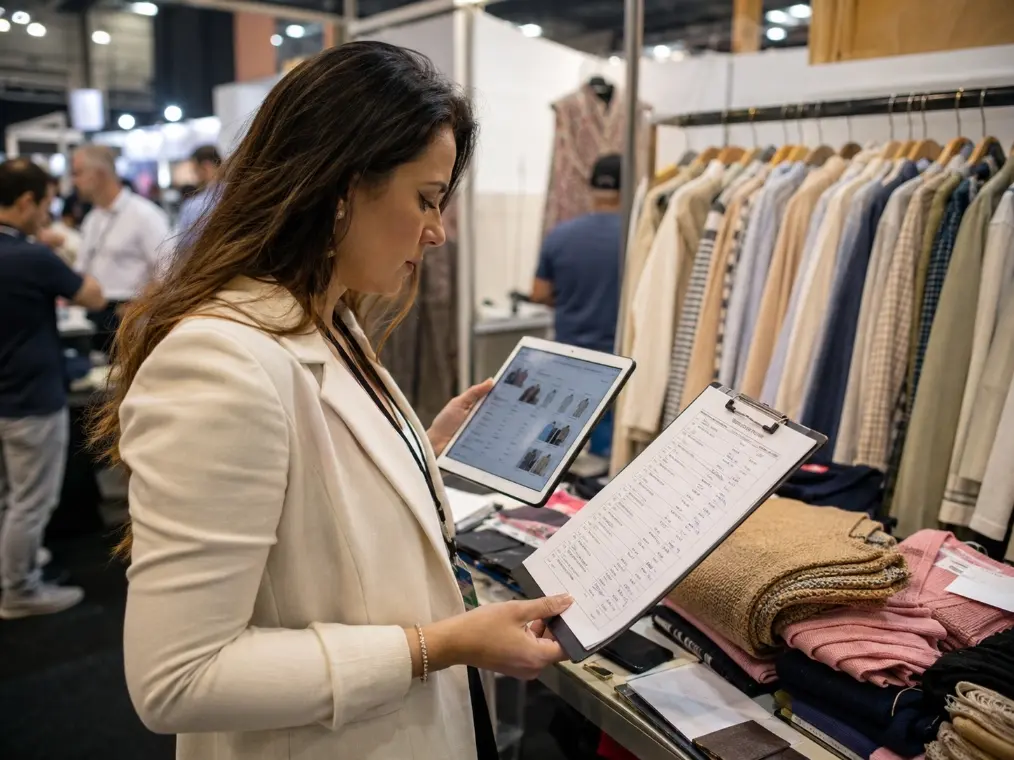
Before You Book: Define What a Successful Market Visit Must Produce
Planning starts with the decision the trip needs to support, well before you book a flight or collect a list of famous markets.
| Visit objective | Evidence to collect | Decision after the visit |
|---|---|---|
| Trend research | Category photos, price bands, materials, recurring details | Which product directions deserve deeper research? |
| Ready-stock test | Samples, size runs, stock status, reorder information | Which styles are suitable for a controlled test order? |
| Vendor shortlist | Comparable answers, product evidence, identity details | Which suppliers move to verification or sampling? |
| Immediate order | Approved item, written terms, payee, delivery and warehouse details | Is the order clear enough to release payment? |
Set One Primary Buying Objective
A first trip often fails because it tries to do everything: research trends, buy stock, find a factory, negotiate private labels, inspect goods, and arrange shipping at the same time.
Choose one primary objective. A practical target might be: “Shortlist five vendors that carry the required children’s category, can explain their stock and reorder model, and will provide written product and payment details.”
That objective is measurable. “Find good products” is not.
Secondary goals are still useful, but they should not distract from the main deliverable. If the goal is supplier shortlisting, for example, collecting ten clearly identified samples is more valuable than buying fifty unrelated pieces.
Define the Product and Commercial Boundaries
Prepare a one-page summary of what you need. It should identify the product category, intended customer or age group, sales channel, destination market, size range, preferred fabrics and construction, color direction, and expected quantity by style. Add the target cost range, packaging and labeling needs, and a clear distinction between must-have, preferred, and unacceptable features.
Use ranges where exact figures are not yet possible. Suppliers can respond more usefully to “an initial test across these sizes and colors” than to a demand for the lowest possible MOQ with no product conditions.
Decide Whether a Wholesale Market Is the Right Sourcing Model
Markets are strongest when you want existing products, fast comparison, and relatively little development work. They are less suitable when your brand needs original construction, controlled measurements, exclusive materials, documented change control, or dependable repeat production.
If you have not chosen a destination yet, compare the major clothing wholesale markets in China by location and product focus. This will help narrow the options before you verify current addresses, opening hours, and holiday schedules.
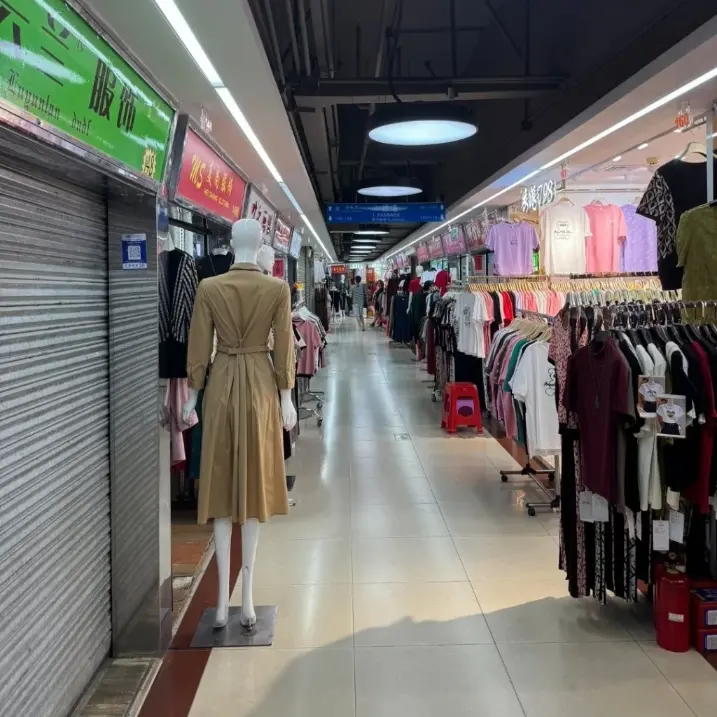
Plan the Trip With Current, Verifiable Information
Market names, addresses, building layouts, holidays, and operating arrangements change. A dated blog post or social video can help you discover a place, but it should not be your final travel source.
Verify the Market, Address, Hours, and Closure Dates
Confirm the exact market name in both English and Chinese where possible. Record the building, district, entrance, relevant floor or product area, official contact, and the date you checked the information.
The final check should answer a few practical questions. Is your target category still concentrated in that building? Will vendors be open on the planned date, especially around a public holiday? Does the market have several buildings with similar names? If you need translation, payment support, or shipping services, confirm that they are currently available rather than assuming they will be easy to arrange on arrival.
Use the market operator, local government, or another current official channel for the final check. A supplier appointment can provide a second confirmation, but one vendor may not know the schedule of the entire complex.
If Guangzhou is your destination, use this guide to its main clothing wholesale areas to choose a district, then confirm the exact building and booth with your vendor.
Build a Realistic Daily Route
Treat the market like a work site, not a sightseeing stop. A useful day has four blocks:
- Scan the relevant area.
- Compare shortlisted vendors.
- Return for verification or sample collection.
- Reconcile all records before the day ends.
Avoid planning several distant markets in one day. Large markets can take longer to understand than expected, and the best vendor is often found after you have learned how the building is organized.
Leave time for a second visit. Important questions about stock, payees, packing, or sample availability often appear only after you compare several booths.
Choose Translation or Sourcing Support by Task
A translator, sourcing agent, inspector, freight forwarder, and consolidation warehouse perform different jobs.
A translator helps communication. A sourcing agent may contact vendors and coordinate orders. An inspector checks products within an agreed scope. A forwarder arranges transport. A warehouse receives and combines goods. One company may offer several services, but you should still define each responsibility separately.
Before hiring support, agree on the fee structure and disclose any supplier commission. Put the provider’s authority in writing, including whether they may negotiate, place orders, or access payments. The agreement should also define the inspection scope, responsibility for shortages or mismatched goods, and ownership of supplier contacts and records.
Being guided through a market is not the same as receiving independent supplier verification or quality control.
Prepare Payment, Communication, and Backup Options
Ask your bank or payment provider what will work in China and what transaction controls apply. Confirm accepted methods with the market and shortlisted vendors before arriving, but do not assume every booth follows the same practice.
Bring charged devices, power banks that comply with your carrier’s rules, offline copies of essential documents, a translation glossary, and a secure backup for photos and notes. Keep sensitive tech packs or unreleased artwork separate from the general brief and share only what is necessary.
Guangzhou’s official 2026-2028 plan for professional markets calls for stronger international-buyer services, payment support, foreign-language facilities, and consolidation services. That is useful policy context, but it does not prove that every market currently offers the same facilities. Verify the service at the specific location.
Bring a Buyer Kit and a Standard Sourcing Brief
A standard brief makes vendor answers comparable. Without it, each conversation gradually changes, and the quotations no longer describe the same product or order.
Use One Brief for Every Comparable Supplier
Your brief should fit on one page for the first discussion. Start with the product, end use, user or age group, size range, and critical measurements. Then cover materials, construction, colors, artwork, quantity range, labels, packaging, destination market, and target timing. Leave space to record answers about stock, samples, reorders, and available documents.
You do not need to reveal every design detail at the first booth. Start with enough information to judge fit. Share more detailed files only with credible candidates that need them to answer accurately.
For children’s clothing, include age range, garment use, trims, decorations, small components, labels, and destination-market questions. A generic request for “high-quality kidswear” is not a usable specification.
Build a Market-Visit Kit in Four Parts
Product and commercial documents. Bring your one-page brief, reference images you have the right to use, a size or measurement sheet, target quantity range, quote template, and your must-have, preferred, and unacceptable criteria. Keep these documents short enough to use during a standing conversation at a busy booth.
Supplier and sample records. Create a vendor log, sample labels, a photo naming rule, and one place for business cards or contact QR codes. Link every record with the same ID.
A practical format is:
DATE-MARKET-VENDOR-STYLE-SAMPLE
For example, the same code should appear on the sample bag, quote sheet, permitted product photo, and follow-up message. Do this before leaving the booth.
My practical sourcing rule: I treat a sample record as incomplete until the garment, booth, supplier contact, and quotation share the same ID. It takes less than a minute to make that connection at the booth, but reconstructing it from photos and chat histories after a full market day can take far longer and still leave room for mistakes.
Basic product-checking tools. A soft tape measure, compact scale where relevant, color reference, magnifier, reusable sample bags, removable tags, and a pen can support basic comparisons. They do not replace laboratory tests or a planned pre-shipment inspection.
Communication and trip essentials. Carry charging equipment, the market address in Chinese, appointment details, a translation glossary, emergency contacts, and offline backups. Comfortable clothing and a manageable bag also matter when you spend hours standing, measuring, and carrying samples.
Follow a Three-Pass Workflow on the Market Floor
Separating discovery from commitment makes the market easier to evaluate and reduces impulsive decisions.
Pass 1: Scan the Market and Map Relevant Vendors
On the first pass, move quickly. For each promising booth, record the product category, general price tier, style direction, location, and whether the offer is ready stock or made to order. At this point, you only need enough information to decide whether the vendor matches your brief.
Do not begin a full price negotiation at every booth. The first pass teaches you how the market is segmented and what a realistic comparison looks like.
Use a simple status: reject, possible, or priority return.
Pass 2: Compare Shortlisted Vendors With the Same Questions
Return to the possible and priority vendors with your standard brief. Ask the same core questions about product status, MOQ, sample availability, size and color mix, reorder continuity, packing, delivery point, and documentation.
With permission, photograph the product together with its vendor and style ID. A beautiful garment photo without a booth reference is almost useless after a busy day.
Write down unanswered questions. Do not convert “maybe,” “normally,” or “should be the same” into a confirmed fact.
Pass 3: Verify the Order Before You Commit
The third pass is for candidates that may receive money or a formal sample order.
Confirm the business and contact name, quotation or invoice entity, and payee. Match those details to the style, color, size, quantity, approved sample, packing requirements, delivery location, and expected handoff date. The same record should state how defects and shortages will be handled and which documents are still outstanding.
If the seller, invoice, and payee differ, ask for a clear explanation and supporting records. Pause if the relationship remains unclear.
End Each Visit Day With a Record Reconciliation
Before dinner, align business cards, chat contacts, samples, photos, quotations, order drafts, payment records, and warehouse instructions. Then give each supplier one status: reject, follow up, sample test, or ready for order review. Add the next action and its owner while the conversation is still fresh.
This daily review is what keeps the second day from becoming a continuation of the first day’s confusion.
Evaluate the Commercial Offer Before You Commit
The phrase “What is your best price?” produces a number, but not necessarily a usable quotation.
First Confirm What the Supplier Is Actually Selling
First establish whether the item is physically in stock, available only after order confirmation, or presented as a supplier design with limited modifications. Ask whether another factory produces it and whether private labeling, OEM, or ODM development is genuinely available for that specific style.
These routes have different sample, timing, control, and reorder implications. A booth can sell ready stock and also accept made-to-order projects, so record the model for the specific item.
Break MOQ and Price Into Comparable Conditions
Use the same matrix for each supplier:
| Question | What the answer must clarify | Evidence to retain |
|---|---|---|
| What is the MOQ? | Per style, color, size, mixed lot, material, or package | Written quantity breakdown |
| What does the price include? | Packing, labels, local delivery, tax or invoice treatment | Quote with scope |
| Is the item in stock? | Physical quantity, location, size and color availability | Dated stock confirmation |
| What is the sample relationship? | Display sample, paid sample, or order reference | Tagged sample and written note |
| Can I reorder it? | Same style only, or same materials and measurements | Reorder conditions |
| Where is delivery made? | Booth, local warehouse, forwarder, or another point | Named delivery location |
There is no universal China wholesale market MOQ. A vendor may allow mixed stock in one transaction but require a different commitment for one color, a custom label, or a new production batch.
I never treat the headline MOQ as a standalone number. I first ask what it applies to and what changes it. An offer of 50 pieces may be workable only as mixed ready stock, while a single color, custom packaging, or repeat production may follow a completely different minimum. That context matters more than the smallest number mentioned during the conversation.
Before committing to a serious supplier, use a repeatable process to verify a clothing supplier before ordering. A market visit gives you direct access, but it does not replace entity and product checks.
Test Reorder Claims With Specific Questions
When a supplier says that you can reorder, ask what will actually remain consistent. A permanent style code is helpful, but it does not prove that the fabric composition, weight, shade, finish, measurements, trims, or labels will be unchanged. Confirm whether a new batch comes from the same production source and whether you will approve another sample before repeat production.
A useful reorder promise means that the supplier can deliver the same approved product, not just another garment with a similar appearance.
Verify Vendors and Avoid Common Mistakes
The moment before you commit money is where risk concentrates. A short, consistent verification habit protects you more than any single recommendation.
Confirm who you’re actually buying from
Establish what kind of supplier you are dealing with: a stall reselling ready stock, a trading company, or an actual factory. Ask directly and ask for evidence, because a polished showroom does not prove production capability — a market stall is not automatically a factory, even when a vendor implies otherwise. If your plans point toward custom production, our guide on how to find and vet clothing manufacturers goes deeper on verifying a real factory.
Common mistakes and how to avoid them
Most losses on a first trip come from a handful of avoidable errors:
- Trusting the display piece. Confirm that bulk stock matches the sample you inspected, not a better showroom version.
- Assuming a stall is a factory. Verify before you expect customization, consistency, or accountability.
- Over-ordering an untested style. Buy small and prove demand before committing to volume.
- Ignoring restock consistency. Ask whether the next batch will match this one — for a brand, it must.
- Paying carelessly. Avoid full prepayments to unverified personal accounts.
- Skipping written specs. Document everything; verbal agreements are not enforceable memory.
After the Visit: Shortlist, Test, and Choose the Next Sourcing Route
A suitcase full of samples is not a sourcing result until each item has a traceable supplier, quote, risk record, and next action.
Score Suppliers Before the Details Fade
Score suppliers within a day of the visit. Compare product fit, quality of evidence, sample control, commercial clarity, reorder confidence, communication, and unresolved risk. Use the same criteria for every candidate so that a persuasive conversation does not outweigh weak documentation.
Include pass/fail gates. An unexplained payee, unclear sample-to-order relationship, refused written confirmation, unauthorized substitution, or irrelevant documents should not be offset by a low price.
Run a Controlled Test Before Scaling
Choose the next test according to risk. A paid sample or small ready-stock order may be enough for an early commercial check. Products with tighter fit, safety, or consistency requirements may need repeat measurements, product-specific testing, third-party inspection, or further verification of the contracting and production entities.
Define what success means before the test. “See how it goes” is difficult to evaluate. “Confirm measurements, batch match, correct labels, complete size assortment, and on-time warehouse handoff” produces a usable decision.
Know When Market Stock Should Become an OEM Brief
Market stock can validate a category, color direction, price band, or customer use case. It becomes less suitable when the brand needs original construction, controlled sizing, selected materials, custom labels and packaging, documented quality criteria, or repeatable production.
At that point, convert your sales, returns, fit comments, and product observations into an original brief. Do not ask a factory to make an unauthorized copy of a market design.
HAPA’s guide to planning a direct factory sourcing process explains the next operational steps. For kidswear projects, HAPA’s published children’s clothing OEM service covers product and tech-pack review, patterns and size grading, fabric and trim selection, sample approval, production checks, labels, and packaging. The exact scope still needs to be confirmed for each project.
Conclusion
When planning how to visit a clothing wholesale market in China, treat the trip as a sourcing project rather than a shopping day. The useful output is a set of identified suppliers, tagged samples, comparable quotations, clear payment records, warehouse instructions, and a short list of risks that still need answers.
Bring the same brief to every comparable booth, work through the market in three passes, and reconcile your records at the end of each day. This keeps products, contacts, payees, and delivery details connected even after dozens of conversations. Wholesale markets can be effective for ready-stock discovery and demand testing, although original specifications and dependable repeat production usually require a more controlled sourcing route.
If a core children’s wear product now needs controlled sizing, materials, branding, or repeatable production, turn your findings into a product brief and share it with HAPA to discuss whether an OEM route fits the project.
Frequently Asked Questions
Can foreign buyers purchase directly from clothing wholesale markets in China?
Often, yes, but market access, payment, receipts, export support, and visitor services vary. Confirm current arrangements with the specific market operator and qualified trade providers before traveling or paying.
Do I need a sourcing agent or translator to visit a China clothing market?
Not always. Base the decision on language, order complexity, vendor count, inspection, and consolidation needs. Define the provider’s fees, authority, commissions, and responsibility before the visit.
What MOQ should I expect at a China clothing wholesale market?
There is no universal MOQ. Ask whether minimums apply per style, color, size, mixed lot, material, package, or production batch, and record the conditions with the quotation.
Can I pay a wholesale-market vendor immediately after selecting products?
You may be able to, but first match the vendor, invoice, payee, product, sample, delivery point, and receipt. Pause when an unexplained entity difference or product uncertainty remains.
How do I know whether a market vendor is also a factory?
Do not rely on “factory direct.” Ask who owns stock, develops samples, purchases materials, performs production, keeps quality records, receives payment, and accepts responsibility for order problems.
Can several market orders be consolidated into one shipment?
Yes, through an appropriate warehouse, agent, or forwarder. Use vendor IDs, order numbers, expected cartons, receiving checks, packing instructions, shortage records, and clearly assigned export responsibilities.
How should I check children’s clothing at a wholesale market?
Link the sample to the order, then check measurements, fabric, construction, trims, small components, labels, and packaging. Confirm destination-market testing and documents separately for the actual product.
When should I move from wholesale-market stock to an OEM factory?
Consider OEM when you need original design, controlled measurements, selected materials, custom branding, written quality standards, or repeatable production that the stock vendor cannot reliably support.