Finding the best OEM clothing suppliers is less about locating one universally superior factory and more about finding the right production model for your product. A supplier that works well for a small streetwear launch may be unsuitable for a technical underwear program, a detailed kidswear collection, or an enterprise order measured in hundreds of thousands of units.
This guide compares 10 OEM clothing manufacturers, development studios, and production partners serving different types of apparel buyers. The selection includes companies that support emerging brands, specialists in technical categories, U.S.-based development teams, and large listed manufacturing groups.
What an OEM Clothing Supplier Actually Is
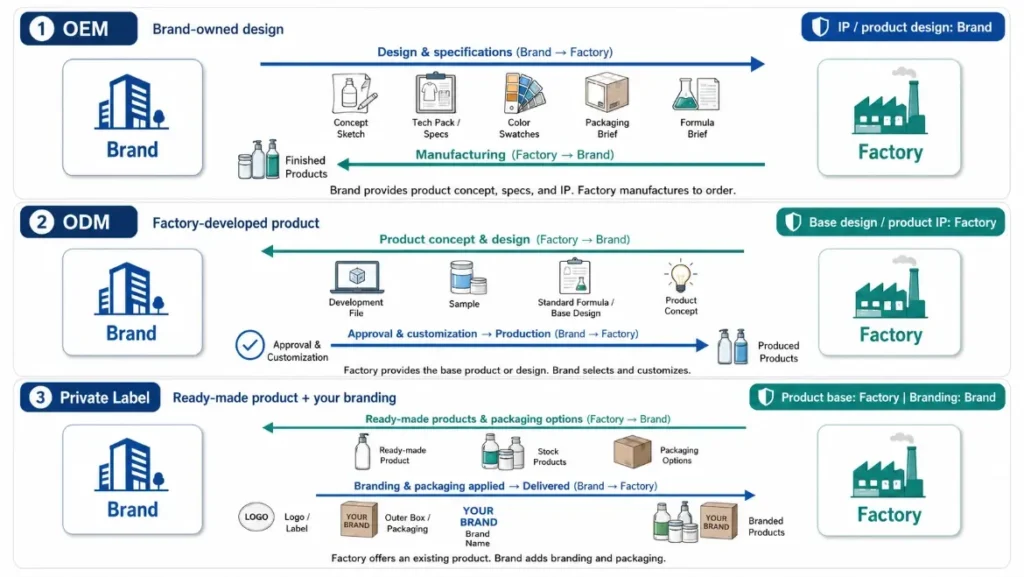
In apparel manufacturing, OEM means Original Equipment Manufacturing. An OEM clothing supplier produces garments according to a brand’s designs, tech packs, measurements, material requirements, and approved samples. The finished clothing is sold under the buyer’s brand. In a typical OEM project, the buyer controls the product concept and specifications, while the supplier turns those requirements into samples and repeatable bulk production.
The exact scope varies. One OEM factory may expect production-ready patterns and buyer-nominated fabrics. Another may source materials, create patterns, grade sizes, develop samples, apply prints or embroidery, attach labels, pack the goods, and coordinate shipment. Those responsibilities should appear in the quotation and manufacturing agreement rather than being assumed from the word “OEM.”
There is also a practical difference between an OEM manufacturer and an OEM supplier. A manufacturer normally operates the facility making the garments. A supplier may operate a factory, coordinate several factories, or manage product development and production through a partner network. Neither model is automatically better, but the buyer should know who will handle the order and where production will happen.
| Manufacturing model | Who provides the design? | Customization level | Typical starting point | Best suited for |
|---|---|---|---|---|
| OEM | The buyer provides the design, tech pack, specifications, or approved reference sample | High | Buyer-owned concept and technical requirements | Brands seeking control over product design and differentiation |
| ODM | The supplier provides or helps create the design, which the buyer may adapt | Medium to high | Supplier-developed designs or collaborative development | Brands needing more design and product-development support |
| Private label | The buyer selects an existing or lightly modified supplier product and adds its branding | Low to medium | Existing supplier styles or market-ready products | Brands prioritizing a faster, simpler launch |
OEM is usually the clearest route when your brand already has a defined product and wants control over its construction and appearance. ODM can make sense when you need more design input. Private label is often more practical when speed matters more than creating every detail from scratch. For a deeper explanation, see HAPA’s guide to what an OEM clothing manufacturer does.
How We Selected These OEM Clothing Suppliers
This list is not ranked. Nobody here is number one, and the order tells you nothing about quality. Each company earned its place against the criteria below, and each criterion is something you can check yourself — which is the entire point. We are not asking you to trust our judgement. We are showing you the basis for it so you can go and audit it.
Every supplier on this list met the following:
- A traceable operating entity. The company’s existence, scale and capability can be traced back to a primary source — its own site, its corporate filings, or a stock exchange disclosure — not a directory listing that anyone can buy.
- A factory, not an intermediary. Production happens in facilities the company controls or explicitly names. Agents, trading companies and directory platforms dressed up as factories are excluded.
- Genuine OEM capability. The factory will build to a buyer’s own tech pack and specifications, rather than only applying a label to an existing house design.
- A defined category competence. Knits, wovens, performance, denim, streetwear, childrenswear — a real specialism. Category depth beats raw scale more often than buyers expect, and the next section explains why.
- A published order profile. The company says who it works with and at what volume, so you can work out for yourself whether it will take your order before you waste a week finding out the hard way.
- A checkable compliance posture. Certifications that can be looked up in the issuing body’s own database — not a certificate image sitting on a web page.
- Coverage across order sizes. The list deliberately spans tiers, from runs of a few dozen pieces to global-scale production, so a reader at any stage finds a realistic option rather than ten factories that will never return their email.
- Geographic spread. China, Turkey, Serbia and the United States, so that readers working around tariffs, lead times or a “made in” requirement have somewhere to go.
We left out suppliers whose capability claims could not be traced to any source at all, content-farm listings recycling each other’s numbers, and directories and agents presenting themselves as manufacturers.
OEM Clothing Supplier Comparison at a Glance
| Company | Base or production model | Public product focus | Development support | Public MOQ status | Potential best fit |
|---|---|---|---|---|---|
| Billoomi Fashion | Delhi NCR, India; custom OEM/ODM manufacturer | Womenswear, menswear, kidswear, denim, decorative techniques | Patterns, sourcing, sampling, printing, embroidery, labels | Small-batch support stated; reconfirm by style | Emerging brands with detailed, multi-category collections |
| Thygesen Textile Vietnam | Vietnam; full-package OEM/FOB manufacturing | Activewear, underwear, kidswear, casual and technical knit categories | Fabric development, dyeing, branding, packaging | Not presented as one universal figure | Established brands needing technical knit expertise |
| HAPA Garments | Guangzhou, China; OEM/ODM and private label manufacturing | Kidswear and selected detail-heavy fashion categories | Sampling, materials, customization, labels and packaging | Published minimums vary by project; reconfirm | Kidswear and complex custom collections |
| Steve Apparel | U.S.-registered company with production in Karachi, Pakistan | Streetwear, sportswear, casualwear and branded basics | Sampling, cut-and-sew, bulk production, private label | Confirm current minimum by product | Brands developing custom basics and streetwear |
| Tack Apparel | U.S.-based company using a global factory network | Custom apparel, private label, cut-and-sew and decoration | Development coordination, sampling and production | Low-MOQ positioning stated; confirm structure | Buyers wanting a managed production interface |
| Appareify | Guangzhou, China; multi-category apparel supplier | T-shirts, hoodies, denim, activewear, swimwear, underwear and kidswear | OEM, ODM, CMT, private label and packaging | Low-MOQ positioning stated; confirm by category | Brands seeking broad category coverage in China |
| The Evans Group | Los Angeles development and production company | Designer fashion and custom sewn apparel | Design, sourcing, patterns, samples and small-volume production | Small-volume model; confirm project minimum | Emerging designers needing hands-on U.S. development |
| Portland Garment Factory | Portland, Oregon; design and fabrication studio | Garments, soft goods, prototypes and experiential fabrication | Ideation, design, prototyping, materials and in-house cut-and-sew | Low- to mid-volume work stated; confirm scope | Experimental soft goods and highly custom U.S. projects |
| Shenzhou International | Listed multinational, vertically integrated knitwear group | Activewear, athleisure, casualwear and related knit categories | Integrated materials-to-garment production | Enterprise onboarding; no startup MOQ stated | Large established brands with scaled knit programs |
| Crystal International | Listed multinational apparel manufacturing group | Lifestyle wear, denim, intimate, sweaters, sportswear and outdoor apparel | Multi-country development and manufacturing platform | Enterprise onboarding; no startup MOQ stated | Large brands with multi-category global programs |
The strongest shortlist usually contains two or three suppliers whose capabilities overlap with your product—not simply the first names in a table.
10 OEM Clothing Suppliers and Manufacturers to Compare in 2026
1. Billoomi Fashion — Best Fit for Small-Batch, Multi-Category Custom Development in India
Location and model: Billoomi Fashion describes itself as a made-to-order custom clothing manufacturer in Delhi NCR, India, offering OEM and ODM garment manufacturing.
Its published capabilities cover a broad range of development work: pattern making and grading, fabric and trim sourcing, labels and tags, sampling, printing, embroidery, smocking, sequins, beadwork, and selected denim effects. The company presents womenswear, menswear, and kidswear among its product areas and states that it works with smaller orders as well as larger programs.
Who should shortlist it: Billoomi may be worth investigating for an emerging or growing brand that already has a tech pack and wants one production partner to coordinate a detailed, multi-category collection in India. Its published decorative capabilities may also be relevant to brands developing fashion products beyond basic cut-and-sew.
What to verify first: Ask for the current MOQ for each style and color, the specific factory handling your products, which decorative processes are in-house, and which are subcontracted. Align material sourcing, sample revision, testing, export terms, quality checkpoints, and the production calendar before paying for development.
Official source: Billoomi Fashion—About Us
2. Thygesen Textile Vietnam — Best Fit for Full-Package OEM/ODM and Technical Knit Categories
Location and model: Thygesen Textile Vietnam publishes OEM and FOB manufacturing services supported by the wider Thygesen textile group heritage.
Its service information describes fabric sourcing and development, custom dyeing, printing or embroidery, labels, hangtags, and packaging. Product areas presented across its website include activewear, underwear, kidswear, casualwear, and other knit or performance-oriented categories. That makes it structurally different from a general cut-and-sew studio that depends on the buyer to nominate every material and supplier.
Who should shortlist it: Thygesen may suit established brands developing technical knits, underwear, activewear, or programs where fabric performance and full-package coordination matter. Buyers should still confirm whether the relevant product line, machinery, and development team are available for the proposed order.
What to verify first: Confirm the applicable factory, current capacity window, MOQ structure, fabric minimums, testing plan, and which certifications apply to the facility and product scope. If traceability or a particular material standard is important, ask for current documents tied to the order rather than relying on general website badges.
Official sources: Thygesen Textile Vietnam and its manufacturing services
3. HAPA Garments — Best Fit for Kidswear and Detail-Heavy Custom Collections

Location and model: HAPA Garments is based in Guangzhou, China, and presents OEM, ODM, and private label support for children’s apparel brands.
HAPA’s published process covers product development from a tech pack, reference sample, or developed concept, followed by sampling, material and trim decisions, bulk production, quality checks, and brand-ready details such as labels and packaging. Its core positioning is kidswear, with public examples spanning common children’s clothing categories and more decorative fashion products.
Who should shortlist it: HAPA is most relevant to kidswear brands and buyers developing garments where fit, child-appropriate construction, trims, embroidery, sequins, beadwork, or other visual details need to move consistently from sample to bulk production. Buyers seeking only adult commodity basics should compare HAPA’s fit with more specialized alternatives in this list.
What to verify first: Send the product category, target quantities, size range, fabric direction, decoration, packaging, and sales market. Confirm the project-specific MOQ, sample plan, testing responsibility, quality checkpoints, and production schedule before proceeding.
Official sources: HAPA Children’s Clothing OEM and About HAPA
4. Steve Apparel — Best Fit for Custom Streetwear, Sportswear, and Private Label Basics
Location and model: Steve Apparel states that it is registered in Ohio, United States, while operating its own manufacturing facility in Karachi, Pakistan. That distinction matters when evaluating production origin, contracting, and logistics.
The company’s published services include sample development, cut-and-sew, bulk production, and private labeling. Its public product focus includes streetwear, sportswear, casualwear, T-shirts, hoodies, sweatshirts, and related custom apparel. The model may offer a U.S.-facing commercial interface while production occurs in Pakistan.
Who should shortlist it: Steve Apparel may fit a brand developing custom branded basics, streetwear, or sportswear and looking for support from first sample through bulk production. It is especially important for buyers to separate sales-office location from manufacturing origin when comparing landed cost and required documentation. A U.S. business address does not establish U.S. production; use this U.S. clothing manufacturer shortlist and verify each facility’s actual location.
What to verify first: Confirm the legal contract entity, beneficiary bank account, Karachi production address, and any subcontracted processes. Ask for a project-specific MOQ, fabric specification, decoration method, sample revision policy, quality plan, testing scope, shipping term, and realistic production window.
Official source: Steve Apparel—About
5. Tack Apparel — Best Fit for Brands Seeking a Managed Global Factory Network
Location and model: Tack Apparel describes itself as a U.S.-based clothing company with a network of factories around the world. Buyers should therefore treat it as a managed manufacturing network unless the company confirms that a specific order will be made in a directly operated facility.
Its website presents custom clothing, private label, cut-and-sew, sampling, bulk production, embroidery, and related development services. A network model can be useful when a supplier matches different products to different production partners. It also creates an extra verification task: the buyer needs to know which factory will make each style.
Who should shortlist it: Tack Apparel may suit a brand that prefers a U.S.-facing project contact and is comfortable working through a coordinated global network. It could be relevant for multi-product apparel programs where communication and supplier management are as important as access to a single factory.
What to verify first: Request the actual production country and factory for your order, the disclosure policy for subcontractors, the contract party, management fees, current minimums, audit evidence, sample approval path, and responsibility for quality failures. Do not interpret “USA manufacturer” language as proof of U.S.-made production without order-specific confirmation.
Official sources: Tack Apparel and Tack Apparel—About
6. Appareify — Best Fit for China-Based Multi-Category OEM and Private Label Production

Location and model: Appareify’s public contact information identifies a Guangzhou business entity, and its website describes OEM, ODM, CMT, private label, cut-and-sew, small-batch, and packaging services.
Its product pages cover T-shirts, hoodies, denim, activewear, leggings, loungewear, swimwear, underwear, and children’s clothing. That breadth can be useful to brands trying to consolidate several categories. It also means buyers should verify whether each category is handled by the same factory, specialized production lines, or partner facilities.
Who should shortlist it: Appareify may be relevant to brands looking for broad category coverage and flexible cooperation models in China. Buyers with multi-category collections should assess the supplier’s depth in each product rather than assuming every listed category has identical technical capability.
What to verify first: Confirm the legal company and factory entity, production address, in-house and outsourced processes, current MOQ by category, and whether published turnaround language is realistic for your materials and customization. Validate testing responsibility, certificates, production scheduling, inspection access, payment milestones, and final shipment terms in writing.
Official source: Appareify
7. The Evans Group — Best Fit for Emerging Designers Needing Los Angeles Development and Small-Volume Production

Location and model: The apparel company The Evans Group—also known as TEG—operates from Los Angeles. It should not be confused with an unrelated company of the same name serving the outdoor sporting industry.
TEG’s published services include design assistance, fabric and trim sourcing, patterns, sample development, small-volume production, and mentorship. It also describes partner production for larger volumes. This is a development-led model: the value is not merely sewing units but helping turn an early concept into a production-ready garment.
Who should shortlist it: TEG may suit emerging designers, premium fashion brands, or founders who need hands-on U.S. development before committing to production. It is less likely to be the natural first choice for a buyer whose only goal is the lowest unit cost on a simple, high-volume basic.
What to verify first: Ask for a clear development budget, deliverables, pattern and sample ownership, revision boundaries, current minimums, and production calendar. If volume will move to a partner facility, confirm its location, the point at which responsibility transfers, quality oversight, subcontracting terms, and how costs change after development.
Official sources: The Evans Group—About and the CFDA production directory
8. Portland Garment Factory — Best Fit for Experimental Soft Goods, Prototyping, and U.S. Cut-and-Sew

Location and model: Portland Garment Factory is a creative design and fabrication studio in Portland, Oregon. Its work extends beyond conventional apparel into soft goods, art fabrication, retail experiences, and technically unusual sewn products.
PGF describes ideation, design, product development, prototyping, material sourcing, in-house cut-and-sew, labels, packaging, and fulfillment. Its public portfolio and service model suggest a studio built for experimentation as well as production, rather than a high-volume commodity apparel factory.
Who should shortlist it: PGF may be a strong candidate for brands, artists, or agencies developing experimental garments, custom soft goods, seeding kits, installations, prototypes, or highly unusual material concepts. A standard T-shirt brand should compare whether that creative capability is necessary for its project.
What to verify first: Discuss whether the project fits PGF’s current service mix, how development is billed, the practical production range, the ownership of prototypes and patterns, and the transition from experiment to repeatable manufacturing. Confirm material availability, testing needs, quality criteria, packaging, fulfillment, and delivery scope before approving production.
Official sources: About Portland Garment Factory and PGF services
9. Shenzhou International — Best Fit for Established Global Brands Requiring Large-Scale Vertically Integrated Knitwear Production

Location and model: Shenzhou International is a Hong Kong-listed apparel manufacturing group with production bases across Asia. Its official information emphasizes vertical oversight from raw materials to finished apparel.
The group’s public product focus includes activewear, athleisure, and casualwear. Corporate reports also describe sportswear, casualwear, and lingerie-related knit production. The operating scale and listed-company reporting make it fundamentally different from a startup-oriented sample room or small custom factory. For the production side of that performance brief, compare this sportswear manufacturer shortlist and ask how each factory checks the specified fabric.
Who should shortlist it: Shenzhou is most relevant to established international brands with mature procurement, compliance, forecasting, and vendor-management teams. It is a potential fit for large knitwear programs requiring integrated material and garment capacity—not a supplier to approach on the assumption that it accepts experimental low-MOQ startup orders.
What to verify first: Determine whether the group is onboarding customers in your category, the expected order scale, development requirements, nominated production base, material program, audit process, capacity allocation, and commercial terms. Enterprise suppliers may require extensive vendor onboarding and demand planning well before production begins.
Official sources: Shenzhou International and its 2025 annual report
10. Crystal International — Best Fit for Large Global Programs Across Multiple Apparel Categories
Location and model: Crystal International is a Hong Kong-listed global apparel manufacturing group with a multi-country production platform.
The group publicly organizes its business into five categories: lifestyle wear, denim, intimate, sweaters, and sportswear and outdoor apparel. Its model is designed for large brand programs that require category specialization, product development, and production allocation across an international manufacturing footprint.
Who should shortlist it: Crystal may fit mature global brands that need multi-category manufacturing, regional capacity options, and enterprise-level supplier management. Like Shenzhou, it should not be presented as a low-MOQ solution for a founder developing a first small collection.
What to verify first: Ask about new-customer eligibility, expected order size, the division responsible for the project, the factory and country proposed for production, material development, capacity planning, audits, quality governance, and commercial onboarding. For multi-country suppliers, confirm whether a style can move between facilities and how the buyer approves such changes.
Official sources: Crystal International investor information, financial reports, and business overview
How to Vet OEM Clothing Suppliers Before You Send Your Tech Pack
A tech pack can contain valuable measurements, construction details, artwork, and commercial information. Before sharing the complete file, confirm the supplier’s identity, production model, product experience, and quality readiness. A staged review reduces unnecessary disclosure and helps you narrow the field to qualified candidates. For a deeper process, use this OEM manufacturer verification checklist.
Verify the Company, Factory, and Payment Details
Match the website name with the legal entity signing the contract, issuing the invoice, and receiving payment. Confirm the production address and ask which processes are subcontracted. If company names or payment details differ, request supporting documents and verify them through a previously confirmed contact. A live factory video, audit, or visit is more useful than a promotional montage.
Confirm Experience With Your Product Category
General apparel experience is not enough. Ask for anonymized samples, construction photos, swatches, strike-offs, or measurement records from comparable products. A capable supplier should ask about fabric, construction, size range, tolerances, decoration, quantity, target market, and testing. A fast quote issued without understanding those details has limited value.
Review Quality, Compliance, and Production Readiness
Ask for the supplier’s inspection stages and sample quality records, not just a “strict QC” statement. Verify any certificate’s holder, facility, scope, and validity. Clarify responsibility for testing, labels, and product documents in the destination market. Also confirm the indicative MOQ structure, relevant capacity, and scheduling so you know whether the order fits the supplier’s operating model.
Protect Your Design Before Full Disclosure
Use watermarks and version numbers, and remove proprietary artwork or other details that are unnecessary during initial screening. Before sampling, document confidentiality, design and pattern ownership, permitted file use, and subcontractor obligations. An NDA can support this process, but it does not replace due diligence or controlled disclosure.
Start With a Controlled Brief and Evaluate the Response
Send three to five suppliers a short brief covering the product, material direction, estimated quantity, size range, market, and non-sensitive references. Compare their questions, limitations, and transparency. Then select two or three verified candidates to receive the same complete tech pack and RFQ so their quotations remain comparable.
The staged sequence is simple:
- Review public information.
- Send a controlled brief.
- Verify the company, facility, and capability.
- Agree on confidentiality and document ownership.
- Release the full tech pack and request a sample.
Which OEM Clothing Manufacturer Fits Your Product Category?
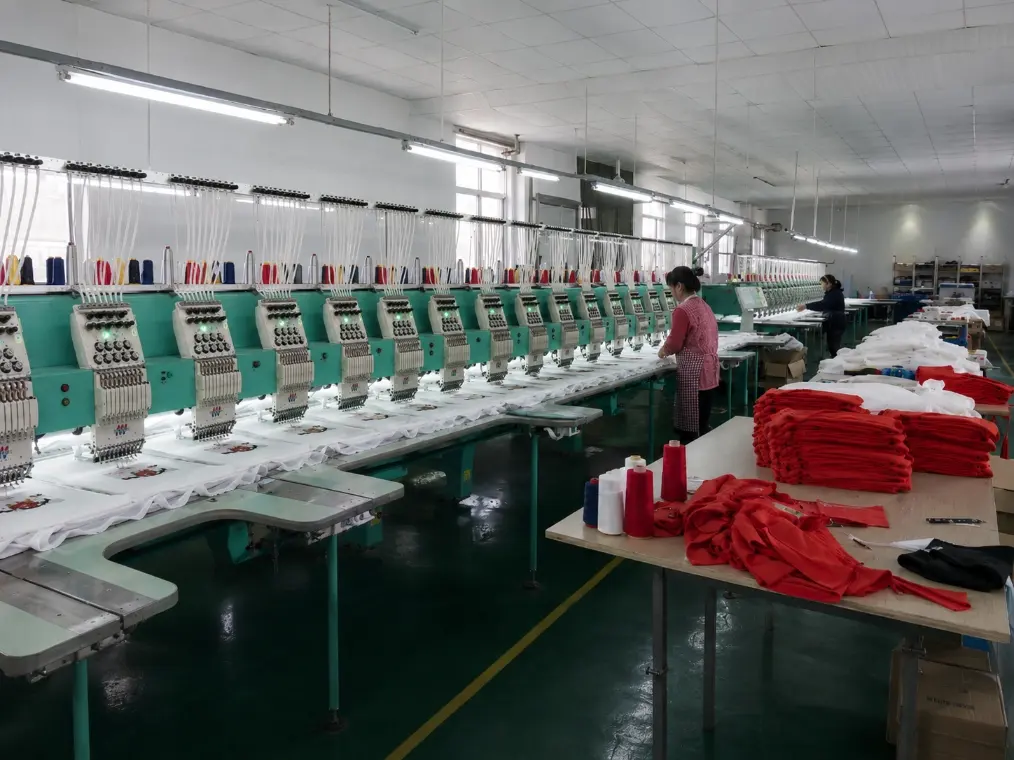
Product specialization should carry more weight than a supplier’s position in a list. The matches below are starting hypotheses based on published capabilities. Your tech pack, quantity, material, target market, development needs, and calendar determine the final fit.
Kidswear and Baby Clothing
HAPA is the most directly kidswear-focused option in this list. Billoomi Fashion and Appareify also publish children’s clothing capabilities, while Thygesen presents kidswear within a broader technical textile offering.
For children’s products, ask about age and size range, fit and grading, small parts or trims, comfort, durability, labels, packaging, testing, and the intended sales market. A general adult-apparel factory should not be assumed to understand those details automatically.
Streetwear, Hoodies, and Branded Basics
Steve Apparel and Tack Apparel publicly emphasize custom apparel, streetwear-related products, private label, and decoration services. Appareify also presents T-shirts, hoodies, and multi-category customization.
Compare fabric availability, weight and hand feel, wash treatment, shrinkage, print or embroidery method, label construction, and how the supplier reproduces an approved sample across the bulk order. A low initial minimum is only useful if the fabric and process can be repeated for reorders.
Activewear, Underwear, and Technical Knits
Thygesen Textile Vietnam is the clearest technical knit and full-package candidate among the medium-sized supplier options. Shenzhou International and Crystal International may be relevant to scaled global programs, while Appareify publishes activewear and underwear categories for buyers considering a broader custom supplier.
Technical products require material and construction depth. Ask about stretch and recovery, moisture management, seam choice, elastic or component sourcing, fit testing, colorfastness, dimensional stability, and the test methods appropriate to the product and destination market.
Multi-Category Fashion, Denim, and Intimates
Billoomi Fashion publishes broad fashion and decorative capabilities, while Appareify presents multiple categories including denim and underwear. Crystal International operates dedicated enterprise divisions across lifestyle wear, denim, intimate, sweaters, sportswear, and outdoor apparel.
Do not select a multi-category supplier merely because it lists more products. Confirm which team and facility specialize in your category and whether the supplier can coordinate materials, patterns, washes, components, or embellishments at the quality level you need.
U.S. Development, Prototyping, and Experimental Soft Goods
The Evans Group offers a development-led path for designers needing patterns, samples, sourcing, and small-volume production in Los Angeles. Portland Garment Factory is the more experimental option for unusual garments, soft goods, prototypes, and fabric-based brand projects.
U.S. development can provide closer communication and easier physical fittings for some buyers, but compare development fees, pattern ownership, material minimums, production origin, and the cost of scaling after the prototype stage.
Large-Scale Global Apparel Programs
Shenzhou International and Crystal International are the enterprise options in this list. Their listed-company disclosures, multinational facilities, and category structures make them more appropriate for established brands with formal vendor onboarding, demand forecasts, audit requirements, and large production programs.
They should not be contacted as though they were startup sample rooms. A procurement team should first establish customer eligibility, expected volume, development scope, capacity allocation, factory location, compliance program, and commercial onboarding.
Do not shortlist by country alone. Product specialization, factory identity, material access, communication, quality systems, and order scale often matter more than the flag beside a company name.
A Five-Step Process for Building Your OEM Supplier Shortlist
Building a reliable OEM supplier shortlist is not about collecting as many factory names as possible. It is a structured screening process that helps you compare suppliers on the same basis, verify their capabilities, and reduce sourcing risks before sampling or bulk production. The following five-step process will help you move from an initial project brief to a shortlist supported by clear evidence.
1. Define the project before searching.
Prepare the product type, material direction, quantity, colors, size range, target market, launch window, decoration, packaging, and expected quality level. You do not need every detail finalized, but the brief must be specific enough to filter suppliers.
2. Select three to five plausible candidates.
Use product experience, production model, location, and order scale to narrow the field. Verify the company identity, actual production location, and relevant capability before sharing a full design package.
3. Send a controlled brief.
Ask whether the project fits the supplier’s category, minimum structure, current capacity, material access, and development model. Use the response to test transparency and technical understanding. Resolve confidentiality requirements at this stage.
4. Issue the same RFQ to two or three verified suppliers.
Provide the same tech pack, bill of materials, quantities, colors, size ratio, artwork, labeling, packaging, testing expectations, destination, and trade term. Ask each supplier to identify exclusions and assumptions. A unit price is not comparable when one quote includes grading, packaging, inspection, or freight and another does not.
Arrange samples only after confirming what the sample represents, how revisions are charged, and which version will become the approved bulk standard. HAPA’s product sample service illustrates the role of sample evaluation before bulk production.
5. Select on evidence, not price alone.
Compare sample execution, communication, document quality, quotation completeness, material control, factory transparency, quality planning, and commercial risk. Record the reasons for your decision. The cheapest unit can become the most expensive option if specifications, testing, rework, packaging, or delivery are missing.
Choose the Supplier That Fits the Product, Not the Headline
The best OEM clothing suppliers are the ones whose product experience, operating model, order scale, development support, and production controls match your project. No country, low MOQ, homepage claim, or position in a 2026 guide can replace verification and a well-executed sample.
Choose three plausible suppliers. Pre-screen them before sharing sensitive files. Send the same RFQ to the strongest two or three, compare assumptions as well as price, and make the final decision using samples, documents, factory evidence, and written quality requirements.
If you are developing children’s clothing or a detail-heavy custom collection, HAPA can review your product category, reference images or tech pack, quantities, fabric direction, size range, decoration, packaging, and destination market. Use the HAPA contact page to discuss whether the project fits its OEM development and production path. As with every supplier in this guide, complete your own due diligence before committing to an order.
Frequently Asked Questions
What is an OEM clothing supplier?
An OEM clothing supplier produces garments to a buyer’s design and specifications for sale under the buyer’s brand. Its services may include sourcing, sampling, production, labeling, packaging, and quality control.
Is an OEM clothing manufacturer the same as a private label supplier?
Not always. OEM normally starts with buyer-owned specifications, while private label often starts with an existing supplier style that receives the buyer’s branding and limited modifications.
Which country is best for OEM clothing manufacturing?
There is no universal best country. Compare product specialization, material access, order scale, quality systems, communication, logistics, duties, and the actual factory proposed for your order.
What should I send an OEM clothing supplier for a quote?
After pre-screening, send a tech pack, bill of materials, quantities, colors, size ratio, artwork, labels, packaging, testing expectations, destination, and requested trade term.
How many OEM suppliers should I contact?
Start with three to five plausible candidates. After identity and capability checks, send a full RFQ to two or three suppliers whose production model fits the project.
How can I verify that a clothing supplier owns a factory?
Request its legal name, production address, live video or audit access, and facility documents. Cross-check the contract, payment account, certificate holder, subcontractors, and actual production location.