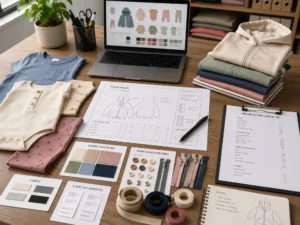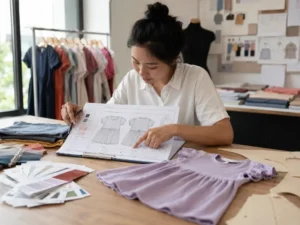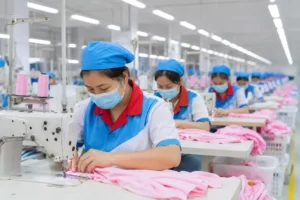
If you are building a clothing brand, you will quickly run into the term OEM clothing manufacturer. It often appears beside words like custom clothing, ODM, private label, cut and sew, sampling, tech pack, and bulk production. The problem is that many explanations of OEM are written for electronics, automotive parts, or general supply chains, not apparel.
In clothing, an OEM manufacturer is a production partner that makes garments based on your brand’s designs, product specifications, materials, sizing, labels, packaging, and quality requirements. You bring the product direction. The manufacturer helps turn that direction into samples and, after approval, repeatable bulk production.
For clothing brands, that distinction matters. OEM is not simply buying ready-made stock. It is also not the same as choosing a supplier’s existing design and adding your logo. OEM is most useful when your brand needs control over the garment itself: fit, fabric, trims, construction, label placement, packaging, and future reorder consistency.
This guide explains what an OEM clothing manufacturer does, how OEM differs from ODM, private label, and wholesale, and what you should prepare before contacting a factory. Since HAPA works mainly with children’s apparel brands, several examples focus on kidswear, where fit, comfort, durability, labels, and production consistency need careful attention from the beginning.
What an OEM Clothing Manufacturer Means in Apparel Production
The general business meaning of OEM is “original equipment manufacturer.” Investopedia describes an OEM as a company that produces parts or components used in another company’s final products. In apparel, the meaning is adapted to garment production: the factory or manufacturer produces clothing for another brand according to the brand’s product requirements.
For clothing brands, the simple version is this:
An OEM clothing manufacturer makes garments according to your brand’s design and specifications, then delivers finished products that can be sold under your brand.
That sounds straightforward, but the working relationship depends on how clear your product information is. A manufacturer cannot produce a reliable custom garment from a mood board and a target price alone. The more specific your product file is, the easier it is for the factory to sample, quote, source materials, and control the final result.
What OEM means for clothing brands
OEM is a practical production model. It connects brand-side product decisions with factory-side execution.
Design ownership
In an OEM project, the brand usually owns the product direction. That may include sketches, tech packs, CADs, reference samples, size charts, fabric choices, trim details, print artwork, embroidery files, label artwork, packaging instructions, or target market notes.
The manufacturer does not simply decide what the garment should be. Instead, the manufacturer reviews whether your idea can be sampled and produced, then helps turn the product file into a physical garment.
For a children’s apparel brand, design ownership might include the shape of a baby romper, the length of a girl’s dress, the placement of snaps, the softness of a pajama fabric, or the position of a woven label. These details affect how the garment looks, feels, and performs.
Manufacturing execution
The manufacturer handles the production work: pattern development or refinement, sample making, fabric and trim sourcing, cutting, sewing, finishing, checking, folding, packing, and preparing goods for delivery.
This is where OEM becomes more than a definition. A good OEM process turns approved details into repeatable production. If the approved sample uses a certain fabric weight, stitching method, trim placement, and packaging method, those details need to carry into the bulk order.
Brand presentation
OEM production can also include brand-facing details such as main labels, care labels, size labels, hangtags, polybags, carton marks, barcode stickers, and retail packaging.
These details are not just decoration. They affect receiving, retail presentation, marketplace fulfillment, customer experience, and sometimes labeling review. For kidswear, labels and packaging should be discussed early because they may connect to age group, product type, market expectations, and sales channel requirements.
Why OEM is different in apparel than in electronics or auto parts
Many OEM definitions use examples from electronics or auto parts. That can confuse clothing buyers.
In apparel, the “component” is not always a separate part that another company assembles later. The OEM manufacturer may produce the full garment, attach the brand labels, pack the goods, and help prepare the order for shipment.
The apparel version of OEM is also more tactile. A small change in fabric handfeel, stretch, seam finish, washing performance, measurement tolerance, or trim placement can change the final customer experience. Clothing brands therefore need to think about OEM as a product development and production control model, not just a factory transaction.
How OEM applies to children’s apparel and kidswear
Children’s apparel makes OEM details even more important. Kidswear buyers are not only judging style. They also care about comfort, fit, durability, skin-contact areas, easy dressing, secure trims, wash performance, and label accuracy.
HAPA’s children’s clothing OEM manufacturer page describes support across tech pack review, pattern making, size grading, fabric and trim selection, sample development, bulk manufacturing, quality checks, labels, packaging, and delivery preparation. These are the kinds of steps that help turn an idea into a garment that can be sampled, approved, and repeated.
The OEM Clothing Production Process, Step by Step
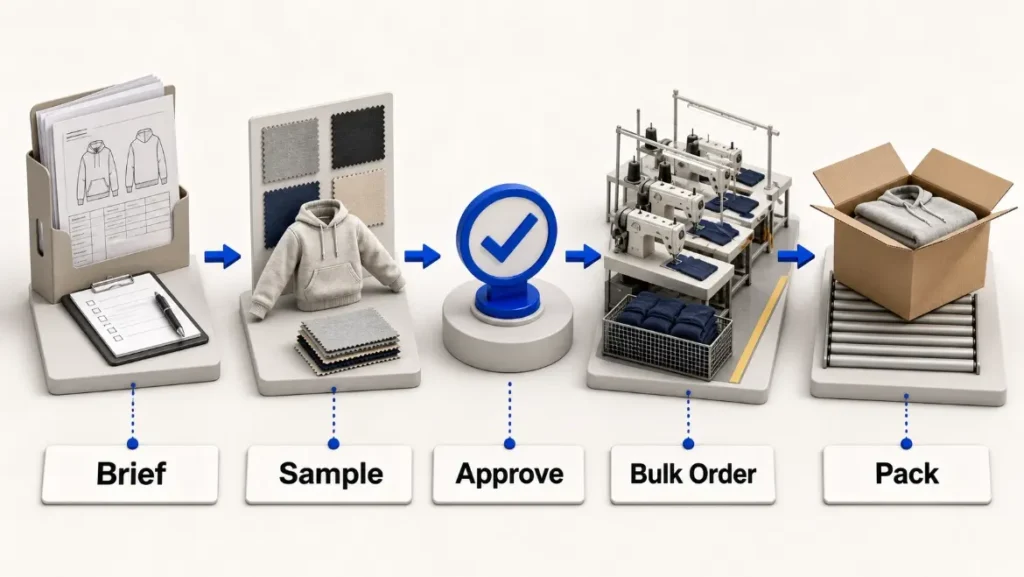
Every factory has its own rhythm, but a serious OEM project moves through the same seven stages. Knowing them helps you plan cash flow and calendar — and spot when a supplier is skipping steps.
- Tech pack submission and quotation. You share your design documentation; the factory quotes based on materials, construction complexity, and quantities. A quote is only as accurate as the tech pack behind it — vague specs produce vague prices that shift later.
- Fabric and trim confirmation. Materials are locked in: either sourced to your exact specification or selected from options the factory presents. For children’s wear, this is where component safety (dyes, snaps, drawstrings) gets decided.
- Pattern making and first sample. The factory drafts patterns and sews a first sample. Expect imperfection — the sample’s job is to surface problems on one garment instead of a thousand.
- Sample review and approval. You check fit, fabric handle, construction, and washing behavior, then request revisions until the sample is right. The approved sample becomes the contractual reference for bulk quality, so never rush this stage.
- Bulk production. Cutting, sewing, and finishing at scale. Reputable factories run in-line checks during production rather than waiting for the end.
- Final quality inspection. Finished goods are checked against the approved sample — measurements, stitching, labeling, packing. You can also commission a third-party inspection before shipment.
- Packing and shipping. Goods are folded, packed, and labeled to your instructions, then dispatched under the agreed shipping terms.
As a planning rule of thumb across the industry, sampling typically takes days to a couple of weeks, and bulk production commonly runs several weeks to two months depending on order size, fabric availability, and construction complexity. Build buffer around peak seasons.
This is the compressed version. For a deeper stage-by-stage breakdown — including what can go wrong at each point — see our full guide to the kids clothing manufacturing process.
OEM vs ODM vs Private Label vs Wholesale: Which Route Fits Your Brand?
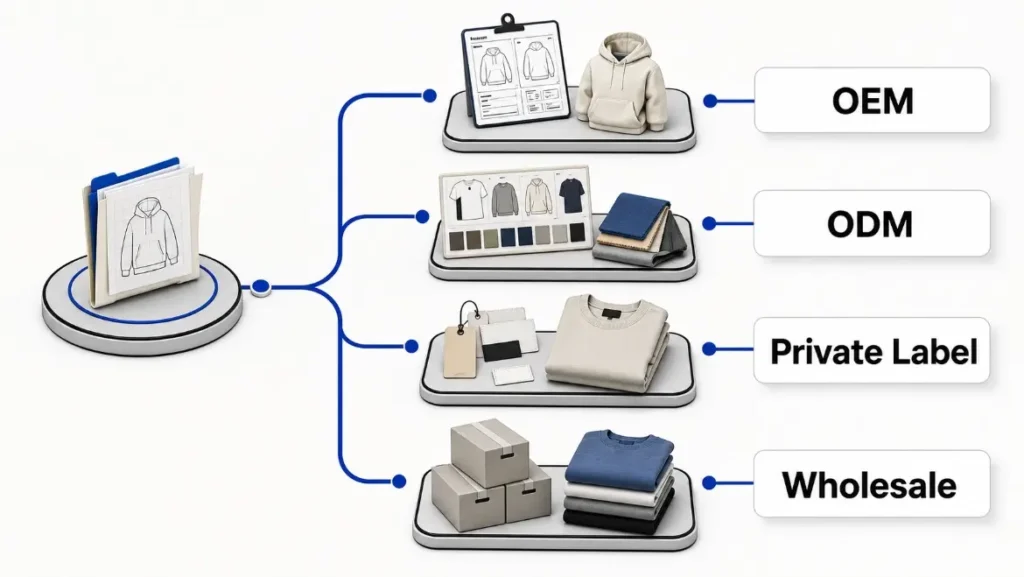
Many clothing brands search for an OEM clothing manufacturer when they are still deciding what kind of production route they need. That is normal. The terms often overlap in supplier conversations, and different factories may use them differently.
Use the comparison below as a practical guide, not a legal definition.
Compare the four production routes
| Production route | What it usually means | Best for | Buyer control | Main risk |
|---|---|---|---|---|
| OEM manufacturing | Factory produces according to the buyer’s design and specifications | Brands with designs, tech packs, reference samples, or clear product briefs | High | Requires clear product files and approvals |
| ODM manufacturing | Supplier helps develop or adapt designs, often from existing directions | Brands that need product development support | Medium to high | Customization limits must be clarified early |
| Private label production | Existing or supplier-supported products are branded for the buyer | Ecommerce sellers, boutique brands, faster launches | Medium | Fit, fabric, and design control may be limited |
| Wholesale or stock buying | Buyer purchases ready-made products | Fast market testing or replenishment | Low | Limited control over quality, labels, packaging, and reorders |
OEM manufacturing
OEM is usually the strongest route when you already know what you want to make. You may have a tech pack, reference garment, original artwork, measurement chart, or a clear product brief.
The advantage is control. You can define the garment more closely, from fit and material to trims, labels, packaging, and future consistency. The tradeoff is that OEM requires more preparation from the buyer.
ODM manufacturing
ODM can fit brands that have a product direction but need more help developing the style. A supplier may offer existing shapes, style references, pattern directions, fabric options, or collection ideas that you can customize.
For kidswear brands, HAPA’s ODM clothing manufacturer for kidswear brands page can help explain this route in a children-apparel context. ODM may be useful when you have a brand concept but still need support with style development, fabric selection, size range, or sample refinement.
Private label production
Private label is often more brand-presentation focused. You may use existing or supplier-supported products, then add your label, hangtag, packaging, and retail presentation.
This route can be practical when speed matters or when you are testing a category. HAPA’s private label clothing manufacturer page describes support for design review, fabric sourcing, sampling, custom labels, packaging, production, QC, and delivery for kidswear brands. Once the production model is clear, a jumpsuit project can start with our custom jumpsuit manufacturer shortlist.
Wholesale or stock buying
Wholesale is the least custom route. You choose from available stock or existing catalog styles. It can work for testing demand, but control is limited.
If your brand wants a unique fit, specific fabric, custom labels, strict packaging, or repeatable production, wholesale may not give you enough control.
Which route gives the brand the most control?
OEM usually gives the brand the most product control, followed by ODM, private label, and wholesale. But more control also means more responsibility.
If you choose OEM, you need to define the garment. If you choose ODM, you need to understand which parts can be changed. If you choose private label, you need to know how much of the base product is fixed. If you choose wholesale, you need to accept that the product may not be fully yours.
Which route is more realistic for early-stage brands?
Early-stage brands do not always need full OEM immediately. If you have only a mood board and no product details, ODM or private label may be a better first conversation.
If you already have clear designs and want the product made around your specifications, OEM is more realistic. The question is not whether your brand is new. The question is whether your product direction is clear enough for sampling.
When an OEM Clothing Manufacturer Is the Right Fit
OEM is not the right route for every project. It is most useful when your brand needs repeatable custom production and is ready to make decisions about the garment.
You already have designs, references, or a tech pack
OEM is a good fit when you can show the manufacturer what you want to make. That can be a full tech pack, a reference sample, a sketch, a CAD drawing, or a structured product brief.
You do not need to have every answer before the first conversation. But you should be clear enough that the supplier can ask useful follow-up questions.
You need control over fit, fabric, trims, and construction
If fit, fabric, trims, and construction define your brand value, OEM is often more suitable than wholesale or basic private label.
For example, a children’s pajama brand may care about soft handfeel, cuff comfort, neckline opening, seam finish, wash performance, label softness, and packaging presentation. These details need to be built into the sample and production file.
You want repeatable production for future reorders
OEM becomes especially useful when you plan to reorder. A one-time stock buy may not require deep product files, but repeatable production does.
When your first approved sample becomes the reference for future orders, you can improve consistency across seasons, colors, sizes, and replenishment cycles.
You sell children’s apparel and need product details controlled early
Children’s apparel gives less room for vague decisions. Fit, comfort, trim attachment, label placement, and fabric feel can all affect customer trust.
For kidswear brands, OEM can help when you need more control over product details before bulk production. It can also help align design, sample, labels, packaging, and quality expectations in one production path.
How to Find and Evaluate an OEM Clothing Manufacturer
Where to look is the easy part: B2B sourcing platforms, trade shows, referrals from other founders, and direct search. A shortlist of OEM clothing suppliers can give you candidates to investigate; use the checks below before requesting samples. The harder part is the first-pass filter. Before investing time in any OEM clothing manufacturer, check four things:
- Factory or trading company? Ask for the business license and check that its registered scope includes manufacturing. Audit reports and a video factory tour help verify you are dealing with the production source.
- Compliance capability for your market. Can they work with tested, compliant materials and provide the documentation your market requires? Ask how they support customers meeting requirements like CPSIA testing (US) or Australian mandatory standards. Recognized material certifications such as OEKO-TEX are a useful signal — verify any certificate directly with the issuing body.
- Sample quality. A paid sample is the cheapest reliable evidence you will ever buy. Judge stitching, fit accuracy against your spec, and how they handle revision requests.
- Communication quality. Slow, vague answers during the sales phase do not improve after you have paid a deposit.
For children’s clothing specifically, treat safety capability as a gating criterion, not a bonus. A factory that cannot speak fluently about child-safe components — snap security, drawstring rules, restricted substances — is the wrong factory for kidswear, whatever its prices look like.
This is deliberately the short version. For the complete evaluation framework — certifications, capacity, quality systems, cost structures, and payment terms — see our detailed guide on what to look for in an OEM kidswear manufacturer, and our comparison of the top kids’ clothing manufacturers if you want a starting shortlist.
What to Prepare Before Contacting an OEM Clothing Factory
The better your first brief, the more useful your supplier conversation will be. A clear inquiry helps the manufacturer understand feasibility, sampling needs, material options, and quotation factors.
Do not send only a photo and ask, “How much?” That may get you a rough answer, but it will not help the factory understand your real product requirements.
Core materials to prepare
Use this checklist as a starting point before contacting an OEM clothing factory:
- Product category and target customer.
- Tech pack, sketch, CAD, reference sample, or clear product photos.
- Size range and measurement expectations.
- Fabric composition, weight, handfeel, stretch, lining, and color direction.
- Trims such as buttons, snaps, zippers, elastic, drawcords, lace, patches, embroidery, or print.
- Construction notes, seam finish, closure method, and washing expectations.
- Label needs, including main label, care label, size label, and country of origin label.
- Packaging needs, including hangtag, polybag, barcode sticker, folded size, carton mark, and retail presentation.
- Target quantity, reorder expectations, destination market, and launch timing.
Product spec and style direction
Start with the style itself. Is it a baby romper, kids hoodie, pajama set, school jacket, girls’ dress, boys’ shorts, sweatshirt, swimwear item, or activewear piece?
Explain the customer and use case. A premium baby gift set, schoolwear item, marketplace basic, and boutique dress do not need the same product decisions.
Size range and fit expectations
Sizing is central to apparel OEM. Share your size range, sample size, measurement chart, tolerance expectations, and fit intention.
For children’s apparel, include the age group and any comfort concerns. Neck opening, waist stretch, sleeve length, crotch snap placement, rise, cuff width, and garment length can matter more than they appear in photos.
Fabric, trims, and construction notes
If you know the fabric, include composition, weight, stretch, surface texture, handfeel, print method, and lining requirements. If you do not know the exact fabric, describe the performance you need.
For trims, explain both appearance and function. A snap, button, zipper, drawcord, or sequin is not only a design detail. It also affects comfort, durability, and review before production.
Labels, packaging, and target market
Labels and packaging should not wait until the final packing stage. Share your brand label artwork, care label needs, hangtag design, barcode sticker requirements, polybag preference, carton marks, and marketplace or retailer requirements if you have them.
If the garment will be sold in a specific market, say so early. Label, documentation, and product review expectations can vary by destination and product type.
What to send if you do not have a full tech pack
If you do not have a full tech pack, send a structured product brief. Include reference photos, desired changes, target customer, size range, fabric direction, color palette, trim ideas, label needs, packaging expectations, target quantity, and sales market.
A professional supplier should be able to tell you what is missing. That conversation is part of early product development.
Questions to ask before paying for samples
Before paying for samples, ask what the sample will prove. Will it confirm fit, fabric, construction, print placement, trim attachment, label placement, packaging, or only general appearance?
Also ask how revisions will be handled, what information is needed before sample making, and what will count as the approved sample for bulk production.
Quality, Compliance, and Production Risks to Clarify Early
OEM risk starts before sewing begins. Most problems come from unclear decisions: unclear measurements, unclear fabric, unclear trim quality, unclear labels, unclear packaging, or unclear approval records.
This section is not legal or compliance advice. Requirements depend on product type, age group, destination market, materials, components, claims, and importer role. Use official sources and qualified advisors for final compliance decisions.
Sample approval risks
A sample can look good in photos and still fail in production. Before approval, measure it, check construction, review fabric feel, test key trims, and confirm whether the sample represents the exact bulk order.
If you approve a sample with unresolved comments, those comments should be written clearly. Otherwise the factory may not know whether the issue is optional, critical, or already accepted.
Fabric, trim, and workmanship risks
Fabric substitutions, color differences, unstable shrinkage, weak seams, uncomfortable trims, loose buttons, poor embroidery backing, or rough label edges can all affect the final garment.
For children’s apparel, these details are more sensitive because the wearer may be active, growing, and sensitive to comfort. Kidswear also often goes through frequent washing, so durability should be discussed before bulk production.
Label and packaging risks
Label mistakes are easy to underestimate. A wrong size label, missing care label, incorrect SKU sticker, or mismatched carton mark can delay receiving and create relabeling work.
For the U.S. market, the FTC’s textile and wool labeling guidance discusses fiber content, country of origin, and responsible business identity for many textile and wool products. Children’s product certification can also apply in some U.S. children’s product contexts; the CPSC explains that certain children’s products subject to children’s product safety rules require third-party testing and a Children’s Product Certificate. As of July 8, 2026, CPSC also notes that importers of most regulated consumer products must eFile certificates of compliance with U.S. Customs and Border Protection through a Partner Government Agency Message Set. If your OEM project involves U.S. children’s products, check the current CPSC eFiling guidance and confirm how it applies to your importer role before shipment.
Market-specific compliance questions
Do not assume one product file works for every market. The U.S., EU, UK, Australia, and other destinations can have different expectations for product safety, labeling, documentation, and importer responsibilities.
Before production, clarify which market the garment will enter, whether it is for babies, toddlers, children, or older youth, whether it includes special trims or decorations, and who will verify final obligations.
| Risk area | Why it matters | What to clarify early |
|---|---|---|
| Fit and measurements | Poor fit can lead to returns and weak reviews | Size chart, sample size, tolerance, grading |
| Fabric and trims | Comfort and durability depend on materials | Composition, weight, handfeel, shrinkage, trim attachment |
| Labels | Wrong labels can create retail or compliance problems | Care label, size label, origin label, barcode, SKU |
| Packaging | Packing errors affect receiving and fulfillment | Polybag, carton mark, folded size, size ratio |
| Approval records | Verbal approvals are hard to trace | Approved sample version, file version, revision notes |
How HAPA Can Support OEM Clothing Projects for Children’s Apparel Brands
HAPA can be considered as a manufacturing partner for children’s apparel brands that need OEM, ODM, private label, sample development, custom labels, packaging, bulk production, and QC support. The right route depends on how much design control the buyer has and how much product development help is needed. For developing a branded T-shirt line with a Chinese supplier, see our private-label T-shirt production in China.
The most useful HAPA conversation starts with a clear product file. That does not always mean a perfect tech pack, but it should include enough information for the product team to understand the garment, target market, and desired production route.
OEM support for brands with ready designs
If your brand already has designs, tech packs, reference garments, or a clear product brief, OEM support can help move the project from idea to sample and then into bulk production.
HAPA’s OEM service page describes a product journey that can include design and tech pack review, pattern making and size grading, fabric and trim selection, sample development, bulk manufacturing and QC, plus labels, packaging, and delivery preparation.
ODM or private label support for brands that need more development help
If your product direction is not fully developed, ODM or private label may be more realistic than full OEM at the beginning.
ODM can help when you need product development support. Private label can help when your main need is a branded collection, labels, packaging, and a clearer path from sample to reorder planning.
Sample, fabric, trim, label, packaging, and QC coordination
The value of a manufacturing partner is not only sewing. It is coordination. For children’s apparel, coordination means connecting the design file, sample comments, fabric and trim decisions, label artwork, packaging, and quality checks before bulk production.
That is where OEM support can reduce uncertainty for the buyer. The goal is to make every approved detail visible before it becomes a bulk production problem.
Conclusion: Use OEM When You Need Repeatable Custom Production
An OEM clothing manufacturer is a production partner that makes garments according to your brand’s design, specifications, materials, labels, packaging, and quality requirements. For clothing brands, OEM is useful when you need more control than wholesale or basic private label can provide.
OEM works best when your product direction is clear enough to sample. If you already have a tech pack, reference sample, measurement chart, fabric direction, or structured product brief, you are closer to an OEM-ready project. If your idea is still loose, ODM, private label, or sample development support may be a better first conversation.
For children’s apparel brands, the decision should be especially practical. Before bulk production, clarify fit, fabric, trims, labels, packaging, and target-market notes. These details shape whether the finished garment feels right, looks right, and can be repeated in future orders.
If you are preparing an OEM clothing project, gather your product type, reference images, size range, fabric direction, label and packaging needs, target quantity, and destination market notes. HAPA can review those details and discuss whether your project is ready for sample development, OEM production, or a different manufacturing route.
FAQ
What is an OEM clothing manufacturer?
An OEM clothing manufacturer produces garments based on a brand’s own designs, specifications, materials, labels, packaging, and quality requirements.
What does OEM mean in clothing?
In clothing, OEM means the brand controls the product direction while the manufacturer handles sampling, sourcing, production, finishing, checking, and packing.
Is OEM the same as private label clothing?
No. OEM usually starts from the buyer’s own design and product specs. Private label often starts from supplier-supported products that are branded for the buyer.
What is the difference between OEM and ODM clothing manufacturing?
OEM follows the buyer’s design. ODM gives more product development support, often using supplier-developed styles or directions that the buyer can customize.
When should a clothing brand choose OEM?
Choose OEM when you need custom design control, repeatable production, specific fit, selected materials, custom labels, packaging, and consistent future reorders.
Can startups work with an OEM clothing manufacturer?
Yes, but startups should prepare a clear product brief, reference images, size range, fabric direction, label needs, target quantity, and market notes.
What should I send to an OEM clothing factory for a quote?
Send a tech pack if available. If not, send a structured brief covering style, size range, fabric, trims, labels, packaging, quantity, and market.