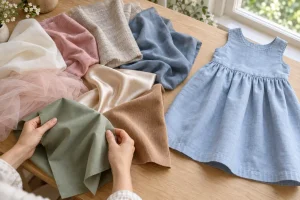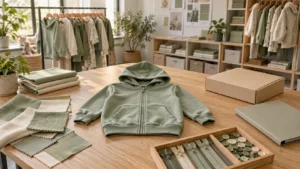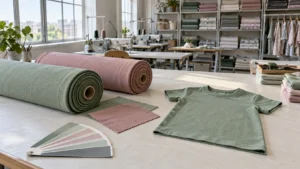
When you first walk into a Vietnamese garment factory, the process feels less mysterious than most buyers imagine. A tech pack moves from costing to pattern making, fabric sourcing, sample sewing, fit checks, cutting, stitching, trimming, pressing, and final inspection — each step shaping whether your OEM or ODM order arrives on time and on spec.
I’ve seen buyers rush straight to price, then regret it later. For wholesale sourcing, the better question is: which factory can understand your product, protect quality, and scale with you?
This guide covers 12 of the best Vietnam Clothing Manufacturers for wholesale sourcing. Some are built for high-volume retail programs, some are better for fabric-led development, and others are more approachable for private label, streetwear, uniforms, or knitwear. If you are still mapping out the sourcing process, start with this practical guide on how to find clothing manufacturers in Vietnam.
Why Top Fashion Brands Choose Vietnam for Clothing Manufacturing
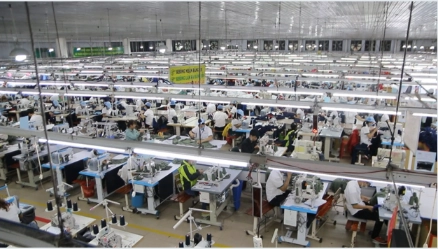
Vietnam is the world’s third-largest garment exporter, with textile and apparel exports reaching $44 billion in 2024 — an 11% increase compared to the previous year. Behind those numbers: nearly 6,000 factories, 2.7 million workers, and a client list that includes Nike, Adidas, Uniqlo, H&M, Lululemon, and Zara.
The appeal comes down to cost, access, and timing. Garment workers earn around $300 per month — significantly lower than China, where wages run from $400 upward — while agreements like the EVFTA and CPTPP cut duties for EU, UK, and Japanese buyers. This is one reason many buyers now compare Vietnam vs China garment factories before making a long-term sourcing decision.
Beyond cost arbitrage, Vietnam dominates the performance wear sector, with synthetic blends and activewear making up roughly 48% of its apparel exports. Supported by a highly skilled workforce, top athletic, children’s wear, and outdoor brands rely on Vietnam for complex, high-volume production that maintains strict Environmental, Social, and Governance (ESG) compliance.
Why I Recommend These 12 Clothing Manufacturers
Finding the right factory takes months of vetting, but these manufacturers deliver exceptional quality, global reliability, and serious scale.
- Massive tariff reductions: Favorable free trade agreements like the EVFTA and CPTPP drastically slash import duties, immediately improving your brand’s profit margins.
- Advanced technical expertise: Vietnam leads the globe in complex synthetic blends, making it the premier destination for performance activewear and outdoor apparel.
- Exceptional sewing precision: A highly skilled workforce delivers meticulous craftsmanship, ensuring your finished bulk garments match your digital tech packs perfectly.
- Strict ethical compliance: Top Vietnamese factories maintain global certifications like WRAP, OEKO-TEX, and Sedex, protecting your brand from supply chain controversies.
- Flexible pilot runs: Many modern suppliers now offer adaptable minimum order quantities (MOQs) to accommodate smaller test batches for growing fashion labels.
- Streamlined global shipping: Strategically located near major deep-water ports, these factories ensure fast, reliable freight forwarding directly to the US and Europe.
12 Best Vietnam Clothing Manufacturers for Wholesale Sourcing
- Thygesen Textile Vietnam
- Thanh Cong Textile and Garment JSC
- DUGARCO
- Vinatex
- Hanosimex
- Viet Thang Corporation
- Gavitex
- Phong Phu Corporation
- TNG
- Dony Garment
- Thai Son S.P Sewing Factory
- HEM APPAREL
1.Thygesen Textile Vietnam — Best for Ethical OEM/ODM Knitwear
Thygesen Textile Vietnam is a strong choice for brands looking for full-package OEM/ODM support with a clear process from inquiry to shipping. Its strengths sit in knitted apparel, sustainable fabric sourcing, certified production, and long-term brand partnerships. It works best when buyers already have clear product specifications and need dependable execution at scale.
- Website: thygesenapparel.com
- Key Products: Activewear, casualwear, underwear, kidswear, workwear, socks
- Best Suited For: Established fashion, activewear, and kidswear brands needing full-package production with higher MOQ planning.
- Pros: Strong OEM/ODM process, broad knitted apparel range, sustainability-focused.
- Cons: MOQs may be high for startups, less ideal for small test orders.
2.Thanh Cong Textile and Garment JSC — Best for Vertical Textile-to-Garment Production
Thanh Cong is one of Vietnam’s stronger vertically integrated textile and garment manufacturers, covering yarn, knitting/weaving, dyeing, and sewing. That makes it useful for buyers who want better control over fabric development, production timing, and bulk consistency.
- Website: thanhcong.com.vn
- Key Products: T-shirts, polo shirts, sportswear, children’s clothing, yarn, woven/knitted fabric
- Best Suited For: Mid-to-large buyers needing vertical production and repeat wholesale programs.
- Pros: Vertical supply chain, strong annual capacity, fabric and garment integration.
- Cons: Less flexible for very small orders, best suited to structured sourcing teams.
3.DUGARCO — Best for Jackets, Shirts, Pants, and Uniforms
DUGARCO (Duc Giang Corporation) is a well-established manufacturer offering strong capacity, sourcing support, R&D, and production across multiple woven and knit categories. It is highly reliable for large-scale output.
- Website: dugarco.com
- Key Products: Jackets, shirts, blouses, pants, suits, knitwear, uniforms
- Best Suited For: Brands and distributors needing medium-to-large apparel orders with structured production support.
- Pros: Large production capacity, strong woven apparel focus, R&D and sourcing support.
- Cons: May not suit small-batch startups, requires clear order planning.
4.Vinatex — Best for Large-Scale Supply Chain Access
Vinatex is Vietnam’s national textile and garment group, connecting buyers with a broader supply chain covering yarn, fabric, garment production, QC, testing, and delivery support.
- Website: vinatex.com.vn
- Key Products: Yarn, fabrics, knitwear, woven garments, textile services
- Best Suited For: Large retailers, sourcing offices, and trading companies needing supply-chain depth.
- Pros: Broad supply-chain coverage, strong textile network, useful for large programs.
- Cons: Not a boutique factory option, may feel complex for first-time buyers.
5.Hanosimex — Best for Yarn, Knit Fabric, and Knitwear Programs
Hanosimex is a long-running company associated with Vietnam’s larger textile industry. It is a great fit for buyers who care about textile input as much as final garment assembly.
- Website: hanosimex.com.vn
- Key Products: Yarn, fiber, knitted fabric, knitwear, denim, towels
- Best Suited For: Buyers sourcing knitwear and fabric-linked garment programs.
- Pros: Long operating history, strong textile/garment capability.
- Cons: Public English information is limited, best for experienced sourcing teams.
6.Viet Thang Corporation — Best for Fabric-Led Garment Sourcing
Viet Thang Corporation is a textile-focused manufacturer with capabilities in spun yarns, greige fabrics, dyed fabrics, and finished garments, making it suitable for wholesale programs where fabric consistency matters.
- Website: vietthang.com.vn
- Key Products: Spun yarns, greige fabrics, dyed fabrics, shirts, trousers, dresses, uniforms
- Best Suited For: Buyers needing fabric sourcing alongside apparel production.
- Pros: Strong fabric foundation, export market experience, useful for uniform sourcing.
- Cons: More textile-focused than fashion-brand focused, minimums may be high.
7.Gavitex — Best for Flexible OEM/ODM and Private Label Apparel
Gavitex positions itself as a practical option for newer or growing brands that need an approachable manufacturing partner with product-development guidance and sourcing flexibility.
- Website: gavitex.com.vn
- Key Products: T-shirts, uniforms, activewear, sportswear, custom clothing
- Best Suited For: Startups, private-label brands, and growing labels needing flexible OEM/ODM support.
- Pros: Flexible service structure, private label support, buyer-friendly communication.
- Cons: Capacity details are less transparent, best for simpler to mid-complexity products.
8.Phong Phu Corporation — Best for Towels, Denim, Yarn, and Home Textiles
Phong Phu Corporation is a major textile company valuable for buyers sourcing textile-heavy products rather than solely cut-and-sew apparel.
- Website: phongphucorp.com.vn
- Key Products: Yarn, sewing thread, denim fabric, knitted fabric, towels, home textiles
- Best Suited For: Denim programs and buyers needing yarn/fabric production support.
- Pros: Strong textile heritage, broad material capability, suitable for large programs.
- Cons: Less focused on small fashion startups, best for textile-led orders.
9.TNG — Best for High-Volume Outerwear and Sportswear
TNG Investment and Trading JSC is one of Vietnam’s larger garment manufacturers, with a long operating history and strong production scale across outerwear, sportswear, padding, and quilting.
- Website: tng.vn
- Key Products: Outerwear, sportswear, knitted apparel, padded and quilted products
- Best Suited For: Large brands needing high-volume orders and multi-factory capacity.
- Pros: Long operating history, strong factory scale, supports finishing processes.
- Cons: Less suitable for small-batch testing, corporate sourcing process may be formal.
10.Dony Garment — Best for Uniforms, Workwear, and Made-to-Order Apparel
Based in Ho Chi Minh City, Dony Garment focuses on made-to-order apparel. It supports different trade terms and full-package production services, including raw materials, printing, and embroidery.
- Website: dony.vn
- Key Products: Uniforms, workwear, fashion clothes, headwear, protective clothing
- Best Suited For: Corporate uniform buyers, promotional apparel companies, and mid-volume custom orders.
- Pros: Strong uniform specialization, full-package production options.
- Cons: Less focused on premium fashion lines, product range leans commercial.
11.Thai Son S.P Sewing Factory — Best for Cut-and-Sew Knitwear
Thai Son S.P is a family-style sewing factory focused on cut-and-sew knitwear using circular knitted fabrics. With English-speaking merchandisers and solid QC processes, it is a strong choice for sustainable apparel programs.
- Website: thaisonsp.com
- Key Products: T-shirts, tops, dresses, activewear, men’s/women’s/children’s knitwear
- Best Suited For: Brands needing cut-and-sew knit garments, jersey fashion, and sustainable fabric options.
- Pros: Strong knitwear specialization, fabric and trim sourcing support, solid QC systems.
- Cons: Not suitable for woven-heavy collections, best for brands with clear specs.
12.HEM APPAREL — Best for Blank Apparel, Streetwear, and Private Label
HEM APPAREL serves fashion brands through OEM, ODM, private label, and wholesale blank apparel, making it a highly practical bridge between wholesale blanks and custom manufacturing.
- Website: hem-apparel.com
- Key Products: T-shirts, hoodies, sweatshirts, denim wear, joggers, blank apparel
- Best Suited For: Streetwear brands, creators, and buyers testing blanks before custom OEM production.
- Pros: Good for blank apparel, lower MOQ options on some products, printing/embroidery available.
- Cons: Custom production requires strict order planning, better for casualwear than formal apparel.
Which Vietnam Clothing Manufacturer Is Best for Your Product Type?
There is no single manufacturer that is best for every clothing brand. The right choice depends on your product category, fabric requirements, order volume, development needs, and target market. Use the manufacturer profiles above as a starting point, then confirm whether the specific production facility has recent experience with garments similar to yours.
| Product or sourcing need | Manufacturers to examine first | What to confirm |
|---|---|---|
| Knitwear and textile-to-garment development | Thygesen Textile Vietnam, Thanh Cong Textile and Garment, Hanosimex, Thai Son S.P | Fabric sourcing, GSM control, shrinkage testing, dye-lot consistency, and sample-to-bulk repeatability |
| Shirts, jackets, uniforms, and workwear | DUGARCO, Dony Garment | Construction details, hardware installation, finishing standards, sizing consistency, and relevant production lines |
| Large-volume outerwear or sportswear programs | TNG, Vinatex | Available capacity, order scale, peak-season scheduling, production location, and subcontracting controls |
| Denim, yarn, or fabric-led sourcing | Viet Thang Corporation, Phong Phu Corporation | The actual fabric mill, dyeing and finishing capabilities, material minimums, and available test documentation |
| Flexible private label, blank apparel, or streetwear | Gavitex, HEM APPAREL | Decoration methods, label and packaging options, minimums by style and color, and product-development support |
This table is a shortlist tool, not a final ranking. A manufacturer may have experience in a product category without accepting your particular quantity, fabric, construction, or delivery schedule. Ask for recent examples related to your garment and confirm which facility would handle the order. If your project also requires custom labels, packaging, and development support, define the required private label clothing manufacturing scope before comparing quotations.
Real Factory or Trading Company? How to Verify Vietnam Manufacturers Before You Commit
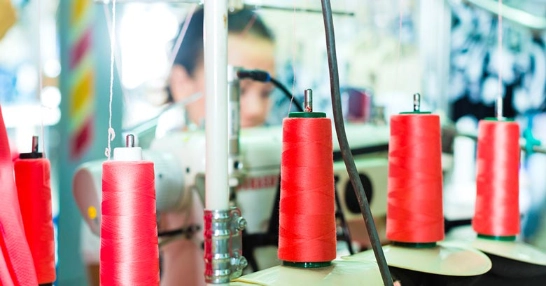
One of the most common—and costly—mistakes buyers make when sourcing from Vietnam is assuming that every supplier presenting itself as a “manufacturer” actually owns a factory. In reality, a significant share of suppliers you’ll encounter online are trading companies: intermediaries that source products from real factories and resell them under their own name. Knowing the difference before you place an order protects your margins, your quality control, and your timelines.
Why the Distinction Matters
Trading companies are not inherently bad. They can be useful when you need to consolidate several product types from multiple sources or when your order volumes are too small for a factory. The problem arises when you pay factory-direct expectations for a marked-up, middleman arrangement. Working through an undisclosed trading company typically means a 10–30% price premium, reduced control over quality, and slower communication.
Verification Steps Before You Commit
- Examine business registration documents: Request the Enterprise Registration Certificate. A manufacturer’s scope will list production activities, whereas a trading company’s will emphasize wholesale or import-export trade.
- Ask detailed technical questions: Inquire about monthly production capacity, specific machinery, raw material sourcing, and standard lead times. A real factory answers these confidently; an intermediary often gives generic figures.
- Request supporting documentation: Legitimate manufacturers can provide factory licenses, certifications (ISO 9001, BSCI, WRAP), and dated photos of their own production lines.
- Verify the location: Confirm whether the registered address sits within a recognized industrial zone.
- Conduct an audit: The most reliable confirmation is a factory visit. If travel is not feasible, arrange a live video walkthrough or commission a third-party audit from an established firm like SGS or Intertek.
Quick Reference: Spotting the Difference
| Feature | Real Factory | Trading Company |
|---|---|---|
| Address | Industrial parks (Binh Duong, Long An, etc.) | Commercial offices in city centers |
| Product Range | Highly specialized (e.g., only activewear or knitwear) | Broad (“We can make anything you want”) |
| MOQs | Strict minimums based on machine limits and raw materials | Fluid or suspiciously flexible |
| Audit Docs | Certificates match their exact company name | Certificates show a different factory name |
What Should You Include in an RFQ to a Vietnam Clothing Manufacturer?
A clear request for quotation, or RFQ, helps different manufacturers quote the same product and makes their offers easier to compare. Send the same specification package to every shortlisted supplier and include the following information:
- Product specifications: Provide sketches, measurement charts, construction details, fabric composition and weight, colors, trims, artwork, print or embroidery requirements, and packaging instructions.
- Order breakdown: State the quantity required for each style, color, and size. Clarify whether it is a trial order, a seasonal program, or a product that may require regular reorders.
- Required services: Specify whether the manufacturer should source fabrics and trims, develop patterns, grade sizes, arrange testing, produce labels, prepare packaging, or provide export documents.
- Sampling plan: Identify the samples you need, what each sample must confirm, the expected revision process, and the approval deadline. Reviewing a structured product sample process can help you define these checkpoints.
- Commercial terms: Ask for the currency, price basis, minimum order requirements, sample fees, additional charges, payment schedule, quotation validity, shipping term, and named delivery place.
- Production and quality requirements: Request the available production window, planned inspection points, measurement tolerances, subcontracting details, and estimated shipment date.
Ask each supplier to respond to the same fields and document any exclusions or alternative assumptions. This allows you to compare the complete offer instead of focusing only on unit price. Reviewing the full garment factory process can also help you identify which approvals and quality-control checkpoints should appear in your RFQ.
How to Place Your First Wholesale Order with a Vietnam Clothing Manufacturer
Transitioning from a finalized digital design to a full production run is where the real work begins. I’ve seen countless emerging brands stumble here because they rush the process. Placing an apparel order isn’t like buying stock inventory off a wholesale website; it is a strict, sequential partnership. Skip a step, and you risk a warehouse full of unsellable garments.
Here is the exact, fail-proof process I use every time I initiate a new production run with a factory in Vietnam:
Step1. Submit a Bulletproof Tech Pack
Your tech pack is your contract. Before a factory will even give you a serious quote, you need to hand them a comprehensive document detailing your bill of materials (BOM), size grading, Pantone colors, stitch types, and label placements. Without this, their pricing is just a guess.
Step2. Commission and Refine the Prototype
Never skip the sampling phase. You will pay a premium for this first physical garment (often 2-3x the bulk unit price), but it is non-negotiable. Review the fit, wash the fabric to check for shrinkage, and test the hardware. You do not move forward until you are holding a “Golden Sample” that is absolutely perfect.
Step3. Lock Down Pricing, MOQs, and Lead Times
Once the sample is approved, finalize your bulk unit cost. This is when you negotiate your Minimum Order Quantity (MOQ) and establish your delivery terms, typically FOB (Free On Board). Ensure your Purchase Order (PO) includes clear penalty clauses for late delivery—reputable Vietnamese factories respect a firm, professional contract.
Step4. Wire the Initial Deposit
To trigger the factory to order the raw bulk fabric, you will need to pay a deposit. Never pay 100% upfront for a new manufacturing run. A standard, healthy agreement is 30% down to start production, and the remaining 70% upon completion.
Step5. Schedule Third-Party Quality Control
While the factory is sewing, hire an independent inspection agency (like SGS or Intertek) based in Vietnam. They will visit the factory floor and conduct an AQL (Acceptable Quality Limit) inspection on the finished goods. It is significantly cheaper to fix a sewing error in Ho Chi Minh City than it is in your home warehouse.
Step6. Settle the Balance and Ship
Once your third-party inspector gives you the green light, wire the final balance. Concurrently, your freight forwarder will coordinate with the factory to pick up the goods from the loading dock and navigate Vietnamese customs, moving your apparel onto a container ship or cargo plane.
Conclusion
Sourcing clothing from Vietnam succeeds through diligence and structure. Verify that suppliers are genuine manufacturers rather than trading companies before committing, then proceed methodically: clear specifications, qualified suppliers, approved samples, written contracts, protected payments, and independent inspection. This disciplined approach reduces risk and builds reliable, lasting B2B partnerships.
FAQ
Where is the best place in Vietnam to get clothes made?
Southern Vietnam (particularly Ho Chi Minh City, Binh Duong, and Dong Nai) is the premier hub for complex cut-and-sew apparel, knitwear, activewear, and performance garments. Northern Vietnam (around Hanoi and Nam Dinh) is traditionally stronger for heavy wovens, large-scale outerwear, and bulk textile milling.
What is the best Vietnamese clothing brand?
From a domestic retail perspective, brands like IVY moda, BOO, and Biti’s (footwear) dominate the local market. However, from a B2B wholesale perspective, the “best” manufacturer isn’t a retail brand—it is the factory whose machinery, certifications, and capabilities perfectly align with your specific tech packs and fabric requirements.
Which city in Vietnam is famous for making clothes?
Ho Chi Minh City (Saigon) is the commercial heart of Vietnam’s garment export industry, surrounded by vast industrial parks dedicated to apparel. Historically, cities like Nam Dinh and Thai Binh in the north are famous for being the foundational textile hubs of the country.
Is Vietnam good for private label clothing manufacturing?
Yes, Vietnam is exceptionally well-suited for private label and white-label manufacturing. The country excels in high-quality OEM and ODM production, making it ideal for brands seeking to scale private label operations in technically demanding categories like performance activewear, sustainable basics, and durable children’s wear.
How long does clothing production take in Vietnam?
Lead times depend on the production model. Generally, sampling takes 15 to 30 days. For bulk production using a CMT (Cut, Make, Trim) model where materials are already staged, expect 30 to 45 days. For an FPP (Full Production Package) model that requires custom milling and dyeing of greige fabrics, bulk production typically ranges from 60 to 90 days.