After years of close collaboration with children’s apparel lines and 16 years deep in the global children’s wear manufacturing industry, I’ve learned one irrefutable truth: kids’ fashion trends wait for no one. In the children’s apparel space, the top-selling styles are consistently those that strike the perfect balance between visual appeal, all-day comfort, real-world practicality, and long-term repeat purchase potential.
As a retailer, you need inventory that solves real pain points for parents, while also exciting and delighting the kids who will wear it. In this guide, we break down in depth the top kids clothing trends 2026 has to offer. My goal is to equip you to make confident, strategic sourcing decisions that protect your profit margins, and help you secure the best deals wholesale kids clothing 2026 has available to keep customers coming back to your boutique time and time again.
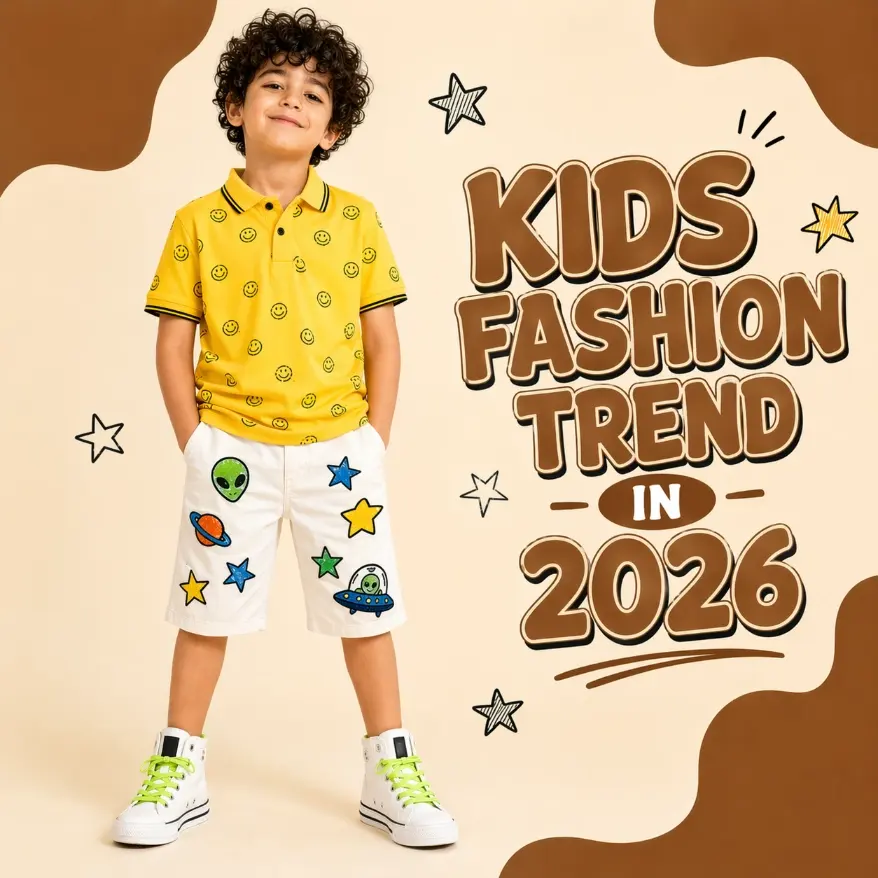
Best-Selling Wholesale Kids Fashion Trends For 2026: What Buyers Need to Know First
In kids fashion 2026, a trend only matters if it can sell consistently. A style may look exciting in a catalog or at a trade show, but that does not always mean it will perform well in real retail. In wholesale, the best-selling trends are the ones that balance style, comfort, pricing, and repeat purchase potential.
When reviewing the latest trends kidswear buyers should expect, it is crucial to think from both the retailer’s and the parent’s perspective. A strong trend needs to look fresh enough to attract attention, but also practical enough for daily wear. The styles that usually perform best are easy to care for, comfortable, durable, and simple to match with everyday outfits.
What makes a kidswear trend “best-selling” in wholesale?
A best-selling kidswear trend in wholesale is not just about style. It must sell well, move fast, and create fewer returns. In most cases, the strongest-performing styles share three core traits:
- Dual Audience Resonance: A strong trend must appeal to both kids and parents. Kids care about comfort and style, while parents focus on durability, easy care, and value. If it only satisfies one side, it is unlikely to become a real bestseller.
- Sales Turnover Velocity: Best-selling wholesale trends need to sell through quickly. Versatile, practical, and easy-to-wear items usually perform better. Faster turnover helps retailers reduce dead stock and maintain healthier cash flow.
- Consistent, Accurate Sizing: Reliable sizing is a key reason some styles sell better than others. When sizing stays consistent, return rates stay lower and customer trust stays stronger. That is why dependable suppliers with strict quality control often produce the best-selling styles.
The difference between a short-lived fad and a repeat-order winner
A fad usually depends on novelty. It may create quick interest, but once the excitement fades, sales often slow down fast. This can leave buyers with leftover inventory and lower margins.
A repeat-order winner is different. When parents search for the best kids’ clothes for comfort and durability, they are looking for these exact core items. These styles hold up well after washing, fit consistently, and solve real needs for parents. Instead of chasing short-term hype, buyers who focus on practical, proven products are more likely to get stable repeat orders over time.
Matching Sets and Coordinated Looks Will Stay a Best-Selling Category
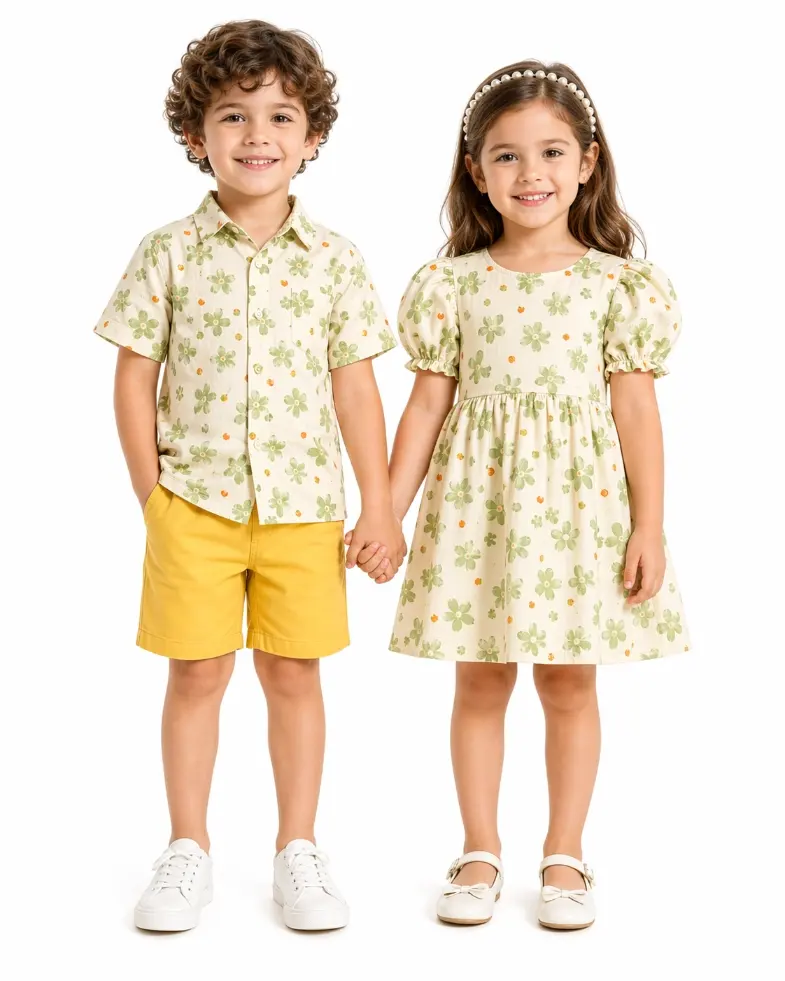
Matching sets remain a strong wholesale category because they combine trend appeal with real-life practicality. They look polished, simplify styling, and offer clear value for both retailers and parents.
Why matching sets work so well for boutiques and parents
For boutiques, matching sets are easy to display, style, and photograph. They help collections look more complete and often increase perceived value with less merchandising effort.
Parents like them because they make dressing easier. A coordinated outfit saves time, looks neat, and feels practical for daily wear, which makes repeat purchases more likely.
The best wholesale matching set categories to stock
The best-performing matching sets are usually comfortable, easy to size, and versatile enough for daily use. Buyers should focus on categories with broad appeal and strong reorder potential.
Casual cotton sets:
- Soft cotton tee and shorts sets for warm-weather daily wear
- Jersey sweat sets that work across multiple seasons
- Easy pull-on styles with relaxed fits and simple colors
Lounge and travel sets:
- Soft knit sets designed for comfort and movement
- Coordinated outfits suitable for outings, travel, and home
- Neutral or muted colors that mix well with basics
Dressy coordinated outfits:
- Woven top-and-bottom sets for parties and family events
- Soft skirt sets that look polished but stay comfortable
- Elevated coordinated looks with better retail value
How to merchandise matching sets for higher average order value
Do not sell matching sets alone. Style them with jackets, socks, accessories, or layering basics to encourage multi-item purchases and raise basket value.
Color coordination also matters. When several sets share a related palette, parents are more likely to add extra pieces that can be mixed across outfits.
Gender-Neutral Basics and Seasonless Colors Will Keep Growing
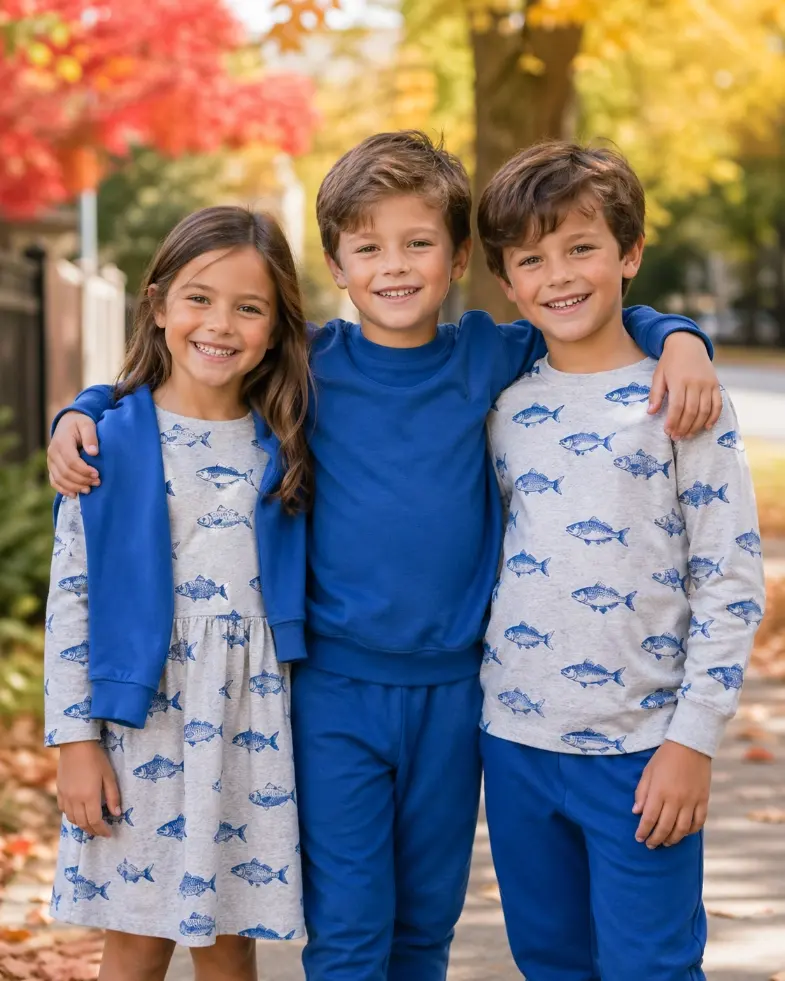
Gender-neutral kidswear is no longer a niche; it’s a major volume driver for 2026. By removing gender constraints, retailers can double their potential customer base per SKU. Seasonless colors also extend shelf life, minimizing markdowns and maximizing your wholesale ROI.
Why gender-neutral kidswear appeals to both parents and retailers
Parents love gender-neutral pieces for their effortless versatility and easy hand-me-down potential across siblings. For boutiques, unisex clothing simplifies inventory management. You stock fewer variations while serving a broader demographic, drastically reducing the risk of unsold, gender-specific seasonal dead stock.
Best-selling unisex silhouettes for 2026
The key to unisex success lies in relaxed, functional fits. Drop-shoulder sweatshirts, oversized knit cardigans, wide-leg linen pants, and classic ribbed rompers are dominating 2026 tech packs. These forgiving silhouettes accommodate rapid growth spurts while maintaining a modern, minimalist aesthetic.
The color directions that give unisex styles longer shelf life
Moving away from traditional pinks and blues allows garments to sell year-round. Earth tones and muted pastels create cohesive collections that transition seamlessly between seasons, allowing boutiques to maintain high-value inventory without forced seasonal clearance sales.
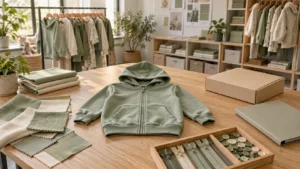
- Beige, cream, olive, terracotta, sage: These warm, nature-inspired earth tones form the core of modern minimalist collections. They offer a premium aesthetic and pair effortlessly with existing wardrobe staples.
- Soft gray, dusty blue, muted cocoa: These sophisticated, muted shades provide versatile alternatives to bright primary colors. They hide wear well, appeal to modern parents, and remain retail-relevant across multiple seasons.
Sustainable Fabrics and Traceable Materials Will Be a Bigger Sales Driver
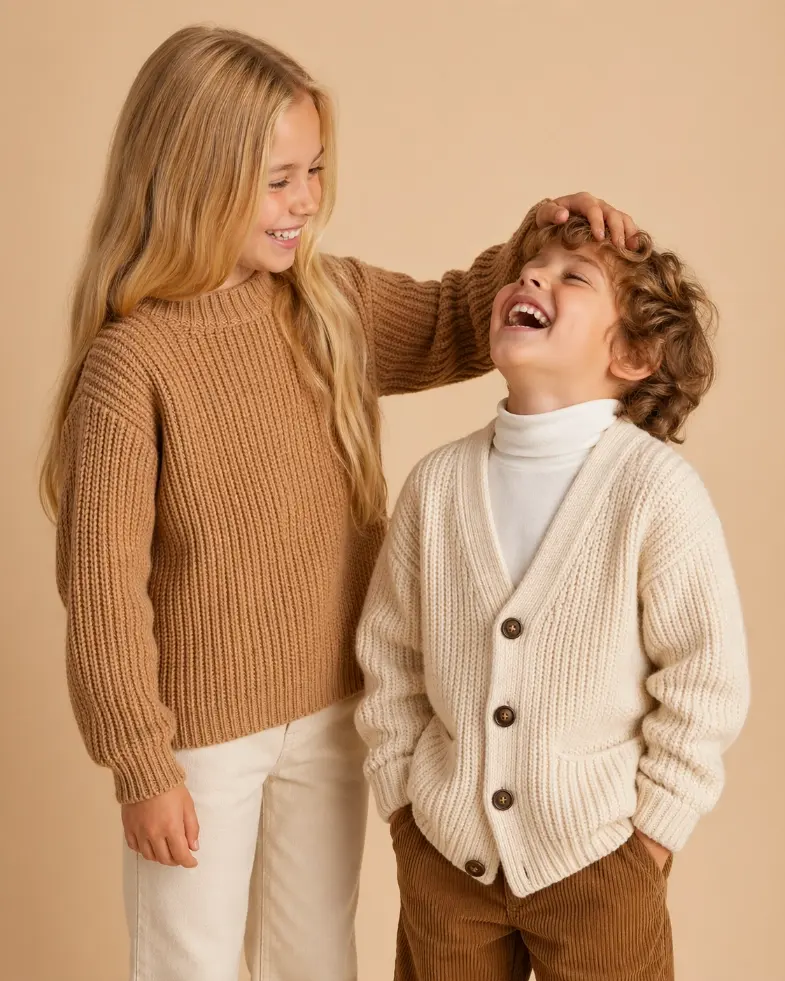
Sustainability has shifted from a niche marketing angle to a core purchasing requirement. For 2026, offering eco-friendly, traceable garments is essential for securing B2B orders. Retailers must partner with manufacturers capable of delivering certified fabrics that modern, eco-conscious parents demand.
Why sustainability is now a commercial selling point, not just a brand story
Modern parents actively check garment tags for fabric composition, prioritizing environmental impact and skin safety over fast-fashion pricing. For boutique buyers, stocking sustainable apparel justifies premium retail pricing, builds immense brand trust, and guarantees higher customer retention rates.
Fabrics parents trust most in kidswear
When developing tech packs for 2026, fabric selection dictates retail success. Parents want soft, durable, and non-toxic materials. Focusing on these three high-demand textiles ensures your inventory aligns with consumer expectations for comfort and sustainability:
- Organic cotton: GOTS-certified organic cotton is the gold standard. It is grown without synthetic pesticides, making it highly breathable, durable, and perfectly safe for sensitive infant skin.
- Cotton jersey: This knit fabric offers natural stretch and supreme softness. It is an everyday workhorse material that holds color beautifully and withstands constant machine washing.
- Bamboo blends and recycled fibers: Bamboo viscose provides unmatched temperature regulation and stretch. When blended correctly, it creates premium loungewear, while recycled fibers appeal to environmentally focused consumers.
What proof buyers should ask for from suppliers
Trust requires verification. When vetting a B2B manufacturing partner, verbal guarantees are insufficient. To protect your brand equity and avoid greenwashing claims, always demand tangible proof of ethical production and material safety before placing a wholesale order.
- Fabric certifications: Demand official documentation like GOTS for organic claims and OEKO-TEX Standard 100 to guarantee the garments are entirely free of harmful chemicals.
- Testing records: Ensure your supplier provides up-to-date third-party lab testing results, confirming strict adherence to CPC and CPSIA safety regulations for the US market.
- Supply-chain transparency: Partner with manufacturers who can clearly trace their sourcing. Knowing exactly where your fabric originates builds credibility and strengthens your brand’s ethical narrative.
Sporty Playwear and Comfort-First Styles Will Dominate Everyday
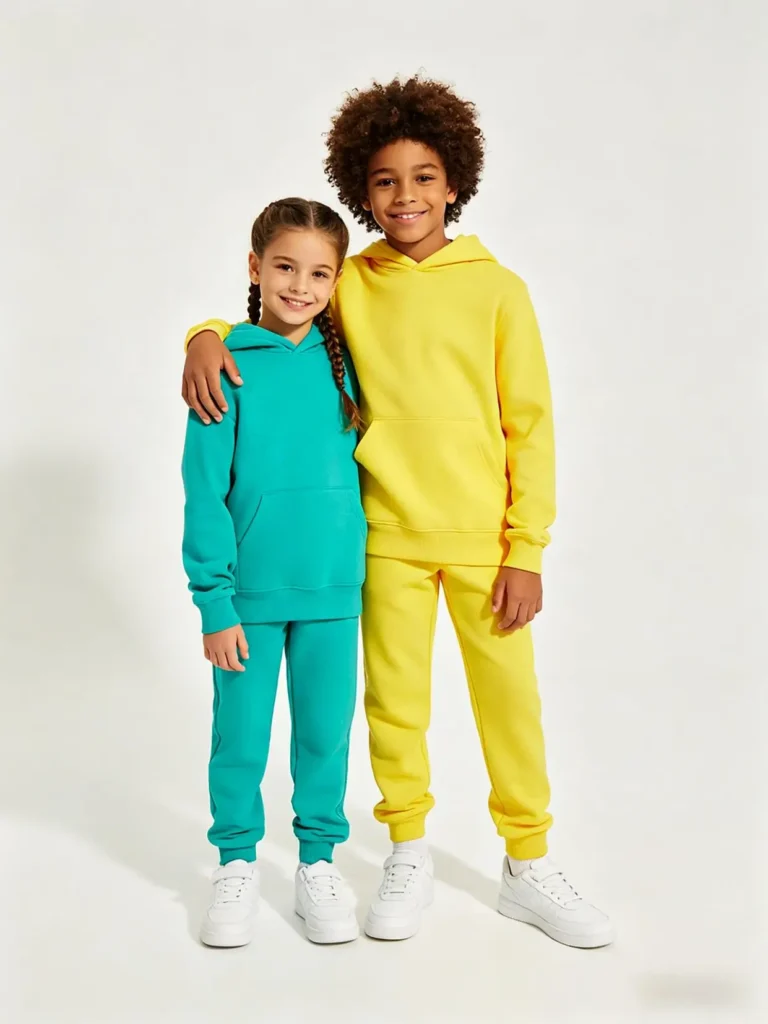
Post-pandemic habits have permanently shifted kids’ fashion towards athleisure. In 2026, sporty playwear is the highest-volume category for everyday apparel. Buyers must prioritize garments offering unrestricted movement, transitioning effortlessly from school desks to playground activities without sacrificing aesthetic appeal.
Why comfort-first fashion keeps outperforming in children’s apparel
Parents prioritize functionality and ease of dressing. Uncomfortable, rigid clothes simply sit unworn in closets. Comfort-first fashion guarantees daily rotation, driving brand loyalty and repeat purchases. Retailers stocking high-stretch, soft garments directly answer this core consumer demand, securing faster inventory turnover.
Best-selling playwear pieces to watch in 2026
When updating tech packs for the new season, prioritize versatile, high-mobility silhouettes. These core items consistently drive high-volume wholesale orders and guarantee reliable retail sell-through across all age ranges:
- Joggers and track sets: Essential for daily wear, offering adjustable waistbands and tapered fits. French terry and cotton-spandex blends provide necessary durability for active children.
- Cotton tees and shorts: The ultimate high-rotation basics. Focus on breathable, mid-weight cotton jersey that resists shrinking and maintains structural integrity after heavy washing.
- Lightweight outerwear: Zip-up hoodies and windbreakers are crucial for seasonal transitions. Layerable, packable designs in moisture-wicking fabrics appeal heavily to practical-minded parents.
How to balance style, movement, and durability in wholesale buying
Success lies in strict fabric specifications. Request tech packs utilizing reinforced stitching at stress points and select shape-retaining blends, like cotton with 5% elastane. This ensures garments withstand aggressive playground wear while maintaining a premium, structured look on retail shelves.
Florals, Nature Prints, and Whimsical Graphics Will Refresh Core
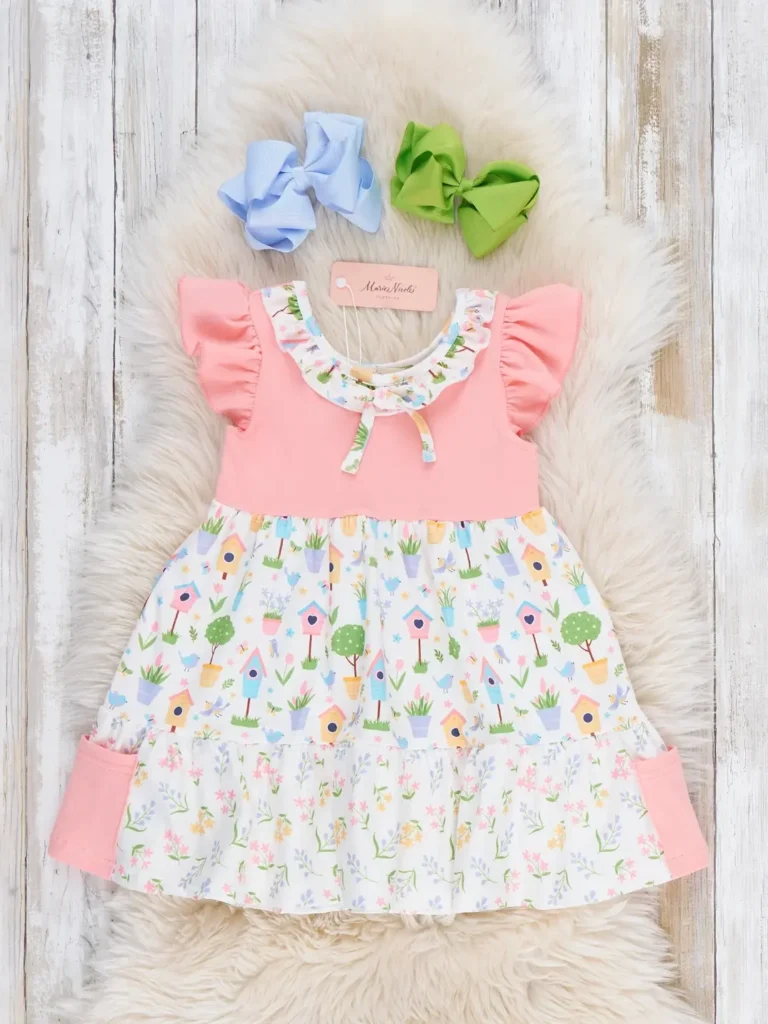
Loud, fast-fashion novelty prints are fading. In 2026, wholesale buyers are shifting toward sophisticated, nature-inspired graphics that elevate everyday wear. These softer, whimsical prints drive higher retail margins and offer boutiques a premium aesthetic that modern parents actively seek.
Why softer prints feel more commercial than overly loud novelty styles
Loud novelty prints trend quickly but die fast, leaving retailers with heavily discounted dead stock. Softer, nature-inspired prints offer timeless, premium appeal. They align perfectly with the rising demand for minimalist aesthetics and guarantee consistent sell-through without aggressive end-of-season markdowns.
Print directions likely to perform well in boutiques
When reviewing tech packs for the upcoming season, choosing the right motifs is critical. Step away from generic licensing and focus on these three highly commercial print directions that guarantee strong retail performance and resonate deeply with modern parents:
- Florals for girls and boys: Gender-inclusive florals are expanding. Think muted botanical line art and subtle earthy blooms for boys’ loungewear, moving away from hyper-feminine pinks toward versatile, cross-category designs.
- Animal, garden, and storybook motifs: Parents gravitate toward nostalgia. Watercolor woodland creatures, subtle insect prints, and classic storybook illustrations on organic cotton provide a premium, charming aesthetic driving emotional purchases.
- Hand-drawn and artisanal-style graphics: Imperfect, sketch-like graphics signal high quality. These artisanal elements separate boutique inventory from mass-market apparel, giving your brand an exclusive feel that justifies premium retail price points.
How to mix printed statement pieces with simpler basics
Maximize your Average Order Value by cross-merchandising prints alongside core basics. Pair a whimsical floral top with solid, earth-toned bamboo joggers. This strategy highlights the statement piece while seamlessly pushing the sale of high-margin, reliable basic separates.
Color-Blocking, Pastels, and Soft Statement Palettes Will Shape 2026
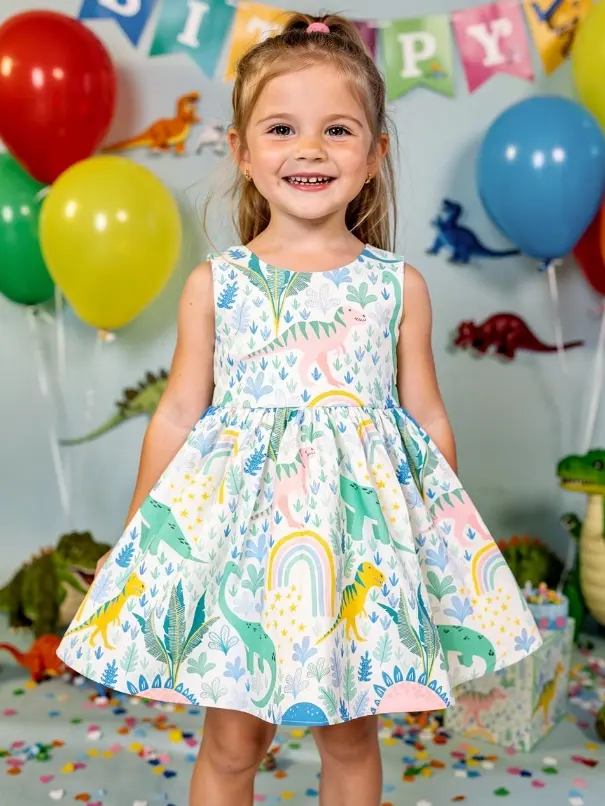
Color choices instantly communicate a brand’s relevance. In 2026, harsh neons are out, replaced by sophisticated palettes that elevate B2B apparel collections. For boutiques, mastering these soft statement colors is the quickest way to capture parent attention and drive high-margin wholesale ROI.
Why color remains one of the fastest ways to signal trend relevance
Modern parents scroll rapidly. Color is the immediate visual hook that stops them. A curated palette signals premium quality before a customer touches the fabric. In my experience manufacturing OEM lines, hitting the right seasonal color story accelerates retail sell-through faster than any specific silhouette.
The most commercially useful color stories for 2026
Choosing the right palette minimizes retail risk. When reviewing 2026 tech packs, focus on versatile hues that merchandise well together. These three core color directions will dominate wholesale orders, offering maximum aesthetic impact while maintaining broad, cross-seasonal commercial appeal:
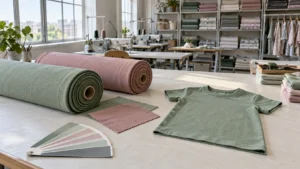
- Soft pastels and airy brights: Dusty rose, butter yellow, and sky blue offer a fresh, modern update to traditional spring palettes, driving high conversions in premium boutique settings.
- Natural neutrals and earthy shades: Terracotta, sage, and warm oat act as essential foundational basics. They pair effortlessly with everything, reducing buyer hesitation and extending the garment’s shelf life.
- Balanced color-block combinations: Sophisticated, muted color-blocking adds visual interest without overwhelming the design. It’s a highly commercial way to introduce playful trends into everyday playwear.
How boutiques can avoid overbuying trend colors
Protect your margins by anchoring your buys. Commit 70% of your budget to seasonless neutrals and organic basics. Use the remaining 30% for soft statement palettes and color-blocking. This strategy minimizes dead stock while keeping your retail floor looking fresh and trend-forward.
Lightweight Layers, Textures, and Elevated Everyday Pieces Will Sell
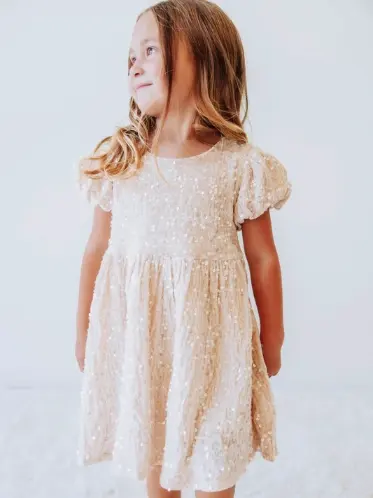
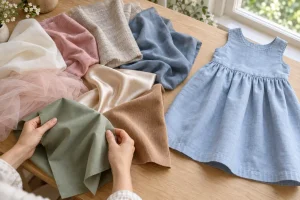
Texture-driven basics and easy layering are showing up repeatedly in 2026 kidswear direction, especially where buyers want simple pieces to feel more considered. Muslin, knits, soft terry, and tactile finishes help everyday styles look more premium without becoming too fashion-risky.
Why texture helps simple silhouettes feel more premium
Texture gives basic shapes more visual value. In wholesale, that matters because a simple dress, set, or pullover can look more elevated when the fabric itself adds softness, depth, or a crafted feel.
Fabrics and finishes to watch
For 2026, I’d watch textured fabrics that still feel practical for children. The best options are soft, easy to layer, and strong enough for repeat wear across everyday categories.
Muslin
- Lightweight and breathable for warm-weather layering.
- Adds softness and a slightly elevated natural texture.
- Works well in dresses, tops, and relaxed sets.
French terry
- Comfortable fabric for casual sets and everyday layering.
- Less bulky than fleece, so it transitions well.
- Strong for pullovers, joggers, and easy outer layers.
Rib knits and soft woven textures
- Rib and knit surfaces make basics feel more refined.
- Soft woven textures add variety without loud design risk.
- Good for elevated everyday tops, dresses, and layering pieces.
Best layering pieces for Spring/Summer and Autumn/Winter transitions
The safest transitional pieces are lightweight pullovers, soft jackets, knitted tops, relaxed overshirts, and easy sets. They extend wear across seasons and help boutiques build outfits with stronger cross-selling potential.
Licensed Graphics and Character-Led Fashion Can Still Be a Fast-Moving Winner
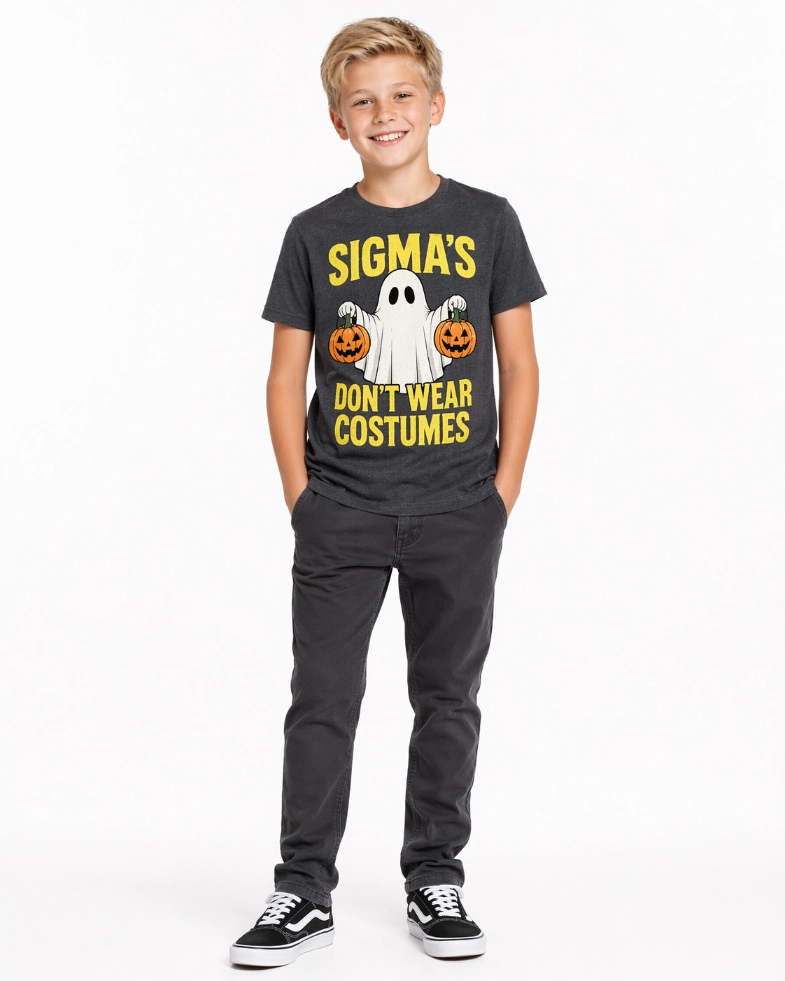
Licensed kidswear still has strong commercial pull, especially when it connects with everyday wear, sleepwear, gifting, and seasonal shopping moments. Market research continues to show solid demand for character-led children’s apparel across major regions.
Why character-led kidswear still moves quickly in the market
Character-led products move quickly because they give children an immediate emotional reason to want the item. For retailers, that kind of built-in recognition can support faster sell-through in the right categories.
Which licensed categories tend to sell best
The strongest licensed categories are usually the most wearable ones. Current market and wholesale listings point again and again to tees, hoodies, sets, and sleepwear as core formats.
Graphic tees
- Easy entry-price item for trend and impulse buying.
- Strong for everyday wear and fast franchise tie-ins.
- Simple to display in boutiques and online stores.
Sweatshirts and pajamas
- Sweatshirts work well for seasonal character demand.
- Pajamas benefit from repeat character appeal in kidswear.
- Both categories suit gifting and cooler-weather promotions.
Back-to-school and gifting capsules
- haracter products fit naturally into school-season buying.
- Licensed apparel often spikes around holiday gifting windows.
- Capsule drops can create urgency without huge inventory depth.
The risks of over-relying on licensed fashion in wholesale
Licensed fashion can move fast, but it is less timeless than strong basics. I’d treat it as a traffic-driving category, not the full foundation of a collection, because trend life, royalty costs, and franchise timing can all affect margin and reorder stability.
How to Choose Wholesale Kids Fashion Trends That Actually Sell
Selecting trends isn’t about guessing; it’s a strategic calculation. Maximizing wholesale margins in 2026 requires looking past viral fads and investing in inventory that practically sells itself by solving real parental pain points.
Focus on styles that solve real parent needs
Parents buy solutions, not just aesthetics. Focus your tech packs on garments offering high-stretch, stain-resistant, or temperature-regulating properties. When your inventory makes a parent’s daily routine easier, you secure guaranteed reorders and deep brand loyalty.
Balance trend-led pieces with evergreen basics
Anchor 70% of your wholesale budget in seasonless, high-margin basics like organic cotton joggers. Allocate the remaining 30% to trend-led statement pieces. This 70/30 ratio minimizes dead stock risks while keeping your boutique fresh and competitive.
Compare trends by age group before you order
Sizing from infant to size 14 requires distinct strategies. What works for a toddler fails for a tween. Analyze the developmental needs of each age bracket carefully before committing to bulk manufacturing orders.
- Baby and toddler: Focus on ultra-soft fabrics like bamboo viscose, easy-snap closures, and GOTS-certified organic cotton to protect highly sensitive skin.
- Little kids: Prioritize durable knee reinforcements, unrestricted movement, and independently manageable closures. This age demands robust playwear that survives daily washing.
- Tweens: Shift focus toward mature silhouettes, trend-forward color-blocking, and sophisticated loungewear. They want elevated aesthetics that mirror adult streetwear.
Use test orders before scaling bulk purchases
Never blindly commit to high-volume manufacturing. Run low-MOQ test orders to evaluate fabric integrity, size chart accuracy, and retail floor reaction. This strategic sampling protects your capital and guarantees bulk order success.
How to Source a Reliable Supplier for 2026 Kidswear Trends
Your brand is only as strong as your supply chain. Finding a B2B manufacturing partner for 2026 requires rigorous vetting. You need a factory that guarantees safety compliance, precise sizing, and reliable communication.
What to ask before placing a wholesale kidswear order
Eliminate manufacturing risks by asking critical questions upfront. Before finalizing any OEM or ODM agreements, require potential suppliers to clearly define their production parameters and compliance guarantees.
- MOQ: Clarify the Minimum Order Quantity per style and color. Ensure their production thresholds align smoothly with your boutique’s purchasing budget and capacity.
- Sampling timeline: Demand exact turnaround times for initial tech pack prototyping and fit samples. Delays here will severely push back your retail launch date.
- Lead time: Confirm strict production and shipping windows. Ensure the supplier can consistently meet your seasonal delivery dates without sacrificing quality control.
- Fabric and safety documentation: Request verifiable proof of CPSIA, CPC, and OEKO-TEX compliance immediately. Never finalize an order without legally binding chemical safety documentation.
Red flags when choosing a kids clothing supplier
Avoid factories that dodge safety certification questions, offer prices drastically below market average, or refuse to provide detailed sampling timelines. Poor initial communication almost always translates to catastrophic bulk production errors.
Should you choose domestic or overseas kidswear manufacturing?
Domestic offers faster turnarounds and easier communication but at premium costs. Overseas production provides highly competitive scaling and advanced OEM capabilities, provided you partner with a factory strictly adhering to US market safety standards.
Why quality control matters more than the lowest price
Chasing rock-bottom manufacturing prices inevitably leads to inconsistent sizing, failed safety tests, and massive retail return rates. Investing in rigorous quality control protects your brand equity and secures long-term boutique profitability.
Conclusion
The wholesale kidswear trends most worth backing in 2026 are the ones that blend trend appeal with real retail practicality. Matching sets, gender-neutral basics, comfort-led playwear, softer prints, textured layering pieces, and sustainability-backed fabrics all align with the broader direction of the children’s wear market and current 2026 trend coverage.
FAQ About Best-Selling Wholesale Kids Fashion Trends For 2026
What are the best-selling wholesale kids fashion trends for 2026?
In 2026, the best-selling wholesale trends are sustainable organic cotton basics, gender-neutral earth-toned silhouettes, and elevated coordinated matching sets. Buyers are heavily prioritizing high-stretch playwear and OEKO-TEX-certified fabrics that offer parents durability, comfort, and chemical-free peace of mind.
Are matching sets still trending in kidswear?
Yes, matching sets remain a top retail driver. They offer parents ultimate styling convenience and naturally increase a boutique’s average order value. For 2026, focus on ribbed cotton loungewear, bamboo travel sets, and textured woven coordinates to maximize wholesale ROI.
Is gender-neutral kids clothing still growing?
Absolutely. Gender-neutral apparel is expanding rapidly because it offers unmatched versatility. Unisex basics in muted earth tones like sage and terracotta allow retailers to serve a broader demographic with fewer SKUs, drastically reducing seasonal dead stock risks.
What fabrics are best for wholesale kids fashion in 2026?
Retail success in 2026 relies on safe, eco-friendly textiles. GOTS-certified organic cotton, ultra-soft bamboo viscose, and durable French terry are the highest-performing fabrics. Always demand strict CPSIA compliance and OEKO-TEX certifications from your manufacturer to guarantee chemical-free safety.
How do I choose a reliable kids clothing manufacturer?
Prioritize OEM or ODM partners who provide transparent safety testing, strict quality control, and meticulously calibrated size charts. Always request samples to verify fabric integrity and confirm their minimum order quantities (MOQs) align with your seasonal purchasing budget.
What kidswear styles work best for boutiques vs online stores?
Physical boutiques excel with highly textured pieces like muslin or rib knits, where tactile quality drives in-person sales. Online stores see massive volume with matching sets and striking color-blocking, as these visually appealing items stop the scroll and bundle easily.