The best material for a winter jacket depends on the part you’re choosing. Down is worth considering for warmth with low weight and small packed size. Synthetic insulation is often more practical in damp conditions. Nylon, polyester, and wool can all work as outer fabrics, but they do different jobs from the filling inside.
I’d start by asking where you’ll wear the jacket and how you’ll care for it. Then look at its shell, insulation, and lining separately. That gives you a better basis for choosing than a thick feel or an impressive fabric name.
Which Materials Work Best in a Winter Jacket?
For a lightweight insulated jacket, consider a nylon or polyester shell with down or synthetic fill. For a structured everyday jacket, wool or a wool blend may suit you better. Choose the lining for comfortable wear over your usual clothes, then check the finished jacket’s weather protection and care instructions.
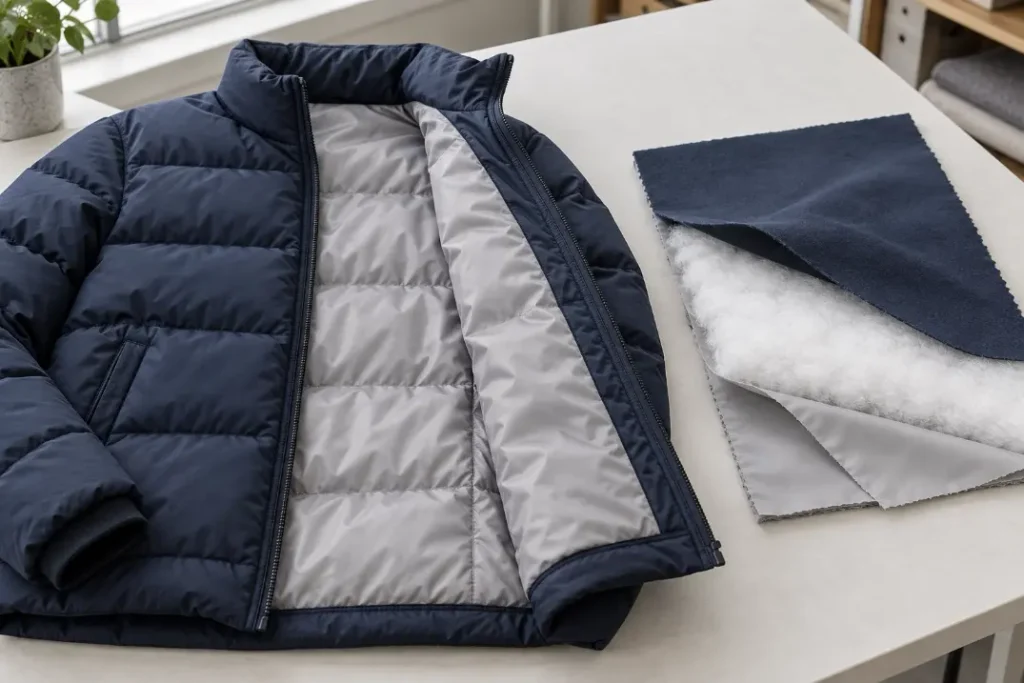
Winter jacket materials do different jobs. Comparing nylon with down is like comparing a roof covering with the insulation underneath it: both matter, but one doesn’t replace the other.
| Jacket part | Typical options | Main job | What the material name doesn’t tell you |
|---|---|---|---|
| Outer shell | Woven nylon, polyester, wool blends, canvas | Forms the outside of the jacket and contributes to protection and durability | Whether the finished jacket is waterproof or how well it resists wear |
| Insulation | Down or synthetic fill | Traps air to reduce heat loss | How much filling is used or how evenly it is distributed |
| Lining | Smooth woven fabric, fleece, pile | Covers the inside and affects feel and layering | Whether the whole jacket will be warm or comfortable for your activity |
Not every jacket has three separate components. A fleece jacket can use one main fabric to provide its body and insulation. A lined wool jacket may have no separate fill at all.
The name on the product page isn’t a warmth rating either. The differences between coats and jackets help explain shape and coverage; you still need the material and construction details to compare two actual garments.
What Is the Best Outer Fabric for a Winter Jacket?
Nylon and polyester are useful starting points for lightweight padded jackets and technical shells. Wool and wool blends deserve consideration when you want a more structured everyday garment. The best outer fabric for a winter jacket depends on whether you need rain protection, low weight, a tailored look, or some combination of these.
A school jacket that regularly rubs against a backpack has a different job from a jacket carried in a bag and worn only at rest. Ask whether the fabric was chosen for that job. A fabric that feels soft and light tells you very little about abrasion resistance or rain protection.
Nylon vs. Polyester: Compare the Fabric, Not Just the Fiber
Both nylon and polyester fabric can be used for shells and linings. When choosing a nylon or polyester jacket shell, compare the finished fabrics, including their construction and weather-protection features.
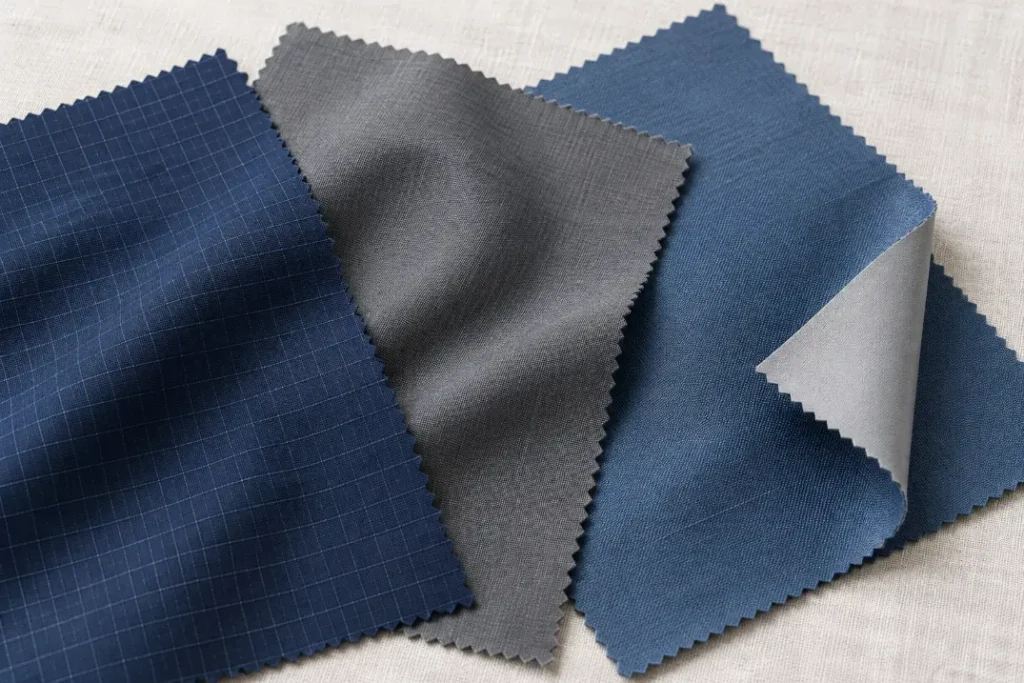
Ripstop describes a reinforcing weave that helps limit tears spreading; it doesn’t make fabric impossible to snag or puncture. A coating or membrane serves a different purpose, contributing to weather protection. Neither term tells you everything about the jacket.
I’d try the jacket with my usual bag and layers, checking movement, stiffness, and noise. Those checks help you judge comfort, but durability and rain protection need supporting specifications. A heavier feel alone wouldn’t persuade me to pay more.
Wool and Wool Blends: Useful for Structured Everyday Jackets
Wool is worth considering when you want warmth in a jacket with a tailored or textured appearance. For short outdoor journeys and everyday wear, I would happily put appearance and fabric feel ahead of the ability to pack the jacket into a small bag.
Don’t judge a wool blend by its percentage alone. Look at the fabric’s thickness and structure, the lining, and whether the garment has additional insulation. Among different coat styles, the same broad fiber description can appear in quite different constructions.
Nor does wool automatically mean either weatherproof or unsuitable for rain. Woolmark’s OPTIM fabric explanation shows how a particular tightly woven wool construction can improve wind and water resistance. That is evidence about an engineered fabric, not a promise for every wool jacket.
Check the care label before settling on a wool garment. If its cleaning requirements don’t fit your routine, its appearance and feel may not compensate for the inconvenience.
Cotton Canvas and Leather: Choose Them for the Right Job
Canvas and leather can suit a workwear or casual jacket, but their substantial feel doesn’t tell you what insulation is inside. Check the lining and filling before treating either as your main cold-weather garment.
For canvas, distinguish ordinary cotton cloth from a wax-treated fabric. The treatment changes the care decision: Barbour advises against machine-washing or dry-cleaning its waxed cotton jackets. You shouldn’t transfer the washing instructions from a cotton T-shirt to a treated outer layer.
Leather needs a similarly specific approach. Schott’s care advice notes that cleaning and conditioning depend on the materials used. If easy home washing is essential, I’d settle that question before buying, rather than assume you can find a suitable cleaning product later.
Down or Synthetic Insulation: Which Is Better for Winter?
I’d lean toward down when carrying weight and packed size matter. For regular exposure to damp conditions, synthetic fill would be my first option to compare. Neither choice removes the need for a suitable shell or enough insulation for your use.
Rab’s comparison of down and synthetic insulation identifies these same trade-offs: down’s warmth relative to weight and compressibility, and synthetic insulation’s usefulness around moisture. Treat them as starting points when comparing winter jacket insulation materials, then check the actual garment.
Down: A Strong Option When Weight and Packability Matter
Down’s loft holds insulating air, making it useful for warmth with low weight and a small packed size. I’d consider it for cold, dry conditions, and pay more for an upgrade only if the weight saving or packability helps my routine.
Know the difference between fill power and fill weight: fill power describes loft under test conditions, while fill weight tells you how much filling is used. A higher fill-power number alone doesn’t mean a warmer jacket. IDFL also identifies filling distribution across the body, sleeves, and hood as relevant to uniform insulation.
Check the baffles, the compartments holding the filling, because their construction affects loft. Wet down can clump and lose insulating performance. Rain protection and proper drying still matter, even with water-resistant down. Follow the garment’s care instructions rather than assuming a treated filling makes the jacket waterproof.
Synthetic Fill: A Practical Option for Damp, Everyday Use
Synthetic fill is a useful option when moisture is hard to avoid. It is commonly made from polyester, but that doesn’t mean every polyester-filled jacket has the same structure or warmth. Tolerating damp conditions also doesn’t make the filling waterproof.
Rab describes several synthetic insulation structures, including sheets and loose, lofted fill. Different constructions can suit different activities. A jacket designed for movement should not be judged only by how warm it feels while you stand indoors.
A jacket that needs a drying method you can’t provide is an awkward purchase, even if its material sounds ideal. Compare the care instructions while you’re still choosing. Synthetic insulation also needs appropriate care; it isn’t permission to wash and dry the garment however you like.
When comparing fillings, look for these details:
- The insulation type, not just a broad claim such as “thermal filling.”
- The quantity and its unit. Grams per square meter describe an area-based amount; total fill weight describes the filling in a garment.
- Whether the body, sleeves, and hood use the same insulation or different arrangements.
- How the filling is held in place and what the maker says about intended use.
If a listing gives a number without a unit or explanation, ask. Don’t compare it directly with another product’s fill weight, and don’t convert it into a minimum outdoor temperature. That would give the number more meaning than the available information supports.
Which Winter Jacket Lining Should You Choose?
Choose a winter jacket lining material that works with what you wear underneath. A soft interior can feel inviting. Try it over a sweater too, and see whether the sleeves slide comfortably and leave enough room to move.
The lining may contribute insulation, or it may mainly cover the internal construction. Those roles are different. A jacket with a thin, smooth lining can still have substantial filling behind it.
Smooth Linings for Easier Layering
A smooth lining is worth trying if textured sleeves tend to catch when you put on a jacket. Nylon and polyester can both be used here; the finished surface matters more to this particular decision than the fiber name.
Try the garment over the clothing you actually plan to wear. Bend your elbows and reach forward. If your sweater sleeves bunch up, check whether the problem is friction, a narrow sleeve, or both. Buying a larger size may not address the cause.
For me, easy dressing matters more than a plush first impression. Smoothness doesn’t prove breathability, though, and a quick fitting cannot measure moisture transfer through the entire garment.
Fleece and Pile Linings for a Softer Feel
Fleece and pile surfaces can add a cushioned feel and insulating air spaces. Fleece describes a fabric structure, not a promise that it contains wool. Polartec explains fleece as a knitted fabric with a raised surface; its range also illustrates that wind resistance varies with construction.
When buying a fleece-lined jacket, check where that material is used. It might line the body but not the sleeves, or appear only in the collar and pockets. A photograph of a soft collar doesn’t establish that the whole jacket has a fleece lining.
For a child who wears bulky school knitwear, try the jacket over that knitwear before choosing a thick pile interior. You may prefer a smoother sleeve even if you like the warmer feel of a fleece-lined body.
Does a Waterproof Fabric Make a Winter Jacket Warmer?
A waterproof fabric helps manage outside moisture, but it doesn’t replace insulation. An uninsulated rain shell and a padded waterproof jacket can both protect against rain while offering very different amounts of warmth on their own.
The distinction between waterproof and water-resistant winter jackets is especially easy to miss when a product description mentions DWR. That abbreviation means durable water repellent, a treatment that helps water bead on the outer surface.
GORE-TEX explains that DWR and the waterproof membrane have separate roles. If the membrane is intact, loss of surface water repellency does not by itself mean that membrane has stopped blocking rain. The outer fabric may nevertheless become saturated and feel cold or clammy.
Before choosing a jacket for wet weather, ask:
- Does the brand describe the garment as waterproof, or only mention a water-repellent finish?
- Does it explain the membrane or coating, seam treatment, and protection around openings?
- Is insulation included, or is the garment intended to go over a separate warm layer?
A product photo showing droplets on the fabric answers very little about seams or prolonged rain exposure. Nor does a membrane name tell you how much insulation the jacket contains.
When comparing winter jacket materials for wet weather, I’d put clear weather-protection information ahead of a fluffier lining. For mostly dry weather, that priority may change. Either way, look at the combination you are buying rather than assuming one impressive feature takes care of every winter condition.
Why Can Two Polyester Jackets Feel So Different?
Two jackets can share a fiber label while using that fiber in different ways. “100% polyester” doesn’t tell you whether you’re buying knitted fleece or a woven shell surrounding separate insulation.
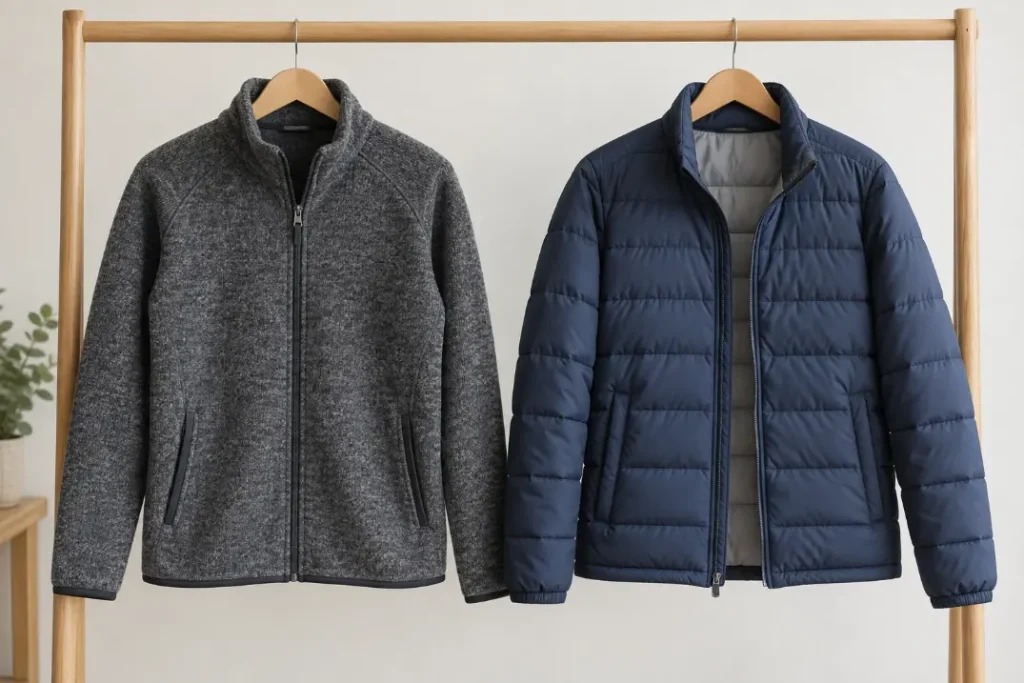
Patagonia’s Men’s Better Sweater Fleece Jacket, style 25528, uses recycled polyester knit fleece as its main body fabric. Its Men’s Nano Puff Jacket, style 84213, uses recycled polyester ripstop for the shell and lining, plus separate PrimaLoft recycled polyester insulation. The fiber is similar; its role and construction are different.
I’d check what forms the shell, what provides warmth, and what lines the inside before comparing two jackets. Check their weather-protection claims too. These examples illustrate published specifications, not wear-test results or a recommendation to buy one over the other.
How Do You Match Winter Jacket Materials to Your Routine?
Start with the parts of your day the jacket actually has to cover. Waiting outside, walking quickly, and moving between shops place different demands on clothing, even when the weather forecast is the same.
The combinations below cover lightweight winter jacket materials, wet-weather options, and everyday fabrics. They are starting points I would consider, not temperature guarantees or the results of comparative testing.
| Your routine | Material combination to consider | Why it may fit | What to check |
|---|---|---|---|
| Cold, mostly dry days when packed size matters | Lightweight woven shell with down insulation | Prioritizes warmth relative to carrying weight and packed volume | Fill quantity, construction, weather protection, and drying instructions |
| Regular rain or wet snow | A waterproof outer shell with suitable synthetic insulation | Combines rain protection with insulation chosen for damp conditions | Evidence for the waterproof claim, seam treatment, openings, ventilation, and care instructions |
| Brisk walks and frequent indoor stops | Insulation selected for active use with a shell appropriate to the weather | Prioritizes managing heat during movement and indoor stops | Ease of ventilation, warmth when you stop, and comfortable movement |
| Short everyday journeys with a preference for a tailored look | Wool or wool-blend outer fabric with a suitable lining | Puts everyday appearance and fabric feel alongside warmth | Coverage, additional insulation, cleaning needs, and actual rain resistance |
For example, suppose you’re choosing between a very warm padded jacket and a lighter insulated option for a brisk walk followed by a heated train. I’d consider how easily each can be opened, removed, and carried. The warmest option while standing still may be inconvenient for that routine.
For a child, also think about what will be underneath. A jacket that works over a thin top can feel quite different over school knitwear. The broader winter layering choices for kids belong to that whole-outfit decision; the material list alone can’t settle it.
If no single jacket matches every part of your winter, decide which conditions matter most before spending more. Otherwise, it’s easy to buy extra insulation when the missing feature was rain protection, or a technical shell when you mainly wanted comfortable everyday warmth.
What Should You Check Before Buying a Winter Jacket?
Before paying, open the materials and care sections of the product page. If you’re looking for the warmest material for winter jackets, check how much insulation the garment contains before choosing by fiber name. I would rather see clear specifications than a long list of impressive terms without explanations.
Use these five checks to compare your final choices:
- Can you identify the outer fabric, lining, and any separate filling? A single fiber percentage may describe only one component.
- Are the insulation details understandable? Check what each number measures and whether the stated fill weight applies to a particular garment size.
- Does the weather claim match your needs? Water repellent, wind resistant, and waterproof are different descriptions, not interchangeable badges.
- Can you follow the entire care routine, including drying? Account for special cleaning requirements before deciding a jacket is good value.
- What important information is missing? Ask the seller rather than assigning an imagined performance level to an unfamiliar material name.
I think an upgrade should solve a problem you can name. Lower packed weight may justify a higher price if you carry your jacket for hours. It offers less value if the jacket usually travels from a hallway hook to a nearby shop. The same applies to a lining you love touching but dislike wearing over your sweater.
For me, the best material for kids’ winter jackets also has to work with the family’s care routine and the clothes a child wears underneath. When you’re choosing a kids’ winter coat, follow the material decision with a separate check of fit, movement, and relevant safety features.
For Kidswear Brands: Put Each Material in the Brief
If you’re developing a jacket, “polyester winter jacket” leaves too much open to interpretation. I’d give a supplier a brief that separates the components and explains the intended use.
Include these details before discussing substitutes:
- The shell, lining, and filling, listed separately with the specifications you already know.
- The intended conditions, activity, and care routine, so proposed materials answer the same brief.
- The sample information and performance evidence you need to evaluate the finished garment.
That makes a conversation about custom kids’ jacket manufacturing more useful. If a supplier suggests another fabric, ask which part of the brief it meets and what changes elsewhere in the jacket. Don’t accept “same composition” as a complete explanation of equivalence.
Conclusion: Choose a Material Combination, Not a Single Winner
The best material for a winter jacket is the one that works in the right construction for your day. I’d consider down when low weight and packability matter, synthetic fill when damp conditions are a regular concern, and wool when the garment’s shape and everyday feel suit your routine.
Then check the shell and lining on their own merits. Before buying, you should be able to explain what protects you outside, what provides insulation, and whether you can care for the finished jacket. If the product page leaves those questions unanswered, ask before paying more for the name on its tag.
FAQs About Winter Jacket Materials
Is a 100% Polyester Jacket Warm Enough for Winter?
Yes, polyester can be warm enough for winter, but the percentage alone doesn’t answer the question. It can be used in a thin shell, a fleece fabric, or separate insulation. Check which component the label describes, then look at the filling, construction, and intended use. A polyester shell without insulation is a different purchase from a padded polyester jacket.
Is a Wool Jacket Warmer Than a Down Jacket?
To compare a wool jacket with a down jacket, look beyond those two material names. Wool may form the main outer fabric, while down is usually filling inside another fabric. Warmth depends on the complete construction, amount of insulating material, and coverage. I wouldn’t rank them without knowing what else is in each jacket.
Does a Higher Down Percentage Mean a Warmer Jacket?
Not by itself. Down percentage describes the composition of the filling; fill power describes loft under test conditions; fill weight tells you how much filling is used. These numbers answer different questions. Distribution and jacket construction also matter, so a higher percentage isn’t a complete comparison of finished garments.
Does Recycled Polyester Keep You as Warm as Virgin Polyester?
Recycled content tells you about the material’s source, not the jacket’s warmth rating. Compare the insulation structure, quantity, and finished construction rather than assuming recycled polyester is warmer or colder. Nor should you assume all recycled and virgin fabrics perform identically simply because both are described as polyester.
What Is the Easiest Winter Jacket Material to Care For?
I’d start with a jacket whose complete care instructions match your usual laundry setup. Some synthetic and fleece garments allow straightforward home washing, but finishes, fillings, and trims can change the instructions. Check drying requirements too. A machine-washable label isn’t much help if you can’t complete the recommended drying process.
References & Sources
These sources support the technical explanations and product examples above. My buying preferences are editorial judgments, not results from independent wear or wash tests. Sources checked September 24, 2026; product specifications may change.
- Filson: Signature Materials, Ripstop Nylon. Reinforcing threads and the limits of tear resistance.
- Woolmark: OPTIM Spinning Technology. Wind and water resistance in a specific engineered wool fabric.
- Barbour Australia: FAQ. Washing and dry-cleaning restrictions for Barbour waxed cotton jackets.
- Schott N.Y.C.: Repair Information and Leather Care. Material-specific cleaning and conditioning advice.
- Rab: Should I Pick Down or Synthetic Insulation?. Weight, packability, and moisture-related trade-offs.
- IDFL: Jacket Testing Information. Filling composition, loft testing, net fill weight, and distribution by panel.
- The North Face: A Guide to Insulated Jackets for Winter. Fill power, baffle construction, and down’s loss of insulating performance when wet.
- Rab: Synthetic Insulation Explained. Polyester-based sheet and loose-fill insulation structures.
- Polartec: Insulation Fabrics. Raised fleece surfaces, air pockets, and differences in fabric construction.
- GORE-TEX: Durable Water Repellent Care. The separate roles of surface repellency and the waterproof membrane.
- Patagonia: Men’s Better Sweater Fleece Jacket, Style 25528. Published knit-fleece materials and care instructions.
- Patagonia: Men’s Nano Puff Jacket, Style 84213. Published shell, lining, and separate synthetic insulation specifications.