Are bamboo baby clothes worth it? They can be if you like the feel, the fit works for your baby, and the care instructions suit your laundry routine. But you don’t need to replace perfectly good clothes, and a higher price doesn’t mean you’re buying something healthier or safer.
I’d compare the actual clothes before choosing a favorite fabric. Below, we’ll look at comfort, price, and care using published product information, not a hands-on product test. You’ll also find a simple cost comparison to help you decide whether one piece is worth trying.
Are Bamboo Baby Clothes Worth Buying?
They can be worth the money when you prefer the soft feel and flexibility, and the outfit fits your baby and your routine. I’d compare its price and wash instructions with the clothes you already use. Buying one piece to try makes more sense than replacing a whole drawer of clothes that work.
Advantages of Bamboo Baby Clothes
A soft feel and comfortable stretch are the main attractions. In Babylist’s sponsored review of Little Sleepies Zippies, the writer and quoted parents praise those qualities. A flexible fabric can make it easier to guide your baby’s arms and legs through the openings. In a stretchy bamboo blend, the knit structure and added spandex contribute to that give; it isn’t a benefit of bamboo alone.
Who Are Bamboo Baby Clothes Best For?
They’re a sensible option if you want a softer-feeling sleeper, can follow its care instructions, and have room in your budget. When weighing the pros and cons of bamboo baby clothes, I’d think about which of these situations sounds like you:
| Your situation | What matters most | A sensible next step |
|---|---|---|
| You want a soft-feeling outfit and can follow its care instructions | Fit, inside finish, and ease of dressing your baby and washing the outfit | Consider one piece before buying several |
| You depend on a fixed wash-and-dry routine | Whether that specific garment can join your usual loads | Read the care instructions before comparing prints |
| Your baby already has enough comfortable, well-fitting clothes | Whether another outfit fills a real need | Keep using what works; there’s no need to replace it |
Bamboo vs Cotton Baby Clothes: Which Should You Choose?
If you’re comparing bamboo and cotton baby clothes, put two similar outfits side by side. Try the bamboo-blend option if you prefer its feel and can manage its care. Choose cotton if that particular outfit is comfortable, fits well, and offers better value for your everyday needs.
Different types of cotton fabric can feel quite different, so compare the actual outfits rather than the fiber names. Cotton isn’t automatically cheaper or washable at high temperatures. Check the label, and keep using cotton clothes that already work.
What Does the Bamboo Label Actually Mean?
Most of the soft, stretchy clothes sold under the bamboo name need a closer look at the fiber label. Bamboo viscose baby clothes contain a manufactured fiber made using bamboo as a plant source. They aren’t simply woven from strips of the plant.
The FTC’s guidance on bamboo fabrics distinguishes actual bamboo fiber from rayon or viscose made from bamboo. Processing the plant into rayon also doesn’t establish that the finished clothing retains bamboo’s naturally antibacterial properties.
Rayon from bamboo describes the fiber, not how the finished outfit will fit or wash. If you also see modal while shopping, the difference between modal and viscose explains why the names aren’t interchangeable. Read the full composition before comparing two pieces.
Are Bamboo Baby Clothes More Comfortable?
You may prefer how a particular bamboo outfit feels. That’s a reasonable reason to buy it. The mistake is assuming every garment with the same fiber name will feel or wear the same way.
Look Beyond the First Touch
When shopping for soft bamboo baby clothes, look at the surfaces your baby’s skin will actually touch. A smooth outside doesn’t tell you much about a bulky seam or the back of a zipper.
I’d check three places:
- The neck and chin: look for the zipper cover and any rough label edges.
- The inside seams and cuffs: check for bulky joins and openings that seem difficult to use.
- The diaper opening: consider how much of the outfit needs removing for a change.
Are bamboo baby clothes breathable? The fiber name alone isn’t enough to answer that. Fabric thickness, knit structure, fit, and the other clothes worn with it affect the comparison. I wouldn’t treat a soft surface as proof that an outfit prevents overheating.
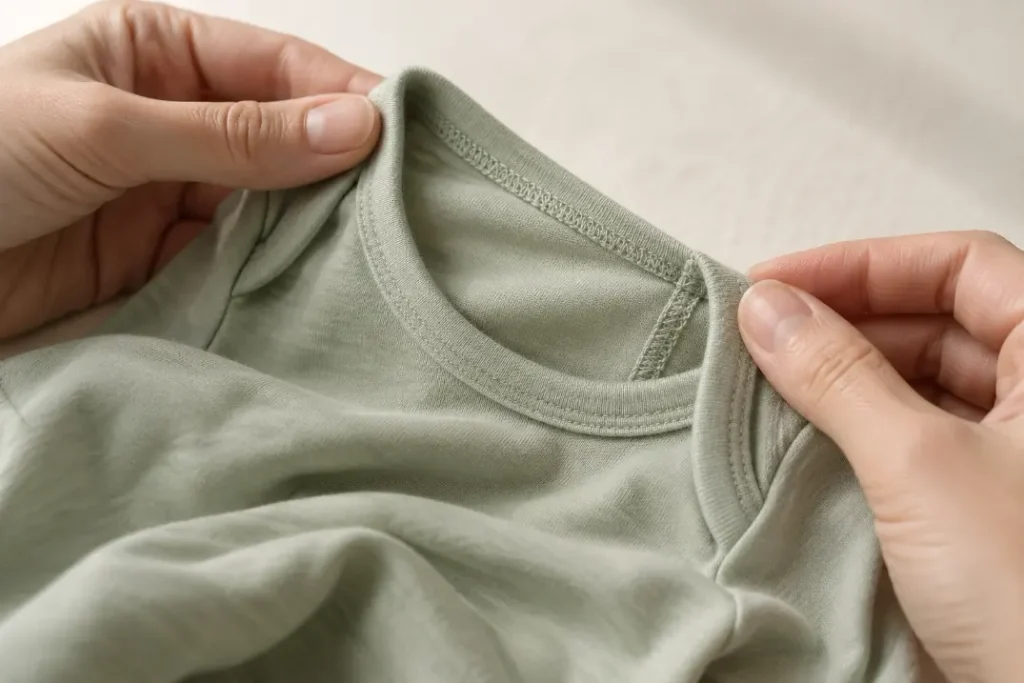
Later, notice changes such as pilling, thinning, or roughened seams. These are things to check, not defects you should expect in every bamboo garment. They also belong among the quality checks in bamboo babywear production, before clothes reach your drawer. A sample’s initial softness doesn’t tell the whole story.
Stretch Does Not Guarantee Longer Wear
Stretch can make dressing easier, but it doesn’t guarantee more months of use. A sleeper may still stretch across the tummy after its feet or body length have become too short.
So, do bamboo baby clothes last longer? Without comparable wear and wash testing, I wouldn’t promise that. Check your baby’s current fit rather than relying on claims about growing into or stretching out an outfit.
You shouldn’t need to pull hard to close it, and continued stretch isn’t a reason to ignore a fit problem. Sleepwear also needs its intended fit; buying it loose for extra growing room isn’t an automatic money-saving solution.
Sensitive Skin Needs Individual Care
If you’re considering bamboo baby clothes for sensitive skin, be cautious about promises of fewer rashes or better sleep. A soft-feeling garment isn’t a treatment, and the word bamboo doesn’t guarantee that your baby will tolerate it.
The American Academy of Pediatrics’ eczema guidance recommends soft fabrics such as 100% cotton and mild, fragrance-free laundry detergent. That advice does not establish that bamboo clothing is better for eczema.
If your baby already has a skin-care plan, follow it. Ask their clinician about persistent irritation rather than repeatedly changing fabrics and hoping the next purchase will solve it.
How Should You Compare Bamboo Baby Clothes Prices?
Compare the same kind of clothing first. A full-length zippered sleeper and a short-sleeved bodysuit cover different needs, even if both listings say baby basics. Comparing their prices without noticing that difference can make either option look misleadingly expensive.
Compare Like-for-Like Clothes
The Little Sleepies Black Crescent Zippy was listed at $36 when checked on September 16, 2026. That’s one item’s listed price, not an average for bamboo baby clothes or a guarantee of what you’ll pay at checkout.
For your own comparison, check the price per piece, the size you need, and what the outfit includes. Then add delivery charges and check return conditions. A multipack price and a single-item price shouldn’t sit in the same comparison without that adjustment.
If you’re wondering why bamboo baby clothes are so expensive, the fiber label won’t explain an individual brand’s price. Branding, design, retail decisions, and garment features can all be part of the offer. A product page usually won’t tell you how much each contributes.
Look instead for differences you can use. Would you prefer that zipper arrangement? Does the available size fit your baby now? Would you still choose it without the limited-edition print? Those questions help you judge whether it’s worth the price without guessing the manufacturer’s costs.
Count Wears, Not Just Price Tags
A simple calculation can help: divide the purchase price by the number of times the garment is worn. Before buying, that number is only an estimate; after use, you can count actual wears.
Here’s an illustrative example using invented prices and wear counts, not product-test results:
- A $30 outfit worn 20 times costs $1.50 per wear.
- A $15 outfit worn 20 times costs $0.75 per wear.
- The $30 outfit would need 40 wears to reach $0.75 per wear.
For the $30 outfit to match the cheaper outfit’s cost per wear, you need those extra 20 wears. Will you get them before it’s outgrown? You might, but I wouldn’t count on it just because the fabric stretches. You may still prefer the more expensive piece for its fit or design; that’s a separate reason to buy it.
This calculation leaves out washing costs and your time, which matter too. Don’t keep your baby in an outgrown outfit to improve the number. Use cost per wear to question a purchase, not to justify squeezing more use out of unsuitable clothing.
How Much Care Do Bamboo Baby Clothes Need?
Care instructions vary between bamboo garments. Some allow low-temperature tumble drying; others may come with different instructions. Find out before buying, especially if separating laundry or finding drying space is difficult for you.
Start With the Garment’s Care Label
The care instructions for the Black Crescent Zippy specify turning it inside out, machine washing in cold water on a gentle cycle, and tumble drying on low. That particular item doesn’t require hand washing or air-drying only.
Can bamboo baby clothes go in the dryer? This example shows that some can. It doesn’t give permission to tumble dry every bamboo sleeper. Read the instructions for the garment you own, including the drying setting, before treating it like another item from the same brand.
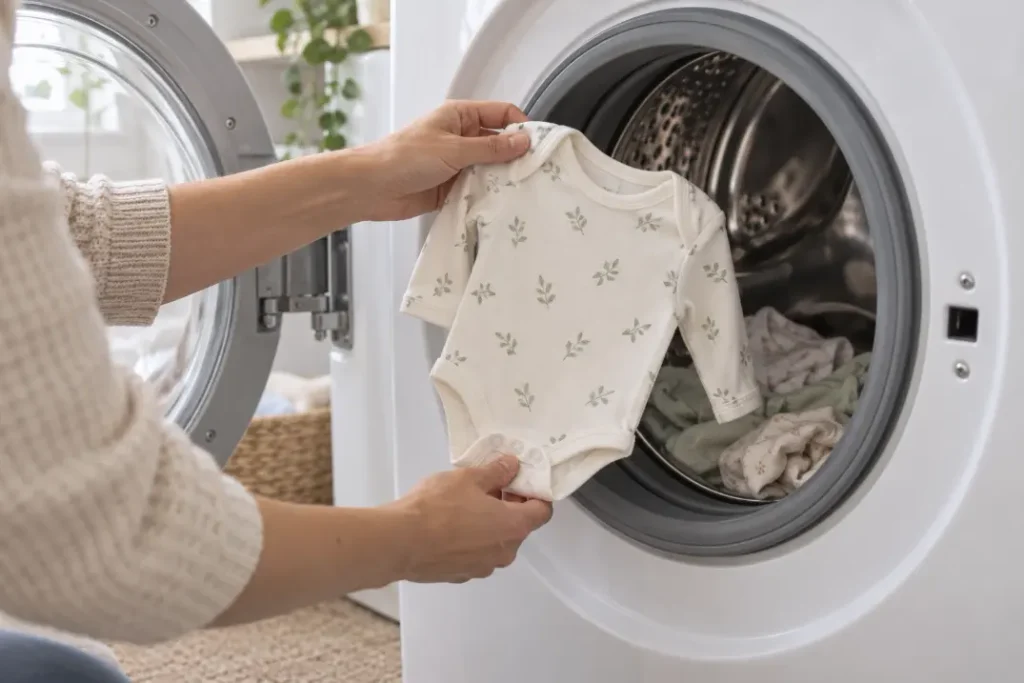
Washing bamboo baby clothes also means watching for different kinds of change. Pilling refers to small balls of fiber on the surface; shrinkage is a change in dimensions. Holes or separating seams are different problems again. If something changes unexpectedly, photos and the care steps you followed give customer service a clearer question than simply saying the fabric didn’t last.
I wouldn’t rely on a universal shrinkage percentage or assume that following the label guarantees no wear. Check the actual garment after washing, including whether its fit has changed. Shrinkage and pilling also come up when comparing modal and cotton fabrics after washing, so switching away from bamboo doesn’t remove the need to check care instructions.
Consider Your Laundry Routine
Suppose you need washed clothes dry and ready again the same evening. An outfit that must hang dry could be awkward for you, even if someone with more drying space and spare clothes finds it easy to manage.
Think about where you’ll dry it, whether it needs a separate load, and what your baby will wear while you wait. The disadvantages of bamboo baby clothes may be very ordinary: the particular item you chose doesn’t fit your laundry habits.
If its instructions won’t work for you, I’d choose something else. You don’t need to reorganize a manageable routine around a new sleeper.
What Should You Check Before Ordering?
Before buying bamboo baby clothing, open the full product details. I’d work through these five checks on the exact item and size you’re considering:
- Read the complete composition. Look for the actual fiber names and blend percentages, not only bamboo in the title.
- Check current fit and openings. Our baby and toddler size chart shows measurements alongside age labels; use the seller’s own chart to choose this item’s size. For bamboo baby sleepers, check body and foot length as well as width. Follow the intended sleepwear fit, and don’t buy snug-fitting pajamas loose for growing room.
- Look inside. Find photos of seams, cuffs, labels, and zipper backing. Ask the seller if an important detail isn’t shown.
- Read care and return conditions. Decide whether the washing and drying instructions work for you. Check what trying on, washing, or removing tags means for returns.
- Confirm the need and total price. Include delivery, and ask what this piece adds to the clothes you already have. A discount alone isn’t a reason to buy several.
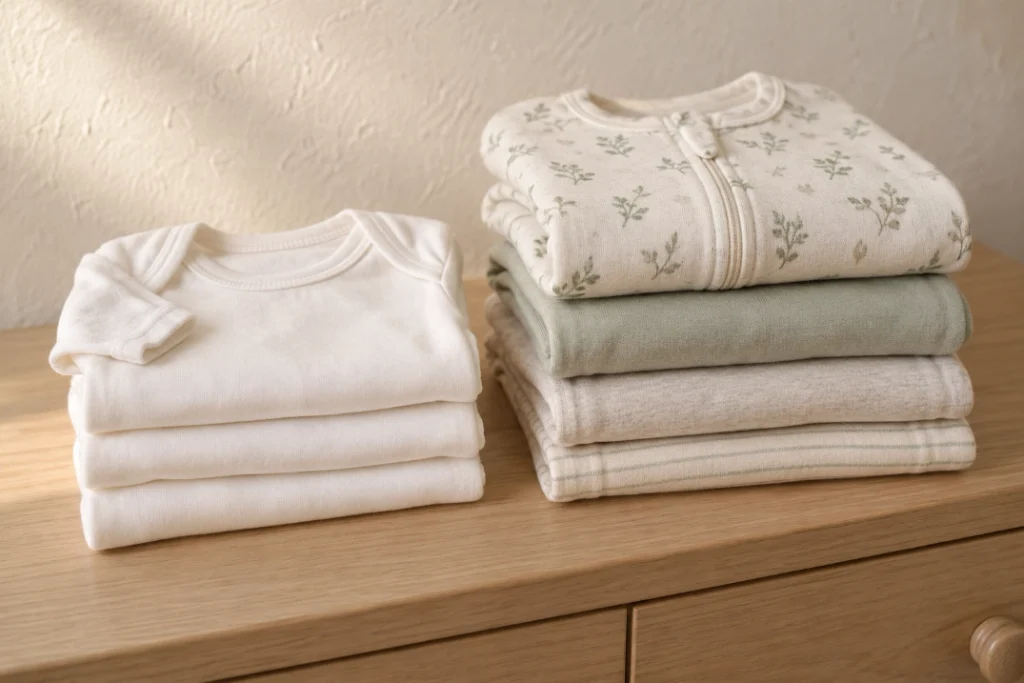
If you’re unsure, consider one piece you intend to keep. Use it according to its instructions before deciding whether you want more. Don’t assume a retailer will accept washed or worn clothing back.
Conclusion
I’d judge bamboo baby clothes by whether you actually want to use them. A comfortable fit, useful openings, an acceptable price, and manageable care can make a piece worth buying. A convincing fabric description can’t make up for the wrong size or a wash routine you won’t follow.
Choose one actual outfit and check the details before ordering. If it suits you, try it. If the clothes in your baby’s drawer already do the job, keeping them is a perfectly reasonable decision too.
Frequently Asked Questions
Are bamboo baby clothes suitable for newborns?
They can be, but choose clothing intended for your newborn’s size and use. Check fit, openings, and instructions rather than treating bamboo as an age-suitability label. For premature babies or babies with additional care needs, follow your clinical team’s clothing advice.
Are bamboo baby clothes warm enough for winter?
Some can be part of a winter outfit, but the fiber name isn’t a warmth rating. Consider thickness, the room or outdoor conditions, and other layers. Our guide to polyester in baby winter clothes explains those different clothing roles. For sleep, follow AAP guidance on avoiding overheating, rather than adding layers because it’s winter.
Does a bamboo label mean the clothes are organic?
No. A plant source isn’t proof of organic certification for the finished garment. Check the specific certificate and what it covers. OEKO-TEX STANDARD 100 concerns testing for harmful substances; that label alone doesn’t establish that the clothing is organic.
Should you size up in bamboo baby pajamas?
Not automatically. Follow the size chart and intended fit. If pajamas are labeled snug-fitting, don’t deliberately buy them loose for growing room. US rules distinguish qualifying infant garments from tight-fitting sleepwear, as the CPSC’s garment guidance explains; not every baby outfit belongs to the same category.
Should you wash bamboo baby clothes before first wear?
Yes, washing new baby clothes before use is the general advice in the AAP’s baby-clothing guidance. Follow the garment’s care instructions. This is routine preparation for new clothing, not evidence that bamboo clothes are inherently hazardous or need a special detox wash.