Baby clothing is one of those rare product categories where passion and profit genuinely align. Parents spend thoughtfully, gift generously, and return loyally to brands they trust. If you’ve been thinking about launching your own infant clothing line — whether as a side income or a full business — you’re entering a market with real, sustained demand. The key is starting with the right manufacturing partner. That’s exactly what this guide walks you through.
Why Selling Baby Clothes Online Makes Strong Business Sense
Before jumping into platform comparisons, it’s worth understanding why this particular category rewards founders so consistently — and why online is the right channel for it.
- Demand is steady and emotionally driven. Parents, grandparents, and gift-buyers shop for infant clothing year-round, across every economic cycle. Unlike trend-dependent fashion, newborn basics and milestone outfits carry reliable repeat-purchase behavior that doesn’t evaporate when consumer confidence softens.
- Online removes the geographic ceiling. A physical boutique limits you to foot traffic. When you sell baby clothes online, a founder in Ohio can reach a grandmother in London shopping for a christening gift. Your potential customer is every parent with a browser — and that’s an enormous number.
- Private-label margins are genuinely competitive. With a quality baby wear manufacturer and sensible minimum order quantities, infant clothing brands can achieve healthy retail margins — particularly in the organic and premium-positioned segments where parents demonstrably pay more for certified, skin-safe quality.
- The gifting economy works powerfully in your favor. Baby showers, birth announcements, first birthdays, and holiday dressing all drive gifted purchases at higher average order values. Beautifully packaged infant clothing sells itself as a gift, which means revenue climbs without proportionally increasing your marketing spend.
- Low entry barrier, high brand moat. Starting with low MOQs through a private label manufacturer lets you test designs, validate demand, and iterate quickly — without heavy capital exposure. A distinctive brand identity, once built, is genuinely hard to replicate.
The 10 Best Places to Sell Baby Clothes Online
Not every platform will match your business model — and that distinction matters more than most new sellers realize. Some reward brand-building; others reward speed and volume. Some attract boutique buyers willing to pay a premium; others draw parents hunting for the lowest price. Here’s an honest look at where each fits in the bigger picture.
1. Shopify — Best for Building a Standalone Baby Clothing Brand
Website: shopify.com
Shopify is a complete e-commerce platform that lets you build your own online store for infant and children’s apparel, free from marketplace competition and third-party branding. Instead of paying per-sale commissions, you pay a monthly subscription and keep full control over your customer data, store design, and brand story. With mobile-optimized themes, built-in payment processing, and integrations for social selling, email marketing, and inventory management, Shopify is the ideal choice for sellers serious about scaling a private-label baby clothing brand and creating a direct, long-term relationship with parent buyers.
2. Poshmark — Best for Branded and Boutique Baby Clothing
Website: poshmark.com
Poshmark is an established social commerce marketplace with a highly active children’s category. Buyers here tend to be brand-conscious, meaning recognizable boutique labels and premium kids’ clothing sets perform exceptionally well. Success on Poshmark requires consistent daily engagement — sharing listings and participating in “Posh Parties” to keep your inventory visible. The trade-off for this built-in traffic is margin: Poshmark takes a flat 20% commission (or $2.95 for items under $15), which significantly impacts lower-ticket basics. That said, if you’re testing demand for a new private-label infant range, Poshmark provides an accessible, low-setup environment with an audience that’s ready to pay fair prices for quality garments.
3. Depop — Best for Trend-Driven, Vintage & Unique Baby Clothing
Website: depop.com
Depop is a social shopping app where visually driven listings and community engagement drive sales. With a user base heavy on Gen Z and millennial parents, it’s an ideal spot for selling curated, stylish, or vintage infant clothing that stands out in the feed. There are no listing fees; Depop takes a 10% commission on each sale, plus a standard payment processing fee. The platform rewards creative flat-lay photography, unique pieces, and active shop curation. For baby clothing brands with a strong visual identity — organic knitwear, handmade sets, or retro finds — Depop connects you to a global audience of style-conscious buyers willing to pay for one-of-a-kind looks.
4. eBay — Best for Global Reach and Auction-Style Sales
Website: ebay.com
eBay gives baby clothing sellers access to a truly international audience through both auction and fixed-price formats. The fee structure is competitive — roughly 13% final value fee plus $0.30 per order, with 250 free listings per month. Unique, organic, or vintage infant pieces can command premium prices through auction-style bidding. Success here hinges on excellent product photography and keyword-rich titles, since the platform’s less-curated interface means you’ll need extra effort to stand out to browsing parents and gift-buyers worldwide.
5. VarageSale — Best for Fee-Free Local Sales
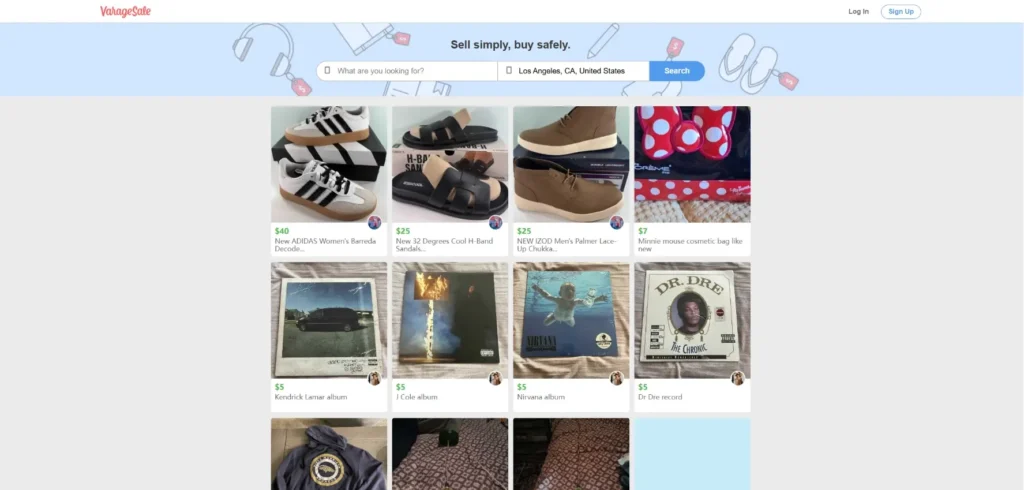
Website: varagesale.com
VarageSale is a verified, community-driven platform designed for local, in-person transactions. Users undergo identity verification, creating a safer environment than most anonymous marketplaces. There are no listing fees, no selling commissions, and no shipping — you meet the buyer locally and keep 100% of the sale price. For first-time sellers, it’s a friction-free way to clear excess inventory or test local demand on a new product. Think of it as a zero-cost complement to your broader online strategy, not a primary brand-building channel.
6. Mercari — Best for Simple, Low-Fee Selling
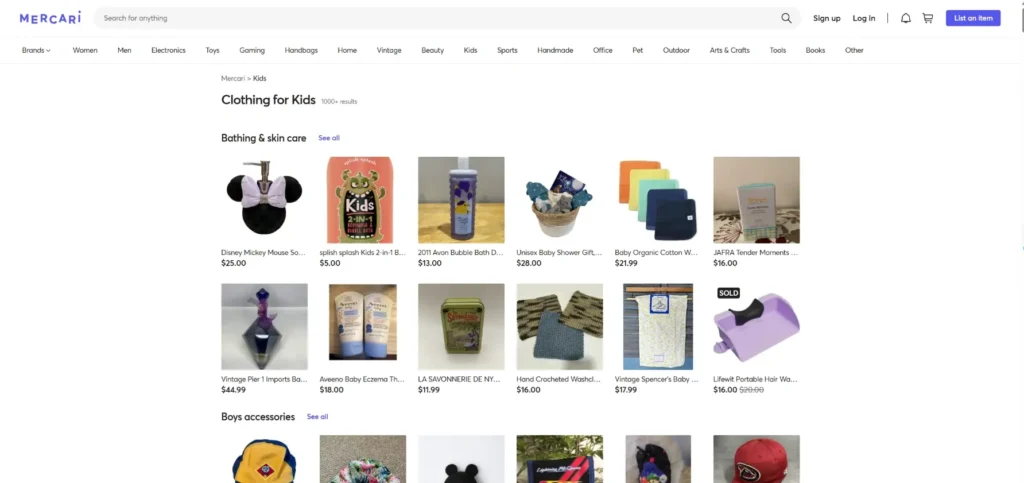
Website: mercari.com
Mercari keeps selling refreshingly simple. A flat 10% selling fee applies to the combined item price and buyer-paid shipping, with no surprise deductions. The mobile app lets you list baby clothes in under a minute, and prepaid shipping labels through USPS, FedEx, and UPS remove fulfillment friction. The buyer base leans practical and deal-oriented, meaning everyday infant basics and multi-piece bundles perform reliably well. If your priority is moving volume with predictable take-home earnings and minimal platform complexity, Mercari is one of the most practical places to sell baby clothes at scale.
7. Facebook Marketplace — Best for Fast, Zero-Fee Local Transactions
Website: facebook.com/marketplace
Facebook Marketplace connects you with local buyers instantly, with no listing fees and zero commission on cash transactions. Over a billion people use the platform monthly, and children’s clothing is a consistently active category. Selling is as simple as snapping a photo, setting a price, and arranging a porch pickup or public meetup. For private-label brands, it’s an excellent no-cost channel to move overstock locally. For beginners, it’s the lowest-effort entry point into selling baby clothes online.
8. Amazon — Best for Scaling a Private-Label Brand
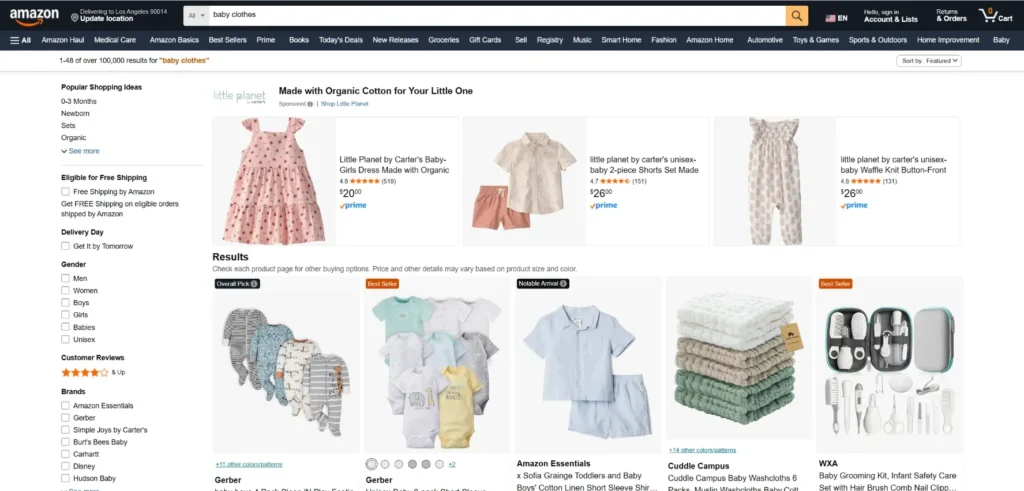
Website: amazon.com
Amazon is not a resale marketplace — it’s a full-scale e-commerce engine for private-label baby clothing brands ready to grow. Selling through Fulfillment by Amazon means your inventory earns the Prime badge, ships from Amazon’s warehouses, and taps into an enormous base of parent shoppers. Total fees — referral, FBA, and storage — can reach 30–40% of the retail price, the highest on this list, but the volume potential is unmatched. Brand Registry also protects your trademark, keeping unauthorized sellers off your listings. This is the platform for serious scaling, not casual clearing.
9. Vinted — Best for Maximum Seller Margin
Website: vinted.com
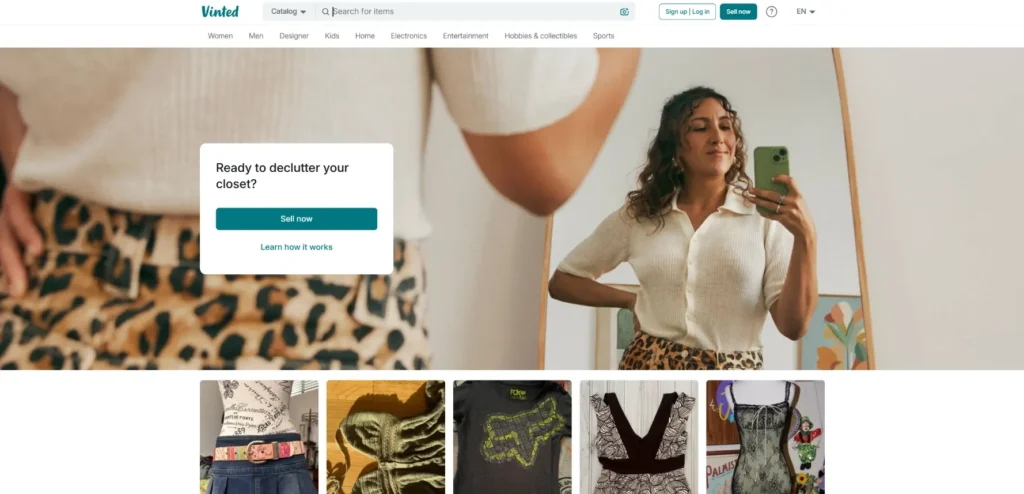
Vinted disrupts the traditional marketplace model with an attractive proposition for sellers: zero listing fees and zero commissions. The price you set is exactly what you keep, as Vinted shifts a small service fee and shipping costs entirely to the buyer. Over hundreds of transactions, retaining 100% of your sale price significantly impacts your bottom line. The buyer base tends to be highly price-sensitive, so premium labels may struggle, but competitively priced everyday kids’ clothing moves quickly. For maximizing cash flow on high-volume, lower-ticket items, Vinted is remarkably efficient.
10. ThredUp — Best for Hands-Off Consignment
Website: thredup.com
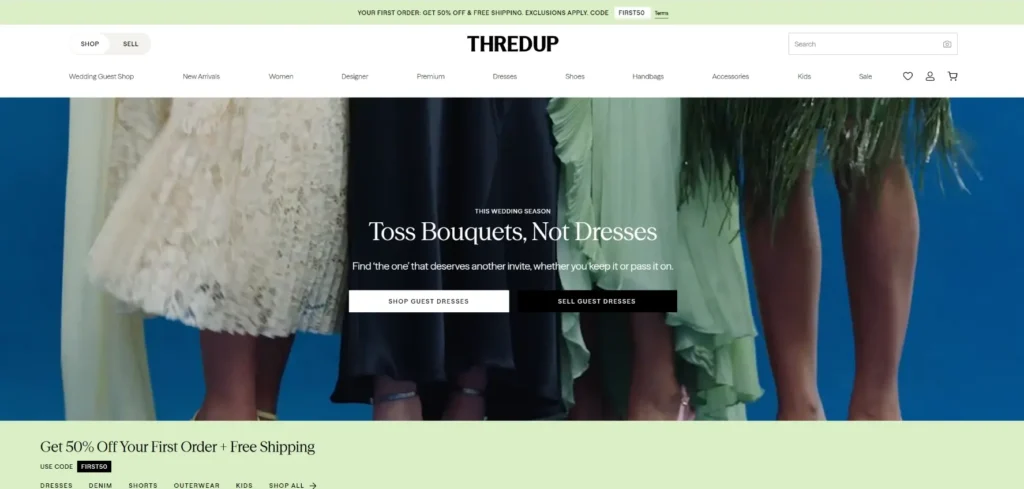
ThredUp operates on a completely hands-off consignment model, making it ideal for sellers who value time over maximum margins. Instead of photographing items, optimizing listings, and managing individual shipments, you simply order a “Clean Out Kit,” fill it with quality apparel, and mail it in. ThredUp handles the entire backend — inspecting, pricing, listing, and fulfillment. The trade-off is a steep commission structure, where everyday basics yield very small returns while premium boutique brands fare somewhat better. It isn’t the right choice for building a standalone business, but if your primary goal is effortlessly clearing outgrown wardrobes or seasonal overstock without daily operational hassle, ThredUp delivers an unmatched frictionless experience.
Essential Legal Requirements and Safety Standards
Selling baby clothes online comes with strict legal obligations — infant apparel is one of the most heavily regulated product categories in the U.S. Getting this right protects your customers and your business.
CPSIA Compliance and Product Safety Certification
Baby clothing sold in the U.S. must comply with the Consumer Product Safety Improvement Act (CPSIA). This includes third-party testing for lead and phthalates, issuing a Children’s Product Certificate (CPC), and ensuring products meet federal safety limits. Manufacturers or importers may also need to apply tracking labels for traceability in the event of a recall. These requirements are mandatory and actively enforced — retailers including Amazon require compliance documentation before approving listings.
Fabric Labeling and Flammability Regulations
Every infant garment sold in the U.S. must carry legally compliant labeling. Under FTC Care Labeling Rules, required elements include:
- Fiber content (e.g., “100% Organic Cotton”)
- Country of manufacture
- Care instructions
- RN or WPL number (required for U.S.-based brands)
Infant sleepwear in sizes 0–9 months requires additional attention: garments must either pass flammability testing or carry a “snug-fitting” label in compliance with 16 CFR Part 1615/1616. Retailers enforce this rigorously before listing approval.
Business Licensing and Tax Registration
To operate legally from day one, start by securing a federal Employer Identification Number (EIN). At the state level, you’ll need a general business license and a Seller’s Permit (Sales Tax License). These documents establish your brand as a legitimate business and authorize you to collect sales tax across applicable jurisdictions — a non-negotiable step before you begin selling at any meaningful volume.
Where to Source Baby Clothes for Resale
Once you’ve identified your target platforms, the next question is inventory. There are two primary sourcing paths worth understanding.
Wholesale Marketplaces and Suppliers
Platforms like Faire connect you with vetted wholesale baby clothing brands, offering boutique styles with low minimums and Net 60 payment terms. For unbranded infant basics at factory-direct prices, DHgate and Alibaba give you access to a wide supplier pool. Always vet suppliers carefully — read reviews, order samples, and confirm fabric composition before committing to volume. Quality control rests entirely on your due diligence, and any children’s items must meet CPSC safety standards before resale.
If you’re researching how to approach this step with confidence, our guide to buying wholesale kids clothing sets walks through the full process, from supplier evaluation to minimum order negotiation.
Private-Label Manufacturing
Private labeling means designing your own baby clothing — from fabric to hangtags — and hiring a manufacturer to produce it under your brand. This path gives you complete brand control and significantly stronger profit margins, though it requires more upfront investment and longer lead times.
Start by shortlisting manufacturers through platforms like Alibaba or at trade shows, then request samples and negotiate minimum order quantities. For brands prioritizing sustainability and skin safety, custom bamboo baby clothes have become one of the fastest-growing product segments — bamboo fabric is naturally hypoallergenic, thermoregulating, and increasingly preferred by health-conscious parents. Working with an experienced baby clothing manufacturer ensures your products arrive with the necessary CPSIA certificates, flammability test reports, and safe dye certifications that major retail channels require.
Proven Strategies for Selling Baby Clothes Successfully
The sellers who build lasting businesses treat the selling side with the same seriousness they gave sourcing. Here’s what that looks like in practice.
How to Price for Both Speed and Profit
Always build your price from the bottom up: unit cost + platform fees + shipping + packaging + a small returns buffer. A healthy retail price typically lands at 2.5–3× your total landed cost. Crucially, don’t compete on price alone. A parent choosing between an unbranded onesie and a certified organic one with a clear brand story will frequently pay more for the latter — if you’ve communicated that story well throughout your listings and branding.
Product Photography and Listing Optimization
Strong visuals are non-negotiable in a competitive market. A few practical rules that experienced sellers follow:
- Shoot in natural light — it shows fabric texture and true color far better than artificial alternatives
- Show garments on a baby or as a styled flat-lay, never just on a hanger
- Structure titles as: Brand + Item Type + Size + Material + Key Feature (e.g., “HapaKids Footed Sleeper 0–3M 100% Organic Cotton Snug-Fit”)
- Lead descriptions with fabric safety and certifications before design details — parents buying for infants prioritize safety information
Building Visibility and Repeat Buyers
Getting one sale is nice. Building a rhythm of consistent sales is the goal — and that requires a different mindset.
Keep listings fresh. Simply editing and resaving an older listing — or relisting it entirely — can push it back toward the top of search results on many platforms.
Cross-list across two or three sites. You don’t need to manage ten platforms simultaneously. Picking two or three that fit your positioning (say, Mercari and Faire) and using a cross-listing tool like Vendoo multiplies your reach without doubling your workload.
Invest in the unboxing moment. A small handwritten thank-you note tucked inside a package costs pennies and takes seconds, but it creates a memorable experience that genuinely encourages repeat purchases and organic word-of-mouth — especially valuable in a gifting-driven category.
Thinking About Your Own Children’s Brand?
If your ambition extends beyond reselling — if you’re thinking about building a brand with your own designs, your own identity, and your own loyal customer base — the journey looks somewhat different, and starts earlier.
Our complete guide to how to start a children’s boutique covers everything from initial concept development to sourcing your first run of product. And for brands looking to work with a reliable manufacturing partner from day one, Hapa Garments specializes in helping independent infant clothing brands bring thoughtful, compliant, and beautifully made products to market.
Frequently Asked Questions
What is the best platform to sell children’s clothes?
The best platform depends on your business model. Faire is the top choice for B2B wholesale. If you’re reselling premium boutique items, Kidizen and Poshmark offer the most engaged, parent-focused audiences. For volume-driven direct-to-consumer sales, Amazon is unmatched — provided you have proper CPSIA certifications in place.
Which is the best online site for baby clothes?
For direct-to-consumer brands wanting complete control and strong SEO, Shopify or WooCommerce give you the most flexibility. If your goal is reaching the highest daily volume of parent shoppers and you have safety certifications locked down, Amazon remains the top choice for scale.
Where can I sell my baby clothes online quickly?
Facebook Marketplace and Mercari are the fastest options — both allow you to list in minutes with minimal setup. For higher-value items, Poshmark and Kidizen typically yield better prices, though they require more active management to keep listings visible.
What’s the best way to sell baby clothes if I’m just starting out?
Start with one or two low-barrier platforms — Facebook Marketplace or Mercari for local and domestic reach — while you build product photography skills, learn what buyers respond to, and refine your pricing. Once you’ve validated demand and defined your brand positioning, expand to more structured platforms like Amazon or Faire depending on your growth goals.