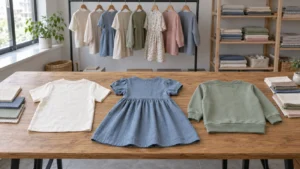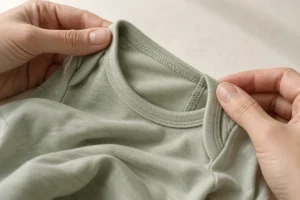
Wholesale kids’ clothing for your boutique sounds simple enough — until it isn’t. You find a supplier with gorgeous matching sets, place your first order, and three weeks later, you’re staring at pieces on your shelf that don’t match the samples, run a full size too small, or have that cheap, mass-market packaging that’s the exact opposite of the “curated boutique” vibe you’re building.
Here’s the brutal truth I’ve learned over 16 years in this industry: 8 out of 10 new children’s clothing boutiques shut their doors within the first 18 months of opening. And it’s almost never from a lack of customers — it’s from costly, avoidable mistakes when navigating boutique kids clothes wholesale.
Over the past 16 years, I’ve partnered with independent boutique owners of every size, from tiny startup shops to multi-location retailers. In this guide, I’m distilling all their hard-won purchasing lessons into one actionable playbook, designed to help you source wholesale kids clothing sets for your boutique that deliver sky-high profit margins and lightning-fast sell-through, every single time.
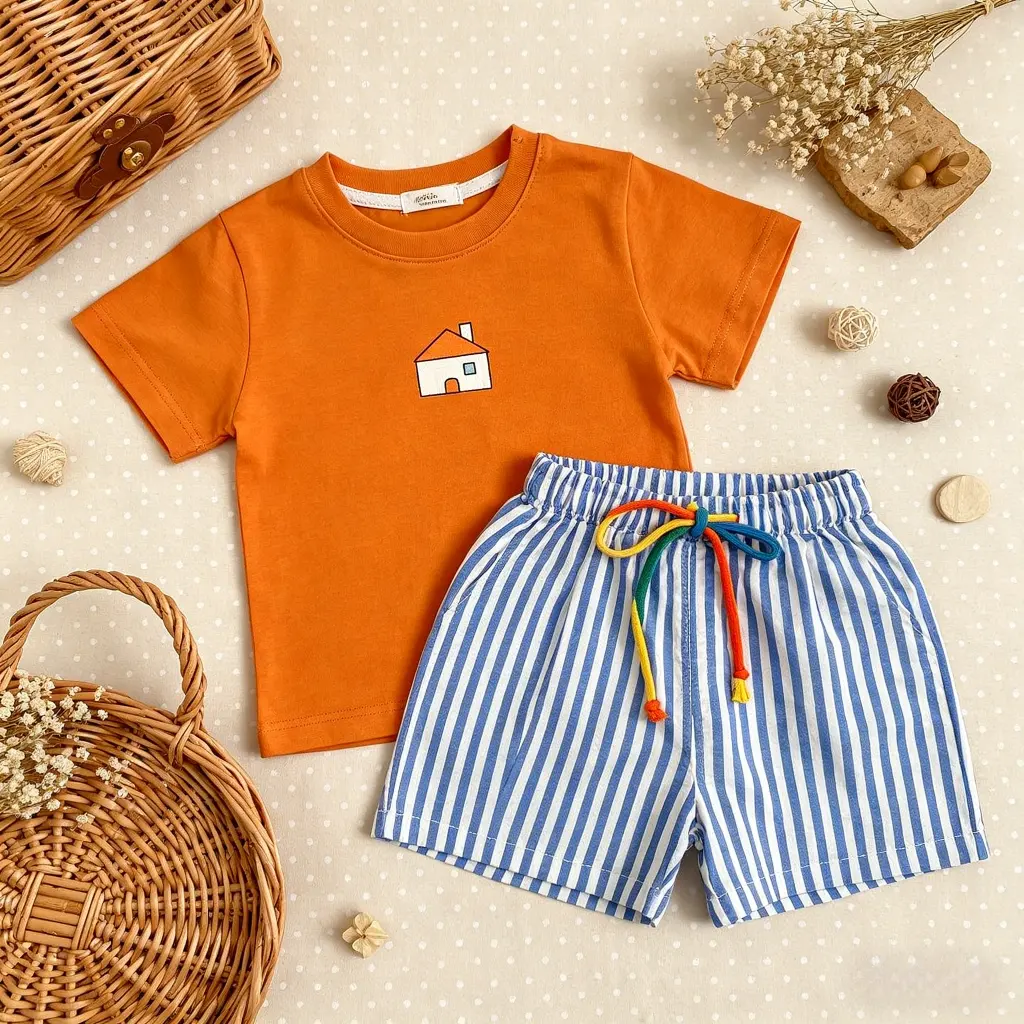
Why Boutiques Are Shifting to Matching Sets
Walk into any high-performing kids’ clothing boutique today, and you’ll notice one thing right away: more and more shelf space is dedicated to matching sets, not individual separates. This shift isn’t a happy accident — it’s intentional, and it’s driven by hard sales data.
From my 16 years supplying boutiques across the country, I can tell you exactly why owners are leaning into wholesale kids clothing sets: they sell better. Plain and simple. They make shopping easier for your customers, they hit your sales floor faster, and they look far more cohesive and eye-catching on your shelves. A parent picks up one of these Kids Clothing Sets, and there’s no guesswork, no overthinking needed. That convenience translates directly to higher conversion rates at the register.
The boutique owners who’ve made the switch all tell me the same thing: today’s parents reach for matching sets first when shopping for their kids, because they eliminate the hassle of putting an outfit together. Plus, they look incredible in photos for Instagram and TikTok — which means your marketing works harder for you, too.
The Difference Between Sets, Separates, and Bundles
Before you place your first wholesale order, it’s critical to get clear on the terminology — because in wholesale catalogs, “sets”, “separates”, and “bundles” are often used interchangeably, and they mean very different things for your business.
- Sets: A matching set is a curated outfit (top, bottom, and sometimes outerwear) designed as a single, cohesive unit, using matching fabric, print, and color palette. Every piece is cut and constructed to complement the others perfectly. When we design wholesale kids clothing sets at HAPA, we test the fit, fabric weight, and wash performance of every piece together — because we know that’s how they’ll be worn, day in and day out.
- Separates: These are individual, standalone pieces sold on their own. A floral button-down is a separate, a linen pant is a separate. Boutiques often style separates together on the sales floor, but they’re sourced, priced, and inventoried as individual SKUs. This gives you more styling flexibility, but it also means more purchasing decisions, more SKUs to manage, and a far higher risk of mismatched inventory.
- Bundles: This is a retail marketing term, not a manufacturing one. A bundle is when you take three different separates from your existing inventory, group them together, and sell them at a slight discounted rate. These pieces weren’t designed or manufactured to be worn as a matching set, but you’ve grouped them for your customer’s convenience.
Why does this distinction matter so much for your boutique? Because it impacts every single part of your business: how you merchandise the pieces, how you shoot them for marketing, how you price them, and even how confident your staff is selling them. A true matching set sells itself, with almost no extra push from your team. A bundle, on the other hand, almost always requires more hands-on selling to close the deal.
Kids’ Clothing Sets vs. Separates — Which Should You Stock?
This is one of the most common questions I get from boutique buyers. When you’re deciding how to allocate your open-to-buy budget between sets and separates, the answer ultimately comes down to your merchandising strategy, and how much inventory risk you’re willing to take on.
Here’s the advice I share with every boutique owner I partner with:
- Merchandising time and effort: If you stock separates, you have to act as the in-house stylist for your store. You also have to nail the size ratio for every single piece, to avoid the all-too-common headache of being sold out of bottoms while you’re still drowning in matching tops. Matching sets arrive ready to hang on a single hanger, saving you hours of merchandising work on your sales floor.
- Inventory risk (aka the “orphan piece” problem): When a separate doesn’t sell, you’re stuck with orphan inventory — mountains of printed leggings with no matching tops to help move them off your shelves. Selling wholesale kids clothing sets eliminates this dead stock risk almost entirely.
- Perceived value and margins: While individual separates may have a slightly lower wholesale cost per piece, matching sets deliver a far higher retail markup. Customers see a matching set as a complete, ready-to-wear outfit solution, which makes them far less price-sensitive. In my experience, shifting more of your open-to-buy budget to matching sets doesn’t just boost your overall sell-through rate — it also keeps your cash flow incredibly healthy.
My Final Recommendation
From my daily conversations with boutique clients, and watching what moves for them and what parents actually buy, my sincere advice is this: lead with wholesale kids clothing sets for newborns up to 5 years old. For this age group, convenience and gifting potential are the biggest drivers of sales, and sets deliver on both. As kids get older, you can intentionally introduce more separates into your mix — because at that age, both kids and parents are far more focused on building a personal, individual style.
5 Tips For Buying Wholesale Kids Clothing Sets for Your Boutique
The 5 tips I’m breaking down below are exactly the guidance I wish more boutique owners had access to right from the start. Whether you’re placing your very first wholesale order or your 50th, these tips will give you a clear, strategic framework for every single buying decision you make moving forward.
Tip 1: Define your boutique’s niche before you place a wholesale order
Of all the mistakes I’ve seen boutique buyers make over the years, this is the most common — and the most avoidable: stocking generic children’s clothing sets bulk, instead of pieces tailored specifically to your core customer. Before you place a single order, you need to nail down the answers to these 3 questions: what age range you serve, what season you’re buying for, and the aesthetic your customers actually want. Get these wrong, and even the most beautifully made wholesale sets will sit on your shelves, unsold.
Age Range Targeting — Newborn, Toddler, or Tween Sets?
This is the very first question I ask every single boutique owner I partner with — and the answer dictates everything else that follows.
The kids’ clothing market isn’t one single market: it’s 4 or 5 completely distinct markets stacked on top of each other, each with its own unique buying patterns, sizing norms, and customer psychology. Boutiques that try to serve every single age group at once almost always end up serving none of them well.
Here’s my on-the-ground breakdown of how each age segment performs in a boutique setting:
- Newborn to 12 months: This market is driven almost entirely by gifting. The buyer is almost never the baby’s parents — it’s grandparents, aunts, uncles, or coworkers shopping for a baby shower gift. That means the set’s visual presentation, packaging, and gifting convenience are make-or-break. This segment is far less price-sensitive than other markets, which means higher profit margins for you. The catch? It has an extremely narrow size window. Newborn sets have a shelf life of weeks, not seasons.
- Toddler sizes (1T to 5T): These are the bread and butter of most kids’ clothing boutiques. In my experience, this size range has the highest inventory turnover, the strongest repeat purchase rate, and the most consistent, steady demand for matching sets. Parents in this age group buy often: kids grow fast, seasons change quickly, and preschool and daycare milestones mean they’re refreshing their kids’ wardrobes on a regular basis. If you’re opening a brand-new boutique and don’t know where to start, this is the size range I always recommend you focus on first.
- Kids (6–12) and Tween/Teen (10–16): This segment is a different ballgame entirely. Kids in this age group have very strong opinions about what they wear, which means a parent’s buying decision becomes a negotiation. Matching sets still sell well — especially in the 6–8 age range — but separates and mix-and-match styles start to take off. Your merchandising needs to be more intentional here, and your style selection needs to lean into a slightly more mature aesthetic, without veering into overly adult territory.
My final advice: Focus the bulk of your wholesale buy on one core age range, with other sizes as a secondary, smaller part of your inventory. A focused, well-defined customer base creates clarity — and clarity always leads to more sales.
Seasonal vs. Year-Round Collections — Planning Your Buy Calendar
One of the biggest differences between boutiques with healthy, consistent cash flow and those stuck in a constant scramble is how they approach seasonal buying. And in the kids’ clothing space, building a solid buying calendar is far more complex than most new owners realize.
The wholesale kids clothing sets market runs on a pre-order model. By the time spring styles hit your sales floor, you should already be planning your summer buy. By the time summer styles are fully in stock, manufacturers like us are already sampling spring collections for the following year. If you’re buying reactively — placing orders only when you feel like you’re low on stock — you’ll always be a full quarter behind the best, most in-demand products on the market.
Here’s the framework I share with every boutique buyer building their first buying calendar:
- Spring/Summer Collections: Place your wholesale orders between January and February, with shipping starting in March. This is always the most competitive buying window — popular styles and colors sell out fast, and buyers who wait until March to order spring sets are almost always stuck picking through leftover inventory.
- Fall/Winter Collections: Start sourcing and lock in your orders between June and July, with shipping starting in August. Knitwear, layering sets, and holiday formal wear for the Christmas gifting season sell the fastest, and are the first to sell out at the wholesale level.
- Year-Round Core Collections: Neutral-toned basic sets, foundational coordinating pieces, and timeless classic styles deserve a permanent spot in your buy, alongside your seasonal inventory. They act as a backup when seasonal styles sell out, and give your sales floor a consistent, cohesive look all year long.
Style Positioning — Casual, Dressy, Gender-Neutral, or Themed Sets?
Once you’ve locked in your target age range and built out your buying calendar, the final piece of your niche is your style positioning. And this is where I see most buyers freeze up — because the wholesale kids’ set market is overwhelming, with thousands and thousands of options. Without a clear style filter, it’s easy to end up with a disjointed inventory that looks like 6 different buyers with 6 completely different visions put it together.
Your style positioning needs to be customer-first, above all else. Not what you personally think is beautiful, not what’s trending on Instagram. What will the customers who walk through your door actually put on their kids?
Here are the 4 core style categories I see boutique buyers focus on, each with very different implications for your wholesale buy:
- Everyday Casual Sets: Relaxed sweatsuits, washed cotton sets, and easy linen pieces are the highest-volume selling category across the board. They have fast turnover, high reorder rates, and photograph perfectly for lifestyle social media content. If your core customers are parents shopping for daycare, weekend outings, and everyday play, this is almost certainly your core positioning. Look for wholesale sets made with breathable, durable fabrics with a relaxed fit — mobility and washability matter more than anything else here.
- Formal/Occasion Sets: Smocked styles, embroidered pieces, and coordinated outfits for milestone events carry a higher retail price tag and higher per-unit margins. While they sell at a slower pace day-to-day, they deliver incredibly consistent sales during peak gifting holidays: Easter, Christmas, baptisms, weddings, and more. If you’re stocking this category, your buying should be guided by the gifting calendar, not just the traditional fashion seasons.
- Gender-Neutral Sets: This category has seen explosive growth as a wholesale segment over the past 5 years, and for good reason: they appeal to a wider customer base, photograph seamlessly, and are incredibly giftable. Earth tones, minimal prints, and unisex silhouettes are the hallmarks of this category. At HAPA, our gender-neutral collection is consistently one of our top-selling lines for the boutique partners we supply.
- Themed & Novelty Sets: Cartoon character prints, holiday-exclusive designs, and viral trend-driven pieces can deliver explosive short-term sales, but they come with far higher inventory risk. My recommendation is to stock these in small, limited quantities, as a fun complement to your core collection, not as the foundation of your inventory.
Tip 2: How to Evaluate and Vet Wholesale Kids’ Clothing Suppliers
Finding wholesale kids clothing suppliers is easy. Finding the best wholesale children’s clothing vendors? That’s the real challenge. With over 16 years on the manufacturing side of this industry, I still see boutique buyers get burned by suppliers every single day — ones that look flawless online, but deliver inconsistent, subpar product in real life. That’s why vetting your suppliers thoroughly isn’t just a box to check: it’s the make-or-break step that will save you from costly, business-altering mistakes down the line.
Key Certifications to Look For — OEKO-TEX, CPSC Compliance, and GOTS
- OEKO-TEX Standard 100: For any boutique that prides itself on quality, this certification is non-negotiable. OEKO-TEX Standard 100 verifies that every single component of a garment — fabric, thread, buttons, zippers, and dyes — has been independently tested and confirmed free of harmful substances.
- CPSC Compliance: If you’re selling kids’ clothing in the US, compliance with US Consumer Product Safety Commission (CPSC) standards is a legal requirement — not a bonus. CPSC rules regulate flammability, drawstring safety, and small part hazards for garments intended for children 12 and under. Any wholesale supplier shipping to the US should be able to provide a General Certificate of Conformity (GCC) or Children’s Product Certificate (CPC) for their garments upon request.
- GOTS Certification: The Global Organic Textile Standard (GOTS) is the strictest certification available for garments made with organic fibers today. If your boutique’s brand is built around sustainability, natural materials, or eco-friendly values, GOTS certification is a must-have for your wholesale supplier.
Red Flags When Browsing Wholesale Marketplaces and Directories
The internet has made finding kids’ clothing suppliers easier than ever — but it’s also made it far simpler to run into untrustworthy, misrepresented suppliers. Here’s my curated list of red flags to watch for before you even start a conversation:
- Fails to publicly list their US business registration details, physical office address, and direct phone line (only offering a generic email address or online contact form)
- Uses vague, non-committal language around compliance, or refuses to provide CPSC test reports and certification documents for specific styles
- Offers pricing that’s 30%+ below the industry average — this almost always means they’re cutting corners on fabric quality, compliance testing, or fair labor standards
- Has no formal pre-production sample policy, or refuses to send physical samples for your approval before you place a large bulk order
- Enforces inflexible, extremely high minimum order quantities (MOQs) (1000+ pieces per single style) with zero flexibility for small boutique inventory needs
- Has no clear, written policy for returns, refunds, or exchanges for defective, damaged, or misrepresented goods
Assessing Shipping Lead Times and Domestic US Warehouse Options
Shipping lead times are one of the most underrated variables in wholesale buying — and one of the most devastating when things go wrong.
Here’s the story I hear more often than any other: A boutique buyer places an overseas order for fall styles in July, with a promised 8-week lead time. Instead, the order takes 14 weeks to arrive. By the time it hits their sales floor, back-to-school season is over, the Halloween gifting window is only 2 weeks out, and their fall collection — which should have had a 6-week prime selling window — gets at most 3 weeks on the shelves.
Lead times aren’t just a logistics consideration: they directly impact your revenue. You need to know your supplier’s actual door-to-door lead time — the exact number of days from the moment you pay your invoice, to the moment the boxes hit the loading dock at your warehouse.
If you’re sourcing directly from major overseas manufacturing hubs, you must build international shipping time (by sea or air) into your planning timeline.
Beyond that, check if your supplier has a domestic US warehouse with in-stock wholesale inventory. While factory-direct sourcing will always get you the best pricing, partnering with a supplier that has local warehousing cuts shipping times down to just a few days — letting you react fast when you run low on stock during peak selling seasons.
Vetting Your Wholesale Partner — Manufacturer vs. Middleman
This is a distinction that doesn’t get nearly enough attention in boutique buying circles — but it directly impacts your pricing, your flexibility, and the consistent quality of the goods that hit your store.
Not every company that calls itself a “wholesale supplier” is an actual manufacturer. Many are middlemen: agents, trading companies, or distributors that source from factories on your behalf, and add a markup on every piece. This isn’t inherently a problem, but you must know who you’re working with before you place an order.
How to tell the difference:
- Ask directly: Do you manufacture the products you sell, or do you source them from a third-party factory? Legitimate manufacturers will answer this question clearly, and share details about their factory location, production capacity, and in-house quality control processes on their production lines.
- Request a factory tour: In person if possible, or virtually if not. A 20-minute video walkthrough of their production facility will tell you more about your supplier than 6 months of back-and-forth emails.
- Ask how they handle quality defects: A manufacturer will have a clear, in-house process to resolve issues fast. A middleman will tell you they’ll “reach out to the supplier” — which only adds extra layers of delay and distance between you and a solution.
Understanding exactly where your inventory is coming from isn’t about distrust. It’s about making sure the partnerships you build to stock your boutique are just as durable, reliable, and high-quality as the garments you hang on your shelves.
Tip 3 — Understanding Minimum Order Quantities (MOQs) and Pricing Tiers
Minimum Order Quantities (MOQs), as the name suggests, are the smallest number of units a supplier will accept per style, per colorway, or per full order. But the way MOQs are structured varies wildly from one supplier to the next, and the relationship between order volume and per-unit pricing adds another layer of complexity — one that’s almost never fully transparent upfront.
Understanding how MOQs and pricing tiers work, and how to leverage them strategically, is one of the core skills that separates sustainable, profitable boutique buyers from those stuck with mountains of dead stock at the end of every season. Here’s everything you need to know.
How Small Boutiques Can Negotiate Minimum Order Quantities
The MOQs listed in wholesale catalogs or on marketplace platforms are almost never set in stone — they’re simply a starting point for negotiation. Here are my go-to, field-tested tactics for negotiating MOQs that work for your small boutique:
- Lead with your growth story, not just your current order size. As a manufacturer myself, I can tell you this with total certainty: a boutique that only orders 12 units today, but has a clear, actionable plan to scale to 60 units per style within 18 months, is far more attractive to us than a one-off 12-unit order with no long-term potential.
- Ask about mixed-color MOQ options. Many suppliers — especially those that produce a single style in multiple colorways — offer combined or mixed MOQs. This means you can split a single minimum order across 2 or 3 different colorways, instead of locking all your inventory into a single shade.
- Propose a trial order with a commitment to repeat business. This tactic works because it gives the supplier clear value in exchange for upfront flexibility: guaranteed future orders. It also proves you’re serious about building a long-term partnership — which matters more than anything in this relationship-driven industry.
Calculating Your Landed Cost — Wholesale Price + Shipping + Duties
Calculating your landed cost accurately is non-negotiable — it’s the foundation of a pricing strategy that actually protects your profit margins. This is where so many boutique buyers drop the ball, only realizing that the wholesale price they negotiated isn’t the actual price they’re paying, when it’s far too late.
Your core calculation should look like this:Product Cost + Shipping/Freight + Duties + Insurance + Overhead Fees = Total Landed Cost
For international imports, the exact duty rate for kids’ clothing sets varies based on the garment’s fabric composition.
For example: if a set has a factory ex-works price of $10, ocean freight adds $1.50 per unit, US import duties (textile duty rates typically range from 7.5% to 16%, and sometimes even higher) add another $1.50, plus $0.50 for insurance, your actual base cost jumps to $13.50 per unit. Always run this full cost breakdown before placing a large bulk order, to make sure your profit margins land exactly where you need them to be.
Tip 4 — Choosing the Right Fabric Quality and Sizing Standards for Kids’ Sets
These aren’t just minor details — they’re make-or-break for your boutique’s reputation. In kids’ apparel, fabric quality and sizing accuracy directly shape your customer experience, and in turn, your brand’s legacy. A parent can buy a gorgeous, photo-ready kids’ matching set from your shop, only to find it fades or seams split after just two washes — and they’ll never come back. What’s more, in today’s retail landscape, they’ll leave a review about it, too.
Fabrics That Sell Best for Children’s Sets — Cotton, Bamboo, and Blends
Below is my field-tested breakdown of the most popular fabric options in the wholesale kids’ set market, and exactly what each one is best suited for:
- 100% Cotton
Cotton is still the most widely used fabric in wholesale kids’ apparel, and for good reason. It’s breathable, durable, naturally hypoallergenic, and when it’s high-quality, it holds up to repeated wash after wash. For boutiques serving the everyday casual wear market — which is, by far, the largest sales opportunity in kids’ apparel — premium cotton is always your safest, most reliable bet. - Bamboo and Bamboo-Cotton Blends
Over the past few years, bamboo has gone from a niche eco-friendly option to a mainstream staple in kids’ wear, and the wholesale market has exploded to match. Bamboo fabric — most often processed into bamboo viscose or bamboo lyocell — has an incredibly soft, buttery hand feel, exceptional moisture-wicking properties, and natural temperature regulation. That makes it the perfect choice for babies and toddlers with sensitive, eczema-prone skin. - Fabric Blends
Blended fabrics — like cotton-modal, cotton-spandex, and cotton-polyester blends — are extremely common in wholesale kids’ sets, and each brings specific functional benefits. Cotton-spandex blends (typically 95/5 or 92/8 ratios) add stretch and shape retention to knit fabrics, making them the industry standard for fitted rompers, leggings, and sweatsuits. Cotton-modal blends add beautiful drape and silky softness to woven fabrics, without sacrificing breathability.
Navigating International Sizing Charts and Avoiding Return Headaches
Sizing is the silent profit killer in kids’ wholesale apparel — and it hits boutiques sourcing from international suppliers the hardest. To avoid a flood of returns and frustrated customers, I recommend these two non-negotiable steps:
- Always ask for the manufacturer’s measurement chart, not just age labels. Request a full size chart from your supplier that lists chest, waist, hip, and garment length measurements (in both inches and centimeters) for every size. These hard numbers are the only way to make an apples-to-apples comparison across different suppliers.
- Optimize your own size guide for your customers. Don’t just copy and paste the factory’s centimeter chart. Create a clear, easy-to-read size guide for your shoppers, with clear labels like “true to size”, “runs small”, or “relaxed, oversized fit”. On top of that, for fabrics with high shrinkage rates (like unpreshrunk 100% cotton), I always advise my boutique partners to add a note recommending customers “size up for the perfect fit” — it’s the simplest way to ensure a smooth, satisfying customer experience.
Tip 5 — Ordering Strategically — Inventory Planning for Boutique Success
Over the 16 years I’ve partnered with boutique owners, the ones with the highest profit margins aren’t always the ones placing the biggest orders. They’re the ones buying with clear, intentional strategy — they have a rock-solid framework for which styles deserve a permanent spot in their inventory, and which ones are worth testing on a small scale. Below are the 3 core strategies that separate wildly successful kids’ clothing boutiques from the rest.
The 80/20 Rule — Stocking Hero Sets vs. Experimental Styles
In every buying season, it’s tempting to spread your wholesale budget thin across as many styles as possible — a little bit of everything, to hedge against uncertainty. It feels like the safe play. But in practice, it’s one of the fastest ways to end up with a disjointed sales floor, weak sell-through across the board, and a mountain of end-of-season markdowns across more SKUs than you can feasibly manage.
The 80/20 rule offers a far more disciplined alternative — and after 16 years watching buying decisions play out across boutiques of every size, I’ve seen this rule work time and time again. The principle is straightforward: allocate roughly 80% of your wholesale budget to proven, reliable styles (your hero sets), and reserve the remaining 20% for new or experimental styles you’re testing for the first time.
What qualifies as a hero set?
- A style you’ve stocked before, with a strong, proven sell-through track record — ideally 70% or higher within the first 6 weeks of the season
- A colorway or print that performs consistently across multiple seasons without feeling dated
- A silhouette your customers return to again and again — the style they message you about the second it goes out of stock
- A set from a supplier whose quality and delivery consistency you’ve already vetted across at least one full order cycle
What belongs in the experimental 20%?
- A new print direction or colorway you’re introducing for the first time
- A style from a supplier you haven’t stocked before, trialed at low volume
- A trend-led piece with a shorter expected selling window
- A higher price point set you’re testing for customer demand before committing to deeper inventory
Using Pre-Orders and Trunk Shows to Test New Wholesale Sets
Pre-orders — letting your customer vote with their wallet
The pre-order model lets you showcase your upcoming wholesale kids clothing sets via your website, email list, or social media before the inventory hits your store, and accept pre-paid retail orders ahead of your shipment date. For kids’ clothing boutiques, this works incredibly well for seasonal collection launches and giftable sets with strong visual appeal.
- Showcase each style with high-quality imagery, clear sizing details, and an honest, transparent delivery window.
- Set a minimum pre-order threshold to justify your wholesale commitment — if you don’t hit that number, you’re under no obligation to place the bulk order.
- Offer a modest incentive for pre-order customers — like early access, a small discount, or a free bonus gift — to drive early purchase intent.
- Use pre-order volume to guide not just whether you place the order, but which sizes and colorways to prioritize in your bulk buy.
Trunk shows — bringing the collection to your customer in person
Trunk shows are short-term in-store or pop-up events designed to showcase a new collection — often styles you haven’t yet added to your regular inventory — and take custom orders directly from customers. In the kids’ apparel space, trunk shows are especially effective for occasion wear sets, seasonal capsule collections, and higher-priced pieces, because customers can see, touch, and try on the garments in person before they buy, which builds massive purchase confidence.
- To maximize your lead time for restocks, schedule your trunk show 4–6 weeks before your main seasonal collection launch.
- Personally invite your most loyal, repeat customers — a curated guest list almost always delivers higher order conversion than an open, public event.
- Have full-size sample sets on hand for customers to try on — confidence in fit directly translates to confidence in buying.
- Take detailed notes on customer interest in specific styles — not just the top sellers, but the pieces customers picked up, asked about, and put back down. That qualitative data is just as critical to your next buying decision as the hard order numbers.
Tools and Apps to Track Sell-Through Rates and Reorder Points
Inventory decisions made on memory and gut feeling alone are just guesses with incomplete data. The boutiques with the sharpest, most profitable buying strategies almost all use a clear, consistent system to track inventory performance — and they act on that data fast, to capitalize on opportunities before they slip away.
If you’re not already tracking sell-through rates and reorder points systematically, this is your sign to start.
What to Track
- Style-Level Sell-Through Rate: The percentage of units sold within a set time frame (typically the first 4–6 weeks of the season) compared to the total number of units purchased. A sell-through rate above 70% means the style is a bonafide bestseller, and deserves heavy restocks and promotion in the next season. A sell-through rate below 40% after 6 weeks means you should be planning markdowns, not reorders.
- Size-by-Size Sales Velocity: Track which sizes in a given style sell the fastest. For example, if your size 3T sells out in week 2, while size 5T is still in stock in week 6, that’s hard data to guide your size spread on your next wholesale order.
- SKU-Specific Reorder Points: The minimum inventory level that triggers a reorder, to avoid stockouts before your next shipment arrives. The simple calculation is: Average Daily Sales × Supplier Lead Time (in Days). It’s a straightforward formula, and it works flawlessly in practice.
- Weeks of Inventory Remaining: Your current on-hand inventory divided by your average weekly sales. This gives you a real-time view of how much selling time you have left for each style, so you can prioritize restock conversations with your supplier before a stockout costs you sales.
Top Inventory Tools to Consider for Your Boutique
- Shopify POS: If you already run your online store on Shopify, this POS system delivers unified inventory tracking across your online and in-store channels, with built-in basic sales reporting.
- Lightspeed Retail: A more robust POS and inventory management platform, with far more advanced reporting capabilities than Shopify’s native tools.
- Faire’s Built-In Analytics: If you source inventory through Faire, the platform offers your full order history, restock alerts, and basic sales analytics tied directly to your purchasing data.
- SimpleConsign or Ricochet: Boutique-specific POS systems built exclusively for independent retailers, with inventory and consignment tracking designed around how boutiques actually operate, not generic big-box retail.
- Google Sheets: Build a simple tracking spreadsheet with columns for style name, total units received, weekly sales, current on-hand inventory, and calculated sell-through rate.
At the end of the day, the exact tool you use doesn’t matter — what matters is building a consistent habit of using it. Sales data is only valuable if you review it regularly, and have time to act on what it’s telling you.
Top Places to Buy Wholesale Kids’ Clothing Sets
Picking the right sourcing channel for your wholesale kids’ clothing sets doesn’t just impact your bottom line — it directly determines whether your boutique hits your target profit margins, avoids costly inventory risks, and builds sustainable, long-term growth. Below, we’re breaking down the three most reliable sourcing channels for kids’ matching sets, with no holds barred, insider insights straight from our 16 years on the manufacturing floor.
Direct Factory Sourcing
Top Picks: HAPA, Siukid, Royal Apparel
Sourcing direct from a kids’ clothing manufacturer is the #1 way to stock your boutique and maximize your profit margins — it’s the exact business model we use with all our long-term boutique partners here at HAPA. By cutting out every layer of middlemen, distributors, and platform commission fees, you lock in the lowest possible per-unit cost, retain full creative control over your designs, and build a direct, unfiltered line of communication with the team actually building your garments.
Online Wholesale Marketplaces
Top Picks: Faire, Tundra, FashionGo
Online wholesale marketplaces are the perfect starting point for brand-new boutiques, and a low-risk way for established stores to test new styles without tying up your precious cash flow. These platforms pre-vet suppliers, handle payment terms, and offer flexible minimum order quantity (MOQ) options — but not all platforms are created equal. Below is our boutique-focused breakdown to help you pick the right fit for your business.
Industry Trade Shows Worth Attending for Children’s Fashion Buyers
Top Picks: LA Kids Market, MAGIC Las Vegas, ABC Kids Expo 2026
At these industry trade shows, you can touch and test fabric quality in person, see the fit and drape of every garment up close, and meet face-to-face with factory owners and brand founders. You’ll be able to negotiate show-exclusive low MOQs and preferential pricing, and even lock in limited-edition styles 6+ months before they hit any online wholesale marketplace.
Common Mistakes Boutique Owners Make When Buying Wholesale Kids’ Sets
These two all-too-common mistakes are the ones I see trip up boutique owners every single day — and they’re the fastest way to get stuck under a mountain of dead, unsold inventory.
Overstocking a Single Style or Colorway
It’s easy to get swept up in the excitement of a seemingly “perfect” matching set. I once had a client who saw a brand-new floral waffle knit sample, was convinced it would be a runaway bestseller on gut instinct alone, and placed a 500-unit order in a single colorway. In my 16 years in this industry, this is the single fastest path to crippling dead stock.
When you tie up too much of your open-to-buy budget in one lone style, you don’t just limit the diversity of your store’s inventory — you massively amplify your risk. Even a small shift in local trend sentiment can leave you stuck with pallets of unsold goods gathering dust in your back room.
Skipping the Pre-Production Sample Process
Let’s be honest: I completely understand the temptation to skip the sample step. When you’re ordering bulk units at $5 a piece, a $100+ sample fee can feel like an unnecessary waste of money.
But as someone who’s overseen thousands of production runs in this industry, I can tell you with absolute certainty: skipping the pre-production sample process is a high-stakes gamble. You can never truly gauge the fabric’s hand feel, the stretch of an elastic waistband, or the true vibrancy of a dye lot from a digital photo alone. If the final production run doesn’t match your expectations, you’ll be left with crushing inventory pressure and thousands of dollars in lost revenue.
Conclusion
Sourcing wholesale kids clothing sets is never just about filling empty space on your shelves. It’s about building a rock-solid foundation of quality and trust — the kind that keeps parents coming back to your boutique, season after season.
Ready to level up your boutique’s inventory? If you’re looking for high-quality, ethically manufactured kids’ sets that blend this year’s hottest trends with long-lasting, hard-wearing quality, I’m here to help. Reach out to the HAPA team today to start building your perfect collection.
FAQ
What is the minimum order quantity for wholesale kids’ clothing sets?
MOQs vary widely by supplier. Large wholesale platforms like FashionGo or Faire often start at 6–12 pieces per style, while factory-direct overseas vendors may require 50–200 units per colorway. As a small boutique, look for kids clothing set suppliers that offer mixed-pack options or low-MOQ starter bundles to test styles before committing to larger orders.
How do I find reputable wholesale kids’ clothing suppliers for my boutique?
Start with established B2B marketplaces such as Faire, Tundra, or FashionGo, which vet sellers and often offer net-60 payment terms. Trade shows like Children’s Club (New York) and MAGIC (Las Vegas) are also excellent for vetting suppliers in person. Always request samples, check for CPSC compliance documentation, and read seller reviews before placing a bulk order.
Are wholesale kids’ clothing sets cheaper than buying individual pieces?
Yes, in most cases. Coordinated sets are pre-packaged by the supplier, which reduces their production and sorting costs — savings that are typically passed on as a lower per-piece wholesale price. Sets also tend to have higher perceived value at retail, allowing boutiques to price them at a stronger margin than equivalent separates sold individually.
What certifications should wholesale kids’ clothing have?
For the US market, look for CPSC (Consumer Product Safety Commission) compliance, which covers flammability and drawstring safety standards for children’s garments. OEKO-TEX Standard 100 certification confirms the fabric is free from harmful chemicals — a strong selling point for boutiques targeting health-conscious parents. GOTS (Global Organic Textile Standard) applies if you’re sourcing organic cotton sets.
How much profit can a boutique make selling wholesale kids’ clothing sets?
Most boutiques aim for a keystone markup — doubling the wholesale cost for the retail price — which translates to a roughly 50% gross margin. Well-curated kids’ sets with strong visual appeal can command 2.2–2.5x markups, especially in the newborn-to-toddler segment or during holidays. Tracking your sell-through rate per style is key to maximizing margins across seasons.
What sizes should I stock when buying wholesale kids’ clothing sets?
A balanced starter assortment typically skews toward sizes 2T–5T, as toddler sets move fastest in most boutique segments. Supplement with a smaller allocation of 6–8 for older children. Avoid over-indexing on newborn sizes unless your boutique specifically targets baby gifting — newborn sets sell in tighter windows and can result in dead stock if mistimed.
What’s the best season to buy wholesale kids’ clothing sets for a boutique?
Most boutique buyers place wholesale orders 3–4 months ahead of the target selling season. Spring/summer sets are typically ordered in January–February; fall/winter stock is sourced in June–July. Buying early gives you access to a wider style selection and better pricing before popular sets sell out. Many suppliers also offer early-order discounts for bookings placed well in advance.