I’ve spent over two decades on factory floors, in production meetings, and across the supply chains of children’s apparel brands on four continents. Of every product category I’ve worked with, nothing demands more from a manufacturer than infant clothing. The margin for error is, quite literally, zero.
Partner with the right private label infant clothing manufacturer, and running your brand feels almost effortless — quality products arriving on schedule, certifications clean, and margins where you need them. Partner with the wrong one, and you’ll find yourself staring at unsold inventory, failed customs inspections, and a brand reputation that took months to build and days to damage.
This guide distills everything I know into something genuinely useful: a clear definition of what private label manufacturing actually means in this space, the non-negotiable evaluation criteria most retailers overlook, and a vetted list of 10 manufacturers worth your serious attention. Whether you’re launching your first infant line or scaling an established brand, this is the framework I wish someone had handed me at the start.
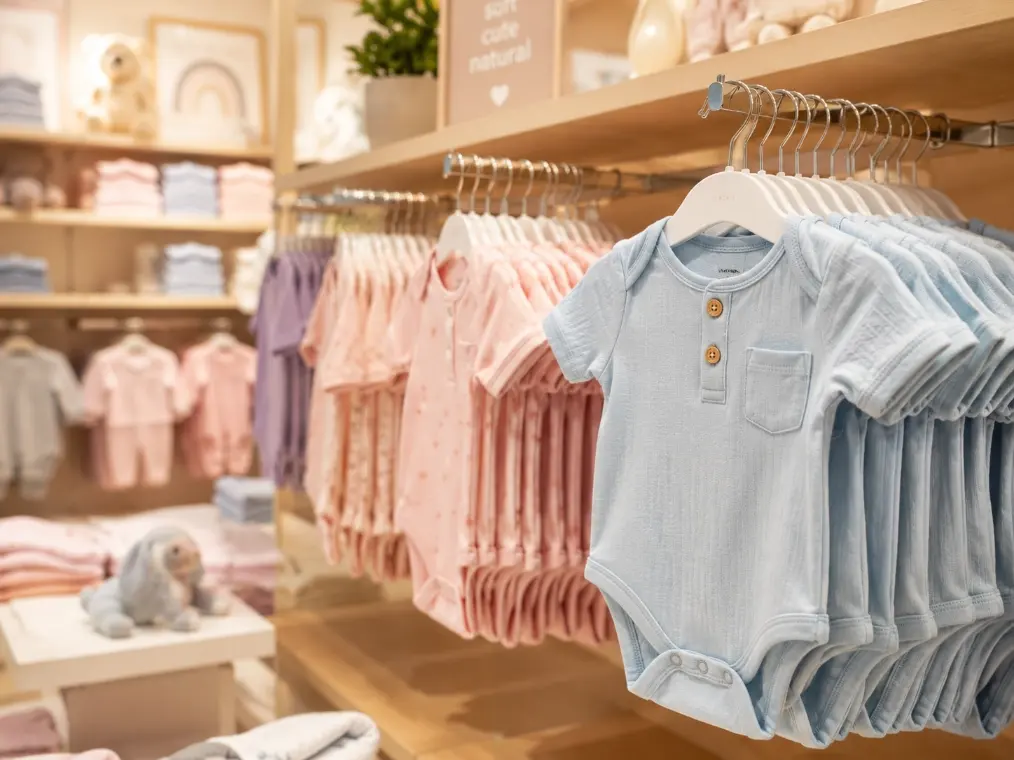
What Is a Private Label Infant Clothing Manufacturer?
A private label infant clothing manufacturer produces garments designed and branded exclusively under your label. You control the design, fabric selection, and brand identity. They handle the cutting, sewing, finishing, and quality control. The factory’s name never appears on the product — yours does.
This model is the backbone of most successful baby apparel brands today, and for good reason. It gives you far greater creative ownership than wholesale purchasing ever could, while keeping capital tied up in production rather than tooling. You’re building an asset — a brand — not just reselling someone else’s product with a sticker on it.
The Growing Demand for Private Label Baby Apparel
The baby apparel market looks fundamentally different today than it did a decade ago. Parents aren’t just purchasing clothing — they’re buying into values. Organic sourcing, ethical production, transparent supply chains, and traceable certifications have shifted from niche preferences to baseline purchasing standards for a meaningful segment of the market.
That shift has created real, sustained demand for independent baby brands that stand for something. And that demand has made private label manufacturing more competitive, more accessible, and frankly more exciting than at any point in my career. If your brand has a clear identity and a genuine commitment to quality, there has never been a better time to bring it to life.
What Makes Infant Clothing Manufacturing Uniquely Challenging
You cannot approach baby clothing the way you approach adult apparel. Newborn skin is significantly thinner and more absorbent than an adult’s, with an immune system that’s still developing. The end user cannot tell you something itches, burns, or doesn’t fit properly. That places the entire burden of safety directly on you and the manufacturing partner you choose.
Safety Regulations and Certifications
I learned the hard way early in my career that a single non-compliant snap can get an entire shipment seized at customs. Regulatory diligence in this category has to be forensic.
For the infant market, the certifications that actually matter are:
- OEKO-TEX Standard 100 Class I — the strictest tier of this certification, required for products intended for newborns and babies. Every component — fabric, thread, button, zipper, printed label — must be tested for harmful substances.
- CPSIA compliance — mandatory for the US market, with specific flammability requirements for children’s sleepwear under 16 CFR Parts 1615 and 1616.
- Global Organic Textile Standard (GOTS) — the gold standard for organic certification, covering the entire production chain from raw fiber to finished garment, including dyes, water treatment, and labor conditions.
Any factory that can’t produce current, verifiable certificates for these standards on request isn’t worth your deposit.
Fabric Requirements for Newborn Skin
That polyester blend that works perfectly well for a toddler hoodie can trigger contact dermatitis on a three-week-old. I always insist on pH-balanced, naturally breathable fibers: organic cotton, bamboo fabric, Pima cotton, and Tencel. No scratchy labels. No exposed elastic. Every seam should be flatlocked and smooth against the skin. These aren’t optional upgrades — they’re the ethical minimum for any brand that wants parents to trust it.
10 Best Private Label Infant Clothing Manufacturers
For a broader view of the market landscape, our full breakdown of the best baby wear manufacturers covers the full competitive picture. The ten partners below represent the strongest options I’ve evaluated for private label specifically.
1. HAPA — Best Overall for Complex Designs and Scalable Production
I’ll be upfront: HAPA Garments is my own company. I’ve placed it at the top of this list because the production data and client outcomes back it up, not because it carries my name.
HAPA is a children’s clothing manufacturer based in Guangzhou, China, with over 15 years of OEM/ODM experience and an active client base spanning more than 200 brands across 25 countries. What genuinely sets HAPA apart isn’t catalog volume — it’s the ability to execute complex, detail-intensive infant styles that other factories quietly decline. Sequined newborn sets, intricate embroidery on 3-month sizing, tie-dye on organic interlock — these are the orders that come to us when other manufacturers say no.
Main Products
HAPA’s catalog covers 3,000+ children’s clothing styles, including onesies, rompers, sleepwear sets, footie pajamas, bodysuit packs, jackets, loungewear, and coordinated gifting sets for the infant and newborn segment. For brands looking to develop custom bamboo baby clothes, HAPA maintains an extensive bamboo viscose program with OEKO-TEX certification throughout.
MOQ
100 pieces per style or color, with size mix-and-match eligible. Small-batch trial orders are welcome. Sampling takes 3–7 days; bulk production runs 15–20 days post-approval.
Pros
- Specializes exclusively in children’s wear — no adult apparel compromises
- Free sampling available for qualifying brands
- Multiple safety and environmental certifications across the facility
- In-house 20-person design team for brands without existing tech packs
- IP protection protocols for all design submissions
Cons
- Primarily optimized for small-to-mid volumes; programs exceeding 100,000 units may be better served by a higher-volume factory
- Guangzhou location means sea freight lead times apply for US and EU markets
Best For: Emerging and mid-size baby brands that need a technically capable, certification-compliant partner — especially those with distinctive design aesthetics that require real manufacturing skill to execute.
2. Thygesen Textile Vietnam — Best for Scale-Ready Ethical Production
Thygesen Textile Group was founded in 1931 in Ikast, Denmark, and has grown into a multinational operation employing over 1,400 people across 10 countries. Their Vietnamese manufacturing arm, established in 2004, has become one of Southeast Asia’s most credentialed ethical producers. Certifications include ISO 9001:2015, GRS, GOTS, OEKO-TEX Standard 100, OEKO-TEX STeP, FSC, and OCS. Clients include Tommy Hilfiger, DKNY, Calvin Klein, and Fjällräven.
Main Products
Bodysuits, jumpsuits, shirts, girls’ dresses, jackets, pants and leggings, joggers, hoodies, and pajamas across the kidswear range.
MOQ
5,000 units per style or design — a figure that positions them squarely for established brands scaling volume rather than first-time founders.
Pros
- 90+ year group history with deep textile expertise at every level
- Among the most comprehensively certified manufacturers on this list
- SA8000 and WRAP-certified ethical labor standards
- Full LEAN production system for efficiency and waste reduction
- AQL 2.5 final inspection as standard
Cons
- 5,000-unit MOQ is a genuine barrier for startups and early-stage brands
- Less flexibility for smaller design counts or first sample rounds
Best For: Established baby and kidswear brands scaling into ethical, certified Vietnamese production with a long-term manufacturing partner.
3. Billoomi Fashion — Best for Organic Boutique Private Label
Based in New Delhi, India, Billoomi Fashion has carved out a highly respected niche in organic knitwear and Ready-to-Dye services. Their commitment to ultra-soft, hypoallergenic materials — bamboo blends and GOTS-certified organic cotton — makes them one of the few Indian infant clothes suppliers that genuinely lives up to an organic brand positioning rather than just claiming it.
Main Products
Organic cotton basics, bamboo infant rompers, and premium boutique kidswear. Their particular strength is knit construction — interlock, ribbed, and jersey bases in natural fibres.
MOQ
As low as 25 pieces per style or color — genuinely rare in the organic manufacturing space and meaningfully accessible for early-stage brands testing an infant line.
Pros
- Unmatched flexibility for startups and small-volume launches
- GOTS-certified cotton and premium bamboo blend programs
- Excellent custom dyeing capability for seasonal color stories
- Competitive labor costs relative to output quality
Cons
- Boutique-scale approach may limit rapid scaling for sudden high-volume demand
- Limited catalog range outside knitwear categories
Best For: Premium organic boutique labels, DTC baby brands, and founders launching a refined infant line without committing to large opening orders.
4. The Pima Company — Best for Luxury Peruvian Cotton Brands
Established in Florida in 2009, The Pima Company is a full-service apparel manufacturer specializing in high-end garments made exclusively with Peruvian Pima cotton — a material with a 38mm extra-long staple fiber that delivers measurable softness through the packaging before you see the label. For parents buying premium gift sets and boutique layette collections, that tactile difference is a genuine commercial advantage.
Main Products
Baby layettes, rompers, Pima cotton tees, infant gift sets, personalized blanks, and pajamas — produced in Lima, Peru and coordinated through a Jacksonville, Florida logistics hub.
MOQ
300 units, structured as a strategic tool to test four colors and styles without overcommitting capital.
Pros
- Genuinely premium raw material with measurable softness and durability advantage
- US-based support team with Peru production — best of both logistics worlds
- CPSC-compliant baby sleepwear across the range
- Strong premium retail positioning ($150–$400 retail price point)
Cons
- Material exclusivity means no synthetic or performance fabric options
- 8–12 week lead time requires careful production planning
- Higher COGS relative to Asian manufacturers
Best For: Premium boutique baby brands and gift-focused infant labels targeting luxury positioning in the US market.
5. Argus Apparel — Best US-Based Option for Startup Compliance
Argus Apparel is a full-service private label infant clothing manufacturer based in the USA, trusted by dozens of babywear startups, boutiques, and subscription box brands. Their differentiator is domestic production paired with startup-level accessibility — a combination that is genuinely hard to find in the American market. For brands that need “Made in USA” compliance documentation from day one, Argus removes a supply chain complexity layer that often trips up first-time founders.
Main Products
Custom baby clothing and private label babywear including onesies, bodysuits, infant tees, and toddler basics, with full packaging and branding options.
MOQ
Starting from 50 pieces per style, with scalable production options as the brand grows.
Pros
- CPSIA-compliant production including flammability standards and lead content limits, with full documentation for US retail
- Faster communication and accessible on-site QC
- Full branding support: woven labels, printed tags, packaging
- Consultants available to guide first-time founders through production decisions
Cons
- US labor costs mean meaningfully higher per-unit COGS compared to overseas suppliers
- Less suited to large-volume programs where overseas pricing creates significant margin advantages
Best For: First-time founders who want domestic production, US-market compliance documentation, and hands-on guidance without navigating overseas time zones.
6. Royal Apparel — Best for Sustainable “Made in USA” Basics
Royal Apparel is an American clothing manufacturer located in Hauppauge, New York. As one of the most accessible domestic infant clothes suppliers for small brands, they maintain a meaningful organic cotton infant line — including organic viscose bamboo options — manufactured in certified sweatshop-free conditions. Their blank stock program is particularly useful for brands testing infant line extensions without inventory risk.
Main Products
Organic infant bibs, hats, lapover tees, long-sleeve lapover tees, infant pants, thermal crews, and one-pieces — available in both organic cotton and organic viscose bamboo.
MOQ
No minimum for blank stock items; custom dye and cut-and-sew MOQs vary by project.
Pros
- One of the most accessible “Made in USA” options for small brands
- Organic cotton, bamboo, and RPET (recycled plastic) fabric programs
- ASI member with strong branded apparel credentials
- Free freight trucking within the continental US for eligible orders
Cons
- US manufacturing means significantly higher COGS compared to Asian or South American factories
- More limited style catalog relative to full-service OEM/ODM partners
Best For: Eco-conscious baby brands and subscription box companies for whom “Made in USA” is a core marketing pillar rather than a compliance checkbox.
7. Baagh Enterprises — Best for Ultra-Low MOQ Global Startups
Baagh Enterprises operates in the USA and worldwide, serving apparel brands since 2018 with competitive pricing, low minimums, and weekly production capacity reaching 10,000 sets. They occupy a practical middle ground — minimums low enough for startups, throughput high enough for scaling brands, and 24/7 customer support that matters when you’re coordinating across time zones.
Main Products
T-shirts, dresses, jackets, and newborn sets — covering newborns through early teens — plus activewear, streetwear, and leather goods. Infant-specific items include onesies and coordinated newborn sets.
MOQ
As low as 20 sets per design — genuinely among the lowest available from any manufacturer operating at this production level.
Pros
- Market-leading low MOQ with genuine weekly production capacity
- Full customization: fabrics, printing, embroidery, branding, and custom packaging
- 24/7 customer support, Monday through Saturday
- Dedicated kids’ clothing team attentive to the details parents prioritize
Cons
- Pakistan production means longer shipping windows for certain regions
- Broad category coverage means less specialization in infant-specific compliance than a dedicated baby manufacturer
Best For: Budget-conscious startups and early-stage DTC brands testing infant designs without large production commitments.
8. Zega Apparel — Best for Versatile Cut-and-Sew Customization
Zega Apparel manufactures in Karachi, Pakistan, with its brand registered in Sheridan, Wyoming. With a client base of 3,000+ customers and over a decade of production history, Zega’s real strength is cut-and-sew versatility — the ability to execute a broad range of construction styles across a single facility, which matters for infant brands building multi-product collections simultaneously.
Main Products
Custom made baby clothes for toddlers, infants, and children — including shirts, pants, bodysuits, and specialty garments — with private labeling, printing, and embroidery services.
MOQ
50 pieces per design as the general standard, with a 200-piece MOQ noted for certain categories.
Pros
- Strong cut-and-sew capability across diverse garment constructions
- Custom label options: woven, satin, and heat-transferred
- Eco-friendly fabric options including organic cotton, linen, and TENCEL
- US-registered business simplifies invoicing and communication for North American brands
Cons
- Compliance documentation requires careful independent verification for the US infant market
- Variable MOQ across product types requires clear upfront clarification
Best For: Multi-category infant and toddler brands building a diverse product range in manageable quantities.
9. Kabeier — Best for Boutique and Occasion Infant Wear
Kabeier operates from Zhejiang, China, with a team of approximately 400 employees across its own facility and six cooperative workshops. They occupy a niche that most manufacturers leave underserved: occasion wear, christening outfits, baptism rompers, and boutique-quality dress sets for the milestone moments parents photograph and remember for years. If your brand targets celebration over everyday basics, Kabeier deserves serious attention.
Main Products
Girls’ smocked dresses, baby baptism rompers, boys’ linen shirts, christening outfits, formal suits, boutique dresses, and kids’ festival and Christmas costumes.
MOQ
Low minimums for sample and small-batch orders; mix-and-match across styles supported. Amazon FBA preparation service available for direct-to-platform brands.
Pros
- Rare specialization in occasion, celebration, and boutique infant categories
- Wide material range: linen, bamboo, 100% organic cotton, Modal, muslin, and jersey
- Digital and reactive printing plus embroidery capabilities
- Amazon FBA prep service is a meaningful logistical advantage for e-commerce brands
- Consistent 4.9 Google rating across client reviews
Cons
- Products aren’t handmade, which may matter for boutique buyers who value artisanal construction
- Occasion-wear focus means limited range for everyday basics
Best For: Boutique baby brands, gifting companies, and Amazon sellers building a curated range of milestone and occasion infant wear.
10. Baby Clothes Factory — Best for Eco-First Organic Startups

Baby Clothes Factory is a professional export children’s clothing factory with 17 years of production experience, 20 designers averaging over a decade of experience each, and products primarily exported to the United States, Australia, and the United Kingdom. Their entire business model is built around one premise: sustainable, certified, small-batch infant clothing for brands that lead with their organic credentials. If eco-first positioning is the core of your brand story, this is the kind of infant clothes supplier that genuinely lives the same values on the factory floor.
Main Products
Organic cotton, bamboo fiber, bamboo-cotton blends, hemp, and other environmentally certified fabrics. Products span infant rompers, bodysuits, sleepwear, and baby sets — all in certified sustainable materials.
MOQ
As low as 50 pieces, and sometimes less when standard fabrics are used.
Pros
- BSCI, OEKO-TEX, and GOTS certified — all three major certifications for infant apparel
- 7-day sample turnaround, among the fastest on this list
- True organic focus across the full production process, not just raw materials
- One-stop service from garments to custom tags and packaging
Cons
- Smaller operation means capacity is better suited to emerging brands than high-volume scaling
- Limited range outside organic and natural fiber categories
- Less brand recognition requires more due diligence in vetting
Best For: Eco-conscious startup brands and sustainability-led infant labels seeking a fully certified, organic-first manufacturing partner.
How to Choose the Right Private Label Infant Clothing Manufacturer
I’ve sat across the table — physically and virtually — from hundreds of factory owners over the years. The best manufacturer isn’t the one with the flashiest catalog; it’s the one who asks about your product’s safety standards before they ask about your budget. What follows is the vetting framework I’ve refined over two decades and more than a few expensive lessons.
Key Factors to Evaluate Before Signing a Contract
Before you commit to any partner, the real truth lives in the paperwork and the pre-production sample — not the sales call.
MOQ Flexibility and Sample Policies
If a factory isn’t willing to show reasonable flexibility on minimums for a startup, they’re probably not structured to support a growing brand over time. More importantly, scrutinize their sample policy. A factory that charges a reasonable fee but deducts it from the bulk order is showing good faith. One that refuses to provide a pre-production sample — or treats sampling as a revenue center — is raising a quiet red flag. Hold every sample in your hands before greenlighting production. Every single time.
Lead Times and Production Capacity
A factory quoting the same four-week lead time year-round is either not being honest about their order book, or they’re running well below capacity — and neither is a good sign. Ask directly about current throughput and who else is on the production line. I build a two-week buffer into every client production calendar. That buffer has saved more retailer relationships than any other single habit I’ve developed.
Quality Control Processes and Audit Transparency
Ask for QC checkpoint documentation — not photos of a tidy sewing floor. You want to understand their inline inspection protocol, the AQL standard they follow, and whether they permit third-party audits with reasonable notice. For custom made baby clothes specifically, I personally verify needle detection policies. Any factory that can’t show me an active metal detector log doesn’t get an order. A broken needle fragment hidden in an infant garment is a brand-ending event, not just a quality issue.
Certifications and Safety Standards You Cannot Overlook
Certifications aren’t decoration. They’re the minimum barrier to entry. If a factory can’t immediately produce valid, up-to-date certificates, your shipment is at risk before it leaves the port.
OEKO-TEX Standard 100
When I see a valid OEKO-TEX Standard 100 certificate, I know that every single component — thread, fabric, button, snap, zipper, and printed tag — has been independently tested for harmful substances. For infant products, Class I is the only tier that matters. Don’t accept a “materials only” claim; verify that the certificate covers the finished garment.
CPSC Compliance and Flammability Regulations
If you’re selling in the United States, the Consumer Product Safety Commission (CPSC) sets the rules, and children’s sleepwear has its own regulatory layer. Fabrics used in pajamas must pass flammability standards under 16 CFR Parts 1615 and 1616. I guide most clients toward tight-fitting, naturally flame-resistant materials like organic cotton, which avoids the need for chemical flame retardants that today’s parents actively research and avoid. A third-party CPSC-accepted lab test report is non-negotiable for US retail.
GOTS Certification for Organic Cotton Baby Clothes
“Organic cotton” gets thrown around loosely in infant apparel marketing. The Global Organic Textile Standard (GOTS) certifies the entire production chain — from field to finished garment — including dyes, water treatment, and working conditions. It’s the seal I trust most. If your brand plans to market its infant line as organic, insist on a GOTS-certified factory with segregated organic production lines to avoid cross-contamination with conventional fiber runs.
Domestic vs. Overseas Infant Clothing Manufacturers
Both paths are legitimate. The right choice depends on your brand positioning, capital structure, and growth stage.
- Domestic manufacturing — US, EU, Canada, Australia — offers speed, communication clarity, and a powerful marketing narrative. “Made in USA” carries real commercial weight with today’s parent consumer, particularly at premium price points. You gain shorter restock lead times, easier quality oversight, and no import duty exposure. The trade-off is cost: domestic labor and overhead compress margins and raise your minimum viable retail price. For a capital-constrained startup, that pressure can be the difference between a viable business model and one that never finds its footing.
- Overseas manufacturing — primarily China, Vietnam, India, Bangladesh, and increasingly Pakistan — offers the inverse: lower unit costs, access to specialized facilities, deeper material ecosystems, and the production scale to grow without constantly renegotiating terms. The complications are real: longer lead times that demand precise planning, greater reliance on written documentation rather than in-person oversight, import logistics, and the reputational responsibility of thoroughly vetting your factory’s labor and environmental practices. Parents buying infant clothing are increasingly supply-chain literate. A low-cost supplier with unverified labor conditions is a brand liability, not just an ethical concern.
My practical recommendation: if you’re launching with a strong domestic marketing story and a premium price point, domestic production deserves serious consideration. If you’re building a scalable brand across a broader price range, a well-vetted overseas partner with proper certifications will almost always give you the unit economics needed to grow. Many mature infant brands I’ve worked with run a domestic relationship for hero SKUs and an overseas relationship for volume basics — a hybrid strategy that takes time to build but tends to be the most resilient position over the long run.
What Products Can You Make With a Private Label Infant Clothing Manufacturer?
One of the most common questions I hear from founders just getting started: “What can I actually put my label on?” The honest answer is more than most people expect. A capable infant manufacturer isn’t just a onesie printer.
Baby Bodysuits, Onesies, and Newborn Basics The foundation of any infant line. Short-sleeve, long-sleeve, sleeveless, envelope-neck, side-snap — these daily essentials drive repeat purchase and represent the highest-velocity SKUs in most baby clothing brands. Start here before building out.
Baby Rompers, Sets, and Seasonal Collections Two-piece sets, footie rompers, coordinated outfits, and seasonal capsules — holiday prints, summer linen, autumn fleece. These are your brand’s visual signature: the custom baby outfits that photograph well, generate social sharing, and drive impulse gifting decisions.
Infant Pajamas and Sleepwear One of the most regulated infant categories, with strict flammability compliance required in the US market. Includes footie pajamas, two-piece PJ sets, sleep sacks, and wearable blankets. High perceived value and strong repeat-buy rate make this a category worth investing in.
Bibs, Hats, Blankets, and Baby Accessories High-margin add-ons that meaningfully expand average order value and gift set appeal. Muslin swaddle blankets, knotted hats, drool bibs, and booties are lower-complexity to produce but have an outsized impact on a brand’s gifting range.
Conclusion
Choosing the right private label infant clothing manufacturer shapes everything about your brand — your product quality, your margins, your reputation with the parents who trust you enough to put your garments on their most vulnerable family members. Take certifications seriously. Vet your partners thoroughly. Never treat a low unit price as a proxy for good value.
The right factory doesn’t just make your clothes. It protects your brand.
Frequently Asked Questions
How much does it cost to start a private label baby clothing brand?
Total startup costs vary by product type, fabric choice, MOQ, packaging complexity, and logistics. For most founders, the main expense categories are design development, sample making, bulk production, custom labels, packaging, regulatory testing, and freight. A realistic first-production budget for a small line typically starts in the low five figures, but the range is wide depending on your choices.
What is the typical MOQ for infant clothing manufacturers?
Most factories operate in the 50–500 piece range per style, though this varies by factory, fabric, customization level, and whether printing or embroidery is involved. Some low-MOQ infant clothes suppliers accept trial orders below 50 pieces, while ethical certified factories often set higher floors to maintain production efficiency.
What fabrics are best for infant clothing?
The materials I consistently recommend are 100% organic cotton, bamboo viscose, and Pima cotton. They’re breathable, ultra-soft, and naturally gentle on newborn skin. Whatever you choose, insist on OEKO-TEX Standard 100 Class I certification — the only tier tested specifically for substances harmful to infants — covering the finished garment, not just the base fabric.
Can I get a sample before placing a bulk order?
You must. Any trustworthy manufacturing partner will provide a pre-production sample — typically for a fee deducted from your bulk order. I never approve production without holding that first finished piece. If a factory refuses or makes sampling impractical, take your business elsewhere.
How long does it take from design to delivery?
For a first order, plan on 8 to 14 weeks in total. Sampling typically takes 2–3 weeks, bulk production another 4–6 weeks, and shipping adds 1–3 weeks depending on whether you choose air or sea freight. I always build in a two-week buffer — particularly before peak seasons when factories run full and freight capacity tightens.