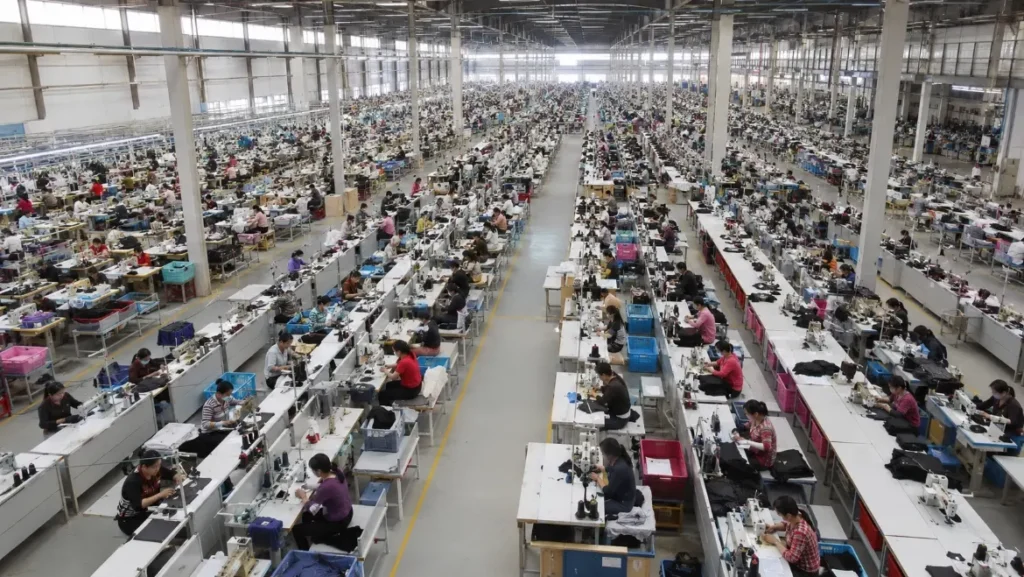
Sourcing clothing from India can be a smart choice for fashion brands, retailers, wholesalers, and private-label businesses. The country has a well-established textile and apparel supply chain covering yarn, fabric, dyeing, printing, garment production, and export. The real challenge is not finding suppliers, but finding a manufacturer that matches your product type, order volume, quality standards, and target market.
Start by defining your sourcing requirements, then search through Google, B2B platforms, industry directories, trade shows, manufacturing hubs, sourcing agents, LinkedIn, and social media. Build a list of 20 to 30 suppliers, shortlist five to eight through RFQs and sample evaluation, and select two or three for a factory audit or trial order before moving into bulk production.
What Should Your India Sourcing Brief Include?
Your sourcing brief should define the product, materials, quantity, target market, manufacturing service, quality requirements, packaging, delivery terms, and calendar. Separate fixed requirements from flexible preferences so factories can assess the project and quote on the same basis.
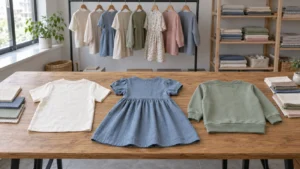
Start with the product category. State whether you need knitted T-shirts, woven dresses, denim, sportswear, uniforms, underwear, outerwear, or a mixed collection. Add reference images and explain the intended customer, use, size range, and quality level.
Cover the essentials:
- Product and market: garment type, use, destination, and any market rules you already know apply.
- Manufacturing model: how much the factory does (this sets who owns design and materials).
- Materials: fabric, weight, composition, key trims, and what’s non-negotiable versus open to substitution.
- Quantities: order size split by style, then color and size.
- Processes: which operations the garment needs, and which you expect the factory to own rather than quietly subcontract.
- Quality, packaging, delivery: your standard, packing format, delivery window, and the delivery terms and named place to quote (ICC Incoterms rules give the shared vocabulary).
Why Choose Indian Clothing Manufacturers?
Indian clothing manufacturers can suit buyers who want established textile capability, cotton-rich materials, specialized knit or woven production, real export experience, and supply-base diversification. The advantage is strongest when your product matches what a factory already makes well. A competitive quote alone does not prove lower total cost or better execution.
National strengths don’t automatically belong to any single factory. India’s chain runs deep, spinning, knitting, weaving, dyeing, printing, garmenting, and the Ministry of Textiles publishes current industry context (cite figures with their year). But you buy from one company, in one location, with one set of machines. Reputation is a reason to look, not evidence about the supplier in front of you.
Where India tends to fit:
- Cotton and natural fibers: a large cotton base supports knit and woven cotton across many weights.
- Specialized knit and woven work: regional clusters give clear direction on where to search.
- Handwork and decoration: embroidery and block printing are real regional strengths.
- Export experience and diversification: many factories have exported to Western markets for years.
Slow down for fully synthetic or technical fabrics, uncommon construction, and very fast timelines; these vary by factory and region. None of it rules India out. It makes the decision product-by-product.
Where to Find Clothing Manufacturers in India
Search through Google and Maps, B2B platforms, industry associations, trade shows, manufacturing hubs, sourcing agents, LinkedIn, and factory-focused social media. Use several channels because each reveals different suppliers and carries different blind spots.
Google Search and Maps
Combine the product, production service, and location in each search. Useful examples include:
private label clothing manufacturer Indiaorganic cotton clothing factory Indiasmall batch garment manufacturer Delhiknitwear manufacturer Tiruppurwoven garment exporter Noidasportswear manufacturer Bengaluru
Open the website and Maps profile separately. Compare the company name, domain, phone number, address, products, and images. An industrial location and consistent contact details add context.
A map pin may still represent an office, showroom, warehouse, home, or shared building. Public photos may be old or uploaded by third parties. Treat mismatches as questions, not immediate conclusions.
Search beyond the first page and add city, material, or process terms. Smaller specialist factories may have basic websites but strong production experience.
B2B Sourcing Platforms
Alibaba, IndiaMART, TradeIndia, Global Sources, and Fibre2Fashion can help build an initial list. Search by product and region rather than using only “clothing manufacturer India.”
Compare location, product categories, customization, public MOQ claims, export experience, and buyer feedback. Save the profile and date because listings change.
Mark every platform field as supplier claim, verify. A “Manufacturer” or “Verified Supplier” badge does not prove factory ownership, current capacity, certification scope, or suitability for your order.
Before shortlisting a lead, request:
- Legal company and factory names
- Registered and production addresses
- Owned and subcontracted processes
- Recent comparable products
- Contact through a company-domain email
A live call from the proposed facility can support later verification.
Industry Association Directories
Focused directories can reveal exporters and regional specialists. Useful starting points include the Apparel Export Promotion Council, Clothing Manufacturers Association of India, Federation of Indian Export Organisations, and Tiruppur Exporters’ Association.
Record the listed company name, role, products, location, contact details, directory, and search date. Then compare the entry with the company’s website and official records.
Directory membership can support a company’s connection to an industry body. It does not confirm current capacity, quality, factory ownership, certification scope, or willingness to accept your order.
Merchant exporters can be legitimate partners. Ask who signs the contract, receives payment, selects the factory, controls quality, and issues export documents.
Textile and Apparel Trade Shows
Trade shows allow buyers to inspect products and meet several suppliers quickly. Official starting points include Bharat Tex, the India International Garment Fair, Gartex Texprocess India, and events listed by Textile Fairs India.
Before attending:
- Check current dates, venues, and exhibitor lists.
- Filter exhibitors by product, material, process, and location.
- Send a short brief and request meetings.
- Prepare the same questions and sample scorecard for every supplier.
At the booth, inspect fabric, construction, stitching, decoration, finishing, labels, and packaging. Ask which samples came from the exhibitor’s own factory.
A polished booth is not an audit. Confirm the legal entity, factory address, production route, minimums, and commercial terms after the event.
Major Garment Manufacturing Hubs
Cluster knowledge helps you search in regions associated with relevant products. It does not mean every supplier in the city has the same capability.
| Hub | Useful search direction | Important buyer check |
|---|---|---|
| Tiruppur | Knitwear, T-shirts, sportswear, underwear | Fabric route, processing, shrinkage, and pilling |
| Delhi NCR and Noida | Woven fashion, private label, embroidery | Exact factory and whether production is outsourced |
| Ludhiana | Sweaters, hosiery, thermal and winter wear | Yarn, gauge, linking, washing, and seasonal capacity |
| Jaipur | Printed dresses and smaller fashion collections | Print control, grading, sewing, and export packing |
| Bengaluru | Export woven garments, uniforms, casualwear | Proposed division, equipment, and product team |
| Surat | Synthetic textiles, printing, and processing | Whether the lead is a mill, factory, exporter, or trader |
Search by product plus hub, then verify the actual facility. A strong fabric cluster does not automatically provide the garment construction, quality control, and export support your order requires.
Local Discovery Networks
Local networks can reveal factories with limited international marketing. The referral path must remain transparent.
| Channel | Best use | Main risk |
|---|---|---|
| Sourcing agent | Factory search, samples, audits, quality, and logistics | Hidden commissions or undisclosed factories |
| Finding owners, export managers, merchandisers, and quality staff | Profiles do not prove employment, capacity, or authority | |
| Social media | Seeing products, processes, and factory activity | Content may be old, edited, copied, or filmed elsewhere |
Ask an agent to disclose fees, supplier commissions, factory names, inspection methods, and decision responsibilities. An agent should improve visibility rather than create another hidden layer.
On LinkedIn, send a concise brief covering product, quantity, material, target market, and timing. On social media, look for consistent company names, locations, machinery, staff, and products over time.
Never treat a production video as proof of ownership, capacity, or order quality. Move every referral into the same identity, facility, sample, and commercial checks.
Top 5 Verified Clothing Manufacturers in India
If you do not have time to search through dozens of suppliers and verify each one yourself, don’t worry. I have researched clothing manufacturers in India across multiple sources and shortlisted five companies worth considering. You can use this list as a starting point, contact the manufacturers directly, and compare their products, MOQs, services, and production capabilities before choosing the right partner.
Shahi Exports
Official website: shahi.co.in
Overview: Shahi Exports describes a vertically integrated route from spinning to finished garments, with public capabilities covering woven and knitted fabrics, garmenting, and denim.
Primary products: Woven apparel, knitted apparel, and denim.
Production service type: Vertically integrated, full-package apparel manufacturing and export.
Potential fit: Established programs that match one of its product divisions and suit a large manufacturer’s commercial requirements.
Buyer check: Confirm the division, proposed factory, material route, subcontracted processes, order-size fit, testing responsibility, calendar, and contracting entity.
Gokaldas Exports
Official website: gokaldasexports.com
Overview: Gokaldas Exports presents itself as an apparel manufacturer and exporter. Its public categories include fashionwear, outerwear, bottomwear, casualwear, and sportswear.
Primary products: Fashionwear, outerwear, bottomwear, casualwear, and sportswear.
Production service type: Multi-category apparel manufacturing and export.
Potential fit: Fashion, casual, sports, bottom, or outerwear programs suited to the proposed production unit.
Buyer check: Confirm the factory, machinery, material source, special processes, sample team, minimums, and subcontracting route.
Pearl Global Industries
Official website: pearlglobal.com
Overview: Pearl Global describes design, product development, apparel manufacturing, and supply-chain services across several locations. Its public information refers to woven, knit, denim, and multi-product capabilities.
Primary products: Multi-category apparel, including publicly described woven, knit, and denim businesses.
Production service type: Design, development, apparel manufacturing, and supply-chain services.
Potential fit: Buyers seeking development support or a multi-location supply partner.
Buyer check: Confirm the contracting entity, production country, proposed factory, process ownership, quality responsibility, and export arrangement.
KPR Mill
Official website: kprmilllimited.com
Overview: KPR Mill describes vertically integrated capabilities in spinning, knitting, processing, printing, embroidery, and garment manufacturing.
Primary products: Yarn, knitted fabric, and knitted garments for men, women, and children.
Production service type: Vertically integrated knit textile and garment manufacturing.
Potential fit: Knit programs that align with the company’s published material and garment capabilities.
Buyer check: Confirm fabric construction, finishing route, decoration, target-market testing, order flexibility, and the garment factory proposed for production.
Texport Industries
Official website: texport.com
Overview: Texport Industries states that it manufactures and exports woven and knitted apparel as well as knitted fabric. Its public categories cover men’s, women’s, and children’s products.
Primary products: Fashionwear, casualwear, sportswear, and knitted fabrics.
Production service type: Apparel export manufacturing with knitted-fabric integration.
Potential fit: Buyers whose woven or knit category matches the proposed unit’s experience.
Buyer check: Confirm the factory, fabric source, subcontracted processes, MOQ layers, testing, export documents, and delivery responsibilities.
These profiles are starting points. A large company may not suit a small, complex order, while a less visible specialist may offer a stronger technical match. For a wider supplier comparison, review this guide to the top 15 garment manufacturers in India.
Are Indian Clothing Manufacturers Suitable for Startups?
Indian manufacturers can suit startups with a focused collection, clear specifications, realistic quantities, a sample budget, and enough time for development. Startups with tiny mixed-category orders, incomplete tech packs, many custom materials, or urgent launch dates may struggle with factory and material minimums.
You are more likely to find a suitable partner when:
- Several styles share fabric, colors, trims, or packaging.
- Quantities are stated by style, color, and size.
- Your team can review samples and approve changes quickly.
- The budget covers development, tests, inspection, and freight.
- The calendar allows for material and fit corrections.
Do not ask only for the garment MOQ. Request five numbers:
- Garment MOQ by style
- Fabric minimum by construction and color
- Trim minimum
- Packaging minimum
- Surcharge or leftover-material policy
Large exporters may have structured systems but prefer established programs and efficient line quantities. Smaller factories may offer flexibility but require closer checks of export documentation, quality systems, testing coordination, and capacity.
If the order is too fragmented, reduce styles, share one fabric, limit custom colors, use available trims, or launch in phases. A startup should choose a supplier whose entire material and production route supports the launch, not one that advertises the lowest MOQ.
How to Verify Clothing Manufacturers in India
Verify an Indian clothing manufacturer by matching the legal company name, GST registration, Importer Exporter Code, bank beneficiary, website, and proposed factory address, then confirming the facility can produce your garment through process maps, recent comparable samples, live or independent factory evidence, valid scope-specific documents, and a controlled sample or pilot order. No single registration or certificate is enough.
Company Identity
Confirm the legal name, trade name, registered address, GSTIN, domain email, contract entity, and bank beneficiary. Check taxpayer identity via the GST Portal search. The limit: a GST record confirms a taxpayer and its status, not manufacturing ability or capacity.
Export Readiness
If importing, request the Importer Exporter Code and check the name and status via the DGFT IEC tool. Confirm the exporter of record and who owns the commercial invoice, packing list, and shipping documents. An IEC confirms export identity, not factory quality.
Facility Capability
Ask for the production address, production flow, equipment, owned-versus-outsourced processes, quality team, and recent comparable products, to find out whether the “factory” is a factory.
Owned Processes
Identify what the factory controls directly, typically pattern making, cutting, sewing, finishing, packing, and material handling. These are easier to hold to a standard and inspect.
Subcontracted Processes
Identify what’s outsourced, often dyeing, printing, embroidery, washing, testing, or packing, and who owns quality for each. Subcontracting is normal; hidden subcontracting is the risk.
Certification Scope
For any certificate, record the scheme, issuer, holder, facility address, scope, issue and expiry dates, and status in the issuer’s database. Keep categories separate, social audits, quality systems, material certs, chemical testing, and product compliance measure different things. Check certificates against the issuing body’s records, not a supplier PDF.
References and Trial Evidence
Ask for recent references close to your category, market, and order size, then supplement with buyer-led video, third-party audits, on-site visits, samples, or a pilot. Public marketing is the supplier’s account; your own evidence is what verification rests on.
Any single Stop, mismatched entities, a refusal to disclose the factory, uncheckable certificates, keeps a supplier out no matter how strong the rest looks.
How to Buy Clothes Directly from Manufacturers in India?
Buy clothes directly from manufacturers in India by identifying a factory that matches your product, verifying the legal entity and actual production site, and sending a complete technical RFQ. Then compare samples, total costs, contract terms, payment details, quality controls, and export responsibilities before a pilot order or bulk approval.
Going direct removes a markup and a middle layer; it also moves merchandising, quality, logistics, contracts, and import responsibilities onto your desk.
Send a Comparable RFQ
The point of an RFQ is comparability. Send the same package and quantity breakdown to every shortlisted candidate: tech pack, BOM, measurements, materials, artwork, quantity by style/color/size, target market, testing, labels, packaging, and calendar.
Ask each to quote on the same terms, currency, validity, Incoterms rule and named place, development charges, testing, packing, payment terms, exclusions, and each MOQ layer, and to disclose service model, factory address, owned processes, subcontractors, and sample stages. Send it to the five to eight that cleared screening, then take two or three finalists forward.
Compare Total Sourcing Cost
Comparing EXW or FOB unit prices alone picks the wrong supplier. Build a landed-cost view:
| Cost component | Include? | Note |
|---|---|---|
| Unit price (EXW/FOB) | Yes | Starting point only |
| Development / sampling | Yes | Hits small orders hardest |
| Testing | Yes | Destination-market driven |
| Packing | Yes | Cartons, polybags, hangtags |
| Freight | Yes | Shifts the ranking |
| Duty | Yes | Product/destination dependent |
| Finance cost | Yes | Deposits tie up capital |
| Inspection | Yes | Recurring third-party QC |
| Reject / rework | Yes | Cheap units with rejects aren’t cheap |
| Delay exposure | Yes | Missed windows can cost most |
Run every finalist through the same components and the “cheapest” quote often changes.
Confirm Contract and Export Responsibilities
Before ordering, confirm the contracting entity, bank beneficiary, Incoterms named place, exporter of record, documents, inspection points, release conditions, and claim process. Make sure the contract entity matches the entity receiving payment. Payment, insurance, import, and contract risk should be reviewed by your own bank, insurer, or legal advisor.
Test an Indian Clothing Manufacturer Before Bulk Production
Verification shows a supplier is real and capable on paper and in person; testing shows whether they hold your approved standard. Record two things at once: the physical product and the supplier’s behavior, how they communicate, disclose, and fix problems predicts the full order. A passing sample is not proof of bulk stability; for higher-risk products, consider a pilot order or staged release.
Sample Accuracy
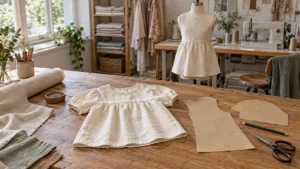
Check the sample against your spec, fabric, measurements, construction, fit, color, decoration, trims, labels, packaging, and know which stage you’re evaluating:
- Proto — concept and basic construction
- Fit — measurements and fit on-body
- Size set — the graded sizes
- Pre-production (PP) — the bulk approval standard, correct materials and processes
- Shipment — what actually ships
Approving fit-level work as a PP sample is a common, costly mistake. Match the decision to the stage.
Material Evidence
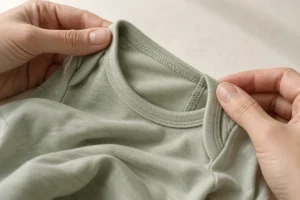
Confirm the mill or supplier, composition, construction, lab dip or strike-off, shrinkage, colorfastness, and any tests your market requires. Any substituted material or changed process must be disclosed and approved first, silent substitutions are a frequent root cause of bulk problems, and cheaper to catch at sampling than in a container.
Pilot Production
Use a commercially reasonable small run or staged allocation to test the whole chain, purchasing, production, QC, correction, and packing, not just sewing. A pilot surfaces real response times, revision counts, whether the factory does genuine root-cause analysis, and resolution quality. These behaviors repeat at full scale.
Release Decision
Define who’s responsible at each control point, incoming material, first output, in-line, final inspection, and shipment release, then summarize evidence in a Go / Clarify / Stop matrix, weighted by product risk, order size, and market. Keep explicit stop conditions in view:
- Legal entity or bank beneficiary details don’t match
- The supplier won’t disclose the actual factory
- Materials or processes were substituted without approval
- Certificates can’t be verified in official databases
- Repeated contradictions or pressure to pay earlier than agreed
Any of these outweighs an attractive price.
Conclusion
Finding clothing manufacturers in India is a screening and verification problem, not a search problem. The companies are easy to find; finding the right one for your product, quantity, and market takes method.
Work it in order: write a sourcing brief, decide whether India fits on total cost (not headline price), cast a wide net across all eight channels, narrow through consistent RFQs and samples, read a public-source shortlist to learn how to check claims, verify the legal entity against the actual factory, and let a sample and pilot, scored against clear stop conditions, make the call. Done that way, it becomes a repeatable process rather than a one-time gamble.
If you also want to compare a China-based OEM option, you can request a comparative apparel manufacturing review by sending your tech pack or a reference sample for a separate feasibility check.
Frequently Asked Questions
What does “verified” mean in this manufacturer shortlist?
It means each official website and published manufacturing scope was checked on July 29, 2026. It does not mean factory capacity, MOQ, certifications, quality, or order performance were audited.
Can I buy directly from an Indian manufacturer without a sourcing agent?
Yes, if your team can manage screening, specifications, samples, contracts, quality, payment, logistics, and imports. Direct buying removes an intermediary, not these responsibilities.
What is an IEC when sourcing garments from India?
An Importer Exporter Code identifies an Indian export entity. Check it through DGFT, but do not treat it as proof of factory ownership or manufacturing capability.
Is a GST registration enough to verify a clothing factory?
No. A GST record supports identity checks. You must still confirm the facility, production processes, product experience, samples, export role, and order performance.
Do I need to visit an Indian garment factory before ordering?
Not always. Higher-risk orders justify stronger onsite or independent evidence. A buyer-led video tour helps, but it may not replace a technical or social audit.
How many Indian clothing manufacturers should I contact?
Consider starting with 20 to 30 leads, sending RFQs to five to eight candidates, and moving two or three finalists into deeper verification.
What payment terms are safe for a first garment order?
There is no universally safe percentage. Verify the contract and beneficiary, use traceable payments, and seek professional trade or financial advice when appropriate.