India gives apparel brands access to some of the world’s largest garment exporters, deeply integrated textile groups, and focused specialist factories. A familiar company name, though, is not the same as the right sourcing partner. Product fit, factory scope, development support, quality control, and total landed cost decide far more than a supplier’s position on any list.
This guide covers why brands source here, profiles 15 garment manufacturers in India that work with global brands, and shows how to verify each one. Details were reviewed in July 2026 and should be reconfirmed before you sample.
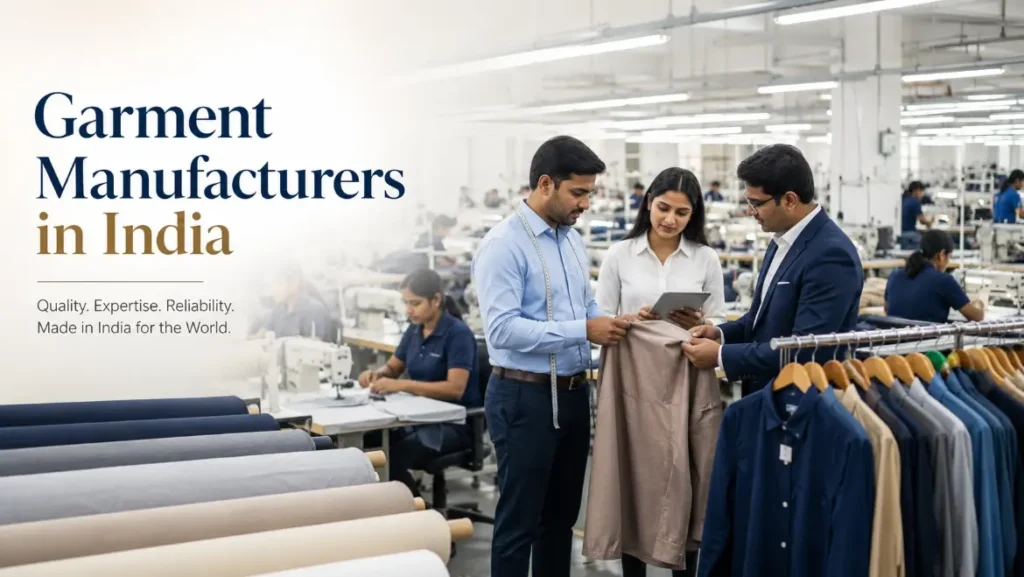
Benefits of Working with Garment Manufacturers in India
A strong Indian supplier offers more than a low quote. The advantage is clearest when your product sits inside a mature local supply base and the factory takes real ownership of development, materials, quality, and export paperwork. Three benefits matter most.
Material Access
India’s textile base puts cotton yarns, knitted and woven fabrics, denim, and a wide span of processing within reach. When a manufacturer is vertically integrated or has stable mill relationships, that shortens the distance between fabric and finished garment and can improve traceability, because you can ask the exporter to name the spinning, dyeing, printing, and finishing units behind your order.
Access is not the same as unlimited choice. A factory with excellent cotton jersey may have thin experience in recycled synthetics, performance finishes, laminates, membranes, or specialist trims. So ask for mill nominations, composition evidence, test reports, lab dips, strike-offs, and the bulk approval procedure for the exact material you need, not the material the factory runs most often.
Product Specialization
India is a country of clusters and factory types, not one generic supply pool. Tirupur is knit territory; Bengaluru and the National Capital Region hold large exporters with broader woven and fashion capability; textile groups across Tamil Nadu, Gujarat, and Maharashtra link yarn, fabric, processing, and garmenting inside one business.
That specialization pays off when your supplier already knows your construction. A denim house should be fluent in wash standards, shrinkage, shade bands, and metal detection; a knit specialist should talk comfortably about spirality, pilling, dimensional stability, neck recovery, and stretch. The benefit comes from category fit, not from country of origin alone.
Supply Chain Diversification
Adding an Indian partner reduces dependence on a single country, cluster, or supplier group. That matters most when you already source heavily from one hub and want a qualified second source for selected product families.
Diversification works best when it is planned at product level. Start with repeatable styles, move approved materials and quality standards across, and track sample accuracy, communication, delivery, and inspection results before you widen the allocation.
15 Garment Manufacturers in India for Global Brands
The companies below represent different manufacturing models. Some are large full-package exporters, some connect textiles and garments under one roof, and others concentrate on a narrow product group. For each one, use the notes to judge the production model, the primary products, the real strengths and limits, and the order-specific evidence you still need to gather.
1. Shahi Exports
Website: shahi.co.in
One of India’s largest apparel manufacturers and exporters, Shahi publicly describes integration that runs from spinning and fabric through to finished garments, across woven, knitted, and denim products.
- Best suited to: large, multi-category programs that benefit from broad in-house scope.
- Primary products: woven fashion and bottoms, knitted apparel, denim garments.
- Strengths: wide material and garment range; upstream textile operations that can tighten coordination and visibility; category-specific production teams across divisions.
- Watch-outs: the scale that suits big programs can be a poor fit for very small or fragmented orders, and group capability does not confirm a given process runs at the factory you are quoted.
- Before you commit: pin down the legal entity, the proposed factory, similar-product history, the current capacity window, the subcontracting map, and the commercial minimums for your actual order.
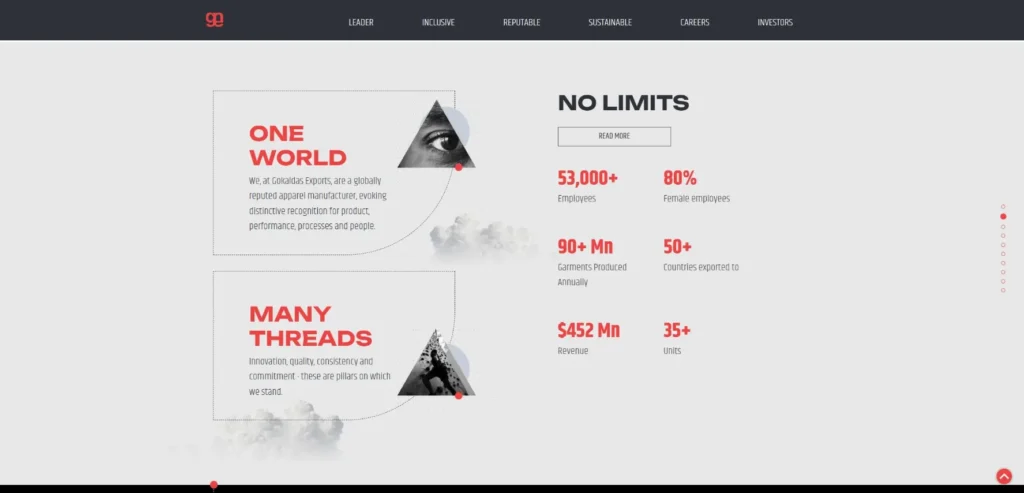
2. Gokaldas Exports
Website: gokaldasexports.com
A long-established, publicly listed export house whose stated range spans fashionwear, outerwear, bottoms, casualwear, and sportswear. The model is built for structured export programs and formal vendor management.
- Best suited to: brands that need mature vendor systems and run recurring, sizeable programs.
- Primary products: fashion and casualwear, outerwear, bottomwear and sportswear.
- Strengths: broad sewn-product range across construction levels; visible outerwear and bottomwear capability for construction-led work.
- Watch-outs: you have to identify the right division and factory per category, and small orders may not fit the commercial model of a large exporter.
- Before you commit: request recent examples from the proposed site, a style-specific machinery list, the sample calendar, and a written map of who owns fabric, wash, print, embroidery, testing, and packing.
3. Pearl Global Industries
Website: pearlglobal.com
Positioned as an end-to-end apparel supply-chain company with design, development, manufacturing, and international operations — relevant if you want a sourcing platform rather than a single standalone factory.
- Best suited to: diversified assortments and buyers who value a design-to-delivery structure across markets.
- Primary products: fashion tops and dresses, bottoms and casual apparel, outerwear and knits.
- Strengths: fewer handoffs on larger programs; a multi-country footprint that helps coordinate across regions.
- Watch-outs: the office you talk to, the contracting entity, the factory, and the exporter of record may all differ, so group breadth still needs facility-level proof.
- Before you commit: confirm the executing legal entity, the production country and factory address, material origin, subcontractors, audit scope, the escalation owner, and exactly which services the quote includes.
4. KPR Mill
Website: kprmilllimited.com
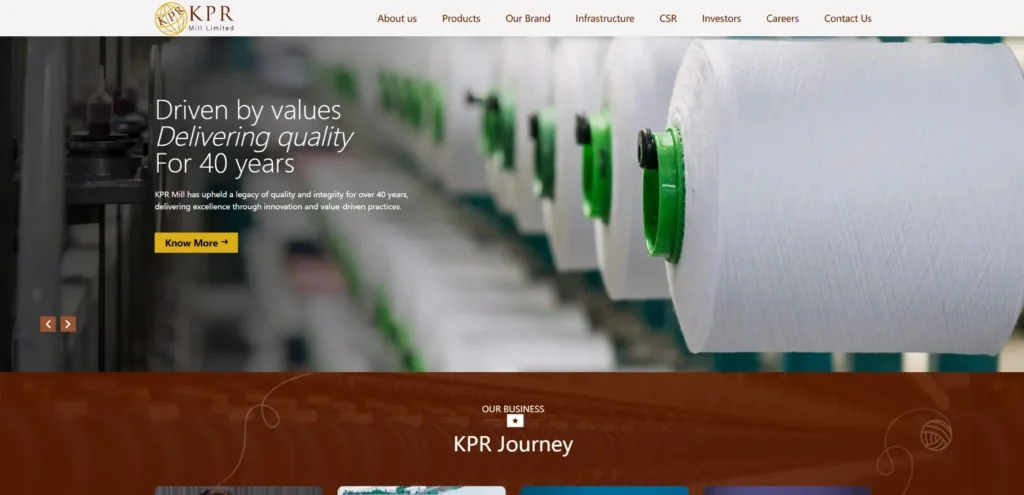
Operates across yarn, knitted fabric, processing, and garment manufacturing, giving buyers a clearer view of the upstream route behind knitted apparel.
- Best suited to: repeatable knit programs where fabric consistency and traceability matter.
- Primary products: cotton and blended yarns, knitted fabrics, ready-made knitted apparel.
- Strengths: connected yarn-to-garment operations that simplify coordination; upstream visibility that supports fabric consistency.
- Watch-outs: deep knit specialization does not carry over to complex woven or tailored work, and a given order may still use external materials or processes.
- Before you commit: verify the fiber and yarn spec, fabric construction, the dyeing and finishing location, the test plan, the garment unit, any external processes, and the order-level traceability route.
5. Texport Industries
Website: texport.com
Publicly identifies woven and knitted apparel manufacturing and export, plus knitted-fabric production, with fashion, casualwear, and sportswear across several segments.
- Best suited to: buyers who want both woven and knit routes from one group.
- Primary products: fashion and casual apparel, sportswear, knitted fabrics and soft garments.
- Strengths: covers both construction routes; backward integration into knit fabric supports selected knit programs; multi-state operations open different units.
- Watch-outs: broad positioning does not prove equal depth in every construction, and special wash, embellishment, or finishing may go to outside partners.
- Before you commit: identify the division that owns your style, review comparable samples and machinery, and map every external fabric, wash, print, embroidery, finishing, and testing step.
6. Eastman Exports
Website: eastmanexports.com
A Tirupur knitwear manufacturer and exporter that describes a fiber-to-garment setup — spinning, knitting, dyeing, finishing, printing, embroidery, garmenting, plus research and testing.
- Best suited to: full-package knit development where an in-house process route reduces coordination gaps.
- Primary products: T-shirts and polos, fashion knitwear and casualwear, sportswear, loungewear, and underwear.
- Strengths: a broad in-house knit route; printing, embroidery, and lab support for end-to-end development; an established knit cluster around it.
- Watch-outs: knit-led capability does not transfer to structured woven or tailored garments, and some published site content reads dated, so confirm current details directly.
- Before you commit: confirm the current legal entity, the proposed unit, process ownership, the fabric and wet-processing route, lab scope, recent similar products, and active compliance documents.
7. Kitex Garments
Website: kitexgarments.com
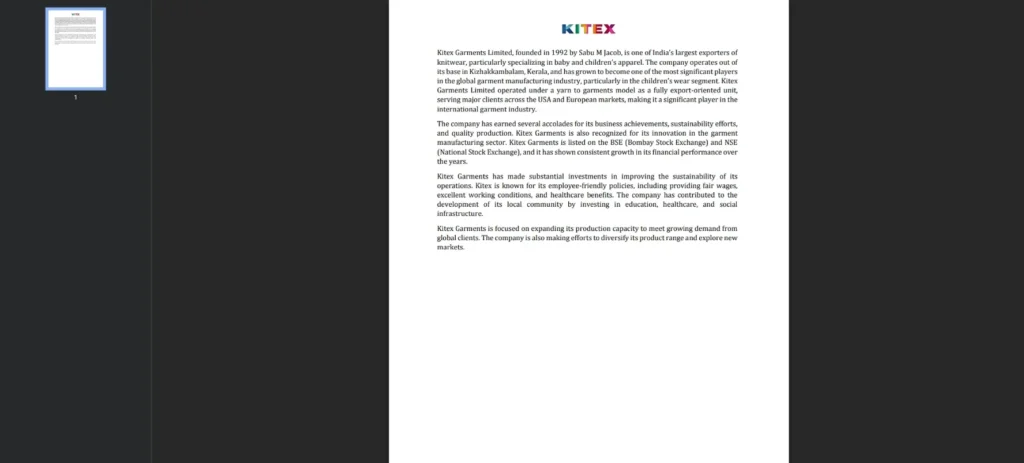
A tightly specialized knitted-apparel producer whose public product mix points to repeatable knit constructions rather than a broad, unrelated assortment.
- Best suited to: high-volume, repeatable knit and infantwear programs.
- Primary products: knitted one-piece garments, sleepwear and playwear, coordinated knit tops and bottoms.
- Strengths: a narrow focus that supports process discipline; integrated operations for core knit materials; a clear product scope that makes technical fit easy to judge early.
- Watch-outs: limited fit for unrelated woven, denim, outerwear, or tailored work, and flexibility on small or bespoke orders needs checking.
- Before you commit: verify exact product alignment, sizing capability, fabric spec, decoration, testing, packing, destination-market controls, and commercial minimums before development.
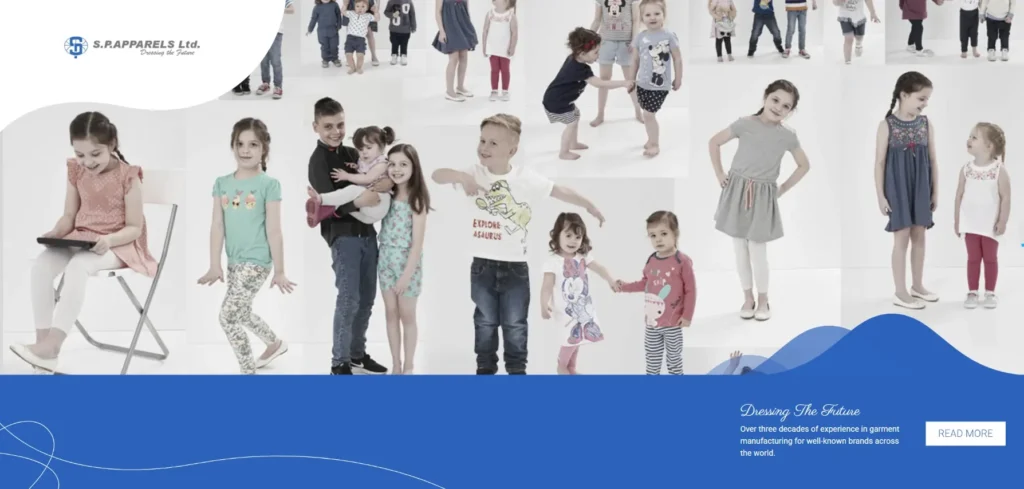
8. S.P. Apparels
Website: s-p-apparels.com
A vertically connected knitted-apparel business with textile and garment operations — most relevant when your inquiry fits its specialized knit base.
- Best suited to: stable, repeatable knit programs, including kids and licensed knits.
- Primary products: cotton-rich knits, one-piece garments and sleepwear, coordinated knit sets.
- Strengths: connected textile and garment operations for fabric-to-product coordination; a specialized focus that supports repeatability; enough public product scope for early category screening.
- Watch-outs: the narrow specialization limits fit for broad multi-category collections, and some materials, decoration, or packaging may still come from outside.
- Before you commit: confirm the proposed unit, material route, wet processing, decoration, testing, quality controls, the current production window, and site-specific documents.
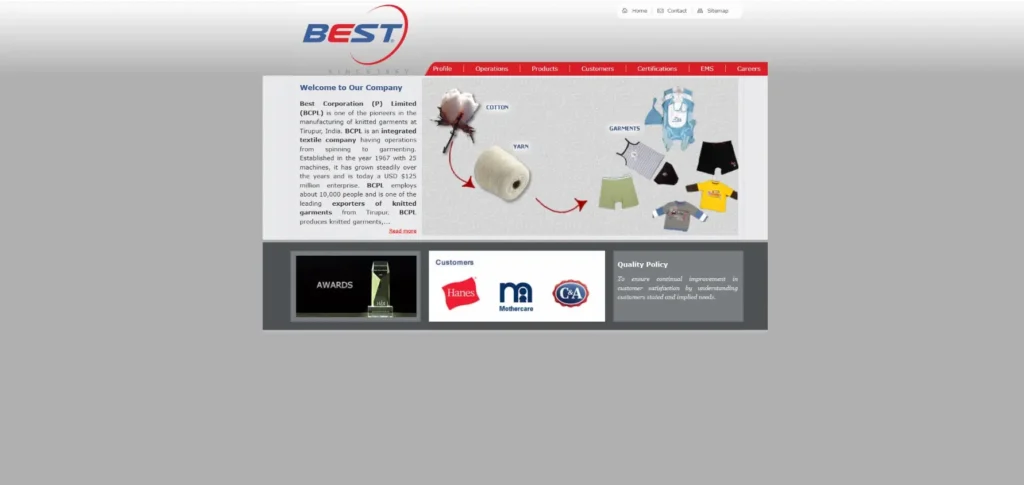
9. Best Corporation
Website: bestcorp.in
Describes an integrated knit operation running from spinning and knitting through processing and garment manufacturing — a fit where coordinated textile and knit-garment production is the priority.
- Best suited to: knit programs that lean on fabric development and repeatability.
- Primary products: yarn, knitted and processed fabrics, knitted apparel.
- Strengths: a textile-to-garment structure that reduces upstream gaps; integrated process ownership that supports traceability.
- Watch-outs: the knit orientation is not built for complex woven or structured products, and current site access and facility detail need direct reconfirmation.
- Before you commit: review the current product mix, nominated facilities, the yarn and fabric source, the dyeing and finishing route, decoration, testing, and who owns upstream material failures.
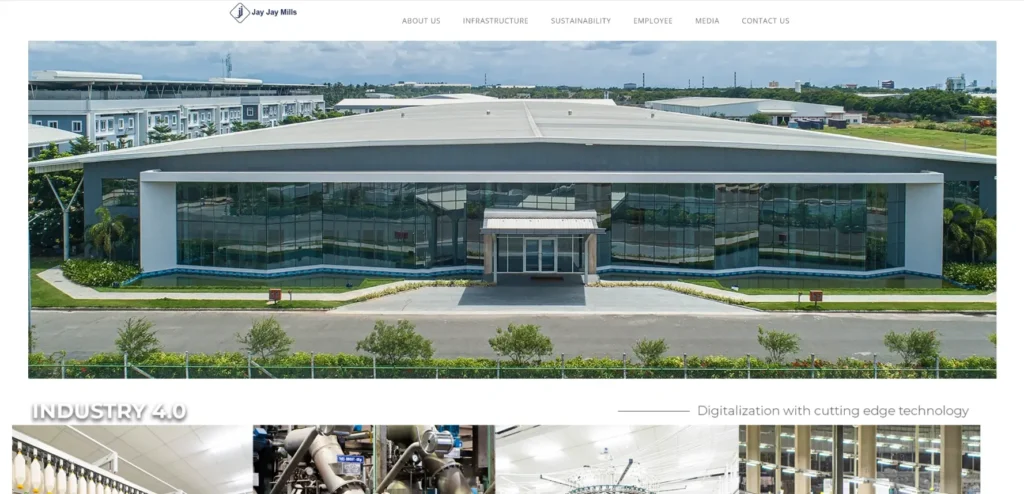
10. Jay Jay Mills
Website: jayjaymills.com
A multi-country apparel group with infrastructure spanning spinning, knitting, yarn and fabric dyeing, printing, embroidery, and sewing. The key is to separate the Indian facility from group capability elsewhere.
- Best suited to: full-package knit programs that can use printing and embroidery in-house.
- Primary products: knitted one-piece garments, sleepwear, tops and bottoms, printed and embroidered knits.
- Strengths: broad knit process infrastructure; decoration options that add flexibility to knit development.
- Watch-outs: a multi-country footprint means the quoting entity, the factory, and the country of production may not be the same, so confirm which site runs your order.
- Before you commit: reconfirm the legal entity, the production country and factory, machinery, process route, current capacity, certificate scope, export responsibility, and recent order-relevant evidence.
11. Pratibha Syntex
Website: pratibhasyntex.com
An integrated textile and apparel manufacturer covering fiber, yarn, knitted fabric, processing, and garments — a candidate when you need upstream material visibility alongside knit production.
- Best suited to: programs where fabric development is central, including sustainability-led sourcing.
- Primary products: yarn and knitted fabrics, knitted tops and bottoms, textile-led casual apparel.
- Strengths: an integrated material route that supports traceability; fewer supplier handoffs when fabric is the focus.
- Watch-outs: public sustainability or material claims may not apply to every order, so treat them as order-specific until proven.
- Before you commit: validate each material claim, the certificate holder, factory address, scope, validity date, and transaction record, then confirm garment quality through samples, tests, and inspection.
12. Celebrity Fashions
Website: celebritygroup.com
An apparel manufacturer and exporter with a public emphasis on tops, bottoms, and outerwear, and a design-and-development orientation suited to structured casualwear and shirt-based programs.
- Best suited to: shirt and structured-casualwear programs where construction detail matters.
- Primary products: shirts and structured tops, trousers and shorts, casual outerwear.
- Strengths: a clear focus that makes category screening straightforward; design and development positioning that helps fashion-led work; experience in construction-sensitive casualwear.
- Watch-outs: a smaller footprint than the largest exporters can limit program scale, and public customer, capacity, and certification details should be treated as time-sensitive.
- Before you commit: review similar products, pattern and grading support, fusing, seam and button controls, pressing, final measurement procedures, current capacity, and commercial terms.
13. Arvind Limited

Website: arvind.com
A diversified group with vertically connected textile and apparel businesses across fibers, fabrics, garments, and branded retail. Its textile depth makes it especially relevant to denim and fabric-led apparel.
- Best suited to: denim and woven programs that lean on fabric development and consistency.
- Primary products: denim fabrics and garments, woven fabrics and apparel, casualwear and textile-led essentials.
- Strengths: deep textile capability for material development; denim and woven operations for fabric-led sourcing; access to multiple businesses within one group.
- Watch-outs: you have to reach the correct business unit for fabric versus finished-garment inquiries, and a group relationship does not create one quality owner across every process.
- Before you commit: identify the relevant unit and legal entity, confirm whether the request is fabric-only or full-package, map mill, garment, wash, and finishing responsibilities, and approve shade and shrinkage standards.
14. Loyal Textile Mills
Website: loyaltextiles.com
Describes manufacturing across yarn, knitted and woven fabrics, garments, and home textiles, with ginning, spinning, knitting, weaving, and garmenting under the group.
- Best suited to: programs that benefit from a broader material range across knit and woven.
- Primary products: yarns, knitted and woven fabrics, knitted and woven garments.
- Strengths: both textile and finished-garment production; knit and woven capability across the group; upstream visibility.
- Watch-outs: broad scope means careful matching to the proposed garment facility, and special finishes, accessories, or processes may still need outside partners.
- Before you commit: confirm the garment categories made at the proposed factory, compare comparable construction samples, map every step from yarn through packing, and verify testing, capacity, minimums, and current site documents.
15. Raymond Lifestyle
Website: raymondlifestyle.com
Public reporting describes textile, tailoring, and business-to-business garment export activity, with an established base in suiting and structured apparel.
- Best suited to: tailored and formalwear programs with demanding construction and pressing.
- Primary products: suiting and formal fabrics, suits and jackets, trousers and structured garments.
- Strengths: strong alignment with tailored and formal apparel; combined textile and garment knowledge for fabric-to-fit coordination.
- Watch-outs: tailoring specialization is less suited to basic knit or highly casual programs, and public details should be confirmed directly.
- Before you commit: identify the export unit, the construction system, the material route, pattern and technical support, fusing and pressing controls, the production calendar, and the commercial fit for your program.
Why Garment Manufacturing in India Looks Cheaper
Indian quotes can look cheaper because of labor economics, domestic cotton, exchange-rate effects, and competitive factory pricing. A lower opening quote, though, does not automatically mean a lower total sourcing cost once development, materials, coordination, quality control, logistics, duties, and delays are counted.
India runs a large textile and apparel base, from cotton cultivation through spinning, weaving, knitting, processing, and garmenting. The Indian Ministry of Textiles reports that India is one of the world’s largest textile and apparel exporters, with the United States and European Union taking a significant share of shipments. That scale creates genuine competition among factories, especially inside established clusters.
The opening quote can also draw on lower labor costs than some competing markets. But labor is only one line in a finished garment. Fabric yield, dyeing, washing, trims, testing, packing, financing, rework, freight, and duty can easily outweigh a small sewing-cost gap. The discipline that protects you is simple: separate the visible unit price from the full cost of landing conforming goods in your market.
| Cost layer | Why an India quote can look attractive | What you still need to calculate |
|---|---|---|
| Cut-and-sew | Competitive labor and factory pricing | Efficiency assumptions, overtime exposure, rework risk |
| Fabric | Strong access to cotton and local textile production | The exact mill, finish, shade standard, shrinkage, yield, and minimums |
| Trims and packaging | Standard items sourced locally | Imported or custom components, development fees, consolidation |
| Development | Basic styles can be economical | Pattern work, repeat samples, testing, courier cost, approval time |
| Quality control | Factory inspection may be included | Independent inspection, failed tests, repairs, replacement, markdown risk |
| Logistics | Export infrastructure serves major markets | Inland transport, port handling, freight, insurance, duty, delay buffers |
Specialization is the other reason a quote can look low. A Tirupur knit factory repeating a familiar jersey, or a Bengaluru exporter running an established woven category, quotes efficiently because its people, machines, and supplier links already match the request. Change the brief to unfamiliar washes, technical bonding, complex outerwear, or many custom trims, and that same supplier may no longer be the cheapest.
The practical rule is to compare like with like. Send every shortlisted supplier the same tech pack, material spec, size range, quantity by color and size, testing requirement, packaging standard, delivery term, and destination. If one quote excludes fabric testing, custom packaging, inspection, or freight while another includes them, the two prices are not comparable.
Which Buyers Are Indian Garment Manufacturers Best For?
India suits buyers with clear specifications, realistic timelines, category-aligned products, and the discipline to verify facilities and samples. Buyers who need many complex categories at once, fast material coordination, integrated packaging, or rapid iterative development should weigh China carefully first.
India rewards brands and importers who understand their product and can hand over complete technical information. A clear brief lets a factory calculate consumption, choose the right process route, flag testing needs, and quote something meaningful rather than a placeholder number.
The strongest fits tend to be:
- Brands with cotton-rich knit, woven, denim, shirt, casualwear, or tailored programs that match established Indian strengths.
- Retailers and importers who can consolidate real volume by product family.
- Businesses adding a second sourcing country to reduce concentration risk.
- Buyers with stable fit blocks, approved quality standards, and documented packaging.
- Teams willing to qualify the actual facility and upstream route, not just a group name.
- Companies with enough calendar room to complete material, sample, testing, and production approvals properly.
India is less straightforward for an early-stage buyer with a tiny mixed order, incomplete specs, and an expectation of instant development across unrelated categories. A large exporter brings systems but wants commercially meaningful programs; a smaller factory is often more flexible but leans harder on outside material and process partners. Neither is automatically better — the right call depends on your order architecture and your capacity to manage the chain.
Take extra care when one collection mixes products that need different ecosystems: basic jersey, waterproof outerwear, seamless activewear, structured jackets, embellished fashion, and complex retail packaging. China usually offers a denser network for pulling those varied inputs together in one program. India may still handle selected categories well, so splitting the assortment by country can beat forcing every style through one location. As a final test, confirm that the supplier makes a genuinely similar product, can source the materials, accepts the order structure, has time for approvals, documents its subcontracting, and stays competitive on landed cost.
India vs China Garment Manufacturing
India and China are both major textiles and clothing producers. A World Trade Organization sector profile shows substantial domestic production capability in each, but their sourcing conditions differ in ways that shape a program.
For many global buyers, India is attractive for specific textile and apparel strengths and for diversification away from a single hub. China usually keeps the edge when a program needs the broadest material choice, rapid development, many specialized processes, custom accessories, integrated packaging, or coordination across numerous categories. This is an inference from ecosystem structure, not a rule that holds for every factory or order.
| Decision factor | India | China | Practical reading |
|---|---|---|---|
| Opening quote | Highly competitive for aligned products | Competitive, not always the lowest visible price | Compare identical specs and inclusions |
| Cotton and established categories | Strong | Strong | Factory and mill fit matter more than country |
| Material and trim breadth | Good in established clusters | Generally broader and denser | China often cuts search and consolidation work |
| Development speed | Varies by factory and route | Often faster for complex, iterative work | Confirm the calendar against real sample milestones |
| Multi-category coordination | Possible through large exporters | Often easier in a dense ecosystem | China can win on total execution |
| Diversification value | Strong option outside China | Limited if you are already China-heavy | India reduces concentration risk |
| Total sourcing cost | Attractive when the product fits | Often competitive once complexity and speed count | Model rework, coordination, delay, freight, duty |
Cost Structure
India can lead on the visible factory price for labor-intensive or locally aligned products. China can still win on total execution cost when a supplier sources materials faster, combines specialized processes, consolidates packaging, and resolves development issues with fewer handoffs.
The comparison that matters is not India FOB against China FOB in isolation. Agree the Incoterms rule, destination, duty treatment, freight method, payment cost, inspection plan, testing budget, and delay allowance up front. Then record the sample rounds, courier shipments, rejected materials, and staff hours needed to reach approval. Those hidden inputs decide whether a cheaper quote stays cheaper.
Supply Chain Depth
Supply chain depth is more than a factory count. It is the availability and proximity of yarn, fabric, dyeing, printing, washing, embroidery, labels, hardware, packaging, testing, machinery support, development, freight, and backup capacity.
China’s Ecosystem
China’s advantage is density. A buyer developing a multi-category collection can often reach specialized mills, trim makers, printers, wash houses, and packaging suppliers inside connected industrial regions. When a construction changes or a component fails, alternatives are usually quicker to find. That density can lift speed and lower coordination cost even when the sewing price is not the lowest — and it counts most for complex synthetics, technical finishes, custom molds, specialty hardware, electronic components, unusual packaging, or frequent design changes. None of this makes China automatically superior; factory quality, compliance, and transparency still vary, and the actual site and route always need qualifying. The point is that a broader ecosystem gives sourcing teams more options as complexity rises.
India’s Strengths
India’s strengths are more concentrated. The country has a substantial cotton and textile base, experienced apparel exporters, recognizable knit and woven clusters, and integrated groups that link upstream textiles with garment production. When your order matches those strengths, they are powerful. India also gives China-dependent buyers a real diversification route that supports continuity planning, alternate-country allocation, and regional capacity balancing. The best results usually come from choosing the right categories for India rather than transferring an entire assortment without differentiation.
Development Speed
Development speed depends on how quickly a supplier can source materials, iterate patterns and samples, resolve failures, and lock approvals. In dense ecosystems, a changed fabric or a failed trim can often be swapped without stalling the calendar; in more concentrated settings, the same change can mean waiting on a single upstream partner. Judge speed against real milestones — lab dips, fit samples, pre-production approval — rather than a promised lead time, and hold each supplier to the same sample stages.
China tends to be the stronger choice when:
- One program combines many categories and specialized process routes.
- Fast sampling and repeated design changes are commercially important.
- The product needs unusual synthetics, performance finishes, custom hardware, molds, components, or complex packaging.
- You want one ecosystem to coordinate material development, accessories, assembly, and consolidation.
- A higher factory price is offset by fewer handoffs, faster correction, and lower execution risk.
Many experienced buyers use both countries. They allocate stable, well-matched product families to India and keep complex, high-velocity, or component-heavy development in China. That captures diversification without giving up the operational advantage of the deeper Chinese ecosystem — and it is the point where a China-based partner earns its place in an otherwise India-led plan.
How These Manufacturers Were Selected
This shortlist is not a claim that one company is universally better than another. The 15 businesses were chosen because public information points to established apparel or textile manufacturing, export orientation, a recognizable product scope, or integrated capability relevant to global buyers.
Inclusion Criteria
Five factors guided the screen:
- Traceable company identity — an official website, corporate report, or other verifiable source.
- Apparel relevance — the business publicly identifies garment manufacturing, apparel export, or a textile-to-garment operation.
- Product visibility — its site or reports give a useful indication of products, scope, or model.
- Export orientation — public information points to international markets or an export supply chain.
- Shortlist value — the company represents a meaningful sourcing model: a large exporter, an integrated textile group, a knit specialist, a woven specialist, or a tailored-apparel producer.
The order is editorial, not a ranking of quality, compliance, price, capacity, or service, and it should not be read as a league table.
Evidence Confidence
Each profile separates public positioning from buyer verification. Official websites and reports show what a company says it does; they cannot confirm current available capacity, the exact facility proposed for your order, the validity and scope of every certificate, present commercial terms, or day-to-day execution.
To build a fuller picture, use the Apparel Export Promotion Council member directory, corporate registries, certification databases, audit platforms, trade records, references, video or on-site facility reviews, samples, tests, and inspections. Logistics reliability is worth checking too; the World Bank Logistics Performance Index is a useful reference point for cross-country comparison. Internally, label each claim as verified for the order, publicly supported, or needing recheck, and move ahead only when the evidence fits the product and market risk.
Match Indian Clothing Manufacturers to Your Product
The fastest way to sharpen a shortlist is to start from the product’s manufacturing route. Size and reputation come second if the factory does not routinely control the materials, machinery, skills, and quality risks that define the garment.
Knits
Knitted products need alignment between yarn, fabric formation, wet processing, construction, and finishing. Give the factory fabric composition, yarn count where relevant, knit construction, finished weight, usable width, color standard, hand feel, shrinkage limit, spirality limit, pilling requirement, stretch and recovery criteria, and any chemical or performance tests.
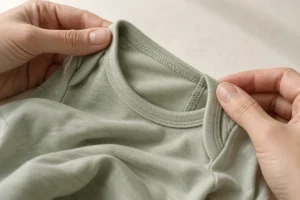
For a basic jersey, inspect neck shape and recovery, seam roping, torque, dimensional stability, needle damage, shade consistency, and measurement after conditioning; for fleece, rib, interlock, pique, or elastane blends, add construction-specific controls. The best knit supplier is not simply the one with knitting machines — it is the one that reproduces an approved fabric and garment result in bulk. Integrated companies such as KPR Mill, Best Corporation, Pratibha Syntex, and Loyal Textile Mills are worth evaluating where upstream visibility matters, but that is a reason to compare their actual fabric route and garment unit, not to skip sampling and testing.
Wovens
Woven garments run from basic shirts to dresses, bottoms, uniforms, outerwear, and heavily engineered fashion. The brief should define fabric construction, weight, finish, shrinkage, seam type, stitch density, tolerance, fusing, lining, wash, embellishment, hardware, pressing, and appearance criteria.
A suitable woven factory should show relevant pattern engineering and production control. Ask to see products with comparable collars, pockets, waistbands, zippers, linings, pleats, matching requirements, or wash treatments — a clean basic shirt does not prove outerwear capability, and a fashion top does not prove structured-trouser expertise. Shahi Exports, Gokaldas Exports, Pearl Global Industries, Texport Industries, and Celebrity Fashions can enter a woven shortlist depending on the product, provided you match the style to the specific division and factory.
Denim
Denim connects fabric specification, shade, construction, washing, chemistry, abrasion, measurement change, and appearance grading. Small shifts in fabric lot or wash recipe move color, hand feel, strength, skew, shrinkage, and final measurements, so control is everything.
A complete denim request should include fabric details, target shade, an approved wash standard, shade range, dry and wet process restrictions, measurement after wash, seam and thread requirements, hardware specs, pull testing, metal detection, colorfastness, strength criteria, and any restricted-substance rules. Arvind Limited is an obvious company to investigate given its public denim and textile businesses, while other exporters coordinate denim through nominated mills and laundries. Either way, inspect the actual wash facility, confirm whether it is owned or subcontracted, and approve bulk standards under production conditions.
Tailored Apparel
Tailored garments rely on pattern balance, material relaxation, cutting precision, internal construction, fusing or canvas systems, sleeve setting, pressing, appearance assessment, and skilled manual work. The supplier has to understand how shell fabric, interlining, lining, shoulder components, thread, buttons, and pressing interact.
The tech pack should specify construction type, silhouette, fit block, grade rules, seam and internal details, interlining performance, care method, pressing standard, measurement tolerance, appearance zones, and packaging that protects the finished shape. Raymond Lifestyle and factories with demonstrated structured-apparel experience are reasonable candidates — but use physical samples and a facility review to tell genuine tailoring capability apart from a general claim to make jackets or formalwear.
Conclusion
The top garment manufacturers in India are not interchangeable. Shahi Exports, Gokaldas Exports, Pearl Global Industries, KPR Mill, Texport Industries, Eastman Exports, and the rest of this guide represent different products, process routes, scales, and commercial models. Their public profiles can seed a shortlist, but they do not replace order-specific verification.
Start with the product, not the company name. Shortlist three to five manufacturers whose current facilities look aligned with your material, construction, order size, market, and calendar. Send each supplier the same technical request, compare total sourcing cost rather than unit price alone, and let samples, tests, facility evidence, and documented commercial terms make the final decision.
India can be an excellent sourcing option when the product matches local strengths and you manage qualification carefully. China often stays stronger for broad, complex, and time-sensitive programs because its denser ecosystem reduces development and coordination friction. The most resilient strategy frequently uses both, with each country assigned the work it executes most reliably.
If part of that decision is a China-side partner — particularly for children’s wear, where HAPA manufactures — we’re happy to talk through where India and China each fit your range before you commit to samples.
Frequently Asked Questions
Is garment manufacturing cheaper in India than China? Sometimes. India can quote lower for products that fit its labor and textile strengths, but China may deliver a lower total cost on complex programs. Compare identical specs, delivery terms, testing, freight, and duty.
Why can Indian garment quotes look lower? Competitive labor, domestic textile production, exchange rates, and cluster specialization all contribute. A low quote can also exclude development, testing, special trims, packaging, inspection, or freight, so confirm exactly what is included.
What are the main advantages of sourcing garments from India? A large cotton and textile base, experienced apparel exporters, strong capability in established knit and woven categories, integrated textile groups, and a valuable diversification option for buyers concentrated elsewhere.
Which buyers should source clothing from India? Buyers with clear specifications, realistic calendars, commercially coherent volumes, and products aligned to the proposed factory’s normal materials and processes — plus the resources to verify facilities, documents, and samples.
When is China a better garment manufacturing choice? Often when a program mixes many categories, needs fast iteration, or uses specialized synthetics, custom hardware, unusual processes, or integrated retail packaging. A denser supplier ecosystem makes complex development and correction faster.
Are the largest manufacturers best for smaller brands? Not necessarily. Large exporters bring mature systems but may prioritize bigger programs. A smaller specialist can offer better attention and flexibility if its processes are transparent. The right match depends on order architecture, not size.
How should buyers verify an Indian garment manufacturer? Confirm the legal entity, factory address, proposed unit, bank beneficiary, product experience, machinery, process route, certificate scope, current capacity, and commercial terms — then test performance through controlled sampling, material and garment testing, and a facility or independent assessment.
What should a garment RFQ include? Technical drawings, measurements and tolerances, construction details, bill of materials, fabric and trim specs, color standards, artwork, quantities by style, color and size, destination market, testing and compliance requirements, labeling, packaging, delivery terms, target calendar, sample stages, inspection standard, and payment expectations.