Kids are naturally active and tend to sweat. That is why fabric is the first thing parents check when shopping.
Quality kidswear isn’t just about looking good. It must be breathable and moisture-wicking to ensure comfort and protect a child’s delicate skin.
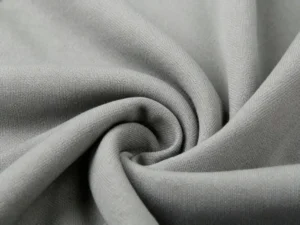
Modal is a natural fabric famous for its silky-smooth texture and incredible comfort.
But does it really meet the high standards for softness and breathability in kidswear? I have put together this detailed guide to tell you everything you need to know about Modal fabric.
What Is Modal Fabric?
Modal fabric is made from natural wood pulp and processed through environmentally friendly techniques. Its most prominent feature lies in its softness and skin-friendliness, excellent breathability, smooth touch, and natural moisture absorption.
Therefore, it is often used to make clothing and home textiles that have high requirements for softness, breathability and comfort. Of course, it is also very suitable for the production of children’s clothing.
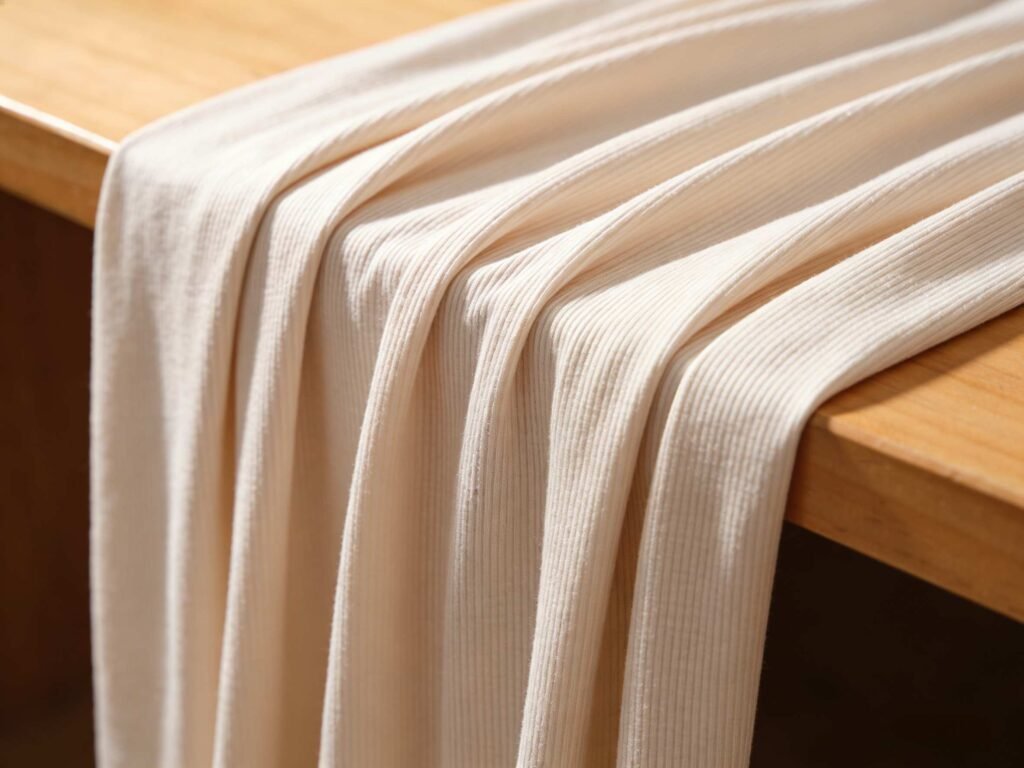
The Breathability of Modal
Modal offers superior breathability. It is widely recognized as one of the most breathable fabrics available on the market.
Imagine its structure as a precision micro-circulation system. It is filled with tiny micropores that boost airflow and actively wick away moisture.
If your child is prone to sweating, or if you are looking for summer essentials (like underwear, tees, or pajamas), Modal is a superior choice over cotton.
It keeps kids drier and cooler. Its unique ability to “breathe” significantly reduces that sticky, stuffy feeling often caused by heat.
Breathability Comparison: Modal vs Cotton Fabric
Modal is exceptionally breathable. In fact, it absorbs about 50% more moisture than cotton.
Its fiber features a unique micro-groove structure. This doesn’t just absorb sweat quickly; it channels moisture to the fabric’s surface, speeding up evaporation.
While cotton is a classic material that performs well, it isn’t always the number one choice for every situation.
For summer kidswear, prioritize Modal or a Modal-Cotton blend.
A blend offers the best of both worlds: it keeps the durability and structure of cotton while adding the breathability and silky smoothness of Modal. This has become the mainstream choice for premium children’s T-shirts and pajamas.
Is modal healthier to wear than polyester?
In general, Modal is healthier and more suitable for next-to-skin wear compared to polyester.
Derived from natural beech wood, Modal offers excellent breathability and moisture-wicking properties. It effectively pulls sweat away from the skin, keeping it dry. This helps reduce bacterial growth and odors. Plus, its silky, soft texture prevents static and friction irritation, making it extremely friendly to sensitive skin.
In contrast, polyester is a synthetic, petrochemical product. It has poor breathability and tends to trap heat and moisture inside the garment. Prolonged wear can clog pores or lead to skin discomfort.
While polyester performs better for quick-drying athletic wear, Modal is undoubtedly the superior choice for skin health when it comes to daily lounging or intimate apparel.
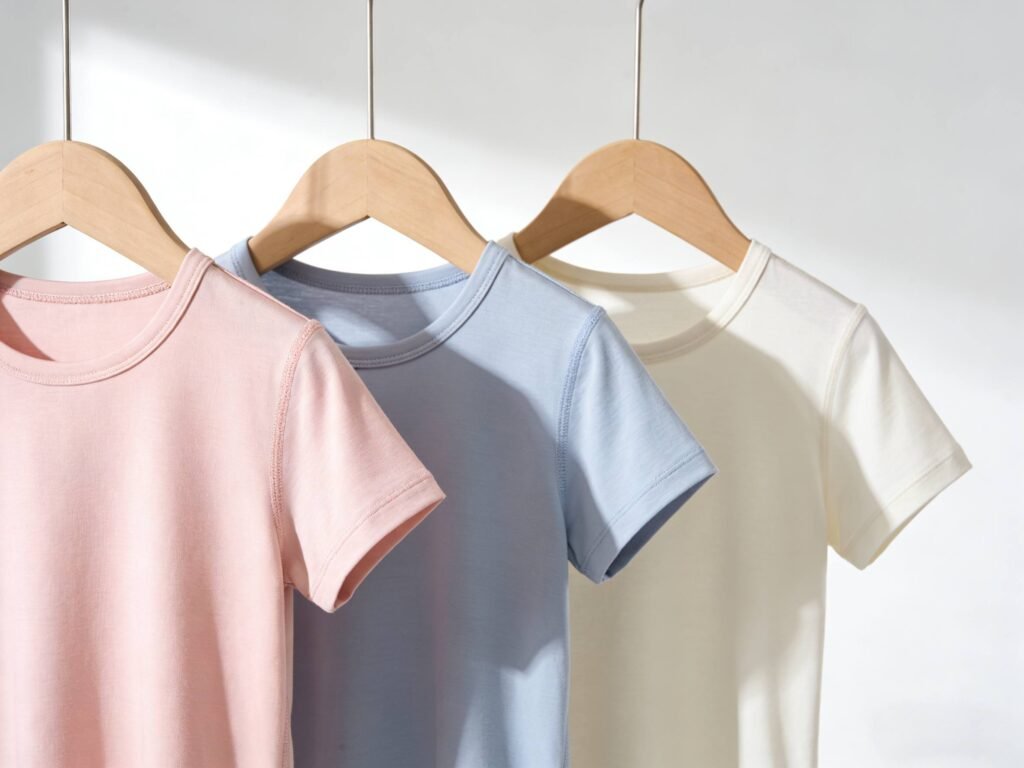
The Benefits of Using Modal for Making Children’s Clothing
Soft and skin-friendly
Modal fabric is extremely soft in texture and has a delicate and skin-friendly touch. For children with delicate skin, it can provide a gentle and close-fitting wearing experience, is less likely to cause irritation or discomfort, and is particularly suitable for making children’s underwear, T-shirts, pajamas and other close-fitting clothes.
Breathable and dry
Modal fabric has excellent breathability and moisture absorption, which can quickly absorb sweat on the body surface and keep the skin dry. Children are less likely to sweat profusely during activities, and their skin can remain fresh for a long time. It is especially suitable for wearing in summer.
Antibacterial and odor-proof
This fabric has certain natural antibacterial properties, which can inhibit the growth of bacteria and thereby reduce the unpleasant smell caused by sweating or prolonged wearing. For lively and active children, it helps keep their clothes fresh and comfortable.
Natural and environmentally friendly
Modal is made from natural wood pulp (such as eucalyptus, maple, etc.), and its production process uses relatively fewer chemicals, having a smaller environmental impact than synthetic fibers. It is a more environmentally friendly material that meets modern families’ pursuit of sustainable living.
Durable and wearable
Although soft to the touch, modal fabric has excellent tensile strength and wear resistance. Even after multiple washes, it can still maintain its original luster and color, making it suitable for children’s frequent daily activities.
Anti-wrinkle and easy to maintain
Modal fabric is not prone to wrinkling. It remains smooth during daily wear and after washing, eliminating the need for frequent ironing. This makes it convenient for parents to take care of it and saves time for maintenance.
The color is long-lasting and bright
This fabric has excellent dyeing performance, can firmly maintain bright colors and is not easy to fade. Therefore, children’s clothing made of Modal can still maintain a bright appearance even after multiple washes, especially suitable for designs with rich colors.
Suitable for all seasons
Modal fabric is not only breathable and cool in summer, but also helps keep the body surface warm in cold seasons through its excellent moisture regulation ability. Therefore, Modal children’s clothing is suitable for a wide range of seasons and can be comfortably worn all year round.
Main Uses of Modal Fabric
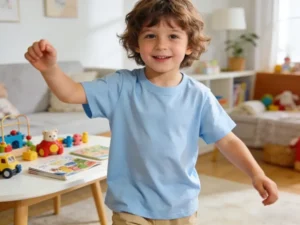
- T-Shirts and Tops Modal is soft and skin-friendly, making it the ideal choice for T-shirts and short-sleeve tops. It is perfect for babies and toddlers with delicate skin, as it minimizes friction and irritation.
- Dresses Modal is lightweight and has a natural, elegant drape. This makes it perfect for girls’ dresses. Whether for simple daily wear or styles featuring ruffles and bows, Modal ensures a soft and comfortable experience.
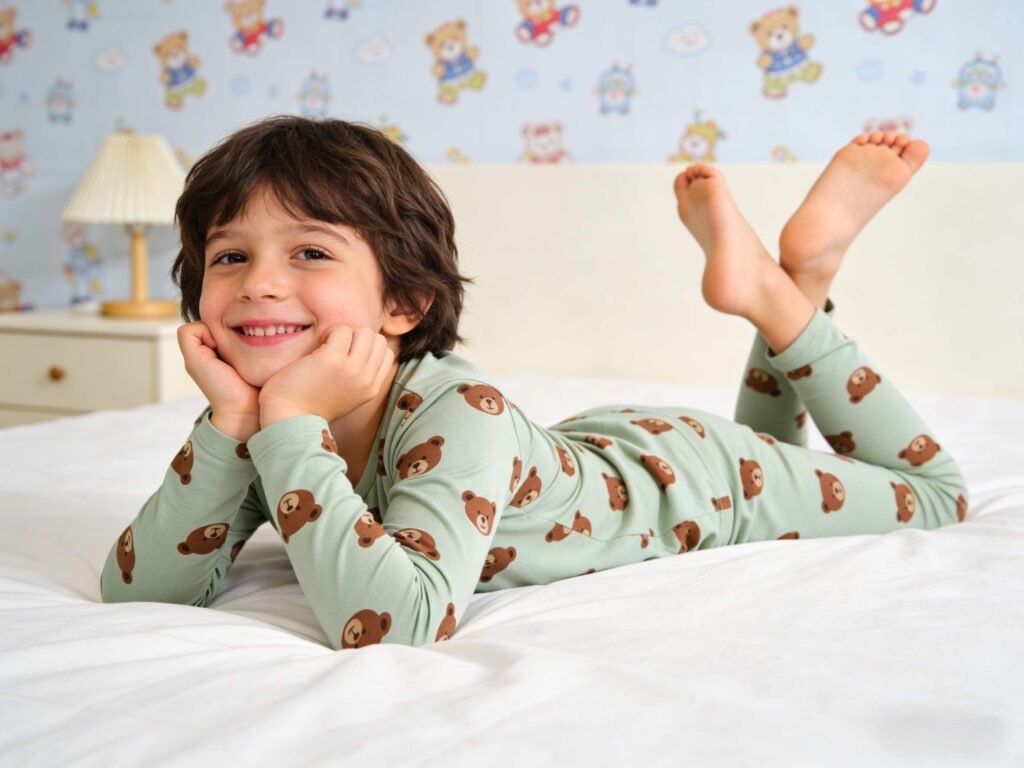
- Pajamas / Sleepwear Thanks to its breathability and comfort, Modal is the top choice for children’s pajamas. It is excellent for long-sleeve sets and nightgowns, helping to regulate body temperature and prevent overheating at night.
- Pants and Shorts Modal has excellent elasticity (stretch), making it great for lounge pants, activewear, and shorts. Its soft texture allows for freedom of movement without feeling constricting—ideal for active, energetic kids.
- Scarves and Hats Accessories made from Modal are soft to the touch and lightweight. They are perfect for spring and autumn, providing just enough warmth without making the child feel stuffy or sweaty.
- Underwear Gentle on the skin, Modal is a fantastic choice for intimate apparel like underwear and panties. Its low-irritation properties help reduce skin allergies, making it especially suitable for children with sensitive skin.
What Are the Disadvantages of Modal Fabric?
Modal is not perfect. Before selecting this fabric for your collection, you should be aware of its specific limitations:
- Lack of Structure: Because the fabric is so soft, it lacks “body” or crispness. It tends to be limp and can cling to the body rather than holding a firm shape.
- Prone to Stretching (Deformation): Modal becomes heavy when wet. If hung to dry, the weight can pull the fabric down, causing it to stretch out and lose its original shape over time.
- Pilling: The fiber surface is soft and fuzzy. Frequent friction during wear or washing can lead to pilling (small fuzzballs forming on the surface).
- Low Heat Resistance: It does not handle heat well. High-temperature washing or drying can cause the fabric to shrink, stiffen, or fade.
To mitigate these downsides, the textile industry often uses blending.
By combining Modal with Cotton, Polyester, or Spandex, manufacturers can maintain the desired softness while significantly improving the fabric’s structure, elasticity, and durability.
Can Modal Fiber Be Blended with Other Fabrics?
Yes, modal fibers can be blended or interwoven with various materials to combine the benefits of each and address the limitations of a single fabric. Common blended combinations include:
Modal + Pure Cotton
This is one of the most common blends. It retains the silk-like feel of modal while enhancing the support and wear resistance of cotton. Unlike pure cotton, it doesn’t become stiff after washing, and unlike pure modal, it doesn’t become overly loose.
Modal + Spandex
Modal itself has average elasticity. By adding spandex, the fabric becomes highly elastic with excellent resilience. This addresses the issue of modal clothing becoming loose or stretched out after prolonged wear.
Modal + Polyester
Polyester enhances the anti-wrinkle properties and durability of modal fabric, and it also reduces drying time (quick-drying). This blend is more crisp and less prone to wrinkling, making it ideal for daily wear or commuting.
Modal + Wool/Silk
This luxurious combination offers the best of both worlds. Modal helps reduce the difficulty and cost of caring for silk or wool while maintaining an exceptionally soft and lustrous feel, making it ideal for high-end, skin-friendly garments.
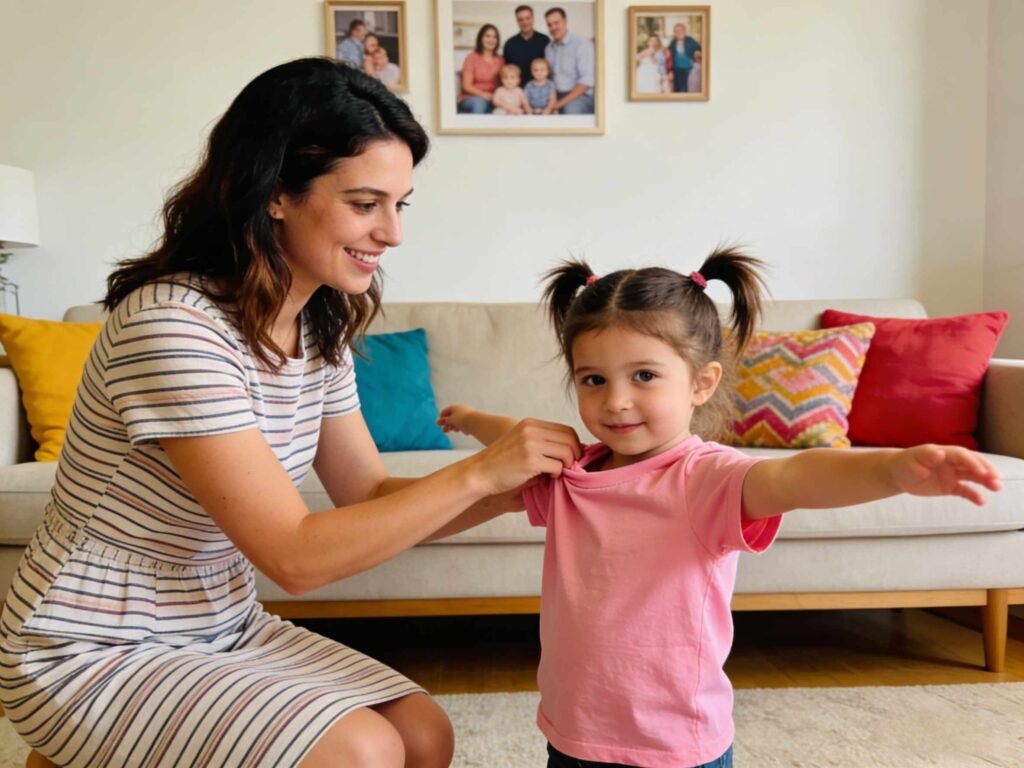
Tips for Extending the Lifespan of Modal Children’s Clothing
If you want to buy undergarments, pajamas or T-shirts for your child, you can follow the following methods to take care of them and extend their lifespan
- Use a Laundry Bag: Modal children’s clothing is most afraid of zippers, buttons and Velcro. When machine washing, it is essential to put it in a laundry bag.
- Avoid high temperatures: Wash with cold or warm water. Excessively high temperatures can damage the strength of the fibers.
- Avoid Velcro: Many children’s shoes or wipes have Velcro. Make sure to wash them separately from modal clothes; otherwise, it may cause large areas of fringing.
How to Find a Children’s Clothing Manufacturer That Can Produce Modal Fabric
Would you like to print your unique design on modal fabric? HAPA can help bring your vision to life.
HAPA is a professional kids clothing manufacturer offering production solutions using modal or modal-blend fabrics tailored to your needs.
Our modal fabric is of excellent quality, eco-friendly, and durable, meeting the OEKO-TEX® Standard 100 certification.
Contact us today to create comfortable, stylish, and environmentally friendly children’s clothing.
Conclusion
With its superior breathability and silky-soft touch, Modal is one of the most ideal fabrics for children’s clothing.
As a trusted kidswear manufacturer, HAPA is dedicated to providing comprehensive services and custom solutions for brands worldwide.
If you are interested in creating a custom collection using Modal or Modal-blends, please feel free to contact us via email at any time.
FAQ
Is modal too hot for summer?
No, modal is an excellent fabric for summer weather. It is highly breathable and does not trap body heat. The material is 50% more absorbent than cotton, which helps keep skin dry. It feels cool and smooth to the touch, making it ideal for hot days.
What are the downsides of modal fabric?
Modal can stretch out and lose its shape over time. It is prone to “pilling” (small fuzzballs) if rubbed frequently. The fabric can be delicate and often requires gentle washing cycles. It is also generally more expensive than standard cotton.
What is the best fabric to wear if you sweat a lot?
Bamboo and modal are the top choices for heavy sweating. They are naturally moisture-wicking and absorb sweat quickly. Linen is also excellent because its loose weave allows maximum airflow. For intense exercise, synthetic “performance” fabrics are best because they dry very fast.
How is Modal fabric made?
Modal is a semi-synthetic fabric made specifically from beech tree pulp. The wood pulp is dissolved into a liquid using chemical solvents. This liquid is then forced through tiny holes to create long fibers. These fibers are spun into yarn to be woven or knitted into fabric.