Yes, bomber jackets can work at any age. You don’t become too old for one at 40, 50, or beyond. I’d pay more attention to how the jacket fits, what you wear with it, and where you’re going. For children, the design and intended use need a closer look.
If you’re unsure whether a bomber suits you, try it with clothes you already own. Sometimes the sticking point is a tight sleeve or an awkward hem; sometimes it’s an unfamiliar outfit. Working out which detail bothers you makes the next choice much easier.
What Age Is Appropriate for a Bomber Jacket?
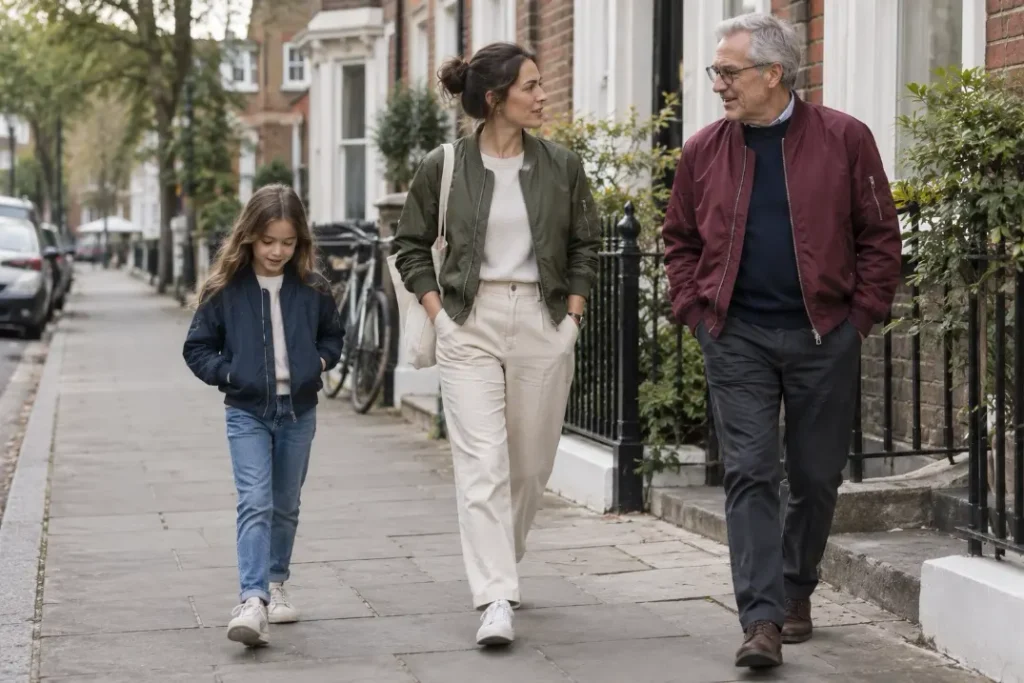
There isn’t a particular birthday when you become too old for a bomber jacket. Adults can choose the style at any age. Children’s versions also exist, but each garment still needs checking for its intended wearer and use, especially for babies and toddlers.
Ask yourself whether you like the style, whether it fits, and whether it suits your plans. An age label can’t answer those questions.
If you’re unfamiliar with what makes a jacket a bomber, think of the short body and gathered cuffs or hem common to many versions. A roomy, padded design looks quite different from a light, close-fitting one. Disliking one doesn’t rule out the others.
How Should a Bomber Jacket Fit?
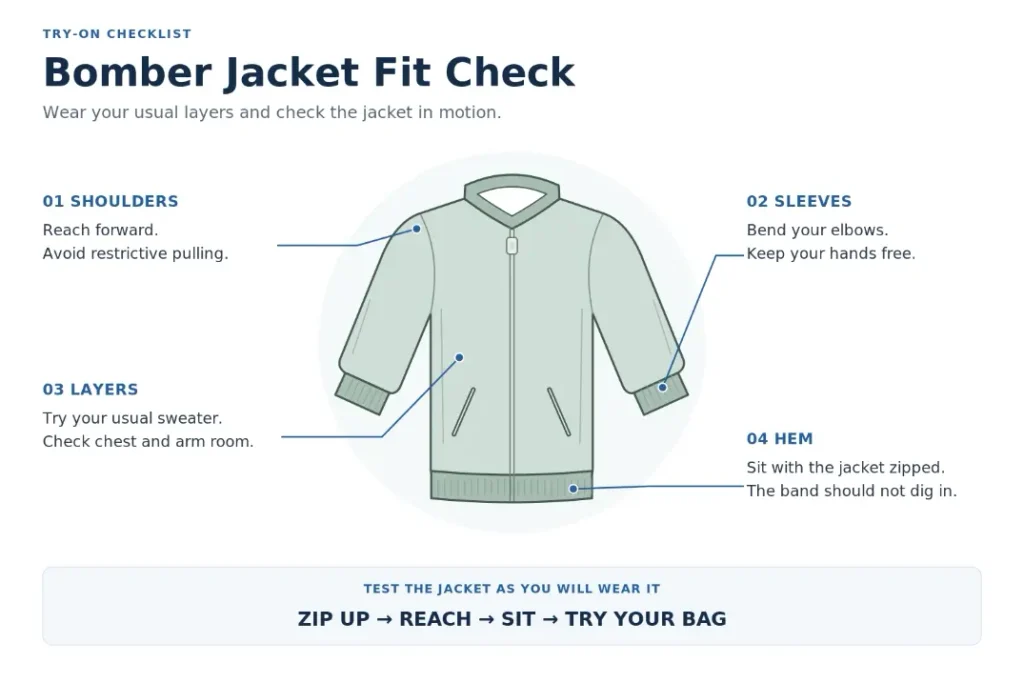
A bomber should give you the shape you want without restricting everyday movements. Judge the fit while moving. A jacket that looks tidy with your arms down can feel awkward when you sit or reach forward.
Check the Shoulders and Sleeves
With a conventional set-in sleeve, check the shoulder position and any pulling across your upper back. Don’t apply one seam-position rule to every bomber: dropped shoulders sit lower by design, and raglan sleeves have a different construction.
Reach forward as though you’re picking up a bag, then bend your elbows. Notice pressure across your back, tight armholes, or cuffs that move uncomfortably far up your arms. Some movement is normal; persistent restriction isn’t something you need to tolerate.
With your hands relaxed, the cuffs should leave you free to use them. If you’re constantly pushing sleeves back, compare another cut before assuming that more room in the body will help.
Check the Hem When You Sit
Many bombers finish around the waist or upper hip, though cropped and longer versions also exist. Choose the coverage you want. A cropped hem isn’t automatically a sizing problem, and a bigger chest size won’t necessarily give you the length you’re after.
Sit with the jacket fastened. Check whether the ribbed band digs in or the front bunches up. Stand again and see whether the hem settles without needing to be pulled down.
For me, a hem that needs constant adjustment is a reason to try another jacket. I’d compare a different length or a less gathered hem before accepting the same irritation every time I sit down. How the jacket settles matters more to me than a tidy standing pose.
Try Your Usual Layers Underneath
Try the jacket over your usual sweatshirt or sweater, not just a thin tee. Check room through the sleeves and upper back as well as the chest.
I recommend noticing whether the lining catches on a long-sleeve top as you put the jacket on. A good-looking jacket can still be annoying to wear. If you’re reviewing a sample, describe where it drags so the sample team has a specific problem to assess before approval.
Online, check whether the chart lists body or finished garment measurements. Schott’s sizing guidance notes that sizing varies between styles, so a size you own isn’t a guarantee for another model. Once the jacket arrives, try these movements before removing the tags:
- Fasten it and breathe normally. Notice pressure at the chest, neck, or waist.
- Reach forward. Check for pulling across the back and at the cuffs.
- Sit down. See whether the hem or zipper presses into you.
- Raise and lower your arms. Check whether the jacket settles back into place.
- Put on your everyday bag and check the shoulders under its straps.
Which Bomber Jacket Fit Should You Choose?
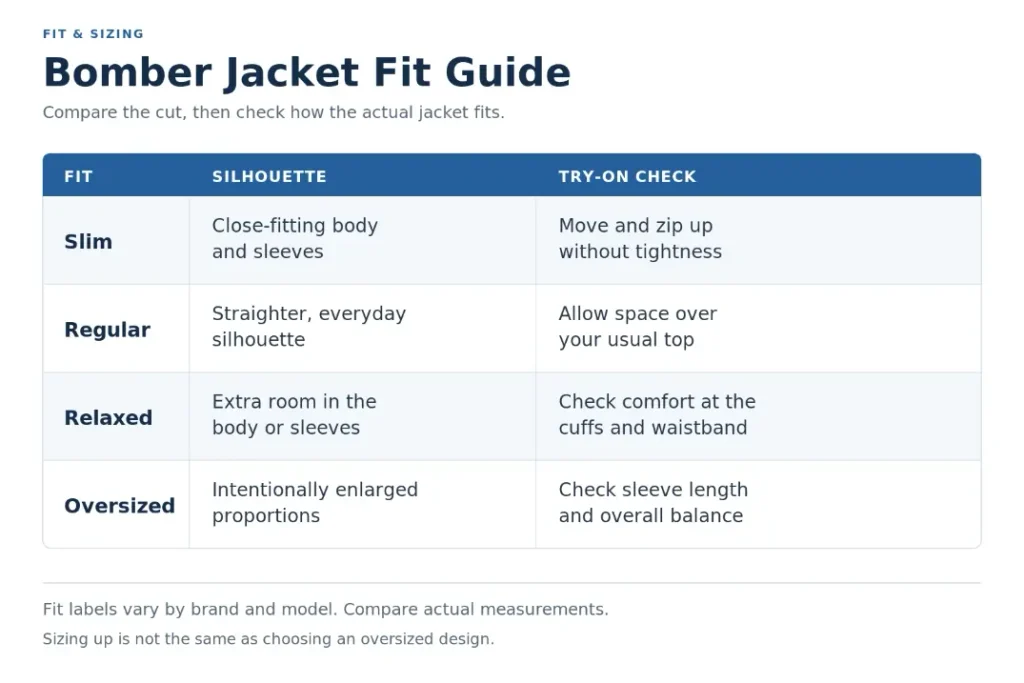
Choose a cut before trying to solve everything with size. Slim, regular, relaxed, and oversized aren’t standardized across brands. The Alpha Industries fit guide explains the distinctions within its own range. Use those labels as a starting point, then compare the actual jackets:
| Fit | Shape to look for | Consider it when… | Check before buying |
|---|---|---|---|
| Slim | A closer outline through the body and sleeves | You prefer less volume and wear lighter layers | You can reach and fasten it without pulling |
| Regular | A straighter, less close-fitting shape | You want an everyday starting point | The actual model has enough room for your usual top |
| Relaxed | More room through parts of the body or sleeves | You enjoy a looser outline or need layering space | The hem and cuffs still sit comfortably |
| Oversized | Deliberately exaggerated proportions | You want the jacket’s volume to be visible | The length and fullness look intentional to you |
If the body fits but the sleeves don’t, I’d change the cut before going up another size. Suppose a slim bomber feels narrow at the upper arms. A larger size might add unwanted sleeve length; a regular or relaxed model is worth trying alongside it. Compare the measurements rather than guessing.
Buying a larger size isn’t the same as choosing an oversized design. Check the shoulders, sleeves, and hem together. More space at the zipper alone doesn’t tell you whether the proportions will work.
Do Bomber Jackets Suit Every Body Type?
You don’t need a particular build to wear a bomber. Start with where it ends and how much volume it adds. If the proportions feel wrong, try a different length or less padding before ruling out the style.
You can also change the clothes underneath. A short bomber over a long tee leaves a visible band of fabric below the hem. If you dislike that effect, tuck the tee in or try a shorter one. Compare your trousers too, especially when both halves of the outfit feel very full.
Petite people don’t have to wear cropped jackets, and larger people don’t have to choose dark colors. Use those options when you like the result, rather than treating your body shape as a dress code.
Can You Wear a Bomber Jacket Over 40 or 50?
Yes. You can wear a bomber jacket over 40 or 50 without making it more formal. If the outfit feels unfamiliar, try the jacket with your usual trousers and shoes before deciding it looks too young.
After years working with outerwear, I still choose a bomber when I want to look put-together without feeling too dressed up. I don’t associate that choice with one age group. I’d rather check whether the cut works with my usual clothes and lets me move comfortably.
I don’t think getting older means choosing a quieter-colored jacket. If you want a calmer outfit, I’d reduce competing details before giving up a color you enjoy. A bright bomber with familiar clothes can feel more like you than a neutral jacket bought only because it seems “age-appropriate.”
If you’re unsure what’s bothering you, ask:
- Is something uncomfortable, or am I just unused to the shape?
- Would I like it more with clothes I already feel good in?
- Does it suit the places where I’ll wear it?
- Do I dislike the detail, or only the idea that someone calls it youthful?
Can Girls and Women Wear Bomber Jackets?
Yes. Brands such as Alpha Industries sell women’s bombers in different lengths and fits. You can choose a roomy, cropped, or regular cut without needing pink fabric or decorative trim to make it appropriate.
Give girls the same freedom around color and appearance, while checking sleeves, fastenings, and trims for the child wearing the jacket. A look they love still needs to work during their day.
A women’s, men’s, or unisex label won’t tell you exactly how a jacket sits. Compare its measurements with one you already wear, especially the shoulders and body length.
How Do You Style a Bomber Jacket?
Start with an outfit you already like and change the outer layer. You’ll get a clearer sense of whether the bomber fits your wardrobe. These combinations give you somewhere to begin.
An Easy Everyday Outfit
Try a tee, jeans or comfortable trousers, and your everyday shoes. The T-shirt neckline and fit change what you see when the jacket is open. Compare the tees already in your drawer before buying another.
Look from the side as well as the front. If both the jacket and trousers are roomy, try a straighter pair of trousers for comparison. Keep the looser combination if you prefer it, and check the outfit with the jacket fastened too.
A Smarter Casual Outfit
A simple bomber can work with a shirt or fine-gauge knit, tailored-looking trousers, and clean shoes where casual outerwear is welcome. Check the neck area: a shirt collar, thick knit, and jacket collar can feel crowded. Try fewer layers or a lower neckline.
Follow the workplace or venue’s actual dress code. A dark color alone won’t make a bomber appropriate for a formal occasion. If the requirements call for another type of jacket, choose that rather than trying to dress around the restriction.
A More Expressive Outfit
Embroidery, shine, bold color, or exaggerated volume can make the bomber the most noticeable part of your outfit. Pair it with familiar clothes while you decide what combinations you like. Feel free to mix colors and prints if you enjoy a busier look.
Compare shiny and matte versions with the same trousers and shoes to see the difference. Also try your bag: decorated shoulders or sleeves may feel awkward under its straps, even when you love how they look.
What Should Parents Check in Kids’ Bomber Jackets?
Becoming a mother changed how I looked at children’s clothing. As my own child grew, I noticed how quickly their clothing needs changed. I cared about quality, safety, and fit, while also recognizing that children want a say in the colors and styles they wear.
For a bomber, I’d involve your child in the choice and check comfort, fastenings, and movement together. If you’re choosing a child’s winter coat, also consider the weather and time outdoors. The bomber shape alone doesn’t tell you how much protection it provides.
Babies and Younger Children
Carter’s sells toddler bomber jackets, but product availability doesn’t establish a universal minimum age. Check each garment: feel inside the neck and cuffs, inspect trim attachments, and watch how it sits when the child moves or is held. The jacket needs to be comfortable now, not only after they’ve grown into it.
Check drawstrings separately. In the US, the CPSC’s children’s outerwear guidance identifies neck or hood drawstrings on upper outerwear in sizes 2T through 12 as a substantial product hazard. These are garment sizes, not recommended ages for bomber jackets. Outside the US, check local requirements.
Don’t put a bulky bomber or other thick coat beneath a child’s car-seat harness. The American Academy of Pediatrics explains that bulky clothing can compress in a crash, leaving the harness too loose. Follow the seat manufacturer’s instructions. For warmth, a coat or blanket can go over the properly secured harness.
School-Age Kids and Teens
Let your child try the jacket with their school outfit. If they tug at a cuff or push a collar away, ask where it bothers them. Then check a few movements together:
- Can they reach forward without uncomfortable pulling?
- Can they sit comfortably with the jacket closed?
- Can they use the zipper, or is help available?
- Are their hands free for school tasks?
- Does their school bag make the shoulders tight?
Try their children’s winter layers underneath before choosing the size. Adding a fleece later may change the fit. Check that they can remove a layer in a warm classroom. For teens, let their preferred silhouette guide the appearance while checking the same practical details.
I’d accept some growing room, but not sleeves a child has to keep pushing back. To me, useful extra room means they can wear their normal layers and still manage their bag and zipper. I wouldn’t promise another season of wear just because the size label is bigger.
Can You Wear a Bomber Jacket in Winter?
Some bombers work in winter; others are lightweight outer layers. Official ranges include light L-2B styles and insulated designs. Check the particular model’s insulation and wind or rain protection. A nylon or polyester shell label doesn’t establish those qualities.
Walking between a car and a building is different from standing outdoors for an hour. Consider your activity, time outside, forecast, and room for layers together. There’s no single temperature range that applies to all bomber jackets.
If you need more coverage when waiting or sitting outdoors, consider a longer coat rather than a short jacket. Adding thick layers to an already restrictive bomber won’t solve every coverage problem.
When Is a Bomber Jacket the Wrong Choice?
A bomber is the wrong choice when keeping the style means giving up comfort or needed protection. Work out whether to change the size, the cut, or the type of outerwear:
| What you notice | What to check | A useful next step |
|---|---|---|
| Tightness across the body and sleeves | Measurements and your usual layers | Compare the next size, then repeat the movement checks |
| Body fits but sleeves or hem remain awkward | The model’s proportions | Try a different cut or length |
| Comfortable fit but unsuitable coverage | The task and expected conditions | Compare a more suitable outerwear category |
| The outfit doesn’t meet the dress code | The venue’s actual requirements | Choose an accepted alternative |
If you need the jacket to fasten or work with a bag, test it that way before buying. A good standing pose won’t make an awkward jacket easier to live with.
Conclusion
Bomber jackets can suit different ages, bodies, and wardrobes. Try one over your normal clothes, fasten it, sit down, and reach forward. Decide whether you enjoy wearing it as much as you like its appearance.
If something feels wrong, identify the detail before changing sizes. Another cut or layer underneath may help. For children, add the fastening, drawstring, and car-seat checks. Those decisions deserve more attention than age-based style rules.
Frequently Asked Questions
Can women wear men’s bomber jackets?
Yes. Compare the specific jacket’s chest, shoulder, sleeve, and body measurements with a garment that fits you. Don’t rely on a universal “one size down” conversion. Men’s, women’s, and unisex sizing can differ by brand and model, so check which chart the seller is using.
Can you wear a bomber jacket over a dress?
Yes. I’d try the jacket open and closed, then look at where its hem meets the dress. A short bomber can leave more of a dress’s waist and skirt visible; a longer one creates a different outline. Choose the proportion you enjoy and check that the layers don’t bunch uncomfortably.
Should you wear a bomber jacket zipped or open?
Either can work. Wearing it open shows more of the layer underneath; closing it changes the outline and coverage. Choose according to comfort, weather, and the outfit. If you expect to wear it closed, make sure it fits that way before buying, rather than using an open zipper to disguise tightness.
Can a tailor shorten a bomber jacket?
Possibly, but ask a tailor to inspect it first. The ribbed waistband, zipper, pockets, and lining can make shortening more involved than simply cutting the body. Get an assessment of the likely result and cost before purchasing a jacket that depends on that alteration.
Is a secondhand bomber jacket worth buying?
It can be, if its condition, fit, and care needs suit you. Check the zipper, stretched ribbing, lining, odors, and care label before paying. Look for damage hidden inside pockets and cuffs. For a child’s jacket, inspect trims and drawstrings too; a low price doesn’t remove the need for those checks.
References & Sources
- Alpha Industries: Fit Guide, for brand-specific fit and sizing terminology.
- Schott NYC: Sizing Guide, for variation between styles and the need to check sizing guidance.
- Alpha Industries: Women’s Flight and Bomber Jackets, for examples of women’s lengths and fits.
- Carter’s: Toddler Boy Midweight Bomber Jacket, as an example of toddler sizing, not evidence of universal suitability.
- Alpha Industries: L-2B Bomber Jackets and Men’s Flight and Bomber Jackets, for the range of lightweight and insulated constructions.
- US Consumer Product Safety Commission: Drawstrings in Children’s Upper Outerwear, for US drawstring safety guidance and size scope.
- American Academy of Pediatrics: Winter Car Seat Safety Tips, for bulky clothing and car-seat harness precautions.