Is polyester good for babies in winter? It can be, particularly in a fleece layer or an insulated coat. But I wouldn’t buy or reject an outfit on that word alone. Where the polyester sits, how the garment is made, and where your baby will wear it all matter.
If you’ve been comparing a fluffy jacket with cotton pajamas, you’re asking two different questions. One is about outdoor warmth; the other involves skin contact and sleep. Separating those uses makes shopping less confusing, especially when several very different outfits all promise to keep your baby cozy.

Is Polyester Good for Babies in Winter?
Polyester can be a useful material in baby winter clothes when the garment suits its intended use, fits properly, and works with the surrounding conditions. A fleece top, a coat lining, and insulated outerwear need different checks. The fiber label alone cannot tell you whether an outfit will be comfortable or appropriate.
For example, Patagonia’s product description identifies its baby Micro D crewneck as recycled polyester fleece for wearing alone or as a middle layer. That gives you a starting point for comparing it with other tops. It doesn’t tell you whether to choose thick pajamas for a heated bedroom.
So before comparing brands, finish this sentence: “I need this for…” A removable daytime layer? An outdoor coat? Pajamas? Once you know the job, the details become much easier to judge. You may find that the clothing you already own covers part of it.
For outerwear, the difference between a coat and a jacket usually involves length and coverage. Neither name tells you how warm that particular baby garment will be.
Where Is the Polyester in Your Baby’s Winter Clothes?
Open the full material description before you make a decision. Some listings separate the outer fabric, lining, and filling. Others show a single percentage without explaining which part it describes. If that information is missing, ask the seller rather than assuming the whole garment has the same composition.
Polyester fleece: a fabric used to add warmth
Fleece is a fabric description, not another word for polyester. In synthetic fleece, a raised, fluffy surface helps hold insulating air. Polartec explains this structure in its technical guide to fleece fabrics. The construction helps explain why a fleece top can feel quite different from a smooth polyester lining.
When comparing polyester fleece for babies, look at the actual thickness and design. With a fine pullover, you might be considering how it fits beneath a coat. With a thick, high-pile jacket, you might want a removable outer layer. Look for photographs that show the neckline, openings, and inside as well as the fluffy surface.
Polyester outer fabrics: check the weather protection separately
On a polyester baby jacket, the outside may be a smooth woven fabric. Its composition tells you what that fabric contains. It doesn’t, by itself, establish whether the jacket is waterproof, wind-resistant, or intended for sustained wet weather.
Look for a clear description of the finished coat’s intended conditions. If rain protection matters, check what the seller says about the seams and closures as well as the fabric. “Water-repellent” shouldn’t become “waterproof” in your head because the product photos show a rainy day. Ask for clarification when those terms are used loosely.
Polyester linings and filling: what sits against the skin?
The lining is the inside fabric you can see and touch. Filling sits between fabric layers to provide insulation. Those are separate parts, even when both happen to contain polyester.
Imagine a coat with a polyester outer fabric, cotton lining, and polyester filling. The filling isn’t the surface rubbing against your baby’s wrist. You’d inspect the cuff and lining for that. You’d still consider the whole coat when judging its bulk and intended use; a cotton lining doesn’t turn a thick coat into a lightweight indoor garment.
Use this table to work out which part of the product description deserves a closer look:
| Where you find it | What to check | What the fiber label cannot tell you |
|---|---|---|
| Fleece fabric | Thickness, inner surface, and whether it fits into the planned outfit | How warm the complete outfit will be |
| Outer fabric | Stated weather protection, seams, closures, and intended use | Whether the whole coat is waterproof |
| Lining | The surface touching skin or the clothing underneath | Whether your baby will find it comfortable |
| Filling | Insulation description, overall bulk, and garment design | Whether it suits sleep, a car seat, or today’s conditions |
Will Polyester Keep Your Baby Warm Without Making Them Too Hot?
Start with the whole outfit. Our guide to winter layering clothes for kids separates next-to-skin comfort, warmth, and weather protection. Those jobs are useful to distinguish for babies too, although the guide’s school and snow-play outfits are for older children.
A fleece top over a bodysuit is one arrangement; adding a padded coat changes it. I would choose pieces that let you make those adjustments easily, then check how your baby is doing as the surroundings change.
A winter outing often includes several different environments: outside, a heated car, then a warm house. The clothes that made sense at the front door may need adjusting along the way. The NHS guidance on dressing a newborn specifically advises removing hats and extra clothing when you go indoors or enter warm transport, even if your baby has fallen asleep.
I would make those transitions part of the buying decision:
- Choose an outer layer you can take off easily when you enter a warm room.
- Consider what’s already underneath before adding another warm garment.
- Reassess the outfit if a short outdoor visit becomes a long indoor stay.
- If your baby seems uncomfortable, check them and the surroundings, even if the outfit is advertised as breathable.
The AAP guidance on avoiding overheating identifies sweating, a hot chest, and flushed skin as warning signs. Reassess clothing and conditions if you notice them. Those signs alone don’t identify which part of the outfit contributed to the problem.
If your baby seems unwell or you suspect a fever, don’t assume an outfit change answers the concern. Seek medical advice; touching their skin cannot rule out illness.
Can Babies Wear Polyester Against Their Skin?
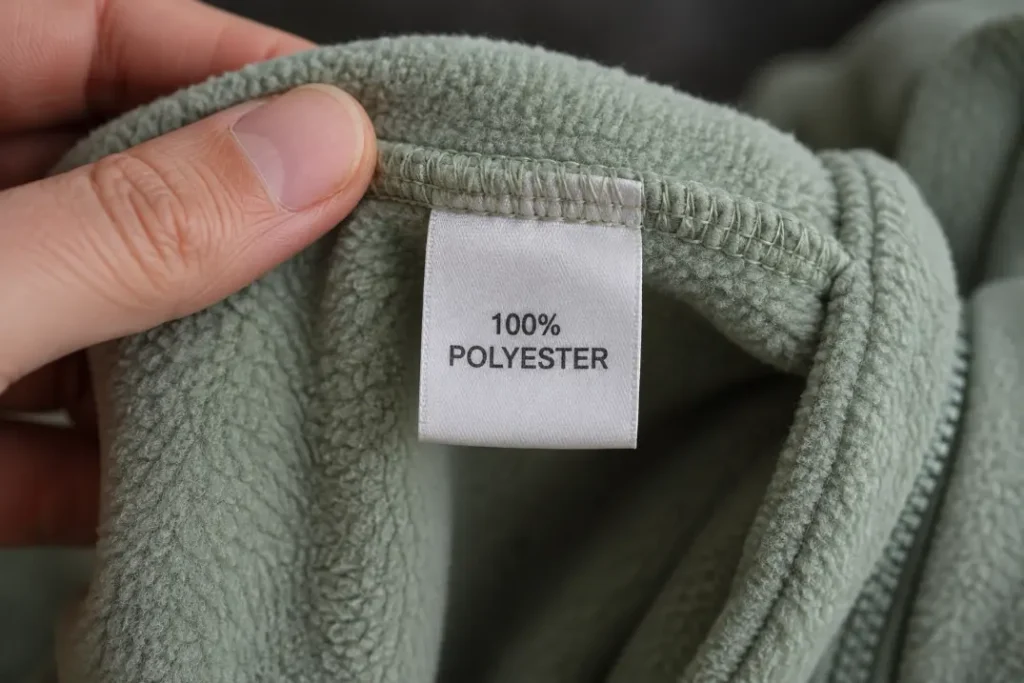
There isn’t one answer for every baby and every polyester fabric. A smooth lining, a brushed fleece, and a rough seam can feel very different, even within one outfit. I would inspect the surface that will actually touch your baby rather than stroking only the outside of the garment.
Turn it inside out. Feel around the neck opening, underarms, cuffs, and the back of the zipper. A soft body fabric doesn’t cancel out a scratchy label or a stiff edge. For online shopping, an inside photograph can be more useful than another styled image of the front.
Skin conditions deserve a more individual approach. The National Eczema Society’s clothing guidance notes that many people with eczema find wool and synthetic fabrics irritating. Seams, labels, dyes, and fastenings can also cause problems. The charity commonly recommends cotton, while recognizing that clothing preferences and tolerances vary.
That doesn’t establish that polyester causes eczema, or that every cotton garment will suit an affected baby. If your baby already has a care plan, use that advice when choosing clothing. Don’t deliberately retry a fabric you know irritates them just to see whether a new product is different.
For a baby without a known sensitivity, pay attention to comfort during normal use. If a garment appears to cause irritation, stop using it and seek advice if symptoms persist. Keeping a note of where the irritation appeared and which part of the outfit touched that area may help you describe the problem clearly.
Can Babies Sleep in Polyester Pajamas During Winter?
Polyester baby sleepwear needs a separate assessment from a daytime fleece or coat. The word “polyester” doesn’t settle the question, and a soft, warm outfit isn’t automatically sleepwear. Start with a product intended for your baby’s age and for sleep, then check its fit, instructions, and suitability for the room.
Plan for the bedroom, not the outdoor forecast
It can be freezing outside while the bedroom is warm. Before buying thick pajamas, consider the room and anything else your baby will wear, including a sleep sack if you use one. Follow that product’s sizing and clothing instructions. Don’t invent a warmth rating from the fabric percentage or a fluffy photograph.
Keep these sleep precautions in view:
- Place your baby on their back on a firm, flat, level infant sleep surface.
- Keep loose blankets, pillows, and other soft objects out of the sleep space.
- Don’t use weighted sleepers, weighted sleep sacks, or other weighted sleep items.
- Avoid overheating and keep indoor hats off once home from the hospital.
These points come from the AAP’s safe sleep recommendations, which address the sleep setup rather than approving a particular fiber. Choosing cotton instead of polyester doesn’t replace those precautions.
I would also be cautious about a listing that promises to keep every baby at the “perfect temperature.” Useful instructions explain the product’s intended use and limits. A reassuring slogan leaves you to guess.
Read sleepwear fit and flammability labels
In the United States, children’s sleepwear rules distinguish between qualifying infant garments, qualifying tight-fitting sleepwear, and other sleepwear. The categories have different requirements. An age label alone doesn’t explain all of them.
The CPSC guidance on infant garments and tight-fitting sleepwear explains the distinction. Qualifying tight-fitting sleepwear carries snug-fit labeling and is not flame-resistant. Qualifying infant garments must meet their own definition and applicable general clothing flammability requirements. Other children’s sleepwear is subject to the relevant sleepwear standards.
For shopping, the practical point is straightforward: read and follow the actual label. Don’t buy snug-fitting pajamas deliberately oversized for extra months of use. Don’t assume polyester means flame-resistant, or that “baby clothing” means no requirements apply. These are U.S. distinctions; products sold elsewhere need to meet the rules of that market.
What About Polyester Coats in a Car Seat?
For a car seat, bulk matters more than whether the coat contains polyester, cotton, or down. The AAP winter car seat guidance advises against bulky coats and snowsuits underneath the harness because their padding can compress during a crash, leaving dangerous space beneath the straps.
Use appropriate thin clothing and follow your seat manufacturer’s instructions for positioning and tightening the harness. “Fleece” isn’t an automatic green light: a thick fleece outfit or several layers can still add bulk. Don’t loosen the harness to accommodate a padded coat.
When extra warmth is needed, the AAP describes placing a blanket over the secured harness, keeping the face uncovered. Remove unnecessary warmth as the car heats up. Nothing bulky should sit between your baby and the harness or beneath their body in the seat.
That affects what I would buy. If most trips begin with a car journey, choose a winter coat you can put on after unbuckling at your destination. An awkward all-in-one might look appealing online but be inconvenient for that routine.
Once travel is over, a car seat shouldn’t become the regular sleep space. The NIH Safe to Sleep guidance advises moving a sleeping baby to their regular sleep space as soon as possible once out of the vehicle. Place them on their back on an appropriate firm, flat, level surface.
What Should You Check Before Buying Polyester Baby Clothes?
A useful product page shows the inside as well as the outside. Before paying extra for a claimed benefit, I would look for the details behind it. You should be able to find the materials, sizing, intended use, and care instructions without having to infer them from a styled photograph.
Read the full description and check any certification claim
Start with the separate material details, intended use, size information, and care label. If something important is missing, ask:
- What are the outer fabric, lining, and filling made from?
- Is this intended as daytime clothing, outerwear, or sleepwear?
- Can you show the inside construction and full care label?
- If it is certified, which product does the certificate cover, and can I verify the number?
OEKO-TEX STANDARD 100 concerns testing for harmful substances. Its Product Class 1 covers babies and children up to three years and has the strictest requirements within that standard. You can check a label through the official verification service.
Match the claim to the item you’re buying. A certificate for one fabric doesn’t automatically establish certification of every finished garment sold by that brand. It also doesn’t tell you how warm the outfit will be, whether it suits sleep, or whether your baby will find every seam comfortable.
Check the inside, the openings, and the fit
Look at the zipper backing and any guard near the chin. Check whether the neck opening seems practical and whether the sleeves and legs give room for normal movement.
The baby and toddler size chart shows how height, chest, and other measurements sit alongside age labels. For the item you’re buying, use that brand’s own chart rather than assuming sizes are interchangeable.
Then imagine a diaper change. Can you open the garment where you need to, or must you remove almost everything? With a footed outfit, consider body length as well as width. Adding room around the waist won’t help if the garment is too short through the body.
An inspection can reveal an uncomfortable edge or visible damage. It cannot prove that a small attachment passes a safety test, so don’t rely on a home pull test as reassurance.
Choose care instructions you can realistically follow
Read the wash and drying instructions before checkout. If a garment needs a routine you rarely manage, its attractive fabric description won’t make it practical. Think about how you’ll keep another suitable outfit available while this one is being washed and dried.
Follow the specific label rather than a generic “how to wash polyester” rule. After laundering, check the fit, seams, and fabric surface before dressing your baby again. A fiber name doesn’t guarantee that the finished piece will never pill, distort, or develop a rough patch.
Should You Choose Polyester, Cotton, or Wool for Winter?
I wouldn’t choose one fiber for an entire winter wardrobe. Start with the piece you need and the clothes your baby already wears comfortably. You might want a familiar, soft bodysuit against the skin and a separate removable layer for an outing. Those pieces don’t have to share the same composition.
If you’re weighing cotton vs polyester for babies, compare similar garments. A light cotton bodysuit and a padded polyester suit have different jobs. Their fiber labels can’t explain the entire difference in warmth, bulk, or convenience. Lay out what goes underneath and over the item you’re considering; it becomes easier to spot what you’re missing.
Cotton can be a reasonable starting point when you want a familiar next-to-skin fabric, particularly when it fits existing advice for your baby’s sensitive skin. Still, check the actual seams, surface, and cut. “Natural” doesn’t make an uncomfortable neckline disappear.
For a wool option, feel the particular fabric and check the care instructions. I wouldn’t assume every wool garment feels equally soft, or pay a premium for one that won’t fit your washing routine. Known skin sensitivities should guide that decision too.
You may also encounter modal blends when browsing soft bodysuits and tops. Our modal and polyester comparison explains their differences in feel and moisture uptake. Those details can help you compare fabrics, but you’ll still need the baby garment’s own sizing, care, and use instructions. General fabric properties don’t establish its suitability for sleep.
A sensible wardrobe can contain several materials. You don’t need to replace a comfortable, appropriate item just to make every label match.
How Would You Choose Between Two Winter Outfits?
Consider these three hypothetical shopping decisions. Each starts with what you need the clothing to do.
Suppose two listings both say “100% polyester.” One is a thin fleece top; the other is a padded outdoor suit. If you need an adjustable daytime layer, I’d investigate the fleece first. If you’re buying for an outdoor outing, I’d compare the suit’s stated use and construction with other outerwear. The matching percentage doesn’t make them alternatives for every job.
Now imagine a short walk followed by an afternoon in a heated house. You’re choosing between an easy-opening jacket and an all-in-one with awkward fasteners. I would give the jacket’s removability real weight. You already know the outfit will need to change indoors. Convenience here is about being able to make that adjustment promptly, not simply getting dressed faster.
Finally, you’re comparing two cozy-looking one-pieces for bedtime. One listing provides sleepwear sizing, labels, and clear instructions. The other calls the outfit “perfect for winter cuddles” but says nothing about sleep. I’d check the first product’s suitability and ask the second seller for details. The adjective “cozy” leaves the most important question unanswered.
Before you pay, see whether you can answer these five questions:
- Where is the polyester? Identify the fabric, lining, or filling you’re assessing.
- What will this garment do? Name the actual use, including whether sleep is involved.
- Where will your baby wear it? Consider the transitions as well as the outdoor weather.
- Does the fit work now? Check measurements, movement, and any product-specific fit instructions.
- Can you verify the important details? Find the care label, use instructions, and evidence for relevant claims.
If one answer is missing, ask before buying. You may discover that you need a different design, not a different fiber.
If a discount is driving the decision, consider when to buy a winter coat alongside the fit you need now. A lower price is little help if the available size won’t work.
Conclusion: Choose the Garment for the Job
Polyester can have a useful place in your baby’s winter wardrobe. I would judge the actual garment before deciding whether its fiber content is a reason to buy or pass.
Start with where the polyester is used, then check the fit, inner surface, care instructions, and intended conditions. Treat sleep and car-seat use as separate decisions. Before adding something to your basket, picture the day you’ll use it: what goes underneath, where you’ll go, and when you’ll need to take it off. That picture tells you more than “winter warm” on a product page.
FAQs About Polyester Baby Clothes in Winter
Is all fleece made from polyester?
No. Fleece can contain other fibers or blends. For example, Cotton Incorporated’s insulating-fabric comparison includes both polyester fleece and cotton-polyester fleece. Check the composition of the actual item. “Fleece” describes a fabric type; it doesn’t give you a complete fiber label or explain how the finished baby garment should be used.
Is recycled polyester warmer than virgin polyester?
Not automatically. “Recycled” describes the material’s source, not a warmth rating. Compare the actual fabric construction, insulation, and garment design. Two recycled-polyester pieces can serve very different purposes, just as two virgin-polyester pieces can. I wouldn’t pay more for extra warmth unless the product information supports that particular claim.
Is a polyester-cotton blend automatically better for winter?
No. A blend percentage doesn’t tell you the fabric’s thickness, surface, or role in the outfit. A cotton-rich lining inside a padded coat also isn’t the same thing as a cotton-rich base layer. Compare pieces intended for the same use, then check the fit and care requirements instead of looking for one ideal ratio.
Should I replace polyester baby clothes I already own?
I wouldn’t replace an item solely because polyester appears on the label. Review its condition, fit, intended use, and instructions. Stop using something that causes irritation, is damaged, or doesn’t suit the situation. The useful question is whether this particular piece belongs in your baby’s current routine, not whether every item shares your preferred fiber.
Does the same advice apply to newborns and older babies?
The buying questions still help, but individual care needs come first. Small or premature babies may need additional support with keeping warm, as this NHS neonatal guidance explains. Follow your baby’s clinical team’s advice rather than applying an older child’s outfit or an online clothing chart to a newborn.