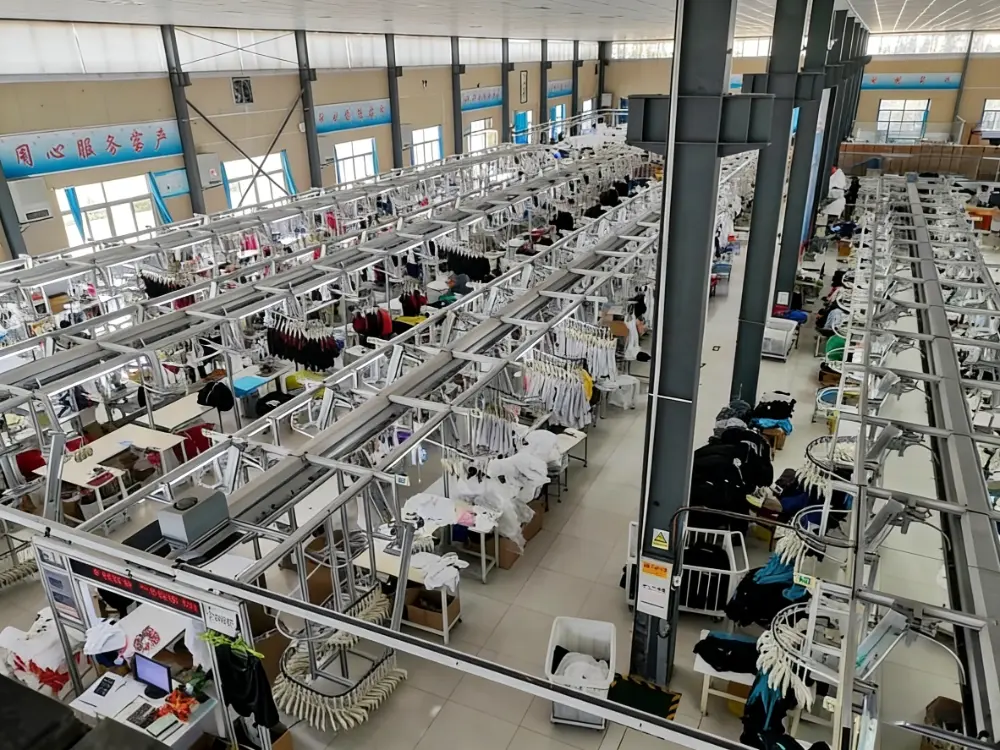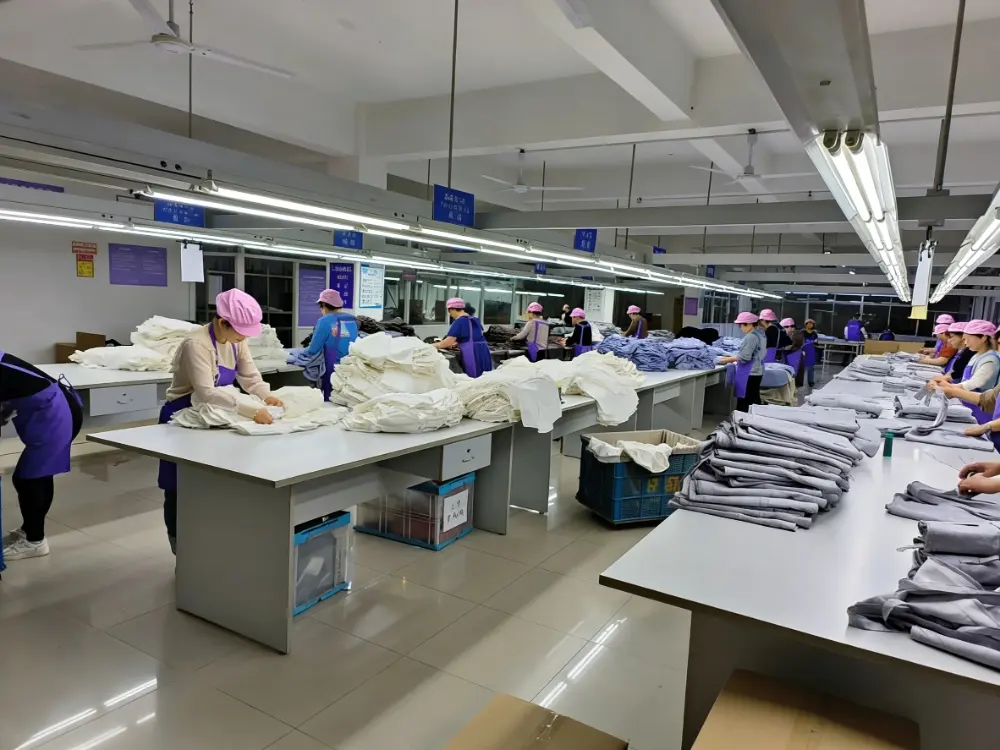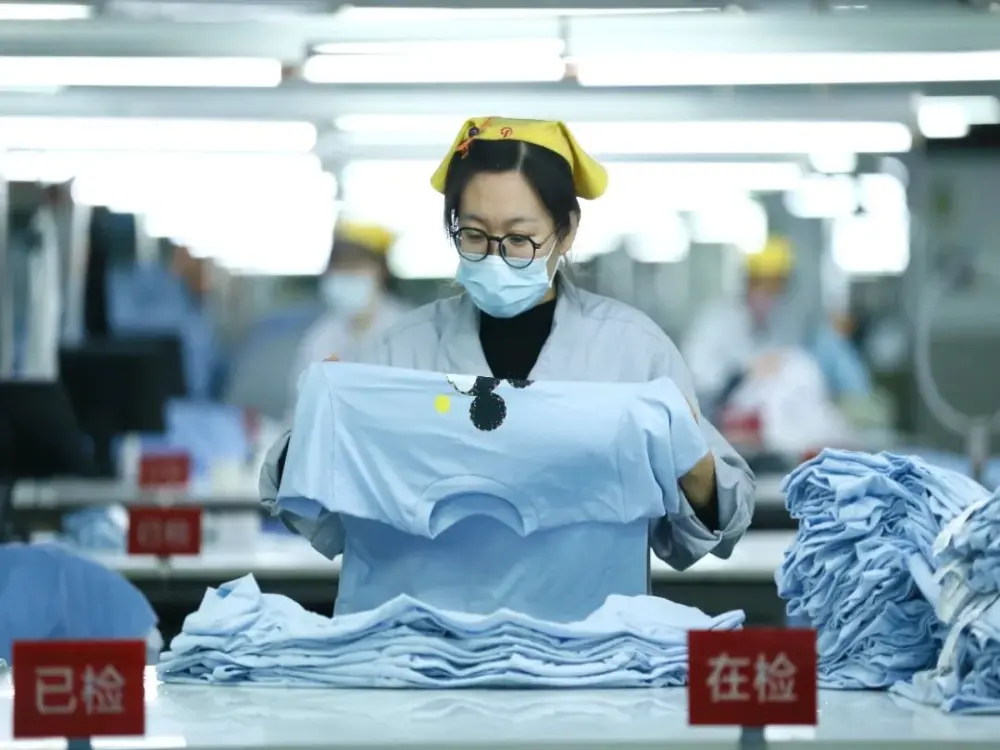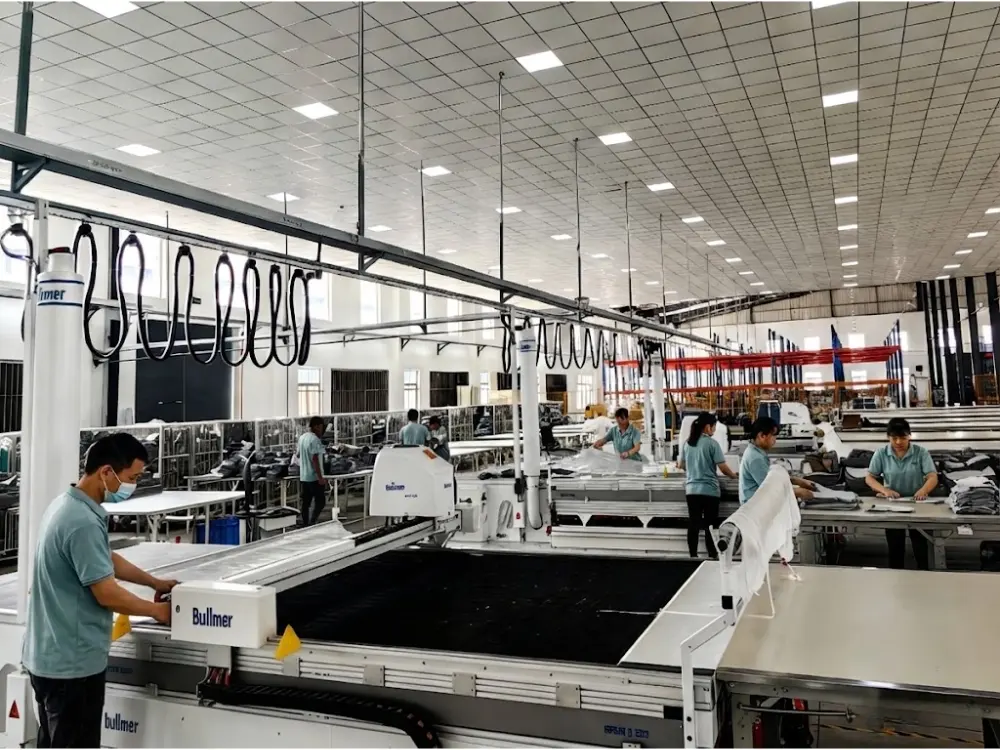
With 16 years deep in the industry, I know trust is built not only on expert pattern making and craftsmanship, but also on an uncompromising respect for kids wear safety standards.
When parents choose clothes for their kids, they look far beyond appearance. They care most about safety: Is the fabric soft? Can zippers scratch delicate skin? Do buttons come loose and pose a choking risk?
As a children’s clothing retailer, you must ensure every garment you sell is safe. This is why valid CPC Certification is far more than just a regulatory formality—it is a bridge of trust between you and your customers.
In this article, drawing on real industry experience, we will give you a complete understanding of how CPC for kids clothing works—and the essential checklist every wholesale buyer must follow.
What is a CPC (Children’s Product Certificate)?
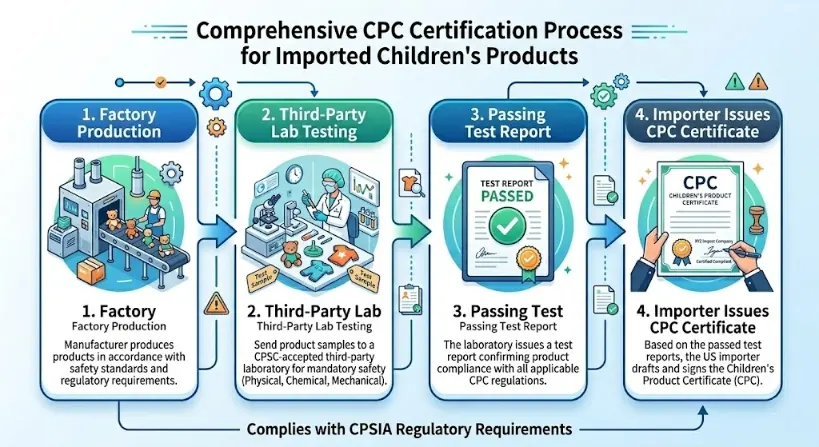
Short for Children’s Product Certificate, the CPC is a mandatory compliance document required by the U.S. Consumer Product Safety Commission (CPSC) for consumer products intended for children 12 years of age and younger. It is a legally required self-certification document for products entering the U.S. market—including customs clearance, e‑commerce platform listings, and retail sales.
A CPC cannot be arbitrarily created by factories. Every compliance statement must be based on passing test reports issued by a CPSC‑accredited third‑party laboratory. Without genuine supporting test data, obtaining a valid CPC for children’s apparel is impossible.
For children’s clothing wholesalers, the CPC is an essential, mandatory “passport” for selling into the U.S. market—especially on major platforms like Amazon.
Why CPC Certification Is Indispensable for Wholesalers
For wholesalers importing children’s clothing into the U.S. market, the Children’s Product Certificate (CPC) is far more than just a piece of paper—it is the lifeline that keeps your entire business running. Whether you are importing everyday kids’ T‑shirts or delicate girls’ dresses, the CPC is non‑negotiable for the following reasons:
Importers Bear Ultimate Legal Liability
Under rules from the U.S. Consumer Product Safety Commission (CPSC), U.S. importers (wholesalers) are legally recognized as “domestic manufacturers” for overseas‑produced goods. This means full legal responsibility for complying with U.S. safety standards and providing a valid CPC falls on you, not your foreign factory.
Essential for Smooth Customs Clearance
U.S. Customs and Border Protection (CBP) applies strict inspections. If your shipment arrives without a valid CPC for kids clothing, your goods will be detained immediately. This leads to expensive storage fees, and in serious cases, forced return or destruction of your cargo.
A Must for All Sales Channels
The CPC is a mandatory requirement across every sales channel. Major platforms like Amazon and Walmart strictly review CPC certification documents. Missing paperwork results in product delisting or account suspension.
Avoid Heavy Fines and Devastating Recalls
If the CPSC finds your products (zippers, snaps, fabric, etc.) fail lead or flammability testing without valid CPC support, wholesalers face civil penalties ranging from tens of thousands to millions of dollars per violation. Even worse, a mandatory product recall can permanently damage a brand’s hard‑built reputation.
In short, for children’s clothing wholesalers, no CPC means no legitimate access to the U.S. market.It is not only a legal requirement but also a cornerstone of safe, stable, and sustainable cross‑border business.
The Importance of Working with a Compliant Children’s Clothing Manufacturer
For U.S. wholesalers, partnering with an overseas manufacturer experienced in CPSIA compliance is a smart strategy to lower operating costs. By working with a factory that provides full CPC support, you gain these key advantages:
- Save on High Testing Costs: A compliance-savvy manufacturer provides valid third-party test reports, saving you thousands in extra costs.
- Ensure Smooth Customs Clearance: Having pre-prepared compliance data helps you avoid cargo detention.
- Guarantee Product Safety: Professional factories prioritize naturally safe materials like organic cotton, fundamentally mitigating risks.
- Simplify Supply Chain Management: Entrusting the tedious CPC for children’s apparel process to a professional factory allows you to focus on sales.
Choosing HAPA means choosing a partner that understands U.S. laws. We take care of the complexities of CPC certification so you can focus on expansion.
Key Safety Tests Required for Children’s Apparel CPC
For wholesalers and retailers, understanding these core tests not only helps avoid purchasing risks but also communicates quality assurance to end consumers. Below are the four most critical safety test categories that every compliant manufacturer must adhere to:
| Test Category | Scope / Application | Core Test Focus & Regulations | Key Compliance Requirements (Limits/Rules) | Significance for Manufacturing & Sourcing |
| 1. Lead Content | All non-textile hardware and accessories on garments. | Total Lead Content: For substrates (e.g., metal zipper teeth, alloy snaps). Surface Coating Lead Limit: For hardware with paint or coatings (e.g., painted zipper pulls, colored buttons). | Substrate Lead ≤ 100 ppm Surface Coating Lead ≤ 90 ppm | Ensures hardware is free of heavy metals harmful to a child’s nervous system. Requires sourcing compliant materials directly from raw material suppliers. |
| 2. Phthalates | Plasticized components and printing materials on garments. | Focuses on plastisol inks, large screen prints, heat transfers, plastic labels, PVC components, etc. | Specific phthalate content ≤ 0.1% | Prevents exposure to chemicals that can disrupt the endocrine system. Dictates the use of eco-friendly water-based inks or certified phthalate-free materials. |
| 3. Flammability | All children’s clothing fabrics and finished garments (sleepwear has separate, stricter standards). | 16 CFR Part 1610 (Standard for the Flammability of Clothing Textiles). Tests the burn rate and surface flash of fabrics when exposed to a flame. | Burn rate must fall within safe limits. Note: Plain surface fabrics weighing > 2.6 oz/sq yd, or made entirely of acrylic, nylon, polyester, or wool are exempt from testing, but the exemption must still be claimed on the CPC. | Ensures garments will not ignite and burn rapidly, protecting children from severe burn hazards. |
| 4. Physical Safety (Small Parts & Drawstrings) | Ages 0-3 (Infants/Toddlers): Detachable small parts (buttons, appliques, sequins, etc.). Ages 2-12: Garments with drawstring designs. | Tension Test: Checks if components detach under a specific pulling force and fit into a CPSC “Small Parts Cylinder.” ASTM F1816: Regulations for drawstrings on specific areas of children’s upper outerwear. | Small Parts: Detached components must not pose a choking hazard. Drawstrings: Strictly prohibited at the hood and neck. Waist/bottom drawstrings must extend ≤ 3 inches outside the channel with no knots or 3D toggles at the ends. | Prevents fatal choking/swallowing hazards for infants, and eliminates strangulation or entanglement risks caused by drawstrings. |
How Fabric Choice Impacts Your CPC Test Success Rate
In manufacturing, fabric selection is the first critical factor in securing CPC certification.
- Synthetic vs. Natural Fibers: Synthetic fibers (polyester/nylon) are often exempt from flammability testing, simplifying the process. Natural fibers (cotton) must meet strict 16 CFR 1610 standards.
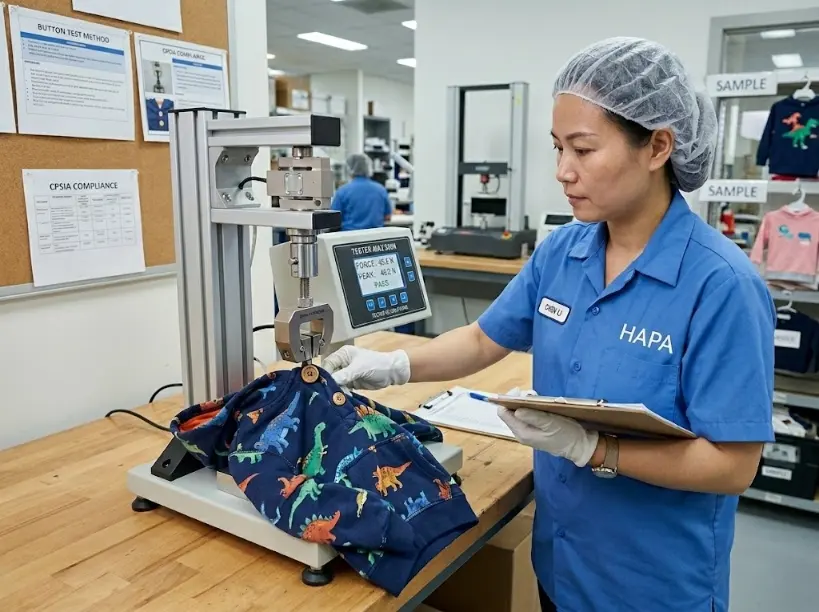
- Surface Decorations: Sequins and buttons require strict tension tests to prevent choking hazards.
- Dyeing Processes: Even safe fabrics can fail if dyes contain lead. Using non-toxic dyes ensures your product is ready for a CPC for kids clothing.
How to Read & Validate a Children’s Product Certificate (CPC)
For children’s apparel wholesalers, simply receiving a document labeled “CPC” is not enough. If the document is incomplete or non-compliant, it will result in rejection during U.S. Customs clearance or Amazon audits.
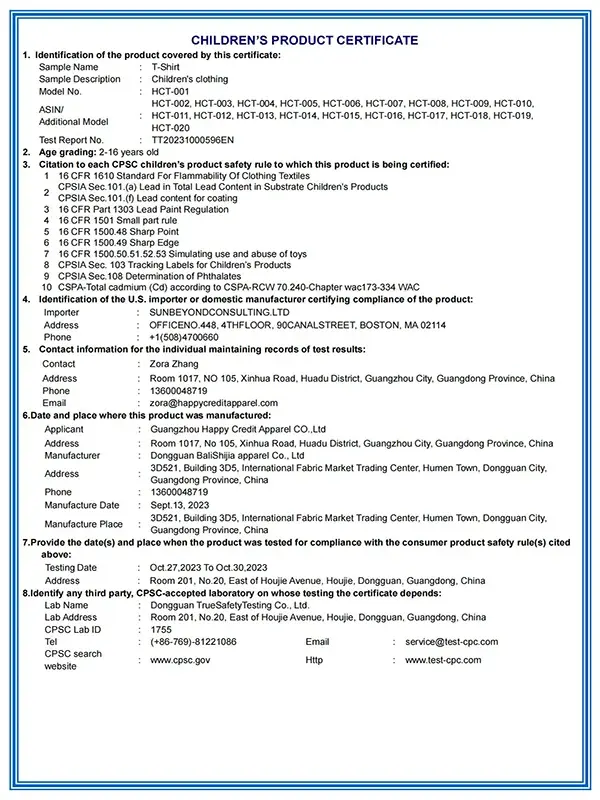
To protect your supply chain, you must know how to quickly audit a certificate. Under U.S. CPSC law, a valid CPC must include these 7 essential elements. Use this as your official checklist:
Detailed Product Identification
- What to check: The certificate must clearly and uniquely describe the covered product. It is not sufficient to simply write “children’s clothing.”
- Requirement: It must include specific details such as the Style Name, SKU Number, Color, or Batch Number. The description must exactly match your commercial invoice and shipping documents.
Citation to Each Applicable CPSC Safety Rule
- What to check: A list of every regulation the product has passed testing for.
- For Children’s Clothing: This typically includes:
- CPSIA Total Lead Content: For buttons, zippers, snaps, etc. (15 USC 1278a).
- Flammability: 16 CFR Part 1610 (General) or 1615/1616 (Sleepwear).
- Phthalates: If plasticized prints or accessories are present (16 CFR Part 1307).
Identification of the Importer or Domestic Manufacturer
- Critical Rule: For overseas-produced kids’ wear, this section MUST identify the U.S. Importer (you, the wholesaler/retailer), not just the foreign factory.
- Requirement: Full legal name, complete U.S. mailing address, and U.S. telephone number.
Contact Information for the Records Custodian
- What to check: The person responsible for maintaining the original test results (usually a compliance officer at your company).
- Requirement: Full name, physical mailing address, email address, and telephone number.
Date and Place of Manufacture
Requirement:
- Date: At least the month and year of production (e.g., Feb 2026).
- Location: City and Country (e.g., Guangzhou, China) where the product was finally assembled.
Date and Place of Testing
- Requirement: The exact date (month/year) and location where the third-party testing occurred.
- Note: The testing date must be prior to the date of customs entry or first distribution.
CPSC-Accepted Third-Party Laboratory Information
- The Most Critical Step: This verifies the data source.
- Requirement: Full name, address, and phone number of the testing laboratory.
- Verification: You must check the official CPSC website to confirm the lab is on their Accredited List. If the lab is not CPSC-accepted, the CPC is automatically invalid.
Sourcing Compliant Children’s Clothing: Critical Questions to Ask Your Manufacturer
As a wholesaler importing children’s clothing into the U.S., the best time to protect your business from compliance risks is before you place your order. Do not assume every overseas factory understands strict U.S. regulations. When evaluating potential manufacturers, you must ask these critical questions to verify their real compliance capabilities:
“Do you use third-party testing labs accredited by the CPSC?”
Why you must ask:
This is the non-negotiable bottom line for CPC certification. U.S. Customs and market regulators do NOT accept in-house test reports or certificates from ordinary commercial labs. Only test data from a CPSC-accepted, officially registered laboratory holds legal validity.
How to verify:
Don’t just ask, “Have you tested the product?” Instead, directly request:
“Please provide a sample test report from a CPSC-accepted lab you have worked with recently.”
If the manufacturer is vague, or if the lab cannot be verified on the official CPSC database, partnering with them means you will bear all testing costs and failure risks.
“Can you provide traceable production records?”
Why you must ask:
The U.S. Consumer Product Safety Improvement Act (CPSIA) requires all children’s products and packaging to have a permanent tracking label. In addition, you must accurately list the exact production date and location on your CPC. A factory without clear production records cannot support your compliance process at all.
How to verify:
Ask the factory:
“How do you manage production batches? Can you show me your tracking label system?”
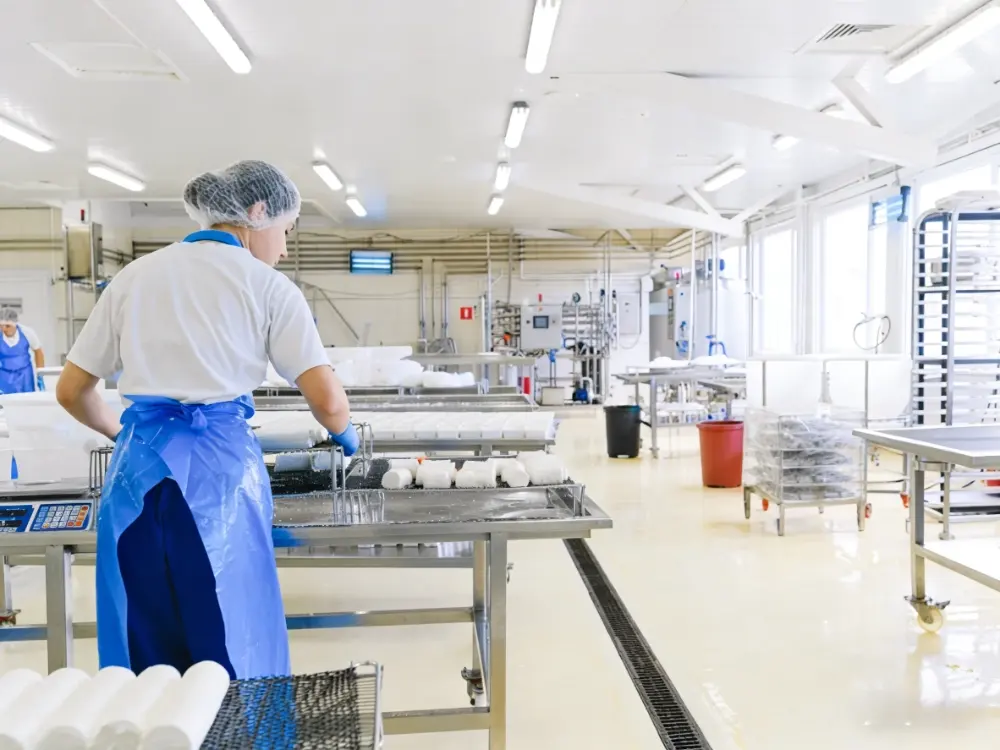
A professional manufacturer will have strict internal records to ensure every shipment to the U.S. can be accurately traced to:
- Production month and location
- Specific fabric and accessory batches used
This is not only required for customs inspection but also helps you identify problematic batches quickly in the event of a product recall, minimizing financial damage.
Partnering with a Reliable Manufacturer for Hassle-Free Sourcing
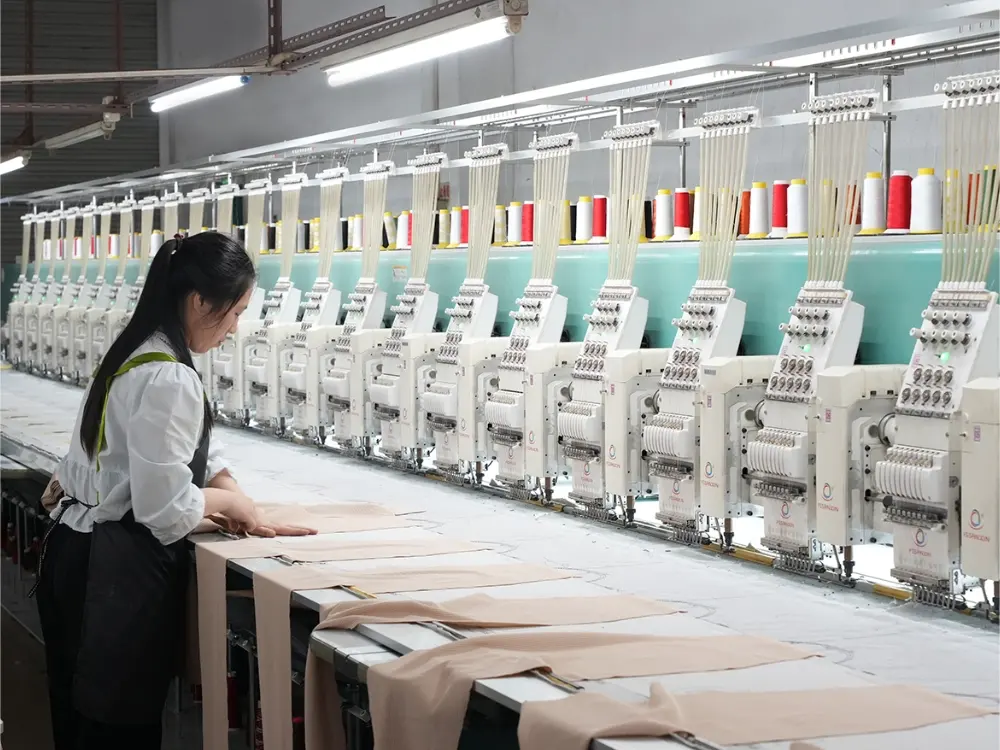
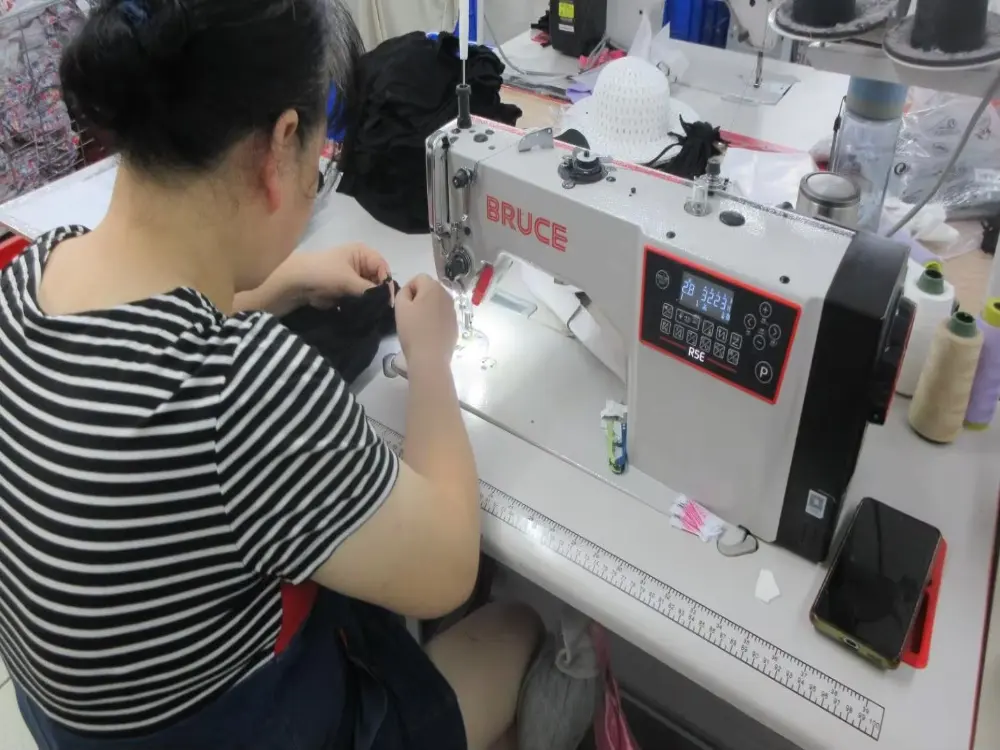
Since 2010, HAPA has been deeply engaged in children’s apparel manufacturing. With 16 years of experience, we help B2B buyers navigate the challenges of CPC certification.
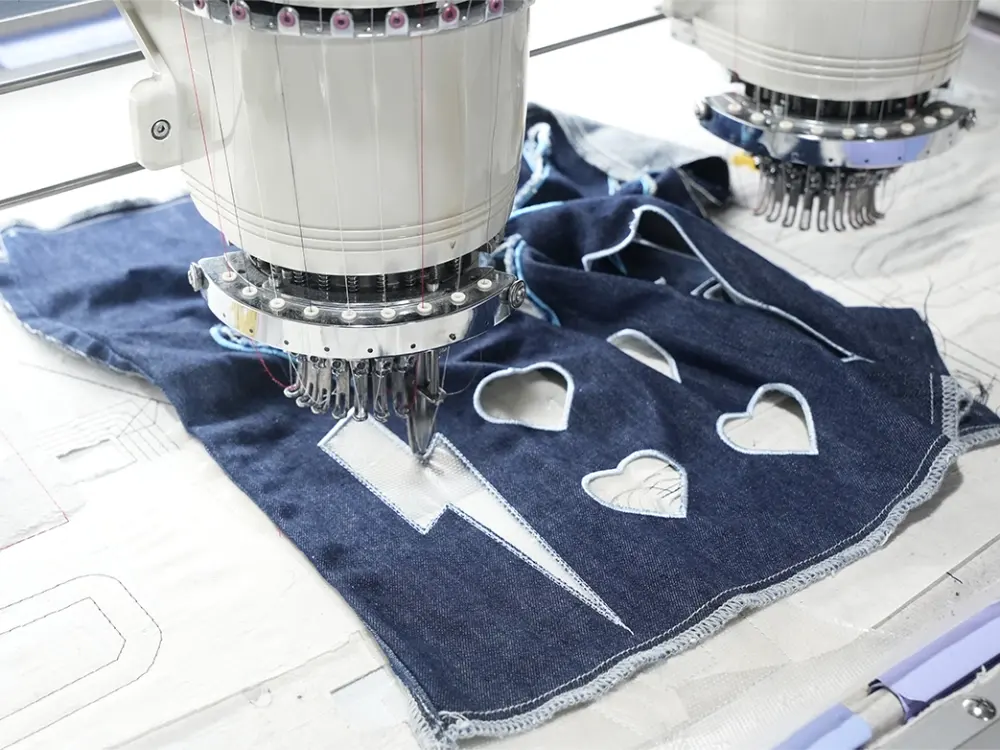
We specialize in intricate garments—our clients call us the “Sequin Paradise”. We enforce strict quality control, from flammability testing to pull tests, ensuring every product meets high kids wear safety standards.
Through our website at hapagarments.com, we offer a streamlined sourcing experience. Leave the complex CPC for kids clothing compliance work to us, so you can focus on growing your business.
FAQ
What is the difference between GCC and CPC?
GCC is for general-use products (e.g., adult clothing) and relies on self-testing. CPC is strictly for children’s products (age 12 and under) and requires mandatory testing by a CPSC-accepted, third-party laboratory.
What happens if you do not have a CPC?
Selling children’s clothing without a CPC carries severe risks, including shipment seizures by US Customs, heavy CPSC fines, forced product recalls, and immediate delisting by platforms like Amazon and reputable retailers.
How to find manufacturers with CPC certification?
Always ask vendors for a sample CPC and third-party lab testing records upfront. To guarantee safety and seamless customs clearance, partner with an established manufacturer like HAPA. We provide full CPC documentation for all our children’s apparel to keep your business protected.