
After more than a decade of designing and crafting leather jackets for children at HAPA, I’ve learned one truth that every parent eventually discovers: even the most beautifully made jacket means nothing if you don’t know how to care for it properly.
I’ve had countless parents reach out to us, heartbroken over a stained or stiffened jacket that cost them real money — and real sentiment. That’s exactly why I wanted to write this guide myself.
Knowing how to clean a leather jacket at home isn’t just a handy life skill — for families investing in quality children’s outerwear, it’s practically essential. The good news? You don’t need expensive equipment or a trip to the dry cleaner. With the right technique and a little patience, keeping leather looking its absolute best is something anyone can do — right from their own home.
How to Clean a Leather Jacket at Home: What You Need to Know First
At HAPA, every jacket we produce goes through rigorous material testing before it ever reaches a child’s shoulders. But what happens after it leaves our hands — after the first ice cream drip, the playground tumble, the rainy school run — that part is up to you. Before you grab a cloth and start scrubbing, there are a few foundational things worth understanding. A little knowledge upfront saves a lot of heartbreak later.
Why Leather Needs a Gentler Cleaning Method Than Regular Fabric
Here’s something I always tell parents who visit our showroom: leather is not fabric. It sounds obvious, but the implications are enormous when it comes to leather jacket cleaning.
Regular fabrics — cotton, polyester, fleece — are built to handle machine washing, agitation, and chemical detergents. Leather, by contrast, is a natural material containing oils, fibers, and a surface finish that work together to create its signature suppleness. Introduce the wrong cleaner or too much water, and you begin breaking down that structure — often permanently.
From years of working directly with tanneries, I’ve seen how quickly premium leather deteriorates under improper care. The most common consequences include:
- Cracking and peeling, from stripping the leather’s natural oils
- Discoloration, triggered by harsh chemical reactions
- Stiffening, when moisture is absorbed unevenly without follow-up conditioning
- Surface scratching, from abrasive cloths used with too much pressure
Think of it less like doing laundry and more like caring for fine skin — gentle, intentional, and consistent. So, do you wash leather jackets like you would a sweatshirt? Absolutely not. Understanding that difference is the first step to taking care of a leather jacket the right way.
Understanding Your Jacket’s Material Before Cleaning
Before cleaning anything, take two minutes to identify what you’re actually working with. Not all leather is the same, and using the wrong method on the wrong material causes real damage.
- Full-Grain and Top-Grain Leather — The highest quality options, found in many of HAPA’s premium styles. They respond well to mild soap and conditioner but are still susceptible to water staining if soaked.
- Genuine Leather — More porous and less forgiving. It requires careful handling and benefits greatly from conditioning after every clean.
- Bonded Leather — Made from leather scraps bonded with polyurethane. Looks convincing, but excessive moisture or rubbing can cause the surface to flake.
- Faux / Vegan Leather (PU or PVC) — Increasingly popular in children’s fashion, it tolerates moisture better than genuine leather, though harsh solvents can still damage its coating.
- Suede and Nubuck — These require specialist products and should never be cleaned with standard wet methods.
Can You Really Clean a Leather Jacket at Home?
Short answer: absolutely — and with better results than you might expect.
When I started in this industry, conventional wisdom was to always send leather to a professional. For severe damage or deep restoration, that still holds. But for routine maintenance, surface dirt, and light staining? Home cleaning is not only possible — it’s often the smarter choice. Here’s why:
- You control the process. A professional cleaner may use industrial solvents that are far too aggressive for a lightly soiled child’s jacket. At home, you choose gentle, non-toxic products suited to the actual level of cleaning needed.
- Consistency beats intensity. Regular, light cleaning at home will always outperform infrequent professional cleans for long-term leather health.
- The right technique makes all the difference. Once you know the method, how to clean a leather jacket at home becomes a simple, satisfying routine — achievable on a Sunday afternoon in under 30 minutes.
Many parents ask, can you wash leather jackets in a machine? The answer is a firm no. While you can spot-clean and refresh them, learning how to wash leather in the traditional sense is not the approach. You’ll be working with a damp cloth, not a washing machine.
Tools and Supplies You Need for Leather Jacket Cleaning
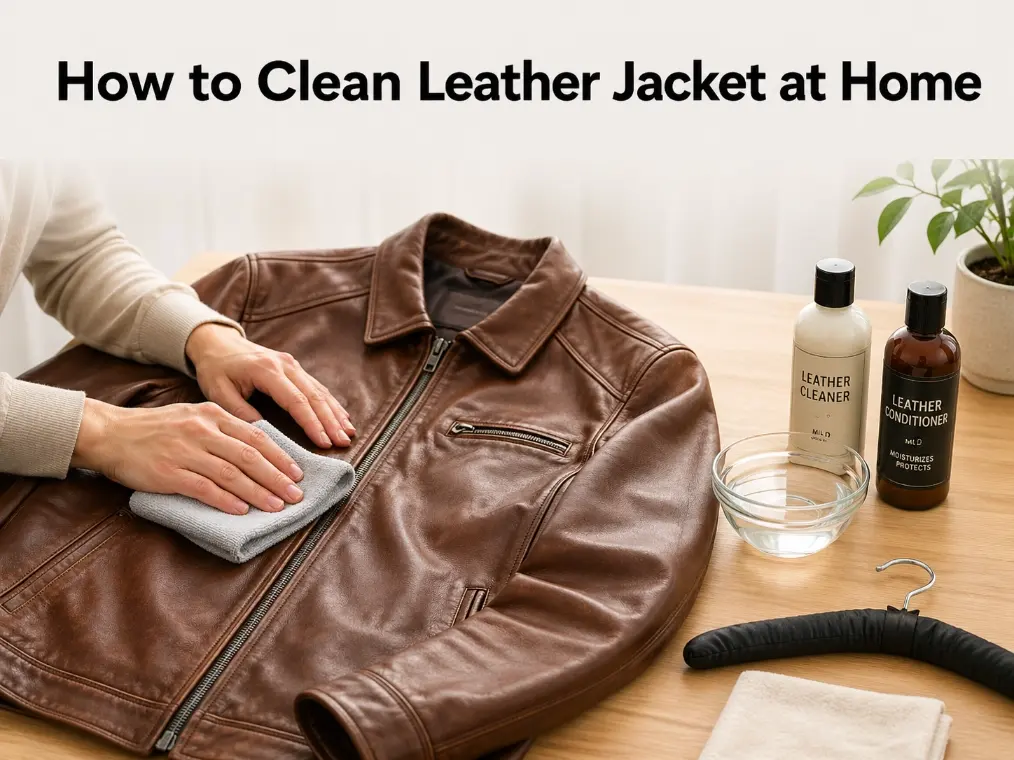
You don’t need a cabinet full of specialist products — just the right ones. A focused, well-chosen kit of a few items is genuinely all it takes to clean a leather jacket safely and effectively at home.
Here’s what you’ll want to have on hand before you start:
- A mild, pH-balanced soap or dedicated leather cleaner
- Two clean microfiber cloths — one for cleaning, one for buffing
- A small bowl of lukewarm water
- A quality leather conditioner
- A soft-bristle brush (optional, for textured leather or seam areas)
- Cotton swabs for detailed or hard-to-reach spots
Gentle Cleansers — What to Use and What to Avoid
Use: dedicated leather cleaners, diluted mild dish soap, or castile soap.
Avoid: bleach, ammonia, acetone, alcohol above 30%, and fragranced wipes — all strip leather’s protective finish.
Microfiber Cloths vs. Sponges: Which Works Best?
Microfiber cloths, always. They lift dirt without abrading the surface. Sponges retain excess water and cause micro-scratches over time.
Kid-Safe and Non-Toxic Products for Leather Cleaning
Why Non-Toxic Formulas Matter for Children’s Garments
Children’s skin is more permeable than adults’. Chemical residue left on leather transfers through prolonged skin contact — making ingredient safety non-negotiable for kids’ outerwear.
Top 3 Budget-Friendly, Family-Safe Leather Cleaners
- Leather Honey — non-toxic, solvent-free, excellent value
- Chamberlain’s Leather Milk — silicone-free, natural ingredients, no residue
- DIY Castile Soap Solution — one teaspoon unscented castile soap per cup of lukewarm water; fully transparent, completely safe.
Step-by-Step: How to Clean a Leather Jacket at Home
This is the section parents bookmark and come back to. We’ve distilled years of material expertise into six straightforward steps — simple enough for a Sunday afternoon, thorough enough to genuinely protect your investment. This is the best way to clean a leather jacket without risking damage.
Step 1: Empty the Pockets and Hang the Jacket Properly
Before anything else, empty every pocket and hang the jacket on a wide, padded hanger. A proper hang keeps the leather taut and evenly accessible, preventing accidental creasing mid-clean.
Step 2: Remove Dust and Surface Dirt
Using a dry microfiber cloth or soft-bristle brush, gently wipe down the entire jacket in long, even strokes. Always follow the grain of the leather. This removes loose debris before moisture is introduced — skipping this step risks grinding surface dirt deeper into the material.
Step 3: Spot Test in a Hidden Area
Apply a small amount of your chosen cleaner to an inconspicuous spot — inside the collar or beneath a pocket flap. Wait 10 minutes. If there’s no discoloration or texture change, you’re safe to proceed. This single step has prevented countless cleaning disasters.
Step 4: Wipe the Jacket with a Damp Cloth
Dampen — never soak — a clean microfiber cloth with your mild soap solution. Working in small sections, wipe the leather using gentle circular motions, then follow immediately with a second dry cloth to lift excess moisture. Pay extra attention to cuffs and collars, where dirt accumulates most on children’s jackets.
Step 5: Dry the Jacket Naturally
Hang the jacket in a well-ventilated room away from direct sunlight, radiators, or hair dryers. Heat is leather’s worst enemy — it accelerates cracking and causes irreversible stiffening. Never put a leather jacket in the dryer, no matter how tempted you are to speed things up. Allow at least 24 hours of natural air drying before moving to the next step.
Step 6: Apply Leather Conditioner
Once fully dry, apply a small amount of leather conditioner using a clean microfiber cloth, working it in gently with circular motions across the entire surface. This replenishes the natural oils removed during cleaning and restores the jacket’s softness and sheen.
Removing Common Stains from a Leather Jacket at Home
In children’s apparel manufacturing, we learn very quickly that stains should never be treated with panic. The same rule applies to how to clean a leather jacket that’s been through a messy day. Before you reach for a cleaner, slow down and look at the stain carefully. Is it dry dust, a water mark, oil, or something deeper like ink or dye transfer?
Leather is strong, but it does not forgive rough handling. A small stain can become permanent if you scrub too hard, use too much water, or apply the wrong product. I always recommend starting with the gentlest method first. Leather-care experts also advise blotting rather than rubbing and testing any cleaner on a hidden area before treating the visible surface.
How to Remove Dirt and Dust Marks
For simple dirt or dust marks, start with a dry microfiber cloth. Wipe the surface gently, especially around cuffs, seams, pockets, and the collar. These areas collect the most everyday grime. If the mark does not come off, lightly dampen the cloth with clean water and wipe the area again. The cloth should be barely damp, not wet.
How to Treat Water Spots
Water spots can leave uneven rings on leather if they dry too quickly or soak into one small area. To soften the mark, use a clean, slightly damp cloth and gently blend around the spot instead of focusing only on the center. After that, pat the area with a dry towel and let the jacket air dry naturally — no sun, no radiator, no hair dryer.
How to Remove Oil or Grease Stains
Oil stains need patience. First, blot the surface with a clean dry cloth. Do not press too hard. Then apply a small amount of cornstarch or talcum powder over the stain and let it sit for several hours, or overnight if the stain is stubborn. As Harley-Davidson’s leather-care guide also recommends, cornstarch or talcum powder helps absorb grease from leather. Once the powder has absorbed the oil, brush it away gently with a soft cloth. Repeat if needed, but avoid using hot water, dish soap, or strong degreasers.
Why You Should Blot, Not Rub
Blotting lifts the stain from the surface. Rubbing pushes it deeper — something I’ve seen ruin many a soft leather finish on lighter-colored jackets.
When to Stop and Call a Professional
Stop home cleaning if the stain is ink, mold, deep oil, color transfer, or if the leather darkens during testing. For suede, nubuck, vintage, designer, or expensive leather jackets, a professional leather cleaner is the safer choice. A good jacket is worth preserving carefully, not risking for a quick fix.
How to Clean the Inside Lining of a Leather Jacket
Most parents focus entirely on the outside of a leather jacket — which makes sense, because that’s what everyone sees. But after years of designing children’s outerwear at HAPA, I’d argue the lining deserves just as much attention. It’s the part that sits directly against your child’s skin every single day, and neglecting it is one of the most common reasons jackets develop persistent odors and deteriorate from the inside out.
Why the Lining Needs Separate Care
The lining of a leather jacket — typically polyester, satin, or quilted fabric — behaves completely differently from the outer shell. It absorbs sweat, body oils, and everyday grime in a way that smooth leather simply doesn’t. And because it’s enclosed within the jacket, it doesn’t get the same incidental airing out that the exterior does.
What makes this particularly important for children’s jackets is the sheer frequency of wear. Kids sweat more actively than adults, wear their jackets closer to bare skin, and rarely think to turn them inside out after a warm day. Over time, that accumulated moisture and body oil breaks down the lining’s integrity — and eventually creates odors that no amount of exterior leather jacket cleaning will resolve.
How to Spot Clean Sweat and Body Oil
The lining should never be soaked or submerged — that level of moisture will saturate the leather shell from the inside and cause warping, stiffening, and potential color damage. Spot cleaning is the only safe method, and it’s more effective than most people expect.
Turn the jacket inside out and lay it flat on a clean surface. Dampen a microfiber cloth with a solution of lukewarm water and a small amount of mild dish soap or baby shampoo, then gently work it into the affected areas using light circular motions. Focus on the collar lining, underarm areas, and cuffs — the places where body contact is highest and buildup accumulates fastest. Follow immediately with a second clean damp cloth to remove any soap residue, then allow the lining to air dry fully before turning the jacket right-side out again.
Baby shampoo is something I specifically recommend for children’s jackets because it’s designed for sensitive contact with skin — which means it’s gentle enough for delicate lining fabrics too.
How to Freshen Odors Without Soaking the Leather
Odor in a leather jacket lining is usually a moisture problem as much as a hygiene one. Before reaching for any product, try the simplest solution first: hang the jacket inside out in a well-ventilated space for 24 to 48 hours. Fresh air circulation alone resolves mild odors more often than parents expect.
For more persistent smells, lightly spritz the lining with a solution of equal parts water and white vinegar using a spray bottle, keeping the mist fine and even. Don’t saturate — a light, even application is all that’s needed. Allow it to dry naturally and completely. The vinegar smell dissipates as it dries, taking the odor with it.
What I’d steer parents away from is the reflex to spray perfume or fabric freshener directly onto the lining. These products mask odors temporarily but leave residue that attracts more grime over time — and many contain alcohol or synthetic fragrance that can seep through to the leather shell.
Cleaning Kids’ Leather Jackets — Extra Care Tips for Parents
This section is one I feel particularly qualified to write — not just as someone who has spent years manufacturing children’s leather outerwear, including our work as a custom kids jacket manufacturer, but as a parent who understands what it means to invest in a quality piece for your child.
Why Children’s Leather Jackets Need Gentler Cleaning
Children’s skin is far more permeable than adult skin — meaning chemical residue left on garment surfaces transfers through prolonged contact. Add the physical reality of how kids actually wear their jackets: stuffed into bags, rolled in, pulled on and off relentlessly. Gentle, consistent cleaning always outperforms harsh, infrequent deep-cleans. When people ask how to wash leather on a child’s garment, they’re often surprised that the answer is simply: you don’t, in the machine sense. You lovingly spot-clean and condition.
Non-Toxic, Dermatologist-Approved Cleaning Approach for Kids’ Garments
Use pH-balanced, fragrance-free products — a non-toxic leather cleaner or diluted unscented castile soap applied with a microfiber cloth. Always follow with a child-safe, silicone-free conditioner. The American Academy of Dermatology stresses how sensitive young skin is to topical irritants, so your product choices matter enormously.
Ingredients to Strictly Avoid When Cleaning Children’s Apparel
- Ammonia and bleach — reactive on leather and irritating to children’s skin
- Synthetic fragrances — often contain phthalates, an endocrine-disrupting compound
- Alcohol above 20% — drying to leather and harsh on sensitive skin
- Silicone-based conditioners — seal leather’s pores and trap residue against the lining
Keeping Kids’ Leather Jackets Looking New Longer
Always hang on a padded hanger, store in a breathable garment bag, and air the jacket out after warm days. Condition every two to three months regardless of whether it needs cleaning — consistency is everything when taking care of a leather jacket that’s worn almost daily.
Conclusion
Caring for a leather jacket at home isn’t complicated — it just requires the right knowledge, the right products, and a little consistency. At HAPA, we design our jackets to last. How you maintain them determines whether they actually do. Once you master how to clean a leather jacket properly, you protect not just the garment but the memories it holds. Start simple, stay gentle, and the leather will reward you for years to come.
FAQ
How do I clean my leather jacket at home?
From a manufacturer’s point of view, the safest method is to start gently. Wipe dust away with a dry microfiber cloth, then use a barely damp cloth for light marks. If needed, apply a small amount of leather-safe cleaner, spot test first, air dry naturally, and condition the leather afterward. Leather should never be soaked or scrubbed aggressively. Do you wash leather jackets in a sink? No — avoid submerging them in water.
Can I use Dawn dish soap to clean a leather jacket?
I would not use Dawn dish soap as my first choice for leather. It is designed to cut grease, which can be too strong for leather’s natural oils and finish. If you must use soap, choose a very mild, diluted solution, test it on a hidden area, and wipe away residue carefully. A proper leather cleaner is the far safer way to wash a leather jacket surface without damage.
Are you not supposed to wash leather jackets?
You should not wash a leather jacket the way you wash regular clothing. Machine washing, soaking, and tumble drying can make leather stiff, dry, misshapen, or cracked. For most jackets, spot cleaning with a soft cloth and minimal moisture is the safer home-care method. And please — a leather jacket in the dryer is an expensive mistake you’ll regret instantly. Expensive, suede, nubuck, or heavily stained jackets should go to a professional cleaner.
How Do I Get Rid of the Smell in My Leather Jacket?
First, hang the jacket in a cool, ventilated place away from direct sunlight. Then wipe the lining gently with a barely damp cloth and mild soap if needed, without soaking the leather. Let it dry fully before wearing. If the smell is from smoke, mildew, or deep sweat buildup, professional leather cleaning is the better option. Regular airing is also a cornerstone of taking care of a leather jacket for the long haul.