Introduction
Every season, girls’ sequined dresses quickly sell out on the shelves of boutiques. Whether it’s a festival show, a birthday party, or a flower girl ceremony at a wedding, there’s always a reason for little girls to get their next big moment. For retailers and brands, these items are often the best-selling items in the children’s dress and special occasion categories.
Getting hold of these items, however, is another matter entirely.
One bad batch, such as a loose sequin, an itchy lining, or a discoloration after the first wash, can trigger a flood of returns and damage the brand’s reputation, it can even wipe out profits on the whole lot.
Finding a truly trustworthy girls’ sequin dresses manufacturer is a task that goes far beyond a simple online search. This guide will walk you comprehensively through the entire procurement process—from identifying the key factors you should prioritize, to knowing exactly when to cut your losses and look elsewhere.
1: Why should a girl’s sequined dress be made by a professional manufacturer?
Most children’s clothing categories face their own challenges, with sequined dresses adding several more.
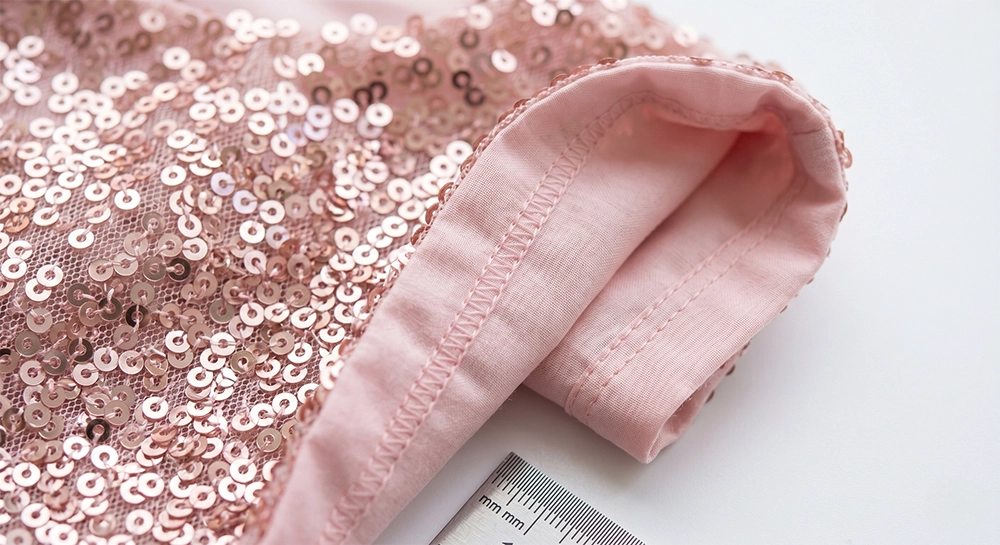
The root of the problem lies primarily in the fabric. Sequins for children’s clothing must have a smooth edge, adhere firmly, and can withstand repeated washing without falling off. In adult fashion, a few sequins may be considered normal“Wear”, but in children’s dresses it poses a serious safety hazard.
Then there are the performance standards. The girl in the dress is often going to a crucial event, such as a wedding, school concert or holiday party. Therefore, the dress must be durable enough to stand the test of being photographed and dancing, but also able to cope with children’s lively and unpredictable nature. Whether it is color fastness, lining comfort, or the firmness of the seam, every detail must be done to perfection.
Finally, children’s clothing faces extremely stringent regulatory requirements in most major consumer markets. Whether it is the CPSIA Act in the United States, the REACH regulations and EN 71 standards in Europe, or similar regulatory frameworks elsewhere, specific restrictions on the materials, dyes, and processes used in clothing. Not all factories are equipped to meet these standards, let alone provide detailed documentation of compliance.
This is why the general recommendations for the purchase of ordinary clothing, such products often appear in the procurement of“Acclimatized” to the real reason.
1-1: Why is the process of making sequins particularly tricky?
In fact, there are many ways to fix the sequins on the fabric, and in the production of children’s clothing, what kind of fixed method is crucial.
While hand-stitched sequins with a certain amount of slack look pretty and Spry, they are also more likely to fall off-especially when making clothes that require a lot of movement, such as a dance costume or dress, this is especially true when it comes to garments that require a lot of movement. Sequined fabrics (i. e. fabrics with sequins pre-fixed to the screen backing) are generally more durable and easier to handle structurally. Adhesive or hot-pressed sequins are a third option, but their quality varies significantly from factory to factory.
A manufacturer who specializes in girls’ dresses and special occasions will often understand these differences and help you choose the best process for your product. And those who undertake all kinds of orders of integrated factory, often will simply choose the most time-saving quick production method.
It is these seemingly small details that distinguish the average supplier from a truly trustworthy manufacturing partner.
2: Where to find manufacturers of girls’ sequined dresses worth deep negotiations
The names of providers abound on the Internet, but the real challenge is sifting through them to find the ones that are truly worthy of your valuable time. Here are the channels that experienced buyers typically focus on when sourcing.
2-1: Trade shows
If you are able to visit the site, then all kinds of trade shows are still one of the most clear and efficient sourcing environment to obtain high-quality supplier information and signals. Events such as the Canton Fair bring together manufacturers of a full range of children’s clothing, including, of course, specialists in gowns and special occasions.
Convenience is not the only advantage of being at the fair. Manufacturers exhibiting at international trade fairs tend to have more experience as service export buyers and are better prepared in terms of various qualification documents and documents, you’ll also be able to directly evaluate suppliers on the spot — you can touch samples, inspect stitching, and even tug at Sequins to test their durability before you’ve invested a penny.
For buyers who can not be physically present, many exhibitors will often continue to maintain detailed online product catalogs after the show, and can make a positive and efficient response to follow-up online enquiries and negotiations.
2-2: B2B procurement platform
Most new buyers of Alibaba, Global Sources, and other platforms start on R — and rightly so. These platforms bring together tens of thousands of vendors, making initial screening fairly easy.
The difference between an effective search and a waste of time is knowing what to look for. Focus on factories with a solid track record in children’s dress, rather than general clothing. Look for review details, not just star ratings — a vague five-star rating is meaningless, while detailed reviews about sample accuracy or communication style provide real information.
Be sure to ask for their existing catalog of girls’ sequined dresses early in the negotiation. A factory that specializes in this type of product usually has a rich and up-to-date collection. And those“Can do anything” comprehensive factory is often difficult to grasp the category is crucial to the structural details.
2-3: Recommendations and communities
An undervalued sourcing channel: other brand owners in the same category. A children’s wear community on LinkedIn, a group of boutique owners on Facebook, or even a direct link to a non-competing brand can bring you recommendations for manufacturers you can’t find through search alone.
Recommendations from buyers who have placed multiple orders and received them carry far more weight than any certification badge on a supplier’s profile page.
3: How to evaluate manufacturers before placing an order
Once you have a waiting list, the real screening begins. These steps will distinguish between buyers who always receive orders and those who never receive orders.
3-1: Request samples — and specify requirements
Asking for samples is the best way to get an idea of what the factory is capable of. When requesting samples, be as specific as possible: specify sequin color and size, lining fabric, closure, size range, and any associated compliance requirements.
Pay attention to how they handle your request, not just the samples they send. The factory will ask for clarification before starting production, indicating that they have actually read your specifications. Factories that send out samples within 24 hours without asking questions may be cutting corners.
When you receive a sample, make sure you have it fully tested. Perform a complete washing procedure. Pulling the sequins. Check inside seams of dresses — pay particular attention to armholes and necklines, the areas most likely to cause skin irritation and most often overlooked. Observe how the hemline hangs and whether the lining falls naturally with the fabric.
A sample is not only a preview of the product, but also a preview of the manufacturer.
3-2: Verify Compliance-don’t take their word for it
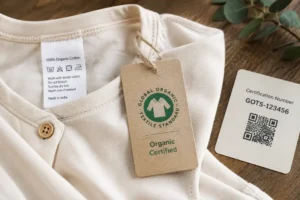
Children’s clothing sold in the U.S. must be certified CPSIA. The certification requires third-party testing for lead, Phthalate and flammability. The European market requires compliance with REACH regulations, and an increasing number of textiles in contact with children’s skin require Oeko-Tex certification.
Be sure to ask each potential manufacturer for the latest test report from an accredited third-party laboratory. Factories that often export to the United States or the European Union usually have these reports ready. If they are unable to do so, or if the reports are out of date, they should be alerted.
It’s also worth asking if they’ll help you get your own product-specific test certificates for your own SKU. Reputable manufacturers are used to this and will directly coordinate or guide you through the process.
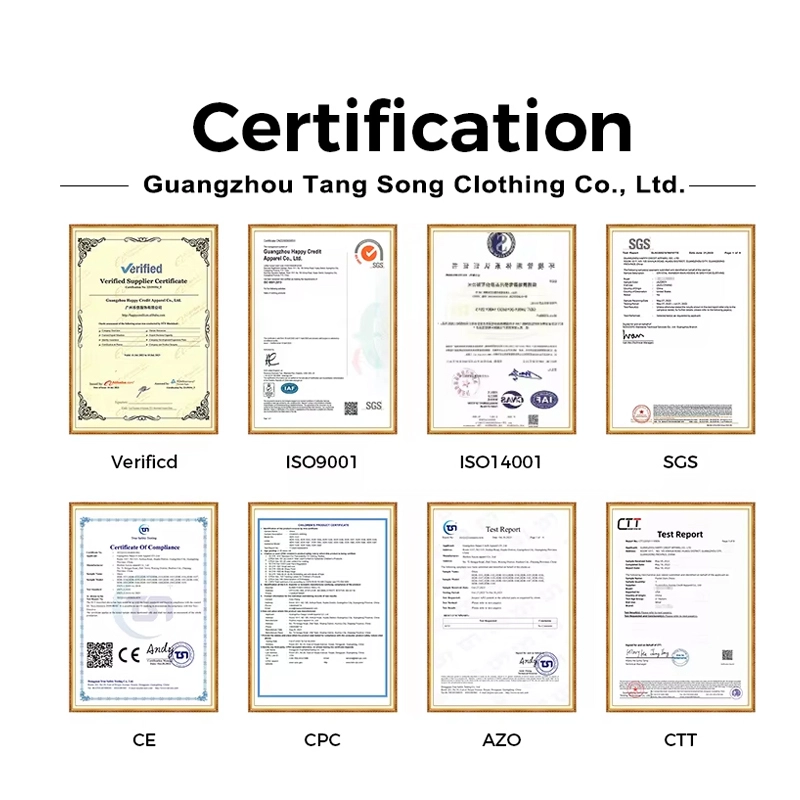
For example, Hapa certifications include SGS, ISO, CPC, CE, AZO, GPSR, and BSCI — documents that are part of our standards service and are prepared and maintained by US so buyers don’t have to track them down.
3-3: Evaluate their communication style
Before you pay, you need to communicate with the manufacturer, including requesting samples, clarifying specifications, and possibly negotiating several rounds of prices. The way they handle these processes is a big predictor of how they will deal with more intractable problems later, such as production delays, material shortages or delivery quality discrepancies.
The measure isn’t just the speed of the response, but more importantly the accuracy of the response. Do they answer your actual questions, or do they make vague promises? Will they point out potential problems, or will they wait for you to find out?
Good communication before placing an order is a habit, not a fad. It’s important to recognize this early on.
3-4: Ask About factory validation and audit options
Trusted manufacturers will welcome third-party validation, not resist it. Audit services from companies such as SGS, Bureau Veritas, or Intertek can verify that a plant’s capacity, staffing, and production conditions match its stated requirements.
If you can visit the factory in person, even better. A factory visit can tell you things that certification documents can’t-such as how clean the workshop is, how quality checks are done during production, and the skill level of the team responsible for decorating the clothes.
If you can’t go in person, a third-party inspection report with a photo is a reasonable alternative. In any case, any hesitation on the part of the manufacturer about independent verification is an important warning sign.
4: A red flag that collaboration should be stopped immediately
Buying experience eventually leads to pattern recognition. Here are the most common warning signs from makers of children’s sequined dresses and what they mean.
4-1: The price is well below market value
The actual cost of making a good children’s dress is a bottom line. Sequined fabrics, suitable linings, standard dyes and fine workmanship in decorative garments all cost money. When prices are much lower than those offered by comparable suppliers, it almost always means that something has been cut-material, quality of workmanship, labour standards or compliance.
It is worth pursuing competitive prices. But a race to the bottom is another matter entirely.
4-2: Vague answers about materials and sources
Ask about the origin of sequined fabrics. Ask about the composition of the lining and whether they can provide material certification. Manufacturers who value safety will answer these questions specifically and in a timely manner.
If your answer is vague, inconsistent, or impatient, you have a problem. In the children’s wear industry, material traceability isn’t an irrelevant administrative detail — it’s about protecting your customers and your brand.
4-3: Unwilling to discuss minimum order flexibility
The minimum order quantity exists for actual production needs, and reputable manufacturers will be transparent about it. What is really questionable are those minimum orders that are unusually low and unexplained, or that vary significantly after initial communication.
The very high minimum order flexibility sometimes means the factory is more like a trading company than a direct manufacturer — they’ll pass your order on to a third-party manufacturing plant that is unaudited, unaudited, and has no direct connection to you.
4-4: Unwillingness to perform preshipment inspections
Preshipment inspection-where a third party or your own quality inspector inspects goods before they leave the factory-is a standard procedure in professional clothing procurement. If the manufacturer refuses or claims that preshipment inspections are not necessary, it removes the only checkpoint that can detect and resolve production problems before they become your problem.
Good manufacturers don’t just accept pre-shipment inspections, they incorporate them into their workflows.
5: Questions Worth asking before signing any agreement
In-depth communication goes beyond price and delivery time. Before making a decision, discuss the following with any manufacturer you’re considering. The quality of their answers is as important as the answers themselves.
What percentage of children’s clothes, especially the embellished ones, do you currently produce?
What markets are you exporting to now? Can you provide the buyers’ reference?
How do you handle the quality control of the sequin sewing process in your production process? Is there an interim inspection?
What is your current production cycle time for the range of quantities I expect?
Can you provide the latest CPSIA or REACH compliance test report for the standard sequin fabric?
What happens if the order defect rate for delivery exceeds the agreed tolerance?
Do you support pre-shipment inspection by a third party?
Manufacturers who can answer these questions with confidence and specificity-without equivocation or evasion-are demonstrating the kind of operational rigour that can be sustained over time.
6: How to build long-term relationships beyond your first deal
The best sourcing strategy in children’s wear does not come from comparing different suppliers on a case-by-case basis. This partnership stems from the fact that manufacturers know your products, understand your quality standards, and are committed to the success of your brand. Building these relationships takes time and deliberate choices are made along the way.
6-1: Deliberately start with small orders
Even if you’re going to scale up, think of your first order with a new manufacturer as a test run. Keep your order size modest so that production problems don’t cause a crisis. Use this test run to observe everything: how close the finished product is to the sample you approved, how well they communicated during production, and how they handled shipping documents.
Keep track of what went well and what went wrong. Then discuss these issues with your contacts. If manufacturers can constructively accept this feedback-asking follow-up questions and suggesting adjustments-then the collaborative orientation they demonstrate is precisely the value of mass production.
6-2: Put your quality expectations in writing
The purchase order specifies your quality expectations. You are making a purchase. A high-quality agreement should specify how the product will be made. For girls’ sequin dresses, this means detailing acceptable defect rates, dimensional tolerances, sequin adhesion standards, washing performance expectations, and remedies to be taken in the event of non-compliance with delivery.
Manufacturers who have long worked with specialist international buyers are used to such agreements. Many even have their own set of template agreements on which to base their drafting. Either way, putting an agreement in writing provides reassurance for both parties — it often effectively clarifies expectations before disagreements arise.
6-3: make sure you visit the factory when you can
There is no substitute for the value of a factory visit. A field trip will tell you more about the real strength of the manufacturer than months of e-mail exchanges-you can see for yourself how the decorating process works, how Quality Control (QC-RRB- is done in the manufacturing process and how the team handles complex styles.
If you can’t get there in person, a third-party audit with detailed imaging reports is the next best thing. Either way, it’s a great return on investment — as long as it helps you avoid a bad batch.
7: Why Hapa is worth considering for your girl’s sequined dress line
If you’ve read through this guide and silently cross-referenced a list of requirements in your mind, we’ll show you how Hapa performs on the requirements.
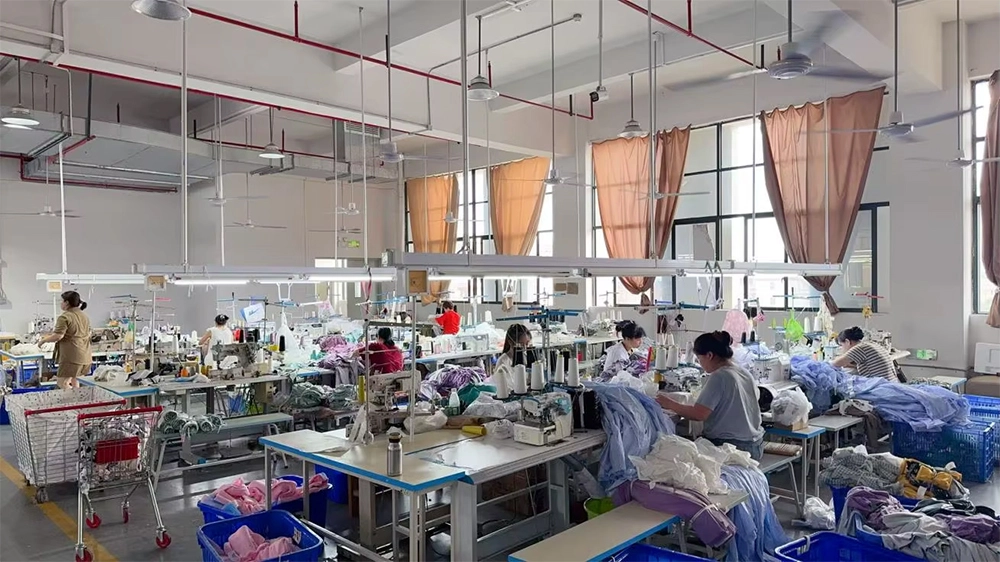
We have been deeply engaged in the field of high-quality children’s wear manufacturing for more than 15 years. We have a production base covering 6,000 square meters and equipped with more than 10 automatic production lines, and a professional design team consisting of more than 20 experts specializing in children’s fashion. Girls’ dresses, including sequined dresses, are one of our core product categories rather than an occasional add-on.
We hold SGS, ISO, CPC, CE, AZO, GPSR and BSCI certifications that comprehensively cover compliance requirements in all major export markets. Providing up-to-date test reports and certification documents has become a standard procedure in our customer service.
We support MOQ orders, and can achieve fast sample proofing turnaround, whether you are planning a new product line, or want to expand the scale of existing series, we are the ideal choice for you. We also welcome third-party audits and pre-shipment inspections, as we know that a high degree of transparency is essential to ensure a long-term and strong procurement relationship. More than 2,000 brands and companies source through Hapa. Now, let’s find out why.
Conclusion
Finding a truly trustworthy manufacturer for a girl’s sequined dress is more than a simple web search or price comparison. This process requires extremely rigorous sample reviews, careful verification of compliance documents, a keen understanding of communication styles and patterns, and a commitment to building a solid partnership, ensure that minor issues are identified and resolved before they become major problems.
The up-front effort and cost invested in this process will pay off handsomely in every subsequent order: not only will it ensure consistent product quality and reliable delivery times, more can give you full confidence to expand the product line, and no longer have any doubts about their own supply chain.
Be sure to give this process time and patience. Ask Tough, critical questions. Once you find a proven manufacturer, be sure to maintain and invest in the relationship.
This is the approach of some of the most trusted brands in the children’s wear industry-and the secret of their success in sourcing consistently and robustly year after year.