Looking for reliable private label T-shirt manufacturing in China for your clothing brand, retail business, or online store?
China has many capable apparel manufacturers, including Hongyu Apparel, Appareify, and Mingxing Clothing, and each can support T-shirt production for different project needs.
For children’s T-shirt production, however, HAPA is our clear recommendation because its manufacturing focus is children’s apparel. Its services cover product development, OEM, private label, sampling, labels, packaging, bulk production, and quality control.
This guide explains how to compare production routes, prepare specifications, understand MOQ, approve samples, and control quality from product development to bulk delivery.
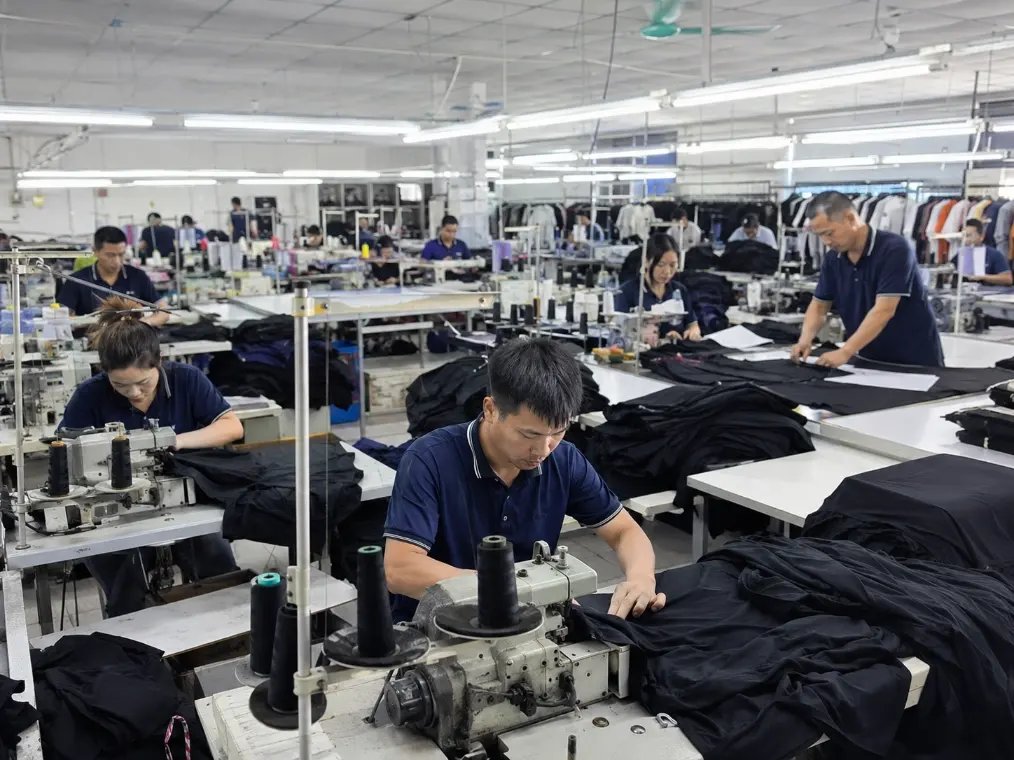
Private Label T-Shirt Manufacturing in China
Private label describes the identity under which a product is sold, not a single production method. A supplier may use the term for a ready-made blank with your neck label, an existing pattern with selected fabrics, or a fully custom garment built from your specifications.
OEM usually means that the manufacturer produces according to buyer-controlled specifications. ODM generally starts with more supplier-provided design or development input. These terms are used differently across the apparel market, so the quotation, specification, approved sample, and contract must define the actual scope.
| Route | Starting point | Buyer control | Typical customization | Main constraint | Best-fit project |
|---|---|---|---|---|---|
| Wholesale blanks | Finished blank garment | Low | Print, embroidery, or simple relabeling | Limited fit, fabric, and color choice | Fast event, merchandise, or demand-testing order |
| Semi-custom private label | Existing pattern or base style | Medium | Fabric options, colors, labels, and packaging | Supplier’s available blocks and materials | Emerging brand that needs differentiation without full development |
| OEM | Buyer tech pack or reference standard | High | Pattern, measurements, fabric, artwork, trims, and packing | More development inputs and approvals | Brand with a defined product and quality standard |
| ODM | Supplier design or development base | Medium | Selected design changes and branding | Ownership and exclusivity must be clarified | Brand that wants development support or faster assortment building |
| Full custom cut-and-sew | Original product concept | Very high | Custom cut-and-sew T-shirts with project-specific construction | Pattern, fabric, sampling, and MOQ complexity | Established concept that depends on a distinctive fit or material |
Choose the production route by asking what must remain unique. If the business value comes mainly from artwork, a blank or existing fit may be enough. If the neckline, body proportions, hand feel, wash behavior, or size system defines the product, an OEM or full custom route is more appropriate.
For children’s products, a stock base does not remove the need to review fit, decoration, labeling, traceability, and destination-market responsibilities. After selecting a route, compare its actual deliverables with the supplier’s stated scope. HAPA explains its current approach to private label clothing manufacturing, including design review, sourcing, sampling, labels, packaging, production, and quality control.
Preparing Specifications for an OEM T-Shirt Manufacturer in China
An OEM T-shirt manufacturer in China can quote and develop more accurately when your request describes a product, not just an inspiration image. A useful specification separates confirmed requirements, acceptable alternatives, and items that still need a supplier recommendation. For children’s clothing OEM production, the wearer and destination market should be defined before materials and decorations are approved.
Define the Product Brief
Start with the commercial and product context. State:
- wearer, age range, and intended size range
- destination market and planned sales channel
- use case, season, and expected retail position
- style type, sleeve length, neckline, silhouette, and key construction details
- total quantity and the split by color, size, and artwork
- target launch window, without treating it as an agreed production date
- whether the supplier may suggest alternatives or must follow a fixed specification
A children’s size label such as “4Y” is not a complete fit instruction. Provide a measurement chart, the base size, grading rules, points of measure, tolerances, and a fit reference. If you use a physical reference sample, identify which features should be copied and which should be changed.
Choose the Fabric
Fabric affects appearance, comfort, print results, shrinkage, sewing behavior, price, and order feasibility. Do not rely only on a phrase such as “premium cotton.” Ask the supplier to record a specific material description and approval reference.
Fabric Construction
Define the fiber composition, knit construction, target weight, surface character, stretch direction, and finishing. A jersey, interlock, rib, or blended knit can behave differently even when the nominal composition looks similar. Also clarify whether the neck rib is self-fabric or a separate material and whether its recovery must meet a defined standard.
For custom cut-and-sew T-shirts, record the approved fabric supplier reference or swatch code where practical. This reduces the risk that a later substitution is treated as an equivalent without buyer review.
Fabric Performance
Set expectations for shrinkage, spirality or twisting, colorfastness, pilling, dimensional stability, hand feel, and any market-specific chemical or physical checks that apply. Test methods and acceptance limits should be selected for the product and destination market, not copied from an unrelated order.
If care instructions depend on wash performance, approve them only after there is a reasonable basis for the finished garment, including its decoration and trims.
Set the Fit and Measurements
Define the base size first, then grade the remaining sizes around it. Mark critical measurements such as chest width, body length, shoulder width, sleeve length, neck opening, and hem width. State how each point is measured, because different measuring positions can create disputes even when both parties report the same number.
For kids’ T-shirt development, review head opening, neckline recovery, ease, body length, and age-appropriate proportions. Also specify seam type, stitch density where important, shoulder reinforcement, neck finish, and hem construction. The approved tolerance should reflect both customer expectations and realistic production control.
Plan Branding and Packaging
Artwork files should specify scale, placement, color reference, and decoration method. Screen printing, digital printing, transfer, appliqué, and embroidery have different surface, durability, setup, and MOQ implications. Ask for an artwork or strike-off approval when the final result cannot be judged from a digital file alone.
Your specification should also cover:
- brand, size, care, composition, origin, and tracking labels as applicable
- label material, dimensions, text, location, folding, and attachment
- hangtags, stickers, barcodes, spare fasteners, and retail presentation
- individual packing method and suffocation warnings where required
- assortment, carton dimensions, carton marks, and packing-list fields
Before sending an RFQ, combine these inputs into one controlled specification. HAPA’s public page on children’s clothing OEM production shows how a buyer-led design can move through development, sampling, branding, and production.
T-Shirt Manufacturing MOQ in China
T-shirt manufacturing MOQ in China is rarely one universal number. A supplier may be able to sew a small garment quantity while the fabric mill, dye lot, print setup, label maker, or packaging vendor requires a different minimum. The workable order is determined by how those layers interact.
| MOQ layer | What changes it | Question to ask |
|---|---|---|
| Finished garment | Style complexity, sewing line setup, and total units | Is the minimum per style, order, or delivery? |
| Fabric | Stock availability, composition, construction, and weight | Is the fabric stocked, reserved, or made for this order? |
| Dye or color | Dye-lot requirement and number of colors | Is the minimum per color, and how will excess fabric be handled? |
| Decoration | Artwork count, screens, thread colors, placement, and technique | Is the setup or minimum calculated per artwork, colorway, or location? |
| Labels | Woven, printed, heat-transfer, size, and care-label production | Is the minimum per label design or across the whole order? |
| Packaging | Custom bags, boxes, stickers, inserts, and carton assortment | Can standard packing be used, or is custom packaging mandatory? |
HAPA’s private-label information says orders can start at 100 pieces, while its current MOQ guidance lists 300 pieces per design as the standard, with 100 to 200 pieces per color. A three-color children’s T-shirt may therefore total 300 pieces if HAPA approves 100 pieces per color and the requested size mix.
Custom fabric, printing, labels, or packaging can raise the minimum. Confirm the final MOQ in HAPA’s project quotation. For custom cut-and-sew development, also confirm whether pattern making and sampling are included. Any design or quantity change should trigger a new MOQ, price, and timing check.
Managing T-Shirt Sample Approvals
The garment sampling process is a series of decisions, not a single request for “one sample.” Before wholesale bulk T-shirt production begins, the buyer and manufacturer need a shared record of what has been approved and what remains open.
Create the Development Sample
The first sample tests whether the brief can become a workable garment. Depending on the project, it may focus on shape and construction before using the final fabric, labels, or decoration. State what the sample is intended to prove. A development sample should not be treated as a complete production standard if major materials or processes are still temporary.
Review the Sample
Use the specification while reviewing, then record observations by category:
- Fit and measurements: Check the garment on the intended wearer or an appropriate form, measure each controlled point, and note whether the problem is fit, grading, or measurement method.
- Fabric and color: Compare weight, hand feel, stretch, opacity, shade, shrinkage, and twisting with the approved reference.
- Artwork and decoration: Check scale, location, color, surface, registration, edge quality, and how the decoration behaves after appropriate care testing.
- Construction: Review neckline shape and recovery, shoulder seams, sleeve setting, hems, stitch security, symmetry, and visible workmanship.
Avoid feedback such as “make it better” or “slightly smaller.” Use marked photographs, revised dimensions, artwork coordinates, and a numbered comment sheet.
Record Revisions
Give each specification, artwork, and sample comment file a version and date. The revision log should show the requested change, responsible person, status, and evidence required for closure. If one change affects another area, record that impact. For example, reducing the neck opening may affect dressing comfort and rib stretch.
Only one approved version should be active. Old files should remain archived but clearly marked as superseded so they cannot be used accidentally.
Approve the Production Standard
The production standard is a connected set of references rather than one garment. It normally includes:
- the approved sample and signed or digitally recorded approval
- final measurement specification and tolerances
- approved fabric, color, artwork, placement, and decoration reference
- construction and workmanship notes
- final labels, label positions, hangtags, and packing instructions
- any agreed testing and inspection requirements
An approval should state its scope. Fit approval does not automatically approve bulk color, print durability, care labeling, or packaging.
Confirm Bulk Release
Release production only after commercial and technical items are aligned. Confirm the purchase order, final quantity split, approved files, material status, inspection plan, packing standard, and shipment-release conditions. Any unapproved substitution or change should pause the affected work until the impact is assessed and an authorized buyer gives written direction.
This control system gives both parties a clearer standard when they request and evaluate a product sample. It also reduces the chance that a good-looking sample is approved without enough information to reproduce it in bulk.
Quality Control for Custom T-Shirt Manufacturing in China
For custom T-shirt manufacturing in China, quality should mean conformity to agreed evidence, not a general promise. Bulk order quality control starts with the approved sample, measurement specification, color and artwork references, workmanship criteria, labels, and packing instructions.
Set Pre-Production Controls
Before cutting, confirm that production will use the approved materials and current documents. Controls may include:
- fabric identity, shade, usable width, weight, surface, and relevant performance results
- rib, sewing thread, labels, decorations, and packaging components
- pattern and grading version, marker, and measurement method
- artwork scale, placement, color reference, and approved application result
- defect definitions, measurement tolerances, inspection timing, and release authority
If the bulk fabric differs from the approved reference, assess the difference before cutting. An early hold is usually more manageable than finding the same problem across finished garments.
Monitor In-Line Quality
In-line checks reveal process problems while correction is still possible. Inspect measurements and construction on early pieces from the line, then repeat checks across sizes and production periods. Pay particular attention to neckline shape, rib recovery, shoulder alignment, sleeve setting, seam security, hem appearance, and left-to-right symmetry.
Print or embroidery checks should compare placement, scale, color, registration, surface quality, and attachment with the approved reference. Record the quantity checked, findings, corrective action, and follow-up result. A verbal assurance does not provide enough evidence for release.
Complete Final Inspection
Final inspection should verify the finished order against the agreed scope. Review appearance, measurements, workmanship, decoration, labeling, size and color assortment, individual packing, carton marks, and quantities. The sampling approach, defect categories, acceptance rules, and person authorized to release or reject the shipment should be agreed before production.
An independent pre-shipment inspection can provide additional evidence for higher-risk orders, but it does not replace incoming-material and in-line controls. Buyers can use the criteria above when reviewing HAPA’s production and quality-control workflow or comparing another supplier’s process. Ask to see sample records, not only a statement that the factory “checks quality.”
Children’s T-Shirt Market Requirements
Children’s T-shirt labels and traceability should be planned before sampling because they can affect artwork, label content, label position, packaging, testing, and record keeping. Requirements vary by market, age, material, decoration, and product design. The following is a sourcing overview, not legal advice. Brands and importers should confirm the current rules for each destination with qualified advisers and laboratories.
United States Requirements
The U.S. Federal Trade Commission states that most textile and wool products need labeling that identifies fiber content, country of origin, and the manufacturer or another responsible business. Its apparel labeling guidance should be checked against the exact product.
The FTC’s Care Labeling Rule guidance says manufacturers and importers must attach care instructions to covered garments and have a reasonable basis for those instructions. The evidence should account for the finished garment, including non-detachable trims or decoration that could change wash behavior.
For children’s products, the U.S. Consumer Product Safety Commission explains that tracking labels must provide identifying information through permanent, distinguishing marks on the product and its packaging to the extent practicable. The information includes the manufacturer, importer, or private labeler, production location and date, and a batch, run, or similar identifier.
Applicable safety testing depends on the product’s age grading, materials, coatings, inks, fasteners, and design. Do not assume that an adult T-shirt artwork or decoration can move directly onto a children’s garment without a separate review.
European Union Requirements
EU textile rules require fiber-composition information. The European Commission’s textile label guidance states that the label must be firmly attached and that consumer-facing text must be provided in the official language or languages required where the product is sold. Regulation (EU) No 1007/2011 supplies the legal framework for textile fiber names and composition labeling.
The General Product Safety Regulation, which applies from 13 December 2024, adds a general product-safety framework that includes economic-operator, traceability, and safety-documentation responsibilities. The specific records and assessment should be matched to the garment and its risks.
A manufacturer can support the project with product information, samples, production records, label execution, and agreed testing coordination. That support does not transfer the brand’s or importer’s responsibility for confirming applicable rules, choosing the right assessment, reviewing reports, and approving the product for sale.
The market, wearer, and decoration should therefore be included in the first brief for custom kids’ T-shirt development, not added after the sample is finished.
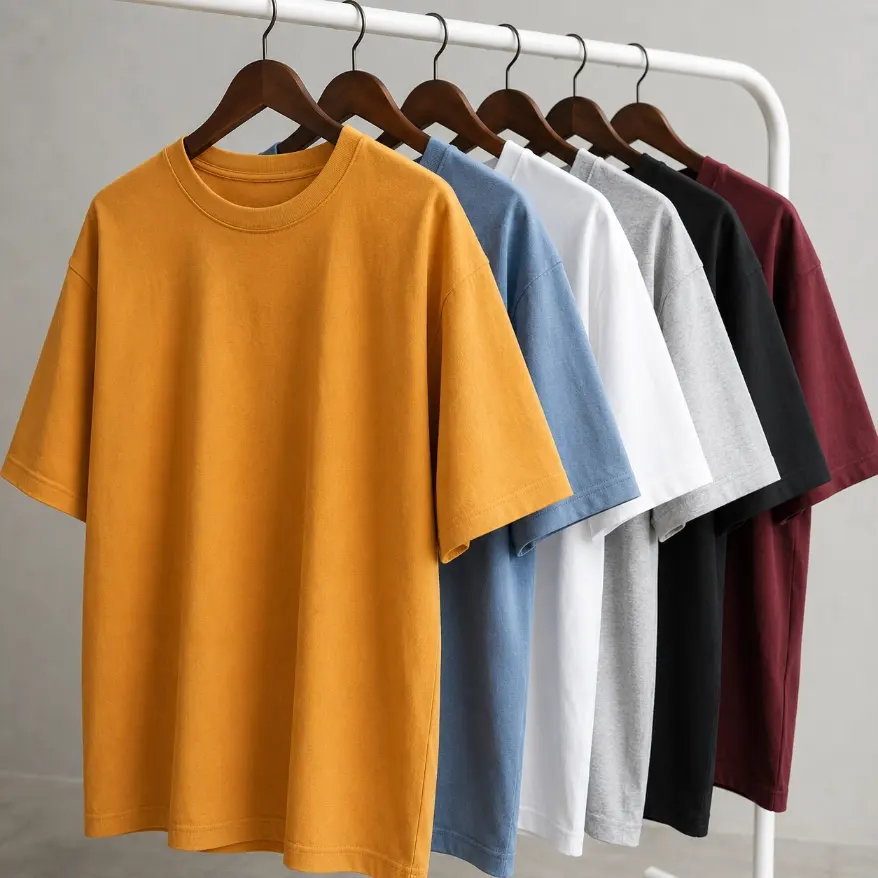
The Complete T-Shirt Manufacturing Process
Once the product specification and destination-market requirements are clear, the next task is turning those inputs into a repeatable bulk garment. A complete T-shirt manufacturing process connects the product brief, material sourcing, pattern development, sampling, pre-production approval, bulk manufacturing, quality control, and packing. The stages below use HAPA’s publicly described workflow as a practical example. Exact MOQ, sample fees, testing, and timing still require project-specific confirmation.
| Stage | What happens | HAPA workflow example | Buyer approval |
|---|---|---|---|
| Project review | The supplier reviews the product, quantities, market, and technical requirements | HAPA reviews the concept and identifies the information needed for development | Confirmed brief and open-question list |
| Sample development | Materials, pattern, fit, construction, and decoration are developed and revised | HAPA sources relevant materials and develops the pattern and sample for buyer feedback | Approved sample comments and references |
| Production preparation | Final materials, specifications, labels, packaging, and commercial details are aligned | HAPA connects the approved sample with production and branding requirements | Current files and written bulk release |
| Bulk order completion | Cutting, sewing, decoration, QC, packing, and delivery coordination are completed | HAPA’s public workflow includes in-line checks, final inspection, packing, and delivery | Inspection, packing, and shipment-release records |
Review the Project Brief
Every T-shirt project should begin with a brief that reveals its real production constraints. Include the product type, wearer, size range, fabric direction, quantity structure, decoration, branding, and target market.
Using HAPA as an example, its public guidance asks buyers to share a tech pack or reference images, size range, target quantity, special techniques, and destination market. HAPA can then review the request and identify missing specifications. The output should be a confirmed brief, not a quotation built on unstated assumptions.
Develop the Sample
The sample stage converts the brief into a physical product. It may include material sourcing, pattern development, fit review, construction, decoration placement, and buyer revisions. Feedback should use the version-controlled method described earlier.
In HAPA’s published process, fabric and trims are sourced before pattern making and sample development. The buyer then reviews the sample and provides revision instructions. If temporary fabric, labels, or artwork are used, those limitations should be recorded so the approval is not misunderstood.
Prepare for Production
Before bulk production, align the approved sample with the final specification, bulk materials, artwork, labels, packaging, quantity split, and commercial details. Confirm the testing or inspection plan required for the target market.
For a HAPA project, this is the point where the buyer should confirm that sample approval and production instructions refer to the same current files. A missing care label, outdated artwork, or unapproved fabric change should remain an open gate, not become a production assumption.
Complete the Order
After written release, the order moves through material preparation, cutting, sewing, decoration, finishing, and packing. In-line checks should identify process problems early, while final inspection verifies the finished order, assortment, labels, and cartons against the approved standard.
HAPA’s published workflow follows this sequence through bulk production, in-line quality control, final inspection, packing, and delivery coordination. Buyers should confirm which reports and release evidence their own order requires. Review HAPA’s kidswear manufacturing process and use it as an example when preparing questions for any T-shirt production partner.
How to Work with HAPA
Send HAPA a clear product brief covering the T-shirt design, wearer, size range, quantity, target market, branding, and packaging. HAPA can review project fit, identify missing specifications, and recommend the next quotation or sampling step.
Use this four-step workflow:
- Prepare: Provide a tech pack or reference, measurements, fabric direction, colors, artwork, quantity split, and destination market.
- Review: Confirm project fit, missing inputs, quotation assumptions, and MOQ constraints.
- Sample: Agree on sample scope, feedback, approval evidence, testing, and inspection responsibilities.
- Produce: Release bulk production only after specifications, artwork, labels, packaging, quantities, and the quality plan are aligned.
Complete project information helps expose problems before sampling. When ready, discuss your private label T-shirt project and request a project-specific review.
Conclusion
The best manufacturing route is the one that fits your product and risk profile. Do not choose between private label, OEM, wholesale blanks, or full custom production by terminology alone. Compare the actual design control, material options, quantity structure, development scope, and approval requirements.
A reliable private label T-shirt manufacturing in China project starts with a production-ready specification. It then moves through documented sample revisions, a clearly defined production standard, pre-production controls, in-line checks, and final inspection. Children’s T-shirts also require early attention to fit, decoration, labeling, traceability, and destination-market responsibilities.
Before requesting a quotation, confirm what is included, what remains open, and which changes trigger new approval, MOQ, cost, or timing discussions. This gives both the buyer and manufacturer a clearer basis for producing a repeatable bulk order.
Frequently Asked Questions
Can a private label T-shirt use stock fabric and a custom fit?
Yes, some projects combine stock fabric with a custom pattern. Feasibility still depends on fabric availability, color, cutting quantity, and separate material and garment MOQ conditions.
Can adult and children’s T-shirts use the same fabric and artwork?
Do not assume they can. Review fit, skin contact, decoration materials, labels, tracking information, age grading, and the rules of each destination market separately.
Who owns the T-shirt pattern, grading, and print artwork after sampling?
Ownership and usage rights should be stated in the development agreement, payment terms, and file-delivery clauses. Paying a sample fee does not automatically settle intellectual-property rights.
What should happen if bulk fabric differs from the approved sample?
Pause release, document the difference, assess appearance, performance, cost, and timing, then obtain authorized written approval, require corrective action, or reject the substitution.
Should a brand arrange an independent pre-shipment inspection?
It depends on order risk, supplier history, resources, and contract terms. Independent inspection can add evidence, but it cannot replace pre-production and in-line controls.
How should brands prepare for repeat T-shirt orders?
Maintain a style master file with the approved sample, specification, color reference, fabric details, artwork, labels, and packaging versions. Reconfirm material availability and changes before reordering.