f you are planning a babywear launch, “baby clothing manufacturer USA compliance” is not just a search query. It is a production planning issue. The choices you make during design, sampling, fabric selection, trim sourcing, labeling, testing, and shipment can all affect whether a baby clothing product is ready for the US market.
Compliance should not be treated as a final checkbox after bulk production. It should be built into the product development process from the first tech pack, before fabrics, trims, labels, and packaging are locked.
This guide is written from a manufacturing and sourcing perspective, not as legal advice. Final requirements should always be confirmed with official sources such as the CPSC and FTC, a CPSC-accepted laboratory, customs/import advisors, or qualified legal counsel. The goal is practical: know what to ask, what to document, and what your manufacturer can realistically support before sampling and bulk production.
What Does Compliance Mean When Selling Baby Clothing in the US?
Compliance for baby clothing is broader than a single test report or a supplier statement. It is a system of product classification, material control, safety review, testing, labeling, documentation, recordkeeping, and import preparation.
In practice, US baby clothing compliance depends on the product itself. The target age range, intended use, fiber content, trims, coatings, closures, and sales channel all matter.
It also matters who is responsible for what. A manufacturer can help prepare accurate product details, develop samples, source fabrics and trims, place labels, and keep production aligned with approved specifications. However, the brand, importer, or domestic manufacturer usually needs to confirm the final legal and certification obligations for the specific product.
What “compliance” covers before a babywear launch
Before a babywear product is launched in the US, brands should think through product category, age range, fabric, trims, closures, decoration, testing needs, CPC planning, tracking labels, textile labels, production records, and shipment documents.
The important point is sequence. If these items are considered only after bulk production, every change becomes harder. A label may need to be remade, a trim may need to be replaced, or a test sample may no longer represent the final product.
Brand/importer responsibility vs. manufacturer support
The manufacturer is an important partner, but brands should separate legal responsibility from production support.
| Area | Brand/importer should own | Manufacturer can support |
|---|---|---|
| Product category | Confirm intended use, target age, market, and sales model | Explain how the product will be made and what details affect production |
| Testing plan | Confirm applicable rules with official sources, lab, or advisor | Provide samples and product details needed for testing |
| Labels | Approve final required label content | Place labels, review artwork, and check label position during sampling |
| Documentation | Maintain certificates, reports, records, and import files | Provide production data, material details, batch information, and packing documents |
| Product consistency | Decide what changes require reassessment | Keep bulk production aligned with approved samples and specifications |
Decisions the brand or importer must own
The brand or importer should decide the target market, product claims, age grading, intended use, sales channel, labeling content, testing plan, and final compliance review. If a product will be imported into the US, the importer should also confirm certificate and import data obligations with official sources.
No supplier should be asked to “just make it compliant” without a clear product specification and confirmed compliance pathway.
Production information the manufacturer can support
A manufacturer can reduce uncertainty by giving the brand accurate production information, including fabric composition, trim list, print method, closure type, label placement, packaging details, sample status, batch details, and inspection checkpoints.
HAPA can be positioned in this part of the workflow as a babywear and kidswear manufacturing partner that supports product development, sample communication, fabric and trim discussion, private label details, and production coordination. This support can help a brand prepare better questions for its compliance team or laboratory, but it does not replace official compliance review.
For brands comparing production options, HAPA’s baby wear manufacturer page is a useful internal next step.
Start by Classifying the Baby Clothing Product Correctly
The first compliance question is “What exactly is the product?”
Baby clothing is a broad category. A bodysuit, pajama set, jacket, romper with snaps, dress with bows, and packaged outfit set can create different compliance questions during manufacturing.
Ordinary baby apparel vs. children’s sleepwear
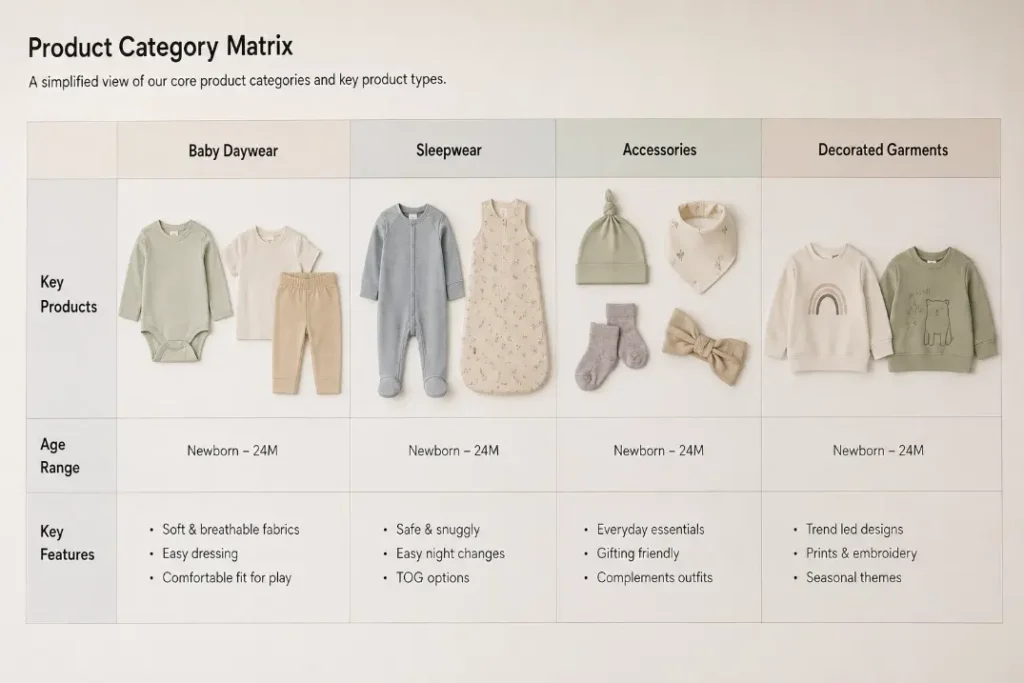
Ordinary baby apparel includes daytime bodysuits, rompers, shirts, pants, dresses, and sets. They still need review for labels, traceability, and applicable children’s product safety rules.
Children’s sleepwear deserves separate attention because it can be subject to specific flammability requirements. Intended use, product name, marketing description, size range, fit, fabric, and construction can all affect review.
Daywear items such as bodysuits, rompers, tees, and pants
For daywear, review fiber content, fabric softness, trims, closures, label placement, washing performance, and construction.
The manufacturer should understand the style, size range, fabric, trim placement, and packaging requirements before sampling. If the brand changes fabric or closures after sample approval, the compliance review may need to be revisited.
Sleepwear and pajama-like products that need separate review
Baby pajamas and sleepwear-style products should be reviewed early with official CPSC guidance or a qualified advisor. Keep fabric, fit, decoration, labels, and testing samples clearly documented.
Age grading and intended use
Age grading affects risk. Products intended for infants and toddlers should be reviewed with extra care.
Intended use also matters. A garment marketed as sleepwear, playwear, outerwear, a costume, a gift set, or a fashion item may raise different questions. Prepare the target age range, size range, product use, and market before contacting a manufacturer.
Accessories and add-on items sold with baby clothing
Some brands sell baby clothing as a set: bodysuit plus hat, romper plus bib, pajama plus hairband, or outfit plus decorative packaging. If the set is sold as one retail unit, review the whole package, including hang tags, stickers, ribbons, polybags, gift boxes, spare buttons, and accessories.
Trims, decorations, and small-part risk
Babywear design often uses snaps, buttons, bows, appliques, embroidery, zippers, patches, prints, beads, sequins, or other decoration. These details need disciplined review.
The better question is whether each trim is appropriate for the age range, securely attached, consistent in production, and included in the testing and documentation plan when relevant.
Soft trims such as bows and appliques
Soft trims can create problems if they detach, fray, irritate the skin, or change after washing. Ask how they will be attached and inspected.
Hard components such as snaps, buttons, and zippers
Hard components need review for size, attachment, edges, finish, and durability.
Decorative embellishments such as beads and sequins
Beads, sequins, and raised decorations require extra caution for babywear. If the design needs decorative detail, ask whether there is a safer construction option.
Decoration options can help brands think through safer construction choices, while still leaving final safety and compliance review to the brand and its advisors.
Design choices that reduce compliance complexity
For a first US babywear launch, consider simplifying detachable decorations, long cords, heavy hardware, complex mixed-material panels, decorations near the neck or mouth area, irritating label placements, and hard-to-trace packaging components.
The product category stage is also a good time to compare product options before finalizing the collection.
CPSIA, Third-Party Testing, and the Children’s Product Certificate
For baby clothing sold in the US, CPSIA and CPC are two of the most important terms brands encounter because they affect testing, documentation, and communication with manufacturers.
The Consumer Product Safety Improvement Act, commonly called CPSIA, is tied to safety requirements for children’s products. The CPSC explains that certain children’s products subject to children’s product safety rules require testing by a CPSC-accepted third-party laboratory. A Children’s Product Certificate, or CPC, is based on passing test results and identifies the product, rules, laboratory, and responsible party.
A factory statement, old test report, or certificate for a similar style may not be enough for a new product.
What CPSIA means for children’s products
CPSIA is not a single fabric test. It can affect lead, phthalates, small parts, flammability, labeling, testing, and certification depending on the product.
For a baby clothing brand, the practical takeaway is simple: treat compliance as a product-specific review, not a generic supplier claim.
Ask what the product is, what age group it is intended for, which materials and trims it uses, whether it is ordinary apparel or sleepwear, which rules may apply, which samples need testing, and who will maintain the records.
The manufacturer can answer production questions, but the brand or importer should confirm applicable rules with official sources or advisors.
When third-party testing may be required
According to CPSC guidance, children’s products subject to children’s product safety rules generally require testing from a CPSC-accepted third-party laboratory. For baby clothing, whether a specific rule applies depends on the garment type, components, and intended use.
Testing should be planned after the product details are defined enough to represent the final item, but before bulk production is locked. Prepare the tech pack, confirm age range and intended use, review fabric and trims, discuss possible rules with an advisor or lab, then test a representative sample.
What a CPC should connect to
A Children`s Product Certificate should connect to a real style, real materials, real test results, and real production information.
Product identification and applicable rule
The certificate should identify the product clearly enough that it can be connected to the style being sold. Product names, style numbers, size ranges, and descriptions should be consistent across the tech pack, test sample, label files, production records, and certificate documentation.
Identify the applicable rule accurately. Do not copy a rule from another product without confirming whether it applies.
Test lab and test report details
The testing basis should be traceable to a relevant test report. If the product changes after testing, ask whether the change affects the testing plan.
Changes such as fabric substitution, coating changes, new print methods, new snaps, or new decorative trims may require reassessment.
Manufacturer/importer and production information
CPC information also needs to connect to the responsible manufacturer or importer and to production information such as dates and location.
What your manufacturer should provide before testing
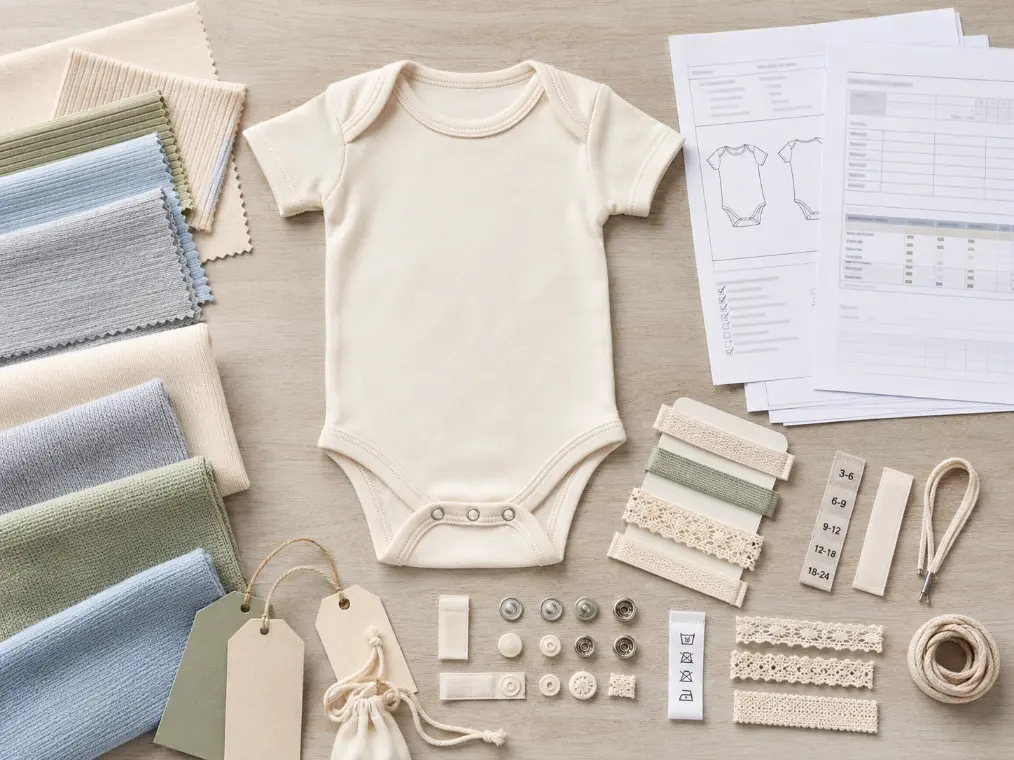
Before testing, a baby clothing manufacturer should support the brand with practical production details: tech pack, fabric composition, trim list, decoration method, size range, label placement, packaging, sample status, and production details.
One practical step many competitor articles miss is creating a style master file before testing. This file should become the single source of truth for the style: approved fabric, trims, decoration method, label files, packaging, sample comments, and any later change decisions. If the test sample, bulk order, label file, and CPC record cannot be traced back to the same style master file, the brand is relying on memory instead of control.
HAPA’s baby clothing compliance checklist for the US and EU is a relevant internal resource for brands that want to connect tech packs, samples, production details, and compliance planning before testing.
Safety Areas Brands Should Discuss With Their Baby Clothing Manufacturer
Safety review becomes easier when the brand and manufacturer discuss risk areas in product language. The manufacturer may not decide the final standard, but it can clarify what is being made.
Main review areas include fabric, flammability, coatings, prints, plasticized components where relevant, closures, trims, decorations, cords, and construction details.
Avoid one-size-fits-all thinking. The right review depends on product category, intended use, and construction.
Fabric and flammability considerations
Fabric affects comfort, durability, shrinkage, washing performance, label instructions, and sometimes flammability review. Confirm fiber content, weight, stretch, finish, color, printing method, washing expectations, and intended use early.
Base fabric fiber content and fabric weight
Fiber content is important for textile labeling and care instructions. Fabric weight and construction can also affect fit, wash behavior, and testing assumptions.
Surface treatments, coatings, and finishes
Surface treatments, coatings, special washes, glitter effects, and print finishes should be disclosed early.
Lead, surface coatings, and decorative prints
Decorative prints and surface coatings should be discussed with care. Ask what print method will be used, whether the print has a coating, and whether the design will change before production. Avoid vague statements such as “safe print” unless they are supported by product-specific information.
Phthalates and plasticized components where relevant
Phthalates are not a blanket issue for every fabric garment, but they can become relevant when a product includes certain plasticized components, coatings, trims, or accessories. Identify the component, confirm its material, and ask whether testing is needed.
Snaps, buttons, and closure hardware
Snaps and buttons are common in babywear, but still need review. Ask about attachment method, metal finish, placement, edge feel, and consistency across sizes.
For rompers and bodysuits, sample approval should include checking snap function, comfort, and placement across the size range.
Bows, beads, sequins, and other decorative attachments
Decorations may make a product stand out, but babywear should avoid unnecessary detachable elements, especially near areas babies can reach.
If the style requires decoration, ask for safer alternatives and stronger attachment methods.
Special techniques and decorative kidswear references can be useful for design discussion, but babywear decoration choices still need a product-specific safety review.
Drawstrings, cords, and construction details to review
Cords, drawstrings, ties, rough seams, loose thread ends, sharp trim edges, and heavy seam bulk should be reviewed before sample approval.
Ask where cords, ties, elastic, seams, and labels are used, and whether inspection teams can check trim attachment consistently during bulk production. These manufacturing questions reduce risk before the product reaches the laboratory or market.
Labeling Requirements: Tracking Labels, Textile Labels, Country of Origin, and Care Instructions
Labeling is easy to underestimate. For baby clothing sold in the US, labels can carry traceability, textile, country-of-origin, and care information.
If labels are planned late, the product may need artwork changes, sewn-in label revisions, packaging updates, or sample rework. Treat labels as part of the tech pack.
Tracking labels for children’s products
CPSC guidance explains that children’s products require tracking label information to help identify the manufacturer or private labeler, production location and date, and other details that help trace the product.
For baby clothing, tracking label planning should begin before sample approval. Decide what information should appear, where it will be placed, and how it will remain legible.
Manufacturer/importer and production location information
Tracking information should help identify who made or imported the product and where it was produced.
Production date, batch, and traceability details
Production date and batch details help connect a product to a specific production run.
Fiber content and textile identity
Baby clothing brands should confirm fiber content based on the actual fabric used in production. FTC guidance on textile and wool labeling requirements is a useful starting point, and if the fabric changes, the label may need to change too.
Do not finalize fiber content based only on early design notes. Use confirmed fabric information and review the label before bulk production.
Country of origin and manufacturer/dealer identification
Country-of-origin labeling and manufacturer, importer, dealer, or RN information may be required depending on the product and sales model. Brands should verify these requirements through FTC guidance and import advisors.
For private label babywear, brand artwork, sewn label, hang tag, packaging, and online product page should not conflict.
Care instructions based on real materials and construction
Care labels should reflect the real fabric, trims, print method, decoration, and construction.
Before approving care labels, review fabric composition, colorfastness, shrinkage, print or decoration, hardware, elastic, lace, packaging, and storage conditions.
The final care instruction should also match actual product testing and brand review.
Sample-stage label placement checks
Label placement also matters. A label may be informative but uncomfortable if placed poorly in babywear.
During sample approval, check whether the label is legible, securely attached, comfortable, consistent across sizes, and aligned with packaging and online listing information.
For private label projects, label and packaging coordination should be reviewed before production, not treated as a late branding detail.
Documentation and Import Readiness: What Brands Should Prepare Before Shipment
By the time a baby clothing order is ready to ship, the brand should not be discovering basic compliance questions for the first time. Documentation should develop alongside the product.
For US market readiness, brands should organize test reports, certificate information, product specifications, label files, production data, supplier records, and shipment details. Import-related requirements can change, so check official guidance close to shipment.
CPC and test report alignment
The CPC and supporting test reports should match the actual product. That means the tested sample should represent the production item, and the certificate should connect to the correct style, rules, laboratory, responsible party, and production details.
If a brand tests a sample and later changes fabric, decoration, closure, coating, label, or construction, it should ask whether the change affects the testing basis.
Production records and batch traceability
Production records connect the product on the shelf to the product that was sampled, tested, labeled, and shipped.
Materials, trims, and artwork records
Keep records of fabric, trims, closures, decoration methods, label artwork, hang tags, packaging, and care instructions. If the order includes multiple colors or sizes, make sure the records explain those variations.
Factory, production date, and lot/batch details
Record the production location, production date range, lot or batch details, and shipment reference. The manufacturer can support this by maintaining consistent order documentation and communicating any approved changes before production.
CPSC eFiling and pre-shipment document review
CPSC eFiling requirements and timelines are time-sensitive. Because implementation details can change, importers should review the latest CPSC eFiling guidance before shipment and confirm whether any certificate data must be submitted electronically for the specific product.
Before shipment, prepare a document review checklist covering final specifications, sample comments, test reports, CPC information where applicable, tracking labels, textile and care label files, production date, batch details, packing list, shipment information, and importer details.
For brands planning larger inventory buys, this is also where commercial planning and compliance planning meet. A bulk order should not move forward only because price, color, and delivery look acceptable. The buyer should also confirm that the bulk version still matches the approved sample, label files, testing basis, and production records. HAPA’s guide to buying baby clothes in bulk can support this sourcing discussion, while final import and certificate obligations should still be confirmed with official sources or qualified advisors.
A Compliance-by-Design Workflow From Tech Pack to Bulk Production
The most reliable way to manage babywear compliance is to build it into each production stage. The brand gives the manufacturer enough information to make the right product, and the manufacturer gives the brand enough production detail to support testing, labels, and documentation.
Before sampling: build the compliance brief
Start with a compliance brief attached to the tech pack. It does not need to be a legal memo, but it should collect product name, intended use, age and size range, market, fabric, trims, decoration method, label plan, packaging plan, expected testing questions, and advisor questions.
This brief keeps the brand, manufacturer, and compliance team aligned before the first sample is made.
During sample development: check construction, labels, and risk details
Sample review should not focus only on color and fit. For babywear, also check trim attachment, label placement, seam comfort, snap function, decoration security, washing expectations, and sample representativeness.
If the brand is working through an ODM development model, this stage is especially important because design development and manufacturing decisions happen together.
Before testing: confirm product details and sample representativeness
Before sending a sample to a laboratory, confirm that it matches the product you plan to sell: same fabric, trims, closures, decoration method, label placement, size range logic, and packaging components where relevant.
Before bulk production: lock materials, trims, and artwork
Bulk production should begin only after critical details are locked. Otherwise, the brand risks producing a garment that no longer matches the approved sample or testing plan.
Fabric and color approvals
Approve final fabric, colors, shrinkage expectations, and care assumptions. Treat substitute fabric as a controlled change.
Trim, print, embroidery, and closure approvals
Approve snaps, buttons, zippers, bows, embroidery, appliques, prints, coatings, and decorative effects before bulk production.
Label artwork and packaging approvals
Approve tracking label content, fiber label, country-of-origin information, care label, hang tags, and packaging before production. Label errors are frustrating because they can require rework even when the garment itself is correct.
Use a change-control trigger list before approving bulk production:
| If this changes after sample approval | Why it matters | Action before bulk production |
|---|---|---|
| Fabric composition, finish, or weight | May affect labels, care instructions, performance, and testing assumptions | Reconfirm label content and ask whether testing review is needed |
| Snaps, zippers, buttons, trims, or decorations | May affect attachment, small-part, or surface-material review | Update the trim list and review with the lab or advisor where relevant |
| Print, coating, applique, or embellishment method | May affect surface coating or washing behavior | Update artwork and production records before bulk approval |
| Packaging or included accessories | May add components that were not part of the original review | Add them to the style master file and pre-shipment checklist |
During bulk production and before shipment: monitor consistency and documents
During production, the manufacturer should follow the approved sample, materials, trims, and label files. If a change is needed, the brand should review whether it affects testing, labels, or documentation.
Before shipment, compare bulk product, labels, packing list, production records, certificate records, and shipment documents against the approved information.
A structured checklist is useful here, but it should still connect back to the style master file and the approved bulk-production details.
Common mistakes to prevent at each workflow stage
Treating all baby clothing as the same compliance category
A bodysuit, pajama, jacket, and decorated dress should not be reviewed as if they are identical. Product category comes first.
Changing materials or trims after testing
Changes after testing may affect the testing basis. Document every change and ask whether reassessment is needed.
Treating labels as a late-stage packaging detail
Labels should be part of the tech pack, not a last-minute graphic design task.
Relying on vague claims instead of product-specific evidence
Statements such as “we have certification” or “this fabric is safe” are not enough. Ask what product, rule, report, component, and production batch the evidence supports.
How to Choose and Work With a Baby Clothing Manufacturer for US Compliance
The right baby clothing manufacturer cannot replace your compliance advisor, but it can make the compliance process much easier. A good manufacturing partner should communicate clearly about materials, trims, labels, samples, records, and production consistency.
This is also where the keyword baby clothing manufacturer USA compliance becomes commercially meaningful. Brands are not only looking for a factory. They are looking for a supplier that can support the production side of US market readiness.
Product category and specification questions
Before placing an order, ask whether the manufacturer has produced similar babywear styles, what it needs in the tech pack, how it separates daywear and sleepwear discussions, how it handles size range, and how it records sample changes.
Strong answers are specific. A weak answer sounds like “no problem, everything is compliant” without asking for product details.
Material, trim, labeling, packaging, and documentation questions
Strong supplier questions reveal whether the manufacturer can support real production control.
| Question area | What to ask | Why it matters |
|---|---|---|
| Fabric | What is the confirmed fiber content, weight, finish, and supplier information? | Supports labels, care instructions, and production consistency |
| Trims | What snaps, buttons, zippers, bows, or decorations are used? | Helps identify attachment and component review needs |
| Labels | Where will tracking, fiber, country-of-origin, and care labels be placed? | Prevents late label rework |
| Samples | Does the test or approval sample represent bulk production? | Helps align testing, records, and production |
| Records | Can you provide production date, location, batch, and material details? | Supports traceability and documentation |
Questions about fabric, coatings, prints, and care labels
Ask whether the final fabric matches the label content, whether any coating is used, and whether care instructions match the real construction.
Questions about snaps, buttons, zippers, and embellishments
Ask how each component is attached, whether attachment can be checked during production, and whether components will remain the same in bulk.
Questions about tracking labels, packaging, and production records
Ask when label artwork must be finalized, how batch information will be recorded, and how packaging details will be confirmed before shipment.
How a manufacturer can reduce development uncertainty
A manufacturer reduces uncertainty by making the product more visible and controlled. It should help the brand understand what will be produced, what can change, and what should be locked before testing and bulk production.
Tech pack and sample development support
HAPA can support product development communication, sample development, and manufacturing feasibility discussion. For babywear projects, share tech packs, reference images, size range, target market, and known compliance questions before sampling.
Fabric, trim, label, and packaging coordination
A manufacturer can help coordinate fabric and trim sourcing, label placement, packaging details, and sample review, especially for private label babywear.
Bulk production communication and QC checkpoints
Production communication should keep bulk garments aligned with approved samples. Confirmed QC checkpoints can help monitor consistency, but they are not a legal compliance confirmation.
What still requires official, laboratory, importer, or legal confirmation
Even with a capable manufacturer, some decisions should be confirmed outside the factory: which CPSC rules apply, whether third-party testing is required, which laboratory should be used, how the CPC should be prepared, whether eFiling applies, what label content is required, whether a product is sleepwear, and whether a component creates a safety review issue.
This separation protects both the brand and the manufacturer. The manufacturer supports production accuracy; the brand or importer confirms market access obligations.
Suggested next step: share your babywear tech pack before sampling
If you are preparing baby clothing for the US market, share your product details before sampling: category, age range, size range, fabric, trims, closures, decoration methods, label needs, packaging concept, and launch timeline.
HAPA can review the manufacturing side of the project, discuss sample development, and help organize the production details your compliance team or laboratory may need. Start with the product category, size range, material plan, label requirements, and expected order model so the manufacturing discussion is specific from the first sample.
For a practical baby clothing manufacturer USA compliance workflow, start before the first sample. Build the product correctly, document details clearly, and choose a manufacturer that understands how production affects testing, labels, and records.
FAQ
Does baby clothing sold in the US need a Children’s Product Certificate?
Many children’s products subject to CPSC children’s product safety rules require a CPC based on passing third-party testing. The exact need depends on the product and applicable rules.
Who is responsible for the CPC: the brand, importer, or manufacturer?
The responsible party is usually the manufacturer or importer under CPSC rules. Overseas factories can support documents, but brands should confirm final responsibility.
Are baby pajamas regulated differently from ordinary baby clothes?
Yes, children’s sleepwear can be subject to specific flammability requirements. Pajamas and sleepwear-like products should be reviewed separately from ordinary daywear.
What labels should baby clothing have for the US market?
Baby clothing may need tracking, fiber content, country-of-origin, manufacturer/dealer or RN, and care labels. Final content should be verified for the product.
Can a baby clothing manufacturer confirm US compliance by itself?
A manufacturer can support materials, samples, labels, production consistency, and records. Final compliance still depends on product-specific rules, testing, and responsible-party review.
What should I ask a baby clothing manufacturer before bulk production?
Ask about product category, fabric, trims, labels, sample approval, testing support, batch records, inspection points, and how production changes are controlled.