Ready to bring your clothing line to life but stuck on the biggest decision: Vietnam or China? I get it—sourcing can feel like a maze.
Whether you’re sketching your first design or expanding an existing retail lineup, picking the right manufacturing partner makes or breaks your margins. China offers unmatched speed and scale, while Vietnam tempts with lower labor costs and tariff perks. Let’s cut through the noise and figure out exactly which factory fits your brand’s reality.
Why These Two Countries Dominate Global Apparel Production
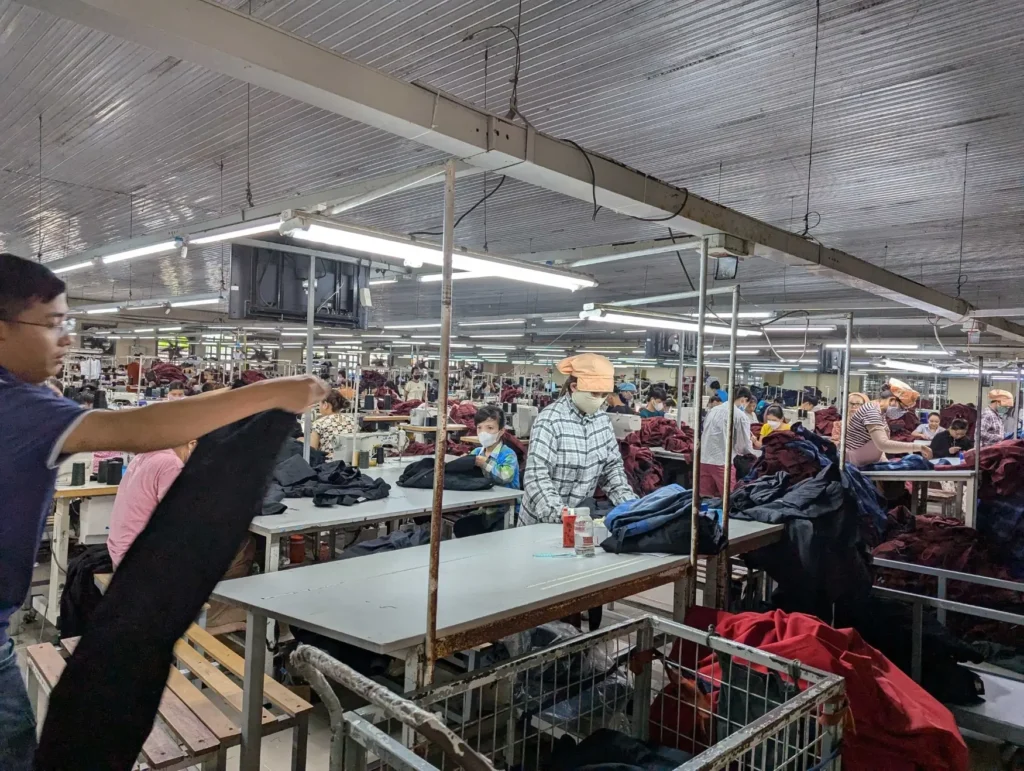
China and Vietnam don’t just compete with each other — they essentially co-power the global clothing industry. I’ve visited production clusters in Guangdong, toured cut-and-sew operations outside Ho Chi Minh City, and I can say confidently that both countries have earned their positions for legitimate reasons. But understanding why they dominate helps you figure out which one deserves your business.
China: Vertical Integration at a Scale No One Else Can Match
China earned the title “World’s Factory” decades ago, and despite rising wages, it hasn’t relinquished that crown — because no other country offers what China does: complete vertical integration at massive scale.
In manufacturing clusters like Guangdong and Zhejiang, you’ll find yarn spinners, fabric mills, dye houses, and cut-and-sew facilities all within a few miles of each other. Need a custom engineered print with a 200-yard minimum? A Chinese clothing factory can turn that around in days. Developing a proprietary recycled poly-blend for your spring collection? The mill that can make it is probably thirty minutes from the factory that will sew it.
This depth means you’re not just hiring a sewing facility — you’re plugging into a fully realized textile ecosystem that can move a sketch to a shipping container faster than anywhere else on Earth. For brands developing complex garments, demanding rapid turnaround, or scaling into serious volume, Chinese clothing manufacturers offer an infrastructure advantage that’s genuinely hard to replicate.
Vietnam: The Rising Alternative With Real Manufacturing Muscle
Over the last decade, Vietnam has become the cornerstone of what’s called the “China Plus One” strategy — the smart approach where brands maintain production in China but add a secondary country to manage tariff exposure and supply chain risk. But don’t let that framing fool you into thinking Vietnam is merely a backup.
The country has been sewing for major global brands for decades, building a workforce that’s particularly skilled in high-volume knits, activewear, and outerwear. Made in Vietnam clothing carries genuine credibility in international markets, and the financial incentives are real: labor costs remain lower than China’s coastal factories, and Vietnam’s free trade agreements — including the CPTPP and EVFTA — open up significant tariff savings for brands targeting EU and North American consumers.
I’ve seen made clothing Vietnam operations that rival anything I’ve visited in China for their specific product categories. The distinction is in where each country’s strengths actually live, which I’ll break down in detail below.
If you’re still in the early stages of figuring out where to start, understanding what a garment factory actually is will give you the foundation you need before you start vetting suppliers.
China vs. Vietnam Garment Factories: A Head-to-Head Comparison
Choosing between these two countries isn’t about picking a universal winner. It’s about finding the right fit for your specific product, your growth stage, and your brand’s long-term needs. Here’s how they compare across the factors that actually move the needle.
Labor Costs and the Hidden Expenses That Complicate Them
On paper, Vietnam wins the labor cost comparison. Minimum wage in Vietnam’s key manufacturing zones is meaningfully lower than in China’s coastal hubs, and for a long time this made Vietnam the default choice for brands looking to tighten their cost of goods sold.
The gap is narrowing, though. Chinese factory wages have plateaued while Vietnamese wages continue climbing as the country industrializes. But here’s what catches a lot of brands off guard: the sticker price on Vietnamese production isn’t the landed cost.
Because Vietnam imports approximately 72% of its textile and fabric inputs — the majority from China, with smaller shares from South Korea and Taiwan — those input costs get baked directly into your FOB price. Factor in the lead time implications of cross-border material sourcing, and that attractive labor rate starts to look different:
- Fabric import lead time can add 3–6 weeks to a Vietnamese production timeline
- Rework rates on technically complex garments tend to run higher at less specialized facilities
- Freight and logistics at high volumes don’t yet match China’s port efficiency
- Development sample costs can be steeper at smaller factories with limited in-house pattern capacity
China, by contrast, absorbs most of these costs internally through vertical integration. When I’ve run full landed cost analyses for brands I’ve advised, the real-world gap between Chinese and Vietnamese production is consistently narrower than a raw wage comparison suggests — and sometimes reverses entirely for complex styles.
Minimum Order Quantities: Who’s More Flexible?
MOQs are often the deciding factor for emerging brands, and this is one area where China and Vietnam genuinely differ in character.
Chinese clothing manufacturers, particularly larger operations, typically set MOQs at 500–1,000 units per style — sometimes significantly higher for fabric-dependent programs. The trade-off is strong unit economics at scale.
Vietnamese factories — especially small-to-mid-size operations — tend to be more accommodating. MOQs of 200–500 units are fairly common, and some facilities specifically catering to international indie brands will negotiate lower quantities for new relationships with demonstrated growth potential.
For startups managing cash flow carefully or testing new styles before committing to volume, Vietnam’s flexibility is a real operational advantage. You can explore clothing manufacturers for startups to get a clearer sense of what MOQ expectations look like at different production stages.
Supply Chain Depth: China’s Most Durable Advantage
This is the factor that most brands underestimate until they’re six weeks behind schedule.
In China’s established manufacturing clusters, the entire apparel supply chain exists within a tight geographic radius. A factory in Guangzhou can source custom-woven fabric from a mill in Foshan, have it dyed and finished locally, pull metal hardware from a trim market in the same city, and ship finished goods from Nansha Port — all within a production cycle that would take twice as long if those inputs required cross-border sourcing.
Vietnam, by contrast, is structurally dependent on imported materials. When Chinese fabric exports slow down — due to trade disruptions, logistics bottlenecks, or factory shutdowns — Vietnamese factories feel it immediately. I’ve watched brands miss entire retail windows because a fabric shipment out of China hit a customs delay that their Vietnamese factory had no way to work around.
Vietnam is investing in domestic textile production, and several large-scale yarn and fabric facilities have come online in recent years. But meaningful self-sufficiency is realistically still a decade away. Until then, that import dependency is a planning variable every brand needs to account for.
Quality Control and Production Consistency
Where China’s Manufacturing Maturity Shows
Decades of producing for demanding global retailers — including brands operating under zero-tolerance AQL standards — have pushed established Chinese clothing factories to invest seriously in quality infrastructure. Many mid-to-large tier manufacturers run dedicated QC teams conducting inspections at multiple production stages: post-cutting, mid-sewing, pre-finishing, and final audit.
This layered approach reflects institutional knowledge that’s been built over years of working with compliance-heavy retail partners. That doesn’t mean every Chinese factory is a quality operation — there’s enormous variance across price tiers — but at equivalent quality levels, Chinese facilities tend to have more formalized documentation, better-calibrated testing equipment, and more experienced QC personnel.
Defect Rate Benchmarks by Product Type
Here’s a practical breakdown based on production data and firsthand observation:
| Product Type | China (Est. Defect Rate) | Vietnam (Est. Defect Rate) | Notes |
|---|---|---|---|
| Basic T-Shirts / Jersey Knits | 1–2% | 1–3% | Both perform well on simple constructions |
| Woven Shirts / Trousers | 2–3% | 3–5% | China edges ahead on construction precision |
| Outerwear / Technical Jackets | 2–3% | 4–6% | Vietnam improving but gaps remain |
| Structured Tailoring / Suiting | 1–3% | 5–8% | China significantly stronger here |
| Activewear / Performance Wear | 1–2% | 2–3% | Vietnam highly competitive in this category |
The takeaway: for straightforward high-volume basics and activewear, made in Vietnam clothing delivers consistently solid quality. For structured, multi-component, or technically demanding garments, China’s production experience tends to produce more reliable outcomes — especially at scale.
Factory Certifications and Compliance
Factory certifications aren’t just paperwork — they’re your earliest signal that a manufacturer can meet the compliance standards your retail partners and target markets require.
On this front, Chinese clothing manufacturers hold a meaningful advantage. Decades of producing for major global retailers across the U.S., EU, and Japanese markets have pushed China’s established factories to accumulate an extensive suite of internationally recognized credentials. Common certifications among mid-to-large Chinese apparel manufacturers include ISO 9001, OEKO-TEX Standard 100, GOTS, WRAP, BSCI, Bluesign, and GRS.
Vietnamese factories are catching up — the best facilities serving international brands are increasingly well-certified, particularly in WRAP, BSCI, and OEKO-TEX. But the overall density of certification across Vietnam’s factory base remains lower, and smaller facilities may carry only one or two credentials.
For brands building sustainability narratives or navigating specific retailer compliance checklists, you can learn more about working with sustainable clothing manufacturers to understand what verified credentials actually mean in practice.
Ethical Standards and Sustainability
This is one of the most genuinely evolving aspects of the China vs. Vietnam conversation, and one where neither country holds a clean, uncomplicated advantage.
China has faced persistent scrutiny over labor practices in certain regions, and brands with strong ethical sourcing commitments — particularly those selling into markets where supply chain transparency is increasingly legislated, such as under the EU’s Corporate Sustainability Due Diligence Directive — need to approach Chinese sourcing with active, ongoing due diligence. Reputable factories with verified third-party audits absolutely exist; you just can’t afford to be passive about finding them.
On environmental practices, China has made significant national investments in clean manufacturing. Many of its larger export-oriented factories have meaningfully reduced water waste, adopted cleaner dyeing technologies, and improved chemical management under tightened domestic regulation. Progress is real, though uneven across factory tiers.
Vietnam generally carries a cleaner ethical reputation in Western markets, and its export-oriented factories have developed under relatively close international scrutiny. That said, Vietnam isn’t without documented challenges — wage disputes, excessive overtime in peak production seasons, and welfare gaps at smaller facilities are real issues. Assuming ethical best practice simply because a factory is Vietnamese rather than verified is a mistake.
The honest bottom line: certifications and third-party audits matter more than geography. Whether you source from China or Vietnam, ethical and sustainable manufacturing is something you build into your factory selection criteria — not something you inherit by picking one country over another. For a broader look at how to vet suppliers responsibly, finding the right clothing manufacturer involves a lot more than a country comparison.
Why China Is Still the Superior Choice for Specialty Materials
Whoever controls the fabric controls the game — and right now, China controls the fabric.
Consider what sourcing specialty materials actually looks like in practice:
- Custom engineered prints with a 200-yard minimum? Chinese digital printing houses can turn that around in days. Comparable speed and flexibility at low yardage doesn’t exist at scale elsewhere.
- Sustainable fibers like certified recycled polyester, Tencel, or innovative plant-based textiles? China has invested heavily in green textile technology and remains the most accessible hub for true eco-materials at production scale.
- High-tech performance fabrics — waterproof-breathable membranes for ski gear, advanced compression blends for activewear — require chemical engineering infrastructure that’s deeply embedded in China’s industrial zones.
For brands in categories where material innovation drives differentiation, a Chinese clothing factory isn’t just a convenient option — it’s often the only viable one.
Vietnam, by contrast, is essentially a world-class cut-and-sew operation built on a foundation of imported raw materials. When you place an order with a Vietnamese factory for anything beyond commodity fabrics, they’re often placing their own fabric order with a Chinese mill at the same time. That sequencing — Chinese production, Chinese customs clearance, ocean transit, Vietnamese customs, domestic trucking — can add weeks to your timeline before a single stitch is sewn. One port backup or holiday delay in China, and your entire Vietnam production schedule is at risk.
The Long-Term Partnership Advantage in China
China’s garment industry has a 40-year head start over Vietnam’s, and that gap shows most clearly in the quality of long-term factory partnerships you can build.
Many of China’s top manufacturing operations are second- or third-generation family businesses where client loyalty and long-term reputation matter more than squeezing profit from any single order. In my experience, this business culture produces a fundamentally different kind of supplier relationship — one built on mutual investment rather than transactional fulfillment.
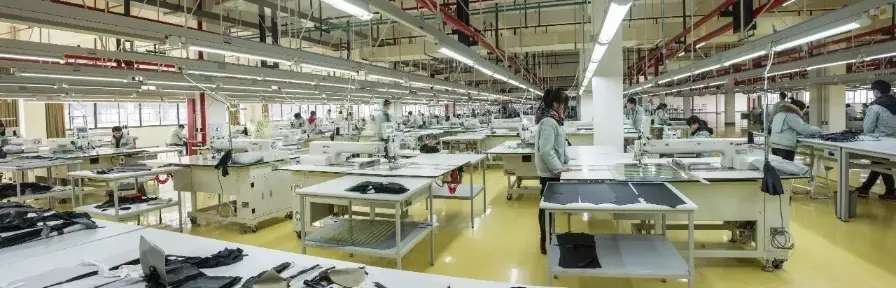
A mid-sized Chinese clothing manufacturer will typically assign dedicated merchandisers, pattern engineers, QC specialists, and logistics coordinators to your account long-term. These team members understand your product line, catch design flaws before production starts, suggest cost-saving material swaps, and troubleshoot issues in real time. I’ve seen factories absorb small material cost fluctuations mid-season to keep a brand’s pricing stable — that kind of goodwill doesn’t happen in a transactional relationship.
This maturity also means a Chinese factory can grow with your brand without requiring you to re-vet a new supplier. A partner handling your 300-unit test order today can scale to 50,000-unit monthly runs without missing a beat. Most Vietnamese factories, which tend to specialize in narrower product categories, can’t make that same commitment.
For a closer look at how to evaluate and build these kinds of relationships from the start, Hapa Garments works with brands at every stage of that process.
So, Which Country Is Right for Your Brand?
Here’s how I’d frame the decision:
Choose China if:
- Your product involves complex construction, specialty materials, or proprietary fabrics
- You need a factory that can scale with you from startup volume to retail partnership volume
- You want access to the deepest trim and accessory markets in the world
- Defect rate consistency on technically demanding garments is non-negotiable
- You’re building a long-term partnership rather than a one-off production relationship
Choose Vietnam if:
- Your product is a high-volume basic or activewear style where Vietnam’s workforce excels
- You need lower MOQs to test styles before committing to larger runs
- Tariff advantages into EU or North American markets materially affect your pricing model
- You’re pursuing a “China Plus One” diversification strategy to reduce supply chain risk
If Vietnam looks like the right fit for your product, review these Vietnam clothing manufacturers before building your supplier shortlist.
And if you’re still in the early stages of figuring out what type of manufacturer you actually need before committing to a geography, understanding how to find clothing manufacturers that match your specific product and growth stage will save you significant time and money.
Final Thoughts
The China vs. Vietnam debate rarely has a single right answer — but it does have a right answer for your brand, your product category, and your current stage. China’s unmatched vertical integration, certification density, and depth of manufacturing expertise make it the stronger choice for most brands serious about scale, complexity, and long-term partnership. Vietnam’s lower MOQs, competitive labor costs, and tariff advantages make it genuinely compelling for specific product types and sourcing strategies.
If your shortlist extends beyond China and Vietnam, use our clothing manufacturing country comparison to assess other options against your product, order size, and delivery needs.
What I’ve seen trip up brands most often isn’t picking the wrong country — it’s picking a factory without a clear understanding of what they actually need from it. Do that work first, and the geography becomes a much easier call.
Whether you’re sourcing performance outerwear, high-volume basics, or exploring whether is selling baby clothes profitable enough to warrant production investment, the answer starts with finding a manufacturing partner whose capabilities match your ambition — wherever in the world that partner happens to be.
FAQ
Is Vietnam better than China for manufacturing?
It depends on your product and priorities. Vietnam offers lower labor costs, flexible MOQs, and strong tariff advantages through free trade agreements like the CPTPP and EVFTA — making it a smart choice for high-volume basics and activewear. However, China remains the stronger option overall for brands that need complex garment construction, specialty fabrics, faster lead times, and deeper supply chain infrastructure. For most clothing brands, China is the more versatile long-term manufacturing partner.
Are clothes made in Vietnam good quality?
Yes — made in Vietnam clothing is genuinely good quality, particularly for knits, activewear, and outerwear. Vietnam’s garment industry has been producing for major global brands for decades, and its top-tier factories meet rigorous international quality and compliance standards. That said, quality varies by factory and product type. For technically complex garments like structured tailoring or multi-component outerwear, Chinese factories tend to deliver more consistent results at scale.
What country has the most clothing factories?
China has the most clothing factories in the world by a significant margin. It is home to thousands of garment manufacturing facilities ranging from small specialized workshops to large-scale export factories, concentrated in provinces like Guangdong, Zhejiang, and Jiangsu. No other country comes close to matching China’s sheer density of apparel production infrastructure.
Which country is No. 1 in the garment industry?
China is the world’s number one country in the garment industry. It is the largest producer and exporter of clothing globally, accounting for a significant share of worldwide apparel exports. Beyond finished garments, China also dominates textile and fabric supply — giving it an end-to-end advantage that no other manufacturing country currently matches.