Over the years, I’ve had the privilege of sitting across the table from hundreds of founders — each one carrying a sketchbook, a mood board, or simply a stubborn belief that their idea deserved to exist in the world. That energy never gets old.
What I’ve also seen, time and again, is how quickly that excitement stalls the moment production enters the conversation. Finding the right clothing manufacturers for startups is genuinely one of the hardest early hurdles — not because good partners don’t exist, but because most founders don’t yet know what to look for or what questions to ask.
This guide is built from two decades of working directly on factory floors, advising emerging labels, and experiencing every painful production mistake firsthand. My goal is straightforward: help you bypass the expensive headaches I faced early on, so you can confidently source, produce, and scale your very first collection.
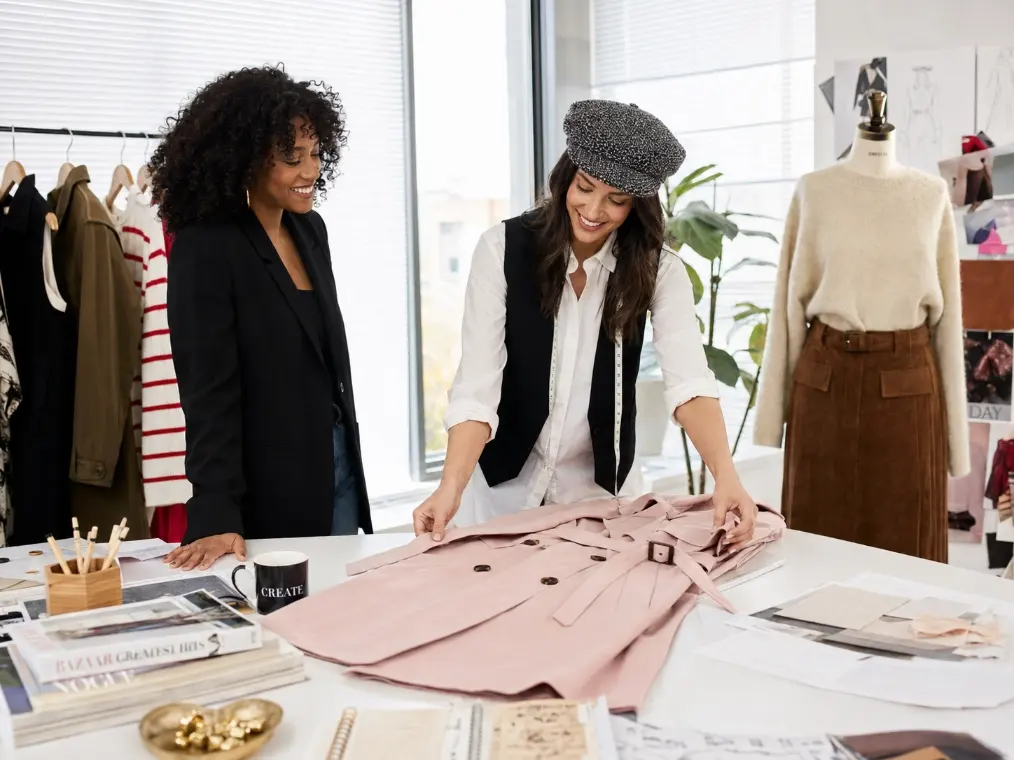
What to Look for in a Startup Clothing Manufacturer
When I speak with new brand founders, I usually lead with the same reminder: never choose a manufacturer based on price alone. In apparel production, the cheapest option often becomes the most expensive mistake — whether through inconsistent sizing, poor sampling, or communication that collapses halfway through a run.
After two decades evaluating production partners, four factors consistently separate excellent manufacturers from frustrating ones.
Low MOQ and Small-Batch Flexibility
When you’re just starting out, cash flow is everything. You don’t want to tie up startup capital in inventory you aren’t certain will sell. A truly startup-friendly manufacturer will offer small-batch flexibility — typically in the range of 50 to 150 units per style or colorway.
Low minimum order quantities (MOQs) let you test the market, gather real customer feedback, and adjust your designs without sitting on piles of unsold garments. It’s the most rational way to validate a brand before committing serious capital.
Sampling, Pattern Making, and Tech Pack Support
A sample isn’t just a prototype — it’s a stress test of your design, your fabric choices, your construction decisions, and your manufacturer’s ability to interpret your vision accurately.
The partners worth working with offer in-house pattern making and will either help you develop a proper tech pack or work cleanly from one you provide. If a factory is vague about this process, or pushes you to “just send a reference garment,” treat it as a yellow flag. Imprecise sampling leads to imprecise production, and by the time you catch the errors, you’ve already spent money you can’t recover.
For startups especially, request at least one full fit sample before committing to a production run — and build that timeline into your launch calendar from day one.
Fabric Sourcing and Customization Options
Your fabric choice dictates the drape, durability, and perceived value of your finished product. A strong manufacturing partner won’t just take your fabric spec and run with it — they’ll actively help you source it.
Whether you’re working with standard cotton blends or targeting eco-conscious markets with organic cotton and bamboo viscose, your factory needs established relationships with reliable mills. Ask upfront about customization limits: custom Pantone matching, specific dyeing techniques, branded hardware, and woven neck labels all require a factory with genuine capability, not just willingness.
Certifications and Ethical Compliance
Consumers today demand transparency, and global regulatory boards back them up. If you’re producing for North American, European, or Australian markets, international compliance is mandatory, not optional.
- Sustainability: Look for GOTS (Global Organic Textile Standard) or OEKO-TEX certifications for organic or non-toxic claims.
- Safety Standards: Brands moving into childrenswear need a partner who understands CPSC, CPSIA, and CPC requirements — you can find a deeper breakdown in our guide to understanding CPC certification.
- Labor Practices: Ethical labor standards aren’t just good PR — they’re increasingly a prerequisite for major retail partnerships.
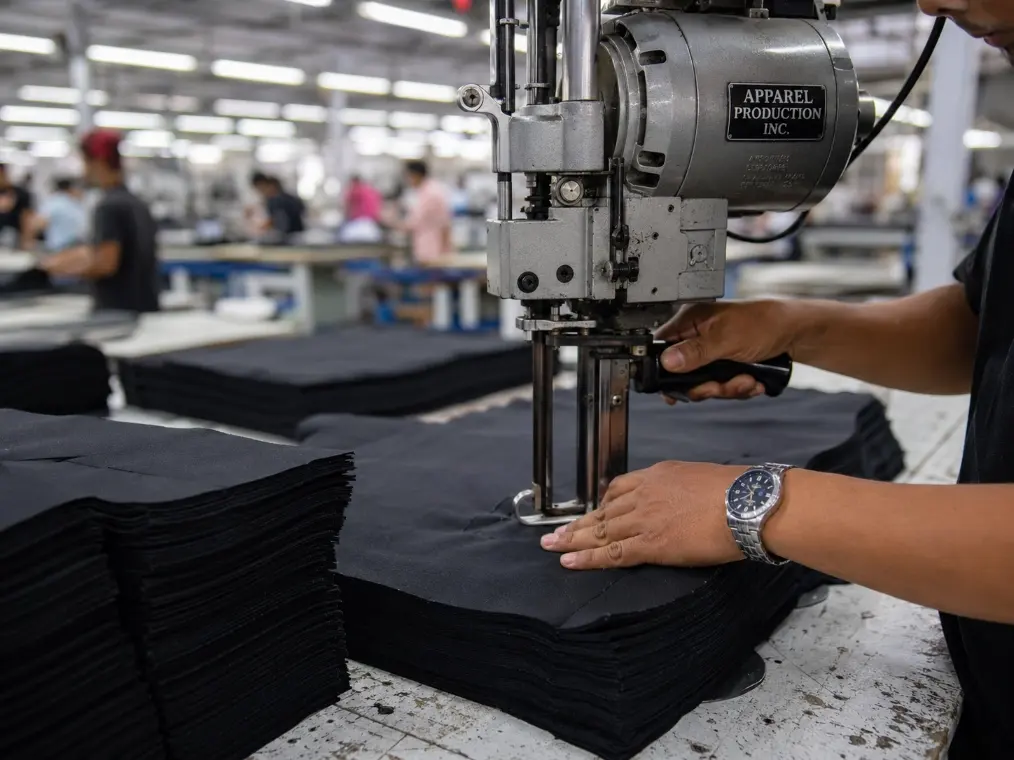
How We Selected the Best Clothing Manufacturers for Startups
When I speak with new brand founders, I usually tell them the same thing: do not choose a manufacturer only because they offer the lowest price. In apparel production, the cheapest supplier can quickly become the most expensive mistake if samples are poor, sizing is inconsistent, or communication breaks down halfway through production.
I have identified four factors that consistently distinguish excellent manufacturing partners from frustrating ones:
- Low MOQs with genuine flexibility — not token reductions padded with hidden fees
- End-to-end sampling support — structured, transparent processes that reduce costly revision cycles
- Fabric sourcing capabilities — strong mill relationships and a diverse materials library
- Verifiable ethical certifications — GOTS, OEKO-TEX, BSCI, or equivalent
- Clear communication across time zones — the single most underrated quality a startup needs in a partner
- Scalability — the ability to grow production as your brand gains traction
15 Best Clothing Manufacturers for Startups
- HAPA
- Appareify
- Hongyu Apparel
- Thygesen Textile Vietnam
- Bryden Apparel
- Hawthorn International
- Zega Apparel
- ARGYLE Haus of Apparel
- Yoke Apparel Manufacturing
- Billoomi Fashion
- Affix Apparel
- NG Apparels
- Yunli Apparel
- Lezhou Garment
- Steve Apparel
1. HAPA — Best For First-Time Founders Who Need Hands-On Production Guidance
HAPA is a cut-and-sew apparel manufacturer founded after years of working directly on the factory floor as a pattern maker. The studio specializes in helping startup clothing brands navigate their very first production run — from pattern making and tech pack development through to small-batch cut-and-sew manufacturing across womenswear, menswear, and childrenswear in both knits and wovens.
HAPA’s facility is structured so that a 30-piece trial run receives the same attention as larger reorders, because that first batch is a market test — not a finished brand. If you want to understand how the broader manufacturing ecosystem works before placing your first order, the guide to what a garment factory actually is is a useful starting point.
- Key Strengths: Genuine low-MOQ flexibility with in-house pattern making and sampling support, even for founders without fully developed tech packs. Direct access to experienced production staff who walk you through fit corrections and fabric sourcing. Designed specifically for startups — no order is too small to matter.
- Potential Drawbacks: Smaller production capacity means scaling to very large volumes may eventually require transitioning to a larger facility. Per-unit pricing on ultra-low runs reflects the labor investment in setup and sampling.
- MOQ: 30–50 pieces per style
2. Appareify — Best For Small-Batch Cut-and-Sew with Eco-Friendly Options
Based in China and launched in 2017, Appareify is a full-service custom clothing manufacturer with a broad product range of over 100 style options spanning activewear, casual wear, and accessories. Their facility handles everything from fabric sourcing and custom printing to private labeling and packaging. Brands like ASOS, Tesco, and Dunhill have partnered with them, but the team remains equally attentive to emerging labels testing the market with small-batch runs.
- Key Strengths: Wide eco-friendly fabric selection including biodegradable materials and recyclable packaging. Flexible minimums with custom printing (screen, sublimation, embroidery) under one roof. Turnaround times as fast as 7–20 days for certain order types.
- Potential Drawbacks: Longer international shipping timelines compared to domestic manufacturers. Overseas back-and-forth during sampling can occasionally slow revisions.
- MOQ: Approximately 50 pieces per design, with flexibility based on product complexity
3. Hongyu Apparel — Best For Full-Package Production Across Multiple Categories
Founded in 2003 in Dongguan, China, Hongyu Apparel has helped over 3,000 customers launch and scale fashion businesses. Their expertise spans womenswear, menswear, childrenswear, sportswear, swimwear, and accessories — all managed under one roof. Founder Kiki Qi shifted the factory’s focus toward startups after recognizing how many talented designers were struggling to find production partners willing to work with smaller budgets.
- Key Strengths: True end-to-end service covering fabric sourcing, sample development, branding, bulk production, and shipping. Broad product scope allowing garments, bags, and hats to be produced within one relationship. 22 years of OEM experience with a daily capacity of up to 10,000 pieces.
- Potential Drawbacks: Fully custom cut-and-sew minimums may run higher than ultra-micro factories. China-based production means lead times include international shipping and customs.
- MOQ: 50 pieces per style for blank wholesale; custom cut-and-sew MOQs vary by complexity
4. Thygesen Textile Vietnam — Best For Sustainable, High-Volume-Ready Production
Thygesen Textile Vietnam belongs to the Thygesen Textile Group, a Danish family enterprise founded in 1931. With over 90 years of experience, the company today operates a modern, SA8000 and WRAP-certified factory in Hanoi, producing activewear, casualwear, kidswear, and underwear for globally recognized brands including Tommy Hilfiger, Calvin Klein, and Fjällräven. Their supply chain certifications span GOTS, OCS, GRS, and OEKO-TEX — a strong foundation for brands building a sustainability story.
- Key Strengths: World-class ethical certifications with a transparent supply chain. Deep technical expertise across performance fabrics and complex garment construction. Monthly capacity of 800,000 pieces with LEAN manufacturing to minimize waste.
- Potential Drawbacks: Standard MOQs are higher than micro-batch factories, making them better suited for startups past the proof-of-concept stage. Sample development lead times may be longer than at a smaller studio.
- MOQ: Typically 500+ pieces per style, depending on product and fabric
5. Bryden Apparel — Best For Creative Founders Who Want a True Collaborative Partner
Bryden Apparel, founded in 2013 in Singapore, operates more like a creative studio that manufactures than a traditional factory. Having developed and produced for over 1,000 brands, they take a distinctly collaborative approach — acting as an extension of your team rather than a transactional supplier. Their supply chain holds GOTS, GRS, and OEKO-TEX 100 certifications, and their packaging is FSC-certified.
- Key Strengths: Exceptionally low MOQ — just 6 designs of 80–100 pieces each — minimizing inventory risk from the start. High-touch, consultative service throughout the entire manufacturing journey. Strong, verifiable sustainability credentials.
- Potential Drawbacks: Singapore-based coordination with production partners means you’re not working directly with the sewing floor. Per-unit pricing at low volumes reflects the premium placed on service and quality.
- MOQ: 80–100 pieces per design, minimum 6 designs
6. Hawthorn International — Best For Premium Made-to-Order Garments with UK Craftsmanship
Hawthorn International is one of the UK’s leading clothing manufacturers, based in central London and incorporated in 2014. They specialize in fully custom, made-to-order garments that are hand-cut, stitched, and finished — a level of craftsmanship that’s becoming rare. Their focus is squarely on fashion startups, SMEs, and emerging designers who prioritize quality over quantity. Hawthorn won the Business Elite Award for Best Custom Clothing Manufacturers 2025 in the UK.
- Key Strengths: Among the lowest MOQs in the UK for fully custom clothing at just 50 pieces per design. Every garment is hand-cut and hand-finished with rigorous quality assurance. London-based operations mean seamless communication for UK and European founders.
- Potential Drawbacks: Hand-finished production means higher per-unit cost than overseas mass production. Smaller total capacity — ideal for premium lines, not budget-volume.
- MOQ: 50 pieces per design
7. Zega Apparel — Best For Complex Customization at Low Minimums
Founded in 2012 and registered in Sheridan, Wyoming, Zega Apparel manufactures primarily out of Karachi, Pakistan, serving a global client base of over 3,000 customers. They’re a cut-and-sew specialist handling everything from basic tees and hoodies to intricately customized activewear, swimwear, and athleisure. Their US-registered structure combined with Pakistani production creates a competitive cost-to-quality proposition for American buyers.
- Key Strengths: Low 50-piece MOQ making custom garment manufacturing accessible to pre-revenue brands. Wide customization capability — they actively seek out complex, non-standard designs. US business registration provides additional reassurance for domestic buyers.
- Potential Drawbacks: Mixed online reviews flag occasional post-order communication gaps, so thorough due diligence is wise. International shipping from Pakistan adds lead time compared to domestic alternatives.
- MOQ: 50 pieces per design
8. ARGYLE Haus of Apparel — Best For Made-in-USA Startup Incubation
ARGYLE Haus of Apparel is a Los Angeles-based fashion design house and full-service apparel manufacturer founded in 2014. More than a factory, it functions as a fashion business incubator — offering design, pattern making, sample development, low-minimum production runs, e-commerce setup, marketing support, and even investor access. They’ve helped launch over 1,000 brands, with Free People among their portfolio references.
- Key Strengths: True end-to-end domestic manufacturing with no overseas communication delays, customs friction, or language barriers. Vertically integrated in Los Angeles — design, development, and production under one roof. Low-minimum runs paired with business mentorship and strategic consulting.
- Potential Drawbacks: Made-in-USA pricing is meaningfully higher than overseas alternatives, which can strain a very early-stage startup budget. The incubator model may involve a more structured onboarding process than a traditional factory.
- MOQ: Low-minimum runs designed for startups — exact quantities vary by project
9. Yoke Apparel Manufacturing — Best For Small-Batch Ethical Production in Vietnam
Yoke Apparel Manufacturing is a full-service garment factory in Đà Nẵng, Vietnam, founded by Australian entrepreneur Jesse James and his wife. Yoke was built with social purpose at its core — providing fair wages to local Vietnamese women while delivering small-batch, high-quality custom apparel to brands in the US, Australia, and Europe. Women’s fashion and casual wear are their bestselling categories.
- Key Strengths: Mission-driven ethical production that is the company’s founding purpose, not a marketing add-on. Genuinely small-batch friendly with a hands-on approach to emerging brands. Bilingual English and Vietnamese leadership bridges the communication gap many founders experience in Southeast Asia.
- Potential Drawbacks: Small team and facility — capacity is limited and may not suit brands ready to scale quickly. As a newer company (founded in 2021), track record is shorter than established competitors.
- MOQ: Small batch — specific quantities negotiated per project
10. Billoomi Fashion — Best For Artisanal Womenswear and Bohemian Clothing
Billoomi Fashion is a women-owned, family-run garment manufacturer based in New Delhi, India, in operation since 2005. They specialize in high-quality custom apparel for small businesses and startups across 18+ countries. Their particular expertise lies in womenswear demanding refined craftsmanship — dresses, bohemian styles, denim with specialty washing effects, hand embroidery, beadwork, smocking, and block printing. The operation is ISO 9001:2015 certified and SEDEX audited, with a zero-waste production commitment.
- Key Strengths: Extraordinary artisanal capabilities — hand embroidery, sequins, smocking, and block printing that few manufacturers offer. Strong ethical foundation with fair wages and safe working conditions. Two decades of experience serving small brands translates into genuine understanding of startup budgets and timelines.
- Potential Drawbacks: Specialization in detailed hand-finished womenswear means they’re less suited for minimalist basics or technical activewear. International shipping from India adds lead time for brands on tight launch deadlines.
- MOQ: Flexible — specifics depend on design complexity
11. Affix Apparel — Best For US-Based, Ethics-Certified One-Stop Production
Affix Apparel is a United States-based clothing manufacturer for small businesses with over ten years of experience and six certifications in ethics and sustainability. Their full-spectrum services cover cut and sew, private label apparel, custom screen printing, sublimation, and embroidery — all under one roof, with low minimums and competitive pricing. Their certification portfolio makes them especially appealing for brands that need credible sustainability claims from launch.
- Key Strengths: Very low 50-piece MOQ for many services, making them accessible for market testing. Six ethics and sustainability certifications provide built-in marketing credibility. Domestic US manufacturing means faster shipping and no customs complications.
- Potential Drawbacks: Some mixed online reviews report quality inconsistencies, making clear upfront communication and sample approval particularly important. Per-unit pricing on ultra-low-volume runs will be higher than at larger order volumes.
- MOQ: 50 pieces per design for most services
12. NG Apparels — Best For Indian-Made Private Label at Wholesale Pricing
NG Apparels is a private label apparel manufacturer based in Ludhiana, Punjab, India, in operation since 1995. They produce men’s, women’s, and children’s apparel with particular strength in fitness wear, casual clothing, t-shirts, and uniforms. Their services include pattern making, grading, prototype development, screen printing, digital printing, sublimation, and embroidery with premium Madeira threads.
- Key Strengths: Decades of private-label experience with wholesale-level pricing that works for budget-conscious startups. Wide range of printing and embroidery techniques under one roof. Strong fabric expertise spanning natural and performance materials.
- Potential Drawbacks: Custom trims such as buttons, zippers, and labels can require minimums of 10,000–30,000 pieces, which may be prohibitive for very small brands. Time zone differences can require extra patience during sampling and communication.
- MOQ: Varies by product — garment MOQs are generally accessible; custom hardware MOQs can be high
13. Yunli Apparel — Best For Functional Fabric Expertise and Sportswear
Yunli (Shanghai) Commercial Co., Ltd. is a Chinese clothing manufacturer founded in 2019 and based in the Suzhou Shengze region — known globally as a hub for functional fabric research and development. The company specializes in sportswear, outdoor apparel, and athleisure, leveraging deep knowledge of performance textiles, fabric development, and technical garment construction. Their primary focus is the US market.
- Key Strengths: Genuine expertise in functional and performance fabrics — a meaningful differentiator for activewear and outdoor brands. Access to cutting-edge textile innovations from a leading R&D hub. Competitive pricing for technically complex garments.
- Potential Drawbacks: As a newer company, their track record is shorter than many competitors. Detailed public information on MOQs and startup programs is limited — direct inquiry is required.
- MOQ: Not publicly standardized — inquire based on product type
14. Lezhou Garment — Best For Casualwear and Stone-Washed Vintage Finishes
Lezhou Garment is a Guangzhou-based Chinese manufacturer specializing in fully customized casualwear for small and medium-sized businesses. They’re best known for their stone-washed techniques that deliver the kind of worn-in vintage feel sought by streetwear and relaxed-lifestyle brands. Their focused product range — tees, tanks, hoodies, sweatpants, and sweatshorts — is supported by five dedicated production lines and full-package services including private labeling and international shipping.
- Key Strengths: Distinctive stone-washing and vintage-finishing capability that differentiates casualwear collections. Clear 100-piece MOQ with full customization. Deep expertise within a focused product range.
- Potential Drawbacks: Narrower scope — not a fit for tailored shirts, dresses, or formalwear. Stone-washed finishing can extend lead times compared to standard production.
- MOQ: 100 pieces per design
15. Steve Apparel — Best For US-Based Customization with Sublimation and Embroidery
Steve Apparel is a US-based clothing manufacturer positioned as a one-stop shop for small to large brands. They offer sublimation printing, screen printing, embroidery, cut and sew, and private labeling — all under one operation, simplifying the supply chain for startups. They’ve been recognized among top US apparel manufacturers for combining low MOQs with diverse customization capabilities.
- Key Strengths: Wide customization options across sublimation, screen printing, and embroidery in a single US facility. Low MOQs accessible to pre-launch and early-stage brands. Domestic production means no international shipping delays or customs complications.
- Potential Drawbacks: Online presence is less detailed than many competitors, requiring more upfront vetting. Some services may lean toward print-and-embellish rather than full cut-and-sew development — clarify your needs early.
- MOQ: Low minimums — specifics vary by service type
Types of Clothing Manufacturers: Finding the Right Fit
Before you reach out to a single factory, there’s a more fundamental question worth sitting with: what kind of manufacturer do you actually need? The three primary production models serve very different purposes, and choosing the wrong one at the wrong stage is one of the most common early mistakes I see.
| Cut and Sew (Full Custom) | Private Label & White Label | Print-on-Demand & Dropshipping | |
|---|---|---|---|
| How It Works | Garments built from raw fabric using original patterns and construction specs | White label: your branding on a standardized base garment. Private label: a manufacturer’s infrastructure customized to your colorways and trims | You upload a design; the platform prints on a blank per order and ships directly |
| Customization Level | Full — silhouette, fabric, construction, trims, every finish | Moderate — branding and surface specs are yours; base construction is largely set | Low — design is yours; garment and fabric belong to the platform |
| MOQ | Typically 50–300+ pieces per style | Low to moderate — white label from ~25 pieces; private label typically 50–200 | No minimum — single units per transaction |
| Unit Cost | Highest — reflects custom pattern development, skilled labor, and sourcing | Mid-range | Low per unit, but with thin margins that don’t improve at volume |
| Lead Time | 6–14 weeks (sampling + bulk) | 3–8 weeks | 3–10 business days per order |
| Scalability | High once designs are locked and supplier relationships established | High — especially private label, which can transition to full custom | Limited — margin compression creates a ceiling on brand growth |
| Best For | Original fashion brands, technical apparel, premium or niche categories | Startups entering the market quickly, D2C e-commerce brands | Designers testing demand, content creators, zero-inventory e-commerce |
For a deeper look at how production partnerships actually work on the ground, our guide on how to buy apparel direct from the factory walks through the process step by step.
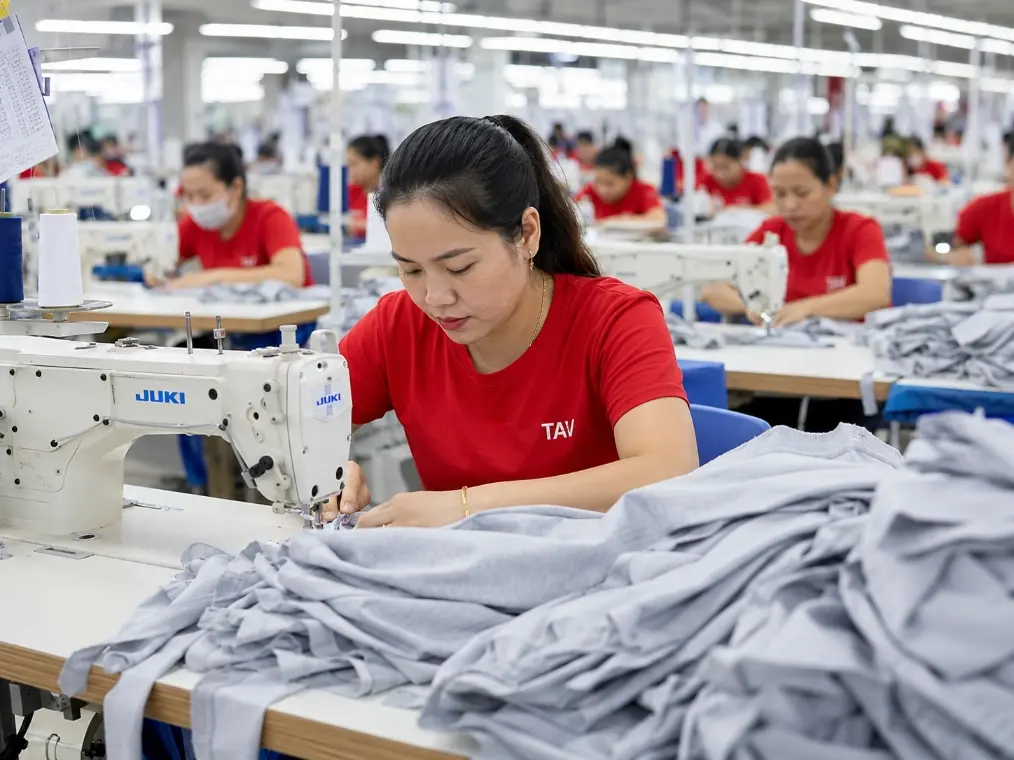
Domestic vs. Overseas Manufacturing: How to Think About the Tradeoff
This is probably the question I get asked most often, and my answer is always the same: it depends on what you’re optimizing for — and being honest about that is the real work.
Domestic manufacturing — whether US, UK, or Australia — delivers shorter lead times, easier communication, greater production visibility, and a country-of-origin story that carries real weight with certain customer segments. Quality control is easier to manage when you can physically visit a facility or turn around a revision in days rather than weeks. The tradeoff is higher per-unit cost, often significantly so, and lower capacity for the kind of scale most brands eventually need.
Overseas manufacturing — across China, Vietnam, India, Bangladesh, and others — gives you access to more developed textile infrastructure, broader materials options, deeper category specialization, and the unit economics that become increasingly important as volume grows. The tradeoffs include longer lead times (typically 4–12 weeks depending on country and category), more complex time-zone communication, and the need for stronger documentation and quality control protocols to compensate for the distance.
For most startups, the practical answer isn’t binary. Many founders run their first sample domestically for speed and control, then move production offshore once the design is locked and the brand has initial traction. Some maintain a hybrid model permanently: premium or limited-edition product domestically, core volume overseas.
If your roadmap includes childrenswear, domestic or certified overseas production becomes especially important given regulatory requirements — our resource on the best kidswear factories covers the compliance landscape in more detail.
Low MOQ vs. Bulk Production: Choosing the Right Approach for Your Stage
This debate comes up in nearly every conversation I have with a new founder, and I’ll be direct: there isn’t a universally correct answer. There is, however, a right answer for your stage, your cash position, and your certainty about what you’re actually selling.
The most common mistake isn’t choosing one model over the other. It’s choosing bulk production too early — often out of enthusiasm, sometimes under pressure from a factory’s pricing tiers — and discovering six months later that half the inventory is sitting in a warehouse while the market has already moved on.
Why Low MOQ Helps New Brands Test the Market
For most bootstrapped startups, beginning with a low MOQ (typically 50–150 pieces per style) is the safest path to market.
Low minimums cap your financial downside if a style doesn’t connect with your audience. They allow you to iterate based on real customer feedback — tweaking fit, fabric, or construction in the next small run rather than sitting on thousands of flawed units. And they keep you free of the warehouse overhead and deadstock risk that quietly erodes margins on a slow-moving style.
When Bulk Production Becomes More Cost-Effective
Bulk production makes more sense once your brand has stable sales data. When you know which style, colorway, and size range performs, larger orders spread fixed costs — pattern setup, cutting preparation, machine setup, production planning — across more units, reducing the average cost per piece. This is the straightforward logic of economies of scale.
The key discipline is sequencing: start low, identify your bestsellers, then scale only proven styles. Founders who invert that sequence consistently pay for it.
Hidden Costs Startups Often Forget
The quoted unit price from a manufacturer is a starting point, not a final number. In my experience, the total landed cost of a garment — what it actually costs you before a dollar of margin is earned — runs 30 to 60 percent above the production price alone, depending on your sourcing model and destination market.
Here’s where that gap lives:
- Sampling fees. Most manufacturers charge for samples, and multiple revision rounds are normal, not a failure. Budget for at minimum two to three rounds per style.
- Tech pack development. If you don’t arrive with a finalized tech pack, you’ll either pay for one or lose weeks going back and forth with the factory. Both paths have real costs that don’t appear in the production quote.
- Shipping and freight. Air freight is fast and expensive. Sea freight is affordable and slow. Getting it wrong — expediting a shipment because a deadline shifted — can erase the unit cost savings of a bulk order almost entirely.
- Import duties and customs. Applicable tariff rates depend on your product category, country of manufacture, and destination market. For many garment categories shipping into the US or EU, duties range from 10 to 32 percent of declared value. Build this into your unit economics from day one.
- Third-party quality inspection. QC inspection before a shipment leaves the factory is insurance, not an optional line item. The cost is modest relative to the risk of receiving a full production run with a systemic defect.
- Storage and fulfillment. Once product lands, it needs a home. Whether that’s your own storage, a 3PL partner, or an Amazon fulfillment center, the cost per unit per month matters — especially on a slow-moving style.
- Returns and rework. Even with solid QC, some percentage of units will come back. Build a realistic return rate into your financial model before placing any order.
None of these costs are deliberately obscured — they’re just easy to overlook when you’re focused on a production price that looks workable on a spreadsheet. The founders who avoid the most painful surprises are the ones who build a full cost model before committing to any order, regardless of size. The U.S. Small Business Administration’s startup cost guide is a practical external reference for building that model from scratch.
Conclusion
Selecting the right clothing manufacturer for your startup is one of the most consequential decisions you’ll make in the early life of your brand. Understanding production models, navigating MOQs, building a realistic cost structure, and choosing a partner whose communication and ethics match your own aren’t just operational details — they’re the foundation your brand is built on.
Take the time to validate through sampling, think carefully about domestic versus overseas tradeoffs, and remember that the cheapest quote is rarely the best deal. The right partner will grow with you.
Frequently Asked Questions
How do I find a manufacturer to start a clothing brand?
Start with your niche, product type, budget, and MOQ requirements. Compare OEM and ODM factories, request samples, review past work, check certifications, and confirm lead times before committing to a bulk order. Evaluate domestic versus overseas options carefully, and ask detailed questions about supply chain transparency.
What is the startup cost for a clothing brand?
Key expenses include design, sampling, tech pack development, fabric, MOQ deposits, labels, packaging, a website, marketing, and working capital. The SBA recommends calculating startup costs before launch to estimate funding needs and break-even timing accurately.
What is the best clothing manufacturer for startups?
The best partner depends on your product category, MOQ, budget, quality standard, and customization requirements. Most startups benefit most from a manufacturer with reliable sampling support, clear communication, transparent pricing, and demonstrated small-batch experience.
How do I find reliable clothing manufacturers for small businesses in the USA?
Search domestic factories through manufacturer directories, trade shows, referrals, and targeted searches. Verify business details, factory capabilities, sample quality, reviews, and compliance credentials. For “Made in USA” claims, confirm the product meets the FTC’s “all or virtually all” US-made standard.
How do I connect with a clothing manufacturer?
Prepare your product details first: garment type, fabric, size range, quantity, tech pack, label requirements, and target price. Then contact manufacturers by email or inquiry form, request a quote, order samples, and confirm MOQ, lead times, payment terms, and quality control processes before moving forward.