Whether you’re launching a brand from scratch or trying to scale up your current business, your manufacturer is your lifeline.
Let’s be honest about the risks: For most startups, the biggest nightmare isn’t bad design—it’s production delays and “hit-or-miss” quality. These are the things that kill a brand before it even gets off the ground.
That’s why choosing the right partner is the single most critical step. You don’t just need a factory; you need a stabilizer. A solid manufacturing partner eliminates the supply chain chaos, ensuring that what you sell matches what you promised. It’s the difference between constantly “fighting fires” and actually building a reputation that lasts.
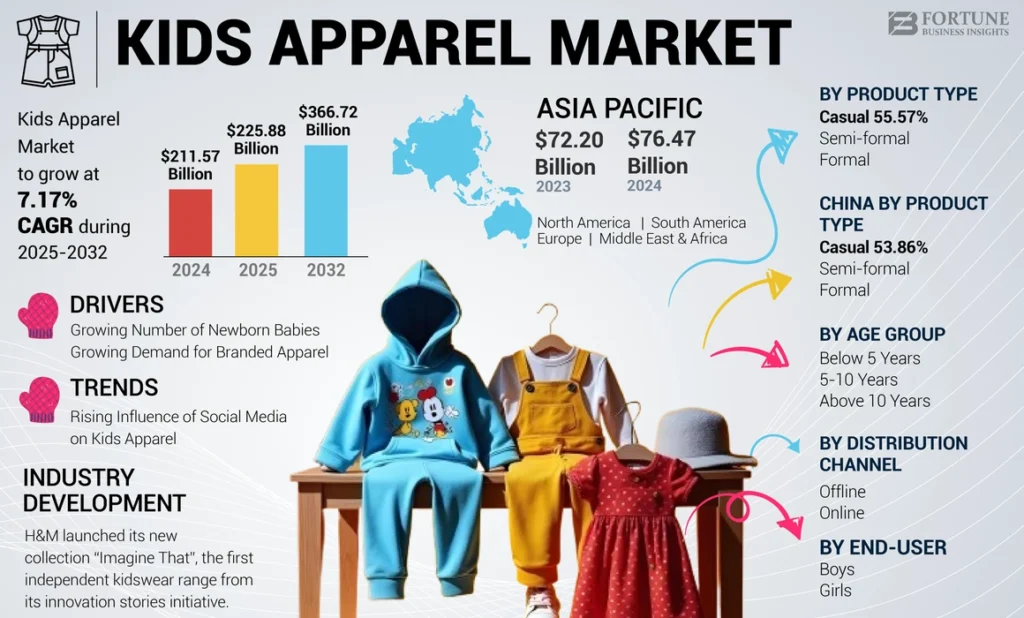
According to data from Fortune Business Insights, the global children’s apparel market reached approximately USD 211.57 billion in 2024 and is expected to grow to around USD 366.72 billion by 2032. As the market continues to expand, more brands are placing greater emphasis on product durability, safety, and sustainability. In this context, partnering with a dependable children’s clothing manufacturer has become a vital foundation for achieving long-term brand growth.
How to Find a Children’s Clothing Manufacturer
You see the potential, and you’re ready to launch. The next hurdle is simple: Where do you actually find these guys?
B2B Platforms
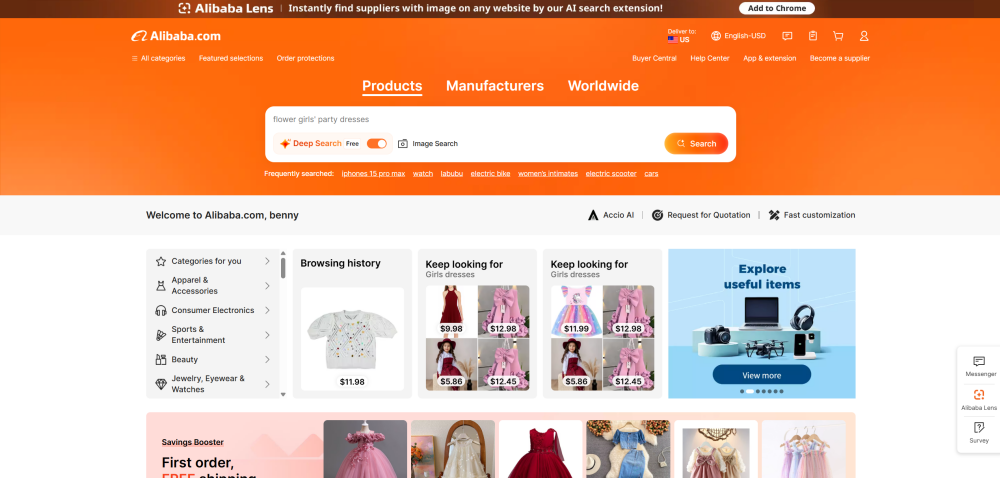
The “Big Three” Marketplaces (Alibaba, Global Sources, Made-in-China) Think of these as the Yellow Pages of manufacturing. It’s the easiest place to start because everyone is there.
Pro Tip: Don’t just browse; use specific keywords. These platforms let you chat instantly, so you can gather quotes and filter out the “middlemen” from the real factories pretty quickly.
Search Engines
Google is the world’s largest search engine.D on’t underestimate a good Google deep dive. Many high-end manufacturers have their own professional websites and might not clutter them up with ads on B2B platforms.
Search Smart: Don’t just search “factory.” Use specific terms like “Private label children’s clothing manufacturer” or “OEM kids wear supplier.” This filters out the noise.
Trade Shows
Attending large-scale fashion or apparel trade shows—or visiting well-known wholesale clothing markets in person—allows you to evaluate manufacturers directly. This hands-on approach helps you assess their craftsmanship, product quality, and production capabilities more accurately.
Social Media
The Social Media Shortcut (Instagram & TikTok) Believe it or not, modern factories are active on social media now. Search hashtags like #clothingmanufacturer or #apparelproduction.
Why it works: You can often see “behind-the-scenes” videos of their factory floor. It’s a great way to verify if they are a real operation and see their craftsmanship in real-time without buying a plane ticket.
How to Choose the Right Children’s Clothing Manufacturer
So, you’ve already found the channels to reach children’s clothing manufacturers and gathered a lot of company info. But here’s the real question: how do you filter out the reliable ones?
This step is critical. Based on my experience in the field, here are a few practical ways to help you lock in the right partners without the headache.
Qualifications and Compliance
First, a trustworthy manufacturer must have the right paperwork. It’s the only way to prove their production is professional and, more importantly, legal.
In the textile industry, you should be looking for standard certifications like ISO, CPC, BSCI, or SGS. Consider these the baseline. When you’re talking to suppliers, ask to see these documents upfront.
If they can’t produce them, it’s a huge red flag. You risk getting substandard or even unsafe clothing, which could ruin your brand’s reputation and destroy consumer trust overnight.
Supply Capacity and Stability
Growth depends on a stable supply chain. We all know children’s clothing sales are highly seasonal—driven by holidays and weather changes.
If your manufacturer can’t deliver on time or drops the ball on quantity, your hands are tied. You lose sales, and your brand image takes a hit. Honestly, that’s the most damaging situation for any business.
Working with a pro manufacturer means tapping into a mature system with strict quality control. This guarantees your volume and quality stay consistent long-term—something that is absolutely vital, whether you’re a startup or an established brand.
How to evaluate a manufacturer’s supply capability:
- On-site inspection: Visit the factory to check whether production lines are sufficient and well-organized, and whether raw materials and finished products are properly managed.
- Client portfolio: Check which brands they have worked with. Have they served clients of similar or larger scale? This can indirectly prove their capabilities.
- Capacity and scheduling: Ask about monthly production capacity and lead times from design to delivery.
- Verify credentials and history: Investigate the factory’s years of operation and whether there have been major legal disputes.
- Small test orders: The most effective way to evaluate quality, communication, and delivery reliability is to place a small order first.
Material Quality
Children have delicate, sensitive skin that requires extra care. Studies show that the prevalence of allergic contact dermatitis in children is approximately 13.3% to 24.5%, with clothing and textiles being potential triggers due to residual chemicals, dyes, sweat retention, or friction (source: National Library of Medicine).
Choosing inappropriate fabrics can irritate or harm children and directly affect brand reputation and consumer trust.
A responsible children’s clothing manufacturer should provide fabric test reports that comply with regulations in your target market and hold international certifications such as OEKO-TEX Standard 100 or GOTS (Global Organic Textile Standard) to ensure fabrics are free from harmful substances and meet standards for direct skin contact.
Recommended fabrics for children’s clothing:
Cotton: Breathable, soft, and hypoallergenic—classic and reliable for delicate skin.
Organic cotton: Grown and processed without harmful chemicals, providing the safest protection for infants and toddlers.
Hemp: Highly breathable, naturally antibacterial and odor-resistant, becoming softer with each wash, and extremely durable.
Lyocell (Tencel): Smooth and draping texture, better moisture absorption and breathability than cotton, sourced from sustainable forests, a high-performance eco-friendly fiber.
Strong Design Capabilities
A top-tier children’s clothing manufacturer brings more than just production lines to the table—they bring innovation. Having a dedicated in-house design team means they can turn your rough ideas into reality, keeping your products unique in a crowded market.
Think of it this way: the design team is the “eyes and brain” of your brand, while production is the “hands and feet.” You need these two working in sync for your brand to scale effectively.
Take professional manufacturers like HAPA, for instance. With a design team of 20 people, they stay ahead of the curve on market trends, colors, and fabrics. They don’t just take orders; they offer cutting-edge suggestions to ensure your inventory never feels outdated.
Environmental and Ethical Standards
When vetting a manufacturer, don’t just look at their output capacity. Sustainability and ethics are non-negotiable—this is a responsibility every modern brand needs to uphold.
- Environmental Responsibility: Check your supplier’s footprint. Are their fabrics and methods eco-friendly? Genuine sustainable manufacturers prioritize safe materials to protect children’s health and implement strict systems for water and waste management.
- Ethical Production: There is zero tolerance here. Manufacturers must strictly prohibit child labor and forced labor. They need to provide a safe workspace, fair wages, and reasonable hours. Respecting basic human rights isn’t just a “plus”—it’s the baseline.
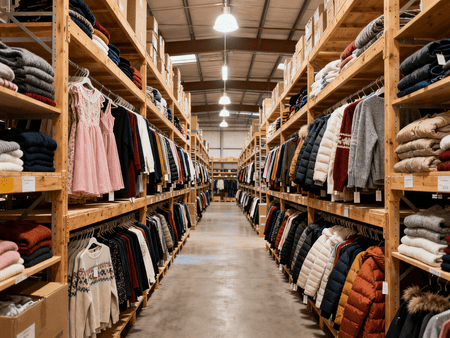
Things to Know Before Working with a Kidswear Manufacturer
Minimum Order Quantity (MOQ)
As a designer or small brand owner, you may wish to start with a smaller order, such as 50 pieces. However, children’s clothing manufacturers typically have their own production standards. Some only accept orders of 200 pieces or more, while others are willing to accommodate smaller orders of around 50 pieces. Before collaborating, always confirm whether the manufacturer supports small-batch production.
Lead Time
Lead time is critical for inventory management, market responsiveness, and executing your sales plans. Each manufacturer has different production schedules. Some can produce samples within 1–3 days and complete bulk production in 15–20 days, while others may take longer. Be sure to clarify the exact timelines before starting a partnership.
Sample Confirmation
Before placing a large order, ask whether the manufacturer can provide a sample. Samples allow you to evaluate the garment’s fit, craftsmanship, and overall quality firsthand.
One-Stop Service Availability
If you are just starting your brand or are not yet familiar with the apparel industry, partnering with a manufacturer that offers full-service support can be a significant advantage. Leading children’s clothing manufacturers, such as HAPA, provide end-to-end services from design to production. This not only ensures a smooth process but also allows you to benefit from their market expertise and professional guidance, helping you gradually build brand credibility.
The Collaboration Process with a Children’s Clothing Manufacturer
Step 1. Consultation
At the beginning of the collaboration, the brand communicates in detail with the children’s clothing manufacturer to clarify product requirements, target markets, style positioning, fabric preferences, and budget. The manufacturer will also provide professional advice to help refine the design and production plan, laying a solid foundation for the partnership.
Step 2. Design
Based on the confirmed requirements from the consultation stage, the design team begins creating style sketches, selecting fabrics, and determining sizes and color schemes. Comfort, safety, and production feasibility are all taken into consideration to ensure that the designs align with market trends and are suitable for mass production.
Step 3. Sampling
The manufacturer produces samples according to the design drawings and selected fabrics. Sampling typically takes 3–7 days. The brand should review the samples carefully—checking fit, craftsmanship, size accuracy, and fabric texture—to ensure they fully meet design expectations before moving to bulk production. This step helps prevent major discrepancies later.
Step 4. Production
Once the sample is approved, the manufacturer proceeds with bulk production in accordance with the agreed quantity, process, and standards specified in the contract. Strict quality control is conducted throughout production to ensure that every garment meets safety and design requirements and maintains consistent quality.
Step 5. Packaging
After production, the manufacturer carries out packing, labeling, and tagging according to the brand’s specifications. This includes protective packaging, hang tags, and product inserts to ensure items remain intact during transportation and enhance both brand image and customer experience.
Step 6. Shipping
The finished products are shipped to the brand or retail outlets via logistics or supply chain partners. The brand may then handle warehousing and distribution as needed, while establishing an after-sales tracking and feedback system to ensure customers receive safe, high-quality children’s clothing.
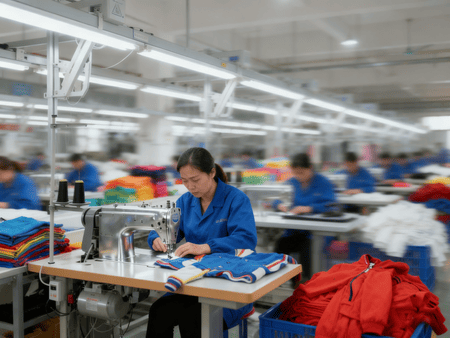
Why Choose a Children’s Clothing Manufacturer From China?
When brands start looking for manufacturers, the usual suspects are always China, India, and Vietnam. However, based on my experience, China consistently takes the top spot.
Here’s why I believe China is your best bet:
A Supply Chain
That Actually Connects China’s supply chain is a beast. We aren’t just talking about sewing factories; we have the whole ecosystem—fabrics, accessories, processing, packaging, you name it. What does this mean for you? Speed. Because everything is local and integrated, we can slash your production cycles. In the kids’ fashion game, speed to market is a massive hidden advantage.
Quality Control
Chinese manufacturers have been exporting to the West for decades. We know the rules. Global standards like OEKO-TEX, GOTS, and GB 31701. Those aren’t special requests for us; they’re the baseline. You get products that are safe, compliant, and ready for international shelves without having to babysit the factory.
The Price is Right
Let’s be real about costs. Between the raw materials, logistics, and skilled labor, China still offers the best bang for your buck. Manufacturers here can offer incredibly competitive pricing because we have the infrastructure to back it up. If you’re a startup trying to keep overhead low without sacrificing quality, this is the smart play.
Production Capacity
Flexible & Scalable Forget the old image of rigid factories. Modern Chinese manufacturing is high-tech and incredibly flexible. We have the advanced gear to handle whatever you throw at us—whether it’s a small batch to test the waters or a massive order for a global rollout. We scale as you grow.
Craftsmanship & Tech Specs
This is where we really shine. Many factories here have 10+ years of experience. We moved past simple “cut and sew” ages ago.
FAQ
Can I buy clothes directly from the manufacturer?
Yes, but with conditions. Most manufacturers operate on a B2B (Business to Business) model, meaning they require a Minimum Order Quantity (MOQ) rather than selling single items. However, some manufacturers are now offering “Direct to Consumer” lines or lower MOQs for sample orders.
How do I find a manufacturer to make my clothing?
You can find manufacturers through online sourcing directories (like Alibaba or ThomasNet), by attending textile and apparel trade shows, or by hiring a professional sourcing agent. When searching, specifically look for factories that advertise OEM (Original Equipment Manufacturer) or ODM (Original Design Manufacturer) services to ensure they can produce custom designs.
Do children’s clothing manufacturers accept small orders?
Yes, but it depends on the factory. While large-scale manufacturers often require thousands of units, many factories now specialize in “Low MOQ” (Minimum Order Quantity) or “Small Batch” production to cater to startups.
Conclusion
Ultimately, a high-quality children’s clothing manufacturer is more than just a supplier—they are a strategic partner in your brand’s growth.
When you’re making your choice, don’t get tunnel vision on price. While cost matters, the real value lies in quality, reliability, and service. These are the factors that will sustain your business in the long run.
Ready to Scale Your Brand? Are you looking for a manufacturer who delivers on both style and substance? Let’s talk. Contact us today to explore our latest collections and see exactly how we can support your business goals.