
Duck down and goose down can both make high-quality jackets. The bird species alone does not tell you which finished garment will be warmer. Whether goose down deserves a higher budget depends on the actual filling grade, quantity, and construction—and whether they deliver a useful improvement in weight, packability, or wear.
Whether you are buying a winter jacket or developing a collection, start with the intended use, compare the specifications, and then evaluate the complete garment. This guide explains the practical differences in warmth, weight, cost, moisture performance, durability, and responsible sourcing.
Duck Down vs. Goose Down: The Main Differences
Both materials insulate by trapping air within soft down clusters, helping reduce heat loss. Down sits beneath a bird’s outer feathers; it is not the same as a feather with a stiff central quill. Both duck and goose down come in different grades, so assess the material offered rather than assigning one species a permanent “basic” or “premium” label.
The supply picture offers useful context. Textile Exchange’s Materials Market Report 2026 states that around 90% of down comes from ducks, with the remainder mainly from geese. This describes raw-material sourcing, not a ranking of jacket warmth. For brands, we recommend evaluating duck down against the same product requirements as goose down, rather than considering it only when the budget rules out other options.
| Comparison | Duck Down | Goose Down | What Matters Most |
|---|---|---|---|
| Material grade | Available in different compositions and fill powers | Also varies by grade; high-loft products often use goose down | The actual specification, not species alone |
| Warmth | Can suit everyday and outdoor jackets | High grades can support warmth-to-weight-focused designs | Filling amount, distribution, construction, and coverage |
| Weight and packability | Compressible; results depend on grade and garment design | High-loft grades are worth evaluating for lightweight, compact designs | Finished weight and packed size in the same garment size |
| Price | Often the more economical option, depending on the quote | Often carries a premium, which may or may not benefit the project | Comparable quantities and the full quotation scope |
| Moisture | Saturation affects loft and insulation | Also needs protection from saturation and a workable drying routine | Filling treatment, outer protection, and use conditions |
| Durability and odor | Assess processing, cleanliness, construction, and care | The name alone does not guarantee longer life or no odor | Physical condition, material evidence, and care requirements |
| Responsible sourcing | Needs relevant origin and certification evidence | Requires the same scrutiny | Certification scope and the actual material supply chain |
When buying a jacket, look for clear filling information. When developing one, put that information in a shared specification. “Premium goose down” and “quality duck down” are descriptions, not substitutes for comparable details.
Understand Four Specifications Before Choosing Down
A product label may show a species name, a composition percentage, and a fill-power figure. These answer different questions. IDFL’s down and feather testing guidance likewise treats composition, species, fill power, and cleanliness as separate testing subjects.
| Specification | What It Tells You | What to Record |
|---|---|---|
| Species | Whether the filling comes from ducks, geese, or mixed sources | Declared source and corresponding species information |
| Composition | How the down, feather, and other declared components are proportioned | Full composition, testing basis, and applicable label description |
| Fill power | The volume a specified mass occupies under defined test conditions | Value, units, test method, and conditioning method |
| Fill weight | How much filling the garment contains | Grams for the stated size and allocation across main sections |
A 90/10 Ratio Is Not a Fill-Power Rating
When a specification explicitly states 90% down and 10% feathers, it describes composition by weight. That ratio does not establish duck or goose origin, fill power, or an outdoor temperature rating.
“Goose down” is incomplete on its own, too. A brand still needs the composition and the proposed garment specification. Label wording should match the actual material and the intended market’s requirements rather than combining separate properties into a vague premium claim.
Read Fill Power and Fill Weight Together
Under comparable testing conditions, higher fill power means a given mass of filling occupies more volume. Fill weight tells you how much material is used. A high fill-power figure without a filling quantity still leaves the jacket’s insulation plan unclear.
Request the test method, units, and conditioning information alongside the figure, and identify the size covered by the stated fill weight. An adult jacket’s filling quantity is not a target for a children’s style. Nor should the finished jacket’s total weight be mistaken for the weight of its filling.
Is Goose Down Warmer Than Duck Down?
Not automatically. Matching fill power under comparable conditions indicates a comparable measured loft characteristic—not identical warmth in two jackets. Filling quantity, placement, and coverage still affect the finished product.
Norrøna’s down guide also separates fill quality from quantity, construction, and intended use. Before attributing a difference between jackets to species, compare their length, size, and filling arrangements in the body, sleeves, and hood.
Construction Can Change the Result
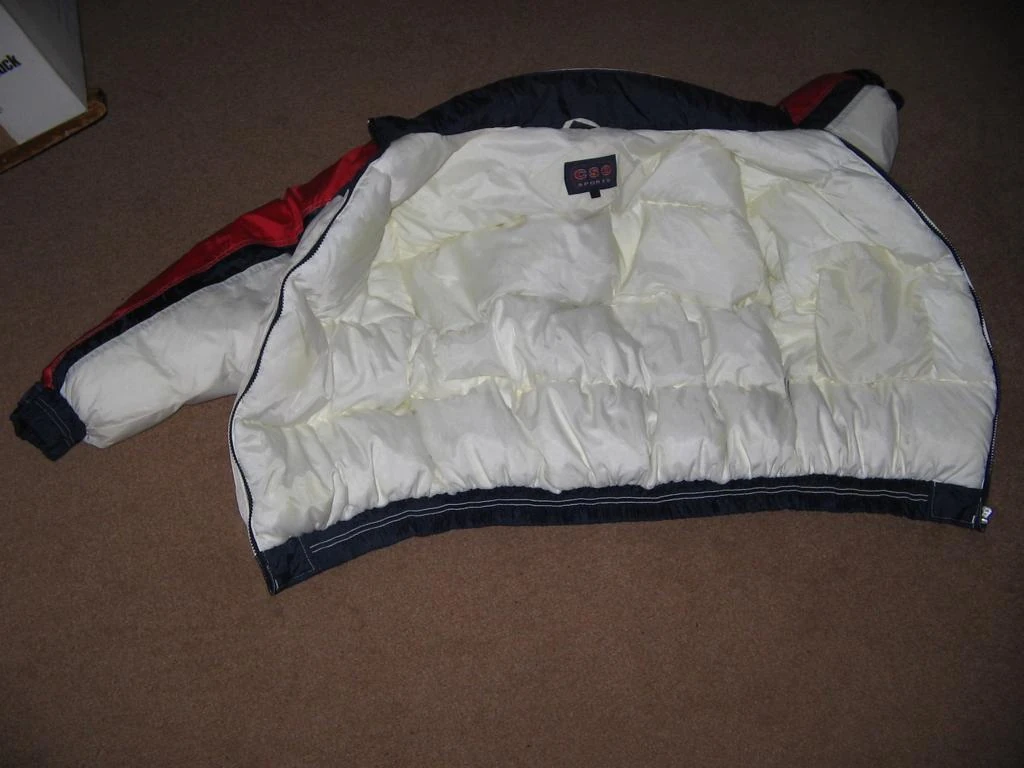
The compartments in a down jacket limit filling movement. Quilting is therefore more than a visual pattern.
- Sewn-through construction: The shell and lining are stitched together to create sections, leaving thinner insulation at the stitch lines. It is commonly used in lightweight designs.
- Box-wall construction: Internal walls separate the shell and lining, providing space for the filling while introducing trade-offs in structure, weight, and bulk.
Mountain Equipment’s down clothing guide explains these differences. Choose construction for the intended product rather than assuming box-wall construction suits every jacket, or that goose down can compensate for any design problem.
Evaluate the shell, lining, and fit together. Our guide to winter jacket materials explains the roles of these layers and can help organize the sample review.
Keep material evidence separate from finished-product warmth claims. Fill power is not a temperature chart that can guarantee the same comfort for every wearer in the same conditions.
Which Down Makes a Lighter, More Packable Jacket?
Higher-fill-power material can achieve a given loft volume with less filling weight, making it worth considering in a lightweight design. That benefit comes from the particular grade and garment—not from a rule that all goose down is lighter than all duck down.
The shell, lining, zipper, hood, and pockets also contribute to total weight. A filling change may make little difference when other components remain heavy. Compare filling weight and finished sample weight separately rather than accepting “lighter down” as the complete answer.
Check packability independently. For travel or a carried insulation layer, compare actual jackets in the same size using the same packing method. Loose-fill loft measurements do not establish the packed dimensions of a complete garment.
Our recommendation is to distinguish less weight while wearing from less space in a bag. Define the priority first, then decide whether a higher filling grade produces an improvement worth paying for.
Is Goose Down Worth the Higher Price?
Goose down often requires a higher budget, but there is no fixed premium that applies to every order. Grade, composition, filling quantity, order volume, and quotation scope all affect the comparison. The price difference between two retail jackets is not a reliable measure of the cost of upgrading their filling.
In my view, the first question is what the extra spending will actually improve in the finished jacket. I would not call a change to goose down a successful upgrade simply because the label sounds more premium. For a brand, the stronger reason to invest is a benefit that fits the product brief and can be assessed through the complete sample and relevant evidence.
Pay for a Benefit the Product Actually Needs
For a design with a clear weight or packability goal, I would define the intended improvement before choosing the filling. Compare finished sample weights in the same size, or assess packed volume using the same method. This keeps the discussion focused on whether the product meets its target rather than which species sounds more prestigious.
I prefer to separate the quotation into two proposals. One keeps composition, comparable fill power, filling weight, shell, lining, and construction as consistent as possible to isolate the cost of changing materials. The other may adjust grade, quantity, or construction to meet a weight or packability goal, but must identify every change and be assessed through the complete sample and supporting evidence. The first answers “How much more does the material change cost?” The second answers “What does that investment deliver?”
A brand may also choose goose down for its market positioning. That commercial choice should remain separate from a demonstrated warmth advantage. If the main reason for the upgrade is brand presentation, do not describe it as a proven performance improvement.
When Duck Down Is the Better-Value Option
For an everyday children’s jacket, if the proposed duck down already meets the use and quality requirements but the sample still has tight armholes, an uncomfortable lining, or an awkward zipper, I would put the available budget toward those specific corrections first. Switching to goose down does not directly solve a fit or closure problem.
My priority is not to protect the goose-down selling point at the expense of necessary sample revisions and quality checks. Reassess an upgrade that depends on reducing fill weight without verification or leaves important development issues unresolved. Conversely, additional spending is easier to justify when the goose-down proposal has a clear product goal, the sample results support it, and the budget still covers development and verification.
Whichever filling you choose, compare quotations for the same size, material specifications, order quantity, and testing scope. Price alternatives separately and identify each change, so “better value” does not simply mean less filling or excluded services.
How Do Duck and Goose Down Perform in Wet Conditions?
Both lose loft when saturated, reducing their insulating performance. Where a jacket will encounter repeated rain or sweat with limited drying opportunities, first decide whether natural down suits the routine. The choice between duck and goose comes after that question.
Hydrophobic Down Does Not Make a Jacket Waterproof
Hydrophobic treatment applies to the filling. A water-repellent finish applies to the fabric surface. Seams, zippers, and openings concern garment construction. These are different layers of protection and cannot substitute for one another.
Record whether each filling has been treated when comparing moisture performance. Treated duck down and untreated goose down differ in more than species; their results cannot establish a universal rule about duck or goose down.
Consider Synthetic Insulation for Persistent Dampness
Mountain Equipment identifies synthetic insulation as an option worth considering in damp conditions. For a collection used frequently in rain, wet snow, or sustained activity, assess a synthetic alternative alongside outer protection, weight, and care requirements.
Not every synthetic filling performs identically, and occasional dampness does not automatically rule out down. The decision should follow the use pattern, the opportunity to dry the garment, and whether the sample meets those needs.
Durability and Odor: Why Species Is Not Enough
Evaluate the Garment and Its Care Routine
Material grade is only part of durability. Fabrics, seams, filling containment, cleaning, drying, and storage all affect the garment over time. Without relevant evidence, a claim that goose down will last a set number of years longer than duck down is not useful.
Rab’s down-care guidance notes that clumping after washing can indicate incomplete drying. A dry-feeling shell or a temporarily flat jacket therefore does not, by itself, prove that the filling has worn out.
Follow the finished garment’s care label and confirm that cleaning and drying instructions suit the whole product. Avoid prolonged tight compression during storage. For a brand’s care trial, record loft recovery, filling movement, leakage, and appearance changes—not simply whether the jacket fits back into its packaging.
Investigate Odor Rather Than Excusing It by Species
Duck down is sometimes associated with stronger odor, but processing, cleanliness, and drying need their own assessment. Goose down should not receive an automatic “odor-free” guarantee, and duck origin should not excuse a noticeable problem.
IDFL includes odor and cleanliness in its testing services. When a sample raises a concern, our advice is to document its condition and ask the supplier to identify the material and available checks. Do not end the discussion with “that is normal for duck down,” or use smell to draw conclusions about health or allergies.
Is Duck or Goose Down More Responsibly Sourced?
Neither species nor price proves a more responsible source. Textile Exchange’s Responsible Down Standard addresses animal welfare and chain of custody, prohibiting live plucking and force-feeding. It does not establish a jacket’s warmth rating or lifespan.
The same Materials Market Report 2026 estimates that RDS-certified down production reached approximately 87,000 tonnes in 2025, about 13% of global virgin down production. This is a raw-material production measure, not the percentage of certified jackets or a quality pass rate. The existence of certified supply does not establish the status of the filling in a particular quotation.
If certified sourcing is a firm requirement, we recommend applying the same material and documentation conditions to both duck- and goose-down proposals from the first inquiry, then comparing price and timing. Do not leave that check until the filling has been selected and production is about to begin. Matching the certificate holder, scope, actual material, order records, and permitted claims is more useful than relying on a supplier’s website logo.
Animal-welfare claims are also different from broad environmental claims. We recommend assessing “does the source meet the brand’s requirements?” separately from “does the garment meet its intended use?” Resolve both before approving product labels and marketing copy.
How to Choose the Right Filling for Your Jacket
Translate the comparison into a use case before choosing a species. This makes the next step more practical than deciding on duck or goose first and building a justification afterward.
| Product Goal | Options Worth Comparing | First Check |
|---|---|---|
| Everyday winter jacket with a limited budget | Suitable duck and goose grades without automatically excluding duck | Coverage, comfort, and complete cost |
| Lightweight travel or packable jacket | High-loft grades, including goose and suitable duck alternatives | Finished weight and packed size in the same size |
| Extended outdoor warmth | Define filling quantity, distribution, and construction before species | Intended use, layering room, and garment-level evidence |
| Persistent dampness with limited drying | Include synthetic insulation in the comparison | Outer protection, wet-use routine, and care |
| Everyday children’s outerwear | Develop filling alongside fit and closures | Reaching, sitting, dressing, and size-specific filling |
For Kids’ Jackets, Resolve Fit Before Paying for an Upgrade
At HAPA, our recommendation for children’s outerwear is to define how the child will wear the jacket before deciding how far to upgrade the filling. Discuss intended layers, reaching and sitting, and the ease of using neck openings and zippers alongside insulation. If a sample is difficult to put on, revising the fit or closure addresses that problem more directly than simply replacing duck down with goose down.
Review it over the intended inner layers and assess the body, shoulders, sleeves, and hood together. For a broad age range, include key sizes rather than applying one middle-size approval to every child. Our guide to choosing a kids’ winter coat covers these garment-level considerations in more detail.
After changing the filling quantity, lining, or construction, we recommend checking layering and movement again rather than relying only on an unchanged flat chest measurement. The washing and drying routine parents will face also belongs in the brief. A worthwhile material upgrade should help the whole garment meet its requirements, not merely change the label.

Compare Suppliers Using One Specification Sheet
Use the following template for two filling options. Leave missing information open rather than replacing it with “premium” or “equally warm.” It can support both the quotation and the sample review.
| Comparison Field | Duck-Down Option | Goose-Down Option | Recording Requirements |
|---|---|---|---|
| Species and full composition | To complete | To complete | Record source and composition separately, with supporting information |
| Fill power | To complete | To complete | Value, units, test method, and conditioning |
| Filling weight | To complete | To complete | Grams for the stated size and allocation across major sections |
| Shell, lining, and construction | To complete | To complete | Material references, compartments, key processes, and differences |
| Finished weight and packability | To complete | To complete | Same size and assessment method |
| Wear and care review | To complete | To complete | Movement, coverage, condition after care, and revisions |
| Quotation and material records | To complete | To complete | Same quantity and delivery scope, with testing and sourcing evidence |
Use matching version references for each quotation and sample, and record changes from the previous proposal in the sheet. If grade, filling quantity, and construction all change, assess the complete revised garment instead of attributing every difference to the change in bird species.
Complete the specification before comparing incomplete prices, and reconcile sample and document versions before approval. Once selected, changes to filling grade, quantity, or construction should require approval. The kids’ down jacket manufacturers guide can help with the next stage of supplier selection.
Conclusion: Pay for the Jacket, Not Just the Species Name
In the duck down vs goose down decision, start with use and budget. High-grade fillings deserve consideration for lightweight and packable designs; suitable duck down deserves consideration for everyday outerwear. The choice should rest on comparable specifications, relevant material evidence, and the complete garment.
Our purchasing sequence is straightforward: define the product, compare materials and quotations, then confirm the result through the sample. There is no need to pay a premium for a name alone—or to ignore wear, care, and sourcing requirements in pursuit of the lowest price.
If you are preparing a children’s outerwear collection, discuss your jacket development requirements with HAPA. Share the intended use, target ages, size range, design references, and material budget. Start with the product problems to solve, then discuss filling options, sampling scope, and any specialist material requirements that need further confirmation.
Frequently Asked Questions
Is White Down Warmer Than Gray Down?
Color is not a warmth or cleanliness grade. Mountain Equipment explains that darker filling can show through pale, lightweight fabrics, which may lead a brand to choose white down. Assess it with the actual shell and lining rather than treating white color as evidence of better insulation.
Can a Jacket Contain Both Duck and Goose Down?
Mixed-source fillings exist; Columbia’s material guidance also describes this option. Request the full source information, composition, and corresponding specifications. A mixed filling should not be marketed as pure goose down, and “mixed” alone does not establish its grade.
Can Recycled Down Be a Good Jacket Filling?
It is worth evaluating against the actual specification. Rab’s recycling program accepts both duck and goose down products, so the route is not limited to one species. Check processing, composition, fill power, and sourcing documents, then assess the finished sample. Recycled describes the sourcing route; it does not remove the need for performance and quality review.
Are Duck- and Goose-Down Jackets Equally Warm if Both Contain 90% Down?
Not necessarily. The 90% figure describes filling composition, not fill power, the amount of filling in each jacket, or a finished-garment warmth rating. Also compare the filling weight for the stated size, fill-power testing conditions, insulation distribution, and garment construction. Matching down percentages alone do not establish matching warmth.
Can Fill Power Tell Me the Lowest Temperature a Jacket Is Suitable For?
No direct conversion applies. Fill power describes the material’s loft under specified test conditions. Actual use also depends on filling quantity, coverage, construction, inner layers, activity, and weather. A brand making a specific temperature claim needs evidence relevant to the finished garment, use conditions, and claim—not a fill-power figure rewritten as a temperature guarantee.
Can I Switch an Approved Duck-Down Sample to Goose Down for Production?
Not without reviewing the change. Identify differences in species, composition, fill power, filling weight, and supporting documents, then determine which construction, wear, or performance checks need repeating. Even if the appearance stays the same, update the specifications and labeling information, and decide whether the change requires a new sample or additional verification. Final approval should match the actual production materials and version, not just photographs of the previous sample.
References & Sources
- IDFL: Down & Feather Testing. Supports the distinction between composition, species, fill power, odor, and cleanliness. Linked in the specifications section.
- Textile Exchange: Materials Market Report 2026, p. 69. Source for the duck/goose sourcing split and estimated 2025 RDS-certified production and share of global virgin down. Linked in the main comparison section.
- Textile Exchange: Responsible Down Standard. Supports animal-welfare, chain-of-custody, and certified-claim information. Linked in the responsible-sourcing section.
Image Credits
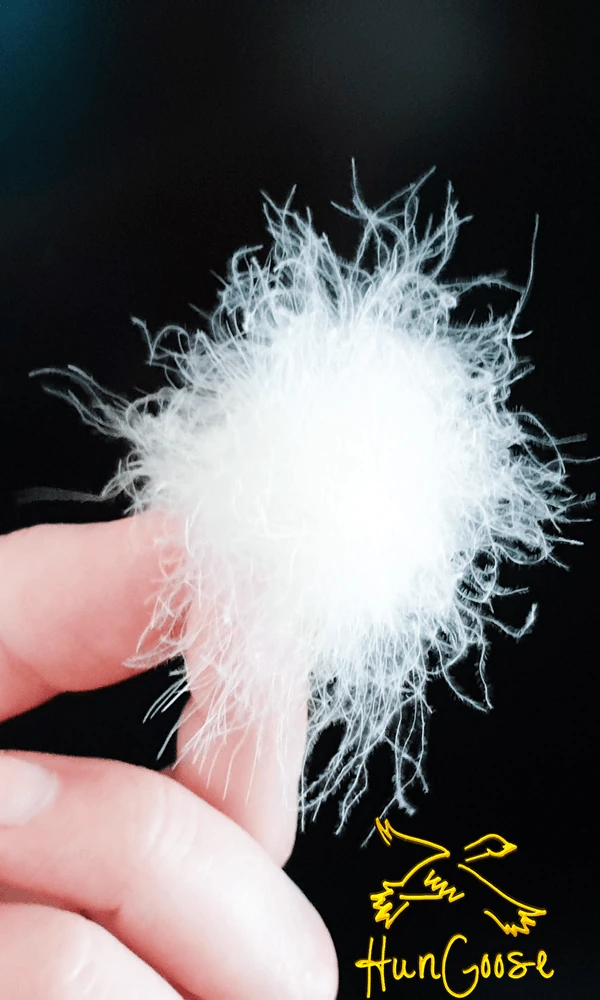
- Goose Down Cluster Close-Up: Mzperxfl, Wikimedia Commons, CC BY-SA 4.0. Resized where necessary and converted to compressed WebP.
- Down Jacket Interior Construction: DirkF601, Wikimedia Commons, CC BY-SA 4.0. Resized where necessary and converted to compressed WebP.
- Girl Wearing a White Down Jacket: Ron Lach, Pexels, Pexels License. Resized and converted to compressed WebP.