If you’re gearing up to create your very own children’s T-shirt line, this entrepreneurial journey is bound to be filled with excitement and promise. But partner with the wrong children’s t-shirt manufacturers, and that promise can quickly turn into a costly startup nightmare. Delayed shipments, inconsistent sizing, and subpar fabric quality are the three most common and damaging pitfalls in children’s apparel production. To avoid these risks entirely, rigorous vetting of your manufacturing partners at the outset is absolutely critical.
For children’s apparel brand owners, fixating solely on the bottom line and production costs is never a wise strategy. We’ve evaluated manufacturers across core criteria including production capacity, quality control standards, delivery reliability, regulatory compliance, and ethical manufacturing practices, to curate a list of the 12 top-tier kids T-shirt manufacturers in the world. Below, we break down these leading factories, all of which deliver consistently exceptional quality, reliable lead times, and strict adherence to global ethical production standards.
5 Key Criteria for Choosing a Children’s Apparel Manufacturer
When vetting kids T-shirt manufacturers for your brand, you can evaluate potential partners against these five core criteria below. This framework will help you efficiently shortlist the right long-term collaborators and avoid costly production risks from the very beginning.
Fabric Safety & International Certifications (CPSIA, OEKO-TEX®)
Children’s apparel is held to far stricter safety and compliance standards than adult clothing. Children have delicate, sensitive skin, and parents are increasingly focused on the safety of the garments their kids wear every day. For this reason, you must prioritize verifying a manufacturer’s safety compliance credentials: for example, whether they hold a CPC (Children’s Product Certificate) recognized under CPSIA, and whether the fabrics they use are certified to OEKO-TEX® standards. Holding these qualifications means every element of the garment — from fabrics and sewing threads, to buttons, zippers, and dyes — has passed rigorous testing for harmful substances, securing the safety bottom line of your children’s wear at the source.
Minimum Order Quantity (MOQ): Match Your Brand’s Growth Stage
Minimum Order Quantity (MOQ) refers to the lowest number of units a factory is willing to produce for a single order. If you are a startup brand, we recommend prioritizing suppliers that specialize in low MOQ children’s wear to reduce the risk of excess inventory and minimize market testing costs. If you are an established brand with stable sales and distribution channels, you can opt for manufacturers with higher MOQ thresholds, which typically come with more favorable unit pricing to help you better control production costs.
Customization Capabilities: OEM/ODM Models & Printing Technology
Your manufacturing partner must have the technical expertise and production capacity to turn your unique design vision into a tangible product. First, clarify which production models they support:
- OEM (Original Equipment Manufacturing): Also known as fully custom cut-and-sew production. You provide the complete design brief, technical pack, and fabric specifications, and the factory handles the full production process from scratch. This is the ideal solution for brands seeking 100% exclusive, differentiated designs.
- ODM (Original Design Manufacturing): Also known as private label production. The factory provides pre-developed, proven blank garments in classic styles, and you simply add your brand logo, custom labels, or print designs. For launching a core basics line, this is a faster, more cost-effective approach with a much shorter time-to-market.
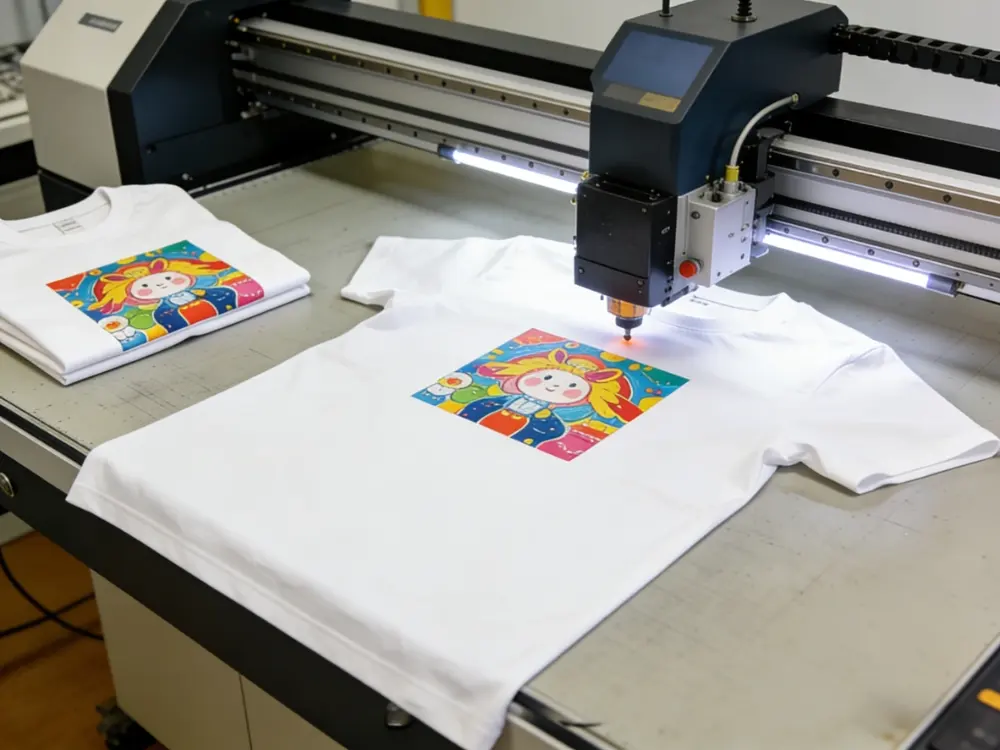
In addition, you must also assess the factory’s printing and embroidery capabilities. For children’s T-shirts, you need to partner with specialized OEM kids t-shirt factories with extensive children’s apparel production experience, that use non-toxic, kid-friendly printing processes (such as water-based inks or Direct-to-Garment printing).
Production Lead Times & Supply Chain Reliability
In the fashion industry, missing critical sales windows — such as back-to-school season or the holiday peak — can lead to severe revenue losses for your brand. For this reason, you must partner with a supplier with reliable, consistent delivery and a stable supply chain. When negotiating with manufacturers, be sure to confirm two core lead time metrics:
- Sample development lead time: 1–3 weeks is the industry standard.
- Bulk production lead time: 4–8 weeks after Pre-Production (PP) sample approval is the industry norm.
At the same time, always factor shipping and logistics timelines into your overall production schedule. Especially when working with overseas manufacturers in regions like Asia, sea freight can add an additional 3–5 weeks to your total delivery timeline, preventing missed sales opportunities due to miscalculated timelines.
Ethical Manufacturing & Sustainable Practices
Today’s consumers care deeply about how and where their clothing is made. Partnering with manufacturers that uphold ethical production standards is no longer just a choice for corporate social responsibility — it is a powerful marketing advantage and core brand differentiator. Where possible, we recommend conducting an in-person factory audit to verify compliance with workplace safety standards, the protection of labor rights, and the factory’s ability to work with sustainable fabrics and eco-friendly production processes, to align with your brand’s sustainability positioning.
The 12 Best Children’s T-shirt Manufacturers in 2026
Finding a trustworthy factory doesn’t have to be a shot in the dark. We’ve handpicked the top 12 custom kids clothing suppliers for your brand, vetted against core metrics including fabric quality, customization capabilities, and industry reputation.
1.HAPA – Best for Flexible OEM Solutions & Safety-Compliant Fabrics
If you’re looking for a strategic manufacturing partner, not just a factory, HAPA stands out as one of the premier children’s t-shirt manufacturers in the industry. Specializing exclusively in kids’ clothing, HAPA is widely acclaimed for its comprehensive OEM and ODM services. It sources premium natural fabrics compliant with OEKO-TEX Standard 100 and CPSIA regulations, guaranteeing uncompromising safety and comfort for children. From everyday cotton basics to intricate designs like custom sequin garments, HAPA’s masterful craftsmanship meets the diverse needs of brands of all sizes.
- Location: China / Global
- Typical MOQ: Flexible (lower MOQs available to support startup brands)
- Key Advantages: A truly end-to-end, one-stop service — from design development and fabric sourcing to rigorous final quality control — making it the perfect partner for both emerging boutique brands and large-scale retailers.
2.Tack Apparel – Best Low MOQ Option for Startup Brands
Launching a new children’s apparel line comes with inherent financial risk, and that’s where Tack Apparel is a game-changer for startups. It offers some of the most competitive options for low MOQ children’s wear in the industry, with zero compromise on quality, letting you easily test multiple T-shirt designs with minimal upfront investment.
- Location: USA, with global manufacturing facilities
- Typical MOQ: As low as 50 pieces
- Key Advantages: Perfect for small-batch launches, market testing, and rapid custom orders.
3.Hawthorn – Top Choice for Premium Cut-and-Sew Services
For brands that have outgrown basic blank garments and are seeking unique silhouettes, Hawthorn excels in high-end OEM cut-and-sew manufacturing. Whether you need a relaxed drop-shoulder fit or specialized neckline ribbing, its skilled European pattern makers will bring your tech pack to life with flawless precision.
- Location: London, UK
- Typical MOQ: 50 pieces per style
- Key Advantages: Unrivaled accuracy in sizing, grading, and premium European manufacturing standards.
4.Hongyu Apparel – Most Cost-Effective Manufacturer in Asia
If you’re looking to maximize profit margins without sacrificing durability, Hongyu Apparel is your ideal partner. Backed by a highly efficient China-based supply chain, it offers extremely competitive per-unit pricing, with in-depth expertise in international sizing standards.
- Location: Guangdong, China
- Typical MOQ: 100 pieces
- Key Advantages: Highly scalable one-stop production lines with factory-direct pricing.
5.Mega Apparel – Best Full Production Package (FPP) for Beginners
No fashion design background? No problem. Mega Apparel offers a complete Full Production Package (FPP). This means it handles every step of the process, from fabric sourcing and pattern making to manufacturing and final retail-ready packaging. All you need to provide is your creative vision, and it delivers finished, shelf-ready children’s T-shirts.
Location: USA
Typical MOQ: Flexible (consultation required)
Key Advantages: End-to-end project management that saves you significant time and resources.
6.Alamby Fashion – Best for Advanced Printing & Embroidery Technology
Children’s apparel designs live or die by their fun, vibrant, and long-lasting graphics. Alamby Fashion offers industry-leading ODM services, with expertise spanning non-toxic water-based screen printing to 3D raised embroidery. It guarantees your designs won’t crack, fade, or peel, even after repeated washes.
- Location: Guangdong, China
- Typical MOQ: 100 pieces
- Key Advantages: Industry-leading color-matching technology and strict exclusive use of kid-safe inks.
7.Newasia Garment – Fastest Turnaround & Rush Order Capabilities
Fashion moves fast, and sometimes you need to restock a best-selling item immediately. With over 39 years of industry experience and 140 production lines, Newasia Garment is renowned for its flexible production processes and lightning-fast delivery for urgent seasonal collections.
- Location: China
- Typical MOQ: 100 pieces
- Key Advantages: Ultra-fast sample development and bulk production, with every order passing through 5 rigorous quality inspection stages.
8.Good Clothing Company – Best Domestic Manufacturer in the USA
If you want to proudly market your brand as “Made in the USA” and avoid the headaches of international shipping, Good Clothing Company is your best choice. Seamless communication, strict adherence to US labor regulations, and lightning-fast domestic shipping make it a worthwhile investment for premium brands.
- Location: Massachusetts, USA
- Typical MOQ: 10 to 50 pieces (small-batch production available)
- Key Advantages: No language barriers, zero import duties, and strong brand equity for made-in-America positioning.
9.Royal Apparel – Top Choice for High-Quality Knit & Blended Fabrics
Finding a supplier that specializes in complex blended fabrics is no easy feat. Royal Apparel focuses on premium knit fabrics that deliver exceptional stretch, breathability, and shape retention — critical features for active toddlers and kids.
- Location: New York, USA
- Typical MOQ: No minimum for blank fabrics
- Key Advantages: Access to exclusive high-performance combed ring-spun cotton and eco-friendly fleece knits.
10.ARGYLE Haus – Best for Tech Pack Creation & Design Support
Countless brilliant ideas fall flat due to poorly developed tech packs. ARGYLE Haus solves this problem with a world-class in-house design team. Before a single piece of fabric is cut, its experts will help you create accurate sizing specifications for children across all age groups.
- Location: Los Angeles, California, USA
- Typical MOQ: 300 pieces
- Key Advantages: Specialized tech pack and pattern making services that drastically mitigate the risk of sizing discrepancies.
11.Bella+Canvas – Best Private Label (White Label) Supplier
If you want to launch your line quickly without navigating custom pattern making, Bella+Canvas is your ideal private label partner. It offers an extensive range of high-quality unbranded blank T-shirts for kids and teens, ready for your custom neck labels and logo printing.
- Location: USA / Global warehousing
- Typical MOQ: No minimum order quantity
- Key Advantages: The gold standard for retail-ready blank apparel and fast, seamless rebranding.
12.Teemill – Best Choice for Eco-Friendly, Sustainable Production
As modern parents increasingly prioritize sustainability, Teemill helps your brand stand out with a fully circular, green supply chain. For those looking for organic cotton kids shirts wholesale, it uses 100% organic cotton and manufactures products in renewable energy-powered facilities. Partnering with Teemill lets your children’s apparel brand establish itself as a true leader in eco-conscious fashion.
- Location: Isle of Wight, UK
- Typical MOQ: 1 piece (print-on-demand available)
- Key Advantages: Transparent, zero-waste supply chain powered entirely by renewable energy.
How to Effectively Communicate With Children’s T-shirt Suppliers
Finding the right supplier is only the first step. To avoid costly partnership risks, never just send your design files and ask for a price quote. In your initial communication, be sure to ask these 5 critical questions to confirm the fundamental terms of your partnership:
1.Business Type: Direct Factory vs. Trading Company
Understand exactly who you are dealing with to control your costs and quality:
- Direct Factory: Owns the equipment. Offers competitive ex-factory pricing, faster communication, and direct control over quality and lead times.
- Trading Company: Acts as a middleman. While they may offer lower MOQs by consolidating orders, they add a price markup and reduce your direct oversight of the production line.
2.Monthly Production Capacity
A factory might easily handle your initial 300-piece trial order, but what if your product goes viral?
What to ask: Do you have the infrastructure and labor reserves to rapidly ramp up to a 10,000-piece bulk order without compromising quality control?
3.Minimum Order Quantity (MOQ) Breakdown
MOQ is the biggest barrier for startups. You must clarify their exact calculation logic upfront to avoid disputes.
- The Trap: A stated “500-piece MOQ” often means 500 pieces of one style in one single color.
- The Solution: Ask if you can split that 500-piece MOQ across 2–3 colors or multiple sizes for the same style.
4.Sampling and Bulk Production Lead Times
Missing a back-to-school season or holiday peak can devastate your cash flow. Request a detailed timeline breakdown:
- Pre-Production (PP) Samples: How many working days to produce?
- Bulk Production: After sample approval, how many weeks until the order is packed and ready for shipment?
- Pro Tip: Always confirm the feasibility and associated costs of rush orders in advance.
5.CPSIA Compliance and Fabric Safety Standards
For children’s apparel, safety is a non-negotiable bottom line. Customs authorities strictly enforce this worldwide.
- What to verify: Are the fabrics, printing inks, and all auxiliary materials (zippers, buttons) completely free of lead, phthalates, and other harmful chemicals?
- Action step: Always explicitly require the supplier to provide valid compliance qualifications and test certificates for your target market.
The Critical Role of a Tech Pack in Custom Children’s T-Shirt Manufacturing
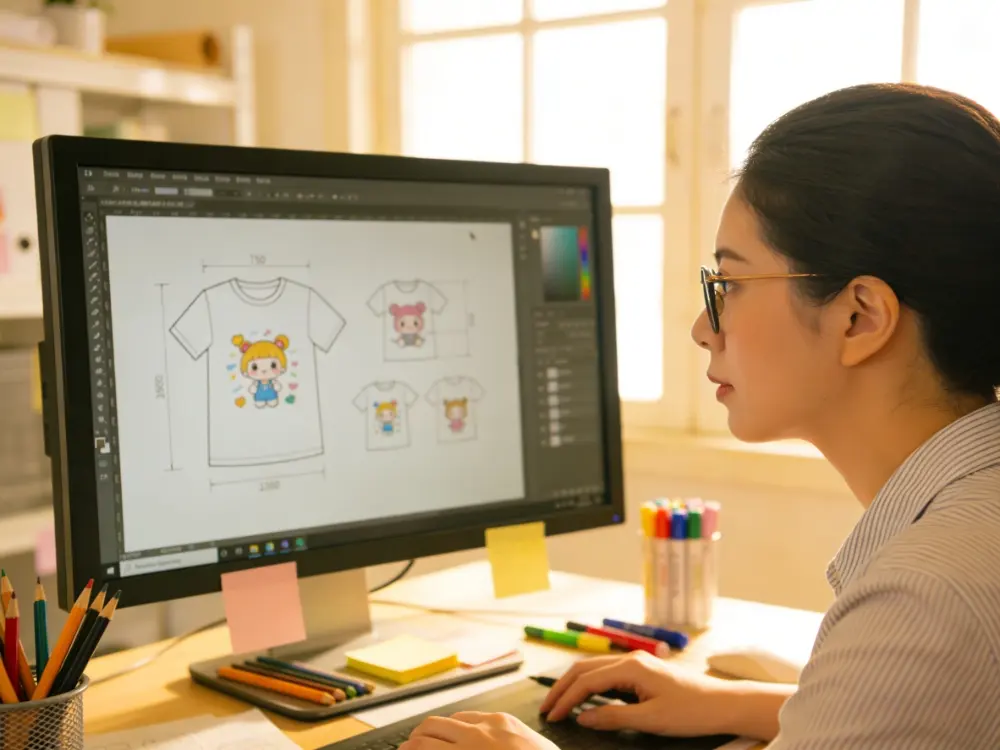
If you’re planning to transition from printing logos on wholesale blanks to creating fully bespoke apparel via OEM production, mastering the Tech Pack is your essential first step.
A Tech Pack is the manufacturing blueprint for your garment. In the highly specialized children’s apparel sector, a precise tech pack is your most critical safeguard against costly manufacturing errors.
Why You Need a Tech Pack Before Contacting Suppliers
Many brand owners make the common mistake of sending a factory a rough sketch from Pinterest and asking, “How much will this cost to make?” The reality is, no reputable manufacturer can provide an accurate quote without a complete tech pack. Here are the 4 core reasons why it is indispensable:
- Lock in Accurate Production Pricing: Factories calculate costs based on exact fabric consumption, labor time, and print complexity. Without precise specs, any quote is just a rough estimate, leaving you vulnerable to unexpected cost overruns.
- Eliminate Communication Misalignment: When working with overseas kids wear manufacturers, language and time zone barriers can create information gaps. A visual, data-driven tech pack prevents misinterpretation at the source.
- Dramatically Streamline Sampling: A detailed blueprint allows the factory to produce a compliant Pre-Production (PP) sample in just 1 to 2 rounds, saving you weeks of costly back-and-forth international shipping.
- Establish a QC & Contractual Reference: Your tech pack serves as the formal “master production agreement.” If a bulk order arrives with an overly tight neckline or misaligned logo, the tech pack is your definitive document to verify specifications and enforce accountability.
5 Mandatory Elements of a Children’s Tech Pack
A children’s T-shirt may seem simple, but children’s body proportions are drastically different from adults’. Combined with the need for wear safety and mobility, your tech pack must include these core components:
- Technical Flat Sketches: Black and white 2D vector drawings displaying the front, back, and interior details. They must explicitly mark structural elements like double-needle stitching, neckline binding, and hem construction.
- Bill of Materials (BOM): The complete “ingredient list” for your T-shirt. This must list every raw material: main fabric (e.g., 95% organic cotton / 5% spandex, 200gsm jersey knit), threads, ribbing, woven/care labels, trims, and retail packaging.
- Precise Measurement Chart & Tolerance: Make-or-break for children’s apparel. Infants have a much larger head-to-body ratio than adults. You must specify the exact width and stretch range of the neck opening so it fits easily over a child’s head without tearing or sagging. It must also include the acceptable size tolerance range for every critical point.
- Size Grading Rules: Children’s apparel must cover a full size range for different age groups (e.g., 2T, 3T, 4T, 5T). The grading rules define the exact incremental or decremental values for chest width, body length, and sleeves to ensure a perfect fit across all ages.
- Print & Graphic Artwork Specs: Avoid vague descriptions like “print logo on chest.” You must provide exact Pantone (PMS) color codes, graphic dimensions (e.g., 10cm wide), exact placement (e.g., centered 5cm below the front neck), and process requirements (e.g., kid-safe, water-based DTG inks).
Understanding Private Label (White Label) vs. Custom Cut-and-Sew
One of the most important decisions when launching a kids’ clothing line is choosing your manufacturing method. Understanding the difference between these two concepts is crucial for finding a factory that perfectly matches your business model and budget.
| Feature | Private Label (White Label) | Custom Cut-and-Sew (OEM) |
| Manufacturing Process | Purchasing pre-made, unbranded blank garments. | Building garments entirely from scratch using raw fabric rolls and Tech Packs. |
| Customization Level | Low: Limited to adding custom prints, logos, and neck tags to existing styles. | High: Total freedom over fabric sourcing, bespoke fits, patterns, and stitching details. |
| Time-to-Market | Very Fast: Blanks are in stock; collections can launch in weeks. | Slower: Requires pattern making, sourcing, and PP sampling (often takes months). |
| Minimum Order Quantity (MOQ) | Low to None: Easy to test new graphic designs without financial risk. | Medium to High: Factories usually require 100 to 300+ pieces per style/color. |
| Initial Investment | Low: Perfect for startups on a tight budget. | Higher: Requires investment in tech packs, pattern fees, and custom fabric sourcing. |
| Brand Differentiation | Low (Homogenization Risk): Competitors might use the exact same blank T-shirts. | Very High: 100% unique products that easily justify a premium retail price point. |
| Best Suited For… | Merch brands, print-on-demand dropshippers, and fast trend-testing startups. | Established labels, high-end boutiques, and brands needing unique oversized fits or organic fabrics. |
Emerging Trends in Children’s T-Shirt Manufacturing for 2026
The global children’s apparel market is in a period of rapid iteration. Millennial and Gen Z parents—who now make up the core consumer demographic—have firmly rejected the traditional fast fashion model. Instead, they prioritize environmental sustainability, durability, skin-friendly comfort, and long-term design value. To maintain your brand’s competitive edge, your product development must deeply align with these four emerging trends:
Sustainable & Recycled Fabrics: From Marketing Bonus to Industry Standard
Sustainability is no longer a gimmicky talking point; in 2026, it is a baseline purchasing expectation. Parents actively seek eco-friendly, traceable clothing, driving a deep transformation across the entire production chain:
- Mass Adoption of Eco-Fabrics: Beyond those looking for organic cotton kids shirts wholesale, sustainable materials like bamboo fiber, recycled polyester (rPET), and Lenzing Modal/Lyocell have become mainstream. They meet the core requirements of skin-friendliness while aligning with a brand’s eco-positioning.
- End-to-End Circular Production: Forward-thinking factories are embedding circular principles into their workflow. This includes zero-waste pattern cutting, biodegradable plastic-free packaging, and waterless dyeing processes to drastically reduce carbon footprints.
- Traceability is Mandatory: Consumers require a fully traceable supply chain. Explicitly listing these sustainability requirements in your tech pack is critical to winning over this fast-growing market.
Gender-Neutral Design & Relaxed Functional Silhouettes
The traditional logic of “pink for girls, blue for boys” has been completely upended. In 2026, gender-neutral aesthetics and relaxed silhouettes dominate the T-shirt category:
- The Normalization of Gender-Neutral: Brands are shifting to low-saturation earth tones (terracotta, sage green, mustard yellow, oat) and minimalist silhouettes. This premium aesthetic enables hand-me-down use between siblings, perfectly aligning with the anti-waste ethos of modern parents.
- Refined Streetwear Silhouettes: There is surging demand for casual, streetwear-inspired looks. Critically, a perfect relaxed fit (like an on-trend drop-shoulder T-shirt) cannot be achieved by simply ordering a size up. It requires manufacturers to develop a fully customized pattern tailored to a child’s mobility—delivering a loose silhouette without excess fabric that restricts play.
Refined Upgrades in Skin-Friendly Safety & Functionality
For this new generation of parents, safety goes far beyond “meeting basic compliance.” They are demanding refined, functional upgrades for next-to-skin clothing:
Targeted Solutions: Hypoallergenic fabrics tailored for sensitive and eczema-prone skin, moisture-wicking and antibacterial knits, and thermo-regulating materials have become popular upgrade directions. These innovations directly address parents’ top anxieties regarding all-day comfort.
Eco-Friendly & Creatively Diverse Printing Technology
Print design remains a core competitive differentiator, but the manufacturing process is evolving across three pillars: child safety, environmental sustainability, and creative diversity.
- The New Standard: Non-toxic, water-based inks and DTG (Direct-to-Garment) printing are now industry standards.
- Creative Techniques: Processes like puff print, glow-in-the-dark print, and flock print are being widely adopted—strictly under the premise of global child safety compliance. This helps brands create highly differentiated, eye-catching products that are 100% safe.
What T-Shirt Material Is Best for Kids?
After over a decade in children’s wear manufacturing, I can tell you straight: picking the best t-shirt fabric for kids comes down to balancing three non-negotiables: gentleness for sensitive skin, long-wearing durability, and ironclad safety compliance. While the market is flooded with every kind of blended fabric imaginable, natural fibers remain the undisputed gold standard for garments that sit directly against a child’s delicate skin.
Below, we break down the top-tier fabrics that meet premium global manufacturing standards for kids’ apparel:
- 100% Organic Cotton
Organic cotton is widely recognized as the top-tier fabric choice for kids’ t-shirts. Unlike conventional cotton, organic cotton is grown without the use of synthetic pesticides and fertilizers. This makes it far gentler on sensitive skin, with a near-zero risk of triggering allergic reactions or irritation — a critical factor for babies and toddlers with delicate skin barriers. - Bamboo Fiber
Bamboo fiber stands out for its incredible buttery-soft hand feel, right out of the package. It’s naturally hypoallergenic, and boasts industry-leading moisture-wicking properties that pull sweat away from the skin far faster than conventional cotton. This makes it the perfect choice for active, playful kids, or for brands creating lines for warm, humid climates. - Modal
Modal is a semi-sustainable fiber, crafted primarily from wood pulp (most often sourced from beech or eucalyptus trees). It’s naturally hypoallergenic, with a silky-smooth texture and exceptional moisture-wicking performance that keeps kids cool and dry all day long. It also holds its shape and softness wash after wash, far better than conventional cotton, making it ideal for everyday playwear for active kids. - Linen-Cotton Blend
For summer collections or elevated, occasion-ready kids’ wear, a linen and organic cotton blend delivers a one-of-a-kind, premium aesthetic with unbeatable functionality. Here’s why it works: linen is the single most breathable natural fabric on the market, but pure linen can be too stiff and scratchy for a child’s delicate skin. Blending it with organic cotton retains linen’s signature cooling, breathable properties, while adding the buttery softness kids’ garments require.
Why Your Fabric Choice Make-or-Breaks Your Brand
From a manufacturing and retail perspective, locking in the right fabric is the single most impactful way to protect your brand’s bottom line:
- Slash return rates: Scratchy, poor-hand-feel fabrics are the #1 cause of returns in the kids’ apparel ecommerce space. Choosing premium fibers like bamboo or combed organic cotton directly boosts customer satisfaction and cuts down on costly, profit-eating returns.
- Guarantee market compliance: For the North American and UK markets, your chosen fabrics must meet mandatory safety standards (including the U.S. CPSIA and Canada’s CCPSA), particularly when it comes to flammability requirements and lead content in dyes and pigments.
- Drive long-term brand growth: Today’s Millennial and Gen Z parents are more discerning than ever before. They don’t just stop at a cute print — they flip the garment inside out and read every line of the fabric composition label. Building your line around eco-friendly, non-toxic fabrics isn’t just a nice-to-have; it’s a non-negotiable strategy for sustainable, long-term brand growth.
Take the Next Step for Your Apparel Brand
Finding the perfect children’s t-shirt manufacturers or custom kids clothing suppliers is undoubtedly one of the most critical decisions you will make for your apparel brand. Whether you want to leverage the speed and agility of private label production to capture the market quickly, or invest in fully custom cut-and-sew manufacturing to build one-of-a-kind product differentiation, the 12 top manufacturers on this list offer a starting point for every business model.
If you’re looking for a trusted OEM partner with 16 years of specialized experience in children’s apparel, acting as one of the leading OEM kids t-shirt factories offering flexible minimum order quantities and an unwavering commitment to safe, premium-quality fabrics, HAPA is ready to bring your next collection to life.
Ready to build your next standout children’s apparel collection? Get in touch with us and share your tech pack, and we’ll deliver a tailored, end-to-end production solution for you without delay.
FAQ
How much does it cost to manufacture a custom children’s T-shirt?
The cost per unit (CPU) varies wildly depending on your manufacturing method and order volume. For private label (printing on blank shirts), you might pay anywhere from $3 to $8 per shirt. For premium custom cut-and-sew using GOTS-certified organic cotton with low MOQs, the cost can range from $8 to $15+ per unit. Ordering in larger bulk quantities (e.g., 500+ pieces) will significantly reduce your final cost.
What is a realistic Minimum Order Quantity (MOQ) for a startup brand?
If you are just launching, look for a factory that offers a “Low MOQ” program, typically ranging from 50 to 150 pieces per style or color. While the cost per shirt will be slightly higher, it prevents you from tying up your cash flow in excess dead inventory while you test your new designs in the market.
How long does it take to produce a batch of kids’ T-shirts?
From the moment you contact a factory to the day the shirts arrive at your warehouse, you should expect a timeline of 8 to 12 weeks. This generally includes 2 to 3 weeks for creating and approving the Pre-Production (PP) sample, 4 to 6 weeks for bulk manufacturing, and 2 to 4 weeks for international shipping and customs clearance.
Do I absolutely need a Tech Pack to get a quote?
Yes. Asking a factory for a manufacturing quote without a Tech Pack is like asking a builder how much a house costs without showing them a blueprint. To get an accurate price and avoid costly miscommunications, you must provide a detailed Tech Pack including precise measurements, fabric specifications, grading rules, and Pantone color codes.