As an intimate garment that accompanies children for nearly half of their day, pajama leaves zero room for compromise on safety — a truth you know all too well if you run a children’s clothing boutique. I’ve seen far too many retailers pay a devastating price for sourcing sleepwear that fails to meet mandatory safety regulations. Many have even seen their businesses grind to a complete halt, their cash flow drained dry by costly product recalls that can sink an otherwise thriving store overnight.
Finding a reliable, high-margin pajama supply source—specifically a trustworthy children’s sleepwear supplier wholesale—is one of the biggest hurdles you’ll face in the early stages of building your business. That’s exactly why I’ve poured extensive time and industry expertise into curating this Top 10 Wholesale kids Pajama Suppliers Guide — to help you stock your shelves with premium, compliant, customer-approved products with total confidence.
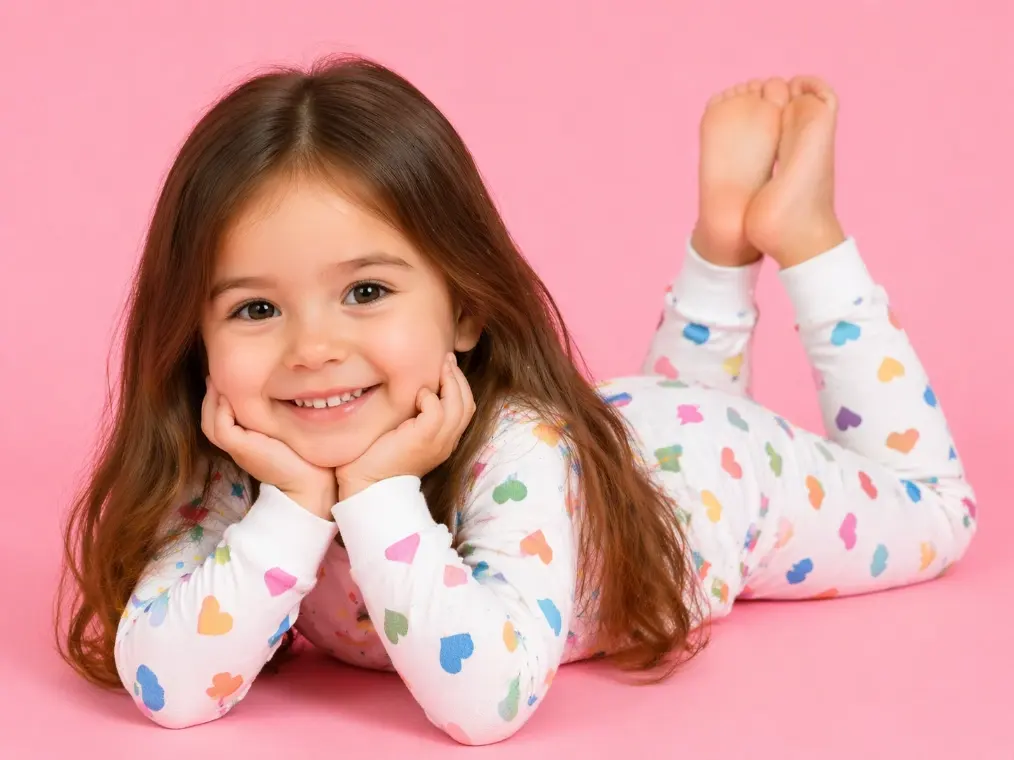
Why Sourcing High-Quality Children’s Pajama Is Critical for Your Boutique
When stocking your shelves, the children’s boutique apparel suppliers you choose will directly determine your long-term success. Pajama is unlike everyday outerwear: it sits directly against a child’s skin for 10 to 12 hours every single day, and must hold up to their tossing and turning through the night, as well as any unexpected accidents that happen after bedtime.
When bulk sourcing children’s pajama, meticulous vetting of your wholesale suppliers is non-negotiable, driven by three core reasons:
- Prolonged Direct Skin Contact: Children’s pajama rests against a child’s skin for 10 to 12 hours daily, placing exceptionally high demands on the fabric’s softness and breathability.
- Heavy-Duty Performance Requirements: Pajama must withstand a child’s constant nighttime movement, unexpected messes, and repeated high-intensity washes, all without losing its shape or structural integrity.
- Strict Compliance Mandates: These products must meet uncompromising, precise, and rigorous safety and technical manufacturing standards — both to protect children’s health and safety, and to safeguard your business’s bottom line.
Why Safety and CPSC Compliance Matter
CPSC compliance is not optional in children’s pajama. In the U.S., kids’ pajamas must meet strict rules for flammability and snug-fit sizing. Even small issues in fabric stretch, trim details, or garment measurements can create serious compliance problems. That is why boutiques should work with suppliers who understand these standards clearly and can control production details well. A reliable partner helps you reduce recall risks, protect your customers, and avoid damage to your brand reputation.
Fabric Comes First: The Rise of Organic Cotton and Bamboo
Organic cotton and bamboo pajamas are becoming more popular because many parents want soft, breathable, and safer-feeling fabrics for their children. But for boutique buyers, comfort is only part of the picture. The fabric also needs to be durable, stable after washing, and resistant to pilling or losing shape. Choosing manufacturers that use certified materials, such as GOTS or OEKO-TEX yarns, can help ensure better product quality and give your customers more confidence in what they buy.
How We Selected the Best Wholesale Kids’ Pajama Suppliers
Finding top rated pajama manufacturers requires looking past polished online storefronts. Drawing on 16 years of manufacturing experience, these wholesale clothing vendors were vetted using a rigorous quality assurance framework to ensure you only partner with reliable factories:
- Stringent Safety and Compliance Verification: We prioritized reliable factory direct kids clothes vendors with strict adherence to US CPSC regulations, demanding exact flame resistance and snug-fit dimensions.
- Proven by Market Success: We analyzed real B2B sleepwear supplier reviews and production histories to ensure consistent quality across bulk runs and reliable lead times.
- Fabric Quality and Sustainability Standards: Selected ethical children’s clothing factories use premium organic cotton and bamboo, backed by GOTS certifications to guarantee buttery-soft, chemical-free fabrics.
- Real-World Washability and Durability Testing: To verify true fabric washability, our US contact, Lucy, physically tested garments for rib elasticity and colorfastness after multiple heavy home wash cycles.
The Top 10 Wholesale Kids’ Pajama Suppliers for Your Retail Business
1.HAPA — Flexible OEM/ODM Kids’Pajama Partner
HAPA is a China-based children’s clothing manufacturer with more than 15 years of OEM/ODM experience in kidswear production. The company presents itself as a full-service partner for global brands, covering design support, sampling, production, and shipment.
Its official site also highlights support for over 200 brands and a catalog of 3,000+ styles. That makes HAPA a strong fit for buyers who want more than basic wholesale and need a supplier that can also support custom development.
MOQ and customization options:
HAPA promotes low-MOQ production, OEM/ODM service, private-label support, free design assistance, and logo customization for packaging and tags. Its website also states sample lead times of 3–7 days and bulk production timelines of around 4–6 weeks.
Best for:
Boutiques, startups, and private-label brands that want custom kids’ pajama with relatively accessible order quantities. This is an inference based on HAPA’s OEM/ODM model and published MOQ guidance.
Advantage:
Strong kidswear focus, flexible customization, and a more development-oriented service model than many standard wholesalers.
2.Thygesen Textile Vietnam — Large-Scale Custom Pajama Manufacturer
Thygesen Textile Vietnam is a long-established apparel manufacturer with deep experience in custom production. Its kids’ pajama pages emphasize stringent quality control, international-standard manufacturing, and broad support for custom pajama projects.
The company also highlights premium material sourcing and fabric development, including cotton, bamboo, and blended options for children’s pajamas. Compared with many boutique-oriented wholesalers, Thygesen is clearly positioned as a mass-production manufacturing partner.
MOQ and customization options:
Thygesen supports OEM, ODM, and one-stop-shop solutions. For cotton pajamas, its official site says the standard MOQ is 10,000 pieces per style, and other company materials describe kidswear and underwear MOQs in the 5,000–10,000 range depending on the product.
Best for:
Established brands, importers, and higher-volume buyers that need structured custom manufacturing and larger production capacity. This is an inference based on Thygesen’s published MOQ range and mass-scale positioning.
Advantage:
Strong production systems, serious fabric capability, and a clear advantage for large, repeat custom orders.
3.Billoomi Fashion — Low-MOQ Private Label Kidswear Specialist
Billoomi Fashion is an India-based apparel manufacturer with a strong private-label and made-to-order model. Its pajama pages position the company as a sustainable manufacturer that works from the client’s own design details rather than selling stock collections.
That approach makes Billoomi especially attractive for brands that want more control over fabric choice, trims, labels, and overall product identity. The company also emphasizes eco-friendly sourcing and support for small and growing labels.
MOQ and customization options:
Billoomi states that MOQ can start from 25 pieces per style per color for some solid-color styles, while custom printed or embroidered styles usually begin at 100 pieces per style. It also supports custom labels, tags, and full private-label development.
Best for:
Startups, boutique labels, and small brands that want private-label kids’ pajamas without committing to very large factory minimums. This is an inference based on Billoomi’s low-MOQ and small-batch positioning.
Advantage:
Low MOQ, strong private-label support, and a more brand-friendly approach to custom development.
4.Kiskissing — Trend-Driven No-MOQ Boutique Wholesaler
Kiskissing is a global kidswear wholesaler built for boutiques and smaller retailers that need trendy products with less inventory pressure. Company descriptions on its public channels position it as an experienced supplier serving boutiques and stores with a broad children’s assortment.
Rather than operating like a traditional custom factory, Kiskissing is better known for fast-moving wholesale styles and a lower-risk buying model. That makes it appealing for sellers who want to test new looks quickly.
MOQ and customization options:
Public-facing company materials repeatedly promote a no-MOQ model, and the brand also advertises custom labels and other boutique-friendly add-ons.
Best for:
Boutiques, small online sellers, and trend-focused stores that want ready-stock kidswear without heavy opening commitments. This is an inference based on Kiskissing’s no-MOQ positioning and boutique-oriented messaging.
Advantage:
No MOQ, quick style testing, and a wholesale model that suits fast-changing boutique demand.
5.PKW Group — Ready-Pack Wholesale Supplier for Retail Testing
PKW Group is a Los Angeles-based wholesale apparel business serving retailers, distributors, and exporters. Its official site emphasizes ready-to-sell packs, small opening orders, and a simple wholesale process for stores that want to start testing inventory quickly.
It is not positioned as a dedicated kids’ pajama manufacturer. Instead, PKW works better as a stock-based wholesale source for retailers that value convenience, faster fulfillment, and broad assortment access.
MOQ and customization options:
PKW promotes small packs and low minimum opening orders, but its public site does not strongly highlight OEM, ODM, or deep private-label customization.
Best for:
Retailers that want to test children’s apparel categories with smaller ready-stock buys instead of developing a full custom pajama line. This is an inference based on PKW’s pack-based wholesale model.
Advantage:
Low entry barrier, fast order handling, and a simple wholesale setup for smaller retail experiments.
6.CnPajama — Dedicated Pajama Factory with OEM/ODM Support
CnPajama belongs to Shine Bright Group and presents itself as a professional pajama manufacturer in Zhejiang, China. The company says it was established in 2003 and focuses on pajamas, sleepwear, and loungewear for international markets.
Because its product line centers on sleepwear rather than general fashion apparel, CnPajama feels more specialized than many mixed-category kidswear suppliers. That can be useful for buyers who want a pajama-focused sourcing partner.
MOQ and customization options:
CnPajama supports OEM and ODM services. On product pages, some stock children’s pajama listings show very low entry minimums, such as 4 pieces or 2 sets, though actual MOQ clearly varies by style and order type.
Best for:
Buyers who want a pajama-specialist supplier with OEM/ODM capability and a more sleepwear-focused catalog. This is an inference based on CnPajama’s core product positioning.
Advantage:
Clear pajama specialization, one-stop development support, and visible OEM/ODM service.
7.KidsBlanks by Zoe — Personalization-Ready Blank Pajama Supplier
KidsBlanks by Zoe is a woman-owned wholesale blank apparel supplier focused on baby and toddler clothing. The brand has operated since 2000 and is built around blank garments that can be decorated, relabeled, or resold under another brand presentation.
This makes KidsBlanks different from a traditional fashion wholesaler. It is a more practical option for businesses that want simple blank sleepwear products they can personalize with embroidery, printing, or custom labels.
MOQ and customization options:
Its FAQ states that wholesale pricing requires a minimum order of 6 pieces of the same color, size, and style. The company also offers private relabeling and other customization services.
Best for:
Small brands, decorators, and boutiques that want blank children’s pajamas for easy personalization. This is an inference based on the company’s blank-apparel and relabeling model.
Advantage:
Very low wholesale threshold and strong support for branding, embellishment, and relabeling.
8.Faire (B2B Marketplace) — Multi-Brand Platform for Wholesale Discovery
Faire is not a manufacturer. It is a wholesale marketplace that connects retailers with a large number of independent brands, including children’s pajama and pajama sellers.
For buyers, the main appeal is flexibility. Instead of working with a single factory, retailers can compare many brands, test product categories, and reduce early buying risk through marketplace-style ordering.
MOQ and customization options:
MOQ and customization vary by brand on the platform. Faire itself promotes free returns on qualifying opening orders and 60-day payment terms for eligible retailers, which helps lower the risk of first-time buying.
Best for:
Boutiques and new retailers that want to test multiple pajama brands before building a direct supplier relationship. This is an inference based on Faire’s marketplace structure and buyer terms.
Advantage:
Broad brand access, lower trial risk, and retailer-friendly payment and return policies.
9.Rioco Kidswear — No-MOQ Boutique Wholesale Platform
Rioco Kidswear is an online wholesale supplier of premium baby and children’s clothing. Its official pages say the company launched in 2019 and supports entrepreneurs with boutique-style kidswear and AQL2.5 quality standards.
Although it is not a pajama-only supplier, Rioco is clearly built for boutiques and small online sellers that want fashionable children’s products with a flexible buying structure.
MOQ and customization options:
Rioco states that there is no minimum quantity restriction on its website. It also offers customized labeling and branded tag options for wholesale buyers.
Best for:
Small retailers, boutique stores, and online sellers that want low-risk wholesale buying with optional branding add-ons. This is an inference based on Rioco’s no-MOQ and custom-label model.
Advantage:
No MOQ, boutique-friendly assortment, and easy label customization for wholesale orders.
10.Royal Apparel — USA-Made Organic and Private-Label Apparel Source
Royal Apparel is a U.S.-based manufacturer and wholesaler known for Made-in-USA production and eco-friendly basics. Its official materials highlight domestic manufacturing, children’s apparel options, and organic cotton products for infants, youth, and other categories.
The company is broader than kids’ pajamas alone, but it appeals to retailers that value domestic production, organic fabric stories, and private-label-ready apparel programs.
MOQ and customization options:
Royal Apparel says there are no minimums for blank stock wholesale orders. For custom apparel and private-label work, its support materials describe much higher minimums, including roughly 1,200–1,800 units per style, color, and design, with some stock-fabric programs starting from 800 units depending on the setup.
Best for:
Retailers that want USA-made basics, organic children’s apparel, or larger-scale private-label programs. This is an inference based on the company’s domestic and custom-manufacturing structure.
Advantage:
Made-in-USA credibility, organic product positioning, and a strong option for stock blanks or larger custom programs.
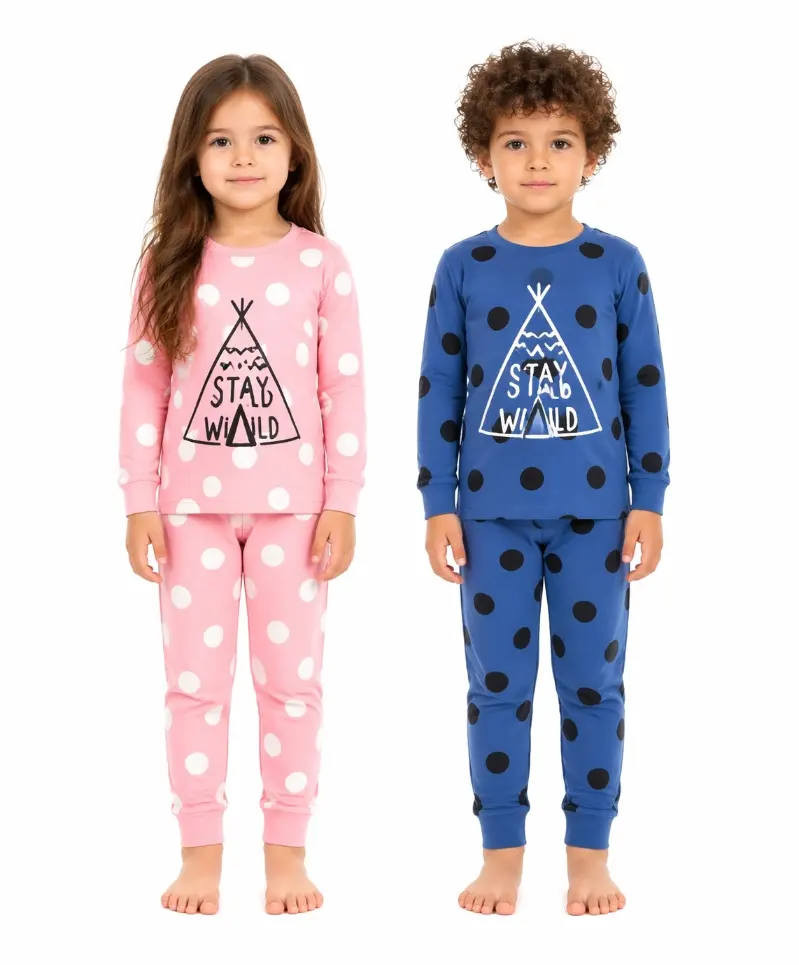
What to Look for in a Reliable Kids’ Pajama Supplier
Finding the right manufacturing partner is about far more than signing off on a polished prototype sample. To build a profitable, scalable pajama line, you need a factory that delivers unwavering, consistent quality across large-scale bulk production runs. Before you place a wholesale order, below are the critical technical and operational factors you must evaluate.
- Fabric performance: Test fabric beyond sample feel. Choose soft, breathable cotton or bamboo that still resists pilling, shrinkage, and shape loss after repeated washing.
- Sizing and stitching: Demand accurate sizing, clear pattern grading, and strong stitching. A reliable supplier should follow tech packs closely and deliver comfortable, consistent fit across all sizes.
- Safety details: Check every print, dye, trim, snap, and zipper for safety. Avoid loose parts and confirm all materials meet CPSC requirements for children’s pajama.
- Communication and support: Choose a factory that replies quickly and solves problems early. Strong partners catch design or production risks before bulk orders and suggest practical fixes.
- Production capacity: Confirm the supplier can handle repeat orders and fast restocks. The best factories offer flexible MOQs at first and stable capacity as your boutique grows.
Red Flags to Avoid When Selecting a Wholesale Kids’ Pajama Supplier
A bad manufacturing partner will not only drain your capital, but also inflict irreversible damage to your brand reputation. After 16 years of deep immersion in the global apparel supply chain, I have learned to spot the warning signs of an unreliable supplier in the earliest stages of negotiation. Below are the critical red flags that should prompt you to terminate discussions immediately.
Inability to Clearly Explain the Sampling and Production Process
Professional factories operate on strict, structured schedules. If a supplier cannot provide a clear, detailed process breakdown — covering the sampling workflow, CAD drawing confirmation steps, and a full bulk production timeline — it signals a lack of mature operational management. Ambiguous, ill-defined processes will inevitably lead to catastrophic delays to your product launch.
Refusal to Provide Real, On-Site Photos or Videos of the Factory
Transparency is a non-negotiable bottom line. If a supplier refuses to conduct a live video tour of the facility, or only provides heavily polished, generic stock-style workshop photos, they are almost certainly a middleman, not a direct, in-house factory. This means you will have zero control over product quality, while also paying a premium for inflated wholesale pricing.
Unusually Low Pricing With No Justifiable Explanation
If a quote seems “too good to be true”, it almost always is. Rock-bottom pricing typically comes with severe corner-cutting: the use of low-quality, uncertified fabrics, poor working conditions, or skipped mandatory safety testing. In the end, you will pay a devastating price for these hidden risks — massive financial losses from exorbitant return rates.
Vague Responses to Questions About Product Details and Compliance
Safety and regulatory compliance are rigorous, exact sciences. If a supplier gives ambiguous, evasive answers when asked about tech pack execution details, fabric shrinkage rates, or US CPSC flammability certification requirements, terminate the partnership immediately. In children’s pajama manufacturing, any practice based on guesswork rather than strict standards exposes your boutique to enormous legal liability risks.
Dramatic Drop in Communication Responsiveness After the Initial Reply
The initial sales enthusiasm a supplier shows is meaningless if follow-up communication is consistently slow and unresponsive. If a supplier takes days to reply to basic technical questions before you have even placed a formal order, you can expect far worse delays once bulk production is underway. Fast, proactive communication is the very foundation of a reliable B2B partnership.
Conclusion
Selecting the right wholesale children’s pajama supplier is about far more than locking in the lowest price. What matters most is finding a true strategic partner — one that delivers powerful, ongoing support for your brand through safe, compliant products, consistent quality, seamless communication, and reliable production capacity for repeat and restock orders.
In my 16 years of deep experience in the global children’s apparel supply chain, I have consistently found that the best suppliers are the partners who maintain unwavering reliability long after the first prototype is completed or the first order is fulfilled. By keeping your focus firmly on fabric quality, regulatory compliance, product consistency, and long-term service, you will be well-positioned to make smarter sourcing decisions — and build a stronger, more resilient retail business over time.
FAQ
What is the average MOQ for wholesale kids pajamas?
The average MOQ can vary a lot by supplier type. Stock wholesalers may accept very small orders, while custom manufacturers often require higher quantities per style or color. In most cases, boutique-friendly suppliers offer lower MOQs, while full OEM factories usually expect larger bulk orders.
What certifications should I ask for before ordering?
You should ask for certifications or documents related to product safety, fabric testing, and factory standards. For kids sleepwear, buyers often look for compliance support, material test reports, and certifications such as OEKO-TEX or other relevant quality and social audit documents, depending on the market.
How long does custom kids pajama production usually take?
Custom kids pajama production usually takes several weeks, depending on the design, fabric sourcing, order size, and factory schedule. Sampling often comes first, followed by revisions and bulk production. If your order includes custom prints, labels, or packaging, the lead time may be longer.
What is the best fabric for childrens pajamas?
There is no single best fabric for every brand, but soft, breathable, and skin-friendly materials are usually the safest choice. Cotton is widely preferred for comfort and ease of wear. Organic cotton and bamboo-based fabrics are also popular in the market for a softer and more premium feel.
Should I choose a domestic or overseas pajama supplier?
That depends on your business priorities. Domestic suppliers may offer easier communication, faster shipping, and simpler quality follow-up. Overseas suppliers often provide more competitive pricing and broader production capacity. The right choice depends on your budget, timeline, customization needs, and order volume.