The North American children’s apparel market is booming, and Millennial and Gen Z parents are far more discerning than previous generations. When shopping for their kids’ clothing, they don’t just fixate on aesthetics and prints — they pore over product labels to understand every garment’s exact fabric composition. What they demand is durable, on-trend clothing that has passed rigorous safety testing, not pieces that fade and lose quality after just a month or two of wear.
Yet for many brand founders, building apparel that aligns with modern parents’ core values hinges on one non-negotiable factor: finding a trusted manufacturing partner. The right partner does far more than just deliver production services — they’re ready to dive deep into the children’s apparel market with you, turn your design vision into tangible, market-ready products, and grow alongside your brand for the long term.
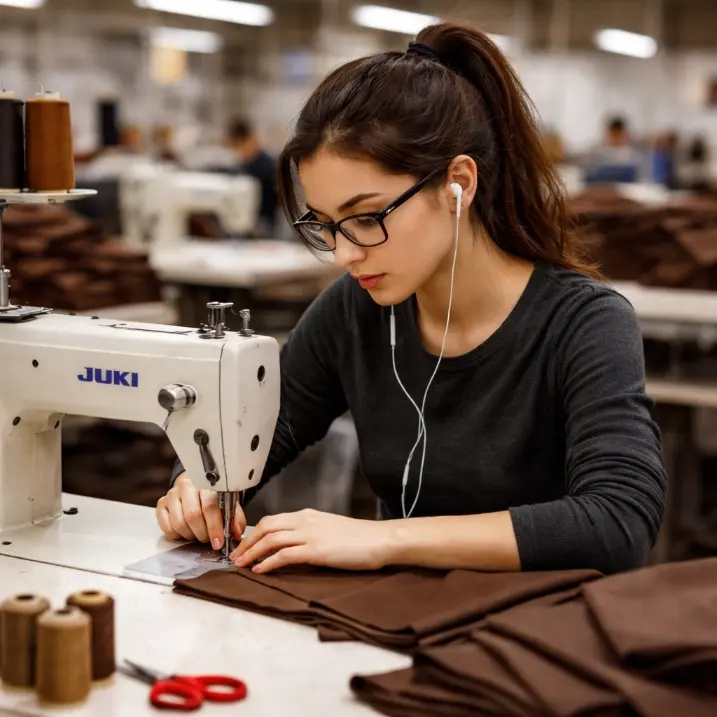
Canadian kidswear manufacturers have long been renowned worldwide for their exceptional craftsmanship and unwavering operational transparency. For kids’ clothing brands already operating in Canada, or those looking to establish a foothold in the Canadian market, partnering with a top-tier Canadian children’s apparel manufacturer is an undeniably smart strategic move. This comprehensive guide rounds up the top 10 children’s clothing manufacturers in Canada to help you make the most informed, confident decision for your brand’s future.
Kids’ Apparel Market Trends in Canada
Today’s parents are more informed and discerning than ever before — cute prints alone are no longer enough to win them over. In the Canadian market, sustainability has emerged as the dominant mainstream trend, with a growing number of parents prioritizing children’s clothing crafted from organic, non-toxic, and eco-friendly materials. These purchasing decisions are driven by a desire to protect children’s delicate skin while minimizing their environmental footprint.
Recent industry data shows that over 41% of consumers now prioritize sustainable or organic fabrics when shopping for children’s apparel. Furthermore, an increasing number of new kids’ clothing lines are anchoring their collections around eco-friendly materials like organic cotton and recycled fibers, underscoring the market’s robust demand for ethical fashion.
Driven by this accelerating trend, forward-thinking manufacturers have adopted industry-leading certification systems, including the Global Organic Textile Standard (GOTS) and OEKO-TEX® Standard 100, while actively implementing low-impact dyes and sustainable, low-waste production processes.
How to Choose the Right Manufacturing Partner for Your Brand
With over a decade of experience in the children’s wear industry and as the founder of my own manufacturing facility, I’ll be honest with you: when you’re compiling your shortlist of potential manufacturing partners, you need to vet them against four core factors. This framework will make it far easier to find the factory that’s the perfect fit for your brand.
Minimum Order Quantity (MOQ)
Your MOQ is the minimum number of units a manufacturer requires for a single production run. This is a make-or-break factor if you’re a startup brand or searching for wholesale kids clothing suppliers in Canada. An excessively high MOQ can leave huge amounts of your capital tied up in unsold inventory. Seek out partners that offer flexible terms so you can test the market with minimal upfront risk.
Fabric Quality & Relevant Certifications
If you fixate solely on price at the expense of fabric quality, manufacturers may cut corners and use low-grade polyester to save costs.
For children’s apparel, fabric quality is a non-negotiable core priority. In today’s market, parents are no longer satisfied with standard cotton fabrics — they’re actively seeking out sustainable, eco-friendly children’s wear products.
During the initial inquiry phase, always ask manufacturers to confirm they can source GOTS-certified organic cotton or OEKO-TEX® certified textiles, and that their finished garments meet the CPSIA standards for the North American market.
Customization & Private Label Capabilities
The factory you choose needs to offer full customization services. This is where the role of a specialized OEM children’s clothing manufacturer becomes vital. A top-tier partner should provide end-to-end private label services—including in-house design development and sample production—to turn your specific creative vision into a tangible product.
Pricing Structure & Production Lead Times
In the apparel industry, time is money. Always ask for average production lead times and seek a transparent pricing model—one that accounts for the use of sustainable materials, ethical labor practices, and rigorous quality control processes.
10 Best Children’s Clothing Manufacturers in Canada
- WS & Company
- Redwood Classics Apparel
- Jerico
- Roopa Knitting Mills
- MVFA
- The Cutting Room
- Garmatech
- Silla Apparel
- Mondetta
- Gildan Activewear Inc.
Tier 1 — Full-package (design → production → private label)
1. WS & Company
- Website: https://wsandcompany.com
- Headquarters: Toronto, Ontario, Canada
- Service Areas: Contract Manufacturing, Private Label Production, Custom Dyeing & Washes, Screen-Printing & Embroidery
- Core Clientele: Prominent Retail Brands, Private Label Programs, High-End Designers
- Key Features: 100% Canadian-owned and operated with a fully vertically integrated manufacturing facility
Introduction
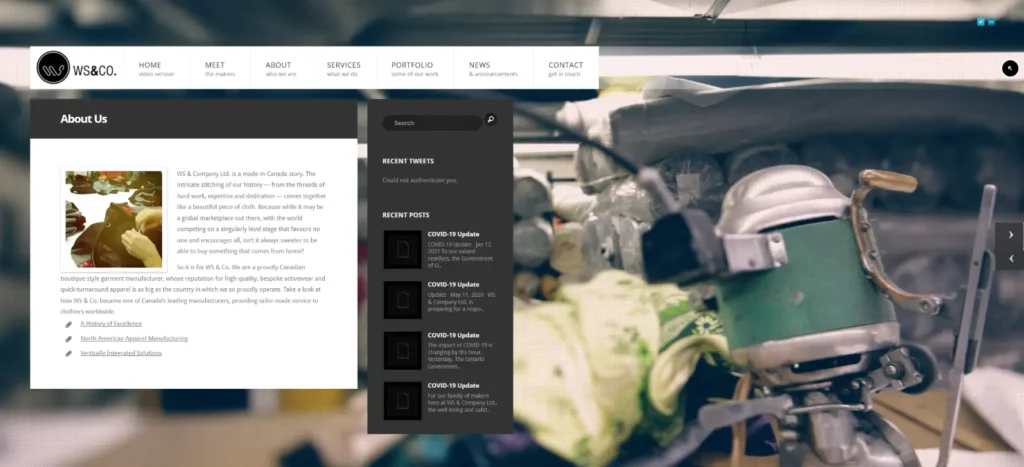
WS & Company Ltd. is one of Canada’s most sought-after clothing manufacturers, boasting over three decades of experience. Based in Toronto, the company provides comprehensive, vertically integrated apparel production and has supplied private-label programs for notable global brands. They emphasize premium Canadian craftsmanship and total transparency, allowing clients to oversee every stage of production.
Business & Services
WS & Co.’s expansive provisions cover everything from cutting, sewing, and embroidering to screen-printing, custom dyeing, washing, and packaging. They specialize in high-quality knits and woven garments and offer a proprietary “Vintage Wash.” With a minimum order quantity starting at 200 units per style for in-stock fabrics, they cater to brands looking for custom colors and full-service domestic production under one roof.
- Pros: Vertically integrated processes eliminate the need to source multiple vendors; highly experienced with top-tier global brands; unique custom dye and wash capabilities.
- Cons: The 200-unit minimum order per style may be prohibitive for early-stage startups seeking micro-batches.
- Best For: Established brands and designers seeking premium, vertically integrated, mid-to-large scale Canadian manufacturing.
2. Redwood Classics Apparel
- Website: https://redwoodclassics.net/
- Headquarters: Toronto, Ontario, Canada
- Service Areas: B2B Promotional Apparel, Private Label Programs, Premium Stock Blanks, Custom Embellishment
- Core Clientele: Promotional Product Distributors, Corporate Identity Programs, Retailers, Universities
- Key Features: Certified diverse supplier (CAMSC, WBE) with a strong focus on sustainable, premium flatlock stitching
Introduction
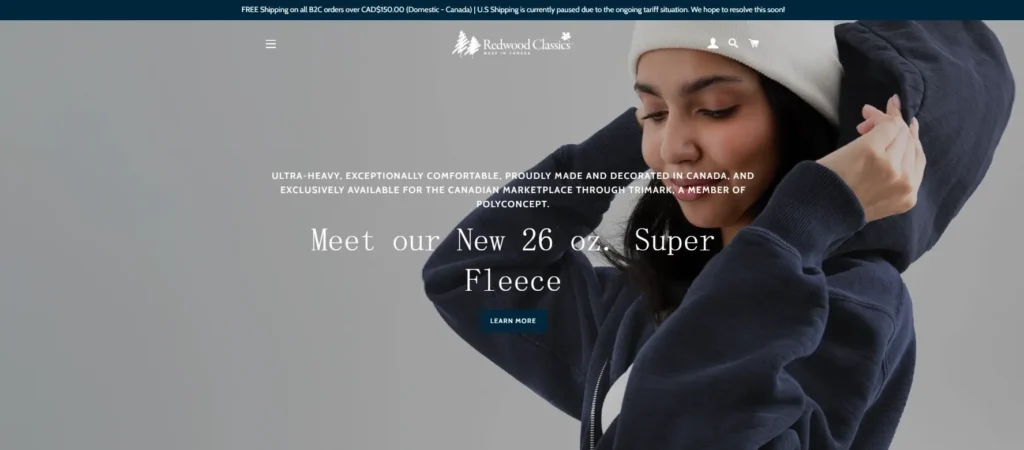
Redwood Classics Apparel is a premium, Canadian-made apparel brand and manufacturer known for producing high-quality promotional and retail garments. With deep roots in Toronto’s textile industry (backed by its factory partner, WS & Co.), the company combines traditional handcrafted practices with state-of-the-art technology to deliver sustainable, locally made clothing tailored for the B2B market.
Business & Services
The company offers a robust Private Label Program alongside premium stock blanks, such as their unisex Reverse Collection. Services include cutting, sewing, dyeing, washing, embroidery, and screen printing. Redwood Classics caters heavily to the B2B promotional market, providing distributors and corporate clients with ethically made, premium Canadian apparel that can be custom-branded.
- Pros: Strong commitment to supplier diversity and sustainability; highly durable garments with signature flatlock construction; excellent stock availability.
- Cons: Primarily accessible through promotional product distributors rather than direct-to-consumer or direct-to-small-brand channels.
- Best For: Corporate programs, universities, and promotional distributors looking for premium, ethically made-in-Canada blanks and private label options.
3. Jerico
- Website: https://jerico.ca/
- Headquarters: Toronto, Ontario, Canada
- Service Areas: Eco-Friendly Basics, Custom Knitting & Dyeing, Cutting & Sewing
- Core Clientele: Eco-conscious Brands, Screen Printers, Corporate Merchandisers, Wholesalers
- Key Features: Largest selection of organic basics in Canada, sweatshop-free, socially conscious manufacturing
Introduction
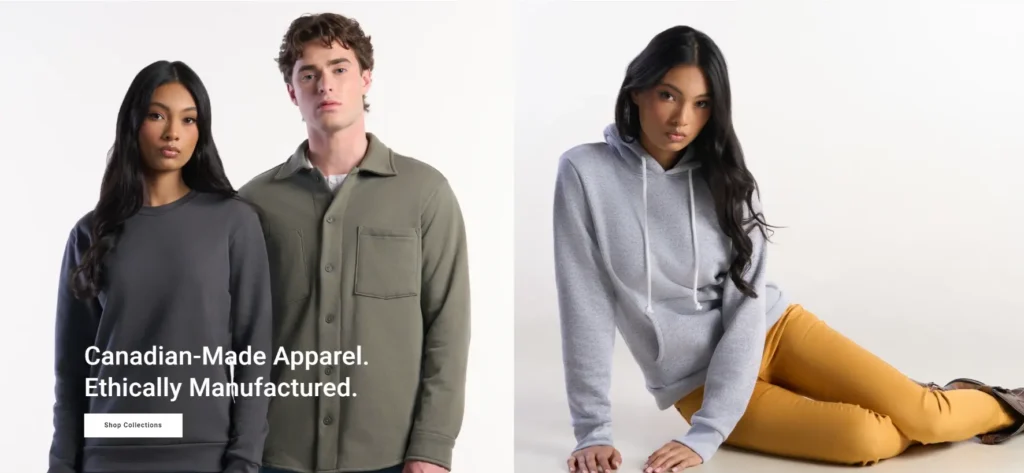
Founded in 1987, Jerico is a proudly Canadian apparel brand and manufacturer committed to ethical and socially conscious production. The family-owned business is renowned for its premium basics and its dedication to maintaining a 100% domestic supply chain, ensuring fair labor practices, safe working environments, and high-quality craftsmanship.
Business & Services
Jerico specializes in knitting, dyeing, cutting, and sewing premium basics such as t-shirts, sweatshirts, sweatpants, and polos. They are industry leaders in utilizing eco-friendly fabrics, including bamboo, organic cotton, and eco-fleece. Their operations are entirely consolidated within Canada, providing authentic, sweatshop-free blank apparel for wholesale and custom branding.
- Pros: Exceptional focus on eco-friendly and organic fabrics; highly transparent and ethical local supply chain; vast color and style options for basics.
- Cons: Focuses almost exclusively on knit basics (tees, fleece), which may not suit designers looking for complex woven garments or outerwear.
- Best For: Brands, screen printers, and organizations seeking high-quality, sustainable, and ethically made Canadian blank apparel.
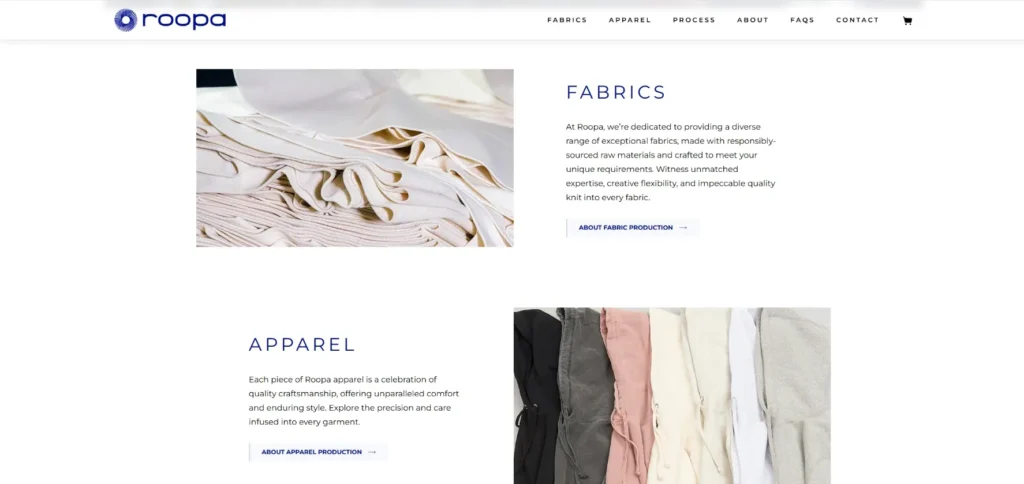
4. Roopa Knitting Mills
- Website: https://roopa.com/
- Headquarters: Toronto, Ontario, Canada
- Service Areas: Custom Fabric Production, Full-Package Apparel Manufacturing, Pattern Making & Sampling
- Core Clientele: Streetwear Brands, Athleisure Labels, Independent Designers
- Key Features: Specializes in custom-milled knit fabrics (fleece, French terry, jersey) and full-package garment solutions
Introduction
Roopa Knitting Mills Ltd. is a premier textile and apparel manufacturer based in Toronto, celebrated for its deep expertise in custom knit fabrics. Serving as both a fabric mill and a garment factory, Roopa provides end-to-end manufacturing solutions, bridging the gap between raw material development and finished premium apparel for the modern fashion market.
Business & Services
Roopa’s dual-service model offers both custom fabric production (knitting and dyeing to specific weights and colors) and full-package apparel manufacturing. Their garment services include pattern making, grading, sampling, cutting, sewing, and embellishments (print/embroidery). They are particularly sought after for heavyweight fleece, French terry, and premium jersey products.
- Pros: Rare ability to custom-mill proprietary fabrics locally; exceptional quality for premium streetwear and heavy knits; comprehensive full-package service.
- Cons: Higher Minimum Order Quantities (MOQs) for custom fabric milling and apparel production (typically 300-800 units depending on the style/fabric).
- Best For: Mid-to-large scale brands and streetwear labels seeking custom-milled textiles and premium, heavy-duty Canadian manufacturing.
Tier 2 — Custom factories / development studios
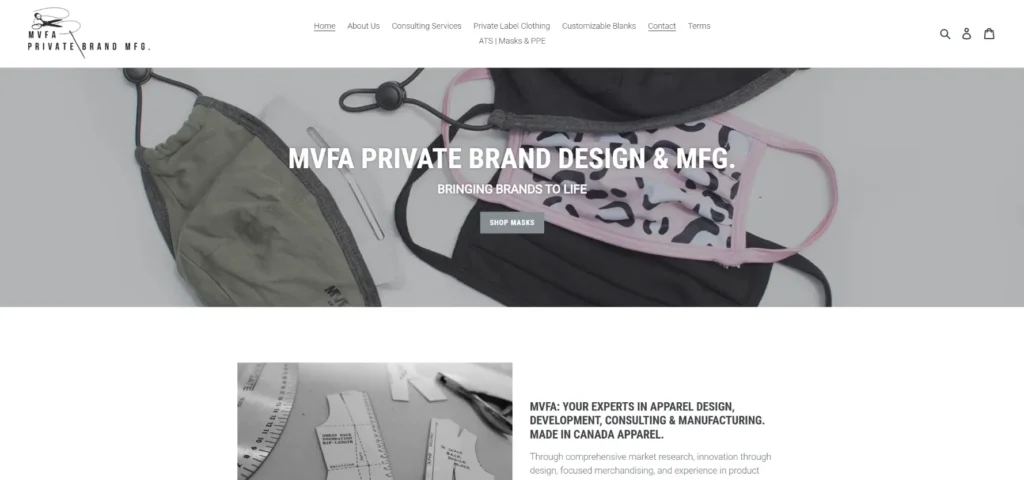
5. MVFA
- Website: https://mvfa.ca/
- Headquarters: Toronto, Ontario, Canada
- Service Areas: Sample Development, Small-Batch Production, Fabric Sourcing
- Core Clientele: Independent Designers, Local Brands, Boutique Retailers
- Key Features: Emphasis on local manufacturing and sustainable practices
Introduction
MVFA is a garment manufacturing company based in Toronto, Canada, specializing in providing high-quality, locally-based production services for designer brands and independent retailers. Renowned for its sustainable, small-batch manufacturing approach and meticulous craftsmanship, the company serves as a vital link within the Toronto fashion industry’s supply chain.
Business & Services
MVFA’s operations encompass the entire production lifecycle—from pattern making and sample creation to the final manufacturing of finished garments. The company employs a dedicated team of professional pattern makers and sewers, capable of accommodating a wide variety of materials and technical specifications. Its client base primarily consists of independent fashion designers and brands seeking to manufacture their products locally within Canada.
- Pros: Ideal for small-batch runs; highly personalized service; strong focus on sustainability and meticulous craftsmanship.
- Cons: May lack the massive scale and high-speed turnaround required by large-volume commercial retailers.
- Best For: Independent fashion designers and boutique brands looking for hands-on, local, small-batch manufacturing.
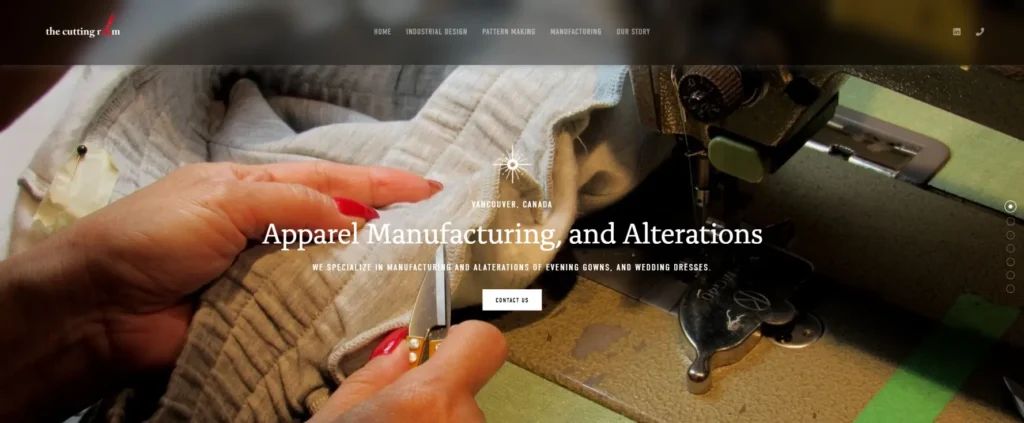
6. The Cutting Room
- Website: https://www.the-cuttingroom.com/
- Headquarters: Vancouver, British Columbia, Canada
- Service Areas: Pattern Making, Tech Packs, Grading, Small & Big Lot Production, Alterations
- Core Clientele: Emerging Designers, Boutique Brands, Niche Fashion Labels
- Key Features: Specializes in pre-production technical development and small-lot manufacturing (under 300 units)
Introduction
The Cutting Room is a Vancouver-based, one-stop apparel manufacturing and development hub designed to assist designers and brands through the complex procedures of creating a new collection. With a team of experts who have worked for global technical and high-fashion brands, they connect independent creators with the professional resources needed to succeed in the fashion industry.
Business & Services
Services range from initial illustrations and technical packages (using Gerber AccuMark 3D) to pattern making, grading, and sample creation. They excel in small-lot production (300 units or less per style) at their Kitsilano location, while also offering big-lot production capabilities through a secondary factory. They specialize in a wide range of garments, from everyday wear to complex evening gowns.
- Pros: Exceptionally low minimums for small-lot production; highly skilled technical design team; excellent hands-on guidance from concept to final product.
- Cons: Boutique approach means higher per-unit costs compared to large-scale mass manufacturing facilities.
- Best For: Emerging fashion designers and boutique labels needing precise technical development, low minimums, and mentorship.
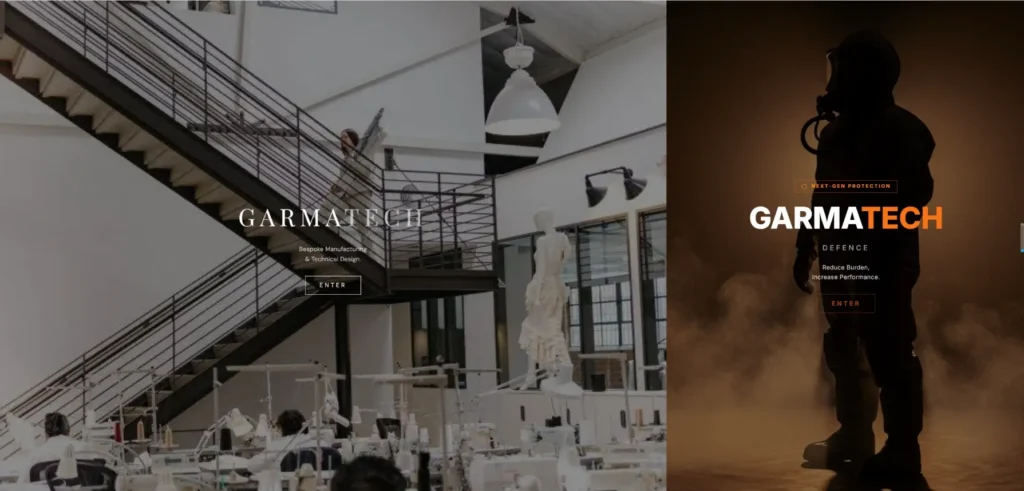
7. Garmatech
- Website: https://www.garmatech.ca/
- Headquarters: Winnipeg, Manitoba, Canada
- Service Areas: Design & Development, Tech Packs, Fabric Sourcing, Bulk Production
- Core Clientele: Eco-conscious Brands, Local Independent Designers, Contemporary Fashion Labels
- Key Features: “True Transparent Manufacturing” program, low minimums, extensive sustainable fabric options
Introduction
Garmatech is an apparel manufacturing agency and production facility based in Winnipeg, dedicated to helping brands grow their products from concept to reality. Known for its “True Transparent Manufacturing” process, Garmatech offers a highly collaborative and ethical approach to garment creation, supporting local designers and eco-friendly labels alike.
Business & Services
Garmatech handles everything from initial design meetings and fabric sourcing to the technical development of tech packs and patterns. They manage custom printing and dyeing, ensuring all products are confirmed with lab dips before moving into bulk production. Their capabilities heavily feature working with eco-friendly and exquisite textiles like linen, hemp, bamboo, and wool.
- Pros: Highly transparent and communicative development process; flexible with low minimums; strong capabilities in sourcing sustainable textiles.
- Cons: The standard timeline of 6 months (3 months development, 3 months production) requires clients to plan well in advance.
- Best For: Brands and designers looking for a transparent partner to develop sustainable, eco-friendly apparel collections from scratch.
8. Silla Apparel
- Website: https://sillaapparel.com/
- Headquarters: Canada
- Service Areas: Custom Apparel Manufacturing, Private Label, Cut and Sew
- Core Clientele: Local Boutiques, Corporate Clients, Independent Labels
- Key Features: Focus on flexible batch production and tailored B2B garment solutions
Introduction
Silla Apparel operates as a dedicated B2B clothing manufacturer within the Canadian textile landscape. Focused on providing reliable and scalable garment production, the company partners with various domestic brands and corporate clients to deliver custom-tailored apparel solutions that emphasize consistent quality and localized service.
Business & Services
The company provides standard cut-and-sew manufacturing, private label services, and bulk production for casual and corporate wear. Working closely with clients to meet specific design and fabric requirements, Silla Apparel ensures that each production run aligns with the brand’s unique identity, offering a streamlined approach to domestic manufacturing.
Pros: Flexible production capabilities; dedicated to supporting local B2B apparel and corporate needs.
Cons: Limited digital footprint and direct-to-consumer presence, requiring direct B2B networking or outreach for detailed catalogs.
Best For: Local Canadian brands and corporate clients looking for straightforward, reliable cut-and-sew and private label manufacturing services.
Tier 3 — Larger / hybrid manufacturers (selective B2B access)
9. Mondetta
- Website: https://www.mondetta.com/
- Headquarters: Winnipeg, Manitoba, Canada
- Service Areas: Athletic Apparel Manufacturing, Private Label, Global Sourcing & Production
- Core Clientele: Major Retailers, Wholesalers, Direct-to-Consumer, Fitness Enthusiasts
- Key Features: Deep expertise in activewear/sportswear, advanced technical fabrics, large-scale capabilities
Introduction
Founded in 1986, Mondetta is a renowned Canadian casual and sportswear design and manufacturing company based in Winnipeg. Originally famous for its world-flag-themed apparel, the company has evolved into a global powerhouse for athletic and athleisure wear, encompassing its own consumer brands alongside a robust, high-volume B2B private label division.
Business & Services
Mondetta specializes in crafting functional, stylish activewear using breathable, innovative technical fabrics. Their private label division partners with major retailers to design, manufacture, and distribute high-volume athletic apparel—including leggings, joggers, outerwear, and tops. They manage a complex global supply chain while maintaining strong Canadian design and corporate roots.
Pros: Deep expertise in technical activewear; massive scale and global distribution capabilities; established industry reputation and financial backing.
Cons: Structured primarily for large-scale retail partnerships and high-volume wholesale, making them largely inaccessible for small boutique designers.
Best For: Large retailers, enterprise-level brands, and major wholesalers seeking high-volume, technically advanced activewear manufacturing.
10. Gildan Activewear Inc.
- Website: https://gildancorp.com/
- Headquarters: Montreal, Quebec, Canada
- Service Areas: Large-Scale Apparel Manufacturing, Blank Apparel, Hosiery, Activewear
- Core Clientele: Screen Printers, Promotional Product Distributors, Global Retail Brands, Wholesalers
- Key Features: Massive global vertically integrated supply chain, highly affordable basics, strong ESG (Environmental, Social, and Governance) initiatives
Introduction
Gildan Activewear Inc. is one of the world’s largest vertically integrated manufacturers of everyday basic apparel. Headquartered in Montreal, the company is a global giant in the blank apparel industry, providing high-quality, affordable garments while increasingly focusing on its “Next Generation ESG” strategy to drive sustainable and responsible large-scale production.
Business & Services
Gildan owns and operates large-scale manufacturing facilities globally, controlling the entire process from yarn-spinning and textile knitting to dyeing, sewing, and distribution. They produce an immense volume of T-shirts, fleece garments, and hosiery under widely recognized labels. They serve as the primary foundational supplier for the global B2B screen-printing, embellishment, and promotional markets.
- Pros: Unmatched pricing and affordability; massive inventory and reliable global distribution; vertically integrated for consistent quality control.
- Cons: Production occurs globally (largely in Central America and Bangladesh) rather than domestically in Canada; not suitable for custom cut-and-sew boutique designs.
- Best For: Screen printers, promotional distributors, and large-scale merchandisers needing massive volumes of reliable, highly affordable blank apparel.
Pros and Cons of Canadian Children’s Wear Manufacturers
Now that you’ve learned about the top 10 Canadian manufacturers, hold off on reaching out to place an order just yet. Many of the Canadian brands we partner with initially explored local production before ultimately choosing to manufacture overseas. When deciding between local production and overseas sourcing, it’s critical to objectively evaluate the core advantages and drawbacks of each route.
The Advantages
- Uncompromising Quality Control: Canadian manufacturing is synonymous with high quality. This is especially critical in the children’s wear space, where comfort, durability, and safety are absolute, non-negotiable priorities.
- Ethical & Sustainable Manufacturing: Canada enforces strict provincial and federal labor laws, guaranteeing workers fair wages, compliant working hours, and rigorously monitored workplace safety standards. Furthermore, their production processes and fabric sourcing generally align with global sustainable and eco-friendly principles.
- Faster Domestic Logistics: By manufacturing locally within Canada, you completely bypass the complexities of ocean freight. With overland domestic shipping, order turnaround times can be cut from months down to just a matter of days.
The Disadvantages
- Prohibitive Production Costs: The single biggest barrier to Canadian manufacturing is the sheer expense. Both labor costs and raw material sourcing are significantly more expensive than working with vetted overseas manufacturers. This premium directly impacts your retail pricing strategy and severely squeezes your profit margins.
- Limited Production Capacity: Canada simply does not possess the massive, large-scale textile industry infrastructure found in global manufacturing hubs like China. As a result, local factories often struggle to fulfill high-volume, bulk orders or scale up quickly to meet sudden peaks in seasonal demand.
- Restricted Technical Capabilities: Local manufacturers often lack access to highly specialized production machinery or master craftspeople with niche expertise. If your tech pack requires complex, advanced production techniques—such as intricate embellishments or custom fabric treatments—domestic factories may struggle to bring your exact design concepts to life.
- Limited Full Production Package (FPP) Options: Across global hubs like China, you will easily find countless manufacturers offering end-to-end FPP (or OEM/ODM) support. The vast majority of Canadian manufacturers, however, operate strictly on a CMT (Cut, Make, Trim) basis. This means your brand is left on the hook for nearly all the administrative heavy lifting, including sourcing every yard of fabric, zipper, and label yourself.
Understanding Production Models
- OEM: In this model, the factory produces garments entirely based on your brand’s unique specifications, tech packs, and custom designs. You retain full ownership of the intellectual property while leveraging the manufacturer’s production infrastructure.
- ODM: Also known as private label manufacturing, the factory creates and owns the product designs, allowing you to select pre-made garments and simply add your own branding. This approach is highly efficient for brands looking to go to market quickly without investing heavily in research and development.
- FPP: The manufacturer manages the entire garment lifecycle from start to finish, including sourcing fabrics, procuring hardware, and handling all physical assembly. This comprehensive, hands-off solution delivers a fully finished product that is immediately ready for retail.
- CMT: Your brand is responsible for sourcing and providing all raw materials, patterns, and tech packs, while the factory solely handles the physical cutting and sewing of the garments. This model offers maximum control over material costs and quality but requires significant supply chain management on your end.
Secrets to a Successful Partnership With Your Children’s Wear Manufacturer
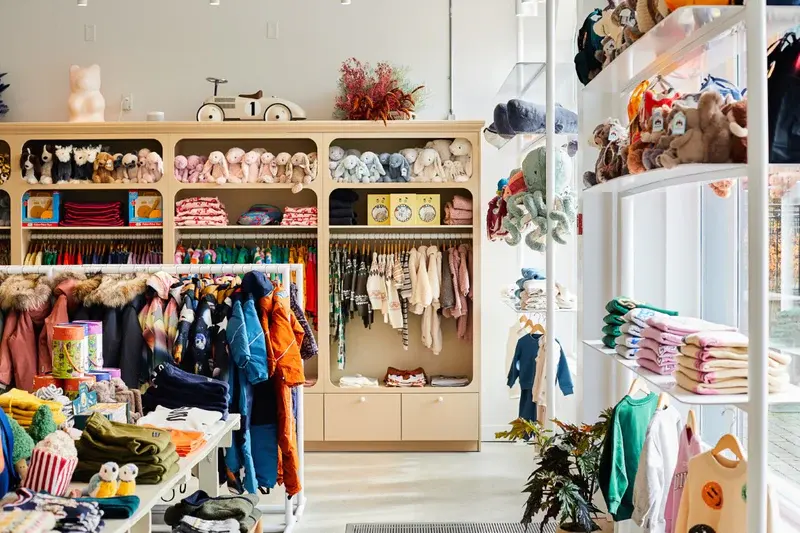
After more than a decade in the kids’ apparel industry, I’ll tell you straight: finding a reliable children’s wear manufacturer is only half the battle. The other half? Building a solid, trusted working relationship with them. That is the true difference between a smooth, stress-free production run and a total logistical nightmare. Below, I’m breaking down exactly how to navigate the entire production process like a seasoned industry pro.
Nail Your Communication & Sampling Process
Here’s the hard truth about kids’ wear: the margin for error is way slimmer than in adult apparel. A tiny sizing discrepancy on a men’s medium tee? It’s a minor cosmetic flaw, no big deal. That exact same discrepancy on a 6-month-old baby romper? It means the neck opening won’t fit over a baby’s head, rendering the entire batch completely useless.
Right out of the gate, your very first conversation with a factory must include a complete, comprehensive tech pack. No cutting corners. To ensure the factory fully grasps your vision and replicates it exactly — rather than just giving you a “close enough” version — your tech pack must explicitly lay out:
- Exact fabric type and weight
- Pantone color codes
- Graded size specs
- All required trims and hardware
- Every last structural and stitching detail
And whatever you do, never, ever skip the sample review stage. Any reputable factory will offer pre-production sampling; this is non-negotiable. Reviewing this physical sample allows you to sign off on the fit, construction, fabric hand-feel, print quality, and overall build before locking in a bulk run. If something is off, speak up and request revisions. Don’t move forward with full production until the sample is exactly what you want. I’ve seen too many new brands skip this step and end up with thousands of unsellable garments.
Lock in Rigorous Quality Control & Inspections
Kids’ wear production has zero room for cutting corners — especially when selling in the Canadian and broader North American markets, where safety standards are incredibly strict. If your garments don’t meet CCPSA (Canada Consumer Product Safety Act) regulations, they cannot be sold. Full stop. That means thousands of dollars in wasted production costs, an irreversible hit to your brand reputation, and for new startups, it can mean closing your doors for good.
Seasoned kids’ wear brands don’t just wait until the end of the run to check quality; they build checks into every single step of the process. A robust QC framework should include:
- Pre-Production Inspection: Confirming all materials and specs are 100% correct before cutting begins.
- In-Line Inspection: Checking garments halfway through the run to catch mistakes early, before they are repeated across thousands of units.
- Final Random Inspection: Evaluating the finished batch once the entire run is completed.
If possible, always ask the factory to send detailed photos and videos of the finished goods before they ship, or better yet, commission a third-party inspection report from a reputable lab. It’s a small upfront cost that can save you from a total disaster.
Build a Long-Term, Trusted Partnership
Here is the biggest secret I’ve learned over my career: the best manufacturing partnerships are never one-and-done transactions. They are long-term, collaborative relationships. When you work with the same factory consistently, they don’t just know your brand’s quality standards — they live and breathe them. They learn your fit preferences, your go-to fabrics, and your seasonal timelines, eventually anticipating your needs before you even ask.
As your business grows, that long-term relationship pays off in huge, game-changing ways. You will lock in more competitive pricing, faster turnaround times for rush orders, priority production slots during peak back-to-school and holiday seasons, and far more flexibility for last-minute tweaks. That is the kind of elite, dedicated support you will never get from a random factory you only work with once.
Conclusion
After over a decade in the children’s apparel industry, one truth stands above all: choosing the right manufacturing partner is the single make-or-break decision for your brand.
If you’re committed to local sourcing, searching for the best children’s clothing manufacturer in Canada through this guide is an excellent starting point. However, the reality is that the vast majority of established Canadian brands ultimately partner with overseas manufacturers for bulk production to maintain healthy margins.
At HAPA, we bridge that gap. We deliver durable, high-end kids’ apparel fully compliant with North American safety standards, at a far more competitive price point than local production. Whether you need a high-capacity OEM children’s clothing manufacturer or flexible low-MOQ options for a new boutique, our team is here to help you scale safely and profitably.
FAQ
What is the MOQ for children’s clothing manufacturers in Canada?
Canadian MOQs typically range from 100 to 500 units per style due to high domestic operating costs. For better profit margins and flexible scaling, many brands eventually shift to highly experienced overseas OEM partners.
Are Canadian manufacturers suitable for startups?
While local factories offer easy communication, their premium pricing can severely squeeze a startup’s initial profit margins. To scale profitably, smart emerging brands often rely on seasoned global ODM partners who offer cost-effective, premium manufacturing.
How long does production typically take?
Expect a 6 to 12-week lead time after sample approval when producing locally in Canada. Surprisingly, highly optimized global supply chains can often beat these timelines, even when executing complex techniques like custom silkscreen printing or sequin applications.
Can I create custom designs with Canadian manufacturers?
Yes, most provide basic OEM services if you supply complete tech packs. However, if your custom designs require internationally certified sustainable fabrics (like GOTS or OEKO-TEX®) and strict safety compliance, a specialized global manufacturer offers far superior capabilities.