FABRIC DECISION GUIDE
Modal vs Viscose at a Glance
Modal and viscose are both regenerated cellulosic fibers, but they are not the same material. Modal is made through a modified viscose process and has higher wet modulus, which can support better stability in washable garments. Viscose is valued for its soft feel, fluid drape, and broad fashion use. The better choice depends on the fabric construction, care requirements, and finished-sample results.
Same Fiber Family
Both start with regenerated cellulose, but they have separate fiber definitions.
Modal
Higher wet modulus and a strong starting point for soft, washable knits.
Viscose
Fluid drape and versatile use in dresses, blouses, and lightweight clothing.
Buyer Decision
Compare construction, GSM, wash results, care requirements, and supplier evidence.
Are Modal and Viscose the Same Fabric?
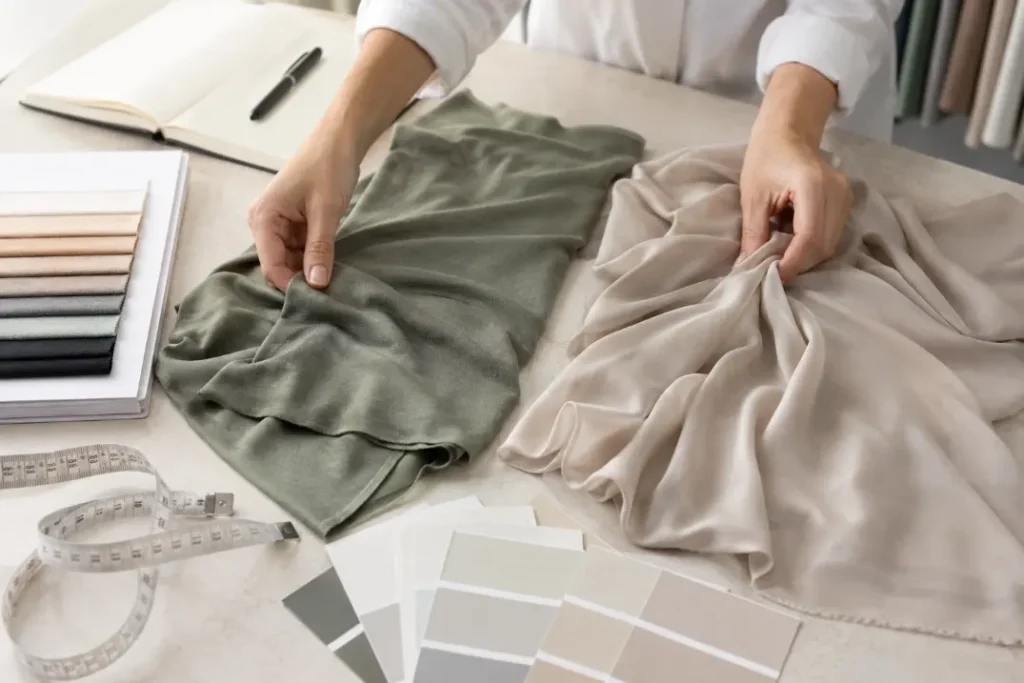
Modal and viscose belong to the same material family, but they are distinct fiber names. Viscose is produced through the viscose process. Modal is produced through a modified version of that process and must meet specific performance characteristics at fiber level.
What Both Fibers Have in Common
Both begin with cellulose, usually obtained from wood. The cellulose is converted into a soluble form, spun through small openings, and regenerated as fiber. Mills then turn the fiber into yarn and use that yarn in knitted or woven fabrics.
This makes both materials manmade cellulosic fibers. They are plant-derived at the raw-material stage, but industrial chemical processing is required to form the textile fiber. Calling either one simply “natural” can therefore hide an important part of its production story.
The shared cellulose base helps explain why both can create soft, absorbent, comfortable fabrics with attractive drape. It does not mean two garments will perform alike. Fiber specification, yarn, construction, GSM, dyeing, finishing, pattern, and care can produce very different results.
What Makes Modal a Separate Fiber Name
The clearest distinction comes from formal textile terminology. EU Regulation 1007/2011 defines viscose as a regenerated cellulose fiber obtained by the viscose process. It defines modal as a regenerated cellulose fiber obtained by a modified viscose process, with specified breaking-force and wet-modulus criteria.
In practical terms, modal is engineered to retain more useful strength and resist deformation better under wet conditions than standard viscose fiber. This characteristic can support washable, shape-conscious products, but it is not a promise that every modal garment will resist shrinkage, pilling, stretching, or seam distortion.
HAPA’s explanation of how modal fabric is produced provides further context on the fiber route and common apparel applications. For sourcing decisions, the important point is to distinguish a verified modal specification from a vague supplier description.
How Rayon, Viscose, Modal, and TENCEL™ Relate
The terminology changes by market, which is one reason buyers become confused. In the United States, rayon is a recognized generic category, and the FTC also permits ISO fiber names including viscose and modal. Its guidance describes viscose as the ISO name for the predominant form of rayon. Modal remains a separately recognized ISO name.
TENCEL™ is not the generic name for modal, viscose, or all wood-based fibers. It is Lenzing’s brand, and its textile portfolio includes TENCEL™ Modal and TENCEL™ Lyocell. LENZING™ ECOVERO™ is Lenzing’s branded viscose offering. Claims attached to one branded fiber should not be transferred to generic modal or viscose.
Keep these terms separate in sourcing documents and product copy:
- Rayon is a broad regulatory or market term whose use varies by region.
- Viscose is a specific regenerated cellulosic fiber name and is commonly used for the predominant form of rayon.
- Modal is made through a modified viscose process and is defined by particular strength and wet-modulus properties.
- TENCEL™ Modal and LENZING™ ECOVERO™ are branded products with supplier-specific sourcing, traceability, environmental, and trademark conditions.
How Are Modal and Viscose Made Differently?
Their basic chemistry is related, but modal production modifies the viscose route to create a fiber with higher wet modulus and breaking force. That technical distinction matters more than simplified claims about one fiber being “premium.”
The Standard Viscose Route
Viscose production typically starts with dissolving-grade cellulose pulp. The pulp is treated to form alkali cellulose, reacted to make a soluble cellulose derivative, dissolved into a viscous spinning solution, filtered, and extruded into an acid bath where cellulose is regenerated as fiber. The fibers are then washed and prepared for textile use.
The quality of the pulp, solution preparation, spinning control, washing, fiber dimensions, and downstream processing can all influence the final product. Viscose can be made as staple fiber or filament and can support light jerseys, fluid woven fabrics, linings, dresses, blouses, and many other products.
The word viscose does not reveal the wood source, mill controls, chemical recovery, wastewater performance, certification status, or fabric quality. Those details need separate documentation.
The Modified Modal Route
Modal follows a modified viscose process with changes to production and spinning conditions that create its characteristic high wet modulus. Regulations define the result through measurable fiber properties rather than through a marketing description such as “made from beechwood” or “extra soft.”
This higher wet modulus means the fiber offers greater resistance to extension under a defined wet load. In a suitable yarn and fabric, that can contribute to improved dimensional behavior and wash performance. It is one reason modal is commonly considered for underwear, loungewear, soft T-shirts, pajamas, and other products that combine a smooth hand with repeated laundering.
The finished garment still needs testing. A loosely knitted modal jersey, an unstable pattern, excessive finishing, or unsuitable drying instructions can create growth or distortion even when the fiber meets the modal definition.
Why the Manufacturing Difference Does Not Tell the Whole Story
Fiber type is only one layer of a fabric specification. A well-engineered viscose woven may hold its intended shape better than a lightweight modal knit because the construction, yarn system, finishing, and silhouette are different. Similarly, a modal blend with elastane can behave very differently from 100% modal.
When comparing options, ask for the full construction, not just composition. Useful fields include yarn type, knit or weave, GSM, usable width, finish, stretch direction, color route, shrinkage data, pilling result, strength result, care method, and fabric code. Without those details, a modal-versus-viscose discussion remains too broad for product approval.
Modal vs Viscose: What Are the Key Differences?
Modal usually offers the stronger fiber-level starting point for wet stability, while viscose often offers broader availability for fluid, lightweight fashion fabrics. The table shows typical decision tendencies, not automatic winners.
| Decision factor | Modal | Viscose | What the buyer should verify |
| Fiber relationship | Regenerated cellulose made through a modified viscose process | Regenerated cellulose made through the viscose process | Correct generic name and supplier specification |
| Defining technical feature | Specified breaking force and high wet modulus | Defined by the viscose production route | Fiber certificate or recognized supplier data |
| Typical hand direction | Smooth, soft, often fine and clean | Soft, fluid, sometimes silk-like or slightly drier | Hand before and after laundering |
| Typical drape | Fluid, especially in light knits and blends | Often very fluid in woven and knitted fabrics | Sewn silhouette and fabric weight |
| Wet behavior | Fiber is designed for higher resistance under wet load | Standard viscose can lose more strength and stability when wet | Wet strength, dimensional change, and care testing |
| Shrinkage and growth | May support better stability, but construction remains critical | Can require careful finishing and care control | Finished-fabric and garment wash results |
| Pilling | Possible depending on yarn, surface, blend, and finish | Possible depending on yarn, surface, blend, and finish | Pilling test and wear trial |
| Color and print | Can support rich color, subject to dye and process | Often selected for vivid prints and fluid fashion fabrics | Colorfastness, print definition, and shade consistency |
| Availability and cost | Often positioned above generic viscose, with no fixed premium | Commonly available across a wide range of prices | Current quotation, minimums, continuity, and quality tier |
| Environmental evidence | Depends on producer, wood source, process, and product | Depends on producer, wood source, process, and product | Product-specific documents, not fiber-name assumptions |
The comparison becomes reliable only when both fabrics are close enough to serve the same product. Comparing a 160 GSM modal jersey with a 110 GSM viscose challis mostly tells you that jersey and challis behave differently. For a useful trial, keep construction, weight, color, finish, and garment pattern as similar as the sourcing market allows.
Do not treat a higher material price as proof of performance. Modal can justify a higher input cost when its hand, stability, traceability, or branded-fiber story supports the product position. Viscose can be the better commercial choice when its drape, print response, construction, and approved care result fit the design.
How Do Modal and Viscose Perform in Clothing?
Modal often provides a smoother hand and stronger wet-state starting point, while viscose is valued for flowing drape and versatile fashion use. Actual comfort and durability depend heavily on how the fabric is built and finished.
Softness, Drape, and Appearance
Both fibers can create soft fabrics. Modal is frequently used where a refined, smooth, next-to-skin hand is central to the product. Viscose is widely used for blouses, dresses, skirts, and relaxed trousers because it can create fluid movement and accept color or print attractively.
The same composition can still produce different results. Yarn fineness, twist, filament or staple form, knit density, weave, brushing, washing, softeners, and other finishes change surface feel. Review a washed sample because a temporary finish can make an unwashed swatch feel better than the production garment will after home care.
Wet Strength and Dimensional Stability
Modal’s formal fiber definition includes high wet modulus, which provides a sound technical reason to consider it when wet stability matters. Standard viscose often needs more careful handling during wet processing and laundering because wet conditions can reduce its strength and allow distortion.
That difference should guide testing, not replace it. Dimensional change can come from fiber swelling, yarn relaxation, knitting tension, wet processing, finishing, garment construction, and drying. Measure length, width, twisting, seam movement, and fit after the intended wash cycles.
Breathability, Absorbency, and Drying
Both fibers are absorbent cellulosic materials and can feel comfortable in warm conditions. Yet absorbency is not the same as airflow, wicking, or fast drying. Air movement depends largely on fabric construction and thickness. Wicking depends on capillary pathways through the yarn and fabric. Dry time depends on retained moisture, surface area, airflow, temperature, and garment design.
HAPA’s discussion of modal fabric breathability explores this comfort question in more detail. A brand planning performance claims should test the relevant fabric rather than infer moisture management from the word modal or viscose.
Pilling, Abrasion, and Care
Neither fiber is automatically pill-free or wrinkle-free. Common risks to review include:
- Surface fuzz or pills caused by fiber dimensions, yarn structure, fabric construction, finishing, friction, and laundering.
- Growth, shrinkage, or twisting caused by relaxation, wet processing, construction balance, sewing, and drying.
- Snagging or abrasion in fine, lightweight fabrics used around zippers, hook-and-loop fasteners, rough trims, or high-friction areas.
- Shade change, staining, or print deterioration caused by the colorant system, after-treatment, and care conditions.
Use the care method the customer is realistically expected to follow. If a viscose dress must be washed gently and dried flat to retain its shape, that requirement affects product positioning. If a modal children’s pajama is intended for frequent machine washing, the sample must prove that the neckline, seams, surface, color, and fit can handle that routine.
Is Modal or Viscose Better for Different Garments?

Modal is often the stronger sampling candidate for soft knits and frequently washed next-to-skin products. Viscose is often the stronger starting point for fluid woven fashion, print-led pieces, and products where drape is the primary visual feature.
Garment type | Modal starting case | Viscose starting case | Critical approval check |
Underwear and base layers | Smooth hand, close fit, and wet-state stability can be useful | Possible in suitable knits, but recovery and care need close review | Seam comfort, pilling, stretch recovery, and laundering |
Pajamas and loungewear | Strong candidate for soft jersey, rib, and blends | Useful for fluid woven sets and relaxed silhouettes | Dimensional change, twisting, opacity, and hand after washing |
T-shirts and tanks | Useful for refined drape and premium softness | Suitable for light, fluid tops | Neckline recovery, growth, spirality, and surface wear |
Dresses and blouses | Suitable when a smooth hand and controlled drape are required | Strong candidate for fluid wovens, prints, and soft movement | Drape, seam slippage, shrinkage, print, and wrinkle appearance |
Linings and lightweight layers | Possible where softness is valued | Common candidate for lightweight, smooth, fluid layers | Strength, seam performance, static, abrasion, and care compatibility |
Children’s basics | Candidate for soft, washable knits after full evaluation | Candidate for dresses and light woven styles with suitable care | Age, fit, trims, strength, colorfastness, wash response, and labeling |
When Modal Is the Better Starting Point
Choose modal for the first sample round when the product brief prioritizes a smooth hand, soft next-to-skin contact, fluid knit drape, and repeatable wet-care performance. This does not mean modal is automatically suitable for high-intensity activewear or every washable garment. Stretch recovery, dry time, abrasion, pilling, and construction still need verification.
Modal also makes sense when a recognized fiber program provides traceability or claims that fit the brand’s sourcing policy. Confirm that the actual fabric contains the branded fiber and that the supplier can support any hangtag or marketing use.
When Viscose Is the Better Starting Point
Viscose is a practical candidate when the garment depends on flowing movement, vivid print, a light woven construction, or a price architecture that modal options cannot meet. Dresses, blouses, skirts, relaxed trousers, and linings commonly use this route.
Its care behavior must match the customer promise. A beautiful viscose fabric that requires delicate treatment may suit a fashion dress but disappoint in a product sold as an easy-care everyday basic. Sample the exact color and finish because dark shades, prints, and wet processing can change results.
What Changes for Children’s Clothing
Neither fiber name proves that a garment is safe, hypoallergenic, or suitable for a child. Buyers must consider the finished product, including chemical requirements, colorfastness, fabric strength, seams, trims, attachments, labeling, age group, fit, flammability where applicable, and expected washing.
The broader guide to choosing fabric for children’s clothing can help place fiber choice within the full garment decision. For kidswear, easy care and durability often matter as much as first-touch softness because the product may be washed frequently and used actively.
Is Modal More Sustainable Than Viscose?
Modal is not automatically more sustainable than viscose. Both fiber types depend on the origin of the cellulose, forest management, pulp production, chemical handling, energy, water, emissions control, wastewater treatment, traceability, and the later fabric processes.
Why the Generic Fiber Name Is Not Enough
The modified modal route can be associated with specific producers that publish stronger sourcing and process evidence, but this is not guaranteed by the word modal alone. Generic viscose also covers a wide range, from poorly documented supply to branded products with controlled wood sourcing, traceability, environmental data, and certification.
The fabric stage matters too. Dyeing, printing, washing, finishing, rejects, transport, garment durability, consumer care, and end-of-life conditions can change the product’s overall profile. A fiber-level comparison should not be presented as a full garment life-cycle conclusion.
How Branded Modal and Viscose Claims Should Be Used
Lenzing publishes separate product information for TENCEL™ Modal and LENZING™ ECOVERO™ viscose. Each page describes sourcing, production, traceability, certification, and environmental claims within defined scopes and footnotes. These are examples of brand-specific evidence, not proof about every modal or viscose fiber.
If your product uses one of these fibers, obtain confirmation for the actual fabric and follow current trademark requirements. If it uses generic fiber, avoid borrowing the branded program’s carbon, water, chemical-recovery, biodegradability, or forestry statements.
What Evidence Should a Brand Request?
Build any environmental statement from documents that match the purchased material:
- Identify the fiber producer, pulp source, production site, and chain of custody for the relevant lot.
- Check whether a certificate covers the forest, pulp, fiber, mill, fabric, garment, or transaction, rather than assuming full-chain coverage.
- Request product-specific environmental data with the comparison basis, system boundary, method, version, and date.
- Review chemical management, emissions, wastewater, dyeing, finishing, and restricted-substance evidence relevant to the supply route.
- Approve the exact consumer-facing wording with legal or compliance review in the destination market.
The most defensible conclusion is often narrower than “sustainable fabric.” A brand may be able to say that a verified fiber comes from certified or controlled wood, or that a named production route meets a defined certification. That is clearer and easier to substantiate than declaring modal universally greener than viscose.
How Should Brands Source and Test Modal vs Viscose?

Brands should compare documented fabrics in sewn garments under the same use and care conditions. The purpose is to turn a broad fiber preference into an approved material specification that production can repeat.
Questions to Ask Before Requesting Samples
A useful supplier conversation should go beyond composition. Ask questions that expose whether the proposed fabric fits the product:
- What is the exact generic fiber composition, and is any branded fiber included and verifiable?
- What are the fabric code, yarn type, construction, GSM tolerance, usable width, finish, stretch properties, and color route?
- Which test reports apply to this exact fabric, color, finish, and production lot, and when were they issued?
- What minimums, lead times, continuity risks, shade controls, and substitution rules apply to the material?
- Which care method and performance tolerances does the supplier recommend for the intended garment and market?
Avoid asking only for the “best modal” or “best viscose.” The supplier cannot make a useful selection without the garment type, silhouette, wearer, price position, care target, destination market, quantity, and risk priorities.
A Six-Step Sample Approval Process
- Write the product brief.Define the garment, target wearer, size range, fit, silhouette, season, market, quantity, price position, care promise, and essential performance needs.
- Shortlist comparable fabrics.Request modal and viscose options that are reasonably close in construction, weight, color, finish, and intended use. Add a blend only when it solves a clear product problem.
- Verify identity and supply.Review fiber declarations, branded-fiber confirmation where relevant, mill data, traceability, certification scope, minimums, lead time, and continuity.
- Test the fabric.Select current laboratory methods and acceptance criteria for composition, dimensional stability, strength, pilling, colorfastness, spirality, seam performance, stretch and recovery, or moisture behavior as required.
- Make and wash garments.Sew the same representative style, measure before and after the agreed care cycles, and review fit, drape, surface, shade, seams, trims, and wearer experience.
- Lock the specification.Record the approved supplier, fabric code, composition, construction, tolerances, finish, shade, care method, test results, physical sample, and change-control process.
HAPA’s children’s clothing OEM development process connects fabric and trim selection with sample approval before bulk production. This is the right stage to compare how modal and viscose behave in the actual pattern rather than relying on isolated swatches.
Use a Washed Garment as the Decision Point
An unwashed swatch is useful for early screening, but it cannot show whether the neckline grows, side seams twist, a hem ripples, a print changes, or the garment loses its intended fit. The sewn and washed sample is where fiber, construction, pattern, sewing, finish, and care finally interact.
Brands that need a physical development reference can review a clothing sample before bulk production. Keep the approved sample alongside written measurements and tolerances. A sample controls look and feel, while the technical specification controls measurable consistency.
How Should Modal and Viscose Be Labeled and Marketed?
Use the correct generic fiber name for the destination market and treat trademarks as additional, controlled information. A brand name does not replace the legally required fiber-content disclosure.
Fiber Labels Depend on the Sales Market
EU Regulation 1007/2011 lists modal and viscose as separate textile fiber names. In the United States, FTC textile-labeling guidance recognizes rayon and also permits ISO names including modal and viscose. It explains that viscose is the ISO name for the predominant form of rayon.
For covered US textile products, the label generally needs generic fiber names and percentages by weight, along with the identity of the responsible manufacturer or marketer and country of origin. Care labeling has separate requirements. Other markets have their own language, placement, tolerance, and responsible-party rules, so confirm them before artwork approval.
Avoid Misleading Fiber and Sustainability Claims
Do not label generic modal as TENCEL™ Modal or generic viscose as LENZING™ ECOVERO™. Verify the branded fiber and obtain the required permissions before using trademarks, hangtags, or program claims.
Be equally careful with plant-source descriptions. In US guidance, a textile manufactured from bamboo cellulose through the viscose process cannot simply be marketed as bamboo fiber. The FTC directs marketers toward accurate terms such as rayon made from bamboo or viscose made from bamboo. Whatever the feedstock, the advertising must not hide the manufactured-fiber identity.
Performance claims also need evidence. “Shrink resistant,” “pill resistant,” “quick drying,” “hypoallergenic,” “non-toxic,” “biodegradable,” and “lower impact” each require a defined product, test, comparison, and scope. A technically correct fiber name does not substantiate the rest of the marketing message.
Conclusion
The real difference in modal vs viscose is narrower and more technical than many product descriptions suggest. Both are regenerated cellulosic fibers, but modal is produced through a modified viscose process and is defined by higher breaking force and wet modulus. This gives modal a useful starting advantage when soft hand, wet stability, and repeat laundering matter. Viscose remains an effective choice for fluid drape, lightweight fashion fabrics, prints, and many commercially practical constructions.
Neither name predicts the finished garment on its own. Compare fabrics with similar construction and weight, verify the producer and claim scope, make representative samples, wash them as customers will, and approve measurable tolerances. Choose the fabric whose complete specification supports the product, rather than the one with the stronger marketing reputation.
Frequently Asked Questions About Modal and Viscose
Is modal a type of viscose?
Modal is closely related to viscose and is made through a modified viscose process. Formal textile rules still identify modal and viscose as separate fiber names. Modal must meet defined breaking-force and wet-modulus criteria, so it should not be treated as a decorative label for any soft viscose fabric.
Is modal always softer and more durable than viscose?
No. Modal often supports a smooth hand and its fiber definition provides a stronger wet-state starting point. The finished result still depends on yarn, knit or weave, GSM, finish, dyeing, sewing, garment design, and care. A high-quality viscose fabric can outperform a poorly engineered modal fabric for a particular product.
Does viscose always shrink or become weak when wet?
Standard viscose can lose strength and stability under wet conditions, so shrinkage, growth, and distortion deserve close attention. It does not follow that every viscose garment will fail in washing. Suitable yarn and construction, controlled wet processing, stabilization, garment design, and accurate care instructions can produce an acceptable washable product. Test the actual garment.
Is modal or viscose better for children’s clothing?
Modal can be a strong candidate for soft, frequently washed knits, while viscose can suit fluid dresses and lightweight woven styles. Neither is automatically safe or suitable for children. Review finished-product chemistry, colorfastness, strength, trims, attachments, fit, care, labeling, age group, and destination-market requirements.
Is TENCEL™ Modal the same as viscose?
No. TENCEL™ Modal is Lenzing’s branded modal fiber. LENZING™ ECOVERO™ is its branded viscose offering, while TENCEL™ Lyocell is a different regenerated cellulosic fiber route. Each brand and fiber type has its own documentation and claim conditions. Confirm what the fabric actually contains before using any name in labeling or marketing.