Few garments have achieved the kind of cross-generational staying power that the bomber jacket commands. After two decades of dedicated outerwear manufacturing at HAPA Garments, I still find myself reaching for one first whenever I want to look polished yet effortlessly put-together — and I’m rarely the only one.
Before we dive in, let’s answer the question at the heart of this guide: what is a bomber jacket, exactly? Originally engineered for fighter pilots battling extreme cold at altitude, this silhouette has outlasted nearly every trend that’s tried to compete with it. What started as functional military gear quietly became one of fashion’s most enduring outerwear styles.
In this guide, I’ll walk you through its rich history, technical construction, and versatile styling possibilities — drawing from firsthand experience in outerwear manufacturing, from the cutting room floor to the international fashion runway.
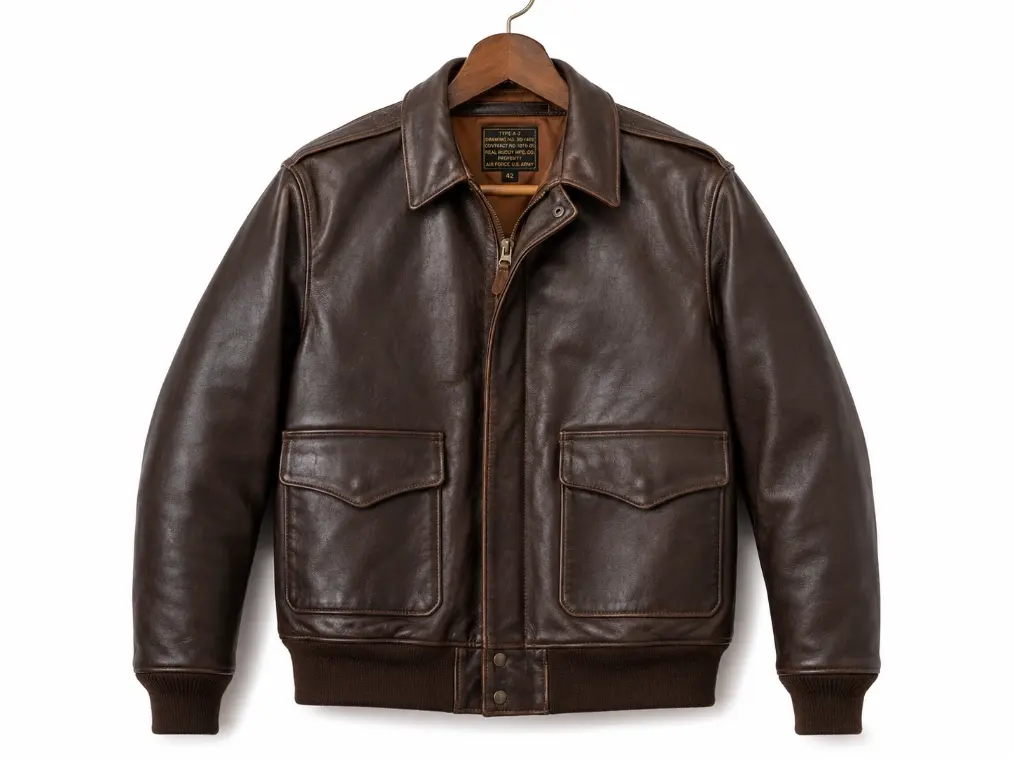
What Is a Bomber Jacket?
At its core, the definition of a bomber jacket is straightforward: it’s a short, waist-length outerwear piece defined by ribbed cuffs, a ribbed hem, and a front zipper closure. The silhouette is relaxed and slightly boxy, with a clean, uncluttered front panel — no lapels, no fuss. Originally designed for military aviators, it has since become a genuine wardrobe staple recognized worldwide for its rare ability to feel both casual and intentional at the same time.
Bomber Jacket vs. Other Jacket Styles: How to Tell the Difference
Spend five minutes in any clothing store and you’ll quickly realize that “jacket” covers a lot of ground. So what sets this silhouette apart from the rest?
The clearest giveaway is its ribbed trim — elasticated cuffs, a matching ribbed hem, and often a ribbed stand collar — which creates that signature fitted finish at the edges while the body stays relaxed. Unlike a moto jacket, there’s no asymmetric zip or hardware detailing. Unlike a blazer, there are no lapels or structured shoulders. And unlike a parka, it doesn’t drop past the hip.
Think of it as the middle ground: structured enough to look deliberate, relaxed enough to wear on a Sunday. Once you know those three hallmarks — ribbed trim, zip front, waist length — you’ll spot one instantly.
Why Is It Called a Bomber Jacket?
The name isn’t metaphorical — it’s functional. During World War II, bomber crews flew in open or poorly insulated cockpits where temperatures dropped sharply at altitude. The U.S. military needed outerwear that could keep pilots warm without restricting movement in tight, high-pressure environments. The result was a snug, lightweight flight jacket worn by the crews of — you guessed it — bomber aircraft.
The MA-1 flight jacket, developed in the 1950s, became the most iconic version of this silhouette and is still widely referenced in fashion today. Over time, “bomber jacket” shifted from a strict military designation into cultural shorthand for the entire style category. The name stuck not because it sounds cool — though that certainly doesn’t hurt — but because it’s simply where the jacket came from.
The History of the Bomber Jacket: From Military Cockpits to Street Style
What begins in a wartime hangar and ends on a fashion week runway is not a typical story. But then again, this jacket has never been a typical garment. Its journey from functional military gear to global style staple spans nearly a century, touching subcultures, designers, and everyday wardrobes along the way.
Early Flight Jackets and Military Aviation
Long before it appeared in any store, the bomber jacket was a piece of survival equipment. In the early days of military aviation — particularly during World Wars I and II — pilots flew in aircraft with little to no cabin insulation. At altitude, temperatures plummeted fast, and a jacket wasn’t a style choice; it was a necessity.
The U.S. Army Air Corps began issuing standardized flight jackets in the 1930s, with leather constructions designed to trap heat without adding bulk. The A-2 jacket, introduced in 1931, defined the WWII pilot silhouette. Later, as jet aircraft arrived and cockpits grew colder still, the military transitioned to nylon with the MA-1 in the early 1950s — a sage-green, reversible design that would go on to shape everything that followed. Function, in this case, quietly wrote the blueprint for fashion.
From Military Surplus to Street Style
The shift from military surplus to cultural currency happened in waves. By the 1950s and ’60s, surplus MA-1 jackets were finding their way off base and onto the backs of greasers, rebels, and young men who liked what the jacket implied: toughness, independence, a slight edge. It was affordable, durable, and carried the quiet authority of something that had actually served a purpose.
The 1970s and ’80s deepened its cultural roots. Skinhead and punk subcultures adopted it as a uniform. Hip-hop artists wore it oversized and unapologetically. Hollywood dressed its antiheroes in it. Then, somewhere in the 1990s and early 2000s, high fashion took serious notice. Designers like Raf Simons and Versace began reinterpreting the silhouette in luxe fabrics and bold embroidery, cementing its dual citizenship — equally at home on the street and on the runway.
So, are bomber jackets fashionable today? Without question. They’ve moved beyond trend cycles entirely, operating as a wardrobe constant rather than a seasonal statement.
Key Features That Define a Bomber Jacket
Not every short jacket qualifies as a bomber, and what makes a bomber jacket distinct comes down to a handful of specific construction details. Once you know them, the silhouette becomes immediately recognizable.
Ribbed Cuffs, Hem, and Collar
If there’s one detail that defines the style above all else, it’s the ribbed trim. The elasticated cuffs, matching hem, and knit collar work together to seal in warmth while keeping the overall look clean and cohesive. Originally, the logic was purely practical — flight crews needed a jacket that wouldn’t let cold air funnel in during movement. What’s interesting is how that functional necessity became the silhouette’s most recognizable style signature. The contrast between a smooth outer shell and textured ribbing at the edges strikes exactly the right balance: neat without being rigid, relaxed without feeling sloppy.
Short Waist-Length Cut
The silhouette is deliberately compact. Unlike a peacoat that falls to mid-thigh or a parka built for maximum coverage, it stops right at or just below the natural waist — and that proportion is central to how the whole jacket reads. Pilots needed full range of movement in confined cockpit spaces, and a longer hem would have gotten in the way. The shorter cut stayed because it worked. Whether worn over slim trousers, a dress, or relaxed denim, it adds structure without overwhelming an outfit — which is rarer in outerwear than you’d think.
Front Zipper and Practical Pockets
There are no buttons on a classic bomber jacket, and that’s entirely intentional. The front zipper offers faster, more secure closure — critical when pilots needed to gear up quickly. It also keeps the front panel smooth and unbroken, contributing to its characteristically clean aesthetic.
The pockets follow the same logic: functional first, stylish by default. Most styles feature two hand pockets — welt or zippered — sitting low on the front panel, with many adding an interior chest pocket as a direct nod to the original flight jacket’s need to carry maps or documents close to the body.
Common Types of Bomber Jackets
The silhouette has evolved considerably beyond its single military origin. Today it comes in a range of constructions — each with its own personality, occasion, and styling logic.
- MA-1 Bomber Jacket — The one that started it all in terms of modern fashion relevance. The MA-1 is the nylon flight jacket developed by the U.S. military in the early 1950s, typically finished in sage green or black with an orange reversible lining. It remains the most referenced silhouette in both streetwear and high fashion.
- Leather Bomber Jacket — Rooted in the A-2 flight jacket worn by WWII aviators, the leather version carries a harder edge — structured, slightly heavier, and built to age visibly. A well-made leather bomber softens and develops character over time, pairing naturally with denim and boots or dressed up over tailored trousers when you want contrast without trying too hard.
- Nylon Bomber Jacket — Lightweight, packable, and endlessly versatile. Substantial enough for a cool evening, light enough to tie around your waist when the temperature shifts. The smooth shell takes well to bold colorways and graphic embroidery, which is why it became the canvas of choice for so much sportswear and streetwear collaboration work throughout the ’90s and beyond.
- Suede Bomber Jacket — Where the silhouette softens. The matte, slightly textured surface reads warmer and more relaxed than leather, making it a natural fit for autumn layering. It tends toward earthy tones — camel, tan, rust, olive — and rewards those who treat it as an investment piece rather than a grab-and-go layer.
- Varsity-Inspired Bomber Jacket — Borrowing from the American collegiate tradition, this version blends the classic silhouette with letterman jacket hallmarks: contrasting sleeve panels, snap buttons, chenille patches, and a mix of wool and leather detailing. Modern interpretations have pushed it into more refined territory without losing its nostalgic energy.
If you’re looking to source any of these styles at scale, our team at HAPA’s custom jacket manufacturing division works across all of these constructions with consistent quality control from sampling through bulk production.
Bomber Jacket Materials: What to Look For
Bomber jacket material determines how a jacket feels, performs, and lasts. Understanding your options before you buy — or before placing a production order — makes all the difference between a piece people reach for every day and one that sits on a rack.
Nylon and Polyester
Nylon and polyester are the go-to choices for everyday wearability. Both are weather-resistant, easy to maintain, and pack down well for layering. Nylon — the original bomber jacket fabric behind the MA-1 — offers a smooth, slightly lustrous finish that handles light rain and wind without fuss. Polyester performs similarly at a lower price point, though it tends to be less breathable. If ventilation matters, prioritize a jacket with a mesh or woven lining rather than a full polyester interior.
Leather and Suede
Leather is a long-term investment. It costs more upfront, requires occasional conditioning, and rewards careful ownership with a jacket that genuinely molds to your body over time. Full-grain leather offers the best durability; bonded leather is more accessible but wears out considerably faster. Suede sits in softer, more casual territory — beautiful in autumn tones, but more vulnerable to scuffs and moisture. A protector spray is non-negotiable if you wear it regularly.
Cotton and Wool Blends
Cotton twill and canvas versions have a relaxed, lived-in quality that softens with wear — low-maintenance and unpretentious. Wool blends shift things toward colder-weather territory; a tighter weave holds warmth well enough to skip a mid-layer on most autumn days. The trade-off is care — wool needs more considered washing and storage than synthetics — but the payoff in texture and longevity makes it worthwhile for anyone treating the jacket as a seasonal staple.
A note from manufacturing: Most shoppers evaluate a jacket from the outside and stop at the shell. The lining is where a manufacturer’s real quality standards show. A thin, scratchy polyester interior signals cost-cutting; a smooth, well-finished lining — quilted, satin, or woven — signals the opposite. The practical test: slide your arm in over a long-sleeve layer. It should glide without catching. If it doesn’t, you’ll feel that friction every single time you put it on.
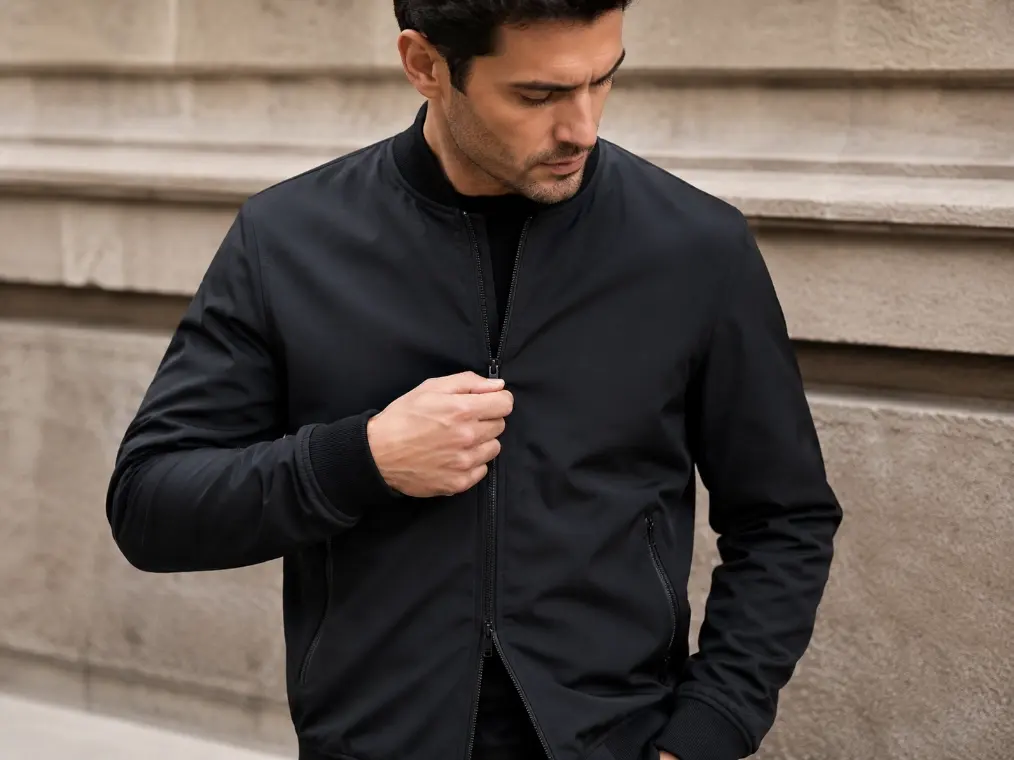
How to Style a Bomber Jacket: Outfit Ideas for Every Occasion
Part of what makes this silhouette so enduringly popular is how well it plays with everything else in a wardrobe. The best approach is to match the jacket’s fabric, fit, and weight with the occasion. A lightweight nylon style feels sporty and relaxed; leather, suede, or more structured versions read noticeably more polished. According to GQ’s outerwear styling guides, the bomber jacket consistently ranks among the most versatile pieces a man can own — working equally well over a white tee or an Oxford shirt.
Casual Looks: With Jeans and Sneakers
For a simple, reliable weekend outfit, pair a bomber jacket with a plain T-shirt, straight-leg jeans, and clean sneakers. The denim keeps things grounded while the jacket adds shape and personality without tipping into formality. If your jacket features bold color, embroidery, or patch detailing, keep the base layer simple so the outfit doesn’t compete with itself.
Easy outfit formula: Bomber jacket + white T-shirt + straight jeans + sneakers Best for: Weekend errands, casual meetups, travel days, relaxed office settings
From a manufacturing perspective, fabric weight matters here. A lightweight nylon bomber pairs well with slim or straight jeans; a padded version looks better with heavier denim or relaxed trousers.
Women’s Styling: Feminine and Androgynous Approaches
For a feminine look, style a bomber with a fitted knit top, pleated midi skirt, slip dress, or high-waisted jeans and heeled sandals. The contrast between a sporty jacket and softer pieces creates a modern, balanced outfit. Vogue’s seasonal style features have consistently shown this silhouette paired with pleated midi skirts, tailored trousers, and loafers — making this direction especially useful for women who want something polished but not overly formal.
Feminine formula: Satin or lightweight bomber + fitted top + midi skirt + boots or heels
For an androgynous approach, choose an oversized bomber with wide-leg trousers, cargos, loafers, or chunky sneakers. The key is proportion: if the jacket runs oversized, keep the inner layer clean and avoid adding bulk at the waist.
Androgynous formula: Oversized bomber + plain tee + wide-leg trousers + loafers or chunky sneakers
Men’s Styling: Classic, Smart-Casual, and Streetwear
For men, the classic combination is hard to beat: a white T-shirt, jeans, and sneakers. It feels clean, masculine, and completely effortless. For a smarter look, wear a black, navy, or olive version over an Oxford shirt or lightweight knit, then pair with chinos or tailored trousers finished with loafers or Chelsea boots.
Classic formula: Bomber jacket + white T-shirt + jeans + sneakers Smart-casual formula: Structured bomber + shirt or knitwear + chinos + loafers
For a streetwear direction, layer an oversized bomber over a hoodie, graphic tee, or cargo pants. Nylon styles like the MA-1 are especially well-suited to everyday layering, while leather versions create a more rugged, intentional look.
We also offer custom kids’ jacket manufacturing for brands looking to extend these styles into younger collections — the bomber silhouette translates exceptionally well into children’s outerwear with only minor adjustments to proportion and hardware.
Conclusion
The bomber jacket is more than a casual outerwear piece — it’s one of the few garments that has genuinely earned its place in fashion history. From military aviation to modern streetwear, it has remained relevant because it combines comfort, structure, and effortless versatility in a way that few other silhouettes can match. Its ribbed trims, compact proportions, and broad range of fabric options make it work across seasons, genders, and occasions.
For buyers and brands developing their own outerwear lines, choosing the right bomber jacket fabric and construction from the outset is what separates a good jacket from a great one. At HAPA Garments, we bring over two decades of manufacturing expertise to every piece we produce — because in outerwear, the details are always what people remember.
Frequently Asked Questions
What is the purpose of a bomber jacket?
Originally designed to provide lightweight warmth and freedom of movement for military pilots, it is now used as both casual outerwear and a versatile fashion piece across a wide range of settings and seasons.
What is the difference between a bomber jacket and a regular jacket?
A bomber jacket has a short waist-length cut, zip front, ribbed cuffs, and a ribbed hem. A standard jacket can vary widely in length, closure type, and silhouette — making the bomber’s specific construction details what sets it apart.
Why is it called a bomber jacket?
The name comes directly from its military origin: it was designed for the crews of bomber aircraft who needed reliable insulation in cold, open cockpits at high altitude during World War II.
Which is warmer — a bomber or a puffer?
A puffer jacket is generally warmer because it’s quilted and filled with down or synthetic insulation. A bomber tends to be lighter and better suited to mild-to-cool weather rather than extreme cold.
What is a bomber jacket used for today?
It’s used for everyday casual wear, streetwear styling, light warmth, and layering across seasons. Its short silhouette and ribbed trims make it both practical and easy to incorporate into a wide range of outfits.