Parents, boutique owners, and retailers ask me all the time: why are kids pajamas flame resistant? It’s an entirely reasonable question — after all, safety is every family’s top priority when it comes to bedtime.
In the United States, there are explicit, legally binding requirements for children’s sleepwear designed for kids 9 months and older, up to size 14: the garments must either meet strict flame-resistance standards or fall under the official “tight-fitting” sleepwear category. If the children’s sleepwear you manufacture or source fails to comply with this mandate, it is illegal to sell. This is a non-negotiable, life-saving safety standard.
You may still be wondering: is flame resistance really necessary for kids pajamas? In this article, drawing on my decades of hands-on industry experience, I’ll give you a clear, unfiltered, no-nonsense breakdown of this critical regulation and explain why are kids pajamas flame resistant in the first place.
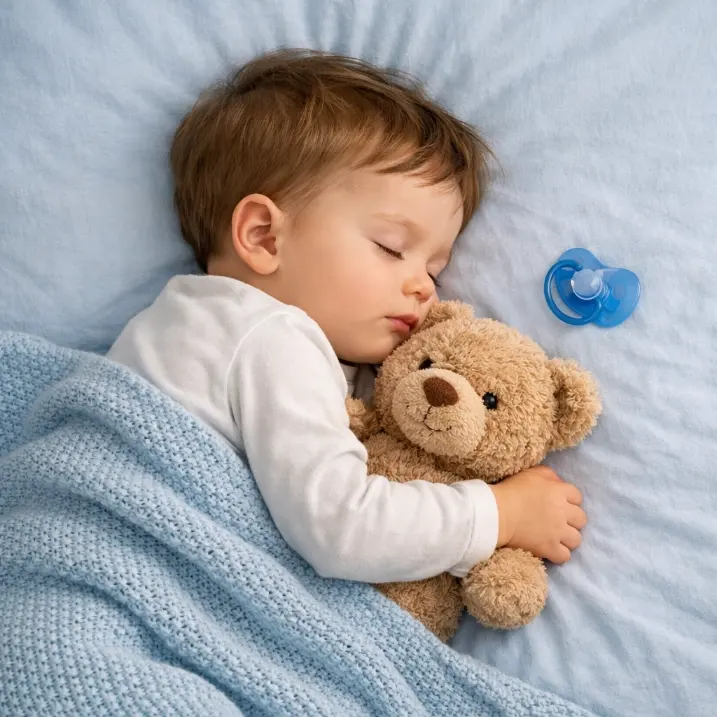
Why Flame Resistance Is the Non-Negotiable Top Priority for Children’s Sleepwear
Children’s sleepwear is required to be flame-resistant first and foremost because it is mandated by federal law. But the reason this requirement exists at all comes down to one harrowing truth: children are the most vulnerable victims in residential fire incidents. Unlike adults, kids often do not wake up immediately when they smell smoke. Worse, if their clothing catches fire, they lack the physical coordination to react quickly and extinguish the flames.
These regulations were written for one single, life-saving purpose: to buy you and your child those critical extra seconds to escape a dangerous situation. They are not designed to make garments fireproof — they exist to ensure the fabric itself does not become an accelerant that feeds the fire.
For parents shopping for kids pajamas, that distinction matters. Properly tested flame resistant sleepwear is meant to slow flame spread and reduce burn risk in a real emergency.
The Real Safety Hazard These Regulations Were Built to Fix
This rule was never created to stop kids from playing with matches. In reality, the hazard that sparked this industry-wide change was far more common, and far more insidious. Back in the 1940s and 1950s, long nightgowns made from brushed rayon exploded in popularity, often referred to as “cowboy style” or “trench coat” sleepwear. The fabric was incredibly fluffy and soft, and its loose fibers trapped massive amounts of oxygen between them. If the gown brushed up against a gas stove or freestanding space heater, it would ignite in an instant.
I’ve spent hours reviewing archived industry case files from these tragic incidents. The victims suffered catastrophic, often fatal burns because the fabric would melt as it burned, adhering tightly to the skin. Doctors and firefighters issued urgent, repeated calls for reform. The government responded by passing the Flammable Fabrics Act and, later, the much stricter 1972 children’s sleepwear safety standards.
To this day, we still simulate these exact hazard scenarios in our factory’s in-house testing lab. We use a standardized flame source, held up to a suspended fabric swatch, to run compliance tests. Under federal regulations, the char length of the fabric must fall within an extremely narrow limit. Most critically, the fabric must self-extinguish the second the flame source is removed, with no ongoing smoldering. This test was designed specifically to eliminate the exact, horrific hazards posed by those vintage rayon nightgowns.
Why Sleepwear Is Regulated Far More Strictly Than Everyday Clothing
You’ve probably wondered: why can your child’s everyday 100% cotton T-shirt be sold with no flame-resistance requirements or warning labels? The logic comes down to two core factors: supervision and activity level. During the day, kids are awake, active, and moving around — and you’re almost always awake and supervising them too. If a sleeve brushes up against a stove burner, you’re right there to swat it out immediately.
At night, the dynamic changes completely. The house is dark, quiet, and your guard is down — you naturally assume everyone is safe in bed, asleep. But if your child is sleeping near a faulty baseboard heater, or a nightlight with an electrical short, they’re incredibly vulnerable. They may not even wake up until the fire has already spread to their bedding and clothing.
That’s exactly why the U.S. Consumer Product Safety Commission (CPSC) draws an extremely strict line when it comes to products designed for sleep time. Everyday clothing only needs to meet general flammability standards. Sleepwear, by contrast, must pass a far more rigorous, highly specific vertical flame test. For manufacturers like us, the cost difference in testing alone is staggering. For everyday apparel, we typically only need to test one batch per quarter. For flame resistant sleepwear, we are required to test every single new dye lot we receive, with no exceptions.
How Loose Fabric, Trapped Air, and Open Flame Combine to Amplify Burn Risk
In our factory, we jokingly refer to this combination of three factors as the Triangle of Trouble. While the science behind it is straightforward, the result is fire that spreads at an alarming, often fatal rate. Below, I’m breaking down exactly how this works, based on what we’ve observed firsthand in our testing lab.
The Three Core Risk Factors
- Loose-Fitting Fabric: A flowy, oversized nightgown creates gaps between the fabric and the wearer’s body. These gaps let air circulate freely on both sides of the material — and more oxygen in the air means a faster, hotter, more aggressive fire.
- Trapped Air: Fluffy, napped fabrics like fleece or terry cloth trap tiny pockets of air against the skin. Under normal circumstances, this layer of air acts as a thermal insulator to keep kids warm. In a fire emergency, however, it instantly becomes a perfect fuel channel to feed and accelerate the flames.
- Open Flame: Even a tiny flame from a candle or lighter can have fatal consequences when combined with the first two risk factors.
This is exactly why the regulations include the official snug-fit exemption. If a cotton sleepwear garment fits tightly against a child’s skin, there are no air gaps between the fabric and the body to feed a fire — and the child’s body itself can smother the flames before they spread. That’s the hard science behind why snug-fitting cotton sleepwear does not require chemical flame-retardant treatment.
This is also the reason parents often ask, why do kids pajamas need to be tight? The answer is simple: a snug fit reduces trapped air, limits oxygen flow, and lowers the chance that the garment will ignite and spread flames quickly.
A fluffy, loose-fitting polyester gown, by contrast, must have flame-retardant properties built directly into its fibers to meet federal compliance standards.
U.S. CPSC Children’s Sleepwear Flame-Resistance Standards: What Every Parent Needs to Know
If you don’t work in the children’s apparel industry, these regulations can feel overwhelming and hard to navigate. But as a children’s clothing manufacturer, every part of our work is guided by the rules set by the U.S. Consumer Product Safety Commission (CPSC). The CPSC enforces two core standards for children’s sleepwear, set out in Title 16 of the Code of Federal Regulations, Parts 1615 and 1616 — and I’m sharing everything you need to know about these rules with full transparency.
Core Federal Regulations: 16 CFR 1615 and 16 CFR 1616
These two regulations form the legal bedrock for all children’s sleepwear sold in the United States. Every single sleepwear style our factory produces must undergo third-party testing to ensure full compliance with these standards. There are no legal loopholes or workarounds when it comes to safe, compliant children’s sleepwear.
- 16 CFR 1615: Applies to infant and toddler sleepwear in sizes 0 through 6X.
- 16 CFR 1616: Covers children’s sleepwear in sizes 7 through 14.
Both regulations require that the fabric self-extinguish immediately when the ignition source is removed and set strict limits on the allowable char length after exposure to flame. Every sleepwear style must pass mandatory laboratory testing before it can be sold to the public.
The Critical “Fit Exemption” Clause: The Difference Between Snug-Fit and Loose-Fit Sleepwear
This section of the regulation is the most common point of confusion for most parents — and even for some small apparel brands. The truth is, not all compliant sleepwear requires additional chemical treatment, even though many shoppers still assume all safe pajamas must be flame retardant pajamas.
There are two legal pathways for sleepwear to meet federal safety standards:
- Flame-Resistant Fabric: The fabric must be able to self-extinguish on contact with a small flame. We typically use synthetic fibers like polyester, which have inherent flame-resistant properties built into the fiber itself.
- Snug-Fit Design: If we use natural fibers like 100% cotton, the garment must be engineered with a tight, snug-fitting cut. This design eliminates the air gaps needed to fuel a fire, achieving the required safety standard through fit alone.
You may naturally have questions about infant clothing. Because infants under 9 months of age have limited mobility and are far less likely to come into contact with an ignition source, sleepwear in these smaller sizes is exempt from the strict flammability regulations outlined above. They are still required, however, to meet general apparel safety standards.
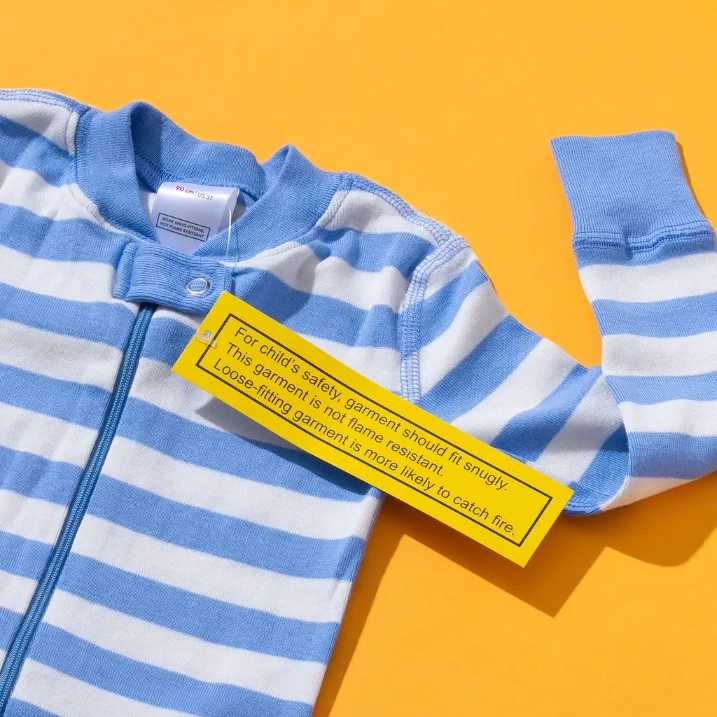
Every time we ship snug-fitting cotton sleepwear, it must be accompanied by a specific warning label. You’ve likely seen that bright yellow hangtag in stores. It features a clear warning in bold lettering: wear snug fitting not flame resistant. That label tells parents the garment relies on close fit, not chemical treatment, to meet the rule.
In addition, many families are also familiar with the broader keep away from fire clothing label, which appears on many children’s garments as a visible reminder of fire risk. Both labels serve an important purpose, but for sleepwear, the snug-fit warning has very specific legal and safety meaning.
Never overlook that yellow tag. It signals that the manufacturer has chosen the chemical-free, snug-fit path to safety and compliance. What’s more, if you intentionally size up when buying these garments, you completely negate their built-in safety design.
What Does “Flame-Resistant” Actually Mean in Children’s Sleepwear?
Let’s clear up a massive industry misunderstanding. What does “flame-resistant” actually mean? Many parents assume it means the pajamas will never catch fire. However, that is entirely incorrect.
Instead, it means the fabric will automatically stop burning once the heat source is removed. In our factory, we test this rigorously. We expose the fabric to a direct flame, then carefully measure how quickly it self-extinguishes.
Flame-Resistant vs. Flame-Retardant vs. Nonflammable
To make safe choices for your child, you must understand three distinct terms. Brands often mix these up in their marketing, but as a manufacturer, I deal with these technical differences daily.
Here is the simple breakdown of what these labels really mean:
Flame-Resistant: The fabric inherently resists catching fire. For example, we use specific polyester because it naturally melts rather than bursting into flames. Ultimately, it puts itself out.
Flame-Retardant: The fabric is chemically treated to delay burning. Historically, factories soaked normal cotton in harsh chemicals to achieve this safety rating. Today, most parents and modern brands avoid these chemical coatings entirely. When people search for flame retardant pajamas, they are usually trying to understand whether the garment is chemically treated or inherently flame resistant.
Nonflammable: This material simply cannot catch fire under normal conditions. Think of industrial materials like fiberglass or asbestos. Obviously, we never use nonflammable materials to make soft, cozy kids’ clothes.
Do All Children’s Pajamas Have to Be Flame-Resistant by Law?
The short, surprising answer is no. Not all children’s pajamas are legally required to be treated with chemical flame retardants. In my 16 years in the apparel manufacturing industry, I’ve seen countless brands struggle to navigate this nuance — and the truth is, there are major exemptions to these strict federal rules.
Specifically, the U.S. Consumer Product Safety Commission (CPSC) grants defined, narrow exemptions to manufacturers. This means we can safely produce non-flame-retardant sleepwear, but only if we meet rigid, non-negotiable requirements to qualify.
Here’s what you need to know about the legal exemptions:
- Infant Sleepwear: Garments sized for babies 9 months and younger qualify for a full exemption. Put simply, infants at this age do not have the mobility to reach an ignition source or other fire hazards on their own.
- Tight-Fitting Sleepwear: Tight-fitting sleepwear made from natural fibers also falls under the legal exemption. Because the garment fits snugly against the body, there is virtually no air gap between the fabric and the skin — eliminating the oxygen that fuels and accelerates a fire.
That said, everyday loungewear creates a tricky, high-stakes gray area. If a garment looks and functions like sleepwear, regulators will strictly classify and regulate it as sleepwear, with all the same compliance requirements. That’s why my team always clearly defines the intended use and market positioning of every loungewear piece we design. This not only prevents dangerous misuse by customers, but also shields our brand and our retail partners from steep legal penalties.
The Manufacturing and Certification Process for Safe Sleepwear
Manufacturing safe, compliant sleepwear is a rigorous, multi-step production process. In my 16 years in apparel manufacturing, safety has always been our non-negotiable top priority. We never guess whether a fabric is safe — we rely solely on strict, science-backed lab testing to confirm it.
Understanding Third-Party Testing and CPC Certification
Every legitimate, compliant children’s sleepwear garment is required by law to come with a Children’s Product Certificate (CPC). This is not a legal document you can simply print yourself. To issue a valid CPC, the product must first pass a battery of rigorous tests conducted by a CPSC-accredited laboratory.
During these lab tests, technicians put the fabric through extreme, real-world challenge tests. For example, they precisely measure the burn rate and self-extinguishing properties of the material, and for tight-fitting styles, they take exact measurements of the finished garment to verify that it meets the strict snug-fit safety standards.
Here’s our standard, mandatory testing process for every sleepwear line we produce:
- We send large batch fabric swatches to an independent, CPSC-accredited third-party lab.
- Technicians subject the fabric to up to 50 repeated wash and dry cycles to simulate real-world use by families.
- Finally, they perform controlled flame tests on the washed fabric, exposing it directly to an open ignition source.
We can only legally ship a sleepwear batch if it passes every single one of these tests with no exceptions. That’s why, when shopping for flame resistant sleepwear, you should always ask the brand for a valid, up-to-date CPC certificate for the style you’re purchasing.
Beyond Fire Safety: The Critical Importance of OEKO-TEX® STANDARD 100 Certification
Fire safety is undeniably critical, but it’s not the full picture of safe sleepwear. In the apparel industry at large, chemical safety is just as non-negotiable — which is why we rely on OEKO-TEX® STANDARD 100 certification for every garment we make.
This rigorous certification system verifies that a garment is free of harmful substances. What’s more, its testing requirements are often far stricter than the baseline safety regulations set by governments around the world.
Specifically, OEKO-TEX testing involves a detailed review of every single component of the garment:
- Main Fabric: Tested for toxic dyes, heavy metals, and other harmful chemicals.
- Sewing Thread: Verified to be free of harmful substances, ensuring every structural component of the garment is safe.
- Trims and Hardware: Tested for hidden hazardous materials like lead in metal buttons and zippers.
At the end of the day, this standard exists to provide the strongest possible protection for your child’s delicate, sensitive skin. When you see the OEKO-TEX certification mark on a product, you can shop with greater confidence and peace of mind.
How Children’s Pajamas Are Tested Before They Go to Market
Before a single pair of pajamas reaches your home, it undergoes grueling laboratory tests. In my 16 years of running production lines, testing has always been our top priority. We cannot simply guess whether a garment is safe for your child.
Instead, we follow a strict two-phase testing protocol mandated by the CPSC. Ultimately, this rigorous system ensures every single production batch meets federal safety laws.
Fabric Production Unit Testing Explained Simply
The first major step is testing the raw material itself. In the industry, we call this the Fabric Production Unit (FPU) test. Before we even cut the fabric, we send large yardages to an independent lab.
Technicians cut these raw samples into precise strips. Then, they suspend them in a testing chamber and apply a direct flame. If the fabric burns too quickly, the entire batch is instantly rejected.
Garment Production Unit Testing and Why Finished Garments Matter
Passing the fabric test is only half the battle. Next, we must test the actual sewn garments, known as the Garment Production Unit (GPU). You might wonder why we test the finished product again.
Sometimes, the sewing threads or special seams can react to fire differently than flat fabric. Therefore, we randomly pull finished pajamas directly from our assembly line. We specifically test the edges and seam areas to guarantee complete structural safety.
Why Durability After Repeated Washing Is Part of Compliance
Kids are notoriously messy, so pajamas get washed constantly. Consequently, safety regulations require these garments to remain safe over time. A protective treatment that washes out after one laundry cycle is entirely useless.
Because of this, certified labs perform a strict washing simulation before the final burn test:
- They wash the sleepwear 50 times under standardized conditions.
- They use standard, heavy-duty washing machines and strong detergents.
- Finally, they re-test the flammability of the heavily washed fabric.
This strict process guarantees that the safety features last for the lifetime of the garment. As a responsible manufacturer, ensuring this lasting durability is my ultimate promise to you.
Conclusion
Flame-resistant children’s sleepwear exists for one single, life-saving purpose: to prevent life-altering, entirely avoidable burn injuries in kids. These regulations are not arbitrary bureaucratic hoops to jump through — they are a life-saving line of defense built on decades of real-world safety data.
For 16 years, I’ve overseen thousands upon thousands of fabric burn tests, all with one core mission: to make sure your child never has to suffer the pain and devastation of a clothing fire. It may sound like a bold statement, but it’s the unvarnished, unshakable truth that drives every single thing we do. Every test we run, every warning label we attach, and every certification we secure serves the same non-negotiable goal: keeping our most vulnerable children safe, even while they sleep.
Whether you are comparing kids pajamas, researching flame retardant pajamas, or trying to understand how flame resistant sleepwear is regulated, the most important thing is choosing products that are compliant, clearly labeled, and designed with real safety in mind.
FAQ
Why are kids pajamas flame resistant?
Kids’ pajamas are flame resistant to help reduce the risk of severe burn injuries during nighttime fire emergencies. Loose sleepwear can ignite quickly, especially around heaters, candles, or other ignition sources. That is why federal law requires certain children’s sleepwear styles to either pass strict flammability testing or be made as snug-fitting garments.
Do all kids pajamas need chemical flame retardants?
No, not all kids pajamas need chemical treatment. Some compliant sleepwear is made with inherently flame-resistant fibers, while snug-fitting cotton sleepwear can qualify under a separate exemption. This is one of the biggest misunderstandings parents have when comparing standard sleepwear and flame retardant pajamas.
Why do kids pajamas need to be tight?
If you have ever asked why do kids pajamas need to be tight, the reason comes down to fire safety. A tight fit reduces air gaps between the fabric and the skin. Less trapped air means less oxygen available to feed a flame, which lowers the risk of rapid fire spread.
What does “wear snug fitting not flame resistant” mean?
The phrase wear snug fitting not flame resistant appears on certain children’s sleepwear labels to show that the garment meets safety rules through its close fit rather than through flame-resistant fabric performance. In other words, the fit itself is part of the product’s safety design.
Is a keep away from fire clothing label the same thing?
Not exactly. A keep away from fire clothing label is a general fire-safety warning found on many garments. It warns consumers that the item can burn if exposed to flame. Sleepwear labels, however, can carry more specific legal wording depending on whether the garment is flame resistant or intended to be worn snug-fitting.
Are flame retardant pajamas and flame resistant sleepwear the same?
Not always. Flame retardant pajamas often refers to sleepwear treated with chemicals to slow burning, while flame resistant sleepwear can also include fabrics with inherent flame-resistant performance. In everyday search behavior, people often use the two terms interchangeably, but technically they are not always the same.