For many people, cotton is the ultimate go-to fabric for clothing.When you see a “100% Cotton” label, it feels like an immediate promise of softness—and that’s why you can confidently add it to your cart.
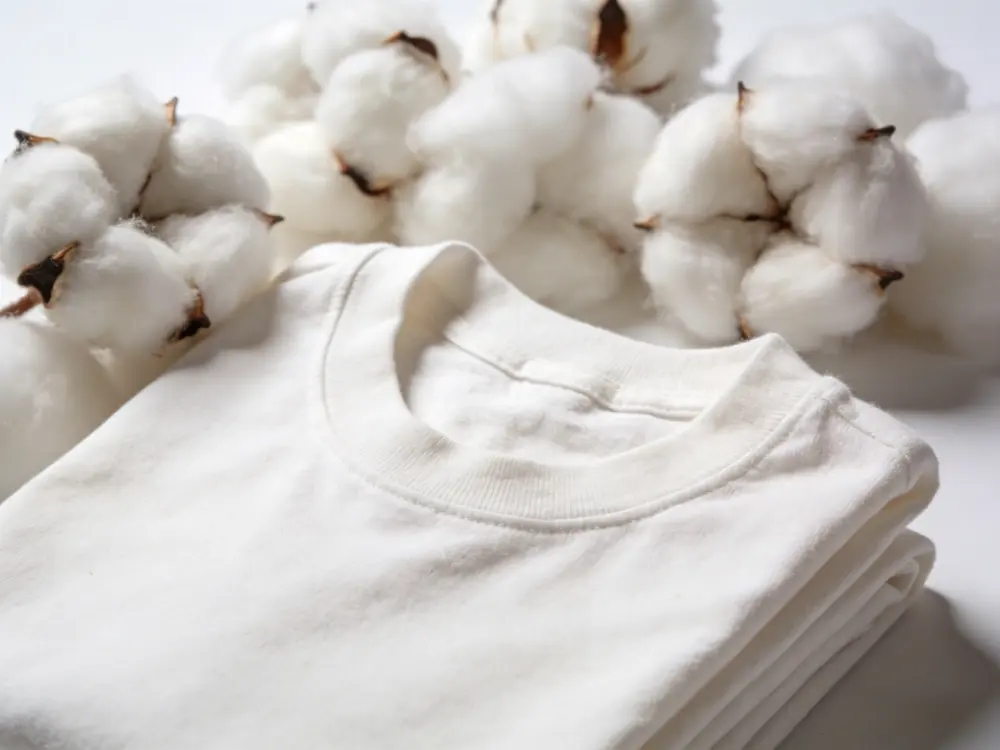
Cotton has earned its reputation as the gold standard in the textile world, a position proven by both time and everyday use.It’s the top choice for next-to-skin garments, especially great for those with sensitive skin and anyone who loves natural, skin-friendly materials.
In this guide, we’ll walk you through the benefits of 100% cotton clothing, compare 100% cotton vs polyester, and be honest about its downsides (like does 100% cotton shrink?). Even more importantly, we’ll teach you how to spot real 100% Cotton so you won’t be fooled by fake labels!
What is 100% Cotton?
100% Cotton is a fabric constructed entirely from natural fibers derived from the cotton plant. It contains zero synthetic fibers (such as polyester or nylon) and zero man-made cellulosic fibers (like viscose or rayon).
Every thread in the fabric — both warp and weft — comes straight from the cotton boll of the cotton plant.
If a garment is labeled 100% Cotton, no other materials can be blended in.This strict definition follows FTC labeling requirements, ensuring consumers get exactly what they pay for.Even adding just 5% spandex for elasticity means it can no longer be called 100% Cotton — it must be labeled a Cotton Blend.
One important distinction:100% Cotton ≠ Pure Cotton
People often use these two terms interchangeably in daily life, but they are not the same.
- 100% Cotton: strictly all-cotton, no other fibers.
- Pure Cotton: a broader term. In general practice, fabrics with a cotton content of 75% or higher may also be called pure cotton.
5 Key Benefits of Wearing 100% Cotton
What makes 100% cotton feel almost magical, like a quiet statement of quality living?Because it breathes—and it truly understands you.
Outstanding breathability and moisture absorption
Cotton is a natural cellulose fiber with a unique hollow structure, letting air pass through the fabric freely.
- Moisture-wicking: Unlike polyester, which traps sweat against your skin like a “plastic bag effect”, pure cotton can absorb 25–27 times its own weight in moisture and quickly release it into the air.
- Result: On hot summer days or after activity, 100% cotton keeps you dry and free from the sticky, uncomfortable feeling of sweat clinging to your body.
Hypoallergenic & extremely kind to sensitive skin
Is 100% cotton good for sensitive skin? According to the National Eczema Association, cotton is a top recommended fabric for people with sensitive skin because it is breathable and non-irritating.
- Anti-static: Cotton doesn’t build up static electricity like synthetic fibers, so it attracts less dust and causes less skin friction.
- Perfect for: Babies, people with eczema, or adults with easily irritated skin.100% cotton is the safest choice — it won’t itch like wool, or cause rashes like synthetic fabrics.
Natural temperature control
Many people wrongly think cotton is only for summer. In fact, it’s an all-season fabric.
- Cool in summer: Its breathability carries away heat and keeps you cool.
- Warm in winter: Air pockets between cotton fibers create an insulating layer that locks in body heat.That’s why many thermal undergarments still use pure cotton as their base layer.
Less likely to hold odors
Have you noticed that polyester sportswear starts to smell bad quickly? Synthetic fibers are oil-loving, easily trapping body oils and bacteria that are hard to wash away.
- Easy to clean: Cotton naturally lets go of dirt and odor-causing molecules during washing.
- A lifesaver for daily life: With a 100% cotton T‑shirt, you’re much less likely to develop body odor when sweating — a huge plus for commuting or all-day wear.
Eco-friendly & sustainable
In a time when fast fashion puts heavy pressure on the planet, choosing 100% cotton is a responsible choice.
Biodegradable: When a 100% cotton garment reaches the end of its life, it can fully decompose naturally in just a few months and return to the earth.
Comparison: Polyester — basically plastic — takes hundreds of years to break down, and sheds microplastics into the ocean every time you wash it.For eco-conscious shoppers, this is a very strong reason to buy.
The Downsides of 100% Cotton: What You Need to Know
While we love the benefits of 100% cotton, it isn’t perfect. Here is a reality check.
1.High Shrinkage Rate
Natural fibers tend to shrink under heat and moisture. Without special pre-shrunk treatment, 100% cotton clothing may shrink by 2%–5% or even more after the first wash.
2. Prone to Wrinkling
This is the most obvious weakness of pure cotton. Cotton fibers have poor elastic recovery — once crushed in the washer or folded in storage, they hold creases very stubbornly.
3.Slow Drying Time
Although cotton absorbs sweat well, it is non-wicking. It locks moisture inside the fibers rather than moving it to the surface to evaporate, so it dries much slower than synthetic fabrics.
4.Lack of Natural Stretch
Cotton itself has almost no natural elasticity. While knit cotton can have some give, woven cotton fabrics (like jeans and dress shirts) feel stiff and restrict movement if no spandex/elastane is added.
Care Guide: How to Wash 100% Cotton Clothing to Prevent Shrinkage
Shrinkage is the most common and annoying problem with 100% cotton garments. By following these steps for washing and drying, you can extend their lifespan significantly.
The Wash Routine:
- Always Wash First: Make it a habit to give new cotton clothes a full wash before the first wear.
- Go Mild: Stick to natural, neutral detergents or soaps. Harsh chemicals can damage the natural fibers.
- Keep it Cool: Heat is the enemy. Keep the water temperature below 35°C (95°F). Also, never soak the clothes for too long, as this weakens the fabric structure.
- Gentle is the Keyword:
Hand Wash: Be gentle! Do not wring it out like a dishcloth; just squeeze the water out softly.
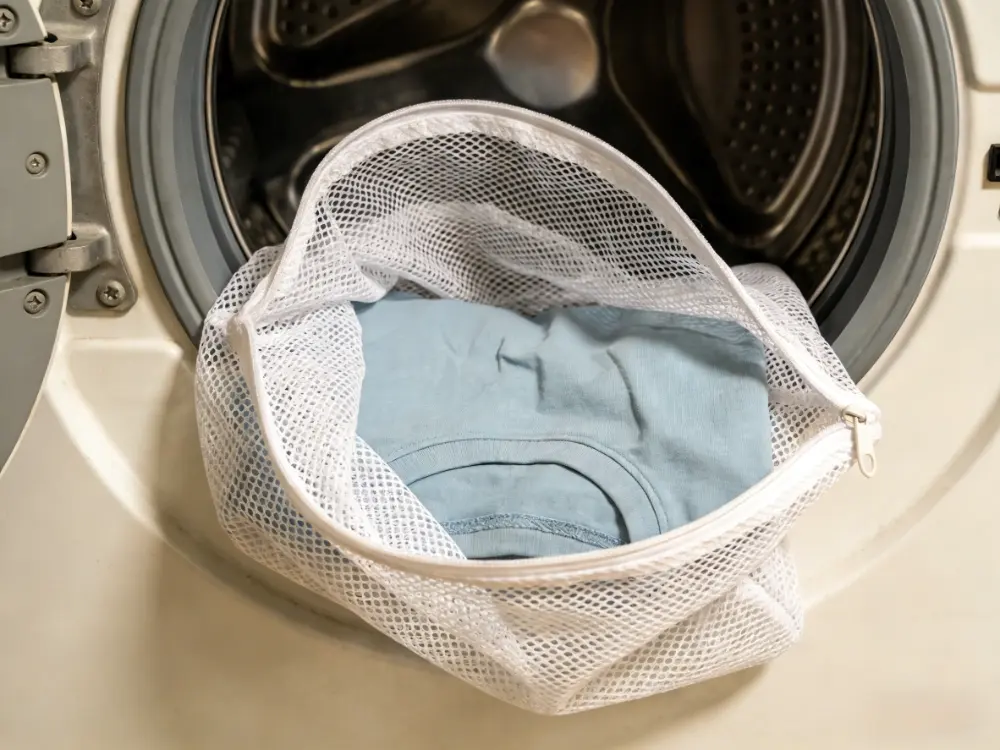
Machine Wash: Use a mesh laundry bag to protect the fabric. Set your washer to the “Delicate” or “Gentle” cycle. This reduces friction and extends the garment’s lifespan significantly.
Drying & Shaping:
- Hang or lay flat to dry right after spinning. Gently shake and stretch the garment into shape to prevent wrinkles and shrinkage.
- Some dyes are sunlight-sensitive and may fade with over-exposure — especially blue, purple, and pink. It’s recommended to dry clothes inside out.
- Ironing helps the fabric stretch again and can partially restore the garment to its original size.
100% Cotton, Polyester, and Blends: Which Is Better?
100% cotton, 100% polyester, and 60/40 cotton-polyester blends (CVC) are the three most widely used fabrics.When choosing, there is no absolute “best” — only the most suitable for your needs.
Cotton vs. Polyester: Natural vs. Synthetic Fibers
Cotton is the natural king of breathability.Its porous fiber structure absorbs and releases moisture freely, with a soft, hypoallergenic touch that makes it the perfect choice for babies and children with sensitive skin.
Polyester, by contrast, is a synthetic fiber made from petroleum.Although it beats cotton in durability, wrinkle resistance and color fastness, its dense structure traps heat and sweat, leaving you feeling sticky and prone to static.
In short:
- For soft, safe, next-to-skin comfort, 100% cotton is irreplaceable.
- For structured, hard-wearing outerwear, polyester is the more practical choice.
Is Cotton Blend Better Than 100% Pure Cotton?
A 60% cotton & 40% polyester blend (CVC) is essentially a commercial compromise between durability and cost — not an upgrade in real quality.This blend uses polyester as a stable “backbone” to fix pure cotton’s biggest weaknesses: shrinking and wrinkling.That makes it great for frequently worn and washed items like school uniforms or sweatshirts, at a lower cost.
However, blended fabrics always take a big hit in breathability.What’s more, friction between the two different fiber types easily causes surface pilling, which reduces the premium look and feel of the garment.
For high-end kids’ clothing brands that pursue ultimate skin comfort and breathability,100% pure cotton still remains the irreplaceable gold standard.
How to Tell if Fabric is 100% Cotton?
While most labels claim “100% Cotton,” verifying the fabric yourself ensures you aren’t paying for a blend. Here are three professional methods to distinguish the real deal.
The Burn Test (The Gold Standard)
This is the definitive method to distinguish natural fibers from synthetics. Note: Always perform this safely with a small snippet of fabric or a loose thread.
The Reaction:
100% Cotton does not melt or curl away from the flame. It burns with a steady, bright flame and smells distinctly like burning paper or dry leaves.
The Residue:
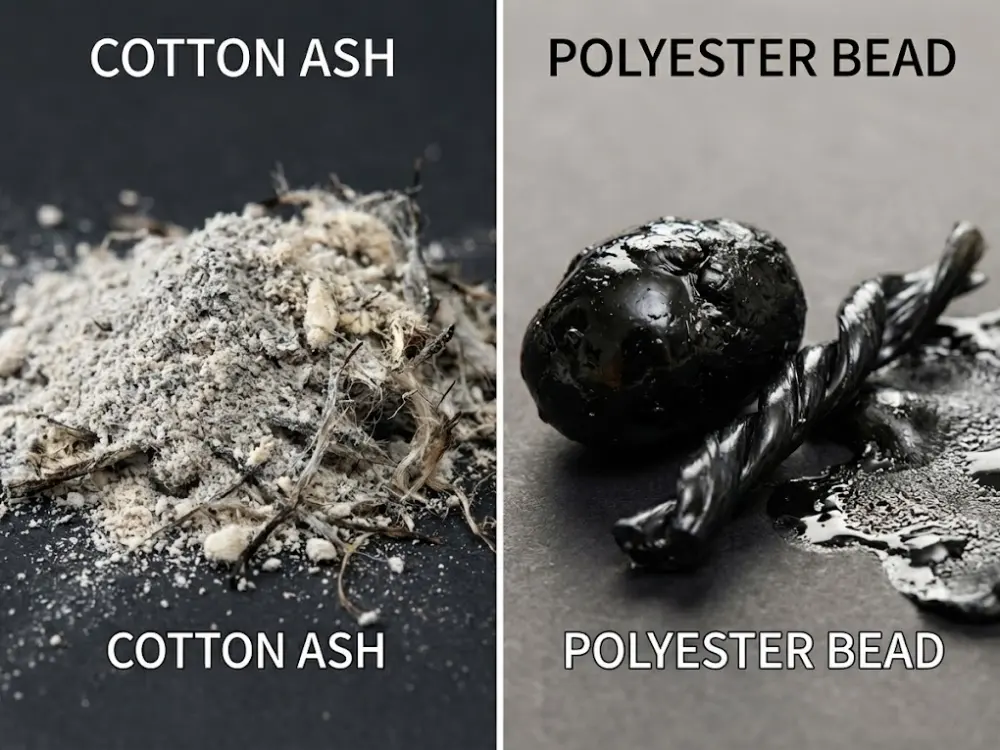
After burning, cotton leaves behind a fine, gray powdery ash that crumbles instantly when touched.
The Contrast:
Polyester or synthetic blends will melt, drip like plastic, and form a hard, brittle bead that cannot be crushed. They will also release a sharp, chemical odor.
The Water Drop Test (Absorbency Check)
Cotton is naturally hydrophilic (water-loving). Place a small droplet of water on the fabric surface:
100% Cotton:
The water should absorb instantly and spread into the fibers.
Synthetics:
Synthetic fibers (like polyester) are hydrophobic. The water will typically bead up and roll off the surface—unless the fabric has been chemically treated with a moisture-wicking finish.
The Touch & Texture Test (Hand Feel)
Tactile Feel:
Pure cotton feels soft, warm, and natural. It lacks the slippery, cool, “artificial smoothness” typical of polyester or rayon.
Visual Inspection:
Cotton fabric is rarely perfectly glossy. Under close inspection, natural cotton (especially carded or uncombed varieties) will show a natural matte finish and tiny, fine fiber fuzz on the surface. Synthetics often have an unnatural, uniform shine.
Application Scenarios of 100% Cotton
| Category | Typical Products | Why Choose 100% Cotton? (Key Benefits) |
| Baby & Children’s Wear | Newborn Onesies, Bodysuits, Swaddles, Inner Lining for Party Dresses | Hypoallergenic: Gentle on sensitive skin and reduces the risk of eczema or rashes. Breathable: Helps regulate body temperature to prevent overheating. |
| Intimates & Sleepwear | Underwear, Boxers, Pajama Sets, Nightgowns | Moisture-Wicking: Absorbs sweat away from the body to keep skin dry. Odor Control: Naturally resists odors better than synthetic fabrics like polyester. |
| Home Textiles | Bed Sheets (Percale/Sateen), Pillowcases, Bath Towels, Robes | High Absorbency: Perfect for towels and bathrobes. Cool & Crisp: High-quality cotton bedding feels cool to the touch and improves sleep quality. |
| Everyday Apparel | Heavyweight T-shirts, Denim Jeans, Dress Shirts (Oxford/Poplin) | Durability: Cotton fibers constitute a strong fabric that holds up well against frequent washing. Comfort: Becomes softer with every wash without losing its shape. |
| Medical & Hygiene | Medical Gauze, Bandages, Cotton Balls, Sanitary Pads | Sterilizable: Can withstand high temperatures for sterilization. Safe & Natural: Free from synthetic chemicals, making it safe for open wounds. |
Why 100% Cotton is the Gold Standard for Children’s Clothing Business
For children’s clothing retailers, building your offering around 100% cotton products directly speaks to parents’ strongest demand: safety and reassurance.
Today’s parents routinely check care labels to verify fabric content, and they see “100% Cotton” as a trusted promise of hypoallergenic, gentle, breathable wear.By prioritizing 100% cotton in your sourcing, you not only remove customers’ biggest concern — skin irritation — but also justify a higher price point, improve conversion rates, and quickly earn parents’ trust.
For long-term business health, pure cotton is also the key to lower after-sales risk and stronger brand loyalty.Unlike blended fabrics that pill easily and trap sweat, high-quality cotton holds up well to repeated washing and becomes softer over time, greatly reducing returns from allergies or fabric complaints.
For wholesalers and retailers alike, choosing 100% cotton is an investment in your reputation.It links your store to comfort, safety, and durability — and that’s exactly what drives the most valuable asset in children’s wear: repeat purchases.
HAPA: Your Partner in Premium Cotton Manufacturing
Rooted in the high-end children’s wear industry, HAPA specializes in 100 cotton and premium blends that balance comfort with durability. We adhere to strict international safety standards, using superior craftsmanship to give your brand a competitive edge.
From Concept to Production
We provide end-to-end OEM/ODM solutions—from design and sampling to bulk delivery. Whether you’re a startup or an established brand, we offer flexible services tailored to your needs. With strict quality control and rapid turnaround, we turn your ideas into best-sellers. Focus on building your brand, and leave the manufacturing to us.
FAQ
Can you wear 100% cotton in summer?
Yes, 100% cotton is one of the best fabrics for summer. It is highly breathable, allowing heat to escape from your body. It is also very absorbent, which helps wick sweat away from your skin. Light-colored, loose-fitting cotton clothing is ideal for keeping cool in hot weather.
Does 100% cotton shrink?
Natural 100% cotton fibers have very little elasticity. However, the way it is made changes how it feels. Woven cotton (like denim jeans) has almost no stretch and feels rigid. Knitted cotton (like a t-shirt) stretches because of the loop structure of the fabric, but it may lose its shape over time since it lacks spandex.
Is 100% cotton expensive?
It depends on the quality. Standard short-fiber cotton is very affordable and common. High-end types of cotton fabric like Pima, Supima, or Egyptian cotton are more expensive because they are softer and more durable. Organic cotton also costs more due to the strict, chemical-free farming process required.
Is 100% cotton waterproof?
No, untreated 100% cotton is not waterproof; it is actually hydrophilic (water-loving). It absorbs water quickly and becomes heavy when wet. However, tight weaves like canvas can be treated with wax to become water-resistant. This “waxed cotton” is often used for outdoor jackets and bags.